Archive for the ‘PANS’ Category

Study: 92% of Pediatric Bipolar Disorder Had Evidence of Tick-Borne Exposure

https://www.frontiersin.org/journals/child-and-adolescent-psychiatry/articles/10.3389/frcha.2025.1685016/full

ORIGINAL RESEARCH article

Front. Child Adolesc. Psychiatry, 05 November 2025

Sec. Developmental Psychopathology and Mental Health

Volume 4 – 2025 | https://doi.org/10.3389/frcha.2025.1685016

This article is part of the Research TopicSevere Mental Illnesses in Children: Unravelling Developmental Trajectories, Neuropsychiatric Impairments, and Chronic PainView all 3 articles

Investigating the frequency of tick-borne infections in a case series of 37 youth diagnosed with pediatric bipolar disorder

  • 1Medical Arts Psychotherapy Associates, P.A., Summit, NJ, United States
  • 2Overlook Medical Center, Summit, NJ, United States

Introduction: This retrospective chart review examined 37 youth with pediatric bipolar disorder from a private practice in the Lyme-endemic state of New Jersey, expanding on findings from 27 previously reported cases to explore the potential contribution of tick-borne infections to disease etiology.

Methods: Diagnoses were based on DSM-IV-TR and DSM-V criteria using parent and child interviews, questionnaires, and school reports. Initial screening evaluated for possible PANDAS/PANS, with testing for Group A beta-hemolytic streptococcus, Borrelia burgdorferiBabesiaBartonella, and Mycoplasma pneumoniae. Lyme disease testing included ELISA, Western Blot (IgM/IgG), and immunoblots, interpreted per CDC guidelines. Other pathogens were assessed via IgM/IgG titers, anti-streptolysin O, anti-DNAase B, fluorescent in situ hybridization, and blood cultures. A positive diagnosis required both laboratory evidence and clinician confirmation.

Results: Babesia was detected in 51% (19/37), Bartonella in 49% (18/37), Mycoplasma pneumoniae in 38% (14/37), Borrelia burgdorferi in 22% (8/37), and Group A Streptococcus in 19% (7/37).

Overall, 92% (34/37) had evidence of tick-borne exposure, with 81% (30/37) meeting both laboratory and clinical criteria.

Discussion: More than three-quarters of the cohort demonstrated confirmed tick-borne infections. Overlaps between bipolar disorder and tick-borne illness—such as immune dysregulation, chronic symptomatology, and responsiveness to treatments like minocycline and anti-inflammatory agents—support further exploration of infectious contributors to pediatric bipolar disorder. While limited by its single-practice retrospective design, these findings suggest that tick-borne pathogens may play a role in the pathogenesis of bipolar symptoms in youth, warranting larger, controlled studies.

For More:

The Three Bs – Borrelia, What, and What? Co-infections & Chronic Illness

https://www.lymedisease.org/the-three-bs-borrelia-what/

The three Bs – Borrelia, What, and What? Co-infections and chronic illness

By Nicole Bell, Galaxy Diagnostics CEO

3/10/25

While many people in the Lyme community are familiar with the three Bs – Borrelia, Bartonella, and Babesia – most people outside the community look confused when I mention these top flea and tick-borne pathogens. I understand their puzzled looks because back in 2017, I was confused too.

Even after my husband, Russ, was diagnosed with these three stealthy invaders, I focused all my research on Borrelia, the bacteria causing Lyme disease.

It ended up taking a tragic journey followed by years of studying the research to gain an appreciation for the complexities of all three pathogens – and that research is still unfolding.

In complex cases, co-infections are the rule, not the exception.

The first thing to understand when considering the three Bs, is that in complex cases, co-infections are common. In a survey of over 3,000 chronic Lyme disease patients published by LymeDisease.org, over 50% had co-infections, and 30% had two or more co-infections. Babesia and Bartonella top the co-infection list, each presenting in about 30% of chronic Lyme cases.
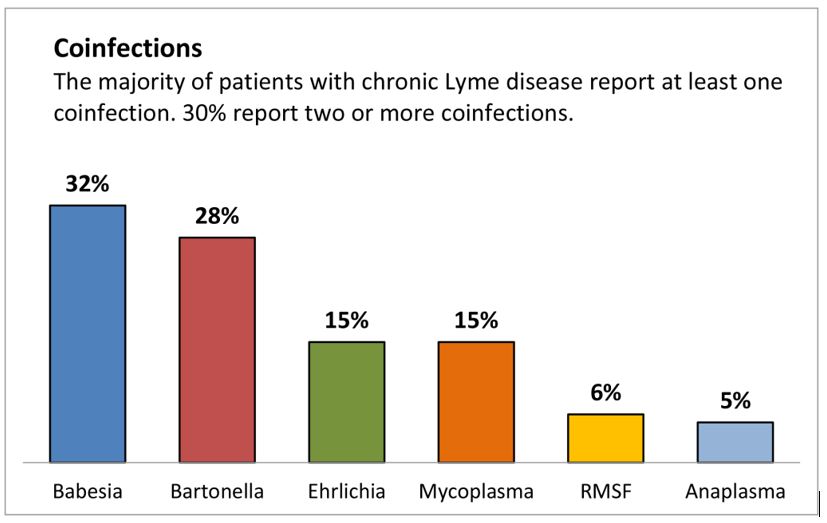
Source: About Lyme Disease Co-infections, LymeDisease.org

The second thing to understand about these pathogens is that calling them “Lyme co-infections” is misleading. All these pathogens – the other Bs and beyond – can be present without a Borrelia  infection (past or present).

The problem is that many doctors don’t have these invaders on their differential – and it’s easy for a pathogen to be considered rare if you never test for it. 

Rare disease? Or inadequate testing and data?

To understand the true prevalence of these pathogens, we need to dig into the details of each pathogen and how we count and test for them. For example, before 2013, Lyme incidence in the U.S. was estimated to be approximately 30,000 cases per year. Then, in 2013, the CDC looked at clinical records, laboratory reports, and public surveys and increased this estimate 10-fold.

In 2021, an analysis of insurance records increased the estimates again, and current data shows that approximately 500,000 Americans are diagnosed and treated annually. And since the standard of care test for Lyme leading to diagnosis and treatment is 40-60% accurate, even this number is likely underestimating the extent of the problem.

So, the question looms – what is the prevalence of the other two Bs? Are they destined for a similar exponential increase as we dig into the data? Emerging research points to yes.

Bartonella – The Hidden Pandemic

Bartonella is a genus of gram-negative bacteria that can infect humans and a wide range of animals. Googling the bacteria shows that it is the pathogen causing cat scratch disease or CSD, an acute form of the infection. But like Lyme, this pathogen has been associated with complex chronic conditions spanning multiple body systems, including the joints, eyes, heart, and brain.

Lyme disease has made people fearful of ticks, but Bartonella can be transmitted by a long list of biting insects – or vectors – including fleas, body lice, sand flies, and even spiders. Also, an underappreciated risk factor for bartonellosis is animal exposure, particularly exposure to cats, which are natural reservoirs of the bacteria.

In a study of veterinary workers, 44% were positive for Bartonella antibodies, and 28% had DNA of the pathogen detected directly from their blood. With approximately 66% of U.S. households owning at least one pet, the pathogen has the potential to be more widespread than generally thought.

Dr. Ed Breitschwerdt from North Carolina State University’s veterinary school has studied Bartonella since the 1990s. The advanced testing methods developed in his lab by collaborator Dr. Ricardo Maggi have uncovered key links between the pathogen and complex illnesses, such as arthritis, chronic fatigue, and fibromyalgia.

Neuropsychiatric conditions

Recently, using innovations in advanced PCR technology, the lab has made groundbreaking discoveries linking Bartonella and neuropsychiatric conditions, such as schizophrenia.

The investigation into schizophrenia started the way many discoveries in medicine do, with one case. A 14-year-old boy – who we will call Michael – suffered from sudden onset psychosis and received a formal diagnosis of schizophrenia. Michael was referred to Dr. B’s lab because he had marks on his skin, called striae, consistent with a Bartonella infection.

Dr. B and his team used their advanced test methods to confirm that Michael was infected with Bartonella. Upon treatment with the appropriate antibiotics, his symptoms evaporated.

The case inspired Dr. Breitschwerdt to consider a hypothesis – what if other patients were experiencing psychosis because of a Bartonella infection? Bartonella can cross the blood-brain barrier and infect endothelial cells, contributing to neuroinflammation.

The hypothesis had merit. His lab partnered with the University of North Carolina to test 17 schizophrenia patients. Sixty-five percent of those patients tested PCR positive for the pathogen, compared to 8% in healthy controls.

A subsequent study with Columbia University on over 100 patients found that people affected with psychosis were over three times more likely to have direct evidence of Bartonella in their blood than unaffected controls.

PANS

And schizophrenia isn’t the only neuropsychiatric condition linked to the pathogen. Pediatric patients with Bartonella infections have been reported to develop Pediatric Acute-onset Neuropsychiatric Syndrome (PANS) and symptoms like anxiety, obsessive-compulsive disorder, and cognitive dysfunction. Case studies have shown improvement in neuropsychiatric symptoms following treatment of the underlying infections.

With over 3 million Americans battling schizophrenia and 1 in 200 children in the U.S. affected by PANS, Bartonella may emerge as the great hidden pandemic.

Babesia – the tip of the iceberg

Babesia is a tick-borne parasitic infection, often touted as similar to malaria, because both parasites infect and replicate within red blood cells and can cause fever, chills, sweats, headache, muscle aches, fatigue, and hemolytic anemia.

Researching Babesia on the CDC Website shows that under 2000 cases were reported nationwide in 2020. The CDC notes that most Babesia cases in the U.S. are caused by Babesia microti, with occasional cases caused by other Babesia species.

Using the same advanced PCR technology that drove clinical discovery in Bartonella, Dr. B and his team turned their attention to Babesia. They found that what we “know” about Babesia may only be the tip of the iceberg.

In 82 individuals the lab was studying for Bartonella infection, 22 (27%) were also infected with Babesia. Furthermore, the top Babesia species identified was not Babesia microti, as expected from CDC data, but rather Babesia divergens (considered rare in the U.S.) and then Babesia odocoilei (considered rare in humans).

Before Dr. B’s work, only a handful of case reports in the U.S. have ever been reported for Babesia divergens. Their best-in-class assay turned up 12 new cases in a group that wasn’t even targeted for Babesia studies.

Dr. B’s team also recently published a paper where an entire family – all five members and one of their dogs – tested positive for a Babesia-divergens-like species. Similar new case discoveries have been made for Babesia odocoilei. His work poses the question – are the pathogens really rare, or are we just not testing for them properly?

Genus versus species – why it matters

Genus and species are terms commonly used by microbiologists, but when I first entered the world of tick-borne disease, I didn’t fully understand their significance. The “genus” is akin to a family name, grouping related individuals – think Hatfields and McCoys. The “species” is like the first name, identifying a specific individual in the family.

Translating this to Lyme disease, Borrelia is the genus or family name, and Borrelia burgdorferi is the species name identifying the particular pathogen.

So why does it matter? The current commercial test methods for all three Bs generally use serology or antibody testing. These assays measure antibodies created by the host’s immune response to the pathogen. The problem is that antibodies react to proteins on the surface of the pathogen, and these proteins can vary depending on the particular species.

In other words, the patriarch of the Hatfield family, Anderson Hatfield, looked and dressed differently than his son Cap Hatfield. Thus, sending out a warrant and a picture of Anderson is unlikely to lead to Cap’s arrest.

Antibody testing is similar, and testing for Babesia microti, may not accurately diagnose a case of Babesia odocoilei or Babesia divergens. There are over 100 known Babesia species, with 15 of those confirmed in human cases.

There are over 50 species of Bartonella, at least 20 of which have been documented to infect humans and other mammalian hosts. Dr. B’s research and testing technology is redefining what we know about these pathogens. And until these tests are launched commercially, millions have the potential to be misdiagnosed.

Direct Detection for BBB is Launching at Galaxy Diagnostics

Fortunately, Galaxy Diagnostics was founded by Dr. Breitschwerdt, Dr. Maggi, and Dr. Amanda Elam to bring these diagnostic advancements to market. This month, Galaxy is launching its digital PCR, direct detection assay for BBB.

This assay has been instrumental in driving clinical discovery in Dr. B’s lab and will now be commercially available to practitioners. Top features of the assay include:

  • Genus level detection, detecting each pathogen regardless of species.
  • Ultra-sensitive, digital PCR, which increases detectability for low abundance pathogens.
  • Multiplexed detection to provide three results in a single test.

The BBB assay is a blood-based assay that detects the DNA of each pathogen. The approach has previously been used only in a research setting, but the team at Galaxy has now validated the assay for commercial use.

Bartonella and Babesia – but what about Borrelia?

The BBB assay is a blood-based approach, and it is essential to note that blood is NOT the best matrix for Lyme Borrelia, as I have discussed previously.

Galaxy recommends its urine antigen test for Lyme since the concentrations of Lyme Borrelia are so low in the blood that a blood draw is unlikely to capture the pathogen in the test tube. And no matter how sensitive the technique is, if the pathogen isn’t in the tube, there is no way to detect it.

So then, why is Borrelia included in the BBB assay? The answer goes back to the genus versus species issue. While the species associated with Lyme Borrelia often hide in tissues and don’t free-circulate in high copy numbers in blood, the species associated with Relapsing Fever Borrelia do replicate to high numbers in the blood.

As a result, combining the BBB assay with Galaxy’s Nanotrap urine antigen test for Lyme provides optimal coverage for the top flea and tick-borne infections at the genus level.

Coming Full Circle – Avoiding Cases like Russ

After my husband Russ passed, the engineer in me knew there had to be better options. I immersed myself in the research and found Dr. B’s published peer-reviewed results. I introduced myself to the Galaxy team, and as I dug in, I became even more convinced that their technology would provide the clarity I craved as a caregiver.

In June 2024, I became Galaxy’s CEO to bring these advanced testing techniques to a broader market. We crystallized our mission to provide a new standard of care for diagnosing these devastating flea and tick-borne diseases. With the commercial launch of the BBB assay, we are one step closer to that goal. I know that Russ is watching – and smiling.

Nicole Bell, CEO of Galaxy Diagnostics, is also the author of What Lurks in the Woods and The State of Lyme Disease Research

For more:

Dr. Elena Frid: Lyme, MSIDS, PANS, & PANDAS

http://  Approx. 50 Min

Dr. Elena Frid on Lyme/MSIDS/PANS/PANDAS

Ticktective Podcast

May, 2024

Dana Parish – TICKTECTIVE at the Bay Area Lyme Foundation interviews Dr. Elena Frid how Lyme disease, PANS, and PANDAS affect children’s ability to function at school and home. Dr. Frid shares her expertise in treating complex cases involving autoimmune conditions, Lyme disease with co-infections, and PANS/PANDAS, which often lead to neurological issues. In the podcast, she explains how she uses advanced diagnostic tools and her clinical expertise to distinguish between idiopathic and organic causes of various neurological disorders. Tune in to gain valuable insights from Dr. Frid’s experience and learn more about these challenging conditions.

For more:

Brain on Fire: Neuropsychiatric Disorders in Children

https://www.lymedisease.org/alain-mass-brain-on-fire/

Brain on fire: neuropsychiatric disorders in children

By Alain Mass, MD

2/13/24

Nearly one in six children between the ages of 2 and 6 years old (17.4%) has a diagnosed mental, behavioral or developmental disorder.

More than 17 million children in the United States have or have had a diagnosable mental illness.

Mental disorders are either primary or secondary. Primary mental illnesses are rather treatable than curable and the treatment is most of the time lifelong.  If you ignore that behind the well-made diagnosis, there may be a deeper reason for the symptoms, you accept the fate of what a primary mental health disorder is about.

The expression “brain on fire” means that the child has only a brain inflammation as opposed to having a true psychiatric disorder, where the psychiatric disorder is only a symptom and not the disease.

The causes of neuroinflammation are numerous and often combined with each other. Many extra-psychiatric conditions may cause psychiatric disorders. The most common ones are infections, auto-immune encephalitis, toxicity including but not limited to mold, heavy metals, or pesticides.  Metabolic or nutritional factors may also contribute to mental disorders.

Lyme disease and neuropsychiatric disorders in children

Children develop more central nervous system symptoms while adults develop more symptoms from the peripheral nervous system.

The most common manifestations of Lyme disease in children are emotional, cognitive and behavioral. The change of personality is definitely the number one symptom of Lyme disease in children.

Lyme disease may be responsible, according to Robert Bransfield, M.D, psychiatrist, for a wide spectrum of neuropsychiatric symptoms. These may include: developmental disorders, autism spectrum disorders, schizoaffective disorders, bipolar disorder, depression, anxiety disorders (panic disorder, social anxiety disorder, generalized anxiety disorder, OCD), intrusive thoughts, eating disorders, sleep disorders, addiction, cognitive impairment, brain fog, seizure disorders, suicide, violence, social withdrawal, depersonalization, dissociative episodes, and derealization. 20-25% of autistic children in the US have been shown to have Lyme disease.

Children may have difficulty with attention and concentration, speed and efficacy of processing information, learning and memory, auditory processing and language expression. Sleep disorder is common or return to bedwetting or loss of daytime bladder control.

Teenagers may have mood swings, depression, suicidal thoughts, personality changes, sleep problems, poor concentration, cognitive disorder, a loss of interest in school and school activities and interest in family values.

Most children who present with cognitive or psychiatric disorders do not remember a tick bite. They are already in the late phase of the disease. The initial phase may be missing.

The symptoms and severity of symptoms can vary from day to day. A child may feel well enough to go to school one day, but not the next. A psychiatric disorder may be the only symptom. Brian Fallon, M.D, Director of the Lyme and Tick-Borne Diseases Research Center at Columbia University, writes, “Psychiatrists who work in endemic areas need to include Lyme disease in the differential diagnosis of any atypical psychiatric disorder.”

Basal ganglia autoimmune encephalitis (PANDAS/PANS)

Auto-immune encephalitis is characterized by an abrupt onset, often from one day to the next and by the correlation in time between the evidence of an infection and a sudden and acute new onset of a neuropsychiatric disorder.

PANDAS refers to encephalitis due to streptococcal infections, whereas PANS to other infections. The diagnostic criteria of PANDAS/ PANS are to have an abrupt, dramatic onset or recurrence of OCD, acute onset of anorexia and/or severe restrictive eating disorders with at least two of the following symptoms.

  • Anxiety, including new onset of separation anxiety, or hyper-alertness.
  • Behavioral regression (baby talk, tantrums),
  • Emotional lability including suicidal depression, hallucination,
  • Irritability, aggression, raging, severe oppositional behaviors.
  • Hypersensitivity to light, noise, or touch. The child may not tolerate his/her clothing
  • Tics, involuntary movements.
  • Handwriting change
  • Deterioration in school performance and cognitive changes, (difficulty focusing)
  • Sleep disturbances (difficulty falling asleep, night terrors, refusal to sleep alone)
  • Urinary frequency or urgency, new onset of bedwetting

Toxicity

Heavy metals (such as mercury and lead), mycotoxins released by mold, and other environmental toxicants are neurotoxic and may also be responsible for neuropsychiatric disorders.

Post COVID 

Anxiety and depression may be common six months after COVID-19 recovery.

Nutritional and metabolic factors

Glutamate, GABA, histamine, oxalate, copper, zinc, selenium, vitamin Bs in excessive or insufficient amounts, the inability to process folic acid as seen in those who have MTHFR mutations,  have also been associated with mental disorders.

Gut inflammation

The gut-brain axis (GBA) consists of bidirectional communication between the central and the enteric nervous system, linking emotional and cognitive centers of the brain with peripheral intestinal functions. Gut inflammation can cause cognitive and mental health disorders, too.

Conclusion

Wondering whether a mental disorder is either primary or secondary, even when the disorder is well categorized as well known mental disease is the only way to give a chance to convert a lifelong, treatable but not curable, mental illness into a curable disease, to relieve from the social and medical burden of a psychiatric illness.

Dr. Alain Mass is board-certified in family medicine, with a practice in Suffern, New York. He is a member of the International Lyme and Associated Diseases Society (ILADS), the International Society of Environmentally Acquired Illnesses (ISEAI), and the PANDAS Physician Network (PPN). His website is massfunctionalmd.com.

For more:

She’s Battling Lyme, Bartonella, Babesia, Anaplasmosis, and PANS

Eileen Clossick opens up about her Lyme disease, Bartonella, Babesia, and Anaplasmosis, and PANS in an effort to help others and spread awareness.

The puzzle pieces are finally starting to come together after going through what I now recognize was the perfect storm this past year: getting the Covid vaccine (& subsequently developing paresthesia in my legs), contracting Covid, going through an emotional stressor, and then being exposed to mold (and later finding out I have mold toxicity, or “mycotoxicity”). The floodgates were opened, and my body could no longer suppress the viral load it was carrying.

Experiencing Symptoms

I was experiencing such severe insomnia that I would go days without sleeping, even after taking four or five Benadryl at a time. I was having heart palpitations, night terrors, such severe brain fog that I couldn’t plan my days off of work without ending up in tears, tingling in my head as well as my legs, intrusive thoughts, dizzy spells, tinnitus, and neck stiffness. I was seeing black dots, snowflakes, and stars. I had weird neuro symptoms like dropping things all the time and mixing up left and right. I would wake up at night with shaking episodes because I couldn’t regulate my body temperature. And worst of all, I was experiencing a darkness and spiral in my mind that I have yet to figure out how to explain in words. By nature, I am a very joyful, energetic, and enthusiastic person, so I knew that this was not me, and something was deeply wrong. I was afraid to hurt a patient at work due to my exhaustion caused by severe insomnia, so I started calling out of shifts.

After a boatload of research, and visiting and calling multiple doctors and clinics, I finally got into a Lyme Literate doctor. I explained my story to her, all the way back to the onset of symptoms at 5 years old. She looked at me and said, “this is classic Bartonella,1 I’ll be shocked if it isn’t.” I instantly burst into tears in her office, and the only thing I could repeat was “no one should ever be told they’re just anxious for 20 years.”

Pediatric Acute-onset Neuropsychiatric Syndrome (PANS)

If it hadn’t been for the flare up this past year, I may have never gotten the answers I needed. I was forced to ask the deeper question of what was really going on.

At the age of five, I had a sudden onset of severe anxiety, OCD symptoms, destructive behavior, night terrors, and sensory issues. It escalated to the point that I needed to be admitted to a children’s psych hospital for a little over a week. My doctors tested me for Strep (for a PANDAS diagnosis), which was negative. Unfortunately, they did not have the knowledge of tick borne illnesses or PANS (Pediatric Acute-onset Neuropsychiatric Syndrome). So, I was seen as a psych case, told I had a “delay in my neurological development” and prescribed psych meds at a young age. Over the years, I led a normal life, but always dealt with what I believed was an anxiety disorder. So I attributed other strange symptoms to anxiety throughout my life. There have been periods when it was worse than others, but overall, I tried incredibly hard to hide it from most people, because I hated that I struggled with it. If it hadn’t been for the flare up this past year, I may have never gotten the answers I needed. I was forced to ask the deeper question of what was really going on.

Multiple Tick-borne Diseases

thumbnail_image2 (1)-2-1When the full Tick Borne Panel came back, my doctor was correct in her assumption. I was diagnosed with Lyme, Bartonella, Babesia, and Anaplasma. Along with these tick borne illnesses, I also had the Neural Zoomer Plus test done which identified blood brain barrier disruption2 and demyelination. With that, I was diagnosed with PANS. Along with those diagnoses, I was also diagnosed with 9 new food sensitivities and mycotoxicity. My doctor looked at me and said “you’re one tough cookie for walking around with all of this.”

Surprisingly, with each new diagnosis came a sense of relief. I finally had proof that everything I was experiencing was real. This illness can be dangerously misleading, and oftentimes cause me to doubt my own experiences, as I look normal from the outside and I have good moments and days when I feel like myself. Because a lot of what I endure is not outwardly visible to others, I have been challenged to put into words what I am experiencing, so I can let others in, especially those closest to me.

My Most Recent Flare

This past spring, I was having flashbacks to my childhood, and experiencing odd bouts of deja vu. My body was trying to tell me I was experiencing a flare, but I couldn’t read the signs. I was begging the Lord to give me sleep, fighting for rest in any way I could: putting my phone away 2 hours before bed, creating a nighttime routine, etc, all to no avail. Even when I did fall asleep, I was awoken by night terrors, pinprick sensations, or shaking episodes and required even more sleep aides to get back to sleep. I didn’t know if I was doing something wrong. All I knew was that I was struggling and needed help, badly. I didn’t know exactly what was going on at the time, but I knew that I was done taking the band aid approach offered to me. I didn’t want to just take more pills; I wanted to know why I was experiencing all of these random symptoms.

Unfortunately, when these tick borne illnesses and other infections have crossed the blood brain barrier and gone systemic after being in the body for years, antibiotics alone do not work. These bugs are quite intelligent. They create a biofilm to protect themselves. So, while I will most likely be on antibiotics and anti-parasitic drugs long-term, the road to recovery involves so much more than just antibiotics. I have yet to meet a single person who healed from long-term Lyme/coinfections with antibiotics alone. In fact, I experienced some of the worst die-off symptoms (herxing) after starting some of the herbal regimens prescribed by my ILADS doctor. From someone coming from healthcare and working with pharmaceuticals, I had no idea how potent and effective some of these herbs could be.

The Healing Process

thumbnail_image0-1In addition to medications and supplements, there are other supportive therapies to help my body and mind heal. Since this has gone undiagnosed for so long and crossed the blood-brain barrier, I will be undergoing treatment for the next couple of years. There are numerous routes to take, so treatment may look different at different points in time over the next couple of years. Because my immune system has been suppressed for years, I need to do everything I can to help boost it. I am currently taking Immunoglobulins. There are many diet and lifestyle changes to make as well to help boost my immune system and decrease the inflammation in my body and brain.

For me, I’ve found that the best medicine of all is being with people. It’s often seeing others and socializing that pulls me out of the never ending darkness or mental spiral that I can’t escape alone.

And, since my body has been stuck in a fight or flight mode (sympathetic state) for so long fighting infection without me knowing, I have to help my body learn how to re-enter the parasympathetic state (or, rest and digest state). For me, I’ve found that the best medicine of all is being with people. It’s often seeing others and socializing that pulls me out of the never ending darkness or mental spiral that I can’t escape alone. When I was a kid, nothing worked, so I am thankful that I have found something that does work. There are other simple things I’ve found effective such as laughter, music, prayer, and being in nature. There are also certain therapies like cold-water exposure, craniosacral therapy, EMDR therapy, & neurofeedback, that help my body shift from the sympathetic to the parasympathetic state. Our bodies heal best in the parasympathetic state. I could create a whole other blog post just on all the treatment and therapies involved. Keeping track of it all is a full time job in and of itself!

And as I mentioned, there is something called the Jarisch-Herxheimer reaction (or “herxing”). I don’t have a worst enemy, but even if I did, I would not wish this on him or her. Basically, as the bacteria die off, they release toxins, so all of the symptoms you’ve experienced come to a head and get worse before they get better. But, as people have told me, even though it’s a living hell, it’s something to celebrate, because you know you’re hitting the nail on the head. Since most of the symptoms I have experienced have been neuro and psychiatric, and because these bacteria have crossed the blood brain barrier and caused PANS, most of the herxing involves worsening of the neuro and psychiatric symptoms. “In PANS and PANDAS, autoantibodies target healthy proteins or receptors in the brain, principally in the basal ganglia, a region of the brain responsible for motor movements, learning, cognition, and emotion.”3 Because I’ve had this for so many years without knowing, there will be a lot of bacteria that need to die off, and lots of herxing to go through, but I am determined to go through whatever I need to in order to get to the other side. It’s taken me years to arrive at this point; I can’t expect to heal in a month or two. As I begin to experience some days in between herxing where I feel like myself again, I am hopeful for complete healing in time and better days ahead.

There is also the issue of mycotoxicity. Who knew mold could wreak such havoc on your brain and nervous system? When not excreted from the body, it gets stored in fatty tissues, including the brain, which explains why everything got worse when I had a new mold exposure. For whatever reason, people with Lyme & co-infections don’t flush out toxins from their body like the average person (many of these people also have an MTHFR gene mutation).

Due to the ups and downs of these illnesses, many weekly appointments, and the financial burden that comes along with all of this, I made the decision to move home to Rhode Island and go ‘all in’ on my healing journey. Although this has felt like rock bottom all around, I am challenging myself to view this situation in a new light. What if this is an opportunity to give my body the rest, space, and time it needs to heal? What if the “falling apart” of my old life, is actually a new path falling together? What if I can use this as an opportunity to spread awareness, and therefore alleviate the suffering of others? What if I can heal completely, and then get back out there, further my degree, and work with the kiddos (& their families) who battle PANS/PANDAS?

Earlier diagnosis = earlier treatment, and therefore, better outcomes.

thumbnail_image3As I’ve mentioned before, I am open about my journey, in order to spread awareness, and to one day fight alongside and achieve victories for others, so that no one will ever go misdiagnosed for so long like I did. Earlier diagnosis = earlier treatment, and therefore, better outcomes. Because of the frequent mental spiral I experience, especially during this past year, I have doubted many of my decisions. However, since I discovered all of this, I have not for one second doubted that I was handed this cross so that I can one day help others with a similar cross. They say people who battle long term Lyme & co-infections with a purpose and reason to get through it, have better outcomes than those without a purpose, and I have most definitely found mine. No one should go misdiagnosed for 20 years, and then have to fight so hard just for a diagnosis. No one should have to go to therapy to process 1) the trauma that comes along with PANS, and 2) the shock of going misdiagnosed for so long. No one should have to pay thousands of dollars out of pocket to regain their health after it was the medical field that missed the bigger picture.  No one should be treated as though they are crazy by certain doctors who have not been trained in or educated themselves on tick borne illnesses (as well as PANS, molecular mimicry, etc), because it’s often a complicated and “controversial” topic.

As passionate as I am about this, I am also realizing there are emotional, spiritual, & mental components to work through as well. I could also write a whole blog post (or book, truthfully) just on those aspects alone. I am learning that I can’t expect to heal while holding onto anger and resentment towards all those who couldn’t help me more when I was a kid, or even this past year. I am also learning to be patient with myself as I process the aftershocks, all the emotions that come with it, and some of the painful memories.

It was only when I came to a place of deep acceptance, that I achieved a sense of peace.

For more GLA blogs, click here.

Endnotes