Archive for the ‘Mycoplasma’ Category

Lyme, Tularemia, Rickettsia, & Other Bacteria Found on Children’s Masks

**UPDATE, Nov. 2021**

Watch a series of brief videos where Tyson Gabriel, an industrial hygienist, safety engineer, and risk manager who trains doctors and has 20 years of experience implementing exposure prevention plans in industry, and is lead researcher for his team, examined each mask study on the CDC’s website.  Also see these reports.

Florida Press Release, Parents Cultured Children’s Masks And Found Lyme Disease, Tularemia, Rickettsia, and Other Bacteria

June 18, 2021

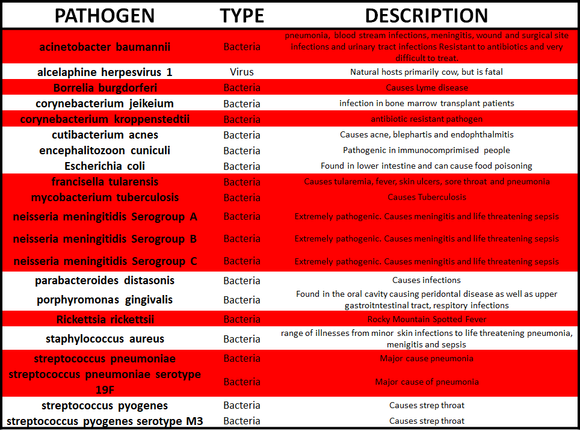
The press release dealt with a group of Florida parents who sent cultures of their children’s (ages 6-11) masks, worn at school for 6-8 hours, to a lab. The masks were freshly laundered before they were worn for the day. One adult mask was submitted who works as a cosmetologist.  Also see this news report.

The Lab report using proteomics to extract proteins from the masks to sequence them revealed the following:

While this might be surprising to some, this website has posted on the dangers of mask usage from day one as well as the fact Fauci himself initially stated they weren’t effectiveyet people are still wearing them!

  • A 2014 study of hospital workers wearing surgical masks in a Bangkok hospital found their masks to be saturated with Staphylococcus aureus (found on some of the masks in the Alachua study) and the fungus Aspergillus.
  • Another study of hospital workers in China from 2019 observed that after more than six hours of use, masks worn by medical personnel also contained viruses, including adenovirus, bocavirus, respiratory syncytial virus, and influenza viruses.
  • Studies have shown that pathogen density on masks grows exponentially after two hours of use. Source

The final nail in the coffin should have been after the Danish mask study  a randomized, controlled trial on thousands of people.  But it didn’t matter.  The spin doctors used their power to shout it down, and any other information showing the dangers and ineffectiveness of mask usage. Merely posting the study got me kicked off LinkedIn.  So much for a free exchange of ideas in the era of COVID.

 
While a Florida appeals court has already ruled that the mask mandate in Alachua County is presumptively unconstitutional because it violates bodily autonomy, the rest of the country is still in question. The Boston Globe is already advocating their use for the flu season. 
 
For Lyme/MSIDS patients, this information should reinforce what we already know.  Ticks are not the sole perp transmitting “tick-borne illness,” and we need much more work done on this issue.  
 
Lida Mattman, the expert on the cell wall deficient forms has stated she believes Lyme is transmitted by fomites, (an inanimate object or substance that is capable of transmitting infectious organisms from one individual to another). But the spin doctors shouting down anti-mask science have also shouted down any work on sexual and congenital transmission. When I asked Elizabeth Burgess if I could interview her, as she has done much work in the past on animal transmission at the University of Wisconsin, she refused – still affected by nearly losing her job and the bullying that occurred for her controversial findings decades ago.
 
Further, Mattman did groundbreaking work on Lyme testing. Her Gold Standard Culture Method has disappeared thanks to the concerted suppression on microscopy. In 2004 she already claimed that she could not find any uninfected blood in the USA anymore.  
 
And now Lyme, Tularemia, and Rickettsia have ALL been found on the masks of children?  
This should cause us all to pause and consider.

For more on guidelines harming children:  https://www.greenmedinfo.com/blog/how-covid-19-school-guidelines-are-harming-kids . It became clear early on that children and teens are at very low risk from COVID-19, with a 99.997% survival.

Please consider signing the petition to lift COVID guidelines at school:  https://standforhealthfreedom.com/action/lift-school-covid-guidelines/


PANS, A Misdirected Immune Response, Can Hijack a Child’s Life

https://www.lymedisease.org/brandi-dean-pans-immune/

PANS, a misdirected immune response, can hijack a child’s life

10 Top Causes of Symptoms in Chronic Lyme Disease

https://www.prohealth.com/library/ten-common-causes-of-symptoms-in-chronic-lyme-disease-8558

10 Top Causes Of Symptoms In Chronic Lyme Disease

(Please see link above for full article.  Excerpts below)

1) Mold toxicity

Real Time labs is among the most accurate of labs for mold testing. Effective mold toxin binders include the medication cholestyramine and activated charcoal.

2) Parasitic Infections

Parasitic infections are often not detectable on conventional lab tests, and may not even show up in sophisticated stool tests; therefore, using multiple forms of testing to detect parasites, such as electrodermal screening tools such as the Zyto or muscle testing, is important, along with lab testing with reputable labs such as Doctors’ Data.

3) Hormone and Neurotransmitter Imbalances

Replenishing the body’s stores of these chemicals can therefore profoundly support the healing process and Lyme doctors will commonly prescribe bio-identical hormones such as pregnenolone, DHEA and thyroid hormone to their patients, along with amino acids such as L-tyrosine, GABA and 5-HTP, which the body uses to make neurotransmitters. To make these amino acids work in the body, supplemental co-factors such as P5P, SAMe, and methyl B-12 are also sometimes important.

4) Vitamin and Mineral Deficiencies

Common deficiencies include magnesium, Vitamins D, C and B-vitamins; zinc and iron—among others. Supplementation with these nutrients can help to support the body during healing. (For more information on common nutritional deficiencies in Lyme disease and supplements that support the body, I encourage you to check out my 2012 book Beyond Lyme Disease).

5) Inflammation

Reducing inflammation involves mitigating all of its causes, such as removing pathogens and toxins from the body, and downregulating the immune response with nutrients and tools such as low-dose immunotherapy. High-quality, natural anti-inflammatory substances such as curcumin may also be helpful for supporting the body’s inflammatory response.

6) Mitochondrial Dysfunction

Supporting the mitochondria with supplements such as L-carnitine and CO Q-10 can help to mitigate fatigue and other symptoms related to mitochondrial dysfunction.

7) Emotional Trauma

Many studies have proven that trauma suppresses immune function and when prolonged, can open the door to chronic health challenges.

8) A Poor Diet

Removing allergenic foods and consuming fresh, organic “real” food, such as non-GMO, antibiotic, pesticide, and hormone-free meats, poultry, eggs, and other proteins; non-starchy veggies and low-glycemic fruits, along with healthy fats such as olive and coconut oil, can help to alleviate symptoms caused by food.

9) Poor Gastrointestinal Function

Supplementing with GI nutrients such as hydrochloric acid, digestive enzymes and probiotics may help to support gastrointestinal function in those with Lyme.

10) Environmental Toxicity

Sauna therapy, rebounding, coffee enemas, liver cleanses, and taking toxin binders such as zeolite, chlorella, EDTA, activated charcoal—among others, are just a few ways to remove toxins from the body.  Ideally, you’ll want to work with a practitioner who can test your body for toxins and prescribe a regimen in conjunction with Lyme disease treatment based on your needs. The same holds for the other causes of symptoms described here.

This article was first published on ProHealth.com on April 26, 2016 and was updated on September 22, 2020.


Connie Strasheim is the author of multiple wellness books, including three on Lyme disease. She is also a medical copywriter, editor and healing prayer minister. Her passion is to help people with complex chronic illnesses find freedom from disease and soul-spirit sickness using whole body medicine and prayer, and she collaborates with some of the world’s best integrative doctors to do this. In addition to Lyme disease, Connie’s books focus on cancer, nutrition, detoxification and spiritual healing. You can learn more about her work at: ConnieStrasheim.

___________________

**Comment**

Not mentioned is Lyme itself, and the many other potential players.  While parasites apart from Lyme is mentioned, dealing with the infections is paramount.  Of course these infections are indirectly affected by the things listed in the helpful article, but never underestimate the infection(s) themselves.  Good, effective, savvy treatment is required.

For more:

Stealth Infections & Their Detection

Dr.-Schwarzbach-Stealth-Infections-and-their-Detection (1)  pdf here

iu-105

Armin Schwarzbach PhD

Medical doctor and Specialist for Laboratory Medicine

Augsburg, Germany

AONM Annual Conference London, November 19th 2017

______________________

**Comment**

Excellent presentation on the following stealth pathogens:

  • Mycoplasma
  • Bartonella
  • Babesia
  • Ehrlichia/Anaplasma
  • Chlamydia pneumoniae
  • Yersinia
  • Coxsackie viruses (B1, A7, A16) and many others 
  • Borrelia burgdorferi , in all its forms

While Dr. Schwarzbach wants to blame “ecosystem disruption” for the mess we are in, I think it more likely to be due to laboratory experimentation/manipulation (bioweaponization), dropping ticks from airplanes, and migratory birds and animals transporting ticks far and wide:

https://madisonarealymesupportgroup.com/2020/09/25/why-should-we-care-about-lyme-disease-a-colorful-tale-of-government-conflicts-of-interest-probable-bioweaponization-and-pathogen-complexity/

Understanding Mycoplasma: Symptoms, Testing, & Treatment

https://rawlsmd.com/health-articles/mycoplasma-the-most-common-lyme-coinfection

Understanding Mycoplasma: Symptoms, Testing, and Treatment | RawlsMD

Mycoplasma: The #1 Lyme Coinfection + How to Outsmart It

by Dr. Bill Rawls
Updated 12/9/20

Mycoplasma is the stealthiest of all stealth microbes. It may be a major player in many chronic diseases associated with aging, but remarkably, most people — including most doctors — have limited awareness of it.

If you have Lyme disease, fibromyalgia, chronic fatigue syndrome, autoimmune disease, or possibly any other chronic illness, however, mycoplasma is a microbe you should know about.

Mycoplasma: The Master Manipulator

Mycoplasma is a parasite, meaning it can’t live without a host. And it’s the smallest of all bacteria: 4,000 of them can fit inside a single red blood cell in your body. By comparison, only 10-15 average-sized bacteria would fit in the same cell.

Unlike other bacteria, mycoplasmas don’t have a protective cell wall, creating an interesting survival strategy: They can shape-shift and fit into areas where other bacteria can’t go. For example, it also allows them to slip inside cells of the host. The lack of a cell wall makes mycoplasma resistant to some commonly prescribed classes of antibiotics like penicillins, which normally work by interrupting a bacteria’s cell wall so that when the bacteria divides, it falls apart.

More than 200 known types of mycoplasma (and probably many yet to be discovered) can infect animals and plants. There are at least 23 different varieties of mycoplasma that can infect humans. A few of them are considered harmless normal flora, but most have the potential to cause disease.

image split in three: tick, flea, and mosquito

Mycoplasma is spread by biting insects (ticks, mosquitoes, fleas, biting flies), sexual contact, contaminated food, and airborne droplets. Most everyone has been exposed to some form of mycoplasma. Several mycoplasma species have been closely associated with many chronic degenerative diseases like multiple sclerosis and Alzheimer’s disease, according to publications like the International Reviews of Immunology and the British Journal of Medical Practitioners, respectively.

Even beyond its tiny size, shape-shifting qualities, and proliferous nature, mycoplasma is a master at manipulating and outmaneuvering the host’s immune system. Half of its genetic makeup is devoted to that exclusive purpose.

While it has little ability to cause direct harm, it can use the host’s immune function to its advantage: Mycoplasma generates chronic low-grade inflammation and steals vital nutrients from the body.

In fact, everything that this stealthy microbe needs for survival — vitamins, minerals, fats, carbohydrates, and amino acids — must be scavenged from the host; it makes nothing itself. Mitochondria, which are the energy powerhouses of cells, are prime targets to sustain the microorganism, which helps explain why fatigue is always a factor in mycoplasma infections.

Mycoplasma favors infecting the cells of tissues that line different areas of the body. Common sites of infection include:

  • Nasal passages
  • Sinuses
  • Lungs
  • Lining of the intestinal tract
  • Genital tract
  • Vesicles inside the brain
  • Synovial lining of joints

They also commonly infect white blood cells, red blood cells, and brain tissue. Different mycoplasma has a preference for certain tissues, but all mycoplasma species possess the ability to infect any type of tissue and all organ systems.

The most common mycoplasma, Mycoplasma pneumoniae, has a preference for lung tissue. Initial infection with M. pneumoniae typically causes pharyngitis (sore throat), cough, fever, headache, malaise, runny nose — all the common symptoms of a basic upper respiratory infection.

man wrapped in blanket, coughing

If the person’s immune system is not full strength, the infection can progress to bronchitis and even pneumonia (about 20% of pneumonias). The type of pneumonia caused by mycoplasma, often called “walking pneumonia,” is rarely severe enough to result in hospitalization, though it can drag on for weeks or even months.

But even when those respiratory symptoms are cleared, it may not be the end of the story. That’s because after mycoplasma enters the body, it also infects white blood cells. And once inside a white blood cell, it can be carried to all parts of the body, infecting tissues and organs.

The potential for widespread infection is very much influenced by the status of the host’s immune function. If immune function is optimal, the microbe is contained after the initial infection, and no long-term harm occurs. Approximately 30-70% of people carry at least one species of mycoplasma without having symptoms. It essentially becomes like normal flora of the microbiome, which are the non-threatening microbes found on the skin, in the gut, and body cavities.

But most mycoplasma species aren’t normal flora, and they are just waiting for an opportunity to gain a foothold. If immune function slips for whatever reason, chronic, systemic infection becomes possible. Mycoplasma begins stealing vital nutrients and causing a wide range of symptoms that are unrelated to the initial infection. The general breakdown of tissues by stealth microbes like mycoplasma accelerates the aging process and is likely a primary factor in many, if not most, chronic degenerative diseases.

Stealth Characteristics of Mycoplasma

Stealth microbes are a stronger force together than when alone. In other words, mycoplasma may not be a problem unless another stealth microbe (or microbes) is present. Lyme disease may be a good example of this phenomenon.

image split in half: borrelia and mycoplasma

Mycoplasma is a common Lyme coinfection: It’s present in 75% or more of Lyme disease cases. Mycoplasma is known to be carried and spread by ticks, but it is also possible that mycoplasma is already present in the body when a bite from a tickcarrying borrelia — the primary bacteria associated with Lyme — occurs.

Immune dysfunction caused by the new tick-borne infection or possible other coinfection allows mycoplasma to proliferate and cause multi-systemic symptoms throughout the body. Many symptoms that occur in Lyme disease can be caused by mycoplasma, too.

Body Systems Affected by Chronic Mycoplasma

woman in bed, face in hand, tired

Mycoplasma infection may be localized to certain areas of the body (such as the lungs), or it can be more widespread and systemic. Parts of the body where symptoms can manifest include:

  • Joints: Mycoplasma commonly infects the synovial lining of joints, the lining protecting the joints. Ninety percent of people with rheumatoid arthritis test positive for mycoplasma in the synovial fluid.
  • Muscles: Muscle pain from breakdown of muscle fibers is common with systemic mycoplasma infection.
  • Heart: Mycoplasma can lead to inflammation of the heart, such as endocarditis, myocarditis, pericarditis.
  • Nerves: Mycoplasma scavenges fats from the myelin sheath covering nerve tissue. Not surprisingly, mycoplasma (and other microbes, including chlamydiaand borrelia) has been linked to multiple sclerosis and other neurodegenerative diseases, including ALS (Mycoplasma fermentans is most common) and Parkinson’s disease.

    Nerve involvement can be associated with neuropathic pain like burning and tingling in the hands and feet. Brain inflammation, contributing to insomnia, brain fog, depression, and anxiety, is common with systemic mycoplasma infection.

  • Immune system: Mycoplasma is a top candidate for explaining autoimmunity; it stimulates host self-damage, and it can live inside cells while simultaneously turning off the ability of the immune system to recognize the cell as abnormal.
  • Lungs: Mycoplasma in the lungs contributes to respiratory symptoms like sore throat, cough, fever, headache, malaise, runny nose, bronchitis, and pneumonia.
  • Digestive tract: Intestinal mycoplasma infection destroys villi — fingerlike projections in the small intestine that aid food absorption — and compromises the intestinal barrier. This allows accelerated damage by lectins in grains (especially wheat), beans, soy, nightshade vegetables, and dairy.

    Mycoplasma may contribute to leaky gut, or increased intestinal permeability. Severe mycoplasma intestinal infection can lead to nutritional deficiencies and weight loss. Infection of the gastric mucosa (stomach lining) can cause chronic gastritis with nausea and stomach discomfort.

  • Ears: Mycoplasma infection has been associated with hearing loss and ringing in the ears.
  • Eyes: The eyes may be impacted by mycoplasma with such issues as conjunctivitis, eye swelling, and vision loss.
  • Reproductive system: Research suggests mycoplasma has been found in ovarian cancer tissue. It may also contribute to interstitial cystitis, a bladder condition marked by severe pain and urinary frequency.
  • Blood: Mycoplasma has been found in the bone marrow of children with leukemia.

Diagnosing Mycoplasma and the Limitations of Testing

When it comes to testing, PCR (polymerase chain reaction) is the most accurate method for testing mycoplasma. It’s cost-effective and evaluates for the presence of mycoplasma’s genetic material, a test that’s easy, sensitive, and quick test to obtain at most laboratories.

However, PCR testing has limits because it only tests for a handful of mycoplasma species and primarily focuses on diagnosing acute respiratory or genital mycoplasma infections — not chronic, low-grade infections.

Female forensic technician collecting biological specimen in DNA

Another problem with diagnosing mycoplasma is that conventional science does not recognize chronic mycoplasma infections as being significant. Even though mycoplasma is commonly found in association with chronic degenerative diseases, it’s also found in one-third to two-thirds of any population without causing symptoms. In other words, it is assumed that mycoplasma just happens to be there but isn’t really a contributing factor in disease.

This type of thinking is simply a reflection of not understanding how stealth microbes operate. Mycoplasma does not cause disease unless it has an opportunity to do so. Individuals with a healthy immune system can harbor mycoplasma and suffer few ill effects. If immune function is disrupted by environmental factors or a coinfection with other stealth microbes, however, mycoplasma can definitely contribute to chronic disease.

When testing for mycoplasma, it is best to order a complete PCR mycoplasma panel, which will include:

  • M. fermentans
  • M. genitalium
  • M. hominis
  • M. penetrans
  • M. pneumoniae
  • M. synoviae
  • Ureaplasma urealyticum

But these are only the commonly-known species of mycoplasma; other lesser-known species could also be present.

Another problem with testing is that other stealth microbes can be associated with chronic infections with similar symptoms of mycoplasma infection, adding confusion to the clinical picture of what’s making a person ill. The list of knowns includes:

  • Yersinia enterocolitica
  • Chlamydophila pneumoniae
  • Chlamydia trachomatis
  • Campylobacter jejuni
  • Babesia
  • Bartonella
  • Ehrlichia
  • Anaplasma

Laboratories that test for mycoplasma include Medical Diagnostic Laboratories (MDL)and Armin Labs. Your healthcare provider may have additional recommendations for you.

But complete testing for the full range of all stealth microbes can cost hundreds or even thousands of dollars. Possibly the best course of action is assuming mycoplasma and other stealth microbes are there.

Stealth microbes only cause problems when immune function is suppressed. Addressing the causes of the underlying chronic immune dysfunction that allowed mycoplasma to flourish in the first place is the most effective solution for overcoming chronic infections.

Conventional Medical Solutions

The nature of mycoplasma makes it very resistant to conventional therapies. Many antibiotics target cell walls; since mycoplasma doesn’t have one, several classes of antibiotics are ineffective against the microbe. Some other antibiotics (doxycycline, erythromycin, clarithromycin, or azithromycin), block internal functions of bacteria and have some activity against mycoplasma, but activity is limited by the fact that mycoplasma bacteria only live inside cells where antibiotics have minimal penetration.

When it comes to chronic mycoplasma infections, the best approach is supporting the body’s natural healing potential.

Natural Solutions for Mycoplasma

Natural herbal therapy is the best therapeutic alternative for chronic mycoplasma. Herbs (especially medicinal mushrooms) work by:

  • Suppressing cytokine cascades
  • Reducing inflammation
  • Restoring normal immune function
  • Suppressing a wide range of covert pathogens

Consider the following herbs to get you started:

Cordyceps mushroom

Cordyceps (Cordyceps sinensis)

Native to Tibet, cordyceps is a medicinal mushroom that reduces cytokines and normalizes immune system functions. It is highly protective of cells, which reduces invasion by microbes.

Suggested dosage: 1-3 grams (1,000-3,000 mg) of whole mushroom cordyceps powder or 400-800 mg extract (standardized to >7% cordyceptic acid is preferred) two to three times daily.

Side effects: Mild nausea can occur, but in general, side effects are rare, even with higher doses. Allergic reactions are rare.

Chinese Skullcap purple flowers

Chinese Skullcap (Scutellaria baicalensis)

When combined with other herbs, Chinese skullcap has potent synergist properties. Additionally, it has strong antimicrobial and immunomodulating properties that are beneficial for suppressing mycoplasma and protecting tissues and organs infected with the microbe.

Suggested dosage: 400-1,000 mg two to three times daily. Root extract standardized to >30% baicalin is preferred. Note: American skullcap does not offer the same antimicrobial properties and should not be substituted.

Side effects: Gastrointestinal upset can occur, but side effects tend to be rare, even at high doses.

white Bidens flowers

Bidens (Bidens pilosa)

The herb offers potent antimicrobial and anti-inflammatory properties against mycoplasma, affecting mucous membranes of the body.

Suggested dosage: Bidens is most potent when prepared as an alcohol tincture. The dose may vary depending on the company, but tinctures are an excellent way to begin at a low dose and increase drops as tolerated.

Side effects: Some plants can be contaminated with heavy metals, so make sure you purchase the product from a reputable company that takes steps to minimize exposure. You should not take this plant if you are diabetic, as it can cause fluctuations in blood glucose or insulin levels.

Houttuynia white flower

Houttuynia (Houttuynia cordata)

Native to India and Nepal, houttuynia is a potent antiviral with activity also against mycoplasma.

Suggested dosage: The dose may vary depending on a company’s preparations.

Side effects: The herb can have a fishy smell but is otherwise well tolerated.

budding Anamu stem

Anamu (Petiveria alliacea)

Found in tropical, Amazonian regions of Central and South America, anamu offers excellent antimicrobial coverage for mycoplasma.

Suggested dosage: The daily dose of powdered herb is 1,000-2,000 mg twice daily.

Side effects: Note that anamu will give urine and feces a strong garlic-like odor. Generally, the herb is safe and well-tolerated, but it should be avoided in pregnancy.

Mullaca leaf berry

Mullaca (Physalis angulata)

Mullaca is another Amazonian herb with antimicrobial qualities to fight mycoplasma, and it works well as a complement to anamu. It can be found online as a loose powder (add it to smoothies or make your own capsules) or a tincture.

Suggested dosage: The daily dose for powdered herb is 1,000-2,000 mg twice daily.

Side effects: The herb is generally regarded as safe, however, it should be avoided during pregnancy or breastfeeding.

The Bottom Line

In addition to herbal therapy, the optimal path to recovery from chronic mycoplasma involves eliminating artificially-processed foods in favor of whole, nutrient-dense meals, reducing exposure to toxins, and managing chronic stress — all of which disrupt immune function and pave the way for stealth microbes to flourish. By minimizing these factors and implementing a comprehensive herbal therapy protocol, you can begin to curb chronic mycoplasma infections and support your body in the healing process.

Dr. Rawls is a physician who overcame Lyme disease through natural herbal therapy. You can learn more about Lyme disease in Dr. Rawls’ new best selling book, Unlocking Lyme.
You can also learn about Dr. Rawls’ personal journey in overcoming Lyme disease and fibromyalgia in his popular blog post, My Chronic Lyme Journey.

REFERENCES
1. K Waites and D Talkington, Mycoplasma pneumoniae and its Role as a Human Pathogen, Oct 2004, Clinical Microbiology Reviews
2. Hakkarainen, Turrunen, Miettinen, Kaitik, and Jannson, Mycoplasmas and Arthritis, Ann Rheu Dis, 1992, Oct 5 (11): p. 1170-1172
3. Baseman, Joel, et.al., Mycoplasmas: Sophisticated, Reemerging, and Burdened by Their Notoriety, CDC, Journal of Infectious Diseases, Vol 3, No.1, Feb 1997
4. Leslie Taylor, ND, Mycoplasmas – Stealth Pathogens (Review article), Jan 2001
5. Razin, Yogev, Naot, Molecular Biology and Pathogenicity of Mycoplasmas, Microbiol Mol Biol Rev, 1998, Dec; 62(4): p. 1094-1156
6. J Rivera-Tapia, N Rodriguez-Preval, Possible role of mycoplasmas in pathogenesis of gastrointestinal diseases, Rev Biomed 2006 17: 132-139
7. Berghoff, W, Chronic Lyme Disease and Co-infections: Differential Diagnosis, Open Neurol J., 2012, 6, p. 158-178
8. Gilroy, Keat, Taylor-Robinson, The Prevalence of Mycoplasma fermentans in patients with arthritides, Rheumatology, Vol 40 (12), p. 1355-1358
9. Zhang et al, Mycoplasma fermentans infection promotes immortalization of human peripheral blood mononuclear cells in culture, Blood 104 (13), p. 4252-4259
10. Walter Berghoff, Chronic Lyme Disease and Co-infections: Differential Diagnosis, Open Neurol J, 2012, 6: p. 158-178
11. Buhner S H, Healing Lyme Disease Coinfections, Healing Arts Press, Copyright 2013 http://www.cdc.gov/pneumonia/atypical/mycoplasma/index.html
12. Libbey JE, Cusick MF, Fujinami RS. Role of pathogens in multiple sclerosis. Int Rev Immunol. 2014;33(4):266-283. doi: 10.3109/08830185.2013.823422
13. BJMP 2009:2(4) 20-28
14. Huang S, Li JY, Wu J, Meng L, Shou CC. Mycoplasma infections and different human carcinomas. World J Gastroenterol. 2001;7(2):266-269. doi: 10.3748/wjg.v7.i2.266
_______________________
 
For more: