Archive for the ‘Lyme’ Category

Natural Treatment for Lyme Disease

https://www.globallymealliance.org/blog/natural-treatment-for-lyme-disease
Did you know that natural remedies like herbal medicine can help patients to heal from Lyme disease?

Lyme disease, caused by the bacterium Borrelia burgdorferi, is the most common vector-borne disease in the United States. Once only associated with woodsy areas like Northeastern United States and the upper Midwest, Lyme is now in every state except Hawaii and in many places throughout the world. Lyme is transmitted through a tick bite (specifically, by black-legged ticks), and is commonly known for its tell-tale symptom of erythema migrans rash. In addition to or in lieu of rash, this tick-borne infection, also known as Lyme borreliosis, can cause flu-like symptoms, joint pain, fever, fatigue, chills, and swollen lymph nodes in its early stage. If not treated, Lyme can spread to other parts of the body such as the nervous system, heart, and joints, causing neurological symptoms such as brain fog and Bell’s palsy, cardiac symptoms like heart palpitations and POTS, and rheumatic symptoms like Lyme arthritis (not to be confused with rheumatoid arthritis). For some, this infectious disease causes chronic illness, with persistent symptoms like chronic fatigue.

Whether dealing with early or chronic Lyme, you need to know how to best treat the infection and relieve your symptoms, and may be wondering if naturopathic medicine or herbal remedies might help.

Can Natural Treatments Help with Lyme Disease?

Lyme disease is a bacterial infection that should be treated with antibiotic therapy by a healthcare provider, but natural treatments like herbal medicine can potentially help remedy symptoms. Natural remedies may also help support your immune system, which is impacted by Lyme disease, and may help with cellular repair, sleep, detoxification, and inflammation.

What Are the Best Herbs for Lyme Disease?

The best herbal remedies for Lyme disease include:

  • Cryptolepis sanguinolenta
  • Black walnut (Juglans nigra)
  • Sweet wormwood (Artemisia annua)
  • Cat’s claw (Uncaria tomentosa)
  • Japanese knotwood (Polygonum cuspidatum)
  • Chinese skullcap (Scutellaria baicalensis)
  • Cistus incanus

This does not mean, though, that you should just take all of these remedies if you have Lyme disease. Natural doesn’t always mean better, or safer; each of these products can have side effects and can interact with antibiotic treatment or other medication.

Research Information About Herbal Medicine and Lyme Disease

The seven herbal medicines listed above have been shown in research to kill the Lyme disease bacteria in test tubes. In a study conducted at the Johns Hopkins Bloomberg School of Public Health, cryptolepis sanguinolenta completely eradicated the bacteria (whereas the antibiotics doxycycline and cefuroxime did not). Cryptolepis has also been used for the tick-borne illness babesiosis.

Researchers at Johns Hopkins Bloomberg School of Public Health have also studied the effect of essential oils on Borrelia burgdorferi. In a study of 35 essential oils, researchers found that oil derived from garlic cloves, myrhh trees, thyme leaves, cinnamon bark, allspice berries, and cumin seeds showed strong activity against “persister” forms of the Lyme disease bacterium.

These studies show good potential and may be exciting news, particularly for chronic Lyme disease patients, but further research is needed to determine the efficacy of herbal remedies.

How to Choose Herbal Supplements

Talk to your Lyme Literate Medical Doctor (LLMD) about the best supplements for you, and where to buy them. They’ll likely want you to consider:

  • Brand—research brands and make sure the one you pick is reputable
  • Ingredients—make sure the supplement doesn’t have extra, unnecessary ingredients
  • Form—there are a variety of ways to take supplements, including tea, capsules, and tinctures
  • Side effects and interactions—make sure you talk with your LLMD about possible side effects of each supplement and how it might interact with your other treatment

Should You Speak to Your Doctor Before Using Natural Remedies?

Yes. You should always consult your LLMD before taking any supplement or doing any kind of alternative treatments. Though natural remedies can often be purchased over the counter, they can interact with prescription medications (or with each other) and can have negative side effects. Your doctor should help you determine which natural remedies are best for you (remembering that every case of Lyme disease is different, and there is no set protocol), and they should also give you dosage instructions.

Lyme Disease Treatment

Though some natural remedies can possibly help with Lyme disease, they are not guaranteed to help and don’t have guaranteed properties. Lyme disease treatment, whether natural, traditional, or a combination thereof, should always be done by a healthcare provider.

Treatment for Lyme disease varies depending on the stage of the infection, severity of symptoms, presence of co-infections, age, and other clinical factors. The most common treatment for early stage Lyme disease is a 14-21 day course of oral antibiotics, whereas late stage Lyme disease should be treated with 3-6 weeks of oral antibiotics (depending on the type of antibiotic used) or 2-4 weeks of intravenous antibiotics. Treatment should be extended or repeated in the event of persistent or recurrent symptoms.

Other treatments for Lyme disease such as Disulfiram (Antabuse) and dapsone are also being studied. Your LLMD will determine the best course of treatment for you. For more information on Lyme Disease treatment, see https://www.globallymealliance.org/about-lyme/treatment/.

Maintaining a Healthy Lifestyle

If you’re battling Lyme or other tick-borne disease, it’s important not just to treat the infection but to make lifestyle changes that can help your body best fight the disease. This can be particularly important if you are fighting chronic disease. A healthy lifestyle should include a program of light exercise as tolerated, good nutrition, and good sleep hygiene. While on antibiotics, taking a probiotic containing acidophilus will replenish the “good” bacteria in the GI tract. Organic yogurt and kefir are also good sources of probiotics.

You may also want to try some adjunct therapies such as integrative manual therapy, neurofeedback, physical therapy, and talk therapy, which can complement your Lyme treatment and help you on your overall journey to health. Always consult with your physician first regarding non-prescription treatments, adjunct therapies, nutrition and exercise programs.

The above material is provided for information purposes only. The material (a) is not nor should be considered, or used as a substitute for, medical advice, diagnosis, or treatment, nor (b) does it necessarily represent endorsement by or an official position of Global Lyme Alliance, Inc. or any of its directors, officers, advisors or volunteers. Advice on the testing, treatment or care of an individual patient should be obtained through consultation with a physician who has examined that patient or is familiar with that patient’s medical history.

For more:

What Happens If a Tick Is Removed From a Student At School

https://www.lymedisease.org/pa-legislation-tick-removal-school/

If a tick is removed from a student at school, what happens next?

The Pennsylvania State Senate has passed legislation by Sen. Michele Brooks to create a standard protocol in response to a tick being removed from a student during the school day.

Senate Bill 232 would require school officials to notify parents in writing about the tick removal and provide information on the symptoms of Lyme disease. The notification will include the date of the tick removal and the recommendation that the child’s parent or guardian promptly seek medical treatment.

The bill also states that the tick must be preserved for the student’s parent or guardian to send to East Stroudsburg University’s tick lab for free testing for tick-related diseases including Lyme disease, Rocky Mountain spotted fever or Powassan virus.

The school also has the option of sending the tick for testing.

“Testing a tick found on a child can provide critical information to help medical professionals prevent the child from long-term or chronic effects from the diseases ticks can carry,” Brooks said.

“In keeping with my ongoing efforts to combat the tick crisis in Pennsylvania, I encourage anyone who has removed a tick from themselves, a pet, and especially a child, to place it in a plastic zip-locked bag and send it to the tick lab.”

Pennsylvania leads the nation in the number of Lyme disease cases. Approximately one in four cases of Lyme occur in children, with children ages five to nine being at the greatest risk for contracting Lyme and other tick-borne illnesses.

The bill now moves to the House of Representatives for consideration.

SOURCE OF PRESS RELEASE: The Office of State Senator Michele Brooks

Editorial from Williamsport Sun-Gazette endorsing the legislation: Schools a logical ally in fight against tick-borne diseases

________________

**Comment**

What’s sad here is that it should be normal procedure to contact the parents of a child that has been bitten by a tick.  Duh.  But, in today’s crazy world, this has to be legislated.  And even then, it might not happen!

For more:

Rather than give medical advice about recommended treatment, I’m going to quote the International Lyme and Associated Diseases Society (ILADS – how to handle a tick bite):

“ILADS recommends that prophylaxis (preventive treatment) be discussed with all who have had a blacklegged tick bite. An appropriate course of antibiotics has been shown to prevent the onset of infection.

When the decision is made to use antibiotic prophylaxis, ILADS recommends 20 days of doxycycline (provided there are no contraindications).  The decision to treat a blacklegged tick bite with antibiotics often depends on where in the country the bite occurred, whether there was evidence that the tick had begun feeding, and the age of the person who was bitten.  Based on the available evidence, and provided that it is safe to do so, ILADS recommends a 20-day course of doxycycline.

Patients should also know that although doxycycline can prevent cases of Lyme disease, ticks in some areas carry multiple pathogens, some of which, including Babesia, Powassan virus, and Bartonella, are not responsive to doxycycline. This means a person could contract a tick-borne illness despite receiving antibiotic prophylaxis for their known bite.

ILADS recommends against single-dose doxycycline. Some doctors prescribe a single 200 mg dose of doxycycline for a known bite. However, as discussed in detail in the guidelines, this practice is based on a flawed study that has never been replicated.

Read more in the ILADS treatment guidelines.

For more on treatment:  https://madisonarealymesupportgroup.com/2016/02/13/lyme-disease-treatment/  Although it’s highly doubtful even a LLMD will give you more than doxy, you can read and learn about herbs that are effective against the other coinfections and layer those in yourself.  Of course, discuss all treatments with your doctor.

Tick Tock: CDC Takes Its Time Treating Chronic Lyme Disease

https://news.climate.columbia.edu/2023/03/10/tick-tock-cdc-takes-its-time-treating-chronic-lyme-disease/

Tick Tock: CDC Takes Its Time Treating Chronic Lyme Disease

BY GRACE BURNS |MARCH 10, 2023
a tick on a stalk of grass

Lyme disease is caused by a bacteria that’s spread through tick bites. If left untreated, the bacteria can affect a person’s joints, heart, and nervous system. Photo: Leroy Baptiste 

My knees buckled beneath the weight of my malnourished adolescent frame. Cold, dripping sweat met its match on the tile floor. Every ounce of strength I had cried out to my parents for help. I didn’t stay conscious long enough to realize they raced up the stairs at the sound of my fall, as if on command.

The year was 2018. Losing consciousness was among the everyday occurrences in my middle-class household in suburban West Hartford, Connecticut. Life had been this way since July 5, 2017, just days before my 17th birthday, when my legs went fully numb during a run.

Not until I was almost 20 years old was I diagnosed with chronic and neurological Lyme disease — 16 strains of it, to be precise.

I blame this delay in diagnosis on the Centers for Disease Control and Prevention (CDC)’s refusal to recognize and legitimize chronic Lyme disease. Whereas many patients with Lyme disease can recover after two to four weeks of antibiotics, others, like me, suffer long-term side effects, and no one knows why. This lack of understanding makes it difficult for any medical professional to treat me in a Lyme-specific manner. Doctors are often reluctant to acknowledge Lyme as a possible diagnosis, and are not sufficiently informed to identify symptoms.

Lyme disease is caused by a bacteria that’s spread through tick bites. If left untreated, the bacteria can affect a person’s joints, heart, and nervous system.

Tests for Lyme disease are unreliable, often producing negative results despite patients later discovering they carry upwards of 5, 10, or 16 strains of Lyme-causing bacteria. There is no proven “cure” or treatment plan for chronic Lyme disease. Stringent criteria are required by the CDC to be diagnosed with the disease, and patients are often passed off to other autoimmune or psychiatric diagnoses.  (See link for article)

_______________

**Comment**

Another harrowing story.  Fortunately, there’s a good ending as the patient got to an experienced Lyme literate doctor (LLMD) for appropriate treatment.  This really is key.  Unfortunately, insurance will typically not cover this kind of treatment due to polarity within the medical community so patients must pay out of pocket.  It’s important to understand the sordid backstory to this in order to understand that attempting to get help from mainstream medicine is like shouting at the mountain.  If you are able – GO AROUND THE MOUNTAIN.  It will save you a lot of time, money, and heart-ache in the end.

For more:

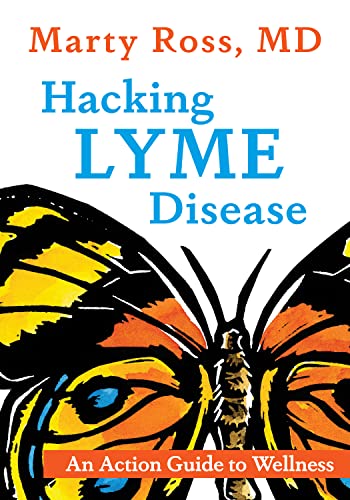
Hacking Lyme Disease Book Review

https://www.lymedisease.org/this-easy-to-read-guide-is-packed-with-useful-information/

This easy-to-read guide is packed with useful information

By Dorothy Kupcha Leland
April 25, 2023

Hacking Lyme Disease: An Action Guide to Wellness is a compilation of articles from Dr. Marty Ross’s informative website “treatlyme.net.”

It covers a wide range of topics, including what he considers the best herbal and prescription antibiotic treatments, what to do if your previous treatments have failed to get you well, and a discussion of many alternative therapies (both pro and con).

It is not a guide to treating yourself. Dr. Ross strongly advises you to discuss these matters with your Lyme-literate practitioner. But it answers a lot of questions that Lyme patients may have, including about many alternative treatments.

The Ross Lyme Support Protocol

He outlines his own treatment guidelines for chronic Lyme and related infections, which he calls The Ross Lyme Support Protocol. He says it’s designed to:

  • Boost the immune system,
  • Improve detoxification,
  • Speed recovery,
  • Kill the infections, and
  • protect and repair from the harmful effects of the infections and the herbal and prescription antibiotics.

Dr. Ross emphasizes that treating Lyme disease is complicated. “The infection triggers an immune system cytokine reaction that affects most organs and systems of the body,” he writes. “In my experience, the great majority of people can recover if they address each of the steps in The Ross Lyme Support Protocol.”

He refers to anything that kills Lyme and related infections as “antigerms.”  These herbal and prescription antigerms include:

  • Antibiotics for bacteria like Borrelia (Lyme), Bartonella, Anaplasma, Ehrlichia, and Clostridium difficile;
  • Antifungals for intestinal yeast overgrowth;
  • Antiparasitic agents for Babesia and hidden intestinal parasites, and
  • Antivirals for chronic infections like mononucleosis and human herpesvirus 6.

However, his action steps encompass much more than just trying to eliminate bacteria. He includes recommendations regarding sleep, diet, controlling inflammation, hormones, exercise, detoxification and more.

He also discusses complicating factors such as yeast infections, mold toxin illness, and mast call activation syndrome.

A unique aspect of Hacking Lyme Disease is how it incorporates information from LymeDisease.org’s MyLymeData research project. More than 17,000 Lyme patients participate in MyLymeData, providing feedback about their treatment experiences.

Dr. Ross includes MyLymeData findings in his discussion of prescription antibiotic use as well as a wide variety of alternative medical treatments.

This easy-to-read guide is packed with lots of useful information.

TOUCHED BY LYME is written by Dorothy Kupcha Leland, President of LymeDisease.org. She is co-author of When Your Child Has Lyme Disease: A Parent’s Survival Guide. Contact her at dleland@lymedisease.org .

http://

Hacking Lyme Disease

Dr. Marty Ross

April 29, 2023

Transcript: http://lymedisease.org.au/wp-content/…

For more:

Lyme Times Open Assess For May – Lyme Awareness Month

https://www.lymedisease.org/members/lyme-times/2023-summer-lymetimes/#articles

In honor of Lyme Disease Awareness Month, the latest issue of the Lyme Times is open-access–freely available to all.

This special issue offers articles from 10 prominent Lyme-treating physicians on such topics as:
  • New treatments for chronic Lyme
  • An overview of Lyme testing
  • Lyme carditis
  • Brain inflammation
  • Lyme in young children