Archive for the ‘Lyme’ Category

Is Lyme Disease Sexually Transmitted?

https://www.bca-clinic.de/en/is-lyme-disease-sexually-transmitted/

Is Lyme Disease Sexually Transmitted?

Lyme disease is primarily transmitted by ticks; that much most people know. The link between the words ‘Lyme’ and ‘ticks’ is cemented in the public consciousness, so much so that in 2018, many will instinctively conjure images of ticks when they hear or read something concerning Lyme disease. This is certainly progress. The enigmatic disease was only discovered a mere 43 years ago, although it has been around for centuries. Since its discovery in the town of Old Lyme, Connecticut, the disease has had a hard time being taken seriously, or at least being considered as the debilitating threat it undoubtedly is. Now that Lyme is finally becoming more visible in the mainstream medical community, patients and doctors alike are looking at ways it can be transmitted. One of the areas up for discussion is the possibility of sexual transmission.

Many severe and extreme conditions can be transmitted sexually, and everyone is aware of the dangers of prominent STDs like AIDS, HIV, syphilis, gonorrhoea and herpes. But could Lyme disease also join the line-up of threats? It was previously thought that any type of human-to-human Lyme transmission was impossible, and only specific types of tick could spread the disease. Borrelia burgdorferi is the bacteria responsible for causing Lyme; it’s carried by deer ticks in North America, and sheep ticks in Europe. It is estimated that as many as one in three ticks are contaminated with Borrelia, making the likelihood of catching Lyme in tick-populated areas quite high. Many people dismiss Lyme disease as they believe it’s easy to tell if you’ve been bitten by a tick or not. However, it is not altogether straightforward. Ticks will often seek out sheltered or hard-to-reach places on the human body before biting, and their saliva is laced with a paralytic agent that further minimises the risk of detection.

BCA-clinic - couple
While the medical community put a lot of effort into researching, treating and attempting to cure common STDs, the research into whether Lyme disease can be sexually transmitted is very limited.

The appearance of a distinctive bullseye rash is one of the most concrete indicators of Lyme disease, although it can be quite hard to spot, and never appears in the first place in a minority of cases. This rash is accompanied by flu-like symptoms as the disease spreads in its acute stage. When these symptoms subside, the bacteria settle into the body, and the condition mutates into its chronic stage, which is notoriously hard to both diagnose and treat, and remains a point of contention between Lyme experts and other medical professionals. If the offending bacteria remains in a person’s system for many years, then it’s logical to assume that they can potentially transmit Lyme disease to their sexual partner(s) at any point during the prolonged infection. Therefore, it’s crucial to know if and how this type of transmission is possible.

According to the CDC (the Centres of Disease Control and Prevention), the case is crystal clear: their website officially states that ‘there is no credible scientific evidence that Lyme disease is spread through sexual contact’, going so far as to say that ‘the biology of the Lyme disease spirochete is not compatible with this route of exposure’. However, the CDC hasn’t got a great track history of Lyme expertise. Their position on the chronic form of Lyme is still a grey area at best, and their website also states that, in relation to the transmission of Lyme disease from mother to child during pregnancy, ‘no negative effects on the foetus have been found’. In fact, the transmission of Lyme during pregnancy is well-documented by Lyme experts and researchers, and although it’s a rare scenario, it is still possible.

BCA-clinic
The CDC say that there is no discernible evidence that Lyme disease can be sexually transmitted, experts have theorised that it is a possibility.

So how do the experts see it? Dr. Carsten Nicolaus, head of Lyme specialists BCA-clinic in Augsburg, thinks that the question is not easily answered, and although it’s a probability, the risk seems very low. He cites a study conducted by Marianne Middelveen and Dr. Ray Stricker in 2014, which confirmed the presence of Borrelia burgdorferi in the genital secretions of Lyme-positive heterosexual couples. In one case, a couple was found to secrete an identical strain of Lyme spirochete in their separate samples, strongly indicating that the bacteria can be transmitted through unprotected sex. However, the study conducted is far too small to be of any diagnostic use; although the findings are interesting and alarming, more research and studies need be conducted to produce a concrete answer.

In theory, certainly, sexual transmission of Lyme disease is possible. The corkscrew-shaped Lyme spirochete shares many traits with Treponema pallidum, the microbe that causes syphilis. The latter is well-versed in the sexual transmission pathway, and has honed the method to near perfection. Borrelia has repeatedly been shown to be both opportunistic and insidious in the way it infects and survives in its host; it follows that if the opportunity for a new method of infection arose, it would almost certainly take it. As Lyme disease becomes more visible all over the world, it is important to remember that we know startlingly little about it, in comparison to other disorders. As such, it is crucial that meticulous study and tests continue, so we can rule out certain methods of transmission, or devise new ways to fight them.

_________________

**Comment**

Although this was written 4 months ago, it still demands an answer.

Isn’t it interesting that the small 2014 study barely raised eye-brows except for in the Lyme world?  That should tell you something right away.

Authorities don’t want to know the answer to this question because first they’d have to admit stupidity & that they were wrong, and second, they’d have to do something about it….and heaven forbid either of those two things happen.

I’m quite open about the fact I believe I got this STD from my infected husband. All my initial symptoms were gynecological, it’s just I didn’t know anything about Lyme/MSIDS at the time. I went down the rabbit-hole of transmission fairly quickly in my journey due to my own case and I write about it, with tons of links to studies and experts disagreeing with the accepted narrative here: https://madisonarealymesupportgroup.com/2017/02/24/pcos-lyme-my-story/

Nothing is going to happen unless we demand it to happen. I find it highly interesting that at the first whiff of Zika being sexually transmitted, authorities followed through and it was the shot heard around the world – even though mosquitoes can’t even carry it in Wisconsin and many, many other states.

Here’s the map of places in the U.S. where the mosquitoes capable of transmitting Zika live:

skeetermap_3d30eb2906fee062c217d550899919fa.fit-560w

Here’s where the black legged tick able to transmit Borrelia burgdorferi and B. mayonii (which cause Lyme disease), Anaplasma phagocytophilum (anaplasmosis), B. miyamotoidisease (a form of relapsing fever), Ehrlichia muris eauclairensis (ehrlichiosis), Babesia microti (babesiosis), and Powassan virus (Powassan virus disease) lives:

lgmap-blacklegged_tick

Here’s where the American dog tick capable of transmittingTularemia and Rocky Mountain spotted fever lives:

CS4_Tick Basemap_v8.ai

Here’s where the brown dog tick capable of transmitting Rocky Mountain spotted fever lives:

CS4_Tick Basemap_v8.ai

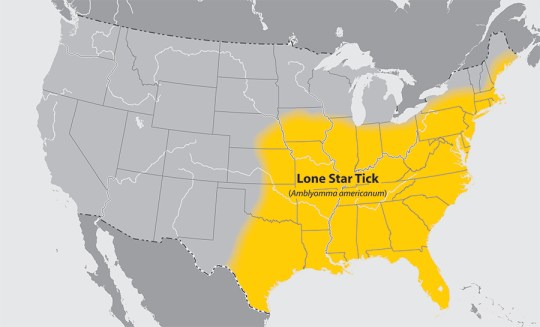
Here’s where the lone star tick capable of transmitting Ehrlichia chaffeensis and Ehrlichia ewingii(which cause human ehrlichiosis), Heartland virus, tularemia, and STARI live:
lgmap-lone_star_tick-2

Here’s where the Rocky Mountain wood tick capable of transmitting Rocky Mountain spotted fever, Colorado tick fever, and tularemia lives:

CS4_Tick Basemap_v8.ai

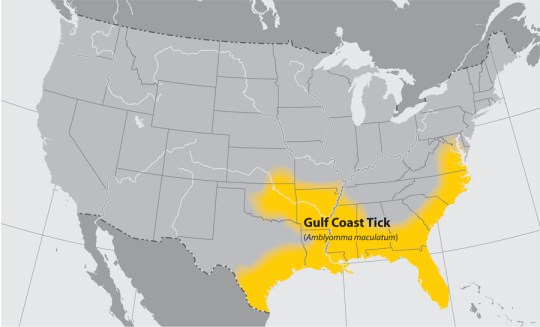
Here’s where the Gulf Coast tick capable of transmitting Rickettsia parkeri rickettsiosis, a form of spotted fever lives:
CS4_Tick Basemap_v8.ai

And lastly, where the Western black-legged tick capable of transmittingAnaplasmosis and Lyme disease lives:

CS4_Tick Basemap_v8.aiTick distribution maps found:  https://www.cdc.gov/ticks/geographic_distribution.html

In total – 7 types of ticks spreading deadly diseases in every single state in the U.S. but we know more about a tropical disease that in 80% of those who contract it have ZERO symptoms, and 1 out of 5 will have mild symptoms that last a week.  https://madisonarealymesupportgroup.com/2016/12/21/how-zika-got-the-blame/. Call me crazy, but the disparity of risk between the two diseases couldn’t be greater.

Not to mention that migrating birds are transporting ticks worldwide:

https://madisonarealymesupportgroup.com/2019/03/09/danish-study-shows-migrating-birds-are-spreading-ticks-their-pathogens-including-places-without-sustainable-tick-populations/

https://madisonarealymesupportgroup.com/2019/04/11/african-tick-found-on-untraveled-u-k-horse/

https://madisonarealymesupportgroup.com/2018/06/08/hemorrhagic-fever-virus-found-on-ticks-on-migratory-birds/

https://madisonarealymesupportgroup.com/2017/08/17/of-birds-and-ticks/

https://madisonarealymesupportgroup.com/2016/10/02/the-role-of-birds-in-tickborne-illness/

https://madisonarealymesupportgroup.com/2018/11/05/hawk-found-carrying-asian-long-horned-tick-the-one-that-drains-cattle-of-all-their-blood/

I literally could go on and on with this….

Time to focus on things that are side-lining Americans.

NY TV Reporter Tells Her Own Lyme Disease Story

https://www.lymedisease.org/new-york-tv-reporter-tells-her-own-lyme-disease-story/

New York TV reporter tells her own Lyme disease story

https://www.localsyr.com/news/local-news/living-with-lyme-newschannel-9-reporter-nicole-sommavilla-opens-up-about-her-health-journey/1914141778

4 Min News Video here of Ms. Sommavilla’s story.  

____________________

**Comment**

Again, we need to keep sharing our stories until authorities listen and change things.  Another great example of a person who NEVER saw the tick or rash.  With all the people I work with – hardly anybody does, yet they make it sound as if it’s a prerequisite.  Please know the percentages seeing the rash very from 27-80% – hardly a sure thing:  https://madisonarealymesupportgroup.com/2019/02/22/why-mainstream-lyme-msids-research-remains-in-the-dark-ages/  And in the 1st ever patient group in Lyme, Connecticut, only a quarter had the rash.

Notice how severe this case is.  I assure you there are thousands more just like this that never got the proper diagnosis.

Thank God for doctors WHO USE THEIR GOD-GIVEN BRAINS!

For a wonderful 5-part series by NBC NY on Lyme/MSIDS:

https://madisonarealymesupportgroup.com/2017/10/24/lyme-wars-part-1-julias-story/

https://madisonarealymesupportgroup.com/2017/10/25/lyme-wars-part-2-kyra-overcomes-chronic-lyme-diagnosis/

https://madisonarealymesupportgroup.com/2017/10/26/lyme-wars-part-3/

https://madisonarealymesupportgroup.com/2017/10/27/lyme-wars-part-4/

https://madisonarealymesupportgroup.com/2017/10/28/lyme-wars-part-5-coinfections/


Neuro-Lyme is Like Hitting My Head Against a Fog Wall

https://www.lymedisease.org/starling-fog-wall/

Neuro-Lyme is like hitting my head against a fog wall

April – Lyme Prevention Month for Dogs: A Pet Owner’s Guide

https://www.avma.org/public/PetCare/Pages/lyme-disease.aspx

Lyme Disease: A Pet Owner’s Guide

Rolo_Small_250w
Rolo has Lyme disease, but thanks to early diagnosis and regular veterinary care, she lives a happy, healthy life with her family.
Lyme disease (Lyme borreliosis) is an illness that affects both animals and humans – what is known as a zoonotic disease – and is the most commonly reported vector-borne illness in the United States, according to the U.S. Centers for Disease Control and Prevention (CDC). Transmitted through tick bites, the disease can be difficult to detect and can cause serious and recurring health problems. Therefore, it is best to prevent infection by taking appropriate measures to prevent tick bites and, for dogs, possibly vaccinating against the disease.

The bacterium that causes Lyme disease – a worm-like, spiral-shaped bacterium called Borrelia burgdorferi  – is carried and transmitted primarily by the tiny black-legged tick known as the deer tick. Deer ticks are found in forests or grassy, wooded, marshy areas near rivers, lakes or oceans. People or animals may be bitten by deer ticks during outdoor activities such as hiking or camping, or even while spending time in their back yards. 

Named after numerous cases were identified in Lyme, Conn., in 1975, the disease has since been reported in humans and animals across the United States and around the world. Within the U.S., it appears primarily in specific areas including the southern New England states; eastern Mid-Atlantic states; the upper Midwest, particularly Wisconsin and Minnesota; and on the West Coast, particularly northern California. The CDC maintains a map detailing confirmed cases of Lyme disease throughout the years.

Lyme disease is a reportable disease – which  means that health care providers and laboratories that diagnose cases of laboratory-confirmed Lyme disease are required to report those cases to their local or state health departments, which in turn report the cases to the CDC.

How to prevent Lyme disease

The best way to protect pets from Lyme disease is to take preventive measures to reduce the chance of contracting the disease. Even during the last weeks of summer, it’s important to remember that pets and people are at greater risk of being infected with Lyme disease and other tick-borne diseases such as anaplasmosis, ehrlichiosis, or Rocky Mountain Spotted Fever.

People with pets should:

  • Use reliable tick-preventive products. Speak with your veterinarian about what tick preventive product is right for your pet.
  • Work with your veterinarian to decide whether to vaccinate your dog against Lyme disease. Your veterinarian’s advice may depend on where you live, your pet’s lifestyle and overall health, and other factors.
  • When possible, avoid areas where ticks might be found. These include tall grasses, marshes and wooded areas.
  • Check for ticks on both yourself and your animals once indoors.
  • Clear shrubbery next to homes.
  • Keep lawns well maintained.

As noted above, there are preventive Lyme disease vaccines available for dogs, but they aren’t necessarily recommended for every dog. Consult your veterinarian to see if the vaccination makes sense for your pets. If your veterinarian does recommend that your dog be vaccinated against Lyme disease, the typical protocol will involve an initial vaccination followed by a booster 2-4 weeks later and annual boosters after that.

Lyme disease in pets – symptoms and treatment

Pets infected with Lyme disease may not show any signs for 2-5 months. After that time, typical symptoms include:

  • Fever
  • Loss of appetite
  • Lameness
  • Joint swelling
  • Decreased activity

Recurrent lameness also is possible, and the involved extremity may be tender. Inflammation of the joint can last from days to weeks, and may migrate from one extremity to another.

Horses with Lyme disease can develop lameness, joint pain, neurologic disease, eye problems and dermatitis.

Symptomatically, Lyme disease can be difficult to distinguish from anaplasmosis because the signs of the diseases are very similar, and they occur in essentially the same areas of the country. Lyme disease is diagnosed through a blood test that shows whether an animal has been exposed to the bacterium.

Antibiotics usually provide effective treatment for Lyme disease. However, it’s important to follow your veterinarian’s advice regarding follow-up care after your pet has been diagnosed with and treated for the disease.

Lyme disease is not communicable from one animal to another, except through tick bites. However, if you have more than one pet and one is diagnosed with Lyme disease, your veterinarian might recommend testing for any other pets who may have been exposed to ticks at the same time. In fact, because people and their pets often can be found together outdoors as well as indoors, a Lyme disease diagnosis in any family member – whether human or non-human – should serve as a flag that all family members might consult their physicians and veterinarians, who can advise about further evaluation or testing.

It’s a “One Health” problem

Because people and their pets often spend time in the same environments where Lyme and other disease-transmitting ticks are found, the American Veterinary Medical Association (AVMA) and the American Academy of Pediatrics (AAP) are working together to offer advice to households with both children and pets. People who have been diagnosed with Lyme disease should consult their veterinarian to determine their pet’s risk based on the animal’s lifestyle and possible environmental exposures. Likewise, people whose animals have been diagnosed with Lyme disease may want to consult their physician about their own or their children’s risk if they have concerns that the animals and family members might have been exposed to similar environmental risks.
Thousands of cases of Lyme disease have been reported in humans and animals across the United States and around the world. By knowing about Lyme disease and how to prevent it, you can help keep all members of your family — human and animal — safe.

Lyme disease in people

In humans, often the earliest indication of infection is a “bullseye” rash at the site of the tick bite – so named because it resembles a target. As the infection develops, symptoms include fever, headache, fatigue, and muscle and joint pain. The disease can progress to cause chronic joint problems as well as heart and neurological problems. As with pets, Lyme disease is not contagious from one person to another.

There are many things people can do to avoid exposure to tick bites. These include:
  • Avoid areas where ticks are found
  • Cover arms, legs, head and feet when outdoors
  • Wearilight-colored clothing
  • Use insecticides
  • Checking for ticks once indoors.

The American Academy of Pediatrics has more information about Lyme disease in people.

Related information

More from other sources

_________________________
**Comment**
  1. Our dog’s case of Lyme disease was picked up on a yearly routine test. He was fine and didn’t show any signs of infection. Our vet insisted that he be treated with over a month’s worth of antibiotics. Meanwhile, my husband spiraled down the vortex of doom for years. No blood test would pick it up. He tested negative on the two-tiered CDC testing. Thankfully, a wise “out of the box” doctor tested him for inflammation which was off the charts high. She said, “The CDC says you don’t have Lyme, I say you do,” and she treated him with two antibiotics – of which he improved immediately. Shortly after, I developed symptoms but also tested negative with CDC testing. By this time, I contacted a Lyme support group and became educated on the polarization within the medical community and had the list of WI LLMD’s in hand. We’ve been in and out of treatment ever since, having spent over $150K out of pocket, but have our lives back.
  2. Throw the CDC maps in the garbage.  This is a pandemic and in every continent but the Antarctica.
  3. Far fewer are getting the EM rash than is touted:  https://madisonarealymesupportgroup.com/2019/02/21/lyme-disease-dont-wait-for-blood-tests-where-patients-have-bullseye-rash/ (read comment as well)
  4. Read up on the Lyme vaccine.  It caused Lyme-like symptoms in people and it’s done that to animals as well: https://www.dogsnaturallymagazine.com/lyme-vaccine-dogs/
  5. While authorities keep saying this can’t be transmitted person to person, Lida Mattman PhD has gone on record saying something entirely different and she studied spirochetes for decades: https://madisonarealymesupportgroup.com/2019/04/02/transmission-of-lyme-disease-lida-mattman-phd/
  6. There’s more than Lyme to worry about:  https://madisonarealymesupportgroup.com/2018/10/30/study-shows-lyme-msids-patients-infected-with-many-pathogens-and-explains-why-we-are-so-sick/
  7. For more on prevention:   https://madisonarealymesupportgroup.com/2019/04/12/tick-prevention-2019/

WLN Newsletter – April, 2019

At_a_Glance_Newsletter_4-16-19

Highlights

  • Recap of March WLN Lyme Workshop held in La Crosse. Over 60 from across the state attended!
  • Great article by WLN president Sherry Sievewright on  the importance of addressing microbes in Lyme/MSIDS treatment.
  • WI Lyme Walk for 2019 tabled.
  • Permethrin Pretreated Socks for sale to raise funds for WI doctor education.
  • Upcoming Lyme Awareness Event in Madison:

Mark Jason Lim