Archive for the ‘Lyme’ Category

Cats Carry All Types of Ticks & Tick-Borne Diseases

https://danielcameronmd.com/cats-carry-types-ticks-tick-borne-diseases/

CATS CARRY ALL TYPES OF TICKS AND TICK-BORNE DISEASES
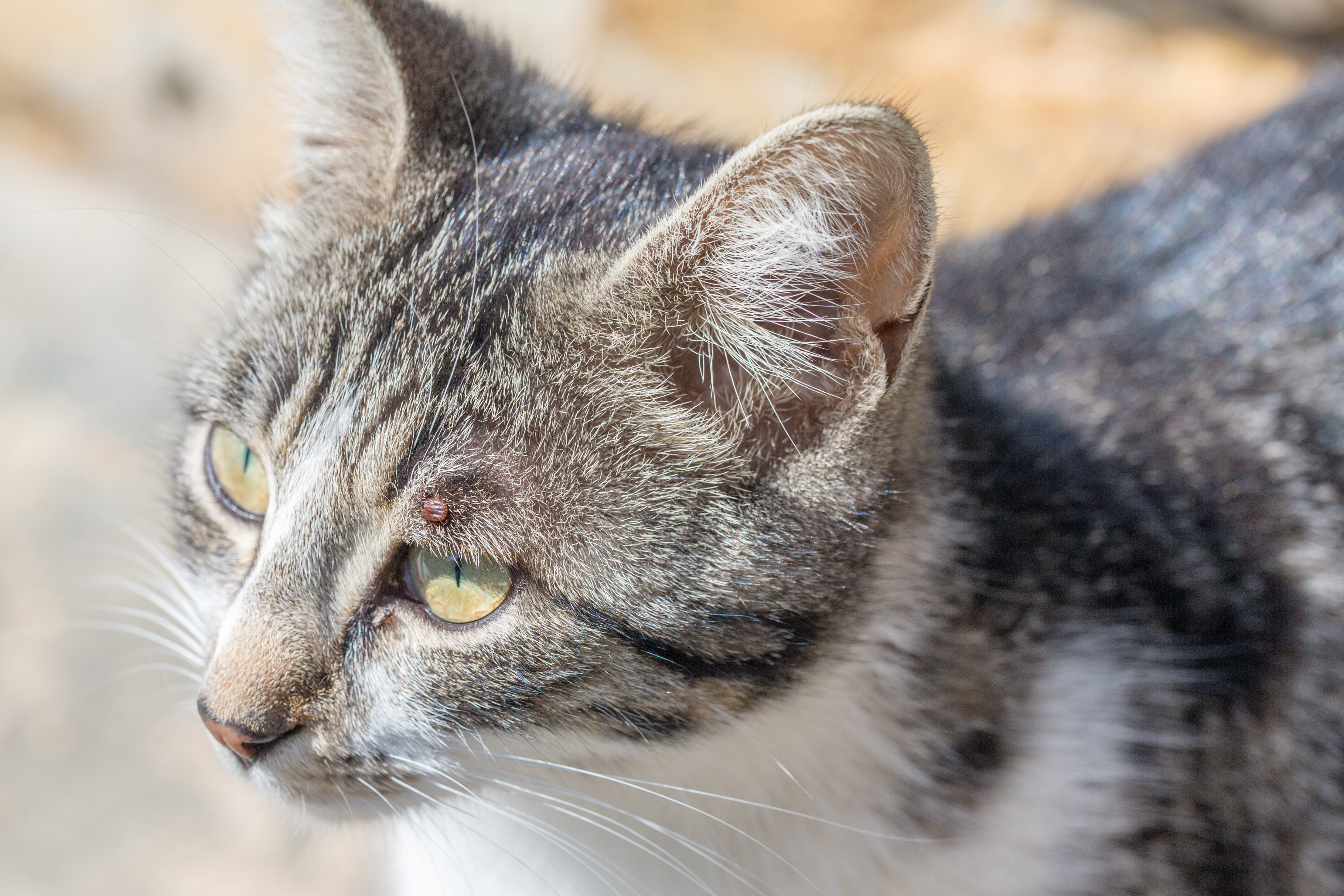
Did you know the cat you may be cuddling with on your couch every evening could be infected with a host of tick-borne diseases? Unlike our canine friends, cats are typically not symptomatic when it comes to such diseases. But as researchers have found, that doesn’t mean they are free from disease.

Updated: April 22, 2019

In a study by Shannon and colleagues, 160 ticks and blood samples were collected from 70 healthy cats brought to the Mid Atlantic Cat Hospital in Queenstown, Maryland. [1]

The authors found that the cats were carrying 3 species of ticks including 83 Lone Star ticks (Amblyomma americanum), 7 American dog ticks (Dermacentor variabilis) and 70 black-legged ticks (Ixodes scapularis.)

Out of the 160 ticks, 22 (13.8%) tested positive by PCR for Bartonella spp., Borrelia burgdorferi, or Borrelia miyamotoi. However, only 25 of the 70 cats were able to be fully tested.

Nine of those cats (36%) were positive for exposure to at least one of the following tick-borne pathogens: Borrelia burgdorferi, Ehrlichia ewingii, Anaplasma phagocytophilum, Borrelia miyamotoi, Bartonella clarridgeiae and Bartonella henselae.

“We also found at least one cat blood sample to test positive for antibodies to each of the four tick-borne agents we screened for,” the authors state.

According to the authors’ review of the literature, the risk to pet owners is unclear. “Pet ownership has been implicated in vector-borne pathogen transmission and has been identified as a potential risk factor for such diseases in some studies, but not others.”

Nevertheless, screening for ticks may prove helpful, providing advanced warning of disease risk to humans “upon recognition of an uncommon or unexpected pathogen in a pet or pet-derived parasite,” Shannon concludes.

Author’s note: Keeping your cat indoors can prevent it from picking up ticks that could be passed onto you or other family members. 

References:
  1. Shannon AB, Rucinsky R, Gaff HD, Brinkerhoff RJ. Borrelia miyamotoi, Other Vector-Borne Agents in Cat Blood and Ticks in Eastern Maryland. EcoHealth. 2017.

___________________

**Comment**

For some reason many people believe cats are immune to tick bites.  This article clearly shows this to be a fallacy.  Besides being bitten by ticks and infected with the pathogens within them, cats are known for carrying and transmitting Bartonella:

https://madisonarealymesupportgroup.com/2019/05/28/woman-wakes-up-with-black-eye-swollen-face-after-cat-scratch-that-left-her-on-iv-drip-for-four-days/

https://madisonarealymesupportgroup.com/2019/06/28/cat-scratch-disease-vet-suffers-extreme-fatigue-for-a-decade-after-catching-rare-severe-case-of-bartonella-infection-that-isnt-rare/

https://madisonarealymesupportgroup.com/2019/03/24/cat-scratch-disease-caused-teens-schizophrenia-like-symptoms-report-says/

As you can see from these links, Bartonella is far more than swollen lymph nodes, and many do not even present with that symptom at all.  If you suspect Bartonella, please print and fill out this questionnaire:  https://madisonarealymesupportgroup.com/2011/09/25/the-bartonella-checklist-copyrighted-2011-james-schaller-md-version-11/  If you have a preponderance of symptoms, take this to your doctor and discuss it.  For Bartonella treatments see:  https://madisonarealymesupportgroup.com/category/bartonella-treatment/

In my experience, not only do many Lyme patients also have Bartonella, it is often harder to resolve than Lyme.  Testing for these coinfections is just as abysmal as Lyme testing is so knowing symptoms is a must for a clinical diagnosis as many will never test positive.  This website is full of patients who had Bartonella who were negative on testing.

Letter to NIAID Requesting Answers to the Growing Lyme disease Problem

Letter-to-NIAID-on-Lyme-Disease-12.19.19

This letter, written by U.S. Senators to Anthony S. Fauci, M.D., the director of the National Institute of Allergy and Infectious Disease (NIAID), demands answers to a number of questions regarding Lyme disease including:

  • What research is NIAID doing to better understand the diagnosis, treatment, and transmission  of Lyme disease?


  • What is NIAID’s understanding of patient experiences with post-treatment Lyme disease syndrome or chronic Lyme and what research are they conducting to better understand the progression of these symptoms and how to treat them?


  • What specific actions, if any, is NIAID taking to expand the pool of researchers interested in studying Lyme disease?


  • Does NIAID support the creation of clinical research “Centers of Excellence” as exist for other disease types?
Other questions are listed as well and the letter is signed by 7 senators.

Lyme Pseudothrombophlebitis in a Young Child

https://danielcameronmd.com/lyme-pseudothrombophlebitis-in-a-young-child/

LYME PSEUDOTHROMBOPHLEBITIS IN A YOUNG CHILD

boy, child, sitting, alone

This case report, featuring an 8-year-old boy, illustrates, once again, the unusual presentation that can occur with Lyme disease. [1] The child was admitted to the emergency department at Jefferson University Hospital in Philadelphia with swelling and pain in his knee and calf.

The pain had been ongoing for one week. “He described the pain as throbbing, worse with movement, and improved with rest,” writes Sandelich and colleagues.  Three days earlier, the boy had visited a different emergency department and was diagnosed with a muscle sprain following results from an X-ray.

The boy’s pain, however, continued, and an ultrasound of the lower extremity was obtained. It revealed “a 13 x 6 x 2.7-cm heterogeneous mass with solid and cystic components in the left calf,” writes Sandelich.

An MRI revealed several findings that were consistent with a large collection in the left gastrocnemius muscle with surrounding myositis involving the gastrocnemius muscle.

A Lyme Western blot test was positive, and the child was diagnosed with Lyme pseudothrombophlebitis. He was treated successfully with intravenous cefazolin, followed by 4 weeks of amoxicillin.

“A known complication of a ruptured popliteal cyst (fluid collection behind the knee) is a pseudothrombophlebitis,” explains Sandelich. A popliteal cyst, also known as a Baker’s cyst, has been reported in Lyme disease.

The authors caution, “The clinical presentation in this case is similar to that of a DVT [deep venous thrombosis), and obtaining an ultrasound of the deep leg veins is imperative.”

References:
  1. Sandelich S, DePiero A. An Interesting Presentation of Lyme Pseudothrombophlebitis. Pediatr Emerg Care. 2019.

__________________

**Comment**

I find it interesting that when I search popliteal cyst, Lyme disease is not mentioned. Most doctors are not going to even think about it, yet swollen knees are a hallmark symptom with Lyme and in fact was one of my first symptoms along with a fever.  I take issue with the statement that it is an “unusual” presentation.  In my experience it is very common – particularly in children.

I often wonder what would have happened if my case was caught at this stage.  I imagine I would have fared much better.  Unfortunately, like so many, I was left to languish for months (some languish for years) before the infection became widely systemic and much harder to treat. Telling patients to “wait and see” is dooming them to often life-long suffering when early treatment could have set them right.

My doctor told me I had “washer woman’s knee” from scrubbing the floor, despite standing and using a mop!
You can’t make this stuff up.


Lyme Mind Podcast: Dr. Leigner & Dr. Horowitz

https://lymeninjaradio.com/2019/12/07/255-leigner-horowitz/?

#255: Lyme Mind 2019 – Drs. Leigner & Horowitz

In this episode you will learn three main things:

  1. How Disulfuram is being used to treat Lyme Disease.
  2. Why Dr. Richard Horowitz is combining Dapsone and Disulfuram.
  3. How these treatments have lead to long term Lyme remission.

Kenneth Leigner, MD

Dr. Leigner practices in Pawling, New York, and has been actively involved in diagnosis and treatment of Lyme disease and related disorders since 1988. His work has focused on the serious morbidity and (occasional) mortality that can comes from chronic and neurological Lyme Disease.

Richard Horowitz:

Dr. Horowitz, the best-selling author of “Why Can’t I Get Better? Solving the Mystery of Lyme and Chronic Disease,” has presented at numerous scientific conferences on Lyme Disease and the role of co-infections and toxins in Lyme Borreliosis.

___________________

For more:  https://madisonarealymesupportgroup.com/2016/10/09/mycobacterium-drugs-for-ld/

https://madisonarealymesupportgroup.com/2019/06/03/disulfiram-in-the-treatment-of-lyme-babesiosis-3-case-reports/

https://madisonarealymesupportgroup.com/2019/07/14/disulfiram-breakthrough-drug-for-lyme-other-tick-borne-diseases/

https://madisonarealymesupportgroup.com/2019/07/26/is-disulfiram-the-magic-bullet-for-chronic-lyme-disease/

https://madisonarealymesupportgroup.com/2019/10/15/disulfiram-psychosis-update/

https://madisonarealymesupportgroup.com/2019/10/27/disulfiram-psychosis-update-2/

https://madisonarealymesupportgroup.com/2019/09/18/dr-liegner-interview-on-disulfiram/

https://madisonarealymesupportgroup.com/2019/12/27/an-old-drug-for-alcoholism-finds-new-life-as-cancer-treatment/


Practice Guidelines For the Psychiatric Evaluation of Adults, 3rd Edition

https://psychiatryonline.org/doi/10.1176/appi.books.9780890426760.pe02

Practice Guidelines for the Psychiatric Evaluation of Adults, Third Edition

Statement 4. APA suggests (2C) that the initial psychiatric evaluation of a patient also include assessment of the following:

  • Height, weight, and body mass index (BMI)

  • Vital signs

  • Skin, including any stigmata of trauma, self-injury, or drug use

  • Cardiopulmonary status

  • Past or current endocrinological disease

  • Past or current infectious disease, including sexually transmitted diseases, HIV, tuberculosis, hepatitis C, and locally endemic infectious diseases such as Lyme disease

  • Past or current neurological or neurocognitive disorders or symptoms

  • Past or current symptoms or conditions associated with significant pain and discomfort

___________________

**Comment**

https://madisonarealymesupportgroup.com/2019/12/31/psychiatric-disorders-are-infectious-agents-to-blame/

Excerpt:

Microorganisms capable of his latency include a diverse range of taxa including viruses such as the herpesviruses herpes simplex virus types 1 and 2, cytomegalovirus, and Epstein Barr virus as well as retroviruses such as human immunodeficiency virus, measles virus, bacteria such as Chlamydiae and Borreliae, and protozoa such as Toxoplasma gondii…(See link for article)

They should have also included Bartonella as it has caused a host of psychiatric issues:  https://madisonarealymesupportgroup.com/2019/03/24/cat-scratch-disease-caused-teens-schizophrenia-like-symptoms-report-says/

Excerpt:

Various strains have been found in eye fluid, the heart (myocarditis and endocarditis), and cysts, and can infect by nearly anything puncturing the skin and exchanging bodily fluids – including needles. Evidence also suggests congenital transmission.

Symptoms are largely associated with where the blood flow is compromised. The reason many have pain in the soles of their feet is due to inflammation caused by microvascular trauma. It has been known to cause cysts around dental roots leading to chronic and hard to diagnose head and face pain as well as root canals. This microvascular trauma is also to blame for brain issues causing psychological issues such as anxiety, anger, and suicidal thoughts, since the small vessel disease affects executive function. A cog is literally caught in the wheel. As neurotransmitters become depleted due to overstimulation, depression rears its ugly head. A vicious cycle ensues.

https://madisonarealymesupportgroup.com/2019/12/21/high-level-of-psychiatric-disorders-found-in-individuals-with-chronic-pain/

https://madisonarealymesupportgroup.com/2015/10/18/psychiatric-lymemsids/  Most doctors are oblivious to the mental issues that can arise from tick-borne illnesses.

Excerpt:

One-third of psychiatric inpatients showed signs of a Borrelia infectionaccording to Holdorf Medical Group based on a 2002 published study in the Journal of Psychiatry. The severest behavioral symptoms were reversed or improved with proper treatment, but not psychiatric medications alone.

Some of these symptoms include but are not limited to:

Memory impairment or loss (“brain fog”)
Dyslexia and word-finding problems
Visual/spatial processing impairment (trouble finding things, getting lost)
Slowed processing of information
Psychosis
Seizures
Violent behavior, irritability
Rage attacks/impulse dyscontrol
Anxiety
Depression
Panic attacks
Rapid mood swings that may mimic bipolarity (mania/depression)
Obsessive compulsive disorder (OCD)
Sleep Disorders
Attention deficit/hyperactivity disorder
(ADD/ADHD)-like syndrome
Autism-like syndrome
Crying spells