Archive for the ‘Lyme’ Category

How Ticks Ambush & Give You Lyme/MSIDS

https://www.lymedisease.org/ticks-ambush-lyme-disease-healy/

Precisely how do ticks ambush you–and give you Lyme disease?

John Eoin Healy, PhD, now retired from University College Cork, Ireland, has been researching tick biology for over 40 years. In the following article and video, he explains how questing ticks make contact with unsuspecting people and animals.

by John Eoin Healy, PhD

Various estimates indicate that up to 60% of people who contract Lyme borreliosis (Lyme disease) have no recollection of being bitten by a tick.

For those concerned about Lyme disease risk, it may be useful to explain how ticks make contact with and attach to host animals i.e. birds and mammals, including unfortunate humans.

The species of tick that transmits the Borrelia bacteria that cause Lyme disease are Ixodes ricinus in Europe, and Ixodes scapularis and Ixodes pacificus in North America. These ticks thrive in areas with woodland or heavy vegetation which provide the cool moist conditions that these ticks need to survive.

Their second vital requirement is a sufficient number of host animals (deer, cattle, sheep, goats, small mammals and birds) to ensure that ticks have hosts on which they can feed (that is, suck blood) and then reproduce. Increasing numbers of host animals such as deer will accelerate the growth of tick populations.

Ticks have limited mobility

At the risk of stating the obvious, ticks are wingless and therefore cannot fly. Neither can they run or jump. The species of tick that transmit the Borrelia bacteria that cause Lyme disease move very little laterally on the ground, that is, in the horizontal plane.

When a blood-fed larva (the first active life stage) drops from the skin of a bird or mammal, it moves directly downwards with the prospect of finding humid vegetation. There, it undergoes digestion and it moults into the next active life stage, the nymph.

If the larva happens to drop from its host onto a dry path or other unsuitable terrain, then it will most likely desiccate and die.

In the event of success, the emerged nymph will begin to seek a host. It does this by climbing vertically on whatever vegetation happens to be in the immediate vicinity.

Ticks don’t choose their location

Sometimes one may hear someone say, “Long grass is the only place you will find ticks” or, “Stay away from ferns – always ticks there” or some such warning, as if ticks choose the vegetation that they will climb. Ticks have no say in the matter – they simply climb whatever vegetational structure is available to them at the location that the previous life stage dropped from its host.

The behaviour and movements of host bird and mammal species dictate where ticks are deposited. So, a blood-fed larva will give rise to an emerging nymph, and a blood-fed nymph will produce an adult male or female. And of course, a blood-fed female will produce up to 2,000 eggs from which larvae will hatch.

I have conducted mass releases of paint-marked adult ticks in a prepared “arena” in a woodland clearing and then observed what happened. I found that the vast majority of individual ticks moved less than 2 metres from their release point, although a small number managed to travel 4 to 5 metres within 4 days.

The most interesting finding was that the majority of ticks somehow managed to locate vertical vegetation to climb within a short radius from the point of release.

Ticks have a finite fuel supply

Ticks waiting for a host to appear.

Ticks limit their horizontal movement for a very good reason – an economic one. A blood-fed larva that drops from a host has a finite energy supply of fat. Think of it as a full fuel tank. The more a tick moves, the more fuel it burns.

If it runs out of fuel before making contact with a host, then life ends for that particular tick. So, ticks have evolved a strategy to conserve their energy supplies by minimizing their movement. They climb vertically and wait … and wait … and wait.

Usually, they will position themselves at or close to the tip of a structure, whether it be a leaf, twig, bracken, grass or rush stem. Ticks can be found on vegetation from a few centimetres to almost 2 metres above ground level. When no hosts are nearby, ticks can assume a resting or “quiescent” position with front legs folded.

In the event of ticks becoming dehydrated, they will move downward into the moist vegetation mat to replenish their bodily water content, before climbing vertically once more.

Ambushing a host

Image shows a nymph and an adult female questing – front legs extended and raised. Another female is in the quiescent pose.

Ticks can detect the presence of a potential host by temperature, carbon dioxide and by various odours released from the skin of the host. Each of the front pair of legs has a specialised organ which is loaded with sensory cells for this purpose.

Once a tick detects the presence of a host animal, its behaviour changes. It will begin to move and adopt what is termed the “questing” pose.

A questing tick waves its front legs about as its scans the local atmosphere. It is most likely that it has the capability to determine the direction and distance from the approaching host although this has not been proven.

In a video clip which I shot in an infested woodland location, you can see how easily an adult female tick latches onto my finger.

The tick was initially in a quiescent position (saving energy) until I began to move my hand close to the rush stem on which it sat. Sensing my hand, and therefore a possible blood meal, it begins to quest as the video shows.

Note the ambushing strategy that this species has evolved – it doesn’t hunt its victim, it waits for the victim to pass close by. The smaller nymph behaves in exactly the same way.

I focused on an adult female for this video rather than a nymph simply because its size made it easier to capture on camera.

The video shows how easy it is for a tick to “jump on board” a passing human. The slightest brush of a hand, arm or leg against infested vegetation is all that is necessary.

Of course, ticks will also cling onto clothing and burrow through to the skin where they will penetrate and begin to suck blood. Bare wrists, arms and legs are the most vulnerable body parts so there is very good reason to use an appropriate tick repellent on these areas.

Light-coloured clothing makes visual detection of ticks much easier. And it is very important that clothing should be of a close weave as ticks will find this much more difficult to penetrate. I would also recommend that socks and walking boots/shoes be sprayed with repellent.

A note on adult and nymph ticks

The Ixodes ticks species that transmit Lyme disease have three active life stages – larva, nymph and adult. The general view among Lyme/tick specialists is that larvae carry very little Borrelia and so present a minimal risk to humans. Adult male ticks do not feed and so cannot transmit bacteria.

Nymphs pose the real threat. An unfed nymph is approximately 1.5 mm in size and weighs around 0.2 mg. In contrast, an unfed adult female can be 3.5 mm in length and 2 mg in weight – 10 times the weight of a nymph.

A person is much more likely to see and feel an adult tick on the skin than detect the smaller nymph. And once a tick has attached and has begun to suck blood, the smaller nymph may remain undetected for long enough to pass Borrelia into the unsuspecting victim. And of course, the small physical size and weight of the nymph explains why so many Lyme disease victims cannot recollect being bitten by a tick.

Dr. Healy’s expertise lies in the area of tick ecology, genetics, behavior and Borrelia infection rates. He has published in all of these fields. Click here for a list of his publications.

_________________

**Comment**

While ticks can’t fly, they can blow in the wind.  I’ve seen it.

Also, ticks can transmit 19 pathogens and counting – far more than just Lyme.

And minimum attachment time has never been determined which means nobody has a clue how little of time it takes for a tick to transmit diseases to you.  Treat each tick bite as seriously as a heart attack.
UW-Stevens Point Researchers Use DNA to Link Lyme Disease, Infected Ticks

https://www.uwsp.edu/news/uptick-uwsp-researchers-use-dna-to-link-lyme-disease-infected-ticks/

Uptick: UWSP researchers use DNA to link Lyme disease, infected ticks

May 26, 2022
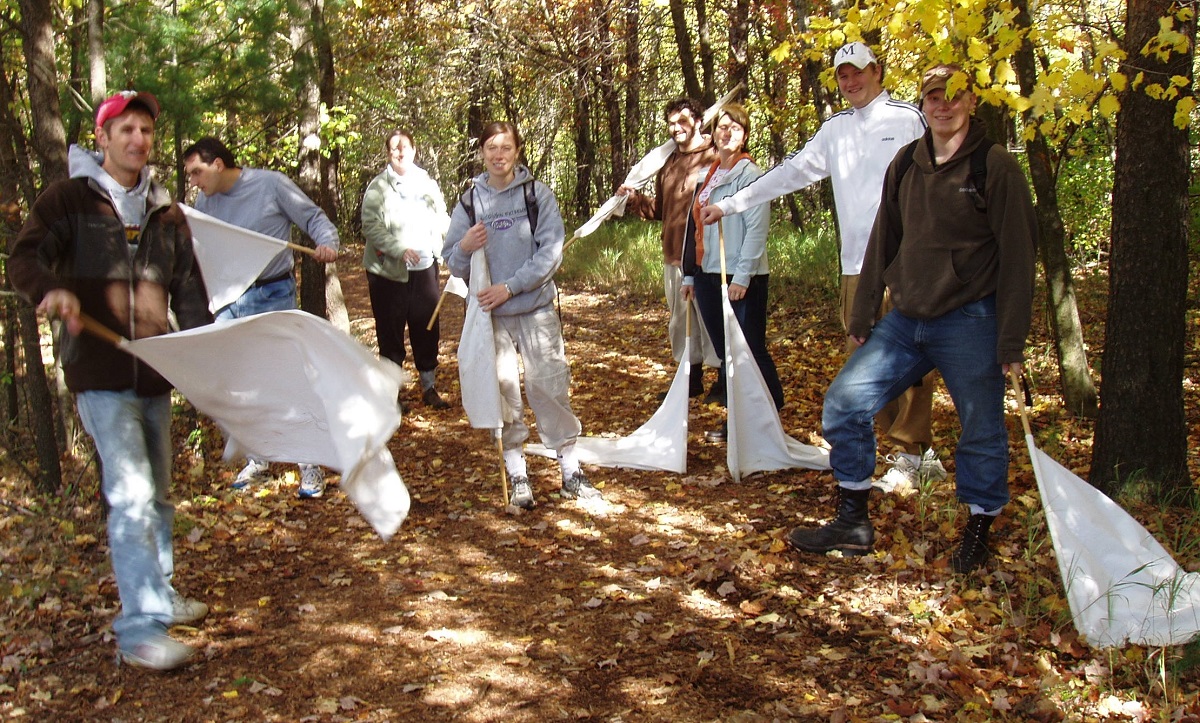
Molecular biology students use white flags to collect deer ticks for research on pathogens they carry.

Diane Caporale has collected thousands of ticks during her career as a biology professor and researcher. Since moving to Wisconsin 1999, she has had help. Nearly 500 students in her molecular biology courses at UW-Stevens Point have collected ticks each year from 2000-2020.

Tick surveillance is useful for predicting human disease risk. What’s especially significant about Caporale’s research is its duration. This is the first continuous surveillance of tick-borne pathogens for two decades in the nation. “It’s been quite an enormous, exciting project,” she said.

“It was started in 2000 — before I was born — so it’s kind of crazy the amount of time this has been going on,” said Cody Korth, a student researcher in her lab.

Caporale first began collecting ticks in the Northeast, where she grew up.

When she was asked to develop a molecular biology course at UW-Stevens Point, it was an opportunity to broaden her research into tick-borne diseases. During the first week of October each year since 2000, her molecular biology students collect blacklegged ticks (Ixodes scapularis). It gives students the opportunity to use DNA as a tool to forecast the incidence of disease.

Blacklegged (or deer) ticks carry three pathogens that can cause human disease. Caporale’s students analyzed all three: Borrelia burgdorferi, the bacterium responsible for Lyme disease; Anaplasma phagocytophilum, a bacterium that causes Anaplasmosis; and Babesia microti, a protozoan that causes Babesiosis. The latter presents with malaria-like symptoms, while the others have flu-like symptoms.

Caporale and her students conducted research in what is known as a microgeographic region that is also convenient to campus: the Schmeeckle Reserve trail around Lake Joanis. They use white flannel flags to collect the ticks – a total of 2,008 in 21 years.

The students extracted DNA and analyzed it for the presence of three pathogens that cause human diseases, then sequenced the DNA to learn what percentage of ticks were infected with one, two or all three pathogens, said McKenzi Fernholz, who took molecular biology in 2019.

Cody Korth and McKenzi Fernholz are student researchers in Biology Professor Diane Caporale’s lab at UW-Stevens Point, analyzing 20 years of data on ticks.

They found each pathogen became more prevalent over time. In 2000, Borrelia burgdorferi, which causes Lyme disease, was found in just the northwest segment of the trail. Seven years later, it reached detectable levels around the perimeter of the lake. The number of ticks with Borrelia peaked in 2015, which was also a year when a high number of ticks were infected with more than one pathogen.

Anaplasma was first detected in 2004 in the southeast segment. It reached detectable levels all around the lake within four years. Babesia was first detected in 2007 in the southwest region. It took eight years to reach detectable levels around the lake.

The highest number of infected ticks – 56%  — was recorded in 2014.

An increase in the number of infected ticks in one year was related to an increase in tick-borne illness, notably Lyme disease, the following year, Korth said. The students compared their data with human disease statistics from Portage County and state public health units.

“If it’s increasing here, it’s increasing elsewhere,” said Caporale, who has also researched ticks in the Kettle Moraine area, Colfax and Whitewater. Overall, cases of Lyme disease oscillate, she said.

Caporale’s students also monitored rainfall each June, average winter temperature in December through February and snow depth for conditions that favor ticks. More eggs hatched when rainfall was higher the prior year, and more snow increased the chance of winter survival, Caporale said.

Tick numbers around Lake Joanis dropped significantly in 2017. That summer, strong winds downed numerous trees on the north end of the trail. When trees were removed, so was refuge for white-footed mice, the main reservoir for these pathogens. Also, invasive buckthorn – a preferred vegetation for ticks – was removed or treated with herbicide. In fall 2021 no ticks were found along the lake trail where extensive restoration occurred. Students did find ticks around the Schmeeckle Reserve Visitor Center carrying Borrelia and Anaplasma.

As independent study researchers in Caporale’s lab, Fernholz and Korth analyzed all the sequenced DNA data collected over the 21 years and determined trends in tick infection rates. They developed graphs and charts to display the results and presented them at the College of Letters and Science research symposium earlier this month. The results will be submitted for publication this summer.

It’s interesting to observe the correlation between infection rates in ticks and humans, Korth said, which means that tick surveillance may be able to predict Lyme disease trends in the following year. “It’s worth the time to take the samples every year because when we compared our tick infection rates to the cases of Lyme disease in humans in Portage County, we saw a one-year difference consistently with pathogen emergence.”

Korth, a biochemistry major from Marshfield, enjoys doing research independently in the lab and said it’s helped him develop critical thinking and problem-solving skills outside of the classroom. “Research is why I came to UW-Stevens Point. I was pleased with how easy it was to get involved.”

​Doing undergraduate research with Caporale helped Fernholz, of West Salem, realize she wants to pursue a career in research. “It allowed me to get a sense of what a career in molecular biology research would be like.” A biochemistry and Spanish major, she graduated in May.

Helping students learn research techniques and be inspired to pursue research careers is a proud legacy for Caporale, who will retire in August.

For more:

Birds vs. Rodents in Transmitting Tick-Borne Pathogens

https://danielcameronmd.com/birds-rodents-transmitting-tick-borne-pathogens/

Birds vs. rodents in transmitting tick-borne pathogens

birds-tick-borne-pathogens

While white-footed mice are considered to be the primary reservoir for tick-borne pathogens, the role of birds as hosts in transmitting such infectious agents is not fully understood. A new study examines the transmission patterns in Canada between the two groups.

In their study, “Transmission patterns of tick-borne pathogens among birds and rodents in a forested park in southeastern Canada,” Dumas et al. “investigated and compared the role of breeding birds to rodents in local transmission dynamics of B. burgdorferi s.s., A. phagocytophilum and B. miyamotoi, which are emerging pathogens in southeastern Canada.”¹

Researchers collected ticks and rodents from the Mont Saint-Bruno National Park in Quebec, an area endemic for Lyme disease. They aimed to identify:

  • Distribution of tick-borne pathogens B. burgdorferi, B. miyamotoi, and A. phagocytophylum in ticks and tick hosts;
  • Evaluate the contribution of birds as hosts to B. burgdorferi transmission compared with white-footed mice;
  • Determine risk factors for tick infestation and B. burgdorferi infectivity among hosts.

They collected 25,150 larvae, 4,177 nymphs and 232 adult blacklegged ticks.  And trapped 665 mice, 13 Eastern chipmunks, 15 Northern short-tailed shrew and one Red-backed vole.

The team found 470 (70.68%) mice, 12 (92.31%) chipmunks and 2 (13.33%) shrews infested with at least one tick. Ticks were not found on the only vole captured. Ticks collected from these small mammals were predominantly attached to the ears.

Approximately 70% of mice and 92% of chipmunks were infested with at least one tick, compared with 29% of captured birds.

Additionally, 849 birds belonging to 50 different species were captured. Researchers found ticks on 28.86% of the birds, “with the majority of these ticks removed from members of the Passerellidae (37.41%), Turdidae (31.11%) and Parulidae (17.04%) families,” writes Dumas.

How many hosts were infected with tick-borne pathogens?

When reviewing tick-borne pathogens detected in hosts tissue, the authors found 33.92% of mice were positive for B. burgdorferi, 0.48% for B. miyamotoi and none for A. phagocytophilum.

Meanwhile, 84.62% of chipmunks were positive for B. burgdorferi, 15.38% for B. miyamotoi and 7.69% for A. phagocytophilum.

“Pathogens were not detected in any of the bird biopsies (n = 262),” the authors point out. However, birds may not be infected but they are responsible for carrying the ticks to new areas.  They also supply a much needed meal for the ticks.

“Our results support the relevance of considering the role of hosts other than the white-footed mouse in eco-epidemiological studies of tick-borne diseases,” the authors suggest.

References:
  1. Dumas A, Bouchard C, Dibernardo A, et al. Transmission patterns of tick-borne pathogens among birds and rodents in a forested park in southeastern Canada. PLoS One. 2022;17(4):e0266527. Published 2022 Apr 7. doi:10.1371/journal.pone.0266527

For more:

For far too long, the white-footed mouse has been given too much credit for the spread of ticks and TBIs.  Many do not know that reptiles are also reservoirs.  And birds can travel great distances dropping ticks along the way that are from other parts of the globe.

Study Finds Strong Evidence of Increased Risk of Myocarditis & Pericarditis in the Week Following COVID Shot in Both Males & Females

**UPDATE**

Despite the ongoing evidence of COVID shots causing blood clotting and heart issues, the CDC recently released 148 REDACTED pages on the topic.

It should come as no surprise, therefore, that there is now an obvious concern about receiving a blood transfusion using COVID ‘vaccinated’ blood.  This article based on a Twitter post relays an important patient case of a COVID ‘vaxxed’ blood transfusion causing blood clotting and pericarditis. Similarly to the redacted pages and blind refusal to admit the gene therapy injections are causing widespread blood and heart problems, researchers are carefully toeing the narrative by stooping so low as to compare the potential for life-altering health issues to a historical example of denying blood based upon race (the old race card).  There is quite a difference between the two when you consider the potential life-altering damage from COVID ‘vaxxed’ blood. It’s simply easier to call it all ‘misinformation.’

You be the judge.

https://www.nature.com/articles/s41467-022-31401-5

Open Access

Published:

Age and sex-specific risks of myocarditis and pericarditis following Covid-19 messenger RNA vaccines

Stéphane Le Vu, Marion Bertrand, Marie-Joelle Jabagi, Jérémie Botton, Jérôme Drouin, Bérangère Baricault, Alain Weill, Rosemary Dray-Spira & Mahmoud Zureik

Abstract

Cases of myocarditis and pericarditis have been reported following the receipt of Covid-19 mRNA vaccines. As vaccination campaigns are still to be extended, we aimed to provide a comprehensive assessment of the association, by vaccine and across sex and age groups. Using nationwide hospital discharge and vaccine data, we analysed all 1612 cases of myocarditis and 1613 cases of pericarditis that occurred in France in the period from May 12, 2021 to October 31, 2021. We perform matched case-control studies and find increased risks of myocarditis and pericarditis during the first week following vaccination, and particularly after the second dose, with adjusted odds ratios of myocarditis of 8.1 (95% confidence interval [CI], 6.7 to 9.9) for the BNT162b2 and 30 (95% CI, 21 to 43) for the mRNA-1273 vaccine. The largest associations are observed for myocarditis following mRNA-1273 vaccination in persons aged 18 to 24 years. Estimates of excess cases attributable to vaccination also reveal a substantial burden of both myocarditis and pericarditis across other age groups and in both males and females.

Important excerpt from the Discussion Section:

In conclusion, this study provides strong evidence of an increased risk of myocarditis and of pericarditis in the week following vaccination against Covid-19 with mRNA vaccines in both males and females, in particular after the second dose of the mRNA-1273 vaccine. Future studies based on an extended period of observation will allow to investigate the risk related to the booster dose of the vaccines and monitoring the long-term consequences of these post vaccination acute inflammations.

For more:

The waters are muddied for Lyme/MSIDS patients that have agreed to be a part of this mRNA experiment as Lyme/MSIDS also causes heart issues:

Tuttle’s Comment to TBDWG After His 1st Attempt Was Censored

https://www.change.org/p/the-us-senate-calling-for-a-congressional-investigation-of-the-cdc-idsa-and-aldf/u/30735115

Written Public Comment – July 19-20, 2022 Meeting

Carl Tuttle

Hudson, NH, United States

Jul 9, 2022 — 

My communication sent to the Tick-Borne Disease Working Group:

———- Original Message ———-
From: CARL TUTTLE <runagain@comcast.net>
To: “Dennis.Dixon1@nih.hhs.gov” <Dennis.Dixon1@nih.hhs.gov>
Cc: (All members of the TBDWG)
Date: 07/09/2022 8:55 AM
Subject: Written Public Comment – July 19-20, 2022 Meeting
 
 
To: All members of the Tick-Borne Disease Working Group,
 
Please see my submission below for the upcoming meeting. As you all know, my previous Written Public Comment was censored removing all references so I wanted to make sure you had an opportunity to read my comment in its entirety. 

It would appear that I’m not the only free thinking individual who recognizes a false narrative as the recent paper below published by academics at the University of Texas, Boston University School of Medicine and George Mason University support my observations; Public Health Officials are propagating a false Lyme disease narrative.
 
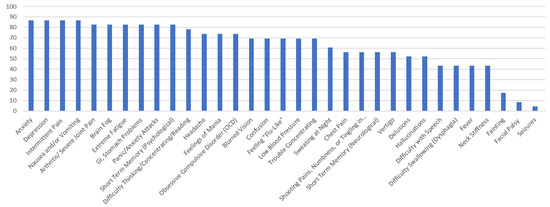
Neurological Pain, Psychological Symptoms, and Diagnostic Struggles among Patients with Tick-Borne Diseases
https://www.mdpi.com/2227-9032/10/7/1178

Abstract

Public health reports contain limited information regarding the psychological and neurological symptoms of tick-borne diseases (TBDs). Employing a mixed-method approach, this analysis triangulates three sources of symptomology and provides a comparison of official public health information, case reports, medical literature, and the self-reported symptoms of patients with Lyme disease and other TBDs. Out of the fifteen neuropsychiatric symptoms reported in the medical literature for common TBDs, headaches and fatigue and/or malaise are the only two symptoms fully recognized by public health officials. Of TBDs, Lyme disease is the least recognized by public health officials for presenting with neuropsychiatric symptoms; only headaches and fatigue are recognized as overlapping symptoms of Lyme disease. Comparisons from a patient symptoms survey indicate that self-reports of TBDs and the associated symptoms align with medical and case reports. Anxiety, depression, panic attacks, hallucinations, delusions, and pain—ranging from headaches to neck stiffness and arthritis—are common among patients who report a TBD diagnosis. Given the multitude of non-specific patient symptoms, and the number and range of neuropsychiatric presentations that do not align with public health guidance, this study indicates the need for a revised approach to TBD diagnosis and for improved communication from official public health sources regarding the wide range of associated symptoms. View Full-Text
 
 
Carl Tuttle’s Written Public Comment:
 
———- Original Message ———-
From: CARL TUTTLE <runagain@comcast.net>
To: “tickbornedisease@hhs.gov” <tickbornedisease@hhs.gov>
Date: 07/08/2022 9:34 AM
Subject: Written Public Comment – July 19-20, 2022 Meeting
 
Preferred identification: 
Carl Tuttle
Hudson, NH 

Member of NH Gov Chris Sununu’s Lyme Disease Study Commission
http://www.gencourt.state.nh.us/statstudcomm/committees/default.aspx?id=1515 
 
To the Tick-Borne Disease Working Group, 

I would like to call attention to a recent paper published in the open access journal BMJ Global Health “More than 14% of the world’s population likely has (had) tick-borne Lyme disease” [1] indicated by the presence of antibodies in the blood, revealing a pooled data analysis of the available evidence. 

As of July 2022, current world population is 7.9 billion and 14% of that number would equal 1.1 billion Lyme infections. 

The CDC claims that a conservative 10% of those treated for EARLY Lyme disease do not recover ending up with Post-treatment Lyme Disease Syndrome. Other studies identified in Dr. John Aucotts’s 2020 paper has that number as high as 36 to 50% [2] and yet no one is keeping track of the number of individuals left disabled by the disease; those who went years before diagnosis missing the narrow window of opportunity for successful short-term treatment.  

If we use say 20% as a multiplier, 220 million may have been left in a debilitated state and the only thing we have in the pipeline after thirty years is a vaccine fast-tracked by the FDA in 2017. 

It would appear that all the eggs have been put into one basket for the sake of a vaccine leaving the sick and disabled to fend for themselves. Sicken in place while we wait for a vaccine; sound familiar? A chronic relapsing seronegative disease doesn’t fit the vaccine model. Is that why we have avoided these patients and why the CDC refuses to recognize the disabling stage of Lyme disease? If we studied the horribly disabled, chronic infection would be uncovered. Postmortem studies have already proven that we have been dealing with an antibiotic resistant/tolerant superbug. 

The false narrative that Lyme disease is hard to catch and easily treated with 2-4weeks of antibiotics was created by those who had a vested interest in profiting from a vaccine. The CDC has propagated that false narrative for decades and to this day refuses to recognize the disabling stage of Lyme disease. Wake up America! 
 
Carl Tuttle
Hudson NH 

References: 

1. More than 14% of world’s population likely has (had) tick-borne Lyme disease
https://www.bmj.com/company/newsroom/more-than-14-of-worlds-population-likely-has-had-tick-borne-lyme-disease 

2. Post-treatment Lyme Disease as a Model for Persistent Symptoms in Lyme Disease
Alison W. Rebman and John N. Aucott    Feb 2020
https://www.ncbi.nlm.nih.gov/pmc/articles/PMC7052487/

Neurological Pain, Psychological Symptoms, and Diagnostic Struggles among Patients with Tick-Borne Diseases
Public health reports contain limited information regarding the psychological and neurological symptoms of tick-borne diseases…
 

Thanks to your support this petition has a chance at winning! We only need 51,614 more signatures to reach the next goal – can you help?

For more: