Archive for the ‘Bartonella’ Category

One Family’s Story of Strep, Lyme Disease, and PANS/PANDAS

One family’s story of strep, Lyme disease, and PANS/PANDAS
Bartonella Transmitted to Children at Birth Causing Chronic Infections

https://news.ncsu.edu/2010/05/bartonella/?fbclid=IwAR2Lf1BBOaAbdKshR76e0Kou-KPUt-H0QVw4Xv_6GFOX_2GoufhEmrg0ZrQ

Disease Caused By Insect Bites Can Be Transmitted To Children At Birth, NC State Researcher Finds

A North Carolina State University researcher has discovered that bacteria transmitted by fleas–and potentially ticks–can be passed to human babies by the mother, causing chronic infections and raising the possibility of bacterially induced birth defects.

Dr. Ed Breitschwerdt, professor of internal medicine in the Department of Clinical Sciences, is among the world’s leading experts on Bartonella, a bacteria that is maintained in nature by fleas, ticks and other biting insects, but which can be transmitted by infected cats and dogs as well. The most commonly known Bartonella-related illness is cat scratch disease, caused by B. henselae, a strain of Bartonella that can be carried in a cat’s blood for months to years. Cat scratch disease was thought to be a self-limiting, or “one-time” infection; however, Breitschwerdt’s previous work discovered cases of children and adults with chronic, blood-borne Bartonella infections–from strains of the bacteria that are most often transmitted to cats (B. henselae) and dogs (B. vinsonii subsp. berkhoffii) by fleas and other insects.

In his most recent case study, Breitschwerdt’s research group tested blood and tissue samples taken over a period of years from a mother, father and son who had suffered chronic illnesses for over a decade. Autopsy samples from their daughter–the son’s twin who died shortly after birth–contained DNA evidence of B. henselae and B. vinsonii subsp. berkhoffi infection, which was also found in the other members of the family.

Both parents had suffered recurring neurological symptoms including headaches and memory loss, as well as shortness of breath, muscle weakness and fatigue before the children were born. In addition, their 10-year-old son was chronically ill from birth and their daughter died due to a heart defect at nine days of age.

Results of the parents’ medical histories and the microbiological tests indicated that the parents had been exposed to Bartonella prior to the birth of the twins, and finding the same bacteria in both children, one shortly after birth and the other 10 years later, indicates that they may have  become infected while in utero.

Breitschwerdt’s research appears online in the April 14 Journal of Clinical Microbiology.

“This is yet more evidence that Bartonella bacteria cause chronic intravascular infections in people with otherwise normal immune systems, infections that can span a decade or more,” Breitschwerdt says. “Also this new evidence supports the potential of trans-placental infection and raises the possibility that maternal infection with these bacteria might also cause birth defects.”

The Department of Clinical Sciences is part of NC State’s College of Veterinary Medicine. Dr. Breitschwerdt is also an adjunct professor of medicine at Duke University Medical Center.

Note to editors: An abstract of the paper follows.

“Molecular evidence of perinatal transmission of Bartonella vinsonii subsp. berkhoffii and B.henselae to a child”
Authors: Edward B. Breitschwerdt, Ricardo G. Maggi and Patricia E. Mascarelli, NC State University; Peter Farmer, Department of Pathology, North Shore University Hospital
Published: April 14, 2010 in Journal of Clinical Microbiology

Abstract:
Bartonella vinsonii subsp. berkhoffii, Bartonella henselae or DNA of both organisms was
amplified and sequenced from blood, enrichment blood cultures or autopsy tissues from four family members. Historical and microbiological results support perinatal transmission of Bartonella species in this family.

_________________

**Comment**

If it weren’t for the work of this singular man, we’d be clueless about the implications of Bartonella.  Heavily vested in finding answers due to his father’s death to Bartonella, Dr. Breitschwerdt is the only one currently looking at congenital transmission:  https://www.ncbi.nlm.nih.gov/pmc/articles/PMC3044516/#!po=1.02041

What’s is going to take? How many more have to become infected before transmission studies on ALL implicated pathogens in Lyme/MSIDS are done?

We’ve known about Lyme for over 40 years and we still don’t have good studies looking at this very real issue of sexual and congenital transmission.  Only one study on sexual transmission done in 2014 showed the Lyme organism in semen and vaginal secretions, but the medical world sniffed and rolled over in bed.  Nothing’s been done since.

Why?

As to congenital transmission (mother to baby), Canada recognizes it, but the U.S. still doesn’t: https://madisonarealymesupportgroup.com/2018/10/05/canada-acknowledges-maternal-fetal-transmission-of-lyme-disease/  There’s 33 years of documentation gathered by a ticked off Canadian mom who happens to be a nurse: https://madisonarealymesupportgroup.com/2018/06/19/33-years-of-documentation-of-maternal-child-transmission-of-lyme-disease-and-congenital-lyme-borreliosis-a-review/

I guess more moms have to get ticked off before something changes in Lyme-land. Frankly, if it weren’t for moms, we wouldn’t even know Lyme exists.

We need these transmission studies done on each and EVERY single organism implicated with Lyme/MSIDS.  We can talk tick prevention all the day long until we are blue in the face, but what if you can contract Lyme/MSIDS through a variety of means? Many say we can:  https://madisonarealymesupportgroup.com/2019/04/02/transmission-of-lyme-disease-lida-mattman-phd/

http://www.endowmentmed.org/pdf/endowmentupdatelymes2.pdf  In 1995 Dr. Mattman obtained positive cultures for Bb from 43 of 47 chronically ill people. She also recovered Bb spirochetes from 8 out of 8 Parkinson patients, 41 cases of multiple scierosis (MS), 21 cases of amyotrophic lateral sclerosis (ALS), and ALL tested cases of Alzheimer’s.

But what do I know?  I’m just a crazy gray-hair.

More on Bartonella:  https://madisonarealymesupportgroup.com/2016/01/03/bartonella-treatment/

https://madisonarealymesupportgroup.com/2019/04/24/human-bartonellosis-an-underappreciated-public-health-problem/

https://madisonarealymesupportgroup.com/2019/03/24/cat-scratch-disease-caused-teens-schizophrenia-like-symptoms-report-says/

https://madisonarealymesupportgroup.com/2019/04/08/case-series-bartonella-ocular-manifestations/

https://madisonarealymesupportgroup.com/2019/03/02/skin-inflammation-nodules-letting-the-cat-out-of-the-bag/

https://madisonarealymesupportgroup.com/2019/01/02/bartonella-langerhans-cell-histiocytosis-cancer/

https://madisonarealymesupportgroup.com/2018/11/10/neurological-presentations-of-bartonella-henselae-infection/

https://madisonarealymesupportgroup.com/2017/01/04/endocarditis-consider-bartonella/


Good News For Bartonella Patients: Identification of FDA-Approved Drugs With Higher Activity Than Current Front-line Drugs

https://www.ncbi.nlm.nih.gov/m/pubmed/31035691/

Identification of FDA-Approved Drugs with Activity against Stationary Phase Bartonella henselae.

Li T, et al. Antibiotics (Basel). 2019.

Abstract

Bartonella henselae can cause various infections in humans, ranging from benign and self-limiting diseases to severe and life-threatening diseases as well as persistent infections that are difficult to treat. To develop more effective treatments for persistent Bartonella infections, in this study, we performed a high-throughput screen of an FDA-approved drug library against stationary phase B. henselae using the SYBR Green I/propidium iodide (PI) viability assay. We identified 110 drug candidates that had better activity against stationary phase B. henselae than ciprofloxacin, and among the top 52 drug candidates tested, 41 drugs were confirmed by microscopy to have higher activity than the current frontline antibiotic erythromycin.

The identified top drug candidates include:

  • pyrvinium pamoate
  • daptomycin
  • methylene blue
  • zole drugs (clotrimazole, miconazole, sulconazole, econazole, oxiconazole, butoconazole, bifonazole)
  • aminoglycosides (gentamicin and streptomycin, amikacin, kanamycin)
  • amifostine (Ethyol)
  • antiviral Lopinavir/ritonavir
  • colistin
  • nitroxoline
  • nitrofurantoin
  • verteporfin
  • pentamidine
  • berberine
  • aprepitant
  • olsalazine
  • clinafloxacin
  • clofoctol

Pyrvinium pamoate, daptomycin, methylene blue, clotrimazole, and gentamicin and streptomycin at their respective maximum drug concentration in serum (Cmax) had the capacity to completely eradicate stationary phase B. henselae after 3-day drug exposure in subculture studies.

While the currently used drugs for treating bartonellosis, including rifampin, erythromycin, azithromycin, doxycycline, and ciprofloxacin, had very low minimal inhibitory concentration (MIC) against growing B. henselae, they had relatively poor activity against stationary phase B. henselae, except aminoglycosides.

The identified FDA-approved agents with activity against stationary phase B. henselae should facilitate development of more effective treatments for persistent Bartonella infections.

_________________

**Comment**

I am convinced that Bartonella is a much bigger player in Lyme/MSIDS than we are being led to believe. Just type Bartonella into the search bar on this website and you will see what I mean.  It’s everywhere, and people without cat exposure who are perfectly healthy are getting it. 

And it with Lyme and it’s a, “one, two, punch, you are out!”

I’m so thankful to see this work being done on drug effectiveness as it is desperately needed.

Interesting personal side-note: when we relapse it is Bartonella symptoms. Recently, I’ve relapsed twice while my husband didn’t.  Guess what he just started taking that I’m not?  Berberine for thick blood.  Berberine is one of the substances listed above.  Bizzarely, Berberine comes from the woody part of the Barberry plant – the thorny, invasive shrub that ticks love to live under. Now if that isn’t Ironic, I don’t know what is.  https://madisonarealymesupportgroup.com/2018/01/20/manage-barberry-lower-ticks/

https://madisonarealymesupportgroup.com/2015/09/30/barberry-friend-or-foe/

https://madisonarealymesupportgroup.com/2017/10/27/lyme-wars-part-4/  Excerpt:

Barberry has a stronger form of Berberine, according to some experts, than what’s found in Goldenseal, Coptis, or golden thread and the Oregon Grape and is used in both Indian and Chinese medicine.  Master herbalist, Steven Buhner states it is active against a large number of resistant bacteria and numerous strains of Mycoplasma, a common coinfection of Lyme.

Berberine is a chemical found in several plants including European barberry, goldenseal, goldthread, Oregon grape, phellodendron, and tree turmeric: https://www.verywellhealth.com/barberry-berberis-vulgaris-what-you-need-to-know-89546

Do not take Berberine without discussing it with your pracitioner.  There are contraindications.

Seems it does many things:  https://madisonarealymesupportgroup.com/2019/04/05/study-shows-berberine-induces-cell-death-in-leukemia/


Case of Endocarditis Caused By Bartonella After Mitral Valve Repair

https://www.ncbi.nlm.nih.gov/pubmed/30981216

2019 Apr 13. doi: 10.1111/jocs.14047. [Epub ahead of print]

Bartonella haenselae infective endocarditis following transcatheter edge-to-edge mitral valve repair: A case report.

Abstract

Infective endocarditis following a Mitraclip procedure might be an under-recognized complication. We describe the case of infective endocarditis by Bartonella henselae as a late complication in a patient with a previously implanted MitraClip system for mitral valve repair. Due to the severity of infection, surgical treatment was performed despite the high preoperative surgical risk, but recurrence of endocarditis of the biological valve implanted occurred. Although infection with Bartonella is known as a possible source of endocarditis, it has never been described before in relation to failed MitraClip therapy.

__________________

**Comment**

A great article came out recently about Bartonella being an under appreciated public health problem:  https://madisonarealymesupportgroup.com/2019/04/24/human-bartonellosis-an-underappreciated-public-health-problem/

And, frankly, that’s an understatement!

Heart issues with Bartonella abound:  https://madisonarealymesupportgroup.com/2017/05/11/bartonella-henselae-in-children-with-congenital-heart-disease/

https://madisonarealymesupportgroup.com/2017/01/04/endocarditis-consider-bartonella/

https://madisonarealymesupportgroup.com/2018/09/28/bartonella-infective-endocarditis-with-dissemination-a-case-report-literature-review/

https://madisonarealymesupportgroup.com/2018/09/07/bartonella-infectious-endocarditis-associated-with-cryoglobulinemia-multifocal-proliferative-glomerulonephritis/

https://madisonarealymesupportgroup.com/2018/07/10/infective-endocarditis-associated-with-bartonella-henselae-a-case-series/

But many other issues abound as well:  https://madisonarealymesupportgroup.com/2019/04/09/abstract-bartonella-in-boy-with-pans/

https://madisonarealymesupportgroup.com/2019/03/21/bartonella-sudden-onset-adolescent-schizophrenia-a-case-study/

https://madisonarealymesupportgroup.com/2019/04/08/case-series-bartonella-ocular-manifestations/

https://madisonarealymesupportgroup.com/2019/03/02/skin-inflammation-nodules-letting-the-cat-out-of-the-bag/


Human Bartonellosis: An Underappreciated Public Health Problem?

https://www.mdpi.com/2414-6366/4/2/69

Trop. Med. Infect. Dis. 2019, 4(2), 69; https://doi.org/10.3390/tropicalmed4020069

Human Bartonellosis: An Underappreciated Public Health Problem?

Published: 19 April 2019
(This article belongs to the Special Issue Recent Advancements on Arthropod-Borne Infectious Diseases)

Abstract

Bartonella spp. bacteria can be found around the globe and are the causative agents of multiple human diseases. The most well-known infection is called cat-scratch disease, which causes mild lymphadenopathy and fever. As our knowledge of these bacteria grows, new presentations of the disease have been recognized, with serious manifestations. Not only has more severe disease been associated with these bacteria but also Bartonella species have been discovered in a wide range of mammals, and the pathogens’ DNA can be found in multiple vectors. This review will focus on some common mammalian reservoirs as well as the suspected vectors in relation to the disease transmission and prevalence. Understanding the complex interactions between these bacteria, their vectors, and their reservoirs, as well as the breadth of infection by Bartonella around the world will help to assess the impact of Bartonellosis on public health. View Full-Text

tropicalmed-04-00069-g001
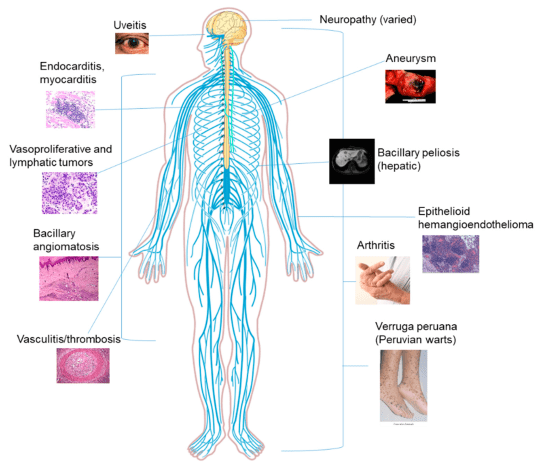
Figure 1  The Clinical Manifestations of Bartonellosis
Excerpt from full-text
Known diseases caused by Bartonella infections include:
  • Carrion’s disease
  • cat-scratch disease
  • chronic lymphadenopathy
  • trench fever
  • chronic bacteraemia
  • culture-negative endocarditis
  • bacilliary angiomatosis
  • bacilliary peliosis
  • vasculitis
  • uveitis [1,2,4,6,7,9,10,11].
Recently, Bartonella infections have been linked to more diverse manifestations such as:
  • hallucinations
  • weight loss
  • muscle fatigue
  • partial paralysis
  • pediatric acute-onset neuropsychiatric syndrome (PANS)
  • other neurological manifestations [6,8,10].

A few case studies have also documented Bartonella in tumors, particularly vasoproliferative and those of mammary tissue [12,13,14]. The potential involvement of this pathogen in breast tumorigenesis is both disconcerting and warrants significantly more research.

Bartonella spp. are zoonotic pathogens transmitted from mammals to humans through a variety of insect vectors including the sand fly, cat fleas, and human body louse [4,5]. New evidence suggests that ticks, red ants, and spiders can also transmit Bartonella [15,16,17,18]. Bed bugs have been implicated in the transmission cycle of B. quintana and have been artificially infected [19]. B. quintana was found in bed bug feces for up to 18 days postinfection [19]. The diversity of newly discovered Bartonella species, the large number and ecologically diverse animal reservoir hosts, and the large spectrum of arthropod vectors that can transmit these bacteria among animals and humans are major causes for public health concern.

Regarding ticks….

3.2. Arachnids (Spiders and Ticks)

Over the last 10 years, the topic of ticks transmitting Bartonella species has been widely debated. Evidence exists to support the transmission of Bartonella through many different species of ticks.

Ixodid ticks, also known as hard ticks, appear to be the main type of tick associated with these bacteria. Tick cell lines have been used to show that Bartonella can replicate and survive within:

  • Amblyoma americanum (Lone Star Tick)
  • Rhipicephalus sanguineus (Brown Dog Tick)
  • Ixodes scapularis cells [77] (Deer Tick)

In California, questing ticks of

  • Ixodes pacificus (Western Black legged Tick)
  • Dermacentor occidentalis (Pacific Coast Tick)
  • Dermacentor variabilis (American Dog Tick)

were collected when in the adult and nymphal stages and tested for Bartonella by PCR for the citrate synthase gene. [78]. All types of ticks were found to contain Bartonella DNA, although in varying percentages and locations. These data alone do not prove that ticks can transmit Bartonella spp. Bacteria; however, the results do show Bartonella DNA occurring naturally in these wild ticks.

In Palestine,

  • Hyalomma spp. (Genus of hard-bodied tick) found in Asia, Europe, & North and South Africa.
  • Haemphysalis spp. (The Asian Long-horned tick is an example)
  • Rhipicephalusspp. (Hard-bodied tick native to tropical Africa)

ticks were collected from domestic animals and tested by PCR for the Bartonella intergenic transcribed spacer (ITS) region [38]. These ticks were infected with 4 strains of Bartonella: B. rochalimae, B. chomelii, B. bovis, and B. koehlerae [38]. While this study tested a collection of ticks found on domestic animals, the results suggest that individuals in close contact with these animals should be aware of the potential for transmission through tick bites.

In a sampling of ticks (Ixodes scapularis and Dermacentor variabilis) and rodents (Peromyscus leucopus) from southern Indiana, the midgut contents of the tick species and rodent blood were analyzed by 16S sequencing. Bartonella was present in a moderate percentage (26% in D. variabilis and 13.3% in I. scapularis) of larvae and nymphs of both tick species, even those scored as unengorged, but was present in the majority (97.8%) of the rodents tested [79].
A survey of ticks from 16 states in the U.S. revealed that the overall prevalence of Bartonella henselae in Ixodes ticks was 2.5% [80].
Interestingly, the highest rate of both Borrelia spp. (63.2%) and B. henselae (10.3%) was found in Ixodes affinis ticks collected from North Carolina.
Ixodes ricinus has been the focus of studies that support tick transmission of Bartonella spp. in Europe. This is because I. ricinus is an important vector for tick-borne diseases in Europe [81]. I. ricinus have been collected in the larval, nymphal, and adult stages in Austria [82]. The analyses revealed that 2.1% of all ticks were infected with Bartonella spp., with the highest rate in ticks derived from Vienna (with a 7.5% infection rate), and that adult ticks had a higher prevalence than other stages [82].
B. henselae, B. doshiae, and B. grahamii DNA were amplified, and this was the first study to find Bartonella-infected ticks in Austria [82].
A recent One Health perspective review on Bartonella indicated that the overall presence of Bartonella in ticks (combining evidence from multiple surveillance studies) was approx. 15% [83].
B. henselae DNA has also been isolated from I. ricinus removed from an infected cat. However, whether the cat gave the tick Bartonella or vice versa cannot be established, so the vector competence of these ticks for transmission cannot be determined [30].
A lab in France has studied the relationship between I. ricinus and Bartonella transmission. One study focused on the ability of ticks to maintain infection from one life stage to the next and tested a vertical transmission from adults to eggs. The authors used B. henselae and found that a transstadial transmission was possible and that a transovarial transmission was not likely [84]. The researchers also supplied evidence to support the vector competency of I. ricinus by amplifying B. henselae DNA from the salivary glands of infected ticks and by amplifying DNA from blood 72 h after infected ticks fed through an artificial system [84]. Although the evidence strongly suggests the ability of ticks to transmit these bacteria, the system employed artificial means for feeding; therefore, one major critique has been that it is not representative of a natural blood meal from a host.
To address this issue, another experiment was performed to the assess vector competency of I. ricinus to transmit Bartonella birtlesii [85]. Mice were infected with B. birtlesii through an intravenous injection via a tail vein, and once mice were infected, naïve ticks were fed on the mice and kept for 3 months to molt. Nymphal ticks were shown to transmit B. birtlesii to naïve mice, and adult ticks were shown to infect blood through a feeder method [85]. B. birtlesii was identified in the blood of the recipient mice through PCR and immunofluorescence [85]. This evidence strongly supports the transmission of these bacteria by ticks. However, the limitation is that this only supports I. ricinus’ ability to transmit a very specific strain of Bartonella, B. birtlesii, which is not linked to human disease.
Concerns such as these related to vector competence and transmission can only be quelled by repeated studies utilizing multiple strains of Bartonella and differing tick species.
An interesting case study provided evidence of spiders transmitting Bartonella. A mother and two sons suffered from neurological symptoms following bites suspected from woodlouse hunter spiders [18]. Bartonella henselae DNA was amplified from the blood of the family as well as from a woodlouse and a woodlouse hunter spider near the family’s home [18]. It cannot be determined if the family contracted the bacteria from the woodlouse or the woodlouse hunter spider or if the lice and spiders contracted the bacteria from the family. This case study points to the importance for diagnosticians to test for bacterial infections after suspected arachnid bites. It also emphasizes the lack of knowledge on the possible vectors that transmit Bartonella as well as the range of manifestations by infection with Bartonella.

___________________

**Comment**

I think we can safely state that Bartonella IS an under appreciated health problem.