Archive for the ‘Bartonella’ Category

Does Unrecognized Lyme in Mothers Lead to Autism Spectrum Disorder?

https://www.lymedisease.org/autism-lyme-disease-in-mothers/

Does unrecognized Lyme in mothers lead to autism spectrum disorder?

July 3, 2022

By Debbie Kimberg

I received many positive responses to my recent blog about my son’s 80% recovery from symptoms that had been diagnosed as autism spectrum disorder (ASD). This was accomplished with long-term antibiotic treatment for congenital tick-borne diseases (TBD).

After reading the article, many parents wrote to me, saying things like, “Thank you for sharing your story. The description of your son sounds just like my child. This gives me hope!” And they went on to ask, “How can I find a doctor to test my child?”

Common symptoms of TBD in parents

Testing the child is only part of what’s needed. When children develop such problems, it’s often because the mother has unknowingly passed along tick-borne diseases during pregnancy. Mothers of children with these problems may not realize that they themselves may have tick-borne diseases—and deserve testing and treatment. And sometimes dads are infected, too.

Here are symptoms that mothers may experience, without knowing that they could be the result of tick-borne diseases, such as Lyme disease and Bartonella1:

  • Psychiatric symptoms: ADHD, anxiety, social anxiety, depression, OCD, temper rages/irritability, mood swings/bipolar, panic attacks, memory issues/brain fog, oppositional, fears, emotional lability, and in severe cases, psychosis, hallucinations, suicidal ideation and violence
  • Autoimmune symptoms: thyroid, arthritis, fatigue, neuropathy/MS, muscle pain/fibromyalgia, inflammatory bowel disease
  • Other: gluten/dairy sensitivity, sleep issues, migraines, urinary issues, eating disorders, day or night sweats, seizures, and some cancers

Symptoms of unrecognized and untreated tick-borne diseases–stealth infections–can slowly worsen over years and decades.

Important clues

Mothers of children with ASD that I corresponded with frequently listed off symptoms they experienced, the doctors they saw, and testing done. Nearly all of these mothers described having psychiatric symptoms, and often had symptoms of one or more autoimmune diseases. These are important clues about a potential TBD transmission during pregnancy2.

Only a few mothers said they were tested for Lyme disease (Borrelia). Of those who were tested, most said they received a negative result on a commonly used lab test, which was potentially a falsely negative result.

One mom had a positive test result for Borrelia, was treated by her doctor with doxycycline for a few weeks and declared cured. However, it is unlikely the mother was cured from this complex disease with just a few weeks of doxycycline, evidenced by her child’s and her own continued symptoms. With the current treatments available, it’s not uncommon for these infections to take years to treat, even with a combination of antibiotics.

Bartonella is known to cause many psychiatric symptoms. That’s the infection that caused 70% of my son’s ASD (and PANS) symptoms. In addition to the many psychiatric issues listed, Bartonella is also known to cause ADHD, memory issues, brain fog, gluten/dairy sensitivity, sleep issues, digestive issues, thyroid, arthritis, neuropathy, muscle pain, inflammatory bowel disease, tumors, and seizures1,3.

If the mother experiences psychiatric or autoimmune issues, this is probably not a coincidence. More likely, it is the smoking gun.

Don’t recall a tick bite?

Most people I’ve heard from say they don’t remember a tick bite. However, it is common for people to be unaware that they were bitten by a tick. Additionally, there’s evidence that these infections can be transmitted sexually5 and during pregnancy6.

Don’t let the lack of a known tick bite deter you from getting screened by a Lyme specialist.

I offer my own history as an example of how these infections can be transmitted within families. As of December 2021, my family has three confirmed generations of TBD.

My mother suffered stealth psychiatric symptoms from Bartonella including OCD, anxiety, social anxiety, emotional lability, night terrors, and night sweats when my sister and I were growing up. My mom has no recollection of a tick bite and no idea when she was infected.

My sister and I first began exhibiting anxiety, fears, oppositional behavior, bedwetting, excessive tantrums, and panic attacks at a young age. It’s likely that we both were infected congenitally, then unsuspectingly passed the infections on to our children during our pregnancies.

Some people mistakenly believe that tick-borne disease is only a problem in the northeastern United States. Wrong! Lyme and other tick-borne diseases have been identified throughout the country.

Why does it matter if you are undiagnosed if the symptoms don’t impact your everyday life?

There are three reasons. First, it matters to our children, our next generation who may be infected during pregnancy and born with autism spectrum disorder, ADHD or psychiatric difficulties8. Second, for your own long-term health, because this is a progressive disease that could affecf any organ in your body over time. And finally, you could transmit the disease to your partner.

Find a knowledgeable doctor

Unfortunately, finding a knowledgeable doctor can be a challenge. The majority of doctors, including infectious disease doctors, are not trained on the latest findings in TBD and rarely consider it at an office visit6. Doctors rarely probe into the full set of psychiatric and physical symptoms of their patients which could indicate TBD.

Additionally, commonly used testing is notoriously inaccurate1 due to the lack of sensitivity of the test. Even with specialty tests, there can be false negative test results as we saw in my family’s testing.

Furthermore, many doctors don’t understand that a person with chronic TBD has a 50% likelihood of having at least two co-infections and a 33% likelihood of having three or more co-infections. If Lyme disease is suspected, the full spectrum of co-infections should be tested for and treated. These factors cause many people to go undiagnosed or improperly diagnosed.

If you do have a positive test, the common practice for doctors is to treat the Borrelia (Lyme) infection with a few weeks of doxycycline10,11. This is insufficient treatment for many. The potentially more impactful co-infections such as Bartonella, Babesia, Rocky Mountain spotted fever, Ehrlichia, and Anaplasma are generally not tested or treated.

Contributing to the problem, the CDC website does not cover the vast array of symptoms that can develop with these complex, multi-faceted chronic diseases. The CDC’s coverage of Bartonella henselae infection is a prime example of scant information that applies only to patients immediately following a tick bite. The CDC does not address the many psychiatric and physical symptoms that can develop over time.

Could stealth infections in mothers be the cause of skyrocketing rates of ASD?

Why are the rates of autism skyrocketing? It’s a perplexing and frustrating question. Might the multi-generational transmission of these stealth infections–especially Bartonella–be a major contributing factor?

If you are pregnant or want to get pregnant and believe you have symptoms, do not hesitate to get tested6. Find a Lyme specialist at the links below.

Remember, testing, even with specialty tests, frequently show falsely negative results. A good Lyme specialist will be able to offer a clinical diagnosis based on your symptoms, if needed.

Dr. Rosalie Greenberg, a child psychiatrist and Lyme expert, says that she sees families like mine in her practice every day because psychiatric symptoms are so common with TBD. She also made an eye-opening comment in her writing, “I’ve been a child psychiatrist for 40 years. The world of tick-borne illness is nothing like I’ve ever experienced before. It makes one really rethink a lot of medicine.”

You can find a Lyme specialist on LymeDisease.org.

To learn about my son’s story, follow me on Instagram @HijackedBrains or visit my website.

On July 12, Debbie Kimberg will take part in a webinar entitled “Co-morbidity of Lyme disease and Autism Spectrum Disorder in Children,” sponsored by Project Lyme. Click here for details.

References

1. Recovery from Lyme Disease: An Integrative Medicine Guide to Diagnosing and Treating Tick-borne Illness, by Dr. Daniel Kinderlehrer, pages 66-77, 122-124, 131-134, 138

2. It’s Time to Recognize Congenital Lyme by Dr. Rosalie Greenberg

3. Bartonella, The Stealth Pathogen That You Can See without a Microscope by Dr. Rosalie Greenberg

4. Schizophrenia and Bartonella spp. Infection: A Pilot Case Control Study

5. Sexual Transmission of Lyme Borreliosis? The Question That Calls for an Answer

6. Molecular evidence of Perinatal Transmission of Bartonella vinsonii susp. berkhoffii and Bartonella henselae to a Child

7. Lyme Disease Data Tables: Historical Data, CDC

Note: These rates are new infections only. The CDC does not take into account a) the known issue with high rates of false negative testing b) the many people who have no known tick bite and stealth symptoms that do not seek testing c) the unknown number of children believed to have a congenital infection

8. Tick-borne Disorders and Mental Illness in Youth: An Unrecognized Connection by Dr. Rosalie Greenberg

9. Lyme Disease Co-Infections, Lonnie Marcum, LymeDisease.org

10. Guidance for Clinicians, Caring for Patients after a Tick Bite, CDC

11. Tick-borne Diseases of the United States: A Reference Manual for Healthcare Providers, CDC
Note: There is no mention of Bartonella, the arguably the most impactful infection in terms of ASD.

Additional Resources

MothersAgainstLyme.org

Breitschwerdt explains what’s known and unknown about Bartonella, April 3, 2019

DISCLAIMER: The author is not a doctor. This writing is an opinion held by the author and is not intended to dispense medical advice. If you have medical questions, please seek the care of a Lyme specialist.

For more:

How Prevalent is Bartonella?

https://www.lymedisease.org/bartonella-prevalent-lyme-disease/

How prevalent is Bartonella in people who have Lyme disease?

July 15, 2022

By Lonnie Marcum

At a meeting of the federal Tick-Borne Disease Working Group on March 1, Ben Beard, PhD of the CDC made a highly significant statement that passed without remark at the time.

Beard’s statement was in reply to a comment by Monica Embers, PhD, also a member of the working group. Embers noted that several slides from Beard’s Clinical Presentation and Pathogenesis subcommittee mentioned neuropsychiatric illness and neuropathic manifestations of Lyme disease.

“We’re seeing a lot more neuropsychiatric disease associated with Bartonella,” said Embers. “I’m wanting to hear more about your thought process and your recommendation with respect to bartonellosis?”

Bartonella’s “significant impact”

Beard replied:

“In my view Bartonella is ubiquitous. There are multiple different Bartonella species. A lot of people are exposed to cats and fleas, and Bartonella henselae–or cat scratch disease–is pretty common. Our group looked at it as an illness that is associated with people with other tick-borne illnesses. Not necessarily agreeing that it’s tick-borne—for me the jury is still out for that—but I’m perfectly convinced that it is very common, and that it may be confounding the diagnosis, and that it is an important co-infection. We need not get side-tracked on whether or not it’s tick-borne. We need to agree that it’s a common infection, commonly seen in patients with other illnesses, and it can have a significant impact on clinical outcome and presentation.”

This is actually a showstopper of a comment.
The CDC has long declined to categorize bartonellosis as tick-borne and has not considered it a co-infection of Lyme.

Even today, the CDC website states: “Ticks may carry some species of Bartonella bacteria, but there is currently no causal evidence that ticks can transmit Bartonella infection to people through their bites.”

Yet, as Beard observed, Bartonella is very common in people with Lyme disease.

What the data says

In MyLymeData, LymeDisease.org’s patient-led research project, 60% of patients with chronic symptoms of Lyme disease report co-infections. A previously published LymeDisease.org survey of over 3,000 patients found that over 50% had co-infections, with 30% of patients reporting two or more. Bartonella (28%) was the second most commonly reported co-infection associated with chronic Lyme disease. (Johnson, L., et al., 2014)

Bartonella does not respond to standard treatment for Lyme disease, and it is notoriously difficult to detect through standard tests. Moreover, Bartonella is not included in standard surveillance testing for ticks, and cases of the disease are not tracked by the CDC

Which leads me to the elephant in the room: nobody knows how many cases of bartonellosis there are in the US—or anywhere else for that matter.

What is bartonellosis?

Bartonellosis is caused by one of many species of the bacterium Bartonella. It is harbored in wild and domestic animals, and can be transmitted to humans through a number of different pathways including fleas, flies, lice, animal bites, animal scratches, ticks, bedbugs, and possibly through maternal fetal transmission. (Maggi RG, et al., 2015; Reis C, et al., 2011)

First identified in 1990, Bartonella henselae bacteria is the most common cause of bartonellosis in humans. Bartonella henselae infection, also called cat scratch disease, is frequently caused by flea bites or the scratch of an infected cat. The primary reservoirs for B. henselae across the world are domestic and stray cats, and the primary vector is the cat flea (ctenophalides felis). (Breitschwerdt, E.B., 2017)

Prior to 1990, there were only two diseases known to be caused by Bartonella bacteria. One was “Carrion’s disease,” endemic to parts of South America, caused by Bartonella bacilliformis. The other was “trench fever,” which infected many soldiers during World War I, caused by Bartonella quintana.  Though the illness was first described in 1915, Bartonella quintana was not  molecularly identified as its cause until 1961. (Breitschwerdt, E.B., 2017)

We now know that these bacteria have been infecting humans for thousands of years. Researchers discovered Bartonella quintana in a 4,000-year-old human tooth in France. (Drancourt M., et al., 2005)

Today, at least 40 different species of Bartonella have been identified.  About half of them are known to cause symptoms in humans or animals.

Bartonella is a stealth pathogen

At a recent conference, Dr. Ed Breitschwerdt, DVM, a leading expert in the field,  explained how Bartonella can invade and “literally affect every system in the body.” This includes the: cutaneous, muscular, skeletal, endocrine, cardiovascular and nervous systems.

He reviewed several recent studies implicating Bartonella infection in the brain in relation to several neuropsychiatric and autoimmune manifestations.

According to Breitschwerdt, these bacteria are extremely difficult to find in humans because they are slow growing and can hide within cells.

He explained how Bartonella, which are intracellular bacteria, have the ability to:

  • invade red blood cells, wall themselves off, and hide from the immune system (immune evasion)
  • migrate into the nervous system via macrophages (Trojan horse)
  • penetrate the blood brain barrier via endothelial cells and pericytes
  • persist within the brain via microglial cells.

Considering the number of different species and different methods of contracting Bartonella, Dr. Breitschwerdt ponders, “Is Bartonellosis a modern-day hidden epidemic?” (Breitschwerdt E.B., 2014)

Symptoms of bartonellosis

The symptoms of bartonellosis can range from mild to life-threatening, depending on the Bartonella species and the health of those infected. Furthermore, a growing body of evidence links Bartonella to neuropsychological symptoms.

The most commonly reported neurological symptoms include sleep disorders, mental confusion, memory loss, brain fog, irritability, rage, anxiety, panic attacks, depression, migraines, tremors, hallucinations, psychosis and postural orthostatic tachycardia (POTS).

Additional symptoms common to bartonellosis are swollen lymph nodes (especially around the head, neck and arm pits), bone pain (especially shins), pain in the soles of the feet, low grade fever in the morning, night sweats, tender nodules along the extremities, gastrointestinal pain, and skin markings (striae) that resemble stretch marks.

The table below lists the known species of Bartonella associated with human disease, the most common symptoms as well as the reservoir host and vector.

bartonella symptoms

How a stealth pathogen may prolong your chronic illness

In individuals with strong immune systems, Bartonella infection is often mild or asymptomatic. However, in those with an impaired immune system, Bartonella can wreak havoc on the body.

In fact, Bartonella henselae was discovered in the 1990s during the AIDS epidemic. Because  the HIV virus causes an acquired immune deficiency, these patients were extremely susceptible to new infections and reactivation of latent infections. In this patient population, Bartonella caused a distinctive skin lesion called bacillary angiomatosis (BA), and a type of liver disease called peliosis hepatis. (Breitschwerdt, E.B., 2017)

Advanced, disseminated disease is more likely to occur in immunocompromised patients or those taking immunosuppressive drugs. Without proper treatment, the infection can spread systemically throughout the body. The result is sometimes fatal.

When the co-infection becomes the main infection

Data from multiple animal studies shows that Borrelia burgdorferi suppresses the immune system. (Buffen K, et al., 2016; Tracy KE, Baumgarth N., 2017)

This makes me wonder. How many people with chronic Lyme disease had a latent Bartonella infection that was re-activated when their immune system became impaired?

I believe this was the case with my daughter. We live on a farm with lots of animals, including cats. Veterinarians, cat owners, and people who live or work on farms are at increased risk for Bartonella.

It wasn’t until my child became deathly ill after contracting Ehrlichia chaffeensis that her Bartonella symptoms began.

The symptoms that stood out were the constant migraine/headache, memory loss, bone pain, painful soles of feet, relapsing fever, insomnia, nighttime hallucinations that made everything look like Whoville, POTS, skin marks (striae) that resembled stretch marks, swollen lymph nodes, and an immune system so impaired it led to a temporary misdiagnosis of HIV. What a horrific experience for all of us!

Diagnosis & Treatment

Because  Bartonella may hide inside of cells and only emerge periodically, you may need to test multiple times to find a confirmatory diagnosis. And in patients who are immunocompromised, the test may not turn positive until after treatment has begun.

Research led by Ricardo Maggi, Ed Breitschwerdt and colleagues has led to the development of a new digital PCR that is much more sensitive to Bartonella. Even still, Dr. Maggi recommends running multiple types of tests (IFA serology, PCR, culture, and microscopy).

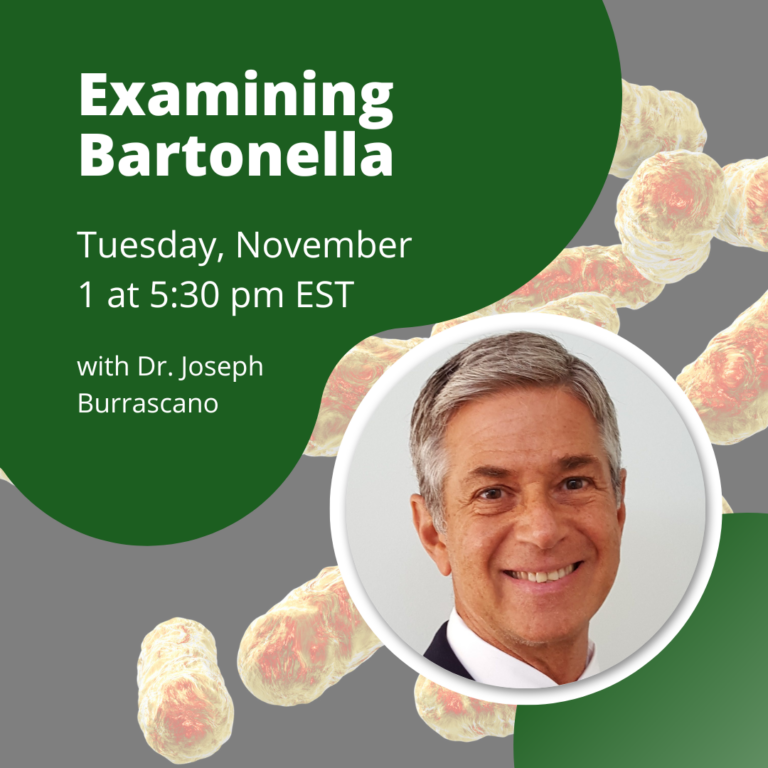
According to Dr. Joseph Burrascano, one should consider bartonellosis when symptoms persist after treatment for Lyme disease. Especially when the neurological symptoms are out of proportion to the common symptoms of disseminated Lyme disease.

Just as with Lyme disease, the longer Bartonella goes untreated, the more difficult it is to treat.  Furthermore, the standard treatment for Lyme (doxycycline) is ineffective against Bart. As Dr. Breitschwerdt famously said, “You cannot float humans or horses in enough doxycycline to kill this bacteria.”

According to the CDC: “A number of antibiotics are effective against Bartonella infections, including azithromycin, penicillins, tetracyclines, cephalosporins, aminoglycosides, and macrolides. More than one antibiotic is often used. Consult with an expert in infectious diseases regarding treatment options.”

Dr. Burrascano says, treating Bartonella-like organisms “can be difficult, as drug resistance can rapidly develop to macrolides and fluoroquinolones when used as a single agent and solo courses of tetracyclines are ineffective.”

Moving forward with Bartonella research

In 2021, a new Bartonella Research Consortium was formed with a $4.8 million grant from The Steven & Alexandra Cohen Foundation.

The consortium includes Ed Breitschwerdt and Ricardo Maggi of North Carolina State University, Monica Embers of Tulane University, and Timothy Haystead of Duke University, who is continuing the work of the late Dr. Neal Spector.

The team is actively working towards creating a targeted treatment for bartonellosis and quickly getting the drug to the marketplace for use in both animals and humans.

It’s time medicine moves beyond the one-pathogen-one-disease model. Let’s face it, ticks are full of toxic soup. Because each pathogen interacts with the host in unique ways, extensive research is needed to understand all factors surrounding co-infections and Lyme disease. (Moutailler S, et al., 2016)

Understanding the complex nature of these pathogens, how they impact the immune system, and how other bacterial and viral factors shape illness, will be key in improving public health. (Cheslock, M. A., & Embers, M. E., 2019)

It’s time for the CDC, NIH, HHS, the Tick-Borne Disease Working Group and other researchers to start looking deeper into the prevalence of Bartonella infections–not just in patients with Lyme disease but in all patients with poorly-defined chronic illnesses.

Resources

More information about testing/diagnosis of Bartonellosis see:

Free Bartonella CME Course:

LymeSci is written by Lonnie Marcum, a Licensed Physical Therapist and mother of a daughter with Lyme. She has served two terms on a subcommittee of the federal Tick-Borne Disease Working Group. Follow her on Twitter: @LonnieRhea  Email her at: lmarcum@lymedisease.org.

___________________

**Comment**

Excellently written.  Bartonella is a real problem out here, but the CDC is just sipping on margaritas.

For more:

Methylene Blue – Magic Bullet?

https://www.betterhealthguy.com/episode166  (Transcript Here)

http://

Why You Should Listen

In this episode, you will learn about the potential applications of the “magic bullet” methylene blue.

Watch The Show

Listen To The Show

Find The Show

About My Guest

My guest for this episode is Dr. John Lieurance.  John Lieurance, ND, DC is a naturopath and chiropractic neurologist who has been in private practice for 27 years.  He directs Advanced Rejuvenation, a multi-disciplinary clinic, with a focus on alternative and regenerative medicine, naturopathic medicine, functional neurology functional cranial release, Lumomed, Lyme disease, mold illness, and many other neurological conditions such as Parkinson’s, Alzheimer’s, degenerative neurological disease, and inner ear conditions.  He travels internationally teaching other doctors.  Dr. Lieurance founded UltimateCellularReset.com, a web based educational portal, which sends out weekly videos on health and wellness tools for overcoming disease and fostering longevity and vitality.  He has been featured in many podcasts and documentaries.  He is the author of the 5-star book Melatonin: Miracle Molecule available on Amazon and at MelatoninBook.com.

Key Takeaways

  • What is the history of methylene blue in medicine?
  • Can methylene blue be helpful in addressing vector-borne infections such as Borrelia, Bartonella, and Babesia?
  • Does methylene blue have virucidal properties?
  • How might methylene blue be helpful in chronic UTIs and interstitial cystitis?
  • What effect of methylene blue on biofilms and the organisms within them?
  • What role does methylene blue play in the electron transport chain?
  • How might methylene blue be anti-inflammatory and neuroprotective?
  • Might methylene blue have a role as a cognitive enhancer?
  • What is the role of methylene blue in concussions and TBIs?
  • Can methylene blue play a role in improving depression?
  • Can methylene blue lead to detoxification reactions? Are binders and drainage support recommended?
  • How might methylene blue support autophagy or the body’s janitorial service?
  • How might nano silver, nano gold, or red light therapy potentize the effects of methylene blue?
  • Should ascorbic acid be taken with methylene blue?
  • Should CoQ10 be avoided with methylene blue?
  • Should methylene blue be used daily or pulsed?
  • Can methylene blue be used with psychedelic interventions?
Connect With My Guest

http://UltimateCellularReset.com

Related Resources

eBook: Methylene Blue: Magic Bullet: The Ultimate Supplement for Mitochondrial Support!
Use code BETTERHEALTH to get your free PDF version of the book

MitoZen
Use code BETTERHEALTH to get 5% off

Functional Cranial Release

___________________

**Comment**

I’ve had my eye on MB since this came out:  https://madisonarealymesupportgroup.com/2019/05/05/good-news-for-bartonella-patients-identification-of-fda-approved-drugs-with-higher-activity-than-current-front-line-drugs/

I’ve just forwarded to my LLMD for his perusal but would love to consider this if I relapse again with Bartonella.  As you all know, antibiotics have blow-back and although Clarithromycin/rifampin get us back to rights each and every time we take it, the old gut is not tolerating this treatment for very long.  I’m always looking for a “plan B” as you never know when the proverbial “shoe will drop” making life miserable again.

You can get the FREE downloadable “Methylene Blue & Metabolic Medicine: The ‘Magic Bullet’ & Futuristic Medicine” by clicking on the top link, and typing in BETTERHEALTH in the coupon code.

https://www.ultimatecellularreset.com/  Go here for research, articles, videos as well as for more information about Dr. John and the Florida clinic.

http://  (Approx. 33 Min)

March 6, 2020

Ask A Lyme Doctor: Q & A With Dr. Tania Dempsey

https://www.globallymealliance.org/blog/dr.-tanya-dempsey-questions?

Dr. Tania Dempsey is an expert in chronic disease, autoimmune disorders and mast cell activation syndrome. In this blog, she is answering Lyme related questions that GLA followers submitted via social media.
Are you seeing cases where Covid has re-activated Lyme or ignited new auto-immune diseases or mast cell activation syndrome? -Kimberly H.

We are just at the beginning of really understanding how COVID interacts with our immune system. Since there are few studies that have been published that give us complete clarity on this, much of what I discuss is based on my experience with my patients. What seems clear to me is there is often some sort of vulnerability or predisposition in the patient, like an autoimmune potential, underlying dysfunctional mast cells, or a history of chronic infections, that leads to the complications that we are seeing post-COVID. I have not yet seen post-COVID patients who did not have some hint of an underlying issue prior to COVID. I have patients who have a history of Lyme disease that is well controlled for a number of years but after COVID they see a recurrence in the symptoms that pre-dated their Lyme treatment. Some of these patients have new symptoms and I postulate that it could be related to their underlying old infection that reactivated in a new location in their body or the new symptoms represent a worsening of their immune dysfunction. COVID seems to both stimulate and suppress the immune system, depending on the timing of the infection and on the susceptibility of the person. If the patient has a history of Lyme disease that is chronic/persistent, we know that their immune system continues to be affected. The vast majority of Chronic Lyme patients (in my practice) have underlying dysfunction of their mast cells, even if they have not been formally diagnosed with mast cell activation syndrome. Many of them had a predisposition before being infected with Lyme, which was worsened by the infection. Since infections of various kinds are known to trigger mast cells, chronic infection can cause chronic mast cell activation that then can be triggered further by a new infection, such as COVID. The relationship between mast cells and other immune cells has been well described and MCAS can be a driver of the development of autoimmunity.

How should I deal with post Lyme flare ups? -Debra C.

There are three main scenarios that I see as contributors for “post-Lyme flares”.

  1. Mast Cell Activation Syndrome (MCAS) is a leading culprit for increased symptoms after Lyme treatment. Whether there is underlying primary MCAS or secondary MCAS triggered by the infection, mast cells often continue to be dysfunctional even after the infection is cleared. Mast Cell Targeted Therapy can be very helpful in stabilizing mast cells, minimizing mediator release and thereby minimizing inflammation.
  2. Another important possibility to consider when patients have flares of symptoms after treatment for Lyme, is the presence of “co-infections.” Treating Lyme can make room for other infections to reactivate, like viruses (EBV, HHV-6, etc), Babesia, Bartonella, and many other microbes. It is important to look for other infections while treating Lyme, so as to not miss the need for other types of treatment.
  3. Persister Lyme is a major cause of  “Post-Lyme flares.” The bacteria that causes Lyme, Borrelia Burgdorferi, can exist in a slow-growing, persister form that is resistant to antibiotics and other anti-microbial treatment. Even aggressive treatment for Lyme disease can leave behind these persister organisms that can continue to wreak havoc on the body.
What are the best current treatment for “stubborn” Bartonella? -Deb T.

Bartonella is probably one of the most difficult chronic infections that I’ve had to treat in my practice. It is necessary to use a multi-pronged approach in treatment of Bartonella. Some patients have other co-infections, which complicates the treatment as well. While I don’t think there is a “best” treatment for Bartonella yet, in my practice what I have found helpful is a combination of modalities, which could include SOT therapy (Supportive Oligonucleotide Technique), Ozone therapy, Herbal protocols and/or Antibiotics, and other therapies.

GLA is currently fundraising for The Bartonella Discovery Program, a research project bringing together some of the top researchers world-wide who are experts on Bartonellosis. These researchers will learn more about the bacteria and which treatments are most likely to cure patients.

How do you heal the nervous system after neurological Lyme and Bartonella ravage it? -Katie M.

Healing the nervous system after Lyme, Bartonella or other infections is a complicated process.  Reducing inflammation, not just by treating the infections, but also by targeting the immune cells that can continue to cause inflammation, is key. We have a considerable amount of evidence that mast cells in the central nervous system are in constant communication with other immune cells like astrocytes and microglial cells and together can be a major driver of neuroinflammation. There is no cure for neuroinflammation but there are a vast number of drugs and natural treatments that have been studied and some show promise in reducing the neuroinflammatory process. Some strategies include mast cell targeted therapy, treatment with natural compounds such as proresolving mediators (SPMs), PEA (palmitoylethinolamide), resveratrol, turmeric, and others, and various drugs like low-dose naltrexone, minocycline, NSAIDS, and steroids. Treatment needs to be individualized and other confounding medical conditions should be taken into account when choosing a protocol against neuroinflammation.

The above material is provided for information purposes only. The material (a) is not nor should be considered, or used as a substitute for, medical advice, diagnosis, or treatment, nor (b) does it necessarily represent endorsement by or an official position of Global Lyme Alliance, Inc. or any of its directors, officers, advisors or volunteers. Advice on the testing, treatment or care of an individual patient should be obtained through consultation with a physician who has examined that patient or is familiar with that patient’s medical history.
GLA Contributor

Dr. Tania Dempsey

GLA Contributor

*Opinions expressed by contributors are their own. Dr. Tania Dempsey is an expert in chronic disease, autoimmune disorders and mast cell activation syndrome. She received her MD from The Johns Hopkins University School of Medicine and her BS degree from Cornell University. Dr. Dempsey completed her Residency at NYU Medical Center/ Bellevue Hospital. She is Board Certified in Internal Medicine and a Diplomate of the American Board of Integrative and Holistic Medicine. Dr. Dempsey opened the AIM Center for Personalized Medicine, where she currently practices.

Email: info@aimcenterpm.com

For more:

4 New Published Articles on Ticks

https://lymediseaseassociation.org/news/james-occi-phd-4-new-published-articles-on-ticks/

James L. Occi, PhD: 4 New Published Articles on Ticks

James L. Occi, PhD
James L. Occi, PhD

James L. Occi, PhD, is the lead author of four new published articles regarding ticks over the last three years that have added to the scientific data necessary to understand the spread of ticks and the diseases they carry and transmit in the Northeast and that have provided a basis for moving the field of tick-borne diseases forward.

Jim has been on the Lyme Disease Association’s (LDA) Scientific & Professional Advisory Board since its inception in 1999.  He has been an invaluable resource to the LDA providing lectures, blogs, tick images, and consultations on ticks and the diseases they carry.

LDA Congratulates James Occi (Jim), who recently received his PhD at Rutgers University, the Center for Vector Biology (New Brunswick), and wishes him every success with his future endeavors.  He studied tick-borne diseases in New Jersey tick populations under the direction of Dr. Dina Fonseca and co-authored the below four published research articles for his dissertation.


Annotated List of the Hard Ticks (Acari: Ixodida: Ixodidae) of New Jersey,” J Med Entomol., April 2019, examines documented cases of hard ticks found in NJ.  After a thorough review of the scientific literature, government documents, and evaluation of tick collections (vouchers) in museums and other repositories, the authors determined there were 11 verifiable species of ticks found in NJ.  Nine are native to North America, while two are invasive (Asian longhorned tick and brown dog tick).  In addition, there are seven tick species that may be present or become established in the future, but confirmation with existing NJ vouchers was not found.

Five tick species were reviewed that were reported in NJ but not found in NJ vouchers or that were found within neighboring states.  The importance of vouchers for tick research and surveillance is discussed.

A detailed statewide tick surveillance program would give public health professionals and physicians information to help protect the public from tick-borne diseases.  They would be knowledgeable about what tick species were present, what the principal hosts were and what pathogens the ticks carry and transmit.  (Click here for published article)


“New Jersey-Wide Survey of Rickettsia (Proteobacteria: Rickettsiaceae) in Dermacentor variabilis and Amblyomma americanum (Acari: Ixodida: Ixodidae)” was published in Am J Trop Med Hyg., Sept. 2020, and concludes the increase in Spotted Fever Group Rickettsioses (SFGR) in NJ is unlikely to come from D. variabilis.  Infection with the tick-borne R. rickettsia bacterium causes Rocky Mountain spotted fever (RMSF) which can be fatal if left untreated.

Two tick species, that are considered Rickettsia vectors, were collected from all 21 NJ counties.  560 Dermacentor variabilis Say, American dog tick; 245 Amblyomma americanum L., lone star tick; and an additional 394 D. variabilis were collected at different time periods.   Zero D. variabilis and zero A. americanum were found to be infected with Rickettsia rickettsia.  They detected R. montanensis in D. variabilis and R. amblyommatis in A. americanum.

Collaboration among medical doctors, public health professionals, medical entomologists, and diagnostic laboratories will be needed to understand the causes of SFGR east of the Mississippi. What is causing human cases of SFGR in NJ remains unanswered. (Click here for published article)


Carios kelleyi, tick vector, on hand (Photo Credit: J. Occi, Center for Vector Biology, Rutgers Univ.)
‘Carios kelleyi’ on hand (Photo Credit: J. Occi, Center for Vector Biology, Rutgers Univ.)

“First Record of Carios kelleyi (Acari: Ixodida: Argasidae) in New Jersey, United States and Implications for Public Health,” J Med Entomol., March 2021.  Carios kelleyi is a soft tick that is almost exclusively a parasite of bats and had been found in at least 29 states, Canada, Mexico, Costa Rica, Cuba, and now in New Jersey.  The nymphs and adults take several short blood meals (min. to hrs.), while the larvae remain attached for several days. Relapsing fever Borrelia is known to come from soft ticks that feed on small rodents, and when bats are removed, ticks begin to seek blood meals from humans.

C. kelleyi has been found infected with a novel spotted fever Rickettsia; a novel relapsing fever-related Borrelia;  Bartonella henselae; and a novel relapsing fever spirochete, identified as Borrelia johnsonii.

Although C. kelleyi is not thought to be an important vector of pathogens, its prevalence in bats in New Jersey is increasing.  This creates the possibility for transmission to humans, animals, and livestock.  New Jersey bats and the pathogens they carry should be monitored to assess the risk to the public. (Click here for published article)


“Ixodes scapularis (Ixodida: Ixodidae) Parasitizing an Unlikely Host: Big Brown Bats, Eptesicus fuscus (Chiroptera: Vespertilionidae), in New York State, USA,” was published in J Med Entomol, Jan. 2022.  I. scapularis is a three-host tick found throughout the Northeast, Southeast, and Upper Midwest in the U.S  and is the most common vector of tick-borne diseases to humans in North America.  It feeds on over 150 species of terrestrial vertebrates, yet it had not previously been reported to feed on bats.   During 2019 and 2020, injured big brown bats in four locations in rural NY had larvae and nymphs attached to them.  Bats are known to carry a large number of pathogens and these ticks could go from hosting on a bat to hosting on a human. This poses a significant epidemiological risk and should be investigated further.  It also threatens bat species that are at risk. (Click here for published article)