France Light-Years Ahead of U.S.A Regarding Tick-Borne Illness


https://globallymealliance.org/highlights-from-lda-columbia-lyme-disease-conference/

Global Lyme Alliance (GLA) recently attended a conference jointly organized by Lyme Disease Association, Inc. and Columbia University. The meeting featured speakers from around the country who gave updates about diverse subjects relevant to Lyme and tick-borne diseases.
Dr. Claudia Molins from the Centers for Disease Control and Prevention (CDC) discussed her work on finding metabolic signatures for Lyme disease. These are byproducts of metabolism that are specific to Lyme patients, and since they are unique to different diseases, identifying these signatures might be useful as a diagnosis of Lyme disease. Even more compelling, they may yield clues about which subsets of patients are unlikely to be cured by first-line antibiotic therapy.
Another speaker, Dr. William Robinson of Stanford University, spoke about his collaboration with Dr. John Aucott of Johns Hopkins University, who is funded by GLA. Together, they work on samples from the landmark SLICE study, which deciphers immunological data from patients in various stages of Lyme disease. Dr. Robinson’s talk focused on antibody production in Lyme disease. These can be both protective against the pathogen, as well as directed against the host, that may help to explain both the failure to protect against the microbe as well as to harm the patient, painting a complex picture of the immune response against Borrelia. He also discussed how these may correlate with disease stage.
A potential new therapeutic drug candidate for Lyme disease was presented by Dr. Kim Lewis, a GLA grant recipient. His group has rediscovered hygromycin A, a previously known drug that was never screened for activity against B. burgdorferi, which it kills without any effect on other bacteria. Thus, it may potentially be developed as a treatment for Lyme disease that will not harm the commensal human microbiome.

From the University of Maryland, Dr. Utpal Pal, who is on the GLA scientific advisory board, the conference heard of his findings about BBA57, a Borrelia gene that is critical for the initial infectivity of the bacteria into a mammalian host, via various strategies to block the host immune system. Curiously, mutations in BBA57 only transiently stop bacterial infection, and bacteria that rebound from the initial delay are able to persist in the host, attesting to the difficulty of bacterial eradication.
Dr. Shannon Delaney from Columbia University spoke about patients who suffer from symptoms that are similar to, but subtly different from Lyme disease. Her study reveals that infection by Borrelia miyamotoi, related to B. burgdorferi, may be responsible for these illnesses, which are missed by standard Lyme disease testing.
Finally, Dr. Anne Louise Oaklander from Massachusetts General Hospital discussed small-fiber peripheral neuropathy, disorders of the nervous system that may result from hyperinflammation in peripheral sites, leading in some cases to chronic pain and other symptoms. Characterization and documentation of these disorders has begun, and greater understanding of the underlying mechanism may reveal whether they are linked to persisting symptoms attributed to tick-borne infections. The conference overall spread a wealth of knowledge and inspired new research ideas.
Understanding Lyme and tick-borne infections is enormously complex. That’s why it’s so important for the scientific community to collaborate. Only through collaboration can we find the answers that will allow us to treat and, ultimately, cure those suffering from tick-borne diseases.
Bernadette Pajer of Informed Choice Washington gave the WA Board of Health a lashing for its complicity in the vaccine industry’s plan to force vaccinate every man, woman and child on this planet.
“Michelle Roberts (WA state’s director of immunization & chair-elect of AIM) and every single immunization program head in every single state has a mission to remove our human right to medical choice, to silence the very real risks and limitations of vaccines, and they are doing so with the full support, collaboration and education of Pfizer and Merck and Glaxo Smith Kline and [others] who were all there at the conference in June. THIS MUST STOP.” Bernadette Pajer
_________________
**Comment**
This is frightening when you stop and consider that Lyme/MSIDS patients are battling enemies within that effectively wreck the immune system. Please read up on vaccines and consider their impact upon your health. Every single Lyme/MSIDS patient I know who has been vaccinated has suffered a relapse.
https://madisonarealymesupportgroup.com/2017/11/28/biological-mechanisms-of-vaccine-injury/
https://madisonarealymesupportgroup.com/2017/12/06/mechanisms-of-vaccine-injury-part-2/
https://madisonarealymesupportgroup.com/2018/08/24/financial-kickbacks-for-vaccinations-abusive-illegal-fraudulent/ “This brings us to the financial incentives to pediatricians offered by insurance companies for vaccinating our children. The Blue Cross Blue Shield health insurance document explaining these financial incentives can be found here: https://jeffreydachmd.com/wp-content/uploads/2018/08/Pediatricians-Receive-Financial-Incentives-Kickbacks-to-Vaccinate-Children-BCBS-2016-Booklet.pdf Pediatricians are raking in 40-80 thousand dollars a year from these kickback schemes.”
https://sopmed.org/webinar-registration/?
The FREE seminar on 10-Pass Ozone has been rescheduled for tonight after previous technical difficulties.
I heard Dr. Rowan at the ILADS convention this past weekend and he’s seeing amazing results using this for Lyme/MSIDS. Go to link to register.
Go here for more info & patient testimonials: https://madisonarealymesupportgroup.com/2018/09/27/is-ozone-10-pass-safe-free-webinar/
https://dermagicexpress.blogspot.com/2018/10/are-mosquitoes-involved-in-transmission.html?m=1
November, 2018
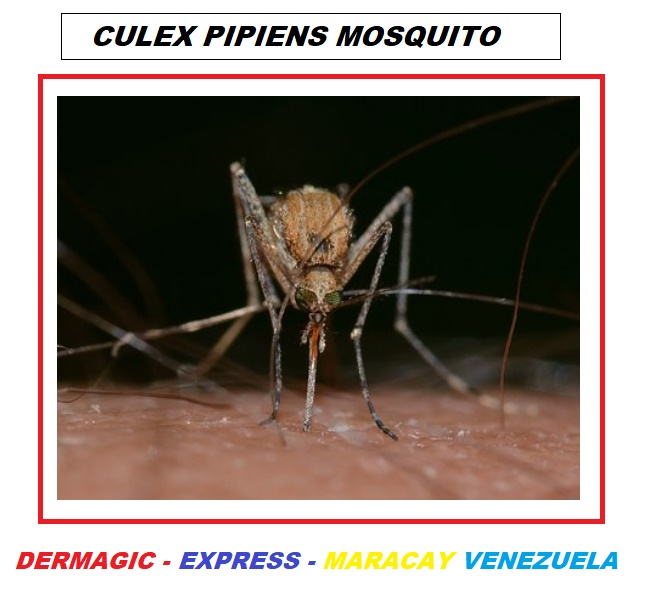

“Under the sun there is nothing hidden, and sooner or later the evidence appears that shows that what you tried to hide, became the evidence that became a truth”
1.) Doby JM , Chastel C , Couatarmanac’h A , Cousanca C , Chevrant-Breton J , Martin A , Legay B , Guiguen C . [Etiologic and epidemiologic questions posed by erythema chronicum migrans and Lyme disease. Apropos of 4 cases at the Regional Hospital Center, Rennes]. Bull Soc Pathol Exot Filiales. 1985;78(4):512-25.b[Article in French]
2.) Magnarelli LA1, Anderson JF. Ticks and biting insects infected with the etiologic agent of Lyme disease, Borrelia burgdorferi. J Clin Microbiol. 1988 Aug;26(8):1482-6.
3.) J.H. (Han) van der Kolk. Borrelia burgdorferi seeks vectors. Page 119 | Taylor and Francsi online. Published online: 15 Dec 2014.
Source:https://www.tandfonline.com/doi/full/10.1080/01652176.2014.972609?scroll=top&needAccess=true
4.) Chang YF, Novosel V, Chang CF, Summers BA, Ma DP, Chiang YW, Acree WM, Chu HJ, Shin S, Lein DH. 2001 Jul. Experimental induction of chronic borreliosis in adult dogs exposed to Borrelia burgdorferi-infected ticks and treated with dexamethasone. Am J Vet Res. 62:1104–1112.[Crossref], [PubMed], [Web of Science ®], [Google Scholar]
5.) Chang YF, Novosol V, McDonough SP, Chang CF, Jacobson RH, Divers T, Quimby FW, Shin S, Lein DH. 2000. Experimental infection of ponies with Borrelia burgdorferi by exposure to Ixodid ticks. Vet Pathol. 37:68–76.[Crossref], [PubMed], [Web of Science ®], [Google Scholar]
6.) Fernando SS. 1983. The giant kidney worm (Dioctophyma renale) infection in man in Australia. Am J Surg Pathol. 7:281–284.[Crossref], [PubMed], [Web of Science ®], [Google Scholar]
7.) Halouzka J, Postic D, Hubálek Z. 1998. Isolation of the spirochaete Borrelia afzelii from the mosquito Aedes vexans in the Czech Republic. Med Vet Entomol. 12:103–105.[Crossref], [PubMed], [Web of Science ®], [Google Scholar]
8.) Halouzka J, Wilske B, Stünzner D, Sanogo YO, Hubálek Z. 1999. Isolation of Borrelia afzelii from overwintering Culex pipiens biotype molestus mosquitoes. Infection. 27(4-5):275–277.[Crossref], [PubMed], [Web of Science ®], [Google Scholar]
9.) Liu D. 2012. Dioctophyme. In: Liu D, editor. Molecular detection of human parasitic pathogens. Boca Raton (FL): Taylor & Francis; p. 535–538.[Crossref], [Google Scholar]
10.) Qiu WG, Schutzer SE, Bruno JF, Attie O, Xu Y, Dunn JJ, Fraser CM, Casjens SR, Luft BJ. 2004. Genetic exchange and plasmid transfers in Borrelia burgdorferi sensu stricto revealed by three-way genome comparisons and multilocus sequence typing. Proc Natl Acad Sci USA. 101:14150–14155.[Crossref], [PubMed], [Web of Science ®], [Google Scholar]
11.) Stricker RB, Lautin A, Burrascano JJ. 2005. Lyme disease: point/counterpoint. Expert Rev Anti Infect Ther. 3:155–165.[Crossref], [PubMed], [Google Scholar]
12.) Wagner B, Erb HN. Dogs and horses with antibodies to outer-surface protein C as on-time sentinels for ticks infected with Borrelia burgdorferi in New York State in 2011. 2012. Prev Vet Med. 107:275–279.[Crossref], [PubMed], [Web of Science ®], [Google Scholar]
13.) Zákovská A, Nejedla P, Holíková A, Dendis M. 2002. Positive findings of Borrelia burgdorferi in Culex (Culex) pipiens pipiens larvae in the surrounding of Brno city determined by the PCR method. Ann Agric Environ Med. 9:257–259.[PubMed], [Web of Science ®], [Google Scholar]
14.) J. A. ROBERTS. Experimental Transmission of Borrelia anserine (Sakharoff 1891) by Aedes aegypti. Letter | Published: 16 September 1961. Nature volume 191, page 1225 (16 September 1961)
15.) Hubálek Z1, Halouzka J, Juricová Z. Investigation of haematophagous arthropods for borreliae–summarized data, 1988-1996. Folia Parasitol (Praha). 1998;45(1):67-72.
16.) Petr Zeman. Borrelia-infection rates in tick and insect vectors accompanying human risk of acquiring Lyme borreliosis in a highly endemic region in Central Europe. Folia Parasitologica 45[4] 319-325 (1998). Regional Center of Hygiene, Dittrichova 17, 120 07 Prague 2, Czech Republic
17.) Zákovská A1, Nejedla P, Holíková A, Dendis M. Positive findings of Borrelia burgdorferi in Culex (Culex) pipiens pipiens larvae in the surrounding of Brno city determined by the PCR method. Ann Agric Environ Med. 2002;9(2):257-9.
18.) Kosik-Bogacka D1, Bukowska K, Kuźna-Grygiel W. Detection of Borrelia burgdorferi sensu lato in mosquitoes (Culicidae) in recreational areas of the city of Szczecin. Ann Agric Environ Med. 2002;9(1):55-7.
19.) Kosik-Bogacka D1, Kuźna-Grygiel W, Bukowska K. The prevalence of spirochete Borrelia burgdorferi sensu lato in ticks Ixodes ricinus and mosquitoes Aedes spp. within a selected recreational area in the city of Szczecin. Ann Agric Environ Med. 2004;11(1):105-8.
20.) Zákovská A1, Capková L, Serý O, Halouzka J, Dendis M. Isolation of Borrelia afzelii from overwintering Culex pipiens biotype molestus mosquitoes. Ann Agric Environ Med. 2006;13(2):345-8.
21.) Kosik-Bogacka DI1, Kuźna-Grygiel W, Górnik K. Borrelia burgdorferi sensu lato infection in mosquitoes from Szczecin area. Folia Biol (Krakow). 2006;54(1-2):55-9.
22.) Alexandre C.Atalibaa. José S.Resendeb. NatalinoYoshinaric. Marcelo B.Labrunaa. Isolation and molecular characterization of a Brazilian strain of Borrelia anserina, the agent of fowl spirochaetosis.Research in Veterinary Science. Volume 83, Issue 2, October 2007, Pages 145-149https://doi.org/10.1016/j.rvsc.2006.11.014
23.) Nejedla P1, Norek A, Vostal K, Zakovska A. What is the percentage of pathogenic borreliae in spirochaetal findings of mosquito larvae? Ann Agric Environ Med. 2009;16(2):273-6.
24.) Petra Nejedla 1, Adam Norek 1, Karel Vostal 1, Alena Žákovská 1. What is the percentage of pathogenic borreliae in spirochaetal findings of mosquito larvae?. Ann Agric Environ Med. 2009;16(2):273–276
25.) Sikutová S1, Halouzka J, Mendel J, Knoz J, Rudolf I. Novel spirochetes isolated from mosquitoes and black flies in the Czech Republic. J Vector Ecol. 2010 Jun;35(1):50-5. doi: 10.1111/j.1948-7134.2010.00027.x.
26.) Melaun C1, Zotzmann S1, Santaella VG1, Werblow A1, Zumkowski-Xylander H2, Kraiczy P3, Klimpel S4. Occurrence of Borrelia burgdorferi s.l. in different genera of mosquitoes (Culicidae) in Central Europe. Ticks Tick Borne Dis. 2016 Mar;7(2):256-63. doi: 10.1016/j.ttbdis.2015.10.018. Epub 2015 Nov 12.
__________________
For more:
https://madisonarealymesupportgroup.com/2016/07/23/german-study-finds-borrelia-in-mosquitos/
https://madisonarealymesupportgroup.com/2018/10/04/deer-fly-lyme-carrying-ectoparasite-on-the-move/

