Archive for the ‘Activism’ Category

Zoonotic Implications of Changing Tick Populations

https://www.americanveterinarian.com/news/zoonotic-implications-of-changing-tick-populations

October 25, 2018

Zoonotic Implications of Changing Tick Populations

As environmental changes allow tick populations to spread, the zoonotic risk of tickborne diseases increases.

By Kate Boatright, VMD

Between 1940 and 2004, the majority of emerging human infectious diseases worldwide were zoonotic. Of these, nearly one-quarter were arthropod vector-borne diseases, with ticks being the most common vector. In the United States, tickborne diseases account for about 95% of vector-borne diseases.

A recent review article in Veterinary Sciences examined many factors of tick biology, including the changing geographic distribution of tick populations and the impact of this change on associated tickborne diseases.

Ixodes Ticks and Associated Pathogens

Ixodid ticks exist worldwide. Warmer temperatures and changing humidity have allowed for northern expansion in North America, Europe, and Russia. Many significant zoonotic pathogens are carried by these ticks:

  • Borrelia burgdorferi, the causative agent of Lyme disease, is now seen throughout the United States, Canada, and Europe.
  • New Borrelia species identified worldwide have been implicated as additional causative agents of Lyme disease (Borrelia mayonii) and a relapsing fever (Borrelia miyamotoi).
  • Babesiosis, caused by over 100 different Babesia species, is especially significant for cattle and humans. Human babesiosis cases are expected to be seen in Canada due to the increased number of Ixodes scapularis ticks, and new Babesia species are now seen in regions not previously known to have babesiosis.
  • Anaplasma phagocytophilum is the causative agent of human granulocytic anaplasmosis (HGA), equine anaplasmosis, and febrile diseases in ruminants, cats, and dogs. Reports of HGA in the United States increased by a factor of 12 between 2001 and 2011.
  • Co-infections are common in individuals exhibiting disease from an Ixodes tick vector. Ten percent of individuals infected with Anaplasma also had antibodies to B burgdorferi or Babesia microti.
Ambylomma Ticks and Ehrlichia

In the United States, Amblyomma americanum ticks have expanded both north and west as white-tailed deer populations have increased in these regions. All life stages of this tick species can feed on humans and deer, increasing the potential for transmission of Ehrlichia chaffeensis and Ehrlichia ewingii, the most common causes of human monocytic ehrlichiosis.

In the rest of the world, other Amblyomma ticks serve as vectors for multiple species of Ehrlichia, including new genetic variants classified as Candidatus Neoehrlichia species in Europe and Asia. For veterinarians, heartwater disease, caused by Ehrlichia ruminantium, is an increasingly important reportable disease of ruminants in Africa and the Caribbean.

Viral Vector-Borne Diseases

Vector-borne viruses are another emerging global zoonotic threat. Many tick species carry viruses of increasing public health importance:

  • Rhipicephalus microplus and Haemaphysalis longicornis ticks in China and Amblyomma americanum in the United States are known vectors of closely related viruses causing severe fever and thrombocytopenia. In the United States, this virus is known as heartland virus.
  • Bourbon virus was recently discovered in the United States.
  • Powassan virus is reemerging in North America.
  • Tickborne encephalitis viruses are broadening in range throughout Europe as reforestation and movement of dogs allows the range of their vector, Dermacentor reticulatus, to expand into Germany, the Netherlands, and Poland.
  • Crimean-Congo hemorrhagic fever virus is spreading to multiple countries in the Mediterranean, likely due to the transportation of its tick vector, Hyalomma marginatum, by birds from Africa, Asia, and Eastern Europe to Central Europe.
Take-Home Message

Practitioners in both veterinary and human medicine must remain aware of the changing geography of ticks and associated vector-borne diseases. The discovery of the Asian tick H longicornis in New Jersey and Virginia should be an important reminder of the fact that

“ticks and tickborne pathogens do not recognize international boundaries.”

Thus, “a robust international disease monitoring network” is needed to protect both human and animal health from both known and emerging tick-borne diseases.
Dr. Boatright, a 2013 graduate of the University of Pennsylvania, is an associate veterinarian in western Pennsylvania. She is actively involved in her state and local veterinary medical associations and is a former national officer of the Veterinary Business Management Association.

________________

**Comment**

Independent Canadian tick researcher states it’s migrating birds and photoperiod allowing tick populations to spread, not climate issues:  https://madisonarealymesupportgroup.com/2018/08/13/study-shows-lyme-not-propelled-by-climate-change/

This groundbreaking study:  https://madisonarealymesupportgroup.com/2018/10/30/study-shows-lyme-msids-patients-infected-with-many-pathogens-and-explains-why-we-are-so-sick/ shows a 85% probability for multiple infections in patients suffering from tick borne disease, including not only tick-borne pathogens but also opportunistic microbes such as EBV and other viruses.

Key Quote:

“Our findings recognize that microbial infections in patients suffering from TBDs do not follow the one microbe, one disease Germ Theory as 65% of the TBD patients produce immune responses to various microbes.”

Eighty three percent of all commercial tests focus only on Lyme (borrelia), despite the fact we are infected with more than one microbe. It takes 11 different visits to 11 different doctors, utilizing 11 different tests to be properly diagnosed. https://www.news-medical.net/news/20181101/Tick-borne-disease-is-multiple-microbial-in-nature.aspx?

Time for things to change.
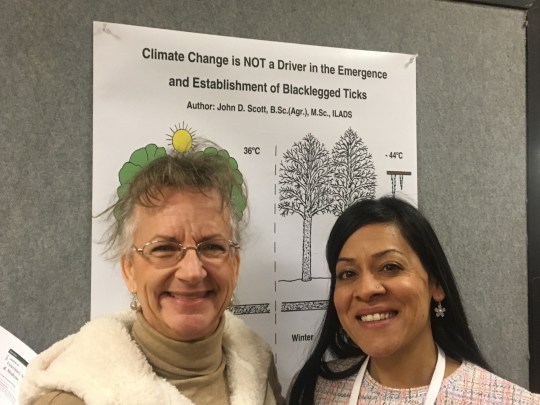


Ticks on the Move Due to Migrating Birds and Photoperiod – Not Climate Change

IMG_1143

Here is Aparna Taylor, ND, MSc from Calgary, Alberta on the right with a poster presentation at the recent ILADS conference in Chicago of John and Catherine Scott’s work on the spread of ticks.  Study found in the Journal of Veterinary  Science and Medicine:  https://madisonarealymesupportgroup.com/wp-content/uploads/2018/08/scott-scott-2018-ticks-and-climate-change-jvsm.pdf

I break it down here:  https://madisonarealymesupportgroup.com/2018/08/13/study-shows-lyme-not-propelled-by-climate-change/, and explain that according to the Scotts, there are numerous problems with the climate change model regarding tick proliferation and therefore, the spread of tick borne illnesses.

  1. Climate-change researchers overlooked and did not take into account established populations of I. scapularis found in the late 1960’s in the upper Midwest, as well as at Manitoba in 1991, in their climate change model maps. Even game hunters remember ticks on the heads and necks of deer in the 1950’s and 1960’s in northwestern Ontario and southern Manitoba. The faulty climate change maps are devoid of any ticks in those areas – yet experience shows otherwise. This has been the experience of patients across the globe as well.
  2. If there was any substance to climate warming in propagating ticks the Amblyomma americium (lone star tick) would have become established in the southernmost part of Ontario, but they haven’t.
  3. The progression of studies used by climate change researchers follows the order in which they were conducted not the result and progression of climate change.  Just because U.S. studies start in the early 80’s does not mean that was when ticks were established. As noted before, ticks and spirochetes have both been found in fossils, obviously long before the 80’s. This demonstrates climate adaptability.
  4. Climate change models overlook the fact that deer ticks were established in northwestern Ontario, southern Manitoba and were already in central Canada prior to 1970. What they predict to happen in the future has already happened in Canada. Their oversight caused a skewed rate of tick expansion and a miscalculation of northward projected movement.
  5. Ticks are marvelous ecoadaptors and find snow and leaf litter when conditions become harsh.  Warmer winters are in fact lethal to I. scapularis (black-legged) ticks. In fact, overwinter survival dropped to 33% when the snow melted. This has been substantiated by other researchers as well.
  6. Yearly bidirectional, songbird migration in spring and fall is behind tick expansion and the climate change model actually reflects migratory flight not warmer futuristic temperatures.
  7. Scott’s in-house tick studies have shown that black-legged ticks require 14 hours of daylight to molt. If ticks can’t molt, they can’t move on to their next life-cycle. Photoperiod is innate and can not be altered by the climate.

He states:

“The hypothesis that I. scapularis ticks will expand further north in the Prairie Provinces because of climate change is not only unscientific, but deceiving.”

I’ve been following the Scotts’ work for years as they are also patients who have been infected for decades with tick borne illness and who have done their own independent work.  I am thankful for them and the honest, transparent work they do.  As often happens in TBI research, the honest researchers are ignored while those pushing an agenda move forward.  Do not be fooled.

“For blacklegged ticks, climate change is an apocryphal issue.” -John Scott

Please spread the word that climate data will not help patients one iota.

For an excellent interview with John Scott:  https://madisonarealymesupportgroup.com/2017/08/14/canadian-tick-expert-climate-change-is-not-behind-lyme-disease/ (He also explains the bogus Lyme vaccine as well)

**UPDATE July 2022**

Spain just admitted it has recently been spraying deadly chemtrails as part of a secret UN program to fight COVID, and previously four state meteorological agency whistleblowers announced in 2015 that planes were regularly spraying lead dioxide, silver iodide, and diatomite throughout Spain to ward off rain and to allow temperatures to rise to create a summery climate for tourism as well as the agricultural sector – producing cold drops of great intensity.

Climate engineering is very real and is causing very real damage.

I assure you, Spain is not alone.

Kristen Meghan, a military chemtrails whistleblower has witnessed canisters of fine, powdered aluminum and barium being shipped to U.S. Air Force bases and being loaded onto jets.

Aluminum and barium are the metals that have been found (and continue to be found) in great excess in soil, rainwater, dust, and blood samples. These are the same metals associated with numerous patents which describe the mechanisms and processes of injecting aluminum and barium into jet engines for the purpose of spraying them into the atmosphere; a process called “geoengineering” by scientists. This also explains why the public witnessed the sudden appearance of trails coming from jet engines which never produced them previously.

Several whistleblowers have come forward exposing ongoing atmospheric spray operations, but Kristen has provided the link between the military and the massive amounts of toxic metals we are all experiencing on the ground.  Go here to watch an informative speech by Meghan.

A formerly classified US military document titled “Forest Fire As A Military Weapon” is a truly shocking exposé of planned scorched Earth destruction. The US Forest Service actually participated in the research and planning that went into this military instruction manual for carrying out orchestrated forest fire catastrophes. What part have climate intervention operations played in the preparation of forests for extreme and unprecedented incineration all over the world? A short video report reveals the shocking degree of research that the US military and the US Forest Service has put into preparing forests for extreme incineration.  Go here if Youtube censors the video.

Climate change alarmists are barking up the wrong tree.  Climate engineering by our own government is causing weather changes and untold environmental damage.

Acupuncture Beats Injected Morphine For Pain: Groundbreaking Study

http://www.greenmedinfo.com/blog/acupuncture-beats-injected-morphine-pain-groundbreaking-study?

Acupuncture Beats Injected Morphine for Pain: Groundbreaking Study

“© [9/6/16] GreenMedInfo LLC. This work is reproduced and distributed with the permission of GreenMedInfo LLC. Want to learn more from GreenMedInfo? Sign up for the newsletter here http://www.greenmedinfo.com/greenmed/newsletter.”

Acupuncture Beats Injected Morphine for Pain: Groundbreaking Study

An amazing new study has found that acupuncture, the ancient practice of using needles to stimulate bodily self healing, is more effective than intravenous morphine for pain. 

A truly groundbreaking study published in the American Journal of Emergency Medicine titled, “Acupuncture vs intravenous morphine in the management of acute pain in the ED,” reveals that acupuncture — one of the oldest techniques to treat pain — is more effective, faster in relieving pain, and with less adverse effects, than intravenous morphine.

The study was conducted over the course of a 1-year period at the Fattouma Bourguiba University Hospital in Tunisia, a tertiary care facility with over 100,000 Emergency Department (ED) visits per year.

300 ED patients with acute pain were included in the study: 150 in the morphine group (administered up to 15 mg a day) and 150 in the acupuncture group. The two groups were comparable in terms of age, sex, and co-morbidities, with the only significant difference being that there were more abdominal pain patients in the morphine group and more low back pain cases in the acupuncture group.

The striking results were reported as follows:

“Success rate was significantly different between the 2 groups (92% in the acupuncture group vs 78% in the morphine group P b .01). Resolution time was 16 ± 8 minutes in the acupuncture group vs 28 ± 14 minutes in the morphine group. The difference was statistically significant (P b .01). The mean absolute difference in pain score between the 2 groups was 7.7. This difference is not clinically significant because the minimal clinically significant absolute difference reported by Todd et al is 13. In morphine group, the mean total dose of morphine administered was 0.17 ± 0.08 mg/Kg (Table 2).

The pain scale change from baseline at each time point in the 2 groups is shown in Figure. From the 5-minute time point, the acupuncture group reported significantly larger pain decrease compared with the morphine group. This difference persisted during the entire study period. Change of blood pressure, HR, RR, and oxygen saturation was not significant in both groups.

Overall, 89 patients (29.3%) experienced minor adverse effects: 85(56.6%) in morphine group and 4 (2.6%) in acupuncture group; the difference was significant between the 2 groups (Table 3). The most frequent adverse effect was dizziness in the morphine group (42%) and needle breakage in the acupuncture group (2%). No major adverse effect was recorded during the study protocol. (See Table 4.)”

In short, the acupuncture group saw a great pain-relieving effect, which occurred faster, with significantly less side effects.

A graph from the study showing the pain-decreasing differences between morphine and acupuncture

Discussion

Since 1996, the World Health Organization has recognized acupuncture as a safe and effective therapy for the treatment of a wide range of conditions, including pain and discomfort.1 Despite this, the use of acupuncture within the conventional standard of care is still exceedingly rare. A deep skepticism exists for therapeutic modalities that do yet have a clearly characterized mechanism of action, as defined through conventional biomedical understanding and terminology. Often, in lieu of this, its therapeutic effects are written off as merely “placebo.”

Placebo, however, is not as diminutive term as it may first seem.  The placebo effect actually reflects the deep power and regenerative capability of the body-mind to heal itself. And since its power translates directly into real, measurable improvements in terms of clinical outcomes, it does not matter if we fully understand “how” it works. Also, consider that “evidence-based” (EB) medicine not only depends entirely on clinical outcomes as final proof of an intervention’s efficacy, but also, the entire EB medicine model depends on “controlling” for the placebo effect, as it is already tacitly recognized as having immense power in influencing the outcomes in most interventions. And so, whether or not a fully known or plausible “mechanism of action” has been identified is secondary in importance to whether it works or not in clinical practice.

Acupuncture happens to be one of the most extensively supported alternative modalities, with clinical trial data supporting its value in over 100 different conditions. If you do a pubmed.gov search you’ll find over 6,700 published studies related to the keywords “pain” and “acupuncture.” You can view the primary literature we have gathered on the topic on the GreenMedInfo.com Acupuncture portal:

Clearly the new study reveals that acupuncture has a powerful role to play in pain management. With addiction to pain relieving drugs affecting millions around the world, acupuncture is perfectly poised to provide patients a time-tested, drug-free alternative. As you can see from the study’s graph, the adverse effects comparison is staggeringly in favor of acupuncture as the safer modality.

Finally, here are the study’s powerful conclusions:

Our study demonstrated that in patients with acute pain syndromes presenting to the ED, acupuncture is at least as efficacious and has a better safety profile than IV morphine. The results of this study suggest that acupuncture has a potential role in controlling acute pain conditions presenting to EDs and appears to be safe and effective. Future studies should be performed in international populations. “

References

1 World Health Organization. Acupuncture: review and analysis of reports on controlled clinical trials; 2002.

Disclaimer: This article is not intended to provide medical advice, diagnosis or treatment. Views expressed here do not necessarily reflect those of GreenMedInfo or its staff.

_________________

More on pain management:  https://madisonarealymesupportgroup.com/2018/10/08/thc-vs-cbd-for-pain-the-differences-interactions/

https://madisonarealymesupportgroup.com/2018/01/24/medical-marijuana-for-lyme-a-doctors-perspective/

DMSO/MSM: https://madisonarealymesupportgroup.com/2018/03/02/dmso-msm-for-lyme-msids/
LDN: https://madisonarealymesupportgroup.com/2016/12/18/ldn/, https://madisonarealymesupportgroup.com/2017/06/12/ldn-reduced-pro-inflammatory-cytokines-in-fm-after-eight-weeks/
Magnetic Fields: https://madisonarealymesupportgroup.com/2018/08/15/treating-pain-with-magnetic-fields/
Laser Therapy: https://madisonarealymesupportgroup.com/2018/02/27/march-2018-support-group-laser-therapy/, https://madisonarealymesupportgroup.com/2018/04/08/class-iv-laser-therapy/
Heat: https://madisonarealymesupportgroup.com/2018/09/28/hotter-bodies-better-at-fighting-disease/

Enzymes:  https://madisonarealymesupportgroup.com/2018/03/05/how-proteolytic-enzymes-may-help-lyme-msids/

Parasite Masterclass – Dr. Jay Davidson

 Approx. 1 hour 47 Min

Dr. Jay Davidson

Parasite Masterclass

Nov. 4, 2018

More on parasites:  https://madisonarealymesupportgroup.com/2017/10/03/removing-parasites-to-fix-lyme-chronic-illnesses-dr-jay-davidson/

https://madisonarealymesupportgroup.com/2017/03/23/rebecca-keith-on-mcas-parasites-lymemsids/


Tale of Two Sisters With Tick Borne Illness

https://lymediseaseassociation.org/news/1928-nbc-10-news-features-lda-columbia-lyme-conference?  (News Story here)

NBC 10 News Rhode Island, October 22, 2018.

Health Check: Raising Awareness about Tick-Borne Diseases, was reported by Barbara Morse Silva.

Interviewed were two local sisters, Mary Lorusso-DiBara and Darlene DiBara O’Connor who have struggled for years with symptoms of Lyme and co-infections, as well as with finding proper diagnosis. With treatment, both have felt enormous relief of symptoms, but must remain under medical care. The sisters advocate for more research and more doctors who are willing to treat chronic symptoms. In the interview, they stressed that there are many symptoms associated with tick-borne diseases, and the symptom list is as long as the problem is big.

“Real change is going to happen with doctors and other scientists talking with one another.”   Lorusso-DiBara