Archive for the ‘Activism’ Category

Gestational Lyme & Other Tick-borne Diseases – Dr. Jones

Dr. Charles Ray Jones – Rock Star
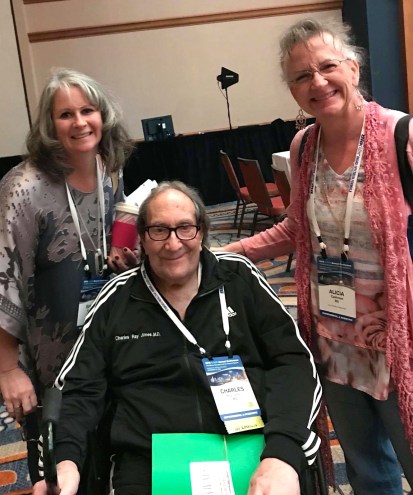
FB_IMG_1541741969447From left, Sherry Sievewright, Wisconsin Lyme Network, Dr. Charles Ray Jones, Alicia Cashman, Madison Lyme Support Group

Dr. Charles Ray Jones specializes in treating Lyme/MSIDS patients.  He has treated over 12,000 children with Lyme/MSIDS, and spoke recently at the Chicago ILADS convention.

Here is the executive summary of his presentation:

  • Borrelia burgdorferi (Bb) can be transmitted via ticks, gestationally, breast milk, and semen (yes, that means sexually).  While there isn’t a large NIH double-blind study, clinically LLMD’s are finding infected couples.  For more data on animals:  https://madisonarealymesupportgroup.com/2017/02/24/pcos-lyme-my-story/  (Scroll down to info on sexual transmission)


  • Gustafason & Burgess demonstrated gestational Bb infection in dogs.  Of the inoculated bitches, 80% became infected who then birthed mostly infected pups.1


  • A retrospective study showed 480 children with gestational Lyme/MSIDS. Diagnosis was based on clinical physical and history. 3


  • About 10% of Dr. Jones’ patients are infected gestationally.


  • Two cases of in vitro fertilization caused embryonic infection.


  • Mothers not treated resulted in 50% gestational transmission compared to mothers treated with 1 antibiotic resulting in a 25% transmission.  70% of infected mothers reported a difficult pregnancy.  ALL children improved with appropriate antibiotic treatment.  


  • Antibiotic treatment for Pregnant mothers:
  1. Amoxil 1000mg every 8 hours
  2. Ceftin 500 mg every 12 hours
  3. Omnicef 300 mg-600mg twice daily
  4. Mepron 750mg twice daily
  5. Zithromax 500mg twice daily
  • Other options for those who can not tolerate oral antibiotics:
  1. Bicillin 1.2 million units IM 1-3 times weekly
  2. Ceftiaxone 2 gms IV daily
  3. Cefotaxime 6 gms daily either continuous infusions or 2gms IV every 8 hours
  • Top 6 gestational Lyme symptoms:
  1. 90% low muscle tone (delays in motor skills, excess flexibility, drooling)
  2. 80% irritability (impulsive, risky behavior, interrupts, anger/mood swings)
  3. 72% fatigue
  4. 69% pain
  5. 60% low grade fevers with pale skin & dark circles under eyes
  6. 50% painful joints with stiffness & decreased range of motion
  • Coinfection rate found in study.3
  1. 30% Bartonella
  2. 20% Babesia
  3. 7% Strep
  4. 6% Ehrlichiosis
  5. 5% Leptospirosis
  • Male Child Case Study Findings.  Daily fevers between 101-102 degrees with severe joint pain, could not process stimuli, and poor muscle control.  Mother was infected with Bb during pregnancy and child had numerous tick bites.  Was initially diagnosed with a virus and was told he’d “grow out of it.”  Grandparents in desperation hired a priest to exorcise him.  Within 3 months of a clinical diagnosis of Bb (Western Blot positive) and multiple TBI’s (Babesia, Bartonella, Mycoplasma) and appropriate antibiotic treatment, he was doing well in school & athletics, and improved on all perimeters.  Treatment is ongoing.


  • Gestational treatment options:
  1. Combination of penicillin, cephalosporins, macrocodes, atovaquone (tetracycline, doxycyline & minocycline not usually used in those under 8) 


  • A 1995 study by Gardner showed 15% abnormal babies in treated mothers vs 67% of abnormal babies in mothers not treated.4


  • A 1989 study by MacDonald showed the following Lyme infection outcomes during pregnancy.5
  1. prematurity
  2. fluid in the brain
  3. blindness
  4. Sudden infant death syndrome
  5. blood infection
  6. Fetal death
  7. cardiovascular system anomalies
  8. growth retardation
  9. respiratory distress
  10. excess of bilirubin in the blood

References:

  1. Gustafson, J.M., E.C Burgess, et al.(1993). “Intrauterine transmission of Borrelia burgdorferi in dogs. “Am J Vet Res 54(6): 882-890
  2.  Xiao, J., et al. 2011. “How Different Strains of Parasite Infection Affect Behavior Differently”. Infection and Immunity. March 2011 . Quoted in science daily, March 22, 2011.
  3.  Jones, Charles Ray, Smith, Harold, Gibb, Edina and Johnson, Lorraine JD, MBA, “Gestational Lyme Disease Case Studies of 102 Live Births, Lyme Times, 2005”. 
  4. Gardner, T. (1995). Lyme disease. Infectious disease of the fetus and newborn infant. J. S Remington and J.O Klein. Philadelphia, Saunders. Chapter 11:447- 528. 
  5. MacDonald, A.B. (1989) “Gestational Lyme Borreliosis. Implications for the fetus. “Rheum Dis Clin North Amer 15(4): 657-677. 
  6. Goldenberg, R.L and C. Thompson (2003) “The infectious origin of stillbirth”. Am J Obstet Gynecol 189(#): 861-873.

____________________

More on Pregnancy with Lyme/MSIDS:

https://madisonarealymesupportgroup.com/2018/06/19/33-years-of-documentation-of-maternal-child-transmission-of-lyme-disease-and-congenital-lyme-borreliosis-a-review/

https://madisonarealymesupportgroup.com/2018/05/24/new-berlin-mom-given-life-altering-lyme-disease-diagnoses-after-pregnancy/

https://madisonarealymesupportgroup.com/2017/10/15/pregnancy-in-lyme-dr-ann-corson/

https://madisonarealymesupportgroup.com/2018/07/24/congenital-transmission-of-lyme-myth-or-reality/

https://madisonarealymesupportgroup.com/2018/02/26/transplacental-transmission-fetal-damage-with-lyme-disease/  (Great videos here)

https://www.lymedisease.org/lyme-basics/lyme-disease/children/  Great read on Lyme/MSIDS in children.

https://www.lymedisease.org/wp-content/uploads/2014/08/Image15-Jones-ABT.pdf  “Rationale for Prolonged Antibiotic Therapy in Treating Lyme Disease.”  By Charles Ray Jones, M.D.

GLA – What the “Man on the Street” Knows About Lyme Disease

Global Lyme Alliance (GLA) and Matthew Morrison (from Glee) take to the streets of NYC to find out what people really know about #Lymedisease.

  1.  While ticks are the accepted transmitters of Lyme/MSIDS, there are other ways to contract it including congenitally & via breast milk.  There is also data suggesting other bodily fluids including semen, vaginal secretions, and urine – not to mention mosquitoes, biting flies, and other biting bugs.

WE NEED GOOD, UNBIASED, RESEARCH IN THIS AREA.

  1. The better question to ask is, “What can you lose with Lyme?” and the answer  – potentially – everything.
  2. Interestingly, Lyme has been around forever:  https://madisonarealymesupportgroup.com/2018/02/12/the-persistent-spiral-the-ancient-history-of-lyme-disease-and-tick-borne-infections/ and was found in Otzi, the oldest European mummy.
  3. Lyme disease is a PANDEMIC.  And it’s not going away.
  4. While dogs are “tick taxi’s,” cats, along with about every single mammal carry Bartonella, a huge player in Lyme/MSIDS.  I predict much more on Bart will be discovered shortly.
  5. Education needs to emphasize that ticks carry numerous pathogens.  The symbiotic relationship between them is one reason many remain ill:  https://madisonarealymesupportgroup.com/2018/10/30/study-shows-lyme-msids-patients-infected-with-many-pathogens-and-explains-why-we-are-so-sick/  The one germ, one drug paradigm does not work here.
  6. While tick testing is an interesting and educational endeavor, you should be seen immediately by a Lyme literate doctor if you ever find an attacked tick. Please do not take the CDC’s “wait and see” approach.  It’s not worth the risk. Few states have free tick testing and it typically costs $50 or more per tick. If it were me, I’d demand prophylactic treatment.  Trust me.  You don’t want this.


2017 Tick-borne Disease Numbers

The 2017 CDC number for Lyme Disease is the largest ever reported total.  Considering the disease is underreported by a factor of 10,that means 427,430 cases occurred in the US in 2017.  (It not more)

**A disclaimer has been made on the map concerning MA. MA has changed its reporting so that it relies primarily on lab reports.  This is problematic since most of its numbers go unreported.  A similar disclaimer should be made for NY.**

CDC Results show a record number of tick-borne diseases.


Reported Tick-borne Diseases, U.S.          2016                    2017

Lyme Disease (confirmed & probable)          36,429                 42,749

Anaplasmosis/Ehrlichiosis                               5,750                   7,718

Spotted Fever Rickettsiosis                             4,269                   6,248

Babesiosis                                                        1,910                   2,368

Tularemia                                                             230                     239

Powassan Virus                                                     22                       33

Total                                                                48,610                59,349


Top 10 States for Reported Lyme Disease Cases

(Confirmed and probable)

  1. PA     11,900
  2. NY      5,155
  3. NJ       5,092
  4. WI       3,000
  5. MN      2,318
  6. CT       2,051
  7. MD      1,891
  8. ME      1,850
  9. VA       1,657
  10. NH      1,381

Top 10 Age Groups for Reported Lyme Disease Cases

(Confirmed and probable)

  1. 60-64     3,836
  2. 55-50     3,717
  3. 5-9         3,536
  4. 65-69     3,479
  5. 50-54     3,119
  6. 10-14     2,953
  7. 40-44     2,886
  8. 70-74     2,594
  9. 45-49     2,447
  10. 15-19     2,098

CDC Links to data:
(case count summary) https://www.cdc.gov/ticks/data-summary/index.html
(state data) https://www.cdc.gov/lyme/datasurveillance/maps-recent.html
(charts and figures) https://www.cdc.gov/lyme/datasurveillance/charts-figures-recent.html


Holidays: Relishing the In-Between Times

https://globallymealliance.org/lyme-patients-during-holiday-season/

image of orange and green pumpkins with Global Lyme Alliance logo

November 2, 2018

Holidays: Relishing the In-Between Times

by Jennifer Crystal

The build-up to Halloween is always an exciting time for kids. There’s so much anticipation—what will I be? What will my friends be? How much candy will I get? After the final flurry of fairies and goblins, ghosts and ghouls, candy bars and lollipops, there’s also an inevitable let down. Besides gorging themselves on too much sugar, kids can find themselves saying on November 1st saying, “Now what?”

There are still a few weeks remaining until Thanksgiving, and another couple months until the winter holidays. If having chronic tick-borne disease has taught me anything, it’s that these in-between times are a good thing. In fact, they’re necessary.

The build-up to a new health milestone is similar to the anticipation of a holiday. When I got my PICC line out after a year of treatment, I was filled with nervous excitement. I wondered if I would be able to maintain my health on oral antibiotics, and I was thrilled at the prospect of having two unencumbered arms. I would be able to shower! Wash my own hair! And swim!

After long illness, when we hit a health milestone or start to feel better, it’s only natural to want to run out and do all the things we did before we grew ill. But doing so more often than not will just land us right back in bed. Slow and steady wins the race for all tick-borne disease infections. It took a few weeks for my body to get used to the shift from intravenous to oral antibiotics. I then had an uptick in insomnia and fatigue. Then my symptoms diminished, and I began to feel good as I had before I went off the PICC line.

Once that happened, my inclination was to keep going—maybe I could lower my antibiotics even more! Maybe I could start doing more work! But my doctor kept me at the same dose of medication for several months. After the excitement of getting my PICC line out, I needed a period of healthy stability before building up to another change.

The same is true for holidays. If kids had Halloween every day, they would get sick from all the sugar and exhilaration. If we jumped right from Halloween to Thanksgiving to Christmas, we would be overwhelmed. The holidays wouldn’t retain their special qualities; they’d simply be exhausting. The down time in between holidays is an important way for everyone to resume their normal lives, get back on a regular schedule, and get themselves prepared for more festivities.

Sometimes, holidays still are tumultuous, despite our best efforts to normalize our lives in-between. The period between Thanksgiving and the winter holidays always feels particularly rushed, and many people find themselves burned out by January 1st. We can’t change when public holidays will occur, but Lyme patients can control how much down time they give themselves between periods of excitement. After my initial time of stability on oral antibiotics, I experimented going off of them, and at the same time made some huge life changes: moving to a new state, starting a new job, reestablishing my independence after years of convalescence.

These changes turned out to be too much, too fast. I relapsed and had to start again with antibiotic treatment. I learned that I should have maintained my treatment protocol for longer, and I should have taken baby steps with my re-entry into the workforce. Instead, I suffered the equivalent of a major sugar crash, and it took me over three years to get over it.

Now, I make changes in smaller increments. Weaning slowly off of one medication, taking on one new project at a time, and treating each like a holiday. That is, I recognize that while the change is exciting, it may also be turbulent, and I need to take extra good care of myself during the transition. Then, I need to relish some steady time getting used to that change before even considering another one. This makes the changes that much more special and enjoyable, which is exactly what holidays are meant to be.


jennifer crystal

Opinions expressed by contributors are their own.

Jennifer Crystal is a writer and educator in Boston. She is working on a memoir about her journey with chronic tick-borne illness. Contact her at jennifercrystalwriter@gmail.com


Cochrane – No Longer a Collaboration

For those of you just tuning in, Cochrane is an international network of scientists promoting evidence-based medicine.  In early September, the board, by a narrow majority, ended the membership of Cochrane founder, Peter C Gotzsche.  Then, four board members promptly resigned in protest.  The trouble started brewing for Gotzsche when he spoke out against a favorable Cochrane analysis of the HPV vaccine because he felt it overlooked side effects.  https://madisonarealymesupportgroup.com/2018/09/18/evidence-based-medicine-group-in-turmoil-after-expulsion-of-co-founder/

https://blogs.bmj.com/bmj/2018/11/08/peter-c-gotzsche-cochrane-no-longer-a-collaboration/

Cochrane—no longer a Collaboration

by Peter C Gøtzsche

November 8, 2018

Peter C Gøtzsche discusses his expulsion from the Cochrane Collaboration

My expulsion from Cochrane’s Governing Board and the Cochrane Collaboration is well known.

As one of its founding fathers, I had great aspirations for the charity and have realised many of them. I have published many important Cochrane reviews, e.g. on mammography screening and health checks, contributed to developing the methods and reporting of research, and documented the harms of overuse of drugs. My greatest contribution to science was to get access to clinical trial data at the European Medicines Agency, a feat that many people said would be impossible. [1]

When CEO Mark Wilson dropped the word “collaboration” from the charity’s registered name, it was a sign of things to come. Wilson changed the organisation from a grass roots scientific organisation, where centres worked autonomously and embraced diversity, into a highly centralised business, focused on ”brand” and “logos,” with “one voice, one position.” I could not abide by this oppressive culture.

When Iain Chalmers started the Collaboration 25 years ago, he wrote in the invitational letter to 50 people, including me, that the collaboration is

”committed to opposing any tendency for it to become dominated by any nation, institution, or individual.” Unfortunately, Cochrane has gone in that direction.

Academic freedom has gone, scientific debates are unwelcome, and transparency is a thing of the past. Cochrane’s public statements deny this, but I am a witness on the inside and Cochrane’s show trial against me is illustrative. [2,3]

Eighteen months ago, I was elected to Cochrane’s Governing Board with the most votes of the 11 candidates. My aim was to stop the rot—what I saw as a moral slide—and I challenged the leadership on core issues and on the way it was managing the charity.

I wrote a policy a year ago that would prevent Cochrane authors from having a commercial interest in the interventions they were assessing. The Cochrane leadership stalled.

I tried to block the CEO from micromanaging centres, so researchers could be free to operate autonomously with their own funding, but failed.

I tried to uphold Cochrane’s values of publicly challenging science. But when my team challenged Cochrane’s HPV vaccine review, we came under heavy criticism.This was scientific censorship. [2, 4, 5]

The Board and the CEO believe that public debates undermine Cochrane’s reputation. I disagree. Scientific debates further science, to everyone’s benefit.

Cochrane no longer lives up to its core values of collaboration, openness, transparency, accountability, democracy and keeping the drug industry at arm’s length.

In my view, the Board and the CEO should resign. They should resign from their posts and call for independent elections to be held and respect the requests from 31 centre directors and many others for an independent investigation of the “process” against me. It’s the only way to restore this great organisation to what it once was.

The ultimate excuse for ousting me from Cochrane was my “seriously bad behaviour.” If questioning our leadership, holding the drug industry to account and criticising bad science qualifies as “seriously bad behaviour,” then I am proud to own it.

I have submitted a complaint to the Charity Commission and hope the Commission and the funder of the UK groups will help to accomplish highly needed changes in the leadership and set-up of Cochrane.

Peter C Gøtzsche is a Danish physician and medical researcher

Competing interests: None declared.

References:

1 Gøtzsche PC, Jørgensen AW. Opening up data at the European Medicines Agency. BMJ 2011;342:d2686.

2 Demasi M. Cochrane – A sinking ship? 2018; 16 Sept. https://blogs.bmj.com/bmjebmspotlight/2018/09/16/cochrane-a-sinking-ship/.

3 Hammerstein D. Regenerate Cochrane to strengthen the production of trusted evidence for the common good of public health. 2018; 8 Oct. http://www.nogracias.eu/2018/10/08/regenerate-cochrane-to-strengthen-the-production-of-trusted-evidence-for-the-common-good-of-public-health-by-david-hammerstein/.

4 Jørgensen L, Gøtzsche PC, Jefferson T. The Cochrane HPV vaccine review was incomplete and ignored important evidence of bias. BMJ Evidence-Based Medicine 2018; 27 July. http://dx.doi.org/10.1136/bmjebm-2018-111012.

5 Jørgensen L, Gøtzsche PC, Jefferson T. The Cochrane HPV vaccine review was incomplete and ignored important evidence of bias: Response to the Cochrane editors. https://ebm.bmj.com/content/early/2018/07/27/bmjebm-2018-111012.responses#the-cochrane-hpvvaccine-review-was-incomplete-and-ignored-important-evidence-of-bias-response-to-the-cochraneeditors 2018; 17 September.

_________________

**Comment**

“Science” has become little more than big pharma propaganda.  Here’s why:

https://madisonarealymesupportgroup.com/2017/01/28/sit-down-science/  Industry funded “science” has tainted our world and turned science-based evidence into science-biased propaganda. Universities are laundering money through foundations to intentionally hide relationships, while scientists secretly nurture their relationships with corporate executives.  Negative outcomes go unpublished, the peer review process is so weak only studies that challenge industry interests are heavily scrutinized (usually by scientists hired by corporate public relations firms). Media is paid handsomely to ensure the public that “the science is settled,” especially when corporate liability is a primary concern.  Raw data is held captive, conflicts of interest are not fully disclosed and studies are designed to specifically obtain a desired outcome.

This is also happening regarding Lyme/MSIDS research:  https://madisonarealymesupportgroup.com/2017/01/13/lyme-science-owned-by-good-ol-boys/

  • Sin Lee, a pathologist and scientist who directs Milford Molecular Diagnostics, has received numerous publication rejections when he attempted to rebut the oft repeated dogma that has ruled the medical world for decades regarding tick borne illness.  


  • Marcia Herman, Giddens, adjunct professor at Gillings School of Global Public Health at the University of North Carolina states, “There has never been a well-designed study to examine this issue,” in regard to 80% getting the EM rash.  Yet, the rash is still the gold standard in diagnosis.


  • Christian Perronne, physician on the infectious diseases faculty at the University of Versailles-St Quentin, France, states, “If you try to publish a little bit different from the guidelines, it’s anti-science.”


  • Lyme literate physician Raphael Stricker goes on record, “The primer propagates one of the biggest myths about Lyme disease diagnosis instead of acknowledging the dreadful state of 30-year-old Lyme serology and the need for better testing.”


  • Benjamin Luft, one of the physicians who wrote the original Lyme guidelines in 2000 admitted that he now agrees that Lyme disease can persist making it infinitely more difficult to treat as time progresses and that the cabal’s continual emphasis on “false positives” is a red herring – that early treatment has great benefit.


  • Raymond Dattwyler, a 1994 CDC panelist that helped write the LD guidelines, stated, “Twenty years ago I would’ve said they’re fine. Now I say,

‘oh shit, we were wrong.’ It doesn’t look as good as we thought it was.”

Yet, The Cabal continues to play cacophony but insists it’s music.

iur

We are sick, not stupid.