THIS BLOG POST IS PART OF OUR PEOPLE TO HIGHLIGHT SERIES DURING OUR 2020 YEAR-END APPEAL. EACH WEEK WE’LL BE SPOTLIGHTING A GLA COMMUNITY MEMBER WHO HAS HELPED TO ADVANCE OUR MISSION. TO SUPPORT GLA DURING OUR YEAR-END APPEAL, DONATE HERE.
by Victoria Kotowski
I am grateful to GLA for speaking up for a community that unfortunately has not been given enough attention.
I went undiagnosed and untreated for 15 years. My initial symptoms started when I was in 5th grade in the fall of 2004. I was likely bitten a second time in 2012. During the next seven years, between then and 2019, I saw over 20 medical professionals, none of who suggested Lyme. In 2019, After months of recurring pain and swelling in my joints (right knee in particular), I finally went to an orthopedist who recommended I get tested for Lyme disease right away. Within a week, I had the results back that I had a positive result for every band tested, including co-infections. My LLMD later explained that my test results made sense to him, given my long list of symptoms and medical history.
Because I went undiagnosed for so long, I have an array of ongoing symptoms. The most prevalent being seizures/fainting, muscle spasms/tremors, joint pain, migraines, extreme fatigue, vision/hearing issues, depersonalization, brain fog, anxiety, blood circulation/body temperature problems, insomnia, depression. I went from being an extremely active, social, fit, and happy person to completely bedridden at times. I had to stop working for a year and quickly went from being a social butterfly to being a hermit. I had to leave college. At one point, I had to move out of my apartment and move in with my parents because living alone was too dangerous due to my seizures and frequent fainting spells.
I first came across GLA when I was diagnosed and desperately searching for answers. They have provided me with an incredible community to lean on for support and turn to for answers. It is also a great resource that I have shared with many who have reached out to me who are confused and scared like I once was. I am grateful to GLA for speaking up for a community that, unfortunately, has not been given enough attention.
I am also a proud Global Lyme Alliance Education Ambassador. I have been sharing my story and tips/education provided to me by GLA virtually on several platforms during the quarantine. In May, I also ran a fundraising campaign, “Lax Out Lyme,” a challenge to raise awareness and funds for GLA. I am happy to give back to an organization that has given me so much.
Today I’ve found that doing a combination of IV antibiotics, IV supplements, holistic treatments (sauna detox, acupuncture, etc.) has been most helpful. I’ve learned that it’s so important to be patient and that healing isn’t linear.
If I could share one piece of advice from my own story, it would be to trust your gut and be your own biggest advocate. I have struggled with symptoms since 2005, but I developed into a very successful student-athlete while having a busy social life. This, coupled with my lack of education/awareness of tick-borne illnesses and no mention of Lyme from any of the numerous doctors I have seen over a fifteen-year period, fueled my self-doubt that anything was wrong with me and led me to continue pushing on.
As you may know, GLA is solely funded by donor support. Due to COVID-19, we have been unable to hold our usual fundraising events. Please donate below if you’d like to support GLA’s research, our programs, and our mission.
Ten Fatal Errors: Scientists Attack Paper That Established Global PCR Driven Lockdown
By Celia Farber
Dec.3, 2020
War has broken out in the scientific literature that strikes at the existential core of Covid-19 and its proposed causative virus.
At the heart of the controversy lies the fact that the creators of the most commonly used test, the RT-PCR, published instructions for how to test for SARS-CoV-2 “without having virus material available,” in their own words, relying instead on the Chinese scientists’ genetic sequence published on the internet.
The paper “Detection of 2019 novel coronavirus (2019-nCoV) by real-time PCR” was published 24 hours after it was submitted to Eurosurveillance, clearly evading peer review. Its lead authors were Christian Drosten and Victor Corman, which is how it took on the title “Corman-Drosten paper.” It provided the “recipe,” or work flow for the Covid-19 diagnostic test, quickly applied all over the world, after it was accepted as the standard of testing by the WHO. (See link for article)
__________________
**Comment**
Important points:
The paper the house of cards is all built upon is called the Corman-Drosten foundation paper, and has been challenged by 22 international scientistsdemanding the paper’s retraction.
Drosten is a co-discoverer of the SARS-associated coronavirus & developed a test for it in 2003.
The paper was written WITHOUT A VIRAL ISOLATE. I posted on this previously here:https://madisonarealymesupportgroup.com/2020/03/16/does-the-coronavirus-exist/ According to Dr. Pieter Borger, it’s like having a few bone fragments and saying, “that’syour fish”. But, it could be any fish. It’s purely a synthetic code & they manufacture the parts that are missing. Borger also states he tried explaining it on LinkedIn but was banned.
The PCR test yields 80-97% FALSE POSITIVES, and Borger says it does NOT detect a virus. He also uses the comparison of finding a wheel and a hubcap from a Mercedes in a junkyard. You can not infer you are in a Mercedes garage based on only seeing 2 parts. He states it has ZERO relevance for diagnosis. This was recently supported by a paper published by Nature.com, which found no “viable virus” in PCR positive cases.
Dr. Corbett agrees there is no viral isolate for validation and calls it ‘donut ring science’ because there’s nothing in the center of it and it has nothing to do with reality.
As to nay-sayers stating the virus has been isolated“all over the world,” evidently there are NO CONTROLS FOR THEM. The CDC’s paper claiming viral isolation swabbed ONE person from China who had cold symptoms.
Corbett also points out the Corman-Drosten foundation paper was suspiciously published in 24 hours, without peer review, and that this never happens. It typically takes months for reviews.
The importance of this issue can not be overstated. If this paper is retracted the whole house of cards falls down.
While Borger states the response from scientists has been overwhelmingly supportive, authors of the Drosten paper were “dismissive on social media,” and Drosten proceeded to personally attack some of the scientists asking for the paper’s retraction.
Most important quote:
From his home in Germany, Reiner Fuellmich said, “The reason why I decided to speak out is that I didn’t want these crazy people who are pulling the strings behind the scenes to rule the world.I had no idea when I came out with my first video that these people and their corporations were such a powerful block. We are up against some really powerful and devious and bad, evil people. But they’re not a united front. We on the good side so to speak, I am firmly convinced that we have the better people, who know much more not just intellectually. The thing is . . . we’re humans, and they’re not.”
And with that, this article has brought us full circle to where we initially started. Again, if you have not read “Virus Mania,” please do. This is not the first time this has happened and I highly doubt it’s the last time. It’s all simply outlined in here:https://www.torstenengelbrecht.com/en/virus-mania/
Similarly to how Lyme/MSIDS has been mismanaged using all sorts of hat tricks and slight of hand, we are seeing similar tactics being used with COVID-19.
In this episode, you will learn about the BIOTOXIC Rx including the LabElymental Milk Cleanse, NeuroPraxis, MYCOMEFREE, and more.
About My Guest
My guest for this episode is Jody Levy. Jody Levy is the founder of The LabElymental Milk Cleanse, NeuroPraxis, and soon-to-be MYCOMEFREE. She is also the co-founder of WTRMLN WTR.
Jody has quietly been suffering from symptoms associated with Lyme Disease, Mold Illness (CIRS), and a slew of co-infections and related imbalances for over 20 years.
Now she is fully recovered and living her best life. She feels strong, healthy, pain–free, and proud of her discoveries.
She always knew she could not expose her struggle until she was able to share the solutions that helped her get better. In her unwavering belief that her journey was bigger than herself, she is now committed to creating simple and easy products that people can use to relieve their suffering and thrive.
For years, she was committed to understanding why she was always exhausted, in pain, puffy, blurry, and foggy. No-one could figure out what was wrong with her. But she was relentlessly determined to understand why she did not feel good. She set out on a painful and tedious journey to find solutions to help herself, and others, feel happy and healthy. She always knew that if she stayed the course, she would find the tools that would help her and ultimately many other people. She spun a web of the most exceptional doctors, scientists, researchers, practitioners, and healers who all played their part in her epic recovery.
She tried so many treatments. She mapped her genetics and her entire body. She was meticulous about how she recorded her treatments. Protocol by protocol, she tracked and cross-referenced her short-term and long-term results. She tried things that nearly killed her and when they didn’t work, she would get right back up and try again. Because she knew – intuitively – that she was going to discover things that would help her and others like her return to vibrant health. During this process she was optimistic, but she was also skeptical of everything. After years of treatments, she questioned if she would ever arrive at an answer.
And she finally succeeded! She healed herself of Lyme Disease and mold exposure. She got rid of co-infections and the agonizing symptoms of viruses and parasites. Her mental commitment, psychological anguish, and massive financial investments paid off. She got herself better. Her test results came back clean. Her brain cleared, her vision got crisp, and her mood balanced. Today, she is working to bring all of these solutions to as many people as she possibly can, so that no one has to suffer the way she did for as long as she did.
Key Takeaways
What was her personal experience through Lyme disease and mold illness?
What is the LabElymental Milk Cleanse?
What types of milk can be used with the cleanse?
What are the components of the cleanse?
What are NeuroPraxis and NeuroSculpting?
Does NeuroPraxis target the limbic system, vagus nerve, or parasympathetic nervous system?
What is MYCOMEFREE?
What are other tools that have been helpful in recovering from Lyme disease and mold illness?
Is there hope for recovering from complex, biotoxin illnesses?
My posting information does not mean I endorse the products mentioned in the Podcast, and in this case I have never even heard of them. Just throwing it out there for consideration. I rejoice with each and every patient who manages to find wellness and figure we should all listen and learn from them.
Melatonin has been shown to play a role in viral infections and research suggests it may be an important adjunct to COVID-19 treatment
Data analysis by Cleveland Clinic found patients who used supplemental melatonin had a 28% lower risk of testing positive for COVID-19. Blacks who used melatonin were 52% less likely to test positive for the virus
Melatonin attenuates several pathological features of COVID-19, including excessive inflammation and oxidation, exaggerated immune response resulting in a cytokine storm, acute lung injury and acute respiratory distress syndrome
A case series reports patients given 36 mg to 72 mg of intravenous melatonin per day as an adjunct therapy to standard of care improved within four to five days; all survived
Texas urgent care clinics using high-dose melatonin in combination with vitamin C and vitamin D say they’ve successfully treated hundreds of COVID-19 patients.Melatonin enhances vitamin D signaling and the two work synergistically to enhance your mitochondrial function
Melatonin is a hormone synthesized in your pineal gland and many other organs.1 While it is most well-known as a natural sleep regulator, it also has many other important functions.2 For example, melatonin:
Is a potent antioxidant3 with the rare ability to enter your mitochondria,4 where it helps “prevent mitochondrial impairment, energy failure and apoptosis of mitochondria damaged by oxidation.”5 It also helps recharge glutathione,6 and glutathione deficiency has been linked to COVID-19 severity
May prevent or improve autoimmune diseases, including Type 1 diabetes10
Is an important energy hormone that can influence your energy level11
Helps regulate gene expression via a series of enzymes12
Has anticonvulsant and antiexcitotoxic properties13
Melatonin Also Has Important Role in COVID-19 Treatment
Melatonin has also been shown to play a role in viral infections14 and according to a June 2020 research paper15,16,17 in Life Sciences journal, it may be an important adjunct to COVID-19 treatment. According to the authors, melatonin attenuates several pathological features of COVID-19, including:18
Excessive oxidative stress and inflammation
Exaggerated immune response resulting in a cytokine storm
Acute lung injury
Acute respiratory distress syndrome
They point out that melatonin is also “effective in critical care patients by reducing vessel permeability, anxiety, sedation use, and improving sleeping quality, which might also be beneficial for better clinical outcomes.”19
The scientific review paper,20 “Melatonin Potentials Against Viral Infections Including COVID-19: Current Evidence and New Findings,” published October 2020 in Virus Research journal, also summarizes the many potential mechanisms by which melatonin can protect against and ameliorate viral infections.
The authors review research looking at melatonin’s beneficial effects against a variety of viruses, including respiratory syncytial virus, Venezuelan equine encephalitis virus, viral hepatitis, viral myocarditis, Ebola, West Nile virus and dengue virus. Based on these collective findings, they believe melatonin may offer similar protection against SARS-CoV-2.
Melatonin Reduces Risk of Positive COVID-19 Test
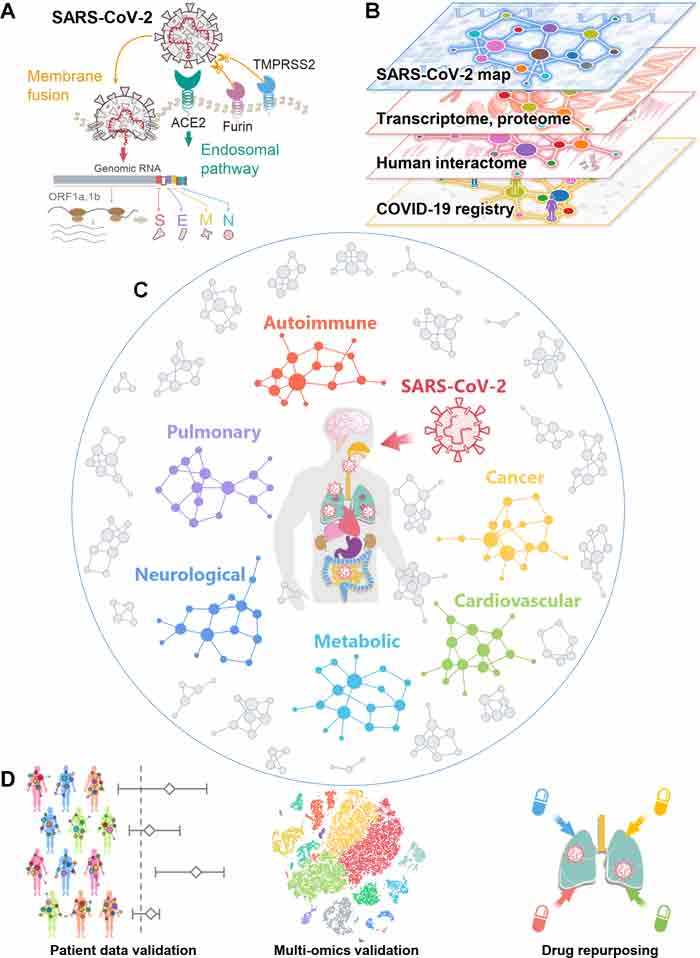
Data21,22 from Cleveland Clinic also supports the use of melatonin. Here, the researchers analyzed patient data from the Cleveland Clinic’s COVID-19 registry using an artificial intelligence platform designed to identify drugs that may be repurposed.23,24
By identifying clinical manifestations and pathologies shared by COVID-19 and 64 other diseases, they were able to conclude that certain proteins associated with chronic diseases are highly connected with SARS-CoV-2 proteins. Put another way, a number of proteins appear to play a key role in the pathologies seen both in COVID-19 and other chronic diseases. For example:25
“Analyses of single-cell RNA sequencing data show that co-expression of ACE2 and TMPRSS2 is elevated in absorptive enterocytes from the inflamed ileal tissues of Crohn disease patients compared to uninflamed tissues, revealing shared pathobiology between COVID-19 and inflammatory bowel disease.
Integrative analyses of metabolomics and transcriptomics (bulk and single-cell) data from asthma patients indicate that COVID-19 shares an intermediate inflammatory molecular profile with asthma (including IRAK3 and ADRB2).”
The diagram below illustrates (among other things) the basic pathogenesis of SARS-CoV-2 (figure A) and the network of disease manifestations associated with the infection (figure C).
These connections suggest that drugs already in use for a chronic disease may be repurposed and used in the treatment of COVID-19, as it acts on one or more shared biological targets. Melatonin stood out in this regard. Patients who used melatonin as a supplement had, on average, a 28% lower risk of testing positive for SARS-CoV-2. Blacks who used melatonin were 52% less likely to test positive for the virus.
Confounding variables adjusted for in the calculations included age, sex, race, smoking history and several known comorbidities. The authors point out that while the findings look promising, large observational studies and randomized controlled trials are still needed to validate the clinical benefits of melatonin.
Two key data points missing from the analysis are the dosage used and the length of supplementation. These data were not included in the patient registry, so we don’t know how much melatonin is required to lower your risk of SARS-CoV-2 infection to the degree found in this study.
High-Dose Melatonin Successfully Treats COVID-19
It’s possible that higher doses than those used for sleep may be needed, at least when treating an active infection. A recent case series26published in the journal Melatonin Research details how high-dose intravenous melatonin can benefit patients with COVID-19 pneumonia.
Here, patients were given 36 mg to 72 mg per day in four divided doses as an adjunct therapy to standard of care. Most supplements contain between 0.5 mg and 5 mg, and when used for sleep, you’d typically start with the lowest dose and work your way up as needed.
All of the patients given melatonin improved within four to five days, and all survived. On average, those given melatonin were discharged from the hospital after 7.3 days, compared to 13 days for those who did not get melatonin.
This is far better than the expensive treatment Remdesivir, which costs over $3,000 and doesn’t produce anywhere near this improvement.
Other Doctors Are Also Using Melatonin Against COVID-19
Dr. Richard Neel and colleagues at Little Alsace and Uvalde Urgent Care clinics in Texas also report using high-dose melatonin in combination with vitamin C and vitamin D, and had as of the last week of July 2020 successfully treated more than 400 patients.27
As reviewed in a section below, melatonin enhances vitamin D signaling and the two work synergistically to enhance your mitochondrial function. Melatonin and vitamin C are both also involved with ACE2, the receptor that SARS-CoV-2 uses to gain entry into the cell.
Together, melatonin and vitamin C help reduce SARS-CoV-2 virulence by inhibiting NLRP3 inflammasomes, which in turn inhibits cytokine storms. The Front Line COVID-19 Critical Care Working Group (FLCCC)28 also lists melatonin as an optional addition to their MATH+ protocolfor COVID-19.
How Melatonin Combats COVID-19
Research suggests melatonin may have the ability to combat COVID-19 via several different mechanisms. For example, it’s been shown to regulate immune responses and prevent cytokine storms.29 As explained by the authors of one such study,30 when your immune cells are in a hyper-inflammatory state, their metabolism changes in a way similar to that of cancer cells:
“Similar to cancer cells … immune cells such as macrophages/monocytes under inflammatory conditions abandon mitochondrial oxidative phosphorylation for ATP production in favor of cytosolic aerobic glycolysis (also known as the Warburg effect) …
The change to aerobic glycolysis allows immune cells to become highly phagocytic, accelerate ATP production, intensify their oxidative burst and to provide the abundant metabolic precursors required for enhanced cellular proliferation and increased synthesis and release of cytokines …
Because of melatonin’s potent antioxidant and anti-inflammatory activities, it would normally reduce the highly proinflammatory cytokine storm and neutralize the generated free radicals thereby preserving cellular integrity and preventing lung damage.”
Cytokine storm is one of the reasons why sepsis (blood poisoning) is so lethal, and studies have confirmed melatonin has a favorable influence on sepsis. (Sepsis is also a feature of severe COVID-19.) As reported in a 2010 study in the Journal of Critical Care:31
“Melatonin is an effective anti-inflammatory agent … Its anti-inflammatory action has been attributed to inhibition of nitric oxide synthase with consequent reduction of peroxynitrite formation, to the stimulation of various antioxidant enzymes thus contributing to enhance the antioxidant defense, and to protective effects on mitochondrial function and in preventing apoptosis.
In a number of animal models of septic shock, as well as in patients with septic disease, melatonin reportedly exerts beneficial effects to arrest cellular damage and multiorgan failure …
Apart from action on the local sites of inflammation, melatonin also exerts its beneficial actions through a multifactorial pathway including its effects as immunomodulatory, antioxidant and antiapoptotic agent.”
More recently, a 2019 animal study32 in the journal Frontiers in Immunology discusses how melatonin can protect against polymicrobial sepsis — i.e., sepsis caused by more than one microbial organism — which has a twofold higher lethality than unimicrobial sepsis (sepsis caused by a single microbe).33
In this case, melatonin appears to offer protection by having an antibacterial effect on white blood cells called neutrophils. A high neutrophil count is an indicator for infection. Melatonin may also combat SARS-CoV-2 infection by:34
Suppressing oxidative stress35
Regulating blood pressure (a risk factor for severe COVID-19)
Improving metabolic defects associated with diabetes and insulin resistance (risk factors for severe COVID-19) via inhibition of the renin-angiotensin system (RAS)
Protecting mesenchymal stem cells (MSCs, which have been shown to ameliorate severe SARS-CoV-2 infection) against injuries and improving their biological activities
Promoting both cell-mediated and humoral immunity
Promoting synthesis of progenitor cells for macrophages and granulocytes, natural killer (NK) cells and T-helper cells, specifically CD4+ cells
Inhibiting NLRP3 inflammasomes36
General Guidance for Supplementation
As mentioned, it’s very difficult to make dosage recommendations based on the limited evidence currently at hand, but since Cleveland Clinic looked at the supplements patients reported using, it seems reasonable to assume they were using it as you typically would. Most melatonin supplements contain between 0.5 mg and 5 mg.
In the case report mentioned earlier, patients were given 36 mg to 72 mg of melatonin intravenously per day, which would likely be excessive for prophylactic use. That said, research37 has found no adverse effects for dosages ranging from 20 mg up to 100 mg.
Whatever dose you take, and I recommend starting low, at 1 mg or less, be sure to take melatonin at night, before bed. Rising melatonin levels is the reason you feel sleepy in the evening, so it’s ill advised to take it in the morning or during the day, when your natural level is (and should be) low. If you happen to wake up in the middle of the night, especially if you’re exposed to a light source, you could also take some then, to help you go back to sleep.
Melatonin is also best taken sublingually, either in the form of a spray or sublingual tablet. Sublingually, it can enter your blood stream directly and doesn’t have to go through the digestive tract. As a result, its effect will be felt more rapidly.
Melatonin and Vitamin D Are a Winning Combo
Another supplement of crucial importance in the age of COVID-19 is vitamin D. Interestingly, melatonin enhances vitamin D signaling, and optimizing your vitamin D may be one of the most beneficial steps you can take to lower all of the risks associated with COVID-19, from reducing your risk of testing positive to lowering your risk of severe infection and death.
To learn more about this, download my free vitamin D report from StopCovidCold.com. Together, melatonin and vitamin D synergistically act to optimize your mitochondrial function. In fact, your mitochondria are the final common target for both.38
A deficiency in either vitamin D or melatonin has been associated with the pathogenesis of several chronic diseases, including high blood pressure, cardiovascular disease, metabolic syndrome and diabetes, just to name a few.39
These conditions have also emerged as comorbidities that significantly raise your risk of death from COVID-19. Synthesis of both vitamin D and melatonin is also dramatically reduced with advancing age, and old age is a primary risk factor for COVID-19 death. So, while vitamin D3 and melatonin supplementation may be beneficial for most people, it’s particularly important for the elderly.
Support Your Body’s Production of Melatonin and Vitamin D
Keep in mind, however, that it makes little sense to take a supplement unless you’re also seeking to optimize your body’s natural production. In the case of melatonin, this includes making sure you get good sleep on a regular basis.
You also need a good dose of natural sunlight around midday to synchronize your circadian clock so that your body produces melatonin at the appropriate time (i.e., in late evening). As the evening wears on and the sun sets, you’ll want to avoid bright and all blue lighting, as blue light inhibits melatonin synthesis. Blue lighting is predominant in LED and fluorescent bulbs that are “cool white.”
Sun exposure, of course, is also the ideal way to optimize your vitamin D. I recommend getting sensible sun exposure on large portions of your body on a regular basis, ideally daily. For further guidance, see “The Risks and Benefits of Sun Exposure.”
If for whatever reason you cannot get sufficient amounts of sun exposure, consider taking a vitamin D3 supplement (along with a little extra vitamin K2 to maintain a healthy ratio between these two nutrients).
I personally have not taken any oral vitamin D for well over 10 years and my levels are typically over 60 ng/mL, even in the winter. I have, however, started taking sublingual melatonin a few years ago as I am now in my mid-60s, even though I sleep in pitch dark and get bright sun exposure during the day.
Despite these COVID-19 treatments, our government has done all in its power to malign them. Their only answer is an experimental, fast-tracked vaccine that has caused serious adverse reactions.
A total of 71 patients with Lyme disease were identified for analysis in whom treatment with disulfiram was initiated between 15 March 2017 and 15 March 2020. Four patients were lost to follow-up, leaving 67 evaluable patients. Our retrospective review found patients to fall into a:
“high-dose” group (≥4 mg/kg/day)
“low-dose” group (<4 mg/kg/day)
62 of 67 (92.5%) patients treated with disulfiram were able to endorse a net benefit of the treatment with regard to their symptoms.
12 of 33 (36.4%) patients who completed one or two courses of “high-dose” therapy enjoyed an “enduring remission”, defined as remaining clinically well for ≥6 months without further anti-infective treatment.
The most common adverse reactions from disulfiram treatment in the high-dose group were fatigue (66.7%), psychiatric symptoms (48.5%), peripheral neuropathy (27.3%), and mild to moderate elevation of liver enzymes (15.2%).
We observed that although patients on high dose experienced a higher risk for adverse reactions than those on a low dose, high-dose patients were significantly more likely to achieve enduring remission. View Full-Text


 Today I’ve found that doing a combination of IV antibiotics, IV supplements, holistic treatments (sauna detox, acupuncture, etc.) has been most helpful. I’ve learned that it’s so important to be patient and that healing isn’t linear.