We’re kicking off our 4th annual #LiveLearnLyme education campaign for Lyme Disease Awareness Month. We’ve got our FREE Unlocking Lyme book giveaway, a FREE Mythbusting Lyme webinar, + TONS of social content for you. Join us all month long as we raise #LymeDiseaseAwareness.
1. Get a FREE Copy of Unlocking Lyme
A free, month-long Unlocking Lyme book giveaway a bestselling book written by Dr. Rawls, revealing the emerging science, unique insights, and practical solutions he used firsthand to achieve recovery.
Coupon code LYMEFREE22 Just cover the $3.95 U.S. book shipping cost
#2. Watch Out for this New Webinar Coming Up: Mythbusting Lyme Disease
Join a free webinar with Dr. Rawls on Wednesday, May 18th at 8 PM EDT — Mythbusting Lyme Disease: The Real Truth About Causes, Symptoms, Testing, and Treatment of Lyme
Registration link is coming next week! Check your email!
#3. #LiveLearnLyme Q&A with Dr. Rawls
Specially-designed #LiveLearnLyme social media content and daily answers from Dr. Rawls to your most-asked questions about Lyme disease across Facebook, Instagram, Twitter, and YouTube.
#4. Guest Appearances
Plus, Dr. Rawls will be making guest appearances on various Lyme-related podcasts throughout May.
In honor of Lyme Disease Awareness Month, the latest issue of the Lyme Times is open-access–freely available to all.
This special issue offers excerpts of 12 important Lyme-related books.
Topics range from personal experience with Lyme and co-infections, to physician advice about different treatments, the history of Lyme disease, how Lyme can affect the brain, and subjects related to Lyme in children.
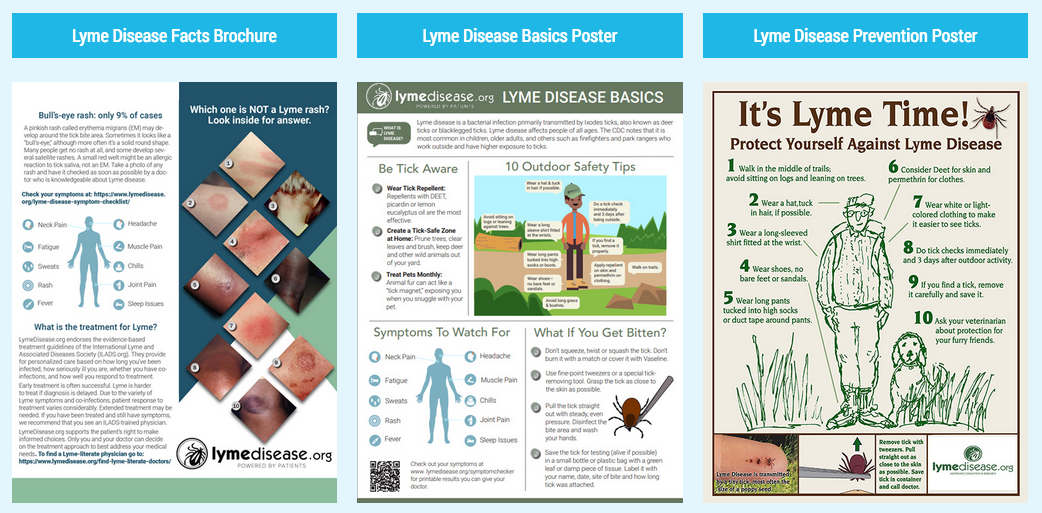
Download Posters & Brochures for Lyme Disease Awareness Month Activities
BOGO Sale for Lyme documentaries: Under Our Skin, and Emergence
It’s Lyme Disease Awareness Month
And our big DVD BOGO Blowout Sale!
This year we continue our advocacy and educational efforts to help spread awareness about Lyme disease. The month of May only we’re donating one free DVD for every DVD purchased of UNDER OUR SKIN or its sequel EMERGENCE. Use these free DVDs to help educate friends, family, physicians and policymakers. Buy one get one free; buy two get two free, and so on. We’ll automatically double your order–the tab’s on us. And if you have a great idea to use our DVDs to educate on a large scale, we can donate in bulk–just let us know your idea. Act now–offer ends May 31st!
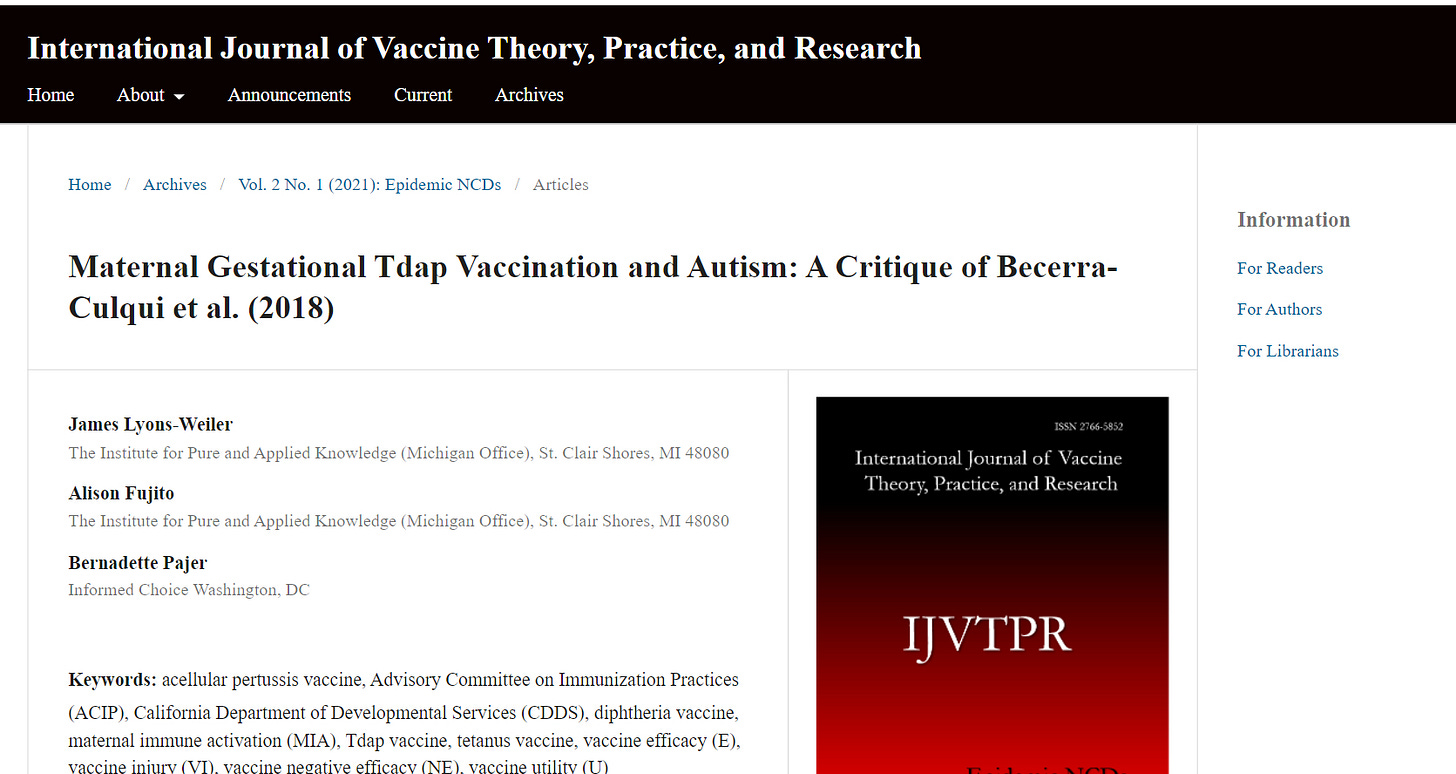
We report flaws and inconsistencies in a critically important study of autism risk following maternal Tdap vaccination. The authors of the 2018 study, Prenatal Tetanus, Diphtheria, Acellular Pertussis Vaccination and Autism Spectrum Disorder (BC18), concluded that Tdap gestational vaccination is not associated with increased autism risk and claimed to provide “evidence supporting the ACIP’s recommendation to vaccinate pregnant women”. Our observations, based on information from the study itself, challenge these conclusions. We find evidence of a peculiar study design and approach to data analysis forcing outcomes by arbitrary data adjustments, overlooked variables of importance such as Bordetella pertussis infection prevalence and vaccine injury rates, insufficient consideration of likely interactions between multiple historical medical challenges by vaccines and other interventions on their participants, exclusion from the study individuals likely at risk of vaccine intolerance due to genetics, and indications that the study samples were not representative of the general population. Their first-year data show a concerning spike in ASD rates, and their findings and conclusions did not hold up to real-world data, which currently reports 3.8% ASD rate in California. Our observations, based on information from the study itself, challenge the conclusions of Becerra-Culqui et al, 2018.
BioNTech 2022 SEC Filing: We May Not Be Able To Demonstrate Sufficient Efficacy or Safety of Our COVID-19 Vaccine. Significant Adverse Events Could Delay or Prevent Regulatory Approval
A notable change: ” Undesirable Side Effects” in 2021 Filing was upgraded to “Significant Adverse Events”
While we are eagerly waiting for the next Pfizer document dump, BioNTech released its annual SEC Filing.
Just like in the 2021 Annual SEC Filing, Pfizer admits that due to safety concerns and the inability to demonstrate sufficient efficacy, they are not likely to receive regulatory approval.
A notable change: ” Undesirable Side Effects” in 2021 Filing was upgraded to “Significant Adverse Events”.
Will this damning documentedadmission be ignored again by the MSM and the majority of so-called Alternative media the same way they ignored BioNTech’s 2021 SEC Filing?
Get ready for the never-ending state of emergency that will allow criminal world governments to mandate experimental Gene Therapy poison under the Emergency Use Authorisation for years to com
Infertility in the United States is on the rise. The use of assisted reproductive technology (ART) by infertile couples is increasing by 5% to 10% annually. Although this may be partially due to societal factors such as advanced education and career opportunities for women, later marriage, and delayed childbearing, there is likely more to this issue. In fact, recent studies show that after a year of having unprotected sex, 15% of couples are unable to conceive a child. Moreover, after two years, 10% of couples had still not achieved a successful pregnancy.
Given the increased prevalence of this issue, more research is investigating potential causes of infertility. Below are some of the most common causes of infertility:
Reports of Women Shedding Uterine Lining Surged in 2021, Research Shows
Three members of the Children’s Health Defense team conducted research for a paper published April 21 in the Gazette of Medical Sciences showing an increase in reports of “decidual cast shedding” during 2021, compared with the pre-pandemic period.
Three members of the Children’s Health Defense team — Brian Hooker, Ph.D., chief scientific officer, Sue Peters, Ph.D., senior research fellow and Heather Ray, scientific administrator — conducted research for a paper published April 21 in the Gazette of Medical Sciences.
Hooker, Peters and Ray worked with My Cycle Story, a multidisciplinary, collaborative research project involving 13 scientists and physicians, on a survey that found an increase in 2021 in reports of “decidual cast shedding.”
Decidual cast shedding refers to a condition where the entire lining of the uterus is passed at once. (See link for article)
________________
SUMMARY:
A survey conducted on social media found that out of 6,049 females there were 292 reported cases of decidual cast shedding between May 16, 2021, and Dec. 31, 2021, contrasted with only 40 cases in the previous 109 years – a 2,000% increase.
A previous survey also found an increase in menstrual irregularities since the beginning of the COVID-19 pandemic, including a variety of unusual, many severe symptoms.
‘What I’ve Seen in the Last 2 Years Is Unprecedented’: Physician on COVID Vaccine Side Effects on Pregnant Women
Former Pfizer VP: ‘Adverse impacts on conception and ability to sustain a pregnancy were foreseeable’
By Enrico Trigoso
April 27, 2022Updated: April 28, 2022
Dr. James Thorp is an extensively published 68-year-old physician MD board-certified in obstetrics and gynecology, as well as maternal-fetal medicine, who has practiced obstetrics for over 42 years.
Thorp told The Epoch Times that he sees 6,000–7,000 high-risk pregnant patients a year and has seen many complications among them due to the COVID vaccines.
“I’ve seen many, many, many complications in pregnant women, in moms and in fetuses, in children, offspring,” Thorp said, “fetal death, miscarriage, death of the fetus inside the mom.
“What I’ve seen in the last two years is unprecedented,” Thorp asserted.
The Importance of Reaching Out If Lyme Disease Has Left You Feeling Suicidal
By Annie Perkins-Rosenberg
Editor’s note: If you experience suicidal thoughts, the following post could be potentially triggering. You can contact the Crisis Text Line by texting “START” to 741-741.
Article excerpt:
The important message of this article is to help those out there who deal with the psychiatric manifestations, the judgments and the daily struggle of living life with a complex disease like Lyme. It can be heavy some days, and anyone can have dark questioning moments pass through their minds. When those moments do arise, it can be complicated to find someone to trust and to talk to. Quite often, Lyme patients are paying for treatments out of pocket and this does not leave much money left for proper psychiatric help. With the limited time in office visits with our doctors, there is not much time left to talk about how we are feeling emotionally, and our doctors are generally not trained psychiatrists, as much as we wish they were. With Lyme disease being largely unknown, others close to you may judge you and you may feel like there is no one left to talk to. Even if there is, the psychiatric disturbances the disease can cause can make you feel like there is no one out there who can understand you, no one who can listen to you and no one to reach out to, but there is. There always is.
One of the techniques the author used was Googling the suicide prevention hotline so she had a plan if things got dark. She also removed anything bothersome and overwhelming to her, set boundaries, learned to speak up, and found a small group of people on the same journey as her for comfort. She also reminded herself that each day she was getting better, that she was healthy and could beat this. When the dark thoughts came, she sought out help.
LAD contributed to suicidality, and sometimes homicidality, in individuals who were not suicidal before infection. A higher level of risk to self and others is associated with multiple symptoms developing after acquiring LAD, in particular, explosive anger, intrusive images, sudden mood swings, paranoia, dissociative episodes, hallucinations, disinhibition, panic disorder, rapid cycling bipolar, depersonalization, social anxiety disorder, substance abuse, hypervigilance, generalized anxiety disorder, genital–urinary symptoms, chronic pain, anhedonia, depression, low frustration tolerance, and posttraumatic stress disorder. Negative attitudes about LAD from family, friends, doctors, and the health care system may also contribute to suicide risk.
By indirect calculations, it is estimated there are possibly over 1,200 LAD suicides in the US per year.
Robert Bransfield, MD, DLFAPA, private practice, Psychiatry, in Red Bank, New Jersey, discusses direct methods that can be used to acquire statistics related to suicides that are a result of Lyme and associated diseases
One of the best pieces of advice I got on the journey from another patient was, “don’t get depressed about being depressed.” In other words, accept the fact there will be dark days with dark thoughts. Don’t beat up on yourself over this. Accept it and look forward to tomorrow which will be better.
While the topics regarding Lyme/MSIDS are endless, dealing with pain and insomnia are two issues that can really help with mental health.