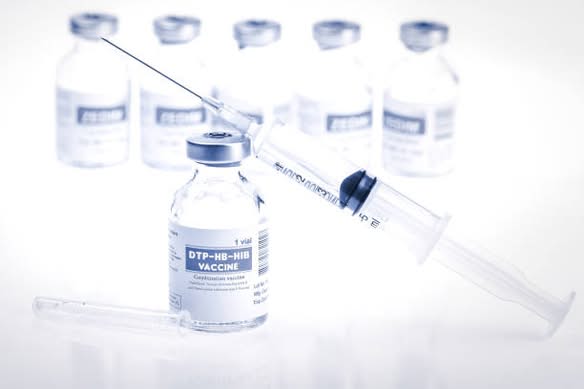
Tech entrepreneur Steve Kirsch used advanced AI to analyze raw, independent datasets about mRNA injuries – and uncovered what “no public health official wants to know.” Legacy media continues to ignore the staggering reality of adverse reactions and side effects of mRNA for COVID-19. Steve Kirsch took matters into his own hands – and his latest analysis estimates that as many as 2 million Americans were seriously disabled by the shots. He joins Dr. Kelly Victory to share his methods, how he used AI to analyze the data, and why “not a single national public-health authority, anywhere in the world, has produced an estimate of the type we just constructed.”
CHAPTERS
0:00 – Dr. Kelly Victory & Steve Kirsch: Exposing mRNA Data
5:30 – How Steve Kirsch Used AI To Analyze mRNA Injuries
18:15 – Steve Kirsch Offered $3.3 Million To Debate The Science, Nobody Took It
24:40 – “Scared Of Losing”: Why They Refuse To Debate Kirsch’s data
FDA’s own data flagged sudden cardiac death, heart attacks, blood clots, neurological damage, and dementia… and the FDA analyst uncovering it was ordered to “cease and desist.”
Even after Dr. Szarfman and DuMouchel published their findings in Drug Safety (2022) showing masking was eight times more likely with COVID vaccines, and Dr. Robert Califf replied “Thanks. These are good,”no changes were made to the methodology.
This is documented, internal FDA communication showing deliberate suppression of safety signals at the exact moment millions of Americans were being told the shots were “safe and effective.” (See link for article)
For the Morgellons community, this interview matters.
Dr. Savely has been one of the most visible and consistent clinicians willing to take Morgellons patients seriously. Long before the condition had any meaningful public recognition, she was listening to patients, examining lesions, documenting fibers, publishing clinical observations, and challenging the assumption that every patient reporting fibers, crawling sensations, or non-healing skin lesions must be suffering from a psychiatric disorder.
As a Morgellons patient advocate, I believe this type of public conversation is essential. Patients do not need more ridicule. They need careful evaluation, better science, better diagnostics, and clinicians willing to look before they dismiss.
The Mammography Deception: Why RFK Jr. Is Right for the Wrong Reasons
How a screening tool became a political battleground — and why the real crisis in breast cancer care has nothing to do with who sits on a government task force
In May 2026, RFK Jr. fired two vice chairs of the U.S. Preventive Services Task Force (USPSTF) — the body whose letter grades legally determine what preventive care your insurance must cover — and the medical establishment and its media apparatus erupted in performative outrage. The concern was presented to the public in the following terms: that political operatives would replace evidence-based scientists, that mammograms and colonoscopies would go the way of vaccine recommendations. But in the ensuing media storm, almost no one stopped to ask a harder question. What if the evidence base for mammography screening was already contested, complicated, and in some dimensions, quietly devastating — long before any politician arrived to interfere?
“Doctors are furious that RFK Jr. touched mammography.
But the Cochrane Collaboration — medicine’s gold standard — found that for every woman mammography saves, 10 are unnecessarily treated.
The outrage is real. It’s just aimed in exactly the wrong direction.” Sayer Ji Source
(See link for article)
________________
**Comment**
1.3 MILLION women are over-diagnosed by mammography screening over a 30 year period and treated for cancers that would never have caused symptoms or death according to a 2012 analysis.
Let that sink in for a moment.
Ji points out that ‘finding is not the same thing as saving,’ and that for a majority of women their body’s immune system is managing this cluster of abnormal cells which would never cause symptoms, spread, or kill them. But today a ‘breast cancer’ diagnosis results in the institutional logic of oncology which demands biopsy, surgery, radiation, and often years of hormone suppression. Similarly to weather modifying geoengineering creating a self-fulfilling prophecy and then turning around and blaming ‘climate change’ for what it actually caused, these diagnosed women with ”breast cancer’ are told mammograms saved them and the system counts her a success despite never addressing the abnormal cell population.
Lastly, the fourth most common breast cancer in women is ductal carcinoma in situ (DCIS) which is abnormal cells within the milk duct – not invasive cancer. It is merely a finding of a tissue-level change yet standard care for it has been lumpectomy or mastectomy, followed by radiation, and often years of tamoxifen. RCTs are showing the majority of low and intermediate-grade DCIS do not progress to invasive cancer.
Never forget: mammography delivers ionizing radiation to breast tissue.
EMR Syndrome: ‘I Have Lost My Career, My Hair and My Voice’
Since smart meters were installed in her condo complex in 2018, Diane Grossi says her life has been steadily taken apart by symptoms she believes are linked to ongoing electromagnetic radiation (EMR) exposure. What began within weeks of installation has, over the past five years, evolved into a steady physical decline.
This article was originally published by The Defender — Children’s Health Defense’s News & Views Website.
Diane Grossi sounds like she’s been crying when she answers the phone.
“This is my radiation voice,” she says quietly. “I used to have a beautiful voice, but now that’s gone too.”
Since smart meters were installed in her condo complex in 2018, Diane says her life has been steadily taken apart by symptoms she believes are linked to ongoing electromagnetic radiation (EMR) exposure.
What began within weeks of installation has, over the past five years, evolved into a constant state of physical decline.
Diane describes a long list of debilitating symptoms: anxiety, migraines, nosebleeds, hair loss, rashes, nausea, tinnitus, tooth grinding, loss of balance, body aches and profound weakness.
But for Diane, the most devastating losses are the ones that cannot be measured clinically: her career, her independence and her ability to function in daily life.
“Since August 2018, I have lost my career, my hair and my voice,” she says. “My hands are numb so I can’t type and I can’t work. It feels like the radiation paralyzes you. You just can’t function.”
Despite refusing a smart meter for her own unit, Diane says she is surrounded on all sides by wireless infrastructure, including electric, gas and water meters installed throughout her building.
She estimates that multiple clusters of meters are located just feet and sometimes dozens of feet from her living space, creating what she experiences as constant exposure.
“I have not slept in my bedroom since the meters were installed,” she explains. “What little sleep I get is on the couch. My heart races. My body goes numb. My eyes burn. Sometimes I wake up and vomit. It’s like being tortured 24/7.”
Diane says she has repeatedly raised concerns with her HOA, providing documentation and scientific literature she believes support a connection between EMR exposure and her symptoms.
She also worries about safety risks in the building itself, including fire concerns and insurance exclusions tied to the infrastructure changes. But she says her concerns have gone unanswered.
“When I explained about insurance exclusions … crickets,” she says.
Unable to work, Diane has been surviving on a modest inheritance left after her mother’s passing in 2017. That financial cushion is now gone, leaving her in debt for the first time in her life.
She faces a painful contradiction: She cannot remain in her home due to her symptoms, but she also cannot afford to leave, pursue legal action or access disability support.
“I can’t get disability because they don’t acknowledge electrosensitivity,” also known as EMR Syndrome, she says. “I can’t even get diagnosed.”
Diane’s experience is not isolated. A growing number of people worldwide report similar symptoms they associate with electromagnetic fields from wireless infrastructure.
While mainstream regulatory agencies maintain that current evidence does not establish a causal link, the lived experiences of those affected continue to raise difficult questions about recognition, research gaps and public health protections.
For Diane, however, the debate is not abstract. It is lived every day in pain, exhaustion and isolation.
“I just can’t understand how this can happen,” she said. “We have laws to protect people. We have responsibilities to keep environments safe. But none of that seems to matter when it comes to this.”
Her story highlights a broader tension between technological expansion and human impact — between what is considered “safe” in policy frameworks and what individuals are experiencing in their homes and bodies.
And yet, despite everything she has lost, Diane continues to speak out not because she has answers, but because she believes the questions are not being asked.
Diane encourages others not to let the “experts” or regular authorities connect the dots of this complex situation. She’s one of many thousands of people who recognize their symptoms of EMR Syndrome. But we are all affected by the electrosmog around us.
Diane is sharing her story so that you and your loved ones never have to have a story of your own. That’s her wish for you. Let’s do what we can to make it come true.
The views and opinions expressed in this article are those of the authors and do not necessarily reflect the views of Children’s Health Defense.
It is being sold across the wellness world as a daily brain booster. Meanwhile, the green pigment in your salad and the blue pigment in spirulina do the same thing — safer, with better evidence, and as the way your body was designed to harvest sunlight in the first place.
Scroll through wellness Substacks, biohacker podcasts, or longevity posts on X in 2026 and you cannot miss methylene blue. A tiny dropper bottle of deep navy liquid. A blue-tongued grin. Claims that it “supercharges mitochondria,” “uncloggs neurons,” and turns aging brains young again.
It is one of the strangest stories in the modern wellness movement.
Because methylene blue is not a botanical, not a peptide, not a mushroom extract. It is a synthetic phenothiazine dye, invented in 1876 by a German chemist named Heinrich Caro to color cotton and wool. It has been used to stain microscope slides, to disinfect aquariums, to treat malaria when nothing else was available in the 19th century, and — in modern emergency rooms — as an acute antidote for a rare blood disorder called methemoglobinemia.
It was never designed as a daily supplement. And once you look at what the toxicology literature actually says — the kind of literature that the FDA’s own regulators read before approving a new drug — the case for taking methylene blue as a nootropic falls apart.
Worse, it falls apart precisely because there is a better, safer, evolutionarily older molecule doing the same job in your mitochondria — and it is sitting in your refrigerator.
This is the story of how a textile dye got mistaken for a mitochondrial medicine, and why the chlorophyll in your spinach and the phycocyanin in spirulina are doing what methylene blue claims to do, without the genotoxicity.
(See link for article)
__________________
**Comment**
Many are promoting MB, including LLMDs for Lyme/MSIDS. This is another take on it to consider. The article also lists other substances that do similar things but are completely safe.
Methylene blue is not a miraculous new discovery. It’s the opposite. Created in 1876 in a lab, it is the oldest manmade chemical to be used in medicine. But for well over a century, methylene blue has never been FDA-approved for psychiatric purposes. Later, its chemical structure was modified in labs to create many of the earliest, most neurotoxic psychiatric drugs. (See link for the in-depth article by psychiatrist Peter Breggin who has decades of experience and who has written many scientific papers and books showing how human beings who take psychiatric drugs sometimes are initially stimulated when the drug over-activates the monoamine neurotransmitters, including epinephrine, norepinephrine, serotonin, and dopamine; but eventually, similar to the animals, the human drug recipients typically become more subdued, apathetic, or disengaged from their own feelings, those around them, and with life itself. Breggin does not prescribe psychiatric drugs as a treatment as he feels they do more harm than good. Instead he offers therapy, and education on more effective and healthier principles of living. He is the author of the only medical textbook on the subject, called “Psychiatric Drug Withdrawal: A Guide for Prescribers, Therapists, Patients and Their Families.”)