Vaxxed III Showing Today
https://vaxxed3.childrenshealthdefense.org/?utm_id=20240918 Trailer here
Click on link to find a screening near you.
There is a screening in Green Bay, two in Milwaukee, 3 in Chicago, and two in Minneapolis.

https://vaxxed3.childrenshealthdefense.org/?utm_id=20240918 Trailer here
Click on link to find a screening near you.
There is a screening in Green Bay, two in Milwaukee, 3 in Chicago, and two in Minneapolis.
https://www.globallymealliance.org/blog/epstein-barr-virus-and-lyme-disease?
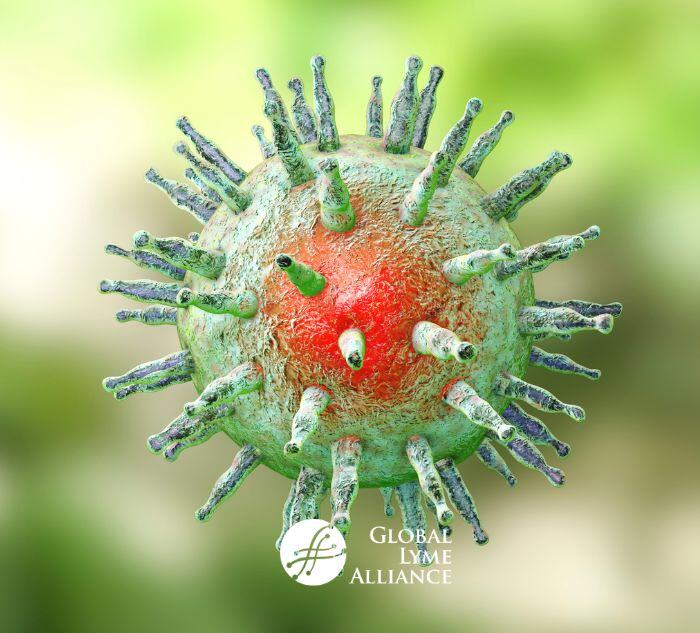
Whenever I write about my chronic tick-borne illnesses Lyme disease and babesiosis, I always add “as well as chronic active Epstein-Barr virus (EBV).” This is because for me—and for many Lyme disease patients—EBV and Lyme go hand in hand. Though one is a virus and one is a bacterial infection, the two wreak havoc on the body together, and a flare of one can lead to a flare of another.
I know this now, two decades into my chronic illness journey. When I got mononucleosis, which is caused by the Epstein-Barr virus, in 2003, I had no idea that I also had underlying tick-borne infections or that the two could impact each other. Since 1997, I’d had all sorts of strange symptoms, ranging from an on-and-off-again flu to migraine headaches, hypoglycemia, asthma, trembling hands, and hives. Each of these complaints had been treated individually—often brushed aside as stress or “just feeling run down”—and tick-borne illnesses were never considered. Ironically, every time the flu-like symptoms came back, I would worry that I had mono. I knew that virus could take a while to get over, and I didn’t have time to be sick. But the tests were always negative.
Until, days before I was to start a job as a Head Counselor at a summer camp in Maine, a sore throat and mounting fatigue led to a mono test that actually did come back positive. Now I really didn’t have time to be sick. I had just finished a strenuous year teaching high school English and Journalism in Colorado, had driven cross country by myself, and was supposed to spend only a few days with family in Connecticut before heading off to Maine.
The universe had other plans, but I didn’t agree with them. I knew that some people got over mono in a few weeks, while some cases took longer. I took a steroid to alleviate symptoms and speed up recovery. I rested in Connecticut for two weeks. And then, with my doctor’s permission, I set off for camp, where I so desperately wanted to be.
Camp needed me, too, as the oldest returning Head Counselor. But my being there that summer wasn’t fair to anyone—not to the campers, not to the directors, not to me. Camp needed me to give my all. I could for a short while, but then the fatigue of mono came raring back, and I found myself dragging my body to activities.
By the end of the summer, I was bedridden. By fall, I was no better. I slept twenty hours a day and developed new symptoms like burning extremities and hallucinogenic nightmares. Tests for mono remained positive, and tests for Epstein-Barr titers remained high. My doctor explained to me that people who have had mono will always test positive for Epstein-Barr virus, but that once the mono goes away, the Epstein-Barr virus titers should decrease (the same way those of us who had chicken pox as kids always carry that virus even though it’s not active). In my case, the titers remained high, which is known as chronic active Epstein-Barr virus, or chronic mono. The doctor told me it might take a couple years for me to get better.
I was devastated. I was supposed to work as a ski instructor in the Rocky Mountains that winter. That dream was shattered. Unable to support or care for myself, I had to surrender my independence and move back with my parents in Connecticut.
I blamed myself for the chronic active Epstein-Barr virus because I’d pushed my body to go to camp. While that choice probably didn’t help my recovery, there were much larger, physiological explanations for my immune system’s inability to fight off mono: Lyme disease, babesiosis, and ehrlichiosis, which my body had been harboring since an unknown tick bite while at camp in 1997.
For the first two years that I had chronic active EBV, I spent so much energy trying to convince people that I really was sick, not lazy; that EBV was a legitimate diagnosis; and that I wanted to be working, socializing, and exercising as I once had, but could barely move from bed—that I didn’t consider whether anything else might be going on in addition to EBV, rather than instead of it.
One day in 2005 while drying my hair, I noticed circular rashes on my elbows when I saw my raised arms in the mirror. I’d become so accustomed to writing symptoms off as nothing, but the naturopathic physician who’d been treating me for EBV said, “Those look suspiciously like the bullseye rashes of Lyme disease,” which he explained can show up months or years after a tick bite, in various places on the body. He said, “I’ve started to suspect you have something additional going on, like an underlying infection, because otherwise you would be getting better.” He sent me to a Lyme Literate Medical Doctor (LLMD) who ran tests that showed I indeed had three tick-borne diseases. The doctor traced these illnesses back to a red rash I’d had on my arm in 1997, just before all my symptoms began. He concluded that the tick-borne diseases had come out in full force when I got mono, because my immune system was so overtaxed that it couldn’t fight all the illnesses; instead, it was walloped by them.
Once I was adequately treated for tick-borne illness, my EBV symptoms quieted, but they still flare from time to time. Because Lyme and EBV symptoms can be so similar (flu-like symptoms, fatigue, achiness, low grade fever), sometimes it’s hard for me to tell which one is activated. Having spent so long in the throes of tick-borne disease treatment and recovery, I sometimes forget that I have EBV, too. But when symptoms flare, it’s important for me to take a step back and ask, is this Lyme, or could this be EBV? Sometimes it’s both and a slight change in a supplement can help either. Sometimes it’s EBV and I need to rest. Sometimes it’s babesiosis and I need a specific anti-malarial medication.
Scientists don’t yet know why there seems to be such a correlation between Lyme and EBV, though they have discovered EBV may be a leading cause of Multiple Sclerosis[i], a Lyme imitator. We know from emerging science and from patient experience that EBV seems to impact certain autoimmune disorders and infections, and vice-versa. Until the science catches up to the experience, the important thing is for patients with overlapping symptoms to keep both EBV and other medical conditions like Lyme disease in mind. If they’ve only been diagnosed with one, they may only be fighting half the battle.
[i] https://www.nih.gov/news-events/nih-research-matters/study-suggests-epstein-barr-virus-may-cause-multiple-sclerosis

https://www.globallymealliance.org/blog/cant-afford-a-lyme-literate-doctor-now-what?

The best way to be appropriately evaluated and treated for tick-borne disease is to see a Lyme Literate Medical Doctor (LLMD). These practitioners are often trained by others in the Lyme field and specialize in the complexities of diagnosis, testing, and treatment of tick-borne disease. LLMDs can be pricey, however, because many of them don’t accept insurance (for information on why that is, see “Why Isn’t My Lyme Disease Treatment Covered by Insurance?”)
Perhaps you’ve been diagnosed with Lyme by your primary care doctor, but you aren’t feeling better after a short course of antibiotics, so now you’d like to see an LLMD. Maybe you have symptoms and risk factors for tick-borne disease, but your standard tests have come back negative, so you’d like to see an LLMD for a detailed clinical evaluation and specialized testing. Maybe you suspect you have a co-infection, but your primary care is only familiar with Lyme. You’ve done your homework and have found an LLMD in your area, but the price of an appointment is prohibitive.
Now what? There are several options you can explore:
Before just walking away due to sticker shock, ask the LLMD’s office if they offer a “super-bill” that you can submit to insurance for reimbursement. Though the office does not participate with insurance, you may be able to submit the “super-bill” yourself and get at least partial reimbursement for your out-of-pocket costs. Call your insurance company to learn how to submit a claim yourself and to find out what kind of coverage you can expect for an out-of-network provider (a provider who is not otherwise covered by your insurance network). If a claim is denied, ask your insurance company about the appeal process.
Given the high cost of appointments, some providers may offer payment plans. Call the provider’s office to find out if that is an option.
Many busy LLMDs have a Nurse Practitioner (NP) or Physician’s Assistant (PA) working in their practice. These practitioners see patients individually, under the guidance of the LLMD, who oversees the care of all patients in the practice and trains the NP or PA. NPs and PAs can order tests, make clinical evaluations, and write prescriptions. The cost for an appointment with an NP or PA is usually less than the cost for an appointment with the LLMD.
Different LLMDs have different appointment costs. The one in your area may be too expensive, but there could be another one just a little farther afield. Think about how far you’d be willing and able to travel to get good and affordable care. (You can search for an LLMD through GLA’s search engine.)
If your primary care doctor or other physician who is covered by insurance is not well-versed in Lyme disease, they may be willing to learn. Some doctors are set in their ways, but others are more open to collaborative care. Try gathering information about Lyme disease to bring and discuss with your doctor and talk together about the complexities of Lyme testing and the importance of a clinical diagnosis. You can do this with treatment protocols, too. (For more, see “How to Be an Advocate with Your Non-Lyme Doctor”.)
There are several organizations that offer financial assistance for the high costs of Lyme disease appointments and/or treatment. On the Financial Assistance Resources page, GLA maintains a list of organizations that help with treatment access, reimbursement, and federal and state assistance programs.
Lyme disease support groups can offer more than emotional support, which is very important; members may also be able to recommend doctors or financial assistance resources. Groups come in different formats, from formal in-person meetings, to small in-person or remote discussions, to online Facebook groups. To find a support group, check out GLA’s Support Groups page.
Through the Peer-to-Peer Mentor Program, GLA can connect you with a fellow Lyme disease patient, or a knowledgeable caregiver of one, who can offer you one-on-one support. The mentor may have advice for you on finding or affording an LLMD. This program is free.
***
For more:
https://www.midwesterndoctor.com/p/the-remarkable-history-and-safety?
Please share your experiences with DMSO with the readers here!
Note: this article has two primary purposes. First, it is a compilation of all the existing safety and toxicology data on DMSO for anyone planning to utilize it in a clinical setting. Second, it is meant to serve as a place to collect reader’s (often incredible) experiences with DMSO so individuals who are considering using DMSO can have testimonials to juxtapose with the wealth of data I am gradually presenting on DMSO.
My time in the medical field has led me to accept many medical practices are adopted because of politics or economics rather than because existing evidence shows they work. Nonetheless, certain instances of this happening still astound me to this day, particularly the blacklisting of DMSO (dimethyl sulfoxide) as:
https://www.midwesterndoctor.com/p/dmso-could-save-millions-from-brain?
Story at a Glance:
If I were stranded on a desert island or knew the world was ending and I could only bring a few therapies with me, one of them, without a doubt, would be DMSO. This is because:
Remarkably, in the 1960s, this was recognized and DMSO took the nation by storm (e.g., people everywhere were clamoring for it, gas stations would often advertise they sold it, and tens of thousands of research studies were conducted by enthusiastic scientists around the globe). Now however, outside of it being a laboratory chemical or an alternative therapy some people use for joint pain, few are even aware of DMSO’s existence.
This was due to the FDA waging a multi-decade long war against DMSO (despite widespread outcry from Congress and the public), which I believe was arguably the worst thing the FDA has ever done to the country.
Since I am uniquely positioned to present many of the forgotten sides of medicine to the public, I’ve long felt the DMSO story needs to be told. Simultaneously however, since there is a wealth of data on this topic, I wanted to ensure I honored the importance of this subject and accurately present it. For this reason, I’ve spent the last three months reading and arranging thousands of pages of literature. Since there is so much to say on this topic, this series will be broken into a few parts. In the first installment, I will cover the key properties of DMSO and the challenging conditions where it provides the most profound benefits. (See link for article & note there will be another part to it explaining where to get it, dosing, and non-IV protocols)
https://www.midwesterndoctor.com/p/dmso-is-a-miraculous-therapy-for
The decades of evidence DMSO revolutionizes the practice of medicine
Story at a Glance:
•The standard approach for treating pain and musculoskeletal injuries typically involves giving NSAIDs (e.g., ibuprofen), and in more severe cases, opioids. Unfortunately, these drugs are extremely dangerous (e.g., each one kills tens of thousands of people each year), but nonetheless have remained the standard of care for decades.
•DMSO is a remarkably effective pain-killing agent, in many cases allowing individuals who’d been disabled for years by their pain (e.g., a failed spine surgery or severe arthritis—DMSO’s most popular use) to get their lives back. Furthermore, it can treat many types of pain other therapies do not work on (e.g., complex regional pain syndrome).
•DMSO is a highly effective therapy for healing wounds and creating healthy scars, making it particularly helpful for recovering from surgery.
•DMSO is incredibly effective for healing a wide range of acute and chronic musculoskeletal injuries (e.g., arthritis, headaches, neck and back strains, restless leg syndrome, sprained ankles, trigeminal neuralgia and numerous traumatic injuries). It typically has an 80-90% success rate and often has an instant and dramatic effect. This use was particularly popular with professional athletes, as it allowed many of them to quickly return to the field rather than be out for the rest of the season.
•In this article, I will review the scientific literature that explains how DMSO provides pain relief and healing, the vast body of evidence (comprising of thousands of patients) showing it indeed does, and our preferred DMSO home treatment protocols for pain, arthritis, and musculoskeletal injury (along with the best sources for procuring DMSO). (See link for article)
_______________
https://www.midwesterndoctor.com/p/how-dmso-treats-incurable-autoimmune
The decades of research that could have prevented an immense amount of human suffering
DMSO is a powerful (but safe) anti-inflammatory agent that is often extremely helpful for autoimmune conditions. For example, it’s frequently used to treat asthma, inflammatory bowel diseases (e.g., ulcerative colitis and irritable bowel syndrome), interstitial cystitis (painful bladder syndrome), ITP, lupus, multiple sclerosis, myasthenia gravis, scleroderma, Sjogren’s syndrome, and uveitis.
One of DMSO’s remarkable properties is its ability to function as a chemical chaperone and stabilize the three dimensional structure proteins assemble (fold) themselves into. This is important as many complex illnesses (e.g., many genetic disorders) result from misfolded proteins and presently can only be (ineffectively) managed with expensive drugs that aim to normalize the function of the abnormal proteins.
In turn, a few drugs have been developed to refold misfolded proteins, and to my knowledge, the most helpful ones on the market were the ones developed to treat cystic fibrosis (after the Cystic Fibrosis Foundation gave 150 million to bring these medications to market which currently are priced at roughly 300,000.00 a year). However, unlike the existing pharmaceutical chaperones (which are very specific to the misfolded protein), DMSO’s effect is remarkably universal.
Studies have shown DMSO can improve the functionality of the dysfunctional proteins that are seen in genetic disorders like cystic fibrosis,1 hereditary nephrogenic diabetes insipidus,1,2 Machado-Joseph disease,1 Niemann–Pick disease,1,2,3,4,5,6 and a defective protein that causes motor disorders and early death in mice.1 Likewise, it can also treat a variety of complex diseases which result from misfolded proteins damaging surrounding tissue. (See link for article. He gives a study in which DMSO was used to treat Alzheimer’s, contractures, Peyronie’s disease, FOP, Scleroderma, & other autoimmune issues like lupus, asthma, IT, MS IBD, MG,& Sjogren’s syndrome) . Also many patient testimonials are given, including the improvement of Downs Syndrome.)
**Comment**
Some of the most thorough articles on DMSO yet. I highly recommend making a pdf of them for your own usage. This safe treatment has been attacked by the FDA so it may be nearly impossible to get good information on it in the future.
For more:

