Study Shows COVID-19 Patients With Gum Disease 9 Times More Likely to Die
Feb. 3, 2021
by European Federation of Periodontology (EFP)
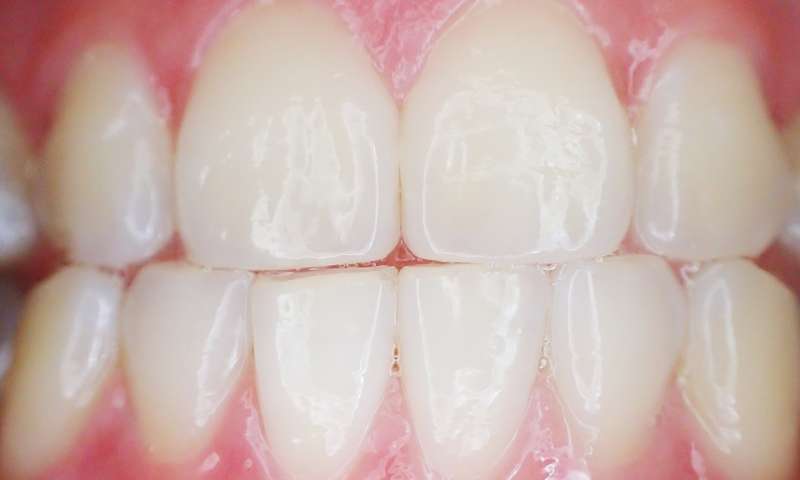
COVID-19 patients are at least three times more likely to experience complications if they also have gum disease, according to research published today in the Journal of Clinical Periodontology,1 the official publication of the European Federation of Periodontology (EFP).
The study of more than 500 patients with COVID-19 found that those with gum disease were 3.5 times more likely to be admitted to intensive care, 4.5 times more likely to need a ventilator, and almost nine times more likely to die compared to those without gum disease.
Blood markers indicating inflammation in the body were significantly higher in COVID-19 patients who had gum disease compared to those who did not, suggesting that inflammation may explain the raised complication rates. (See link for article)
“Gum disease — or periodontal disease — will eventually lead to strokes and an increased risk of heart attacks,” Marc Sclafani, a dentist and co-founder of One Manhattan Dental, told the New York Post about “mask mouth,” which is increasingly causing inflammation and gum disease among patients.
Another dentist and co-founder at One Manhattan Dental, Rob Ramondi, said 50% of his patients are suffering from negative health issues due to mask-wearing.
Masks have also been linked to chronic diseases like lung disease and cancer.
Post Treatment Lyme Disease and Insurance Coverage
Very few Lyme patients appear to know that the Affordable Care Act (ACA) or Obamacare is written to give you health insurance coverage for persistent Lyme and all its complications. Learn about ACA’s legislative language that protects your access to care in this video interview organized by Kristina Petterson Bauer, the Director of Texas Lyme Alliance.
This is Part 1 of three videos on the topics of ACA coverage for persistent Lyme and complications, the medical fraud of Post Treatment Lyme Disease Syndrome (PTLDS), the new Lyme medical codes in the ICD11, and government accountability regarding the Lyme epidemic.
This interview discusses the relationship between the Affordable Care Act/ACA and Post Treatment Lyme Disease Syndrome/PTLDS for Lyme patients’ access to covered care with insurance companies. Lyme patients used to have covered care into the mid-1990s.
Our discussion explores what that was, how we lost it, and why.
Watch the next 2 videos (loading soon) for the complete picture and what we can do to improve access to covered care and treatments that work. Like our content by clicking the like button here, and subscribe to our channel. To support our work and visit both our Lyme related websites, go to https://www.texaslymealliance.net/don… to learn more and make donations.
_____________________
**Comment**
I am not a proponent of the ACA as it is unaffordable to most people. All it has done is replace one group who couldn’t afford health insurance with another group. I also simply do not trust our government to handle anything. I also do not agree with many issues within the ACA. Health care is personal and there are moral issues involved and all should be given choices they can agree and live with. Recently even Democrat Senator Elizabeth Warren finally acknowledged some of the “unintended consequences” and likened it to her “Obamacare epiphany.”
“It’s a familiar story: Big government intervention creates incentives and raises costs that help big business, and then politicians demand more government intervention to fix the distortions they caused,” the board wrote. Source
On top of this, due to how the CDC/IDSA mishandles Lyme/MSIDS by flatly denying persistent infection and the usefulness of prolonged treatment, anything they handle is tainted with these suppositions. In other words, all you will get through the ACA is the CDC/IDSA Lyme guidelines which have only gotten worse and more entrenched with time.
Medical insurance for Lyme/MSIDS patients is rife with difficulties as most insurance will not cover adjunctive therapy which can be just as important as antimicrobial treatment. Patients pay thousands upon thousands out of pocket for a long, long time. We spent over $150,000 out of pocket for the two of us over 5 years of treatment. I don’t know what we would have done without the savings and investments we sold to pay for treatment. This issue of money is a deep, dark vortex that extremely sick and cognitively affected sick patients must somehow deal with – on top of continuing to work to keep the lights on, eat, and pay for treatment. It’s a quagmire for sure. One I surely don’t have all the answers to but firmly believe that more government IS NOT the answer.
After going years without any medical insurance while we still had active teenagers in the house (yes, it was frightening) we finally heard about a “share-pay” program that isn’t insurance and that you can pick your own health care provider, that covers supplements and adjunctive therapy for a period of time including massage therapy, chiropractic, colonics, and much more that we found beneficial. The only draw-back is it doesn’t cover pre-existing conditions so Lyme/MSIDS wasn’t covered for us, but our family now had coverage for other things. It is also economical with fees ranging from $135-$560 per month. (I receive no monies from this organization) While this one is Christian based, I’ve heard there are similar programs that are not. Thinking back to when we considered ACA, it would have cost us over $2,000 per month – hardly affordable.
LYME PODCAST: A 25-YEAR-OLD MAN WITH TRANSVERSE MYELITIS AND LYME DISEASE
I will be discussing a 25-year-old man with transverse myelitis and Lyme disease. “He showed gradual improvement in gait, motor and sensory functions of his lower extremities along with a resolution of neurogenic bowel.” wrote the authors. The authors added. “He continues to need intermittent self-catheterization for neurogenic bladder.”
Dumic and colleague first discussed this case in the journal IDCases in 2019.
“A previously healthy 25-year-old man presented with inability to urinate and frequent falls associated with bilateral lower extremity weakness and numbness.” wrote the authors.
Two weeks earlier, he described a red circumferential rash. His rash was approximately 10 cm in diameter, which is about 4 inch in diameter. The CDC only requires a 5 cm rash to diagnose Lyme disease criteria, which is about 2 inches.
He lived in Wisconsin, USA, with extensive exposure to ticks. He lived next to the woods, hiked, camped, and fished, and has two dogs. He had no recent history of a tick bite.
He also developed a mild, intermittent headache, mild neck stiffness, and thought he had a fever. Flu-like symptoms have commonly been reported in Lyme disease.
Did he get treated for Lyme disease? No.
The rash disappeared within a week without treatment. The erythema migrans rash of Lyme disease often clears without treatment.
His condition took a turn for the worse. “Five days prior to admission, he developed urinary retention as well as progressive numbness and weakness in his lower extremities.” wrote the authors. He was also not able to move his bowels.
His sensory deficit progressed from “left foot numbness to the upper thorax right below the nipple line anteriorly and below the shoulder blades posteriorly.” write the authors.
He began to fall due to the weakness of both legs and problems with his gait.
His physical examination revealed several findings. He had weakness of both legs, mild spasticity in both knees, increased reflexes in his legs, a diminished sensation in his legs, and a Babinski sign of the left foot.
A positive Babinski sign occurs when a doctor stimulates the bottom of the foot. The big toe bends up and back to the top of the foot, and the other toes fan out. This can mean there is some problem with the nervous system.
He had evidence suggestive of myelitis on an MRI “MRI of the cervical and thoracic spine revealed T2 signal hyperintensity in the central spinal cord gray matter at C5, C6 and T3 to T9 levels suggestive of myelitis.” write the authors. They use the term suggestive as a T2 signal hyperintensity can be from other causes. Myelitis refers to inflammation of the spinal cord.
He had strong evidence of an inflammatory process in his spinal fluid as measured by a pleocytosis in his spinal fluid. These are white cells in his spinal fluid. His antibody test for Lyme disease was negative.
His PCR for Lyme disease was positive. They were able to confirm PCR tests were positive for Lyme disease using a molecular detection test at the Mayo Medical Laboratories.
He was diagnosed and treated for acute transverse myelitis.
TRANSVERSE MYELITIS AND LYME DISEASE
The man’s motor, sensory, and autonomic dysfunction were typical of acute transverse myelitis. Autonomic dysfunction is a part of the nervous system that regulates internal organs such as the heart, stomach and intestines. The autonomic nervous system is composed of the Sympathetic and Parasympathetic system. It has also been called the fight-or-flight response. The man was unable to control his bowels and bladder.
OUTCOME
He was treated for Lyme disease with IV ceftriaxone. He also was treated with an intravenous antiviral medicine, Acyclovir, for two days until the spinal tap PCR was positive. Finally, he was treated with the steroid methylprednisolone 1 g IV daily for three days.
“He showed gradual improvement in gait, motor and sensory functions of his lower extremities along with a resolution of neurogenic bowel.” wrote the authors.
The authors added, “he continues to need intermittent self-catheterization for neurogenic bladder.”
This is not the first case of transverse myelitis and Lyme disease patients according to the authors. Their search revealed six other cases of neurologic Lyme disease associated with acute transverse myelitis.
What can we learn from this cases?
Acute transverse myelitis can occur in Lyme disease.
The spinal tap in Lyme disease can present with a high white count, also called pleocytosis, and still have a negative antibody test.
A positive PCR test was able to confirm Lyme disease in this patient.
The man’s acute transverse myelitis and Lyme disease improved with antibiotic treatment.
What questions does these cases raise?
How often does transverse myelitis occur in Lyme disease?
Would the man have been treated for Lyme disease if the PCR test at the Mayo had been negative?
Would the man no longer need intermittent self-catheterization for neurogenic bladder if he were treated with more than a single one-month course of intravenous ceftriaxone?</li
Were there other autonomic issues not described by the authors?</li
TREATING TICK-BORNE DISEASE IN MY PRACTICE
In my practice, each individual requires a careful assessment. That is why I order a broad range of blood tests for other illnesses in addition to tick-borne infections. I also arrange consultations with specialists as needed.
Many patients are complex, as highlighted in this Inside Lyme Podcast series.
We need more doctors with skills recognizing a tick-borne illness in an individual with acute transverse myelitis and Lyme disease. We hope that professionals evaluating individuals with acute transverse myelitis can use this case to remind them to look for tick-borne illnesses and treat accordingly.
Inside Lyme Podcast Series
This Inside Lyme case series will be discussed on my Facebook and made available on podcast and YouTube. As always, it is your likes, comments, and shares that help spread the word about this series and our work. If you can, please leave a review on iTunes or wherever else you get your podcasts. Sign up for our newsletter to keep up with our cases.
References:
Dumic I, Vitorovic D, Spritzer S, Sviggum E, Patel J, Ramanan P. Acute transverse myelitis – A rare clinical manifestation of Lyme neuroborreliosis. IDCases. 2019;15:e00479.
Kenney MJ, Ganta CK. Autonomic Nervous System and Immune System Interactions. Compr Physiol. 2014 July ; 4(3): 1177–1200.
The US press has been pushing a view of acute flaccid paralysis as a mysterious condition of unknown etiology (unknown cause). Checking the scientific literature, however, tells us that AFP is most often Guillain Barre Syndrome (GBS), a condition that appears on the National Vaccine Injury Compensation Program as a “Table Condition” – i.e., one that the US HHS has no defense against when parents file in the NVICP for compensation for GBS as a vaccine injury in their children. https://madisonarealymesupportgroup.com/2018/12/07/acute-flaccid-paralysis-is-most-often-guillain-barre-syndrome/
In the best of times, late winter can drag for people. Cabin fever and a longing for sunshine and warmth make us feel like we’re in the movie Groundhog Day, repeating the same scene over and over and over. The pandemic has only made the usual winter blues worse. We’ve already been repeating the same isolated days, with many people working or learning from home, for a year.
Now the dismal weather makes it seem like this period will never end.
This is a feeling that tick-borne illness patients understood long before the pandemic.
For many patients, especially those with late-stage Lyme disease, days, months, and even years blend together into a bedridden monotony. As I explained in my post “Groundhog Day: Casting a Shadow on Lyme Disease”, for several years my own life revolved around sleeping, taking medications, and going to the pharmacy or doctor’s appointments. Every day was the same, with symptoms sometimes improving and sometimes getting worse. I didn’t know if it was Monday or Wednesday. There was no differentiation between weekdays and weekends. Battling Herxheimer reactions, brain fog, burning extremities, systemic hives, headaches, and aching muscles and joints, I wondered if the suffering would ever end.
At times, the monotony was worse than the symptoms themselves. Staring at the same walls, interacting with the same people (or experiencing total isolation if you live alone), not being able to do your usual activities, can make a person want to scream. Sometimes, I did scream. Sometimes I still do.
But surviving tick-borne illness has taught me some important lessons for getting through the pandemic, as I outline in my posts “What Lyme Patients Can Teach Us About the New Normal” and “Lessons From Lyme: Lockdown Isn’t Forever”. My illness journey also gave me some tools for getting through long, isolating winters. Below are some ideas for beating the winter blues during a pandemic:
Change your scenery: This may seem easier said than done when you’re stuck at home. Sometimes, though, we make ourselves more stuck than we need to be. I mostly convalesced in my bedroom. Even moving to the couch could be a welcome change of scenery. Try working in a different room in the house, taking a walk in a different direction each day, or even eating at a different seat at the kitchen table. A small shift in scenery can make a big shift in perspective.
Redecorate: Whether you order a new comforter, knit a new blanket, or paint a wall a new color, a change in scenery, rather than just a change of scenery, can be refreshing. If you are a caretaker for a Lyme patient, think about ways you can do some redecorating for them (with their permission, of course).
Keep some routine: Part of the difficulty of the pandemic is many people feel their days are unstructured. When I was sick, the day dragged most when there was nothing to do but just lie in bed. Once I started to get a bit better, I appreciated having a set routine of physical therapy twice a week, neurofeedback twice a week, talk therapy once a week, etc. Now, Zoom meetings and remote or hybrid schooling give at-home workers or students some semblance of a schedule, but it’s not always enough. Having set meal times, stretch breaks, or reading hours can lend more structure to an otherwise open-ended day. Think about fun routines that can give you something to look forward to as well: weekly Zoom game nights with friends, pizza nights with the family, or home manicures.
…and also add some variety to that routine: Variety is the spice of life, even when you’re stuck in bed or at home. If you’re able, try a new type of exercise once or twice a week. Watch a new show. Try a new recipe (or, if you’re took sick to cook, have a caretaker make one for you). Paint your nails a wild color. Novelty breaks up monotony and helps you feel like you’re controlling some aspect of an otherwise uncontrollable situation.
Get outside: I know it’s cold. I know it’s dreary. I know you might not feel well enough to exercise (and you shouldn’t, if you’re sick with tick-borne illness and aren’t ready). If you are able, think about trying a new winter sport like snowshoeing. Build a snow fort, no matter how old you are. If you feel awful, perhaps just sit on a front stoop or back porch for five minutes in a mask. Or open the window for five minutes.
Be cozy: Hibernation doesn’t have to mean huddling inside miserable. Make yourself as comfortable as possible. Try a weighted blanket. Put on fuzzy socks and slippers. Make some hot tea. Pampering yourself is part of self-care, and self-care is a critical part of healing and survival.
Sunbathe: You don’t have to be on a beach, or even outside, to soak up some rays. Think like a cat: find a sunny patch of couch or floor in your house, and curl up there, pointing your face to the light. You might even set up a beach chair inside and soak your feet in a bucket of water to pretend you’re at the beach. When I was sick, I took these “staycations” indoors. Now, I have scoped out a sunny, isolated spot in my neighborhood where I sit at lunch time. Vitamin D is healing!
Listen to sounds or watch images of nature: If you’re too sick to get outside, or you live in a city where you can’t do so in a socially distanced manner, you can still reap the benefits of nature virtually. Nature sounds calm the nervous system. Just listening to a soundtrack of a waterfall or birds chirping, or looking at images of mountains, can help elicit the feelings you would have while actually experiencing nature.
Talk to someone outside your pod: No matter how much you love the people you live with, being home with them all the time can be stifling. It’s hard to make time for phone calls when you’re managing a family, working from home, or feeling too sick to talk for long. But even carving out ten minutes per week to talk to an old friend can be revitalizing.
And finally, the most important lesson I learned from my journey with Lyme is that spring always does come, no matter how long the winter lasts.
Jennifer Crystal is a writer and educator in Boston. Her memoir about her medical journey is forthcoming. Contact her at lymewarriorjennifercrystal@gmail.com.
The chance of a person from Wuhan being patient zero is approximately 1 in 630, based on calculations that take into account the population size of Wuhan, the global population and the fact that coronavirus-carrying animals are found virtually all over the world
Taking into account that there are 28 Alpha- and Beta-coronavirus species with members that affect humans, the chance of Wuhan hosting a SARS-related coronavirus outbreak is 17,640 to 1
No credible theory for natural zoonotic spillover has been presented, to date
Meanwhile, there are at least four distinct lab origin theories, including the serial passage theory (which proposes the virus was created by serial passaging through an animal host or cell culture). There’s also a variety of evidence for genetic manipulation
A third theory is that SARS-CoV-2 is the result of vaccine development, and the fourth is the Mojiang miners passage theory, which proposes a precursor to SARS-CoV-2 sickened the miners, and once inside these patients, it mutated into SARS-CoV-2
Early on in the COVID-19 pandemic, many scientists suspected SARS-CoV-2 might have originated in a biosafety laboratory, most likely in Wuhan, China, where the outbreak began in December 2019. Among them, Jonathan Latham, Ph.D., a molecular biologist and a virologist, and Allison Wilson, Ph.D., a molecular biologist were experts who discussed the idea of a lab origin.
I interviewed Latham about some of their theories in July 2020. His interview is featured in “Cover-Up of SARS-CoV-2 Origin?” Latham and Wilson argue that while the virus most likely has a bat origin, the mechanism by which it jumped from bat to human was not a natural one and they have previously presented three different theories by which the virus may have been created in and escaped from a lab.
In a February 16, 2021, article1 in Independent Science News, the pair again reviewed the evidence for a laboratory origin, and the reasons why a zoonotic origin will never be found.
Why Zoonotic Origin Is Most Unlikely
Aside from not being known for exotic culinary dishes involving animals such as bats, Wuhan, located in central China, is an unlikely location for zoonotic virus spillover as it has “no cultural, geographic or climatic predisposing factors,” Latham and Wilson note. Wuhan is also not a known hotspot for exotic animal smuggling.
The well-recognized absence of bats in Wuhan is why researchers at the Wuhan Institute of Virology (WIV) traveled several hundred miles to collect bat coronavirus samples.
What’s more, Latham and Wilson cite research showing that “when WIV researchers needed to study a Chinese population that was not routinely exposed to bat coronaviruses (as a control group), they chose Wuhan residents.” Zheng-li Shi, head of coronavirus research at the WIV, even admitted that she “had never expected this kind of thing to happen in Wuhan, in central China.”
According to Latham and Wilson, “The chance of a person from Wuhan being patient zero is approximately 1 in 630,” based on calculations that take into account the population size of Wuhan, the global population and the fact that coronavirus-carrying animals are found virtually all over the world.
“It truly is very, very, unlikely that a natural zoonotic pandemic would start in Wuhan. Yet no commentator on the outbreak seems to have properly acknowledged the true scale of this improbability,” Latham and Wilson write.2
Another coincidence that strongly points to a lab origin is the fact that the WIV not only has the world’s largest collection of bat coronaviruses, but WIV researchers had also singled out one specific coronavirus out of 28 relevant species for more in-depth work, “and it is a member of this species that broke out in Wuhan,” Latham and Wilson note, adding:
“This, then, is a further curious coincidence: for a pandemic coronavirus (SARS-CoV-2) to emerge in Wuhan and be a member of the species most studied at the Wuhan Institute of Virology.”
Zoonotic Spillover of SARS-CoV-2 Is Not Random
Latham and Wilson go on to review the research done at the WIV in more detail, comparing and contrasting it to the natural evolution of coronaviruses. There are four basic types of coronaviruses: Alpha-, Beta-, Gamma- and Delta-coronaviruses. (For an illustration of the evolutionary tree of these viruses, please see the original article.3)
Of these four, only two are of interest when we’re searching for the origin of SARS-CoV-2 — the Alpha and Beta versions, of which there are 28 species, and “apparently random” coronavirus spillovers from Alpha- and Beta-coronaviruses are known to have occurred in the past. (There are very few Gamma- and Delta-coronaviruses, and none is known to affect humans.)
Six of the 28 Alpha- and Beta-coronaviruses are known to affect humans: HCoV-NL63, HCoV-229E, MERS, SARS, HCoV-OC43 and HCoV-HKU1 (SARS-CoV-2 makes No. 7). When you locate these six viruses on the coronavirus evolutionary tree, you find that they are widely distributed, which is an indication that previous zoonotic spillovers have been random.
Not so with SARS-CoV-2, though. When you place SARS-CoV-2 on this evolutionary tree, its location is not random like the others. Rather, it emerged from original SARS (as evidenced by its name). Latham and Wilson explain:4
“From a zoonotic perspective, nothing appears to be special about these SARS-related coronaviruses. Consequently, the emergence of a second pandemic virus from the same coronavirus species constitutes a second surprising coincidence.
We can again calculate its probability. If each Alpha and Beta coronavirus species is equally likely to spill over to humans, which is consistent with our understanding, then the probability of a virus from the SARS-related coronavirus species starting a zoonotic pandemic is 1 in 28.
(And if there are undiscovered coronavirus species — pretty much a certainty — the number will be greater still). It is a coincidence that, just like the emergence in Wuhan, heavily favors a lab escape if we take into account the specifics of the coronavirus research program at the WIV …”
Zheng-li’s Research Revolved Around the Pandemic Virus
Latham and Wilson then go on to review 18 publications by Zheng-li, starting in 2005, describing her research into SARS-like coronaviruses. They point out that while Zheng-li collected a wide array of bat viruses, her specific research focus was the zoonotic spillover potential of a single species, namely SARS-related coronaviruses (one of the six Alpha- and Beta-coronaviruses known to infect humans).
“So while most discussions of a potential lab escape have mentioned that SARS-CoV-2 emerged within commuting distance of the WIV and that researchers at the WIV worked on bat coronaviruses, none have mentioned that the coincidence is much greater than that.
Zheng-li Shi concentrated, especially with her potentially highly risky molecular research, on the particular species of coronavirus that is responsible for the pandemic,” Latham and Wilson write, adding that:
“If one accepts as reasonable the assumptions made above, the probability of Wuhan being the site of a natural SARS-related coronavirus outbreak is obtained by multiplying 1 in 630 by 1 in 28. The chance of Wuhan hosting a SARS-related coronavirus outbreak is thus 17,640 to 1.”
They also dismiss the argument that these are little more than circumstantial evidences that could be due to sheer chance. Circumstantial evidence is not a “special category of evidence,” they point out; rather, “all evidence of causation is composed of coincidences.”
“All an observer can do is to add up the coincidences until they surmise that the threshold of reasonable doubt has been surpassed. Conclusions are always provisional, but in the absence of evidence to the contrary, anyone open to persuasion ought at this point to conclude that a probability of 17,640 to 1 far exceeds that threshold. A lab escape should at this point be the default hypothesis.”
WIV Held Closest Known Relative to SARS-CoV-2
Since the beginning of the outbreak, we’ve also discovered that the WIV held a virus sample known as RaTG13 which, so far, is the closest known relative to SARS-CoV-2. While Zheng-li has denied extensive study on RaTG13, scientific publications reveal this virus has been studied since at least 2017.
In addition to all of this, no substantive zoonotic theory has ever been presented, which makes it far less plausible than any of the lab-origin theories. While several potential intermediate species have been proposed, none has actually been found to carry SARS-CoV-2 or a precursor to it.
Both journals apparently allowed data sets to be secretly changed without publishing notices of correction. Authors appear to have renamed samples, failed to attribute samples properly, and produced a genomic profile that doesn’t match the samples in the paper.
Some data are also missing. An investigation into the discrepancies found RaTG13, which is 96% identical to SARS-CoV-2, is actually btCoV-4991, a virus found in samples collected in 2013 and studies on them published in 2016. Meanwhile, there are at least “four distinct lab origin theories,” Wilson and Latham note, including:5
1. The serial passage theory, which proposes the virus was created by serial passaging through an animal host or cell culture.6
2. Evidence of genetic manipulation, including the chimeric structure of the virus and the presence of a furin cleavage site.7 While a majority of the viral genetic sequence is close to that of RaTG13, its receptor binding domain is nearly identical to that of a pangolin coronavirus, while the furin cleavage site has not been seen in any other SARS-like coronaviruses.
Others have pointed out that the virus, which is highly adapted to human lung cells, appears to have evolved in the absence of immune system antibodies, which suggests mutation within cell culture.8
In “China Deletes Key SARS-CoV-2 Related Science,” I also review evidence9 suggesting SARS-CoV-2 was created by serial passaging an ancestor virus through transgenic mice equipped with human ACE2 receptors. (Research10 has confirmed transgenic mice with human ACE2 receptors are highly susceptible to SARS-CoV-2, whereas normal mice are not.)
3. The failed vaccine development theory.11
4. The Mojiang miners passage theory,12,13 which proposes a precursor to SARS-CoV-2 — possibly RaTG13, as this virus was collected from that very same mine — sickened six miners in 2012, and once inside these patients, some of whom were ill for several weeks, it mutated into SARS-CoV-2. Samples from four of the hospitalized miners were sent to the WIV.
“To-date, there are conflicting claims about the results of those tests and nothing has been formally published. The Mojiang Miners Passage theory proposes, however, that, by the time they arrived at the WIV, these patient-derived samples contained a highly adapted human virus, which subsequently escaped,” Wilson and Latham write, adding:
“Our prediction … simply based on assessing the probabilities, is that no convincing natural zoonotic origin for the pandemic will ever be found by China or the WHO or anyone else — for the simple reason that one does not exist.”
WHO Investigation Into COVID-19 Origin Is Blatantly Corrupt
Despite the complete absence of a plausible zoonotic origin theory, the World Health Organization’s investigative commission, tasked with identifying the origin of SARS-CoV-2, has now officially cleared the WIV and two other biosafety level 4 laboratories in Wuhan of wrongdoing, saying these labs had nothing to do with the COVID-19 outbreak.14,15,16
They’ve also stated that the lab-escape theory will no longer be part of the team’s investigation going forward.
The WHO team and its Chinese counterparts now insist the most likely scenario is that SARS-CoV-2 piggybacked its way into the Wuhan market in shipments of frozen food from other areas of China where coronavirus-carrying bats are known to reside, or another country, possibly in Europe. As a result, the WHO team is considering expanding its scope to look into other countries as the potential source of the virus.
As noted in a Wall Street Journal op-ed17 by Dr. Scott Gottlieb, “By lending credence to this improbable theory, WHO is damaging trust in the important project of figuring out where the virus originated.”
There are obvious problems with the WHO’s conclusions. For starters, no serious investigation was actually done. The WHO team was not equipped or designed to conduct a forensic examination of laboratory practices;18 rather, they relied on information obtained directly from the Chinese team.
Secondly, China was allowed to hand pick the members of the WHO’s investigative team, which includes Peter Daszak, Ph.D., who has close professional ties to the WIV and has gone on record dismissing the lab-origin theory as “pure baloney.”19,20
He was also the mastermind behind the publication of a scientific statement condemning such inquiries as “conspiracy theory.”21,22 This manufactured “scientific consensus” was then relied on by the media to “debunk” theories and evidence showing the pandemic virus most likely originated from a laboratory.
No Credible Evidence Food Is a Route of Transmission
The inclusion of Dazsak on this team virtually guaranteed the dismissal of the lab-origin theory from the very start, and based on the lame justifications given by the team leader, Danish food safety and zoonosis scientist Ben Embarek, it seems clear they had no intention of looking at evidence that might implicate the WIV or any other Wuhan lab.
For example, Embarek claims that officials at the WIV “are the best ones to dismiss the claims and provide answers” about the potential for a lab leak. But suspects in an investigation are hardly the most reliable sources of evidence to dismiss suspicions against them.
Embarek further insisted that lab accidents are “extremely rare,” hence it’s “very unlikely that anything could escape from such a place.”23 This too is a wholly unconvincing argument that flies in the face of available data.
According to the Cambridge Working Group in 2014, “biosafety incidents involving regulated pathogens have been occurring on average over twice a week” in the U.S. alone,24,25 and virology labs accidentally released the original SARS virus on no less than four separate occasions.26,27Three of those four instances led to outbreaks.28 The 1977 H1N1 influenza outbreaks in the Soviet Union and China were also the result of a lab escape.29
Thirdly, a number of scientific bodies, including the U.S. Food and Drug Administration and the International Commission on Microbiological Specifications for Foods have resolutely dismissed the frozen food origination story, as no credible evidence has surfaced suggesting food, food packaging or food handling might be a significant route of transmission.30
Why the Lab-Origin Theory Must Be Quashed
You may be wondering, if there’s so much evidence pointing toward a lab origin, why are leading health authorities and scientists dismissing it all and insisting SARS-CoV-2 is a natural occurrence, mysterious as it might be? The answer undoubtedly comes down to money.
Should the COVID-19 pandemic be officially recognized as the result of a lab accident, the world might be forced to take a cold hard look at gain-of-function research that allows for the creation of these new pathogens. The end result would ideally be the banning of such research worldwide, which means tens of thousands of researchers would lose their jobs. Prestigious careers would be spoiled.
On top of that, the culprits might face criminal charges under the Biological Weapons Anti-Terrorism Act of 1989, and nations might be held financially responsible for the economic destruction caused by the pandemic around the globe. These are no minor issues. They offer plenty of incentive to cover up the truth.
As Rutgers microbiologist and founding member of the Cambridge Working Group, Richard Ebright, told Boston Magazine:31
“For the substantial subset of virologists who perform gain-of-function research, avoiding restrictions on research funding, avoiding implementation of appropriate biosafety standards, and avoiding implementation of appropriate research oversight are powerful motivators.”
Antonio Regalado, biomedicine editor of MIT Technology Review, was even more blunt, stating that if SARS-CoV-2 was found to be a lab creation, “it would shatter the scientific edifice top to bottom.”32 There’s little doubt that this is the reason why the lab origin theory has been roundly labeled as pure conspiracy theory spread by science deniers and Trump flag-wielding kooks.
Such a stance is extremely unhealthy, however, as it seeks to strangle not only free speech but also scientific inquiry, and “criminalizes” logic in general. In a February 15, 2021, AP News article,33 the three authors identify several professors and organizations as “superspreaders” of disinformation about SARS-CoV-2’s origin.
Among them are Francis Boyle, a bioweapons expert who drafted the 1989 Biological Weapons Anti-Terrorism Act; Luc Montagnier, a world-renowned virologist who won the Nobel prize for his discovery of HIV; and the Center for Research on Globalization. The remainder are individuals and organizations that I, having written many hundreds of articles about COVID-19 over the past year, have never even heard of.
According to AP, the parties on this list have no training in virology (apparently, Nobel prize-winning virologists aren’t good enough) and therefore do not have the expertise to speak on the issue of viral origins. However, they don’t mention the many who have presented evidence for a lab origin who do have all the “right” credentials.
It’s also worth noting that the AP article was produced in collaboration with the Atlantic Council, which is part of the technocratic hub that is using the pandemic to further its Great Reset agenda. That alone qualifies the article as pure globalist propaganda.
If SARS-CoV-2 really was the result of zoonotic spillover, the easiest and most effective way to quash “conspiracy theories” about a lab origin would be to present compelling evidence for a plausible theory. So far, that hasn’t happened, and as noted by Latham and Wilson, the most likely reason for that is because the virus does not have a natural zoonotic origin, and you cannot find that which does not exist.