http://  Approx. 12 Min.

June 28, 2021
Sen. Ron Johnson holds a news conference in Milwaukee, Wisconsin, with families from across the country who share their experiences regarding adverse reactions to COVID-19 vaccines. The state’s governor, Tony Evers, called Johnson’s roundtable “reckless and irresponsible.”
https://www.youtube.com/newsnow?sub_c… Where to watch NewsNOW from FOX: https://www.newsnowfox.com/ Follow us @NewsNOWFOX on Twitter: https://twitter.com/NewsNOWFOX
_____________________
**Comment**
For more:

The COVID-19 “vaccine” injured are being treated similarly to Lyme/MSIDS patients – as if they have mental illness or are making it up.  I’m thankful these stories are coming out – although they are highly censored.  These people, similarly to tick-borne illness patients, want to be seen and heard, but those in high places just want to push it under the rug.  The numbers of those reacting to these injections is much, much higher than is being reported.

https://www.bitchute.com/video/n6mUXJeyYqdg/  Video Here, Approx. 30 Min

DR. KENNETH STOLLER ON WHY SO MANY ARE MISDIAGNOSED WITH MULTIPLE SCLEROSIS & LYME DISEASE

For more with Dr. Stoller:

https://www.lymedisease.org/amy-scher-bubble-of-fear/

Amy Scher: “Healing can’t happen in a bubble of fear”

By Amy B. Scher

In order to fully heal, you are going to have to let go and lighten up (mostly on yourself).

That’s what I tell people when they are trying to micro-manage every itty bit of themselves and their protocols in order to heal. It may seem like an easy suggestion to follow after all they’ve been through. However it was personally one of the most difficult parts of healing for me to embrace.

I lived in a bubble of fear, worried that everything I did or didn’t do would make or break my healing. But  eventually, it became clear to me that healing will not (and cannot) happen in a bubble of fear. Fear is contradictory to the environment that is needed for wellbeing.

While much went into my ultimate recovery from Lyme, the act of lightening up and letting go had one of the most profound impacts on my journey.

When we suppress ourselves, we can end up feeling anxious, depressed, and sick. If healing is all about getting free to experience a full life again, we must also pay attention to freeing ourselves from the patterns and behaviors that no longer serve us.

Lightening up does not always come easy, but it’s so worth it, and it does come if we let it.

The tyranny of perfectionism
My parents raised me with all the love and silliness you’d expect from the hippies that they were. They always praised me as smart, sweet, artistic, and kind.

But instead of taking these compliments as truth, the part of me that analyzed and internalized everything contorted them into a rule: I must be perfect.

With no one else requiring this of me, I took perfection on as my calling, my purpose. As I grew older, the pressure of this piled on me like a thousand pounds. I strived to be the one who made everyone happy and was celebrated for great things, but I also longed to be one whose faults went unnoticed.

When I strayed from the person I thought I should be—by not getting perfect grades, not being the perfect friend, or making a mistake—my insides would clench. I spent a lot of time rehearsing in my head what things I could have done differently, better. Even though my parents didn’t seem  bothered by any of my imperfections, I worried I might somehow be less of a shining star to them.

By the time I’d been suffering with chronic illness and my body had been falling apart for a good long while, I had assigned much of the blame to myself. Somehow, I must have not done this life thing good enough, perfect enough. Now, perfection was something I owed to the people around me as an apology for being the glaring burden I felt myself to be. I tried hard to convince myself I deserved mercy in this new small life, yet still, even on my near-deathbed, I felt I wasn’t doing sick perfect enough.

The truth is this: I was unloved by myself long before my physical body went astray. And it had become painfully obvious that this pattern was crushing my being and assaulting my immune system. At some point, I decided that if I didn’t lighten the f**k up, this pattern of perfection was going to kill me. I sensed that maybe it had already started to in some way.

The self-criticism trap

You cannot bully yourself into doing enough good or being good enough to feel good—and good enough to be loved, especially by yourself. That’s just not how it works.

Thanks to Stanford University’s Center for Compassion and Altruism Research and Education, we now have scientific data that shows us how and why self-criticism isn’t healthy. (Although we probably didn’t need scientific proof on this one). Self-criticism “makes us weaker in the face of failure, more emotional, and less likely to assimilate lessons from our failures.”

In fact, in a 2012 study published in the US National Library of Medicine, a link between self-compassion and negative states such as depression and anxiety was apparent across 20 studies. Because self-compassion is associated with lower levels of self- criticism, and self-criticism is known to be an important predictor of anxiety and depression, this is where we’re going to start our work.

Even outside of these examples, there has been much information that’s emerged over the years on how positive emotions, including love and acceptance, have a direct impact on your physiology, particularly your nervous system. If you beat yourself up all the time about what you are or aren’t doing, it makes sense that your system would read that self-criticism as danger and stress and react to it in just that way.

The practice of self-compassion is learning to lighten up on yourself just as you would with someone close to you who you loved and cared for. You’ve probably been criticizing yourself for a long time. If this hasn’t worked yet, it’s probably time to try something new

Release attachment to symptoms
During my experience with illness, I spent a lot of time obsessing over every new sensation in my body. I was in a state of constant overdrive, trying to figure out what each symptom was from or how to make it go away. I always alerted my doctors, who also seemed perplexed by what they meant, which of course made me feel even more worried.

Ultimately, I started to approach my body and its symptoms as not warning signs of something severe (as long as my doctor had already been notified), but as just something my body was doing that may not have a clear-cut explanation. I learned how, sometimes, to just let my symptoms be, releasing the massive amounts of energy I spent consumed by trying to solve them.

This is what I learned: sometimes they mean nothing.

We spend so much time analyzing our symptoms, guessing what they could mean, and obsessing over when they’ll go. And sometimes, we need to do that. But other times, we need a break. The truth is that despite all of our incessant “figuring out,” sometimes we just won’t know what our body is doing. We also won’t always know what healing might be taking place despite the raging symptoms. I had my worst month of symptoms came just before I turned a corner toward healing.

Give yourself permission to live a little

I spent most of my life in California, where I ate organic food, held my breath when I walked by a smoker, and focused on controlling my environment to control my health. After I was diagnosed with chronic Lyme, I became even more attuned to my lifestyle and surroundings—afraid that every misstep would kill me.

The turning point for me happened when I was in India in 2007, where I had traveled for stem cell treatment. That was my first hint that I needed to learn to let go. I had to. No choice. No time to get used to an entirely different world and medical system.

At the request of one of the nurses, I had given the staff at the hospital a list of foods I could and could not eat. On the could list: protein and veggies. On the could not list: everything else. Over the years, my brain had been programmed with messages like dairy is bad because it causes inflammation, sugar feeds the Lyme bacteria, and carbs are evil. And while maybe some of that has truth to it, being ridiculously strict about my diet only caused me more intense stress.

When the doctor saw the list, she came to my room with it and asked, “But what about your healthy cells? They need some sugar. Dairy is not bad for them. Carbs are okay in moderation! Each night, you can have a small amount of red wine and chocolate. You need some pleasure too.” All I could think was, Are you trying to kill me?

An epiphany
It wasn’t until I was squatting on a mud-smudged grocery store floor that what she said began to sink in. My whole existence for years had been dedicated to “killing” Lyme. I had built my entire life around Lyme disease, the one thing that I didn’t want. What about the rest of me?

“Mom! Look!” I had found a packaged chocolate lava cake, the kind where you add hot water to the plastic tray full of batter and it magically puffs up into dessert. It was inflatable chocolate cake, and it was a miracle in a country that was hard for me to find food I enjoyed.

This is when I had an epiphany that informed the rest of my healing journey:

What if, in my furious effort to find the cure, I had been missing something critically important all along? What if I loosened the death grip I had on my own life? What if healing is beyond what you eat and how perfectly you take your supplements? What if enjoying life and lightening up didn’t look like healing, but was a tiny step toward it?

Chocolate cake, just like the other lessons I learned, would become part of my protocol; one that brought me joy and helped to teach me that the healing journey doesn’t always look like perfection. Sometimes it looks like lightening and loosening up.

Amy B. Scher, an energy therapist, has written several books on healing, including: This Is How I Save My Life: Searching the World for a Cure – A Lyme Disease Memoir (When doctors have all but given up, when a diagnosis eludes you, and when every test result raises more questions than answers, how do you save yourself?); How To Heal Yourself From Depression When No One Else Can (Scher’s accessible approach to helping anyone struggling with depression to reclaim a joyful life). How To Heal Yourself From Anxiety When No One Else Can (A unique, go-at-your-own-pace book, full of hands-on techniques and guidance that illustrate one profound truth: healing from anxiety is possible). She can be found online at amybscher.com.

__________________

**Comment**

Some great advice in here.  I couldn’t help considering the COVID debacle that’s been thrust upon us.  The same advice about being unable to heal while in a ‘bubble of fear’ is also true for a virus.  Fear is an emotion that will zap your strength and lower your immune system by putting you in hyper-drive, yet this is precisely what our corrupt public health ‘authorities’ have foisted upon an unsuspecting public.

Firstly, accepting death is #1 on the list toward living fully while on planet earth.  Secondly, (despite the denial by public health authorities and a complicit main stream media) there are effective treatments for both COVID and Lyme/MSIDS.  Obtaining good medical help is crucial, and in my experience Lyme literate doctors (LLMD’s) are probably your best bet for both illnesses as they are open-minded, up to date on the science, and willing to go outside the box.  When I felt like I was on death’s door from COVID, my LLMD utilized his knowledge once again and squared me away.  I write about the treatment that worked here. Within 1-2 doses I felt like a new person – demonstrating the importance of effective treatment.

These attributes are what make a good doctor, yet for both diseases we are clearly seeing the monopolization of medicine where doctors not following the narrative are censored, bullied, maligned, and persecuted.

It’s an old, old tactic that continues to be deployed.

**UPDATE March 2022**

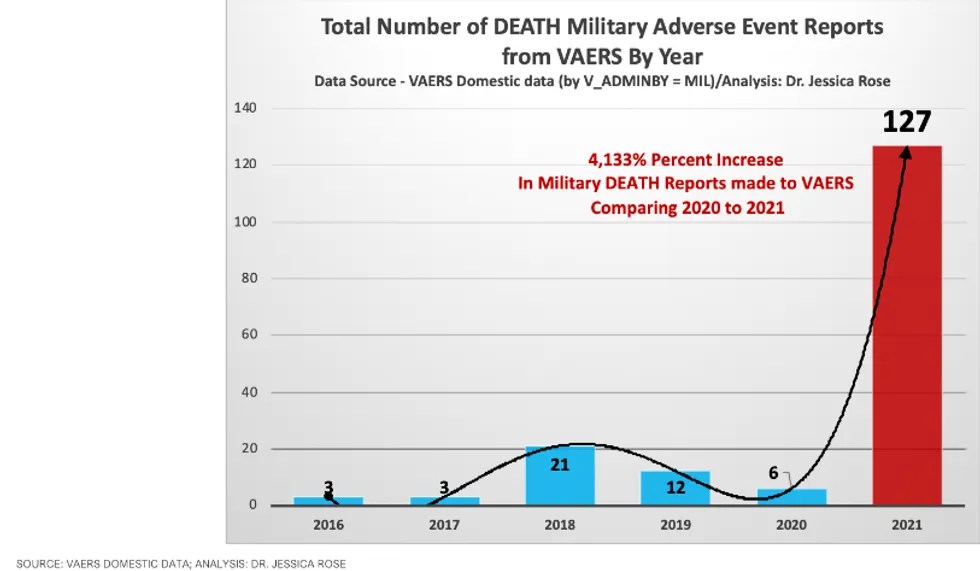
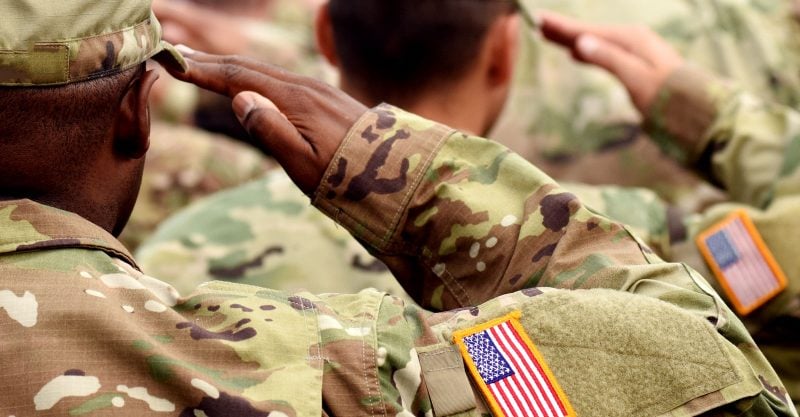
More reported military DEATH from COVID shots than from COVID.

U.S. attorney: 1,100% increase in military deaths following COVID shots. 

HIV protein added to shots to disable autoimmunity (disarm your immune system) so lipid nanoparticles can get through your cellular defense.  Those getting COVID shots are testing positive for HIV and those getting three shots have destroyed their immune systems.

**Update, Aug. 21, 2021**

Despite documented adverse reactions, deaths, and heart inflammation, COVID jabs are now mandated for the military as of Sept. 15, despite being experimental, fast-tracked injections approved under mysterious circumstances. Soldiers with natural immunity are now fighting back by filing a lawsuit against the Pentagon, the DOD, FDA, and HHS. Also, America’s Frontline Doctors have filed a Temporary Restraining Order (TRO) against mandating these dangerous injections for military members with existing immunity.  The military in fact has existing laws and regulations providing exemption from vaccination for those with natural immunity, however commanders have already told servicemen and women that religious, medical, and serological exemptions will be denied.

Guess how many soldiers have died from COVID?  Would you believe only 26 (as of Jun 25, 2021)?  According to U.S. Army Dr. Theresa Long, only 12 were in active duty.

And yet, they are now mandated to get injections that have caused more injuries and death than all injuries and death combined in a 30 year history of VAERS, which is known to only capture about 1% of adverse events.  According to a doctor who served 9 years as a Navy physician and surgeon and who also studied bioweapons:

… the “vaccine” program has ostensibly killed more of our young active duty people than COVID did.  Dr. Lee Merritt

https://childrenshealthdefense.org/defender/heart-inflammation-linked-covid-pfizer-moderna-vaccines-u-s-military/

Heart Inflammation Linked to COVID Vaccines in Study of U.S. Military, Department of Defense Confirms

In a study published June 29 in JAMA Cardiology, researchers described 23 cases of myocarditis in healthy military members who developed the condition within four days of receiving the Pfizer or Moderna COVID vaccines.

By Megan Redshaw

A new study of U.S. service members found higher than expected rates of heart inflammation following a COVID vaccine.

A new study of U.S. service members found higher than expected rates of heart inflammation following receipt of a COVID vaccine. It’s a finding Defense Department researchers say should call attention to the condition, known as myocarditis, as a potential side effect of vaccinations.

In a study published June 29 in JAMA Cardiology, U.S. military physicians described 23 cases of myocarditis in previously healthy males who developed the condition within four days of receiving a COVID vaccine.

A total of 23 male patients (22 currently serving in the military and 1 retiree) with a median age range of 25 years were evaluated between January and April 2021 for acute-onset chest pain following vaccination with an mRNA COVID vaccine.

All military members were previously healthy with a high level of fitness. They were physically fit by military standards and lacked any known history of cardiac disease, significant cardiac risk factors or exposure to cardiotoxic agents.

Seven military members received Pfizer’s COVID vaccine and 16 received the Moderna vaccine. Each patient had a final diagnosis of myocarditis without infectious, ischemic or autoimmune etiologies identified. Diagnoses were reviewed and met the U.S. Centers for Disease Control and Prevention’s (CDC) case definition criteria for probable myocarditis.

All patients presented with acute chest pain and significantly elevated cardiac troponin levels (10-fold to 400-fold the upper limits of their respective reference ranges) with symptom onset within 12 to 96 hours following COVID vaccination.CHD Calls on FDA to Take COVID Vaccines Off the Market – Submit a Comment

According to the study, physicians expected to find eight or fewer cases of myocarditis among the 436,000 male military members who received two mRNA doses. But 20 military members developed inflammation after their second dose, including 14 after the Moderna shot and six after the Pfizer shot. Three developed myocarditis after their first vaccine.

Cardiac symptoms resolved within a week of onset for 16 patients, but seven continued to have chest pain at the time of publication.

The researchers stated that while the true incidence of myocarditis is unknown at this time, the presentation pattern and clinical course suggest an association with an inflammatory response to vaccination.

The team concluded that increased attention to myocarditis as a potential adverse event following vaccination is warranted.

New study supports link between mRNA COVID vaccines and heart inflammation

A separate study published in JAMA Cardiology on June 29 investigated seven cases of acute myocarditis. Four cases occurred within five days of COVID vaccination between Feb. 1 and April 30.

All four patients had received the second dose of an mRNA vaccine and presented with severe chest pain, had biomarker evidence of myocardial injury, were hospitalized and had test results consistent with myocarditis.

“It is possible that these four cases of acute myocarditis represent a rare, potential adverse event linked to mRNA COVID-19 vaccination,” researchers wrote. “The findings from the present report raise the possibility of an association between mRNA COVID-19 vaccination and acute myocarditis.”

An association between COVID vaccines and myocarditis was first reported in Israel with a case study in February involving a 19-year-old male.

On April 26, details leaked from an Israeli Health Ministry report raising concerns among experts about a possible link between the Pfizer-BioNTech COVID vaccine and myocarditis.

A preliminary report by an Israeli committee tasked with monitoring vaccine side effects found 62 cases of myocarditis, including two deaths, in people who received the Pfizer vaccine. Fifty-six cases occurred after the second dose of the vaccine, and 55 cases occurred in men — most between the ages of 18 and 30.

The two patients who died were reportedly healthy until receiving the vaccine and had no pre-existing conditions.

On April 27, Reuters reported the U.S. Department of Defense was investigating 14 cases of heart inflammation among people who were vaccinated through the military’s health services.

On June 2, Israeli health officials confirmed a probable link between the Pfizer’s COVID vaccine and dozens of cases of heart inflammation in young men following the second dose.

As The Defender reported June 10, the CDC’s advisory committee acknowledged a higher-than-expected number of cases of heart inflammation among 16- to 24-year-olds who recently received a second dose of the Pfizer and Moderna COVID vaccines.

Based on a May 24 report from the CDC’s Advisory Committee on Immunization Practices (ACIP) COVID-19 Vaccine Safety Technical Work Group (VaST), the CDC on June 1 updated its website with the following language:

“Data from VAERS [Vaccine Adverse Events Reporting System] show that in the 30-day window following dose 2 mRNA COVID-19 vaccination, there was a higher number of observed than expected myocarditis/pericarditis cases in 16–24-year-olds.”

On June 23, the ACIP said there was a “likely association” of “mild” heart inflammation in adolescents and young adults after vaccination with an mRNA COVID vaccine and a warning statement was warranted.

The safety panel acknowledged more than 1,200 cases of myocarditis or pericarditis in 16- to-24-year-olds who received an mRNA COVID vaccine, mostly occurring in males after the second dose.

As The Defender reported June 28, the U.S. Food and Drug Administration added a warning to Pfizer and Moderna’s fact sheets indicating an increased risk of myocarditis and pericarditis following vaccination.https://platform.twitter.com/embed/Tweet.html?dnt=false&embedId=twitter-widget-0&features=eyJ0ZndfZXhwZXJpbWVudHNfY29va2llX2V4cGlyYXRpb24iOnsiYnVja2V0IjoxMjA5NjAwLCJ2ZXJzaW9uIjpudWxsfSwidGZ3X2hvcml6b25fdHdlZXRfZW1iZWRfOTU1NSI6eyJidWNrZXQiOiJodGUiLCJ2ZXJzaW9uIjpudWxsfSwidGZ3X3R3ZWV0X2VtYmVkX2NsaWNrYWJpbGl0eV8xMjEwMiI6eyJidWNrZXQiOiJjb250cm9sIiwidmVyc2lvbiI6bnVsbH19&frame=false&hideCard=false&hideThread=false&id=1409604910971297795&lang=en&origin=https%3A%2F%2Fchildrenshealthdefense.org%2Fdefender%2Fheart-inflammation-linked-covid-pfizer-moderna-vaccines-u-s-military%2F&sessionId=585e2914ed5412234524c7067130bcbd183a1c9d&siteScreenName=ChildrensHD&theme=light&widgetsVersion=82e1070%3A1619632193066&width=550px

According to the latest data from VAERS, there were 1,342  cases of myocarditis and pericarditis (heart inflammation) in all age groups reported in the U.S. following COVID vaccination between Dec.14, 2020 and June 18, 2021.

Of the 1,342 cases reported, 835 cases were attributed to Pfizer, 458 cases to Moderna and 45 cases to Johnson & Johnson’s COVID vaccine.

Megan Redshaw is a freelance reporter for The Defender. She has a background in political science, a law degree and extensive training in natural health.

© [6/30/21] Children’s Health Defense, Inc. This work is reproduced and distributed with the permission of Children’s Health Defense, Inc. Want to learn more from Children’s Health Defense? Sign up for free news and updates from Robert F. Kennedy, Jr. and the Children’s Health Defense. Your donation will help to support us in our efforts.

https://www.liebertpub.com/doi/full/10.1089/vbz.2020.2724#utm_source=ETOC&utm_medium=email&utm_campaign=vbz

Statewide Passive Surveillance of Ixodes scapularis and Associated Pathogens in Maine

Published Online:https://doi.org/10.1089/vbz.2020.2724

Abstract

The blacklegged tick, Ixodes scapularis, is the primary vector of multiple human pathogens, including the causative agents of Lyme disease, anaplasmosis, and babesiosis. Both I. scapularis and its associated pathogens have expanded their geographic range throughout the northeastern Unites States and into northern New England. Through this study, we present an updated distribution of I. scapularis in Maine and report the first statewide passive surveillance infection and coinfection prevalence of Borrelia burgdorferi, Anaplasma phagocytophilum, and Babesia microti within the state’s I. scapularis population. In 2019, we collected 2016 ticks through a passive surveillance program, in which Maine residents submitted tick samples for identification and/or pathogen testing. We used a single multiplex quantitative PCR assay to detect tickborne pathogens in 1901 tick samples. At the state level, we found:

  • Bo. burgdorferi and A. phagocytophilum infection rates of adults (42.4%, 11.1%) were nearly double that of nymphs (26.9%, 6.7%)
  • B. microti prevalence was similar for both adults (6.5%) and nymphs (5.2%).
  • Spatially, we found an uneven distribution of both tick activity and pathogen prevalence, with both increasing on a north to south gradient.
  • We also noted a potential association between the ratio of adult to nymphal ticks and the incidence of tickborne disease in human populations, with counties that exhibit high rates of human disease also maintaining low adult to nymph ratios.
  • We detected Bo. burgdorferi in ticks from all counties, except Aroostook, although we only tested five samples from this county.
  • Excluding Aroostook, the county-level Bo. burgdorferi prevalence ranged from 30.0% (Piscataquis) to 50.0% (Franklin and Waldo) in adults and 0% (Piscataquis and Somerset) to 43.8% (Knox) in nymphs.
  • High disease incidence counties did not necessarily have higher prevalence rates within submitted ticks.
  • Knowledge of anaplasmosis is not as widespread as Lyme disease, which may lead to the underdiagnosis of this disease.
  • The sporadic distribution of B. microti is consistent with a pathogen that is colonizing a new location and has not yet reached an even spatial distribution (Diuk-Wasser et al. 2016).
  • B. microti is also thought to spread more quickly in areas where Bo. burgdorferi is prevalent due to an immune interaction in reservoir hosts such as white-footed mice (Peromyscus leucopus) or deer mice (P. maniculatus) (Dunn et al. 2014).
  • B. microti is likely to continue spreading throughout Maine.

____________________

**Comment**

It is interesting that researchers acknowledge that multiple infections occur due to an immune interaction yet severely ill patients are still viewed myopically to only have Lyme disease.  Our conflict-riddled public health ‘authorities’ continue to promote ancient mythology, deny persistent infection, and treat patients with a mono-therapy that has never been adequate.  Treating co-infections isn’t even on their radar.