https://www.ledamedical.com/so/34NiwbJuo?

It’s a “Gene-Environment-Immune Complex”….How Mycotoxins impact Lyme, Autism and PANS

Mycotoxins from mold can invade the body thru exposure to contaminated food and water, respiratory inhalation of spores and through contact with mucous and cutaneous membranes.

Decades of data link mycotoxins as a neurotoxic and immunotoxic inducing agent. In fact, several studies that examined the neurocognitive impact of mycotoxin exposure in children show a higher incidence of neurotoxic mold in children with autism spectrum disorder (ASD).

Additionally, children exposed to mold for more than two years show a statistically significant drop of 10 IQ points when compared with their mold free counterparts. Extensive exposure in both children and adult show increased pain syndromes, movement disorders like Chorea and Parkinson’s disease as well as neurocognitive disorders akin to dementia and delirium.

Knowing the neurological and immunological effects of mycotoxins from mold exposure, how does it affect those with behavioral, neurological disorders like ASD, autoimmune encephalopathy and pediatric acute-onset neuropsychiatric syndrome (PANS)?

Multiple studies link pathobiology of mold/mycotoxins specifically to Autism and other symptoms that mimic Autism like PANS and autoimmune encephalopathy. Mycotoxins play a gene-environment interaction that is thought to contribute to dysfunctional progression of neurodevelopment.

The mycotoxins once in the body elucidates a strong immune reaction leading to significantly elevated cytokines. These cytokines permeate throughout the body and often cross over the blood brain barrier. Those exposed can experience increased GI permeability or “leaky gut”, elevated oxidative stress responses and inflammation. This appears to stem in the gut where the mycotoxins provoke a reactive oxygen species release in the epithelial cells which line the inner gut wall. The mycotoxins will colonize in the GI system, disrupting the healthy normal flora. As a result of this disruption, a chronic inflammatory response occurs.

Many studies show the link between chronic gut inflammation and neurological and psychological ailments like depression, anxiety, OCD all common symptoms of ASD, neuro-Lyme and PANS/Autoimmune Encephalopathy.

Other studies link mycotoxins to increased autoimmune disorders and development of autoantibodies in the brain. When this occurs, the nervous system is inflamed leading to significant cognitive struggles, brain fog, mood disorders and involuntary tics and movement disorders. This is the typical progression of Autoimmune Encephalopathy, PANS and some components of ASD.

So how does this connect with Lyme?

Applying the inflammatory, immune and GI effects of mycotoxin illness to Lyme simply adds another layer of symptom severity. Lyme and other tick-borne illnesses are known to provoke an inflammatory cytokine response. Borrelia Burgdorferi specifically provokes anti-neuronal antibodies which can travel peripherally causing brain inflammation. The inflammatory response of tick-borne illnesses like Lyme can further trigger leaky gut and blood brain barrier permeability. More circulating cytokines begets increased inflammation and the vicious cycle continues.

Any significant trigger of chronic inflammation in the body can trigger neuroinflammation and leaky gut. Most individuals can weather the storm with intact immune systems. Those unfortunate to house genes linked to ASD, methylation dysfunction and/or those afflicted with Lyme, Mold or both struggles to clear the inflammation, compounding the symptomatic response.

A study by DeSantis and others studied 52 Autistic children compared to 58 neurotypical children. Results showed the ASD children had a significantly higher mycotoxin load, specifically Ochratoxin A. 

Many integrative providers believe in the Gut-Brain and inflammation connection. This study like many others support this theory and what we as providers see in clinical practice.

We welcome you to contact our office 212-288-8832 for more information and to schedule your one-on-one evaluation and treatment option appointment with one of our clinicians.

LEDA MEDICAL

Written by Somer DelSignore NP

_________________

For more:

https://www.nejm.org/doi/full/10.1056/NEJMoa2109908?

Clinical Features of Vaccine-Induced Immune Thrombocytopenia and Thrombosis

List of authors.

  • Sue Pavord, F.R.C.Path., 
  • Marie Scully, M.D., 
  • Beverley J. Hunt, M.D., 
  • William Lester, M.D., 
  • Catherine Bagot, M.D., 
  • Brian Craven, M.B., B.Ch., 
  • Alex Rampotas, M.R.C.P., 
  • Gareth Ambler, Ph.D., 
  • and Mike Makris, M.D.

Abstract

BACKGROUND

Vaccine-induced immune thrombocytopenia and thrombosis (VITT) is a new syndrome associated with the ChAdOx1 nCoV-19 adenoviral vector vaccine against severe acute respiratory syndrome coronavirus 2. Data are lacking on the clinical features of and the prognostic criteria for this disorder.

METHODS

We conducted a prospective cohort study involving patients with suspected VITT who presented to hospitals in the United Kingdom between March 22 and June 6, 2021. Data were collected with the use of an anonymized electronic form, and cases were identified as definite or probable VITT according to prespecified criteria. Baseline characteristics and clinicopathological features of the patients, risk factors, treatment, and markers of poor prognosis were determined.

RESULTS

Among 294 patients who were evaluated, we identified:

  • 170 definite cases of VITT
  • 50 probable cases of VITT
  • All the patients had received the first dose of ChAdOx1 nCoV-19 vaccine and presented 5 to 48 days (median, 14) after vaccination. The age range was 18 to 79 years (median, 48), with no sex preponderance and no identifiable medical risk factors
  • Overall mortality was 22%
  • The odds of death increased by a factor of
    • 2.7 (95% confidence interval [CI], 1.4 to 5.2) among patients with cerebral venous sinus thrombosis
    • 1.7 (95% CI, 1.3 to 2.3) for every 50% decrease in the baseline platelet count
    • 1.2 (95% CI, 1.0 to 1.3) for every increase of 10,000 fibrinogen-equivalent units in the baseline d-dimer level
    • 1.7 (95% CI, 1.1 to 2.5) for every 50% decrease in the baseline fibrinogen level
    • Multivariate analysis identified the baseline platelet count and the presence of intracranial hemorrhage as being independently associated with death
    • observed mortality was 73% among patients with platelet counts below 30,000 per cubic millimeter and intracranial hemorrhage
CONCLUSIONS

The high mortality associated with VITT was highest among patients with a low platelet count and intracranial hemorrhage. Treatment remains uncertain, but identification of prognostic markers may help guide effective management. (Funded by the Oxford University Hospitals NHS Foundation Trust.)

_____________________

**Comment**

The numbers don’t lie.  

A majority of these “vaccinated” patients had VITT which explains what is happening in reality – blood clotting issues.  

  • We’ve been warned by a Canadian doctor doing D-dimer tests on his “vaccinated” patients that 62% show microscopic blood clotting.
  • A pathologist also states these injections cause severe inflammation due to the “spike protein” which is a dangerous toxin that crosses the blood-brain barrier and disrupts blood vessels throughout the body and brain.  He also reiterates that these injections are not “vaccines.”

Please notice the overall mortality of 22% and significant increased odds of death on these fully “vaccinated” individuals that have been told ad nauseam that these injections will be protective and keep you from hospitalization and death.

For a mounting list of adverse reactions and death (with many examples of blood clotting & cardiovascular issues – even in young people):  https://madisonarealymesupportgroup.com/2020/12/21/warning-3150-injuries-in-1st-week-of-covid-vaccines-among-american-healthcare-workers-pregnant-women-included/

https://m-jpost-com.cdn.ampproject.org/c/s/m.jpost.com/health-science/israeli-scientist-says-covid-19-could-be-treated-for-under-1day

MAAYAN JAFFE-HOFFMAN

Double-blind study shows ivermectin reduces disease’s duration and infectiousness • FDA and WHO caution against its use

Ivermectin, a drug used to fight parasites in third-world countries, could help reduce the length of infection for people who contract coronavirus for less than a $1 a day, according to recent research by Sheba Medical Center in Tel Hashomer.
Prof. Eli Schwartz, founder of the Center for Travel Medicine and Tropical Disease at Sheba, conducted a randomized, controlled, double-blinded trial from May 15, 2020, through the end of January 2021 to evaluate the effectiveness of ivermectin in reducing viral shedding among nonhospitalized patients with mild to moderate COVID-19.
Ivermectin has been approved by the US Food and Drug Administration since 1987. The drug’s discoverers were awarded the 2015 Nobel Prize in medicine for its treatment of onchocerciasis, a disease caused by infection with a parasitic roundworm.
Over the years, it has been used for other indications, including scabies and head lice. Moreover, in the last decade, several clinical studies have started to show its antiviral activity against viruses ranging from HIV and the flu to Zika and West Nile.  (See link for article)
____________________
**Comment**
The study found in MedRxiv, a health-research sharing site, has not yet been peer reviewed.  The study found:
  • Approx. 72% of the Ivermectin group tested negative and 13% were infectious after day six
  • 50% of the placebo group tested positive and 50%, almost 4 times as many, were infectious after day six
  • 5 patients were referred to hospitals, 4 of them were in the placebo group
  • One hospitalized patient complained of shortness of breath, continued on ivermectin and was sent back to the hotel a DAY later in good condition
“Our study shows first and foremost that ivermectin has antiviral activity,” Schwartz said. “It also shows that there is almost a 100% chance that a person will be noninfectious in four to six days, which could lead to shortening isolation time for these people. This could have a huge economic and social impact.”
The study author points out that while this study did not address ivermectin as a prophylactic, or address hospitalization reduction, other studies have shown such evidence.
Other studies have shown:
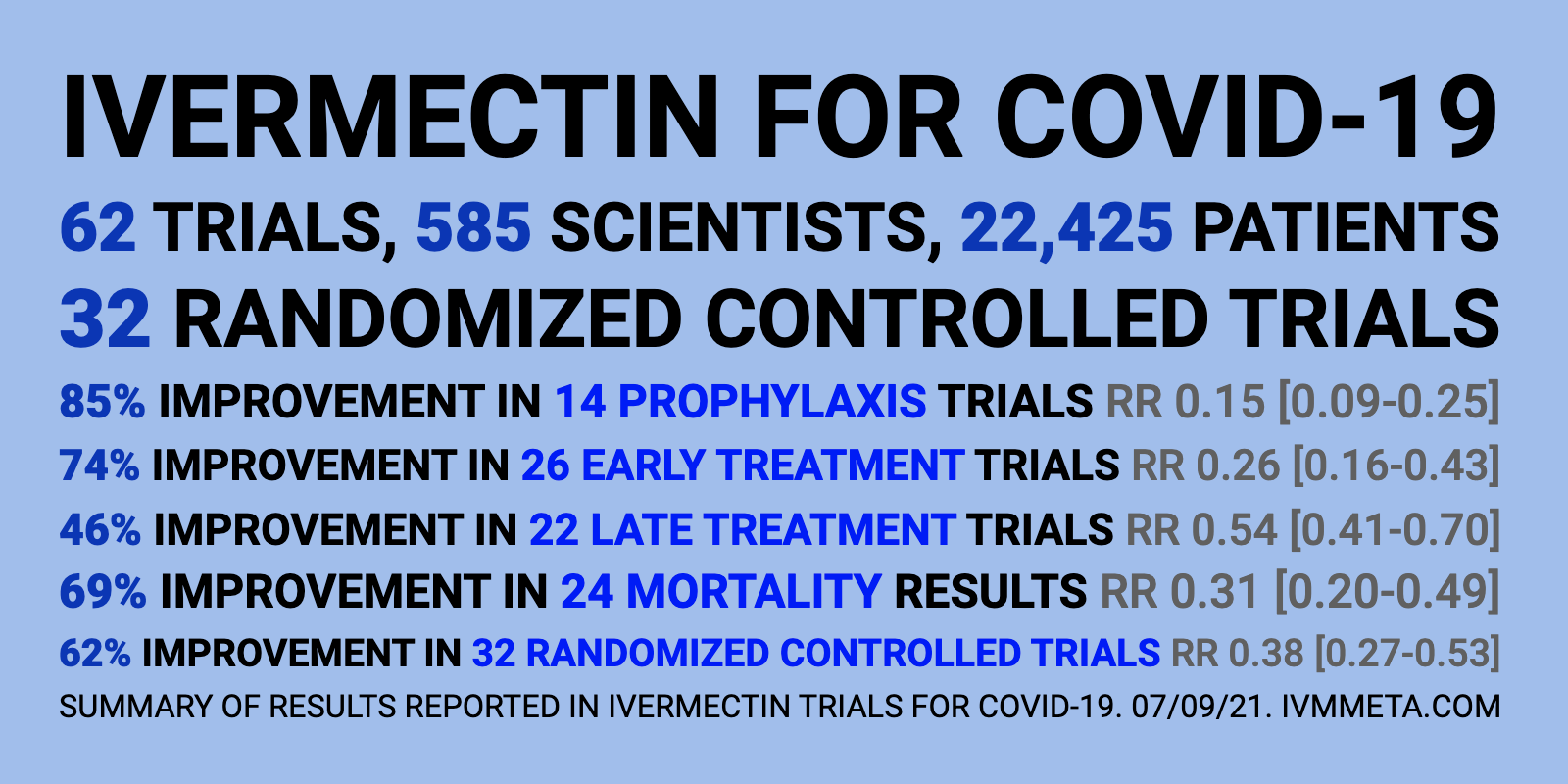
  • 27 studies demonstrate ivermectin’s ability to prevent COVID
  • a recent review found ivermectin reduced death by 75%

Please see:  

isummary

Interestingly, ivermectin is on the WHO’s list of essential medicines yet an Israeli professor states there’s significant risks with it and that ‘caution should be used on a virus that the vast majority of the public will recover from without treatment.’  He didn’t bother to mention anything about fast-tracked experimental “vaccines” that thousands have been maimed and killed from and that experts are warning against.
To date the WHO is not supporting any trials to determine ivermectin’s viability.
Researchers in other places worldwide began looking into the drug at around the same time. But when they started to see positive results, no one wanted to publish them, Schwartz said.
“There is a lot of opposition,” he said. “We tried to publish it, and it was kicked away by three journals. No one even wanted to hear about it. You have to ask how come when the world is suffering.”
“This drug will not bring any big economic profits,” and so Big Pharma doesn’t want to deal with it, he said.
The article points out that some of the loudest opposition has come from Merck, the manufacturer of ivermectin since the 80’s.  Merck was peddling COVID vaccines until it was discovered “the immune responses were inferior to those seen following natural infection and those reported for other SARS-CoV-2/COVID-19 vaccines.”  Now it’s peddling molnupiravir, which raked in 1.2 BILLION from a deal with the U.S. government.  It is currently in a phase 3 clinical trail.  So why make pennies when you can make BILLIONS?
For more:

https://www.betterhealthguy.com/episode148  Go Here for written transcript

Updated: July 14 2021

Why You Should Listen

In this episode, you will learn about how to resolve chronic viruses through immune modulation.

Watch The Show

About My Guest

My guest for this episode is Dr. Frank Shallenberger.  Frank Shallenberger, MD has been practicing medicine since 1973 and has been a pioneer in alternative and integrative medicine since 1978.  He is one of only 16 physicians in Nevada that are licensed both in conventional medicine as well as alternative and homeopathic medicine; allowing him to integrate the best of both approaches for optimal results.  Dr. Shallenberger has revolutionized the practice of anti-aging and preventive medicine by developing a method to measure mitochondrial function and oxygen utilization.  He has written two popular books describing this method: “The Type 2 Diabetes Breakthrough” and “Bursting With Energy” and has authored numerous papers in the international peer reviewed literature on ozone therapy and oxygen utilization.  He is also the editor of Second Opinion alternative medical newsletter.  He is the developer of Prolozone®, an injection technique that has been shown to regenerate damaged joints, herniated discs, and degenerated joints, tendons, and soft tissues.  He published the first paper on Prolozone Therapy in the Journal of Prolotherapy entitled “Prolozone – Regenerating Joints and Eliminating Pain”.

Key Takeaways

  • What is a virus? Do they contribute to disease?
  • Should the focus be on killing or on immune modulation?
  • Can some viruses be health-promoting?
  • Can antivirals be helpful in dealing with chronic viruses?
  • What is the role of Th1 and Th2 in response to chronic viruses?
  • What are some of the factors that lead to Th2 dominance?
  • Where do antibodies come into the discussion? Are high IgG levels relevant?
  • How do “factories” and “missiles” help to explain the situation with chronic viruses?
  • How big of a foe is EBV?
  • Does the body itself produce ozone?
  • Can ozone help to address both the “factories” and the “missiles”?
  • What are some top “missile defense” tools?
  • How might NK cells be stimulated in shifting the system towards Th1?
  • How might medicinal mushrooms be helpful?
  • Can melatonin be immune-modulating?
  • How might hydrocortisone be helpful in addressing chronic viruses?
  • Is it important to address parasites before downregulating Th2 response?
  • How might immune tolerance tools like LDI be helpful in balancing the immune response?
  • In chronic illness, would more ozone passes be less often or less passes more often be more effective?

Connect With My Guest

http://AntiAgingMedicine.com

_____________________

For more:

https://danielcameronmd.com/covid-quarantine-lyme-carditis-diagnosis/

LYME CARDITIS DIAGNOSIS DURING A COVID-19 QUARANTINE

patient with a lyme carditis diagnosis being examined in the hospital room

Lyme carditis is a rare but serious complication of early Lyme disease. It typically causes AV conduction abnormalities in patients with the most severe and fatal cases resulting in third-degree heart block. The condition can occur in a normally healthy individual and has even been reported in children and adolescents.

A 42-year-old man from New York City received a Lyme carditis diagnosis after quarantining in upstate New York during the COVID-19 pandemic. The case is discussed in the article “A curious case of Lyme carditis in an urban hospital,” by Brissett et al. 1

“Lyme carditis was a surprise diagnosis in our hospital due to the patient’s geographical dislocation during the COVID-19 pandemic,” writes Brissett.

In an effort to remain safe during the COVID-19 pandemic, the man sheltered at an upstate New York residence. During this time, he noticed a tick bite.

Two weeks later, he was admitted to the emergency room of an NYC hospital with “progressively worsening generalized weakness, presyncope and dyspnea on exertion.”

In addition, the patient was diaphoretic (excessive sweating) and appeared anxious when admitted to the ER. “Asystole was also noted on telemetry leading to a transient loss of consciousness,” the authors explain.

The man “had marked bradycardia at 30 beats per minute and hypotension.”

Two days prior to presenting to the ER, the patient had developed a Bull’s-eye rash, which extended from his back to his thigh.

An EKG revealed third-degree heart block with ventricular escape rhythm.

Delayed Lyme carditis diagnosis worsens outcome

The patient’s condition quickly worsened, and he went into cardiac arrest.

He was resuscitated and a temporary transvenous pacemaker was implanted.

“Cardiac arrest is rare, and mortality extremely uncommon,” the authors explain. “Of the rare case fatalities reported, delay in recognition was the main factor leading to a poor outcome.”

Young and colleagues agree. “Patients with Lyme carditis often have missed or late diagnoses, which can result in unnecessary pacemaker implantations, complications, and even fatalities.”2

The patient’s test results were positive for Lyme disease on the ELISA, IgG Western blot, and IgM Western blot. Troponin and COVID-19 tests were negative.

After 3 days of treatment with IV antibiotics (ceftriaxone), EKG results were normal. He was later prescribed oral doxycycline and had a complete recovery.

Author’s Takeaway:

“This case is unique due to its occurrence in an urban hospital where such cases are uncommon.”

“Our case highlights the rapidly progressive nature of the illness [Lyme carditis] and the rapid rate of recovery when timely intervention is instituted.”

“With appropriate use of antibiotic and temporary pacemaker placement, our patient had resolution of his symptoms and had a remarkable recovery.”

References:
  1. Brissett S, Myint KT, Lopez Y, Raiszadeh F, Sivapalan V, Kurian D. A curious case of Lyme carditis in an urban hospital. IDCases. 2021;25:e01179. doi:10.1016/j.idcr.2021.e01179
  2. Sympascho Young, MD Omair Arshad Yasemin Arikan, MD Yazdan Mirzanejad, MD. Lyme carditis: A can’t miss diagnosis. BCMJ, vol. 62 , No. 10 , December 2020 , Pages 368-372.

______________________

**Comment**

Once again, the improper usage of the word “rare” is used when nobody’s truly keeping track of these cases due to abysmal testing and subsequent lack of diagnosis.  It would be far more accurate to state that “recorded cases are rare,” but that there are probably many more cases in reality that are not recorded.

But, the good aspect of this case is the obvious quick turn around DUE to the swift and appropriate use of antibiotics.

Time will tell if this patient truly remains free of symptoms.  The excessive sweating is indicative of Babesia, of which doxycycline won’t touch.  This man needs to get to a Lyme literate doctor asap.

For more: