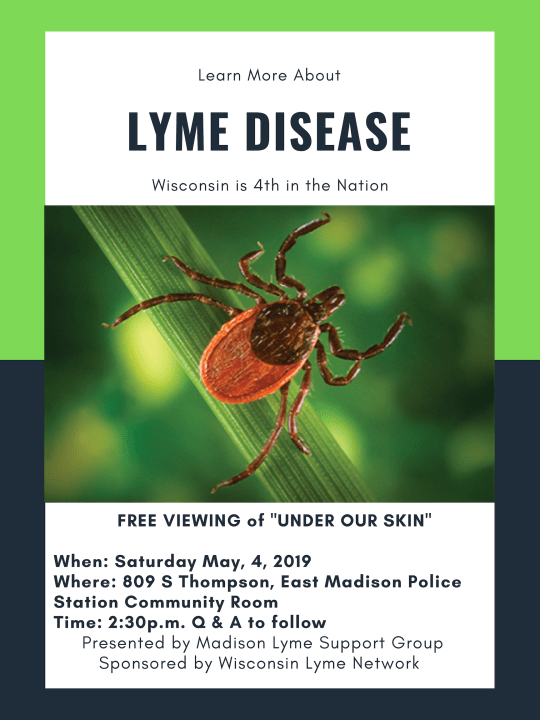
Don’t forget our next meeting will be April 13 at 2:30.  A member of group is going to share practical tips for gut health and nutrition.  Bring a notebook to take notes.

Details here: https://madisonarealymesupportgroup.com/2019/03/11/april-2019-lyme-support-meeting/

Besides distributing flyers for Lyme Awareness, I will be bringing cards you can send to practitioners requesting them to become educated on tick borne illness.  These post-cards can be addressed to physicians in the Wisconsin area that are open to continuing education courses (CME’s) on treating Lyme/MSIDS.  

Please post the flyer on social media and distribute around town as well.  We need to do all we can to spread the word on this 21st century plague that is destroying lives and taking childhoods away from so many youth.

Mark Jason Lim

See you there!


https://science.news/2019-03-21-berberine-induces-cell-death-in-leukemia-cells-study.html

Berberine induces cell death in leukemia cells – study

A study published in The American Journal of Chinese Medicine revealed that a compound called berberine induces cell death in leukemia cells. In this study, the subcellular localization and the apoptotic mechanisms of berberine were investigated.

  • Berberine is an isoquinoline alkaloid found in medicinal plants used in traditional and folk medicines.
  • In the study, researchers at Nagasaki International University in Japan first treated human promyelocytic leukemia cells with berberine, then examined its antiproliferative activity.
  • Five to 15 minutes after treatment, berberine exhibited powerful antiproliferative activity in the cells.
  • Then, the researchers investigated the effect of berberine on inducing cell death and found that the compound induced cell death in leukemia cells.
In conclusion, these findings suggest that berberine can induce cell death in leukemia cells immediately after administration.

Journal Reference:

Okubo S, Uto T, Goto A, Tanaka H, Nishioku T, Yamada K, Shoyama Y. BERBERINE INDUCES APOPTOTIC CELL DEATH VIA ACTIVATION OF CASPASE-3 AND -8 IN HL-60 HUMAN LEUKEMIA CELLS: NUCLEAR LOCALIZATION AND STRUCTURE–ACTIVITY RELATIONSHIPS. The American Journal of Chinese Medicine. 6 October 2017; 45(7): 1497-1511. DOI: 10.1142/S0192415X17500811

___________________

**Comment**

Berberine is a chemical found in several plants including European barberry, goldenseal, goldthread, Oregon grape, phellodendron, and tree turmeric.  It might cause stronger heartbeats which might help heart conditions.  It also helps regulate how the body uses sugar in the blood which may help with diabetes. It also might also be able to kill bacteria and reduce swelling.  https://www.webmd.com/vitamins/ai/ingredientmono-1126/berberine

https://draxe.com/berberine/  According to Dr. Axe, research on berberine shows benefit for the following conditions:

  • Anti-aging
  • Diabetes
  • Gastrointestinal infections
  • Heart disease
  • High cholesterol
  • Hypertension (high blood pressure)
  • Immune challenges
  • Joint problems
  • Low bone density
  • Weight control

Another great article by Dr. Mercola:  https://articles.mercola.com/sites/articles/archive/2015/06/22/berberine-benefits.aspx

Berberine was able to control blood sugar and lipid metabolism as effectively as metformin, with researchers describing berberine as a “potent oral hypoglycemic agent.”4

A separate meta-analysis also revealed “berberine has comparable therapeutic effect on type 2 DM [diabetes mellitus], hyperlipidemia and hypertension with no serious side effect.”5

There is also evidence for reducing inflammation, oxidative stress, tumor growth, & depression and helping with infections, all of which Lyme/MSIDS patients can struggle with.

https://globallymealliance.org/gla-pov-ability-stationary-phase-persister-biofilm-microcolonies-borrelia-burgdorferi-cause-severe-disease/?

Ability of Stationary Phase Persister/Biofilm Microcolonies of Borrelia burgdorferi to Cause More Severe Disease

borrelia-burgdorferi_mice

by Timothy Sellati, Ph.D., Chief Scientific Officer, GLA

Ying Zhang, Ph.D., a Global Lyme Alliance (GLA)-funded investigator, and his team at Johns Hopkins University just published a seminal study in the journal Discovery Medicine titled “Stationary phase persister/biofilm microcolony of Borrelia burgdorferi causes more severe disease in a mouse model of Lyme arthritis: Implications for understanding persistence, post-treatment Lyme disease syndrome (PTLDS), and treatment failure”.

Lyme disease patients, infected via tick bite with the bacterial spirochete B. burgdorferi, are routinely treated with two to four weeks of Doxycycline, Amoxicillin, or Cefuroxime, which is curative in many cases if treated at the onset of the infection. However, research shows that despite treatment, up to 20% of patients continue to suffer lingering symptoms of fatigue, pain, or joint and muscle aches, and neurocognitive manifestations that last 6 months or more.  This clinically-defined condition is known as post-treatment Lyme disease syndrome (PTLDS).  A long-standing mystery is whether development of PTLDS reflects

  1. persistence of B. burgdorferi in a patient’s tissues, consistent with chronic infection, or
  2. self-perpetuating inflammation caused by tissue damage triggered by the original infectious insult.

Zhang and colleagues published several influential papers over the past five years revealing a potential answer to this mystery. His lab showed that in vitro stationary phase (non-growing) cultures of B. burgdorferi contain different morphological variants. These bacterial variants include planktonic (free-swimming) spirochetal forms, round body forms, and aggregated microcolony (biofilm-like) forms, which have varying levels of persistence (e.g., the capacity to tolerate antibiotic exposure) in comparison to the log phase culture, which mainly consists of rapidly growing spirochetal forms with no or few persisters. B. burgdorferi develops into these morphological variants under stress conditions but their relevance to severe and persistent Lyme disease was unclear until the publication of this new study.

Zhang et al. report that biofilm-like microcolony (MC) and planktonic (free-swimming spirochete and round body; SP) variants found in stationary phase cultures were not only more tolerant of exposure to antibiotics but also caused more severe arthritis in mice than the log phase spirochetes (LOG). Importantly, the authors show that the murine infection caused by LOG could be eradicated by Ceftriaxone (CefT) whereas the persistent infection established with MC could not be eradicated by Doxycycline (Doxy), CefT, or Vancomycin (Van), or Doxy+CefT or Van+CefT, but could only be eradicated by the persister drug combination Daptomycin (Dapto)+Doxy+CefT.

This GLA-funded work establishes for the first time that:

Varying levels of persistence and the severity of disease pathology caused by infection with B. burgdorferi is linked to different morphological forms of the spirochete.

The following facts highlight the importance of this novel discovery. The number of patients developing PTLDS, or chronic Lyme, which is less clinically well-defined, is on the rise; a trend that is consistent with the rise in annual incidence of Lyme disease, which is ~427,000 cases. The absence of a full understanding of the cause(s) of PTLDS hampers efforts to effectively treat patients suffering with this syndrome. The authors demonstrated that the degree of persistence or persistent infection varied with different inoculae, where biofilm-like microcolony inoculae produced a more severe and persistent disease that could not be eradicated by the current Lyme antibiotics or even some two-drug combinations but could be eradicated by the persister drug combination Dapto+Doxy+CefT. In contrast, the disease induced by the log phase spirochetal forms is more readily eradicated by CefT. That the inclusion of persister drug Dapto, in combination with Doxy and CefT, is critical for eradicating the persistent infection established by persister inoculae validates the relevance of Dr. Zhang’s GLA-funded efforts to screen for drugs or drug combinations against stationary phase bacteria enriched in persisters in vitro, which were published by Feng et al. in 2014 and 2015 (see influential papers here).

Finally, the reported findings may not only provide a new understanding of PTLDS and perhaps chronic Lyme disease, but also will inform and accelerate development and testing of novel persister drug combination regimens that can more effectively cure persistent Lyme disease in the future. GLA’s goal in the near future will be to support human clinical trials to evaluate if the persister drug combination could more effectively treat or cure patients with PTLDS/chronic Lyme disease.

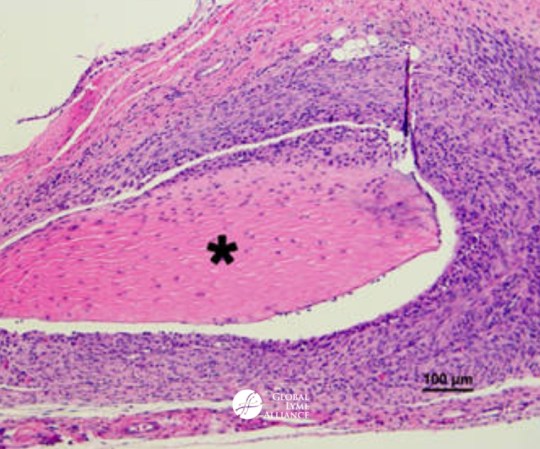
Pictured: Image of joint histopathology taken from a mouse infected with micro-colony/biofilm-like B. burgdorferi. Read Dr. Zhang’s full paper here.


timothy sellatiTimothy J. Sellati, PH.D. is Chief Scientific Officer at Global Lyme Alliance

As GLA’s Chief Scientific Officer, Dr. Sellati leads GLA’s research initiatives to accelerate the development of more effective methods of diagnosis and treatment of Lyme and other tick-borne diseasesmorphological variantshttps://www.dovepress.com/evaluation-of-in-vitro-antibiotic-susceptibility-of-different-morpholo-peer-reviewed-article-IDR  Metronidazole led to reduction of spirochetal structures by ~90% and round body forms by ~80%. Tigecycline and tinidazole treatment reduced both spirochetal and round body forms by ~80%–90%.
In terms of qualitative effects, only tinidazole reduced viable organisms by ~90%. Following treatment with the other antibiotics, viable organisms were detected in 70%–85% of the biofilm-like colonie

_________________

**Comment**

Great work by Zhang et al.!  Paper found here:  http://www.discoverymedicine.com/Jie-Feng/2019/03/persister-biofilm-microcolony-borrelia-burgdorferi-causes-severe-lyme-arthritis-in-mouse-model/

Unfortunately, they use the falsely skewed 10-20% percentages regarding the PTLDS group when microbiologist Holly Ahern argues convincingly that when ALL subgroups are added, it’s more like 60% that develop chronic/persistent symptoms:  https://madisonarealymesupportgroup.com/2019/02/25/medical-stalemate-what-causes-continuing-symptoms-after-lyme-treatment/  This is quite important and reveals the true state of affairs.

When I heard Dr. Zhang a few years back, he was working on this very concept, and please know the mycobacterium drugs have many side-effects that require close monitoring:  https://madisonarealymesupportgroup.com/2016/10/09/mycobacterium-drugs-for-ld/

The drug we used effectively throughout our treatment was Tinidazole which we pulsed throughout the entire time with 2-3 other antibiotics focusing on Bb’s different morphological variants as well as the various coinfections we had:  https://madisonarealymesupportgroup.com/2016/02/13/lyme-disease-treatment/  Dr. Eva Sapi found:

https://www.dovepress.com/evaluation-of-in-vitro-antibiotic-susceptibility-of-different-morpholo-peer-reviewed-article-IDR  Metronidazole led to reduction of spirochetal structures by ~90% and round body forms by ~80%. Tigecycline and tinidazole treatment reduced both spirochetal and round body forms by ~80%–90%.  In terms of qualitative effects, only tinidazole reduced viable organisms by ~90%. Following treatment with the other antibiotics, viable organisms were detected in 70%–85% of the biofilm-like colonies.


https://takebackyourpower.net/brussels-first-major-city-to-halt-5g-due-to-health-effects/

Great news. A Belgian government minister has announced that Brussels is halting its 5G plans — at least for now — due to concerns about health effects.

The statement was made by Céline Fremault, the Minister of the Government of the Brussels-Capital Region, responsible for Housing, Quality of Life, Environment and Energy. From an interview last Friday, with L’Echo:

“I cannot welcome such technology if the radiation standards, which must protect the citizen, are not respected, 5G or not. The people of Brussels are not guinea pigs whose health I can sell at a profit. We cannot leave anything to doubt.”

– Céline Fremault, Minister of the Government (Brussels-Captial Region), responsible for Housing, Quality of Life, Environment and Energy

Ms. Fremault accurately identified that a 5G pilot project is not compatible with Belgian radiation safety standards (9 V/m, or 95 mW/m2 according to this online converter), and stated that she does not intend to make an exception. (In the Building Biology guidelines, the threshold for extreme concern is 1 mW/m2. However, many government agencies still only consider thermal effects, instead of the cumulative body of thousands of peer-reviewed scientific studies.)

Perhaps with Brussels heading up the European Union, and with one of the two major 5G appeals being addressed to the EU, officials there are better informed and motivated to protect themselves.

May support increase for Ms. Fremault and all officials who are hearing the call to sanity and prioritizing the people over the technocratic oligarchy.

2-MINUTE ACTION: To send a brief note of support to Ms. Fremault, go here; and to Brussels city councilors, go here. Encourage them of the importance to keep this ban permanent, despite industry’s forthcoming pressure.

The 5G Situation in Summary

There is almost no question that a 5G-world would place us all under an unprecedented level of surveillance and control; granting unheard-of powers to soulless corporate algorithms.

That should be enough to permanently delete the agenda right there, filed under “useful technology gone bad.”

Though perhaps an even bigger question for our time is: does 5G pose a major threat to all biological life? The independent evidence overwhelmingly indicates that it does.

That is, unless you ask wireless industry sources, who own the FCC and who recently put out this CNBC propaganda/commercial in a thinly-veiled attempt to quash pushback.

The talking heads of the wireless industry even brashly admit — when forced, in a US senate hearing — that they have not done any safety studies… and they don’t plan to.

The fact is, hundreds of scientists are trying everything to sound the alarm.

One such voice, Dr. Martin Pall, the WSU Professor Emeritus whose research actually lays out the mechanism of how wireless radiation causes harm in our cells, calls 5G “the stupidest idea in the history of the world.”

However, within the corporatized halls of government, there is a well-worn pattern of voices of reason being drowned out by the frothed frenzy of technocratic corporations, who envision 5G as an unprecedented economic opportunity for the full-on commercial exploitation of reality.

But 5G pushback is starting to get viral. The compilation of truth assembled in videos on 5G like this one provides a much-needed reality-check on the shocking state of greed and depravationamong the agenda-pushers in our world.

While it may sound stark, after observing this for a long while, to me it honestly now appears that those pushing this agenda are stuck in a type of hive-mind syndrome, so frenzied with dollar-signs and “us-versus-them” progress-obsessions that they are in a mode incapable of self-corrective thought. Or at the very least, incapable of seeing where all of this is obviously heading — for them and their kids, too.

When the industry sheep are being presented with an avalanche of scientific evidence for a catastrophe-in-the-making, and yet they refuse to listen and instead continue to tow the profit-pushing line, what becomes visible is the shadow-expression of utter disdain for life. That may sound harsh, but I encourage you to consider this deeply.

Perhaps it’s the global, unconscious ‘death wish’ that is at the core of the 5G push. Perhaps this is also at the core of the desire to darkly exit the human condition via AI and transhumanism. Apparently this thought-form sees its escape and salvation through technology, instead of through humanity and/or our connection with divinity.

In any case, to any sane human with normal values, the situation is indeed bewildering. Though once we get over the distress, we are called into a kind of soul-led response. Perhaps it’s first a resolve to be sovereign in our thoughts, and to be steward of our mind. Then, inspiration and true Connectedness come when we become involved in manifesting the bigger solution — the choice of a positive future.

On this path, our root challenge is to remember: the power in our individual reality is truly within each of us, because who we are is not limited to the realms of duality and separation that we experience here.

If you’re reading this, be welcomed into the humanity protector’s club. 🙂

Where You Live: The Pushback Against 5G is Going Viral

While Brussels becomes the first major international city to block 5G, dozens of local governments have passed legislation to prevent or restrict 5G rollouts due to health effects. Environmental Health Trust lists legislation from 21 local governments in the USA.

And on March 13, the Portland (OR) city council demanded that the FCC update its research on the health and environmental impacts of 5G.

Websites such as EMF Safety Network, WhatIs5G.info and My Street, My Choice provides guidelines for how to put the brakes on 5G where you live.

This industry-promoted summary of state-by-state 5G legislative actions is also useful, and gives an insight into their modus operandi.

Below is a partial list of resources where you can learn more and get involved. We applaud everyone out there who is taking the reins and leading from their heart.


Brussels story – sources:

Scientific Evidence on 5G Harm

Grassroots Communities & Organizations

Note: Several of the organizations listed below are still promoting actions limited to contacting your elected representatives and pleading for help. With that being said, there is a resounding increase in awareness that a firmer response is now required.

“UN Staff Member: 5G Is War on Humanity” (6 mins, 2019)
Documents the UN Secretary General being notified of harm from 5G and wireless proliferation.

Thanks to Dafna Tachover of We Are The Evidence for helping to break this story.


https://www.ommegaonline.org/article-details/The-Post-Lyme-Disease-Treatment-Syndrome-(PTLDS)-a-review-of-its-origin-and-its-consequences-in-the-socio-economic-sphere./2407#.XKLo6qbumDo.linkedin

The Post-Lyme Disease Treatment Syndrome (PTLDS) a review of its origin and its consequences in the socio-economic sphere.

DR. JOSE LAPENTA
Lapenta J, Lapenta JM

Conclusion

It is demonstrated that the chronic symptoms of Lyme disease are a reality, referred to as:

Chronic Lyme disease (CLD); or Syndrome- Post-treatment of Lyme disease (PTLDS).

As we said at the beginning, the CDC does not recognize the term Chronic Lyme Disease (CLD) because it is confusing[1].

With respect to this, we conclude that the CDC is wrong because data demonstrated that months or years after adequate treatments with antibiotics, patients can have the same or worse symptoms, which gives truth to the term: chronic Lyme disease (CLD).

On the other hand, the CDC alleges that the term Post-treatment of Lyme disease syndrome (PTLDS) is used by some scientists to define symptoms after the treatment of the disease and that it is due to “unknown cause”:

With regard to this aspect, the “so called” Post-treatment of Lyme disease syndrome (PTLDS), is the same chronic Lyme disease, consisting of:

  • Lyme positive patients who were never treated.
  • Positive Lyme patients who after treatment in acute phase relapsed months or years later, and reached the secondary or late stage with symptoms equal or more severe than at the beginning.

Patients who were misdiagnosed due to lack of effective diagnostic tests and reached the chronic stage. Today the CDC recognizes that its diagnostic tests are not 100% effective.

Well-diagnosed Lyme patients who never responded to the treatments recommended by the CDC.

  • We also disagree with the CDC about the definition of “unknown cause” when most studies and research show that it is a chronic encephalopathy produced by Borrelia burgdorferi, either by:
  • Its persistence in the bloodstream, cerebrospinal fluid and tissues due to resistance to treatment, under the well-known mechanism of “Biofilm”.
  • Generation of neurological damage due to the persistence of Borrelia burgdorferi in tissues that do not regenerate, such as the nerve cells.
  • An inflammatory process that remained in the nervous system and tissues after eliminating the causative agent.
In some patients, the coexistence of other diseases such as Erlichiosis, Babesiosis and Bartonellosis, which worsen the symptoms and obstruct the treatment.

We find with an unprotected society, the reality is that thousands of patients are discarded as positive Lyme after 4 months of treatment, because the treatment guidelines of the CDC say that in that time or less you will be cured, which we prove is false in a good proportion of patients.

In 2019 May, is the limit for the recognition of ICD-11 Codes of Lyme disease (International classification of diseases), and the WHO refuse to recognize them all, which will cause patients without coverage for their treatments. One of the unrecognized codes is congenital Lyme[46-54] .

The global community of patients with Lyme must organize well and adequately claim from health authorities such as the World Health Organization (WHO) to recognize the entire Lyme codes, and ensure coverage of their treatment at all levels.

The Syndrome post-treatment of Lyme disease (PTLDS), which is nothing more than the ”chronic symptoms” of the disease, is being used perversely to cover the reality of this disease, avoid coverage by health insurance, and tell patients: “you have nothing, go to a psychologist” … when their blood and brain are sailing in a sea of ​​Borrelias.

Comments

With regard to the proposal of new treatment guidelines for Lyme disease, we prefer to wait for what the health authorities at the world level will propose; then we will make a new publication about it.

Dr. José Lapenta Dermatologist

Dr. José M. Lapenta Md

Acknowledgments

To the Lyme world community that fights for its rights to be treated as real patients and not as psychiatric patients.

To my son J. Miguel MD, for his logistical support and co-author.

To all patients with Lyme especially Stacy Cellier Gomez whose story was quite motivating.

References
  1. Post-Treatment Lyme Disease Syndrome. (2018) Cent Dis Control Prev.

Pubmed| Crossref| Others

  1. Lapenta, J., Lapenta, J.M. Lyme Disease and Dementia, Alzheimer, Parkinson, Autism, an Easy Way to Destroy your Brain. (2018) Inv Dermatol Venereology Res 4(1): 30-43.

Pubmed| Crossref| Others

  1. Krupp, L.B., Masur, D., Schwartz, J., et al. Cognitive functioning in late Lyme borreliosis. (1991) Arch Neurol 48(11): 1125–1129.

Pubmed| Crossref| Others

  1. Benke, T., Gasse, T., Hittmair-Delazer, M., et al. Lyme encepha- lopathy: Long-term neuropsychological deficits years after acute neuroborreliosis. (1995) Acta Neurol Scand 91(5): 353-357.

Pubmed| Crossref| Others

  1. Bujak, D.I., Weinstein, A., Dornbush, R.L. Clinical and neurocognitive features of the post Lyme syndrome. (1996) J Rheumatol 23(8): 1392-1397.

Pubmed| Crossref| Others

  1. Gaudino, E.A., Coyle, P.K., Krupp, L.B. Post-Lyme syndrome and chronic fatigue syndrome. Neuropsychiatric similarities and dif- ferences. (1997) Arch Neurol 54(11): 1372-1376.

Pubmed| Crossref| Others

  1. Bloom, B.J., Wyckoff, P.M., Meissner, H.C., et al. Neurocognitive abnormalities in children after classic manifestations of Lyme disease. (1998) Pediatr Infect Dis J 17(3): 189-196.

Pubmed| Crossref| Others

  1. Elkins L.E., Pollina, D.A., Scheffer, S.R., et al. Psychological states and neuropsychological performances in chronic Lyme disease. (1999) Appl Neuropsychol 6(1): 19-26.

Pubmed| Crossref| Others

  1. Kaplan, R.F., Jones-Woodward, L., Workman, K., et al. Neuropsychological deficits in Lyme disease patients with and without other evidence of central nervous system pathology. (1999) Appl Neuropsychol 6(1): 3-11.

Pubmed| Crossref| Others

  1. Klempner M.S., Hu, L.T., Evans, J., et al. Two controlled trials of antibiotic treatment in patients with persistent symptoms and a history of Lyme disease. (2001) N Engl J Med 345(2): 85-92.

Pubmed| Crossref| Others

  1. Morgen, K., Martin, R., Stone, R.D., et al. FLAIR and magnetization transfer imaging of patients with post-treatment Lyme disease syndrome. (2001) Neurology 57(11): 1980-1985.

Pubmed| Crossref| Others

  1. Weinstein, A., Britchkov, M. Lyme arthritis and post-Lyme disease syndrome. (2002) Curr Opin Rheumatol 14(4): 383-387.

Pubmed| Crossref| Others

  1. Shotland, L.I., Mastrioanni, M.A., Choo, D.L., et al. Audiologic manifestations of patients with post-treatment Lyme disease syndrome. (2003) Ear Hear 24(6): 508-517.

Pubmed| Crossref| Others

  1. Steven, E. P., Joseph, J. B., Nick, S. H., et al. Chronic infection in ‘post-Lyme borreliosis syndrome. (2005) Int J Epid 34(6): 1439-1440.

Pubmed| Crossref| Others

  1. Cairns, V., Godwin, J. Post-Lyme borreliosis syndrome: a meta-analysis of reported symptoms. (2005) Int J Epidemiol 34(6): 1340-1345.

Pubmed| Crossref| Others

  1. Pícha, D., Moravcova, L., Lasikova, S., et al. Symptoms of post-Lyme syndrome in long-term outcome of patients with neuroborreliosis. (2006) Scand J Infect Dis 38(8): 747-748.

Pubmed| Crossref| Others

  1. Pfister, H.W., Rupprecht, T.A. Clinical aspects of neuroborreliosis and post-Lyme disease syndrome in adult patients. (2006) Int J Med Microbiol 40: 11-6.

Pubmed| Crossref| Others

  1. Auwaerter, P.G. Point: antibiotic therapy is not the answer for patients with persisting symptoms attributable to lyme disease. (2007) Clin Infect Dis 45(2): 143-148.

Pubmed| Crossref| Others

  1. Stricker, R.B. Counterpoint: long-term antibiotic therapy improves persistent symptoms associated with lyme disease. (2007) Clin Infect Dis 45(2): 149-157.

Pubmed| Crossref| Others

  1. McAuliffe, P., Brassard, M.R., Fallon, B. Memory and executive functions in adolescents with posttreatment Lyme disease. (2008) Appl Neuropsychol 15(3): 208-219.

Pubmed| Crossref| Others

  1. Hassett, A.L., Radvanski, D.C., Buyske, S., et al. Role of psychiatric comorbidity in chronic Lyme disease. (2008) Arthritis Rheum 59(12): 1742-1749.

Pubmed| Crossref| Others

  1. Moniuszko, A., Czupryna, P., Zajkowska, J., et al. Post Lyme syndrome as a clinical problem. (2009) Pol Merkur Lekarski 26(153): 227-230.

Pubmed| Crossref| Others

  1. Clarissou, J., Song, A., Bernede, C., et al. Efficacy of a long-term antibiotic treatment in patients with a chronic Tick Associated Poly-organic Syndrome (TAPOS). (2009) Med Mal Infect 39(2): 108-115.

Pubmed| Crossref| Others

  1. Markeljevic, J., Sarac, H., Rados, M. Tremor, seizures and psychosis as presenting symptoms in a patient with chronic lyme neuroborreliosis (LNB). (2011) Coll Antropol 35(1): 313-318.

Pubmed| Crossref| Others

  1. Schutzer, S.E., Angel, T.E., Liu, T., et al. Distinct cerebrospinal fluid proteomes differentiate post-treatment lyme disease from chronic fatigue syndrome. (2011) PLoS One 6(2): e17287.

Pubmed| Crossref| Others

  1. Chandra, A., Wormser, G.P., Marques, A.R., et al. Anti-Borrelia burgdorferi antibody profile in post-Lyme disease syndrome. (2011) Clin Vaccine Immunol 18(5): 767-771.

Pubmed| Crossref| Others

  1. Fallon, B.A., Petkova, E., Keilp, J.G., et al. A reappraisal of the u.s. Clinical trials of post-treatment lyme disease syndrome. (2012) Open Neurol J 6: 79-87.

Pubmed| Crossref| Others

  1. Klempner, M.S., Baker, P.J., Shapiro, E.D., et al. Treatment trials for post-Lyme disease symptoms revisited. (2013) Am J Med 126(8): 665-669.

Pubmed| Crossref| Others

  1. Aucott, J.N., Rebman, A.W., Crowder, L.A., et al. Post-treatment Lyme disease syndrome symptomatology and the impact on life functioning: is there something here? (2013) Qual Life Res 22(1): 75-84.

Pubmed| Crossref| Others

  1. Aucott, J.N., Crowder, L.A., Kortte, K.B. Development of a foundation for a case definition of post-treatment Lyme disease syndrome. (2013) Int J Infect Dis 17(6): 443-449.

Pubmed| Crossref| Others

  1. Batheja, S., Nields, J.A., Landa, A., et al. Post-treatment lyme syndrome and central sensitization. (2013) J Neuropsychiatry Clin Neurosci 25(3): 176-186.

Pubmed| Crossref| Others

  1. Crowder, L.A., Yedlin, V.A., Weinstein, E.R., et al. Lyme disease and post-treatment Lyme disease syndrome: the neglected disease in our own backyard. (2014) Public Health 128(9): 784-791.

Pubmed| Crossref| Others

  1. Scieszka, J., Dabek, J., Cieslik, P. Post-Lyme disease syndrome. (2015) Reumatologia 53(1): 46-48.

Pubmed| Crossref| Others

  1. Weitzner, E., McKenna, D., Nowakowski, J., et al. Long-term Assessment of Post-Treatment Symptoms in Patients With Culture-Confirmed Early Lyme Disease. (2015) Clin Infect Dis 61(12): 1800-1806.

Pubmed| Crossref| Others

  1. Blaut-Jurkowska, J., Jurkowski, M. Post-Lyme disease syndrome. (2016) Pol Merkur Lekarski. 40(236): 129-133.

Pubmed| Crossref| Others

  1. Nemeth, J., Bernasconi, E., Heininger, U., et al. For The Swiss Society For Infectious Diseases And The Swiss Society For Neurology. Update of the Swiss guidelines on post-treatment Lyme disease syndrome. (2016) Swiss Med Wkly 146: 14353.

Pubmed| Crossref| Others

  1. Aucott, J.N., Soloski, M.J., Rebman, A.W., et al. CCL19 as a chemokine risk factor for posttreatment Lyme disease syndrome: A prospective clinical cohort study. (2016) Clin Vaccine Immunol 23(9): 757–766.

Pubmed| Crossref| Others

  1. Rebman, A.W., Aucott, J.N., Weinstein, E.R., et al. Living in Limbo: Contested Narratives of Patients with Chronic Symptoms Following Lyme Disease. (2017) Qual Health Res 27(4): 534-546.

Pubmed| Crossref| Others

  1. Rebman, A.W., Bechtold, K.T., Yang, T., et al. clinical, symptom, and quality-of-life characterization of a well-defined group of patients with posttreatment Lyme disease syndrome. (2017) Front Med (Lausanne) 4: 224.

Pubmed| Crossref| Others

  1. Hanna, A.F., Abraham, B., Hanna, A., et al. Effects of intravenous ketamine in a patient with post-treatment Lyme disease syndrome. (2017) Int Med Case Rep J 10: 305-308.

Pubmed| Crossref| Others

  1. Weinstein, E.R, Rebman, A.W., Aucott, J.N., et al. Sleep quality in well-defined Lyme disease: a clinical cohort study in Maryland. (2018) Sleep 1: 41(5).

Pubmed| Crossref| Others

  1. Cervantes, J., Doctor says you are cured, but you still feel the pain. Borrelia DNA persistence in Lyme disease. (2017) Microbes Infect 19(9-10): 459-463.

Pubmed| Crossref| Others

  1. Touradji, P., Aucott, J.N., Yang, T., et al. Cognitive Decline in Post-treatment Lyme Disease Syndrome. (2018) Arch Clin Neuropsychol.

Pubmed| Crossref| Others

  1. Davidsson, M. The Financial Implications of a Well-Hidden and Ignored Chronic Lyme Disease Pandemic. (2018) Healthcare Basel 6(1): 16.

Pubmed| Crossref| Others

  1. Lapenta, J., Lapenta, J.M. understanding the Lyme disease, Classification and codes. (2018) Ommega Pub 4(1): 1-11.

Pubmed| Crossref| Others

  1. Lapenta, J., Lapenta, J.M. Understanding the Lyme Disease, Classification And Codes. (2017)

Pubmed| Crossref| Others

  1. Lapenta, J., Lapenta, J.M. Minocycline, Alzheimer’s, and Other Neurological Disorders.

Pubmed| Crossref| Others

  1. Centers for Disease Control and prevention.

Pubmed| Crossref| Others

  1. Online ICD9/ICD9CM codes.

Pubmed| Crossref| Others

  1. ICD-10 Version 2016.

Pubmed| Crossref| Others

  1. ICD-10-CM Codes.

Pubmed| Crossref| Others

  1. Information from World Health Organization (WHO): List of Official ICD-10 Updates. For the ICD-11 revision: The ICD 11th Revision is due by 2017 (Archived, Feb. 2014); ICD Revision Timelines and ICD-11 Beta Draft (online beta-version of ICD-11). Source:

Pubmed| Crossref| Others

  1. International Statistical Classification of Diseases and Related Health Problems.

Pubmed| Crossref| Others

_________________

For a list of 700 peer-reviewed articles on the persistence of Lyme:  https://www.ilads.org/wp-content/uploads/2018/07/CLDList-ILADS.pdf

Great article by microbiologist Holly Ahern where she takes the PTLDS moniker head-on showing that the actual number of those with persistent/chronic symptoms is more like 60%:  https://madisonarealymesupportgroup.com/2019/02/25/medical-stalemate-what-causes-continuing-symptoms-after-lyme-treatment/

Please spread the word on this as researchers seeing the falsely skewed low percentages of 10-20% aren’t going to see the relevance in studying this further.  If; however, they see that 60% of patients are affected chronically, that puts the whole matter into a different urgent category.  We need to point out CDC/NIH errors.