http://

48 Symptoms of Lyme Disease: What They Look Like & How They Feel

Published on Aug 28, 2017

Lyme and Chronic Lyme Disease Symptoms can imitate diseases like Multiple Sclerosis, ALS, Rheumatoid Arthritis, Fibromyalgia, Binge Eating Disorder and Lupus.
In this video I share my personal experience with Lyme Disease, and I share how the symptoms felt, so that friends, family and doctors can understand what it’s like to live with Lyme, Chronic Lyme, or advanced Lyme.
_________________
**Comment**
Great video and so true.  You will find yourself shaking your head a lot while viewing this.  Remember Dr. Jemsek’s famous quote:
“You either have 20 diseases or you have Lyme disease.”

Of course, by Lyme disease, I actually mean Lyme/MSIDS, as we are typically infected with much more than just Lyme (borrelia), which means our cases are more severe, of longer duration, & necessitate numerous medications:  https://madisonarealymesupportgroup.com/2018/10/30/study-shows-lyme-msids-patients-infected-with-many-pathogens-and-explains-why-we-are-so-sick/

MSIDS = multi, systemic infectious disease syndrome = one sick dog.

https://www.ncbi.nlm.nih.gov/m/pubmed/31035691/

Identification of FDA-Approved Drugs with Activity against Stationary Phase Bartonella henselae.

Li T, et al. Antibiotics (Basel). 2019.

Abstract

Bartonella henselae can cause various infections in humans, ranging from benign and self-limiting diseases to severe and life-threatening diseases as well as persistent infections that are difficult to treat. To develop more effective treatments for persistent Bartonella infections, in this study, we performed a high-throughput screen of an FDA-approved drug library against stationary phase B. henselae using the SYBR Green I/propidium iodide (PI) viability assay. We identified 110 drug candidates that had better activity against stationary phase B. henselae than ciprofloxacin, and among the top 52 drug candidates tested, 41 drugs were confirmed by microscopy to have higher activity than the current frontline antibiotic erythromycin.

The identified top drug candidates include:

  • pyrvinium pamoate
  • daptomycin
  • methylene blue
  • zole drugs (clotrimazole, miconazole, sulconazole, econazole, oxiconazole, butoconazole, bifonazole)
  • aminoglycosides (gentamicin and streptomycin, amikacin, kanamycin)
  • amifostine (Ethyol)
  • antiviral Lopinavir/ritonavir
  • colistin
  • nitroxoline
  • nitrofurantoin
  • verteporfin
  • pentamidine
  • berberine
  • aprepitant
  • olsalazine
  • clinafloxacin
  • clofoctol

Pyrvinium pamoate, daptomycin, methylene blue, clotrimazole, and gentamicin and streptomycin at their respective maximum drug concentration in serum (Cmax) had the capacity to completely eradicate stationary phase B. henselae after 3-day drug exposure in subculture studies.

While the currently used drugs for treating bartonellosis, including rifampin, erythromycin, azithromycin, doxycycline, and ciprofloxacin, had very low minimal inhibitory concentration (MIC) against growing B. henselae, they had relatively poor activity against stationary phase B. henselae, except aminoglycosides.

The identified FDA-approved agents with activity against stationary phase B. henselae should facilitate development of more effective treatments for persistent Bartonella infections.

_________________

**Comment**

I am convinced that Bartonella is a much bigger player in Lyme/MSIDS than we are being led to believe. Just type Bartonella into the search bar on this website and you will see what I mean.  It’s everywhere, and people without cat exposure who are perfectly healthy are getting it. 

And it with Lyme and it’s a, “one, two, punch, you are out!”

I’m so thankful to see this work being done on drug effectiveness as it is desperately needed.

Interesting personal side-note: when we relapse it is Bartonella symptoms. Recently, I’ve relapsed twice while my husband didn’t.  Guess what he just started taking that I’m not?  Berberine for thick blood.  Berberine is one of the substances listed above.  Bizzarely, Berberine comes from the woody part of the Barberry plant – the thorny, invasive shrub that ticks love to live under. Now if that isn’t Ironic, I don’t know what is.  https://madisonarealymesupportgroup.com/2018/01/20/manage-barberry-lower-ticks/

https://madisonarealymesupportgroup.com/2015/09/30/barberry-friend-or-foe/

https://madisonarealymesupportgroup.com/2017/10/27/lyme-wars-part-4/  Excerpt:

Barberry has a stronger form of Berberine, according to some experts, than what’s found in Goldenseal, Coptis, or golden thread and the Oregon Grape and is used in both Indian and Chinese medicine.  Master herbalist, Steven Buhner states it is active against a large number of resistant bacteria and numerous strains of Mycoplasma, a common coinfection of Lyme.

Berberine is a chemical found in several plants including European barberry, goldenseal, goldthread, Oregon grape, phellodendron, and tree turmeric: https://www.verywellhealth.com/barberry-berberis-vulgaris-what-you-need-to-know-89546

Do not take Berberine without discussing it with your pracitioner.  There are contraindications.

Seems it does many things:  https://madisonarealymesupportgroup.com/2019/04/05/study-shows-berberine-induces-cell-death-in-leukemia/


0-7

More on prevention:  https://madisonarealymesupportgroup.com/2019/04/12/tick-prevention-2019/

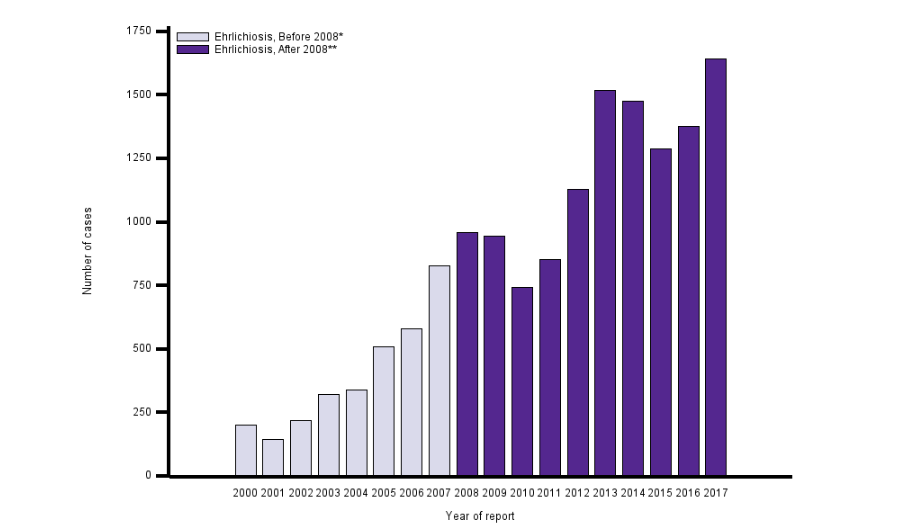
https://www.galaxydx.com/ehrlichiosis-tick-borne-infection-imitates-blood-related-cancers/

Ehrlichiosis: A Tick-borne Illness That Can Imitate Blood-Related Cancers


http://www.fox9.com/news/powassan-virus  Go here for 2 Min News Video

Tick-borne Powassan virus confirmed in 6 Minnesota counties

The virus was confirmed in Anoka, Cass, Clearwater, Houston, Morrison and Pine counties.

First documented in 1958, the virus is named after the Canadian town where it first appeared. Symptoms include headache, vomiting, weakness, and in many cases, swelling of the brain.

Government statistics show that half of those infected will suffer permanent neurological damage.
Unlike Lyme disease, which is treatable and preventable, if an affected tick is quickly removed, the Powassan virus has no known treatment and can be transmitted from a tick to human in only minutes.
___________________
**Comment**
I’ve looked everywhere but can not find why they think that deer ticks transmitting Powassan is a NEW thing.  It’s always been able to transmit it & is even called “Deer Tick Virus.” Even the CDC website states it and they’re usually the last to know about anything.
We’ve also known it takes mere minutes to transmit and being a virus it’s unique in that antibiotics won’t work – but there are many things you can do for viruses:  https://madisonarealymesupportgroup.com/2016/03/28/combating-viruses/
The frightening aspect of Powassan of course is that the symptoms can be severe and transmission happens quickly.  I do know many patients who improved on anti-virals.  Typically this is discovered through trial and error on their part. I am not aware if anti-virals would work on Powassan, but this recent study suggests certain ones may:  https://www.contagionlive.com/news/investigators-discover-how-ticks-reproduce-powassan-virus-in-salivary-glands  Excerpt:
…the utilization of the organ cultures is likely a bona fide way to rapidly assess the efficacy of gene inactivation methods as well as drugs and small molecule inhibitors as antivirals.”


Coppe Lab, a CLIA certified lab, right here Waukesha has been studying Powassan for quite some time. Their pdf below states that numbers look low because only severe cases are reported. Despite this, there’s been a 375% increase in the last 5 years. 

They state the clinical picture of Powassan looks like many other tick-borne illnesses and is…

probably overlooked yet directly contributes to disease long term.

About two-thirds are subclinical but round 30% of symptomatic adults contract a severe form called meningoencephalitis. One-third of those have incomplete recovery with neuropsychiatric symptoms that become chronic. The overall fatality rate is about 1% and severity of illness increases with the age of the patient.  

In 2016, Coppe Laboratories’ Study 1 evaluated 106 patientswith suspected acute tick-borne disease and 10.4% tested positive for POWV by immunofluorescence assay. Nearly 17% of the patients with positive Lyme results also tested positive for POWV exposure. The authors concluded,

“Infection with POWV may be underdiagnosed and may contribute to the persistent symptoms often associated with Lyme disease diagnosis.”16

Coppe states the following patients should be tested for POWV:
  • Patients with a recent tick bite. Studies have shown 2–9% of ticks to be infected with POWV in Lyme endemic areas.17
  • PatientswithLymeoranothertick-borneillness who have been treated with antibiotics and have persistent symptoms consistent with post-treatment Lyme disease.
  • Patients with tick exposure who have tested negative for Lyme disease or other tick-borne illnesses who continue to have symptoms.
  • Patients with tick exposure and unexplained neurologic symptoms.
  • ChronicFatigueSyndrome(CFS)orPost-Infectious Fatigue (PIF) patients with tick exposure.

Coppe has developed both direct and indirect tests for Powassan virus and is the only commercial laboratory to offer this type of testing.  See their pdf for case studies:  http://www.coppelabs.com/wp-content/uploads/coppe-powassan_16pg_030818_lores_indiv.pdf

More on Powassan:  https://madisonarealymesupportgroup.com/2018/06/13/half-of-powassan-cases-from-wisconsin-and-minnesota/