In a WebMD article, the results from a large genetic-factor-only study gleefully reports that the newest, highest-ever estimate of the for percent liability of autism risk that can be attributed to “genetics” is 80%, leaving the remaining 20% to environmental factors. The article also claims that this new, highest estimate is reported by the study authors to be “…roughly in line with those from prior, smaller studies on the issue, further bolstering their validity“. Consistent Results From Invalid Methodology Does not Make Those Results “Valid”. It Makes Them “Consistent”.The “roughly in line with” is an appeal to consistency. But the Liability Threshold Models differ from other approaches methodologically. Previous studies, one of which was conducted by the same group of researchers, had estimates that ranged from 0 to 99% heritability. The average, until this group started using liability-threshold models, was around 40% attribution to genetics. Their studies increased the average, but it still hovered around 50% liability. Only the liability threshold models, used by this group, show results around 80% liability. So their method is consistent with itself. No surprise there. But that’s nowhere near “roughly in line” with all prior studies.
One of those studies is discussed in the article “Non-genetic factors play surprisingly large role in determining autism, says study by group“. Why Autism is Not “Genetic”The article skips over the fact that the newest, latest study, like the prior studies, fails to actually measure the contribution of a single environmental factor. While the article rails against “anti-vaxxers”, the study ignores the vaccination status of those involved in the study. The mantra of so many studies never showing association has be tempered with a mature, responsible and realstic interpretation in the context of how those studies were conducted: restricted to one vaccine (MMR), and then there is this:
Assumptions Without Measurement Lead to Assumptions as ConclusionsTheir entire methodology is based on familial correlations. In the current study under consideration, no exposure levels to pesticides, medical exposures in utero, smoking history, nothing environmental was measured. And yet somehow the study authors pretend they can estimate the % liability from environmental factors. How do they pretend to achieve such a feat? The first problem is that they have not measured any interaction between genetics and environmental factors. There is, in fact, established knowledge of special risk of autism that involves combined risk of specific genes and specific environmental factors. (Check out, for example, Bowers and Erickson (2014): Their Liability Threshold Model Approach is Both Under- and Mis-SpecifiedYou really have to understand population genetics a bit to get this next part, so I apologize to the lay public, but please take what understanding you can from this: Their model (generically represented) is ASD risk = “Genetics” + e where e = measurement error, leaving whatever variation appears to be unexplained to Environment. That’s unusal because the usual interpretation of such unexplained variation is “Error” and “Unknown Variation”. In technical terms, their model is underspecified. Environmental variation is not “Error” in a genetic model, it’s “Environmental Variation”. If they HAD measured environmental factors, say, vaccination exposure, their model form would be ASD risk = “Genetics” + “Environment” + e but this model would still be underspecified. The more fully specified model would be ASD risk = “Genetics” + “Environment“+ “(Genetics x Environment)” + e And if the interaction term “(Genetics + Environment)” is more highly significant than “Genetics” or “Environment“, a reasonable interpretation would be that we cannot interpret genetics in a vacuum, that the significance of many ADK risk alleles must be modified by environmental factors. If during model selection, G or E is significant, but then in the full model G x E is significant, we attribute liability to both G and E working together. Instead of this standard approach to studying genetic and environmental contribution to phenotypic variation (ASD phenotype), they do something very odd. In the Supplementary Material, they report that they made assumptions about environmental factors. Non-specified “Shared Environmental” effects are ASSUMED to be 1.0 for siblings and 0 for cousins. Families quite often stop vaccinating after an older sibling experiences seizures. The study authors also EQUATE “Non-Shared Environmental Factors” with “residual errors”, which is patently absurd. That’s “e“, which is unspecified variation (error), not designated environmental factors. If I had conducted an analysis of environmental factors and their contribution to ASD, and used their methodology, I would be able to attribute any unexplained variation to “Genetics” after allowing “Environmental Factors” to consume most of the variation. I might arbitrarily add in some assumptions, such as assuming that risk from dominant alleles were 1.0 (which they are not, if the impact of those alleles are modified by environmental factors) and all recessive risk alleles contributed zero risk, which would be, as described, arbitary. Their conclusions draw directly from their assumptions. Evidence? What Evidence?The WebMD article cites the entire team of researchers as saying “the current study results provide the strongest evidence to our knowledge to date that the majority of risk for autism spectrum disorders is from genetic factors,” [‘said a team led by Sven Sandin, an epidemiological researcher at the Karolinska Institute in Stockholm, Sweden’] – as quoted by WebMD. Evidence? What evidence? If you assume no contribution of environment, measure no environment, and conclude no contribution, there is no evidence. There are over 850 genes that have been determined to contribute to ASD risk – and not one of them explain >1% of ASD risk individually. Most of these are Common Variants – meaning they are ancient – as in, they pre-date both the ASD epidemic (and yes, there is an epidemic) and vaccination. Here’s a figure from my book, which reviews all of the genetic and environmental studies published to mid-2016:
This explains why ASD pedigrees look like humanity dipping its toes into a toxic soup:
The study also does not explain why >20% of children with ASD have higher copy number variation – de novo genetic variation – compared to the rest of the population, nor why people with ASD – and their mothers – have anti-brain protein antibodies – nor why people with ASD have strange mis-folded proteins, lifelong microglial activation, why studies of replacing the microbiome show a reduction in the severity of autism traits by 50%… a feat for a diagnosis that is allegedly 80% “genetic”… and so on, and so on. Then There is PhenomimicryThe study ignores the fact that environmental factors can impact genes, proteins and biological pathways in a manner that is identical to the effects of genetic variation. This is called Phenomimicry – a term so cool I wish I had invented it. Examples of Phenomimicry are known in science relevant to ASD. |


Maybe It’s Lyme
What happens when illness becomes an identity?
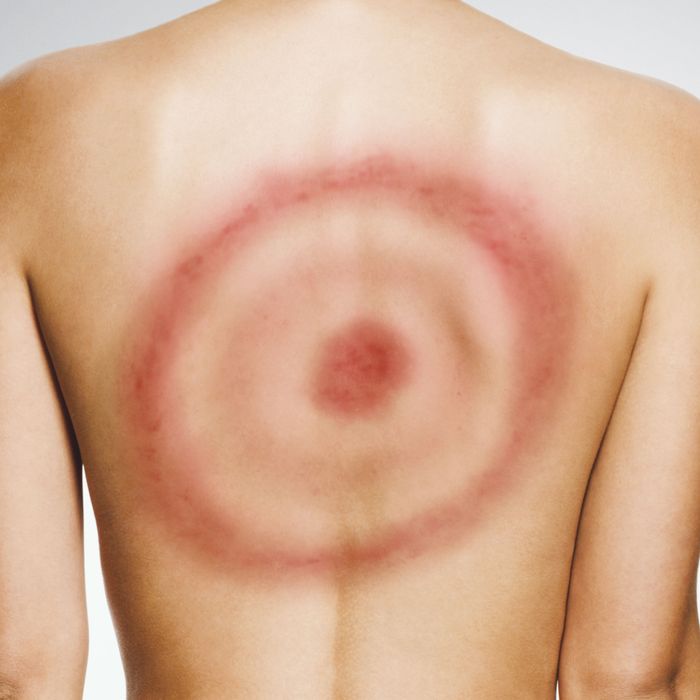
Polly Murray, in the 1960s and ’70s, was a mother of four with an old house on several acres in Lyme, Connecticut. In the summer, her kids built forts in the woods; they ice-skated on frozen cow ponds in the winter. The Murrays had an idyllic life in the country. They also had enormous rashes, strange joint swellings, and recurrent fevers.
One son wound up in the infirmary at boarding school, unable to lift his leg. Another had to have the fluid drained from his knee. Murray was constantly taking herself or her husband or one of her kids to a doctor — but none of the doctors ever had answers, nor did they seem especially interested in finding any. So Murray took the search upon herself. In The Widening Circle, her 1996 memoir, she reproduces extracts from her diary (“Monday, July 28: Todd had a fever of 100 again for two days and a severe jaw ache; he said it hurt to open his mouth … The attack lasted for five days”). The record Murray gathered is a testament to both the relentlessness of the symptoms and her own relentlessness in tracking them. Her husband compares her to “the lonely hero of a Hitchcock movie”: isolated, embattled, and disbelieved.
Soon, though, Murray started to hear other stories like hers. Her area, it appeared, had a cluster of juvenile-rheumatoid-arthritis cases. She called the state’s health department and met with Dr. Allen Steere, a rheumatologist doing a fellowship at Yale. He pored over her pages of notes. On the car ride home, Murray wept with joy: Steere didn’t have any answers, but he had listened. He wanted to find out what was wrong. By 1976, the condition Murray had observed had become known as Lyme disease.
“Lyme disease was a disease born of advocacy,” Dr. Paul Auwaerter told me. Auwaerter, whose lab focuses on Lyme and other tick-borne diseases, is the clinical director of the Division of Infectious Diseases at Johns Hopkins University School of Medicine. Back in the ’70s, Murray and her fellow Connecticut mothers had to fight for attention. Their experience left behind a powerful legacy, Auwaerter said, a sense that perhaps “the medical establishment didn’t really listen initially or were trying to be dismissive.”
Decades after Polly Murray kept her diary of symptoms, the spirit of advocacy associated with Lyme disease endures. But while Murray’s efforts were ultimately vindicated by medical science, a new fight — for the recognition of something known as “chronic Lyme,” which can encompass a vast range of symptoms and need not be linked to any tick bite — has grown into a phenomenon often untethered from scientific method or peer review. The chronic-Lyme community has a new agenda, one that was visible at last fall’s Global Lyme Alliance Gala in New York, where supporters gathered at Cipriani heard a speech from Real Housewife of Beverly Hills Yolanda Hadid. (See link for article)
*This article appears in the July 22, 2019, issue of New York Magazine.
________________
**Comment**
As you can imagine, this article makes the case that chronic/persistent Lyme isn’t backed by science.
All I can say, is take a look at this, Molly: Peer-Reviewed Evidence of Persistence of Lyme:MSIDS copy
https://madisonarealymesupportgroup.com/2019/06/12/bb-microscopy-a-pictures-worth-1000-words-how-bb-evades-the-immune-system/ There is a video in this link showing Bb’s ability to get into and out of the blood stream & lymphatic system quickly demonstrating its ability to go anywhere in the body to colonize.
We desperately need this work done to shut the naysayers up: https://madisonarealymesupportgroup.com/2018/04/13/chronic-lyme-post-mortem-study-needed-to-end-the-lyme-wars/
Then there are the thousands upon thousands whose symptoms persist despite standard treatment. Are they all mad? I don’t think so, and it’s time “science” started listening.