Madison Area Lyme Support Group

  • About/Contact
  • Articles & Documents
  • Meetings
  • Petitioning the State of Wisconsin
  • Photographs
  • Videos

Avid Hiker Meets Bad Bug, Ends Up With Babesiosis

August 22, 2019

https://www.stltoday.com/lifestyles/health-med-fit/health/to-your-good-health/avid-hiker-meets-bad-bug-ends-up-with-babesiosis/article_

Avid hiker meets bad bug, ends up with babesiosis

Aug 16, 2019

Dear Dr. Roach • I am an avid hiker, and I live in an area with lots of Lyme disease. I recently developed some fever, headache, shaking chills and dark urine, and just felt awful. My doctor did some blood tests and said I had Babesia and/or Anaplasma. Are these related to Lyme disease? — I.J.M.


Answer • Like Lyme disease, babesiosis (caused usually by Babesia microti) and anaplasmosis (caused by Anaplasma phagocytophilium) can be spread by the bite of the deer tick, Ixodes scapularis, but neither bacteria species is related to Borrelia burgdorferi, the cause of Lyme disease. These diseases are not well-known by most people, nor even by many general doctors outside the areas where they are common, such as Wisconsin and Connecticut.

Babesiosis causes fever as high as 105.6 F, fatigue and feeling unwell. Dark urine is occasionally present. There are nonspecific lab findings, such as anemia and low platelet counts, but the diagnosis is confirmed by seeing the bacteria inside the red blood cells or by sophisticated blood testing (PCR). Treatment is with azithromycin and atovaquone.

Anaplasmosis has a generally lower fever, muscle aches, headache, chills and the same feeling of being unwell (called “malaise” in medical literature). Blood counts frequently show low white blood cell counts. The diagnosis is made by antibody or PCR testing, but treatment is usually started in the appropriate setting even before positive results. Treatment is with doxycycline.

Tickborne diseases may exist at the same time, so consideration must be given to people having both anaplasmosis and babesiosis, with or without Lyme disease.Doxycycline treatment for anaplasmosis also treats early Lyme disease, but does not treat babesiosis.

Both anaplasmosis and babesiosis can be very severe in people with immune system disease, such as HIV or an organ transplant. Older people are also at higher risk for severe disease.

Readers may email questions to ToYourGoodHealth@med.cornell.edu or send mail to 628 Virginia Dr., Orlando, FL 32803.

________________

**Comment**

This article reminds us of issues that demand answers:

  1. Why does mainstream medicine STILL know so little about tick-borne diseases after 40 years? https://madisonarealymesupportgroup.com/2019/08/22/early-diagnosis-necessitates-lyme-savvy-doctors/
  2. Why is testing STILL being used that is so unreliable after 40 years?  https://madisonarealymesupportgroup.com/2019/08/05/controversies-challenges-in-treating-lyme-other-tick-borne-diseases/
  3. Please notice the doctor’s wise usage of “usually caused by?” This is wise because it could be one of a number of strains of Babesia.
  4. Please notice the the doctor’s wise explanation that a tick bite can transmit a whole host of pathogens – not just Lyme and sometimes not Lyme at all.  This issue is what is completely being neglected in mainstream medicine because doctors aren’t looking at all for any of these coinfections that can come with or without Lyme. Since testing is abysmal for ALL of them, they should be educated in symptomology since diagnosis has always been and still is a clinical diagnosis. Testing is not accurate and should not be the sole means of diagnosis.
  5. Little research has been done on concurrent infection & what it does to the body and how it affects testing:  https://madisonarealymesupportgroup.com/2018/10/30/study-shows-lyme-msids-patients-infected-with-many-pathogens-and-explains-why-we-are-so-sick/  But this recent study shows by Garg et al. shows a 85% probability for multiple infections including not only tick-borne pathogens but also opportunistic microbes such as EBV and other viruses.  Mainstream medicine isn’t touching this with a ten foot pole.
  6. The good doctor points out that anaplasmosis and babesiosis can be very severe in people with compromised immune systems. I believe tick borne illness compromises the immune system greatly and it’s only logical to conclude that concurrent infection with numerous pathogens do so even more. Add a few opportunistic infections like Chlamydia and EBV, and you have a patient as sick as a dog:  https://madisonarealymesupportgroup.com/2016/10/07/chlamydia-like-organisms-found-in-ticks/, https://madisonarealymesupportgroup.com/2017/04/11/diagnosed-with-ebv-had-lyme/  This is why patients are so sick and why standard mono therapy often doesn’t work.
Taking into account the totality of these issues presents an entirely different picture than what authorities such as the IDSA and CDC present.

This is often a complex illness with many moving parts which necessitates various drugs of longer duration than currently being used.

The CDC/IDSA “One size fits all” approach just doesn’t work. Until authorities take into account these variables and allow doctors to treat patients accordingly, it’s a losing battle – and make no mistake about it – it’s the patients who loose.


Category:

Anaplasmosis, Babesia, Ticks, Transmission, Treatment

Comments Off on Avid Hiker Meets Bad Bug, Ends Up With Babesiosis

Early Diagnosis Necessitates Lyme-savvy Doctors

https://www.lymedisease.org/early-diagnosis-lyme/

12 AUG 2019

LYME SCI: Early diagnosis necessitates Lyme-savvy doctors

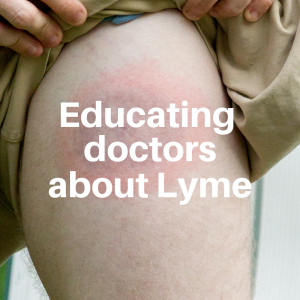
Educating doctors about Lyme

By Lonnie Marcum

The following are my written comments to the ninth meeting of the Tick-borne Disease Working Group (TBDWG) on June 4, 2019.

Dear Members of the Tick-Borne Disease Working Group:

My name is Lonnie Marcum. I am a physical therapist in California. Seven years ago, I had to quit work to take care of my 14-year-old daughter after she came home from school with flu-like symptoms and never got better.

Nearly a year later, she received a positive test for Ehrlichia chaffeensis. That led us to discovery of other vector-borne infections, including Lyme disease and Bartonella. At the time, I knew nothing about tick-borne infections, so when her doctor gave her a 21-day supply of doxycycline, I thought she’d be better in 21 days.

I was wrong.

Years later, after tediously treating each of her infections and repairing her immune system, she gradually began to get her health back. And today I am happy to say she is about 80% better.

Since my daughter’s illness began, I have found a new purpose—to find a cure for Lyme and co-infections. I am now a science writer for LymeDisease.org, one of the most trusted sources of information for patients with Lyme disease. There I devote my time to reading current research, interviewing scientists and sharing what I’ve learned through my blog LYME SCI.

What I’ve learned is that there are a lot of misconceptions about Lyme disease. First, that it is easy to diagnose, and second that it is easy to treat. Nothing could be further from the truth, in my opinion.

Early diagnosis is key

While it may be true that many patients who receive early diagnosis and early treatment do get better, a huge percentage of patients DO NOT receive an early diagnosis. In fact, fewer than 12% of the 12,000 patients in LymeDisease.org’s patient registry, “MyLymeData,” received a diagnosis within the first month after the tick bite. (Johnson 2019)

Delayed diagnosis is critical to understanding why so many patients are left with debilitating symptoms after standard treatment for Lyme. During the months to years that patients are suffering, the untreated infection spreads throughout the body, embedding itself deeply into connective tissues where standard antibiotics have a hard time reaching. (Embers 2012, Cabello 2017, Caskey 2015)

One study demonstrated that a delay in treatment by as little as 9-19 days is predictive of persistent Lyme symptoms. (Bouquet 2016)

Think of these untreated infections like a leaky roof. If you can stop the leak and mop up all the water the first day, the structure will probably be fine. But if you wait a week, a month, a year or more, the damage seeps into the roof, the walls, and the floor, causing mold and rot. If you catch it early enough you may only need to replace the drywall and paint. But if it goes deeper, the structure may need to be replaced.

This is exactly what happens with Lyme patients. Some are lucky to be treated early and recover completely.

Unfortunately, the majority of patients, like my daughter, are initially misdiagnosed with another illness and go months or years before receiving a proper diagnosis. During this time the infection(s) spread to the organs, the brain, the bone marrow, and the heart. (Coughlin 2018, Novak 2019)

Treatment failure is high

Unfortunately, there is no standardized treatment for this patient population. The last NIH-funded treatment trial for patients with persistent Lyme disease was over 10 years ago and it did not reveal a solution. (Fallon 2008, Goswami 2013) The latest study out of Johns Hopkins University found that a triple-drug combination was the only method successful in eradicating the infection in mice. (Feng 2019)

The other issue is that ticks can carry multiple pathogens that can infect people at the same time. (Moutailler 2016) In the MyLymeData survey of patients with chronic symptoms of Lyme disease, over 50% had multiple infections (also known as co-infections).

The most common co-infections are Babesia, Bartonella, Ehrlichia, Mycoplasma, Rocky Mountain spotted fever, Anaplasma and tularemia—all pathogens that can be transmitted by ticks. (Johnson 2014)

The issue with many of these co-infections is they are not all treated with the same prescription medication as Lyme disease. For instance, a patient may receive a diagnosis of Lyme and start taking the appropriate antibiotic, but they may also have an undiagnosed babesia infection which requires an anti-parasitic medication.

As a result, this patient may not get better until all the infections are treated properly. Unfortunately, there are no clinical trials on the most effective method to treat patients with multiple infections.

Need for physician awareness and education

This brings me to my final point—delayed diagnosis of tick-borne diseases. In my opinion, there are two things contributing to the large number of missed diagnoses of Lyme and other tick-borne diseases. 1) lack of physician awareness and education, and 2) lack of accurate diagnostic tools. (Cook 2016)

For example, I know a patient who just last week went to her doctor with a distinctive bull’s-eye shaped rash. Her doctor refused to give antibiotics because her test for Lyme was negative.

Even though the CDC clearly states, “Lyme disease is diagnosed based on: signs and symptoms, and a history of possible exposure to infected blacklegged ticks,” this physician refused to treat this woman during the critical early phase of infection. This is clearly an example of a lack of physician awareness and education.

The second issue here is that the standard test for Lyme is designed to detect antibodies that may take 4-6 weeks for the patient’s immune system to produce. (Borchers 2015) So, while I fault the physician for not knowing about the inaccuracy of the test in the early phase, I also fault the CDC for allowing a faulty test to remain on the market.

To summarize my recommendations:

  1. Improve physician education and awareness of Lyme and tick-borne diseases at all state and local levels. You might do this by requiring doctors to participate in at least one tick-borne disease continuing medical education (CME) course in order to renew their license.
  2. Reduce the number of missed diagnosis and misdiagnoses for Lyme and other tick-borne diseases by developing a precise test capable of detecting all pathogens in a single test.
  3. Improve treatment success rates for patients with late-stage Lyme disease. You may do this by designing clinical trials that use combination antibiotics proven successful in animal models.(Feng 2019)

Thank you for the opportunity to submit comments to the Tick-Borne Disease Working Group (TBDWG). I was an avid viewer of the first eight meetings of the TBDWG and am very happy with the final versions of the sub-committee reports and the Report to Congress. I find them to be some of the most comprehensive accumulations of information regarding tick-borne disease on record.

I look forward to following the second session of the TBDWG and hope that you are able to help implement some of the recommendations as proposed in the first TBDWG Report to Congress.

LYME SCI is written by Lonnie Marcum, a physical therapist and mother of a daughter with Lyme. Follow her on Twitter: @LonnieRhea  Email her at: lmarcum@lymedisease.org .

References

Aucott JN, Rebman, AW. Crowder, L.A.; Kortte, K.B. (2013) Post-treatment Lyme disease syndrome symptomatology and the impact on life functioning: Is there something here? Qual. Life Res. 2013, 22, 75–84. doi: 10.1007/s11136-012-0126-6

Bouquet J, et al (2016) Longitudinal Transcriptome Analysis Reveals a Sustained Differential Gene Expression Signature in Patients Treated for Acute Lyme Disease. Am Society Micro. DOI: 10.1128/mBio.00100-16

Borchers A, et al. (2015) Lyme disease: A rigorous review of diagnostic criteria and treatment. J Autoimmun. 2015 Feb;57:82-115. doi: 10.1016/j.jaut.2014.09.004

Cabello FC, Godfrey HP, Bugrysheva JV, Newman SA. (2017) Sleeper cells: the stringent response and persistence in the Borreliella (Borrelia) burgdorferi enzootic cycle. Environ Microbiol19(10):3846-3862, 2017. doi: 10.1111/1462-2920.13897

Caskey JR, Embers ME. (2015) Persister Development by Borrelia burgdorferi populations in vitro. Antimicrob Agents Chemother 59(10):6288-6295, 2015. DOI: 10.1128/AAC.00883-15

Centers for Disease Control and Prevention. (2013) Press Release: CDC provides estimate of Americans diagnosed with Lyme disease each year. https://www.cdc.gov/media/releases/2013/p0819-lyme-disease.html

Cook MJ, Puri BK (2016) Commercial test kits for detection of Lyme borreliosis: a meta-analysis of test accuracy. Int’l Journal of General Medicine. https://doi.org/10.2147/IJGM.S122313

Coughlin J, et al. (2018) Imaging glial activation in patients with post-treatment Lyme disease symptoms: a pilot study using [11C]DPA-713 PET. Journal of Neuroinflammation. 201815:346 https://doi.org/10.1186/s12974-018-1381-4

Embers ME, Barthold SW, Borda JT, Bowers L, Doyle L, Hodzic E, Jacobs MB, Hasenkampf NR, Martin DS, Narasimhan S, Phillippi-Falkenstein KM, Purcell JE, Ratterree MS, Philipp MT. (2012) Persistence of Borrelia burgdorferi in rhesus macaques following antibiotic treatment of disseminated infection. PLoS One 7(1):e29914, 2012. https://doi.org/10.1371/journal.pone.0029914

Fallon BA,et al. (2008) A randomized, placebo-controlled trial of repeated iv antibiotic therapy for Lyme encephalopathy. Neurology 2008, 70, 992–1003. DOI: https://doi.org/10.1212/01.WNL.0000284604.61160.2d

Feng J, Auwaerter PG, Zhang Y. (2015) Drug combinations against Borrelia burgdorferi persisters in vitro: eradication achieved by using daptomycin, cefoperazone and doxycycline. PLoS One10(3):e0117207, 2015a. doi: 10.1371/journal.pone.0117207

Feng, J, Li T, Yee R, Yuan Y, Bai C, Cai M, Shi W, Embers M, Brayton C, Saeki H, Gabrielson K, Zhang Y. (2019) Stationary Phase Persister/Biofilm Microcolony of Borrelia burgdorferi Causes More Severe Disease in a Mouse Model of Lyme Arthritis: Implications for Understanding Persistence, Post-Treatment Lyme Disease Syndrome (PTLDS), and Treatment Failure. Discov Med 27(148):125-138.  http://www.discoverymedicine.com/Jie-Feng/2019/03/persister-biofilm-microcolony-borrelia-burgdorferi-causes-severe-lyme-arthritis-in-mouse-model/

Goswami ND, et al. (2013) The state of infectious diseases clinical trials: A systematic review of clinicaltrials.Gov. PLoS ONE 2013, 8, e77086. doi: 10.1371/journal.pone.0077086

Johnson L, et al (2014) Severity of chronic Lyme disease compared to other chronic conditions: a quality of life survey. PeerJ, 2014. 2, e322 DOI: 10.7717/peerj.322.

Johnson, Lorraine (2019): 2019 Chart Book — MyLymeData Registry. (Phase 1 April 27, 2017. Sample 3,903). figshare. Preprint. https://doi.org/10.6084/m9.figshare.7849244

Moutailler S, et al, (2016) Co-infection of Ticks: The Rule Rather Than the Exception.

PLoS Negl Trop Dis. 2016 Mar; 10(3): e0004539. doi: 10.1371/journal.pntd.0004539

Novak P, Felsenstein D, Mao C, Octavien NR, Zubcevik N (2019) Association of small fiber neuropathy and post treatment Lyme disease syndrome. PLoS ONE 14(2): e0212222. https://doi.org/10.1371/journal.pone.0212222

Rosenberg R, Lindsey NP, et al. (2018) CDC: MMWR. Vital Signs: Trends in Reported Vectorborne Disease Cases — United States and Territories, 2004–2016. https://www.cdc.gov/mmwr/volumes/67/wr/mm6717e1.htm?s

Schwartz A., Hinckley A., Mead P. et al., (2017) Surveillance for Lyme disease, United States, 2008 – 2015. MMWR Surveill Summ. doi: 10.15585/mmwr.ss6622a1

Tick-Borne Disease Working Group 2018 Report to Congress. Available online: https://www.hhs.gov/sites/default/files/tbdwg-report-to-congress-2018.pdf

Tick-Borne Disease Working Group 2018 Sub-Committee Reports. Available online: https://www.hhs.gov/ash/advisory-committees/tickbornedisease/reports/index.html

Category:

Uncategorized

Comments Off on Early Diagnosis Necessitates Lyme-savvy Doctors

Prevalence of Babesia in Canadian Blood Donors: June – October 2018

August 21, 2019

https://www.ncbi.nlm.nih.gov/pubmed/31385317

Transfusion. 2019 Aug 5. doi: 10.1111/trf.15470. [Epub ahead of print]

Prevalence of Babesia in Canadian blood donors: June-October 2018.

Tonnetti L1,2, O’Brien SF3,4,5, Grégoire Y6, Proctor MC2, Drews SJ3,4,5, Delage G6, Fearon MA3,4,5, Brès V7, Linnen JM7, Stramer SL1,2.

Abstract

BACKGROUND:

The erythrocytic protozoan parasite Babesia microti, the cause of human babesiosis, is transmitted not only by tick bites but also via blood transfusion. B. microti is endemic in the northeastern/upper midwestern United States, where partial screening of blood donations has been implemented. In Canada, a 2013 study of approximately 14,000 donors found no B. microti antibody-positive samples, suggesting low risk at that time.

METHODS:

Between June and October 2018, 50,752 Canadian donations collected from sites near the US border were tested for Babesia nucleic acid by transcription-mediated amplification (TMA). Reactive donations were tested for B. microti by IgG immunofluorescence assay and polymerase chain reaction. A subset of 14,758 TMA nonreactive samples was also screened for B. microti antibody. Donors who tested reactive/positive were deferred, asked about risk factors, and were requested to provide a follow-up sample for supplemental testing.

RESULTS:

One sample from Winnipeg, Manitoba, was TMA and antibody reactive. Of the 14,758 TMA-nonreactive donations tested for antibody, four reactive donations were identified from southwestern Ontario near Lake Erie. None of the interviewed donors remembered any symptoms, likely tick exposure, or relevant travel within Canada or the United States.

CONCLUSIONS:

This is the largest B. microti prevalence study performed in Canada. The results indicate very low prevalence, with only one TMA-confirmed-positive donation of 50,752 tested. This donor was from the only region in Canada where autochthonous infection has been reported. Seropositive donations in southwestern Ontario suggest low prevalence; travel should not be ruled out given the proximity to the US border.

____________________

For more: I would caution authorities in believing there is a low prevalence of Babesa. I’ve heard it takes a trained eye to see it and is rarely detected using only 1 diagnostic test. I think the word is out on the seriousness of tick-borne disease. Let’s not go back in time by adopting a carefree approach. We should be looking hard and using accurate testing methods.

 https://madisonarealymesupportgroup.com/2016/06/02/study-showing-results-testing-babesia-microti/

https://madisonarealymesupportgroup.com/2019/07/28/tick-borne-infection-risk-in-blood-transfusion/

https://madisonarealymesupportgroup.com/2017/09/27/premature-infants-develop-babesia-via-blood-transfusion/

https://madisonarealymesupportgroup.com/2019/07/11/characteristics-of-transfusion-transmitted-babesia-microti-american-red-cross-2010-2017/  This clearly shows there were more than 200 Babesia transfusion-transmissions reported. It also shows you don’t have to reside in an endemic area or travel to an endemic area to get it. The article also clearly points out that the geographic range of ticks is expanding, which means the pathogens they carry will as well.

According to Dr. Ken Singleton, Babesia is rarely detected using one diagnostic test alone.  http://www.lymebook.com/chronic-lyme-testing-and-diagnosis

Excerpts:

Lyme-aware physicians generally screen for 2 strains—Babesia microti and WA-1 (Babesia duncani)—by testing for antibodies (by IFA or ELISA testing) made by the body against those organisms.

Another very useful test for Babesia is known as the FISH (fluorescent in situ hybridization) test. The FISH test is performed on thin blood smears (tests used to detect germs in white blood cells) and is able to detect the RNA (genetic material) of Babesia. If this test is positive, it is very strong evidence of the presence of active Babesia. The advantage of the FISH test is that it will detect other subspecies of Babesia in addition to B. microti and B. duncani. (A direct thick and thin blood smear using a staining technique called “Giemsa” can also be done by one’s local or commercial labs to look for Babesia organisms in red blood cells; however, it is an insensitive test except during acute Babesia, particularly when fever is present.)

A final potentially useful test is the Babesia PCR (polymerase chain reaction). Unfortunately, in my experience it is also not a sensitive test and is the least useful of the three tests mentioned.

All three of these tests—Babesia IFA, FISH, PCR—are available through IgeneX, a laboratory specializing in Lyme disease and other tick-borne organisms. Medical Diagnostics Laboratory (MDL) has two of the tests—Babesia ELISA and PCR. Both labs are excellent and I utilize both regularly. (See the resources section for more information.) However, as mentioned, Babesia can frequently escape detection by diagnostic tests. Therefore, many times babesiois must be a clinical diagnosis made by physicians who are experienced in its detection and treatment.

How many Canadian people slipped through the cracks?


Category:

Babesia, research, Transmission

Comments Off on Prevalence of Babesia in Canadian Blood Donors: June – October 2018

Lyme Disease Is Baffling, Even To Experts

https://www.theatlantic.com/magazine/archive/2019/09/life-with-lyme/594736/

Lyme Disease Is Baffling, Even to Experts

But new insights are at last accumulating.
The September 2019 issue by Meghan O’Rourke gives her narrative about the difficulty in getting diagnosed and treated for Lyme disease. It also shows clearly the Lyme Wars in action as she questions her own sanity and symptoms after talking with Dr. Allen Steere.
Go to link for entire article.

_________________

**Comment**

Overall – great article.

A few points:

  1. Despite the CDC’s opinion of patients, “the proof is in the pudding.” If your test results show antibodies, you begin treatment and feel worse before you feel better….what more can be said? This is a clinical diagnosis.
  2. Nobody’s denying there can be other factors at play. No – not everything is Lyme – but Lyme CAN be anything.
  3. The climate is a mute point regarding tick borne illness:  https://madisonarealymesupportgroup.com/2018/08/13/study-shows-lyme-not-propelled-by-climate-change/, and https://madisonarealymesupportgroup.com/2018/11/07/ticks-on-the-move-due-to-migrating-birds-and-photoperiod-not-climate-change/
  4. For anyone versed in Tick-borne illness, the author has a hallmark case. Not remembering people you should know, having electric shocks all over your body, as well as burning, pain, numbness, severe exhaustion, vertigo, joint pain, tremors, headaches, brain fog – all of which wax and wane….remind me of Dr. Jemsek’s quote: “You either have 20 diseases or you have Lyme disease.”  
  5. It’s a good thing she chose to listen to Dr. Horowitz or things would be very bad for this author right now.
  6. Please remember that Steere is the one who created the entire paradigm keeping patients from getting effective treatment for this 40 years ago.  https://sites.google.com/site/jerryleonard999/home/allen-steere-psychopath-at-large  In short, Steere is a pharmaceuticals consultant, influential researcher and co-author of the IDSA Lyme disease guidelines, and a CDC/EIS biowarfare officer which is chartered with responding to biowarfare agents released on U.S. soil, as well as developing vaccines against them. He also worked for the private Yale Corporation that worked closely with the biowarfare tick lab in Connecticut. Working with Yale, Steere personally oversaw the Lymerix vaccine trials and associated tests run by the company that licensed the vaccine from his previous employer. Steere personally testifies against doctors who who treat chronic Lyme.  Why a patient would ever entertain a word this man says defies logic.


Category:

Activism, Lyme, Ticks, Treatment

Comments Off on Lyme Disease Is Baffling, Even To Experts

5G Risk: The Scientific Perspective

GreenMedInfo is offering Dr. Martin Pall’s eBook on 5G

Dr. Martin Pall’s powerful, 127-page eBook, 5G Risk: The Scientific Perspective, which contains the science that proves, beyond any reasonable doubt, the biologically harmful effect of 5G deployments and wireless radiation. 

GreenMedInfo is co-producing this summit in order to get this scientifically-validated information out as far and wide as possible. Please download, read, and share this widely with friends, family, health professionals, and your elected officials. 

As the 5G wireless technology rollout is relentlessly promoted — without a single test of its safety by those implementing it — Dr. Martin Pall builds a rational and evidence-based case for predicting an imminent explosion in health issues that will come with being immersed 24/7/365 in this technology, including:

+ Neurodegenerative and chronic diseases
+ Infertility
+ Cancers
+ Autism
+ Still-births
+ Blindness
+ Hormonal dysfunction
+ DNA damage
+ Kidney failure
+ Insect holocaust
+ Conflagrations of forests

The future for humanity and our planet can only be assured by people willing to stand up to destructive forces against what may seem insurmountable odds.

This 127-page eBook is a powerful summary of the science that telecoms don’t want us to know, because it scientifically demonstrates, beyond any reasonable doubt, the biologically harmful effect of 5G deployments and wireless radiation in general. Includes citations to 139 scientific research papers.

When you download this important eBook, you’ll also save a seat for the free, online 5G Crisis: Awareness & Accountability Summit taking place on August 26 — world-renowned experts teaching you more about EMFs and 5G!

You can truly get started on better health today!

Yours in health,

The GreenMedInfo Team

For an interesting read on the connection between COVID-19, COVID injections, 5G, and Chemtrails.

A few important excerpts:

…globalist entities that are behind the military deployment of 5G worldwide needed a cover for the inevitable outbreaks of both 5G Flu and 5G Syndrome.  The coronavirus pandemic has provided just that, especially in light of the fact that many of the symptoms of both are quite similar. See: Is The “Coronavirus” Actually Microwave Illness from 4G and 5G Radiation?

There have been many telltale signs that are dead giveaways about the close coordination between the military deployment of 5G just before the first major COVID-19 outbreaks around the world.  For example, Wuhan was established as China’s first 5G “Demonstration Zone” in 2019. See: Wuhan City Was expected to have 10,000 5G base stations operating by the end of 2019

Another major clue concerns the highly suspicious work being conducted at Harvard University.  The activation of 5G energy grids amps up the manifestation and severity of Covid symptoms considerably which is why Harvard’s Charles M. Lieber holds the U.S. Patent for using 5G radiation to vibrate corona virus particles from preset nanotubule containers.  The Chair of the Chemistry Department was arrested and indicted in June of 2020.

….Just how many assaults can the human body take before it starts to break down, particularly for the elderly and those with serious comorbidities. See: CHEMTRAIL SYNDROME: A Global Pandemic Of Epic Proportions

The article also points out that the aerosolized and chemically mobile aluminum oxide is “particularly toxic to the brain when permitted to pass through the blood-brain barrier.” This was accomplished through the invasive nasal COVID-19 testing which punctured the brain lining, causing some to need surgery.

For more:  

  • https://madisonarealymesupportgroup.com/2019/07/23/free-5g-summit-aug-26-sept-1-2019/
  • https://madisonarealymesupportgroup.com/2019/04/15/5g-the-dominoes-are-starting-to-fall/
  • https://madisonarealymesupportgroup.com/2019/04/05/brussels-becomes-first-major-city-to-halt-5g-due-to-health-effects/
  • https://madisonarealymesupportgroup.com/2019/03/13/despite-lack-of-studies-safety-standards-relaxed-ahead-of-5g-emf-health-effects-survey-shows-health-harm-rat-study-shows-microwaves-cause-brain-permeability/
  • https://madisonarealymesupportgroup.com/2019/01/16/award-winning-journalist-exposes-wifi-disaster-in-canadian-public-school-that-injured-dozens-of-children-health-alert-on-cell-phones/
  • https://madisonarealymesupportgroup.com/2019/03/05/global-5g-will-blanket-the-earth-in-a-mosaic-of-cells/
  • https://madisonarealymesupportgroup.com/2019/01/30/petition-26000-scientists-oppose-5g-roll-out/

Governor Tony Evers signs 5 G Bill, ignoring scientific experts:  https://wisconsinsafetech.com/2019/07/10/evers-signs-5g-bill-ignoring-scientific-experts/?

1st Report of 5G Injury from Switzerland where it’s up and running in 102 locations:  https://mdsafetech.org/2019/07/20/the-first-report-of-5g-injury-from-switzerland/? Everything from sleep issues and pain to electrosensitivity & microwave poisoning.

Category:

Activism

Comments Off on 5G Risk: The Scientific Perspective

Search

Archives

Lyme Non-Profits

  • Wisconsin Lyme Network Facebook

Lyme Resources

  • Affordable Blood Draws/injections in Wisconsin
  • Blood Draws in Madison
  • Columbia Specimen Bank 646-774-7503
  • Dental Care For Children With Autism
  • Find a Lyme Support Group
  • IGeneX, Inc. (lab testing)
  • ILADS (International Lyme And Associated Diseases Society)
  • Learn about Lyme
  • Lyme Bio Bank (NDRI & Bay Area Lyme Foundation)
  • Lyme Curriculum & Educational Activities
  • Lyme Disease Association
  • Lyme Info
  • Lyme Resource Zip File
  • Lyme-Symptoms
  • Lymedisease.org (Formally CALDA)
  • LymeLight Foundation
  • National Suicide Hotline
  • On-line Mental Health Therapy
  • SE Wisconsin Support Group
  • Substance Abuse Rehab Centers in Wisconsin
  • Substance Misuse Support
  • Suicide & Social Media
  • Tick borne disease education
  • Tick Borne Disease Prevention: Stuff for Kids
  • Tick Prevention
  • Tick-Borne Disease Alliance
  • TRUTHCURES
  • What is Lyme

Online Support Groups

  • Lyme Support Group of Southeast Wisconsin (Facebook)
  • Military Lyme Info
  • Military Lyme Support (Facebook)
  • Parents Whose Children Have Lyme/MSIDS
  • Wisconsin/Illinios Lyme (Facebook)

Visitors

  • 8,106,565

Top Posts & Pages

  • Proof That the Pandemic Was Planned & With Purpose
  • MYLYMEDATA 2019 Report
  • My Journey With Chronic Infections: Lyme & Chlamydia Pneumoniae
  • 'Another Death One Day After Vaccine' - Medical Examiners Debated COVID Vaccine Safety, Emails Reveal
  • Americans Lost Key Medical Freedom Rights During Pandemic, As Courts Quietly Dismantled Constitution
  • About/Contact
  • Tom Grier - Madison?
  • Research For Chronic Lyme Fellowships Awarded
  • ILADS Launches Registry & Crowd-Solving Platform: One Health Lyme
  • ICAN's Legal Efforts Regarding COVID-19 Vaccines

Categories

  • Activism
  • Adrenals
  • Allodynia
  • Alpha Gal Meat Allergy
  • Alzheimer's
  • Anaplasmosis
  • Anaplasmosis Treatment
  • Autism
  • Babesia
  • Babesia Treatment
  • Bartonella
  • Bartonella Treatment
  • Biofilm
  • Borrelia Miyamotoi (Relapsing Fever Group)
  • C-diff
  • Cancer
  • Candida
  • Chiropractic Care for MSIDS
  • Climate
  • Clinic
  • Corrections
  • Dentistry
  • Detoxing
  • diet and nutrition
  • Disability
  • Educational handouts
  • Ehrlichiosis
  • Ehrlichiosis Treatment
  • EMF
  • Eye Issues
  • Genetic Mutations
  • Gut Health
  • Hearing Loss
  • Heart Issues
  • Hemp Oil
  • Herbs
  • Hormones
  • Hyperthermia
  • Inflammation
  • Interstitial Cystitis
  • Lyme
  • Lyme Disease Treatment
  • Lyme Vaccine
  • Malaria
  • Marijuana
  • Mast Cell Activation Syndrome (MCAS)
  • Meetings
  • Mold
  • Morgellons
  • mosquitoes
  • Mycoplasma
  • Mycoplasma Treatment
  • Pain Management
  • PANS
  • Parasite Treatment
  • Parasites
  • Pregnancy
  • Prevention
  • Psychological Aspects
  • Q Fever
  • research
  • Rickettsia
  • Rocky Mountain Spotted Fever
  • Sleep
  • Supplements
  • Support Group Presentations
  • Syphilis
  • Testing
  • thyroid
  • Tickborne Relapsing Fever
  • Ticks
  • Toxoplasmosis
  • Transmission
  • Treatment
  • Tularemia
  • Uncategorized
  • vaccines
  • Viruses
  • Zika

Older Posts

Newer Posts

Madison Area Lyme Support Group
  • Subscribe Subscribed
    Madison Area Lyme Support Group
    Join 630 other subscribers

    Have a WordPress.com account? Log in now.

  • Madison Area Lyme Support Group
    View site in Reader
    Manage subscriptionsSign upLog in
    Report this content
    Collapse this bar
Loading Comments...