
Some Scientists Now Say Alzheimer’s is an Autoimmune Disease But Ignore the Root Cause to Market New Drugs & One Doctor’s Program to Reverse Cognitive Decline
Scientists Say Alzheimer’s Is an Autoimmune Disease, Not Result of Amyloid Plaque
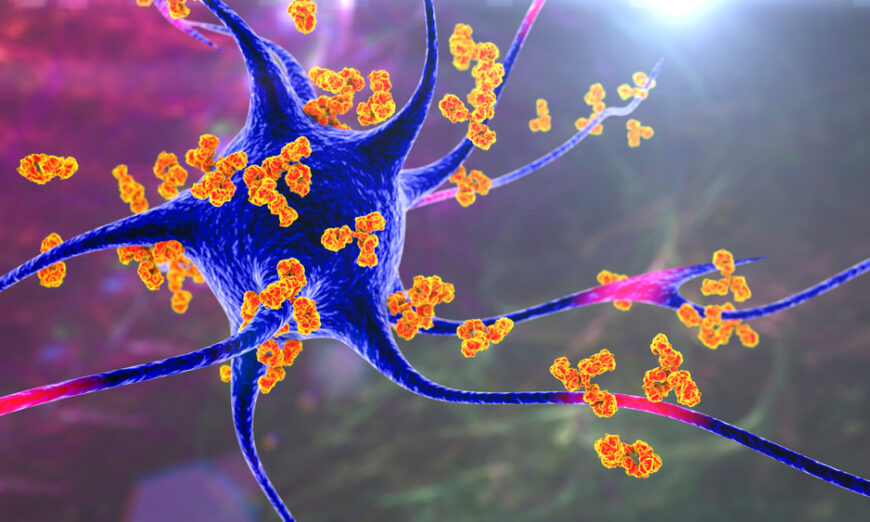
Not long ago, some Canadian scientists clearly put forward a different explanation for the cause of Alzheimer’s disease—they suggested that Alzheimer’s may be an autoimmune disease.
Alzheimer’s May Be an Autoimmune Disease
According to statistics from the World Health Organization (WHO), there are about 50 million dementia patients in the world, with 10 million new cases every year; it means that about one person is diagnosed every three seconds.
Over the years, the “amyloid hypothesis” has been widely accepted among various theories of the cause of Alzheimer’s disease, but it has also been controversial as some phenomena in patients with Alzheimer’s do not fit the hypothesis. For example, people with amyloid plaques in their brains may not have Alzheimer’s. Besides, there are still many uncertainties about the clinical benefit of drugs targeting the elimination of amyloid beta.
Recently, Canadian scientists published a post saying that the amyloid beta found in the brains of Alzheimer’s patients is actually a substance released by the body’s immune response. They further speculate that Alzheimer’s is an autoimmune disease centered on the brain. (See link for article)
_______________
**Comment**
Lyme/MSIDS patients should already be familiar with this refrain because it’s exactly what they say causes chronic/persistent Lyme disease – that old, wonky immune system strikes again.
The problem with this is it completely bypasses the root cause that can be treated, thereby helping that wonky immune system and perhaps even preventing the wonkiness from happening. In my opinion, which has plenty of research to back it up, infections are to blame for both diseases which means all the immune modulating drugs on the planet are not going to fix it. Don’t get me wrong, immunomodulators have their place and can really help with symptoms, but again, won’t deal with the root issue: infections.
You would think researchers would learn from past mistakes, but alas, the same drivers of error (money and power) are still at play.
Rather than researching diseases for true answers to alleviate patient misery, diseases are studied as potential income earners with Big Pharma to create the next hot drug or lucrative “vaccine.” The same tune continues to be played on the same harp.
So rather than deal with the root of these diseases (infections) in which cheap, already existing antimicrobials can be repurposed, scientists carefully craft it to “autoimmune” diseases where sexier, more expensive, new drugs can be created – of which they will patent and profit from. Sound familiar?
While I’m glad they finally quit blaming amyloid beta as the culprit, they are still far from real answers that will help real people.
_______________
https://media.mercola.com/ImageServer/Public/2022/November/PDF/recode-protocol-pdf.pdf
Case Study Reveals How Cognitive Decline Can Be Reversed
STORY AT-A-GLANCE
- A case report of 100 patients diagnosed with cognitive decline using the ReCODE protocol showed both subjective and objective improvements in all participants
- The ReCODE protocol, which involves identifying the drivers of cognitive decline (such as pathogens, toxins and metabolic changes), then targeting those in a personalized program that includes dietary and lifestyle changes, allows your brain to create and maintain synapses again, thereby treating the root of the problem
- A hallmark of neurodegenerative diseases such as Alzheimer’s is that proteins are aggregated and are typically misfolded
- By inducing ketosis, improving insulin sensitivity and supporting the mitochondria, you can often regain the ability to refold or proteolyze misfolded proteins
- Electromagnetic field exposures, such as that from cellphones and Wi-Fi, may play an important role in Alzheimer’s, as it triggers high amounts of oxidative stress and damage to proteins and DNA
Alzheimer’s disease, which is the most common form of dementia, eventually leads to the inability to carry out even the most basic of bodily functions, such as swallowing or walking. It is ultimately fatal, as conventional treatment options are few and universally ineffective.
Like autism among children, Alzheimer’s among seniors has reached epidemic proportions, with no slowdown in sight. On the contrary, evidence suggests the trend is worsening. In 2022, Alzheimer’s affects more than 6 million Americans,1 and 1 in 3 seniors dies with dementia or other demention. By 2050, Alzheimer’s diagnoses are projected to reach 13.8 million.2,3
While the U.S. Centers for Disease Control and Prevention lists the disease as the seventh leading cause of death in the U.S.,4,5 statistics published in the journal Neurology in 2014 revealed Alzheimer’s is vastly underreported on death certificates. In reality, the disease likely killed 503,400 American seniors in 2010,6 making it the third leading cause of death, right behind heart disease and cancer.7
The good news is that contrary to conventional claims, there are ways to prevent and even treat this tragic disease — not by drugs, but by diet and other lifestyle changes.
Dr. Dale Bredesen, professor of molecular and medical pharmacology at the University of California, Los Angeles School of Medicine, and author of “The End of Alzheimer’s: The First Program to Prevent and Reverse Cognitive Decline,” has identified a number of molecular mechanisms at work in Alzheimer’s, and created a novel program called ReCODE to treat and reverse it.8
100-Patient Case Report Sheds Light on Treatment Options
One of Bredesen’s publications is a case report9,10 of 100 patients using the ReCODE protocol. He had previously published three case reports, each involving just 10 patients. This fourth case report contains 100 patients treated at 15 different clinics across the U.S., all of which have documented pre- and post-cognitive testing.
Not only did all show improvement in symptoms, some of them also showed improvement in their quantitative electroencephalographs (EEGs). Others who underwent magnetic resonance imaging (MRI) with volumetrics also showed objective improvement.
“By all the criteria, these people showed improvement, subjective and objective,” Bredesen says. This is no small thing, as there is no conventional treatment that can reverse Alzheimer’s. There have been many drug trials to date, but all have failed to reverse the disease. As noted by Bredesen:
“There are a couple of medications, Aricept, Namenda … but these have a very, very modest impact. The most important thing is their improvement is not sustained. They don’t change the outcome of the disease. You get a little bump in improvement, then you go right back to declining.
The most important part of the [ReCODE] protocol … is that the improvement is sustained. You’re actually going after the root cause of what is causing the cognitive decline. That’s a big difference.”
Alzheimer’s Is a Protective Response to Inflammation
If one were to summarize Bredesen’s approach in one sentence, it would be “to improve the ratio between synaptoblastic and synaptoclastic activity, which is the brain’s ability to create new synapses versus destroying them.” In other words, the treatment allows your brain to create and maintain synapses again. Bredesen explains:
“The molecular biology of this disease shows that what we call Alzheimer’s disease is actually a protective response. It’s essentially a scorched-earth retreat.
You’re pulling back and saying, ‘We’re not going to let this insult kill us, so we’re going to scorch the earth so it (whether it’s bacteria or something else) cannot take advantage … of what’s there.’ You’re literally downsizing [your synapses]. As long as those insults are going on, you will be downsized.”
Beta-amyloid is a protein that is highly correlated with Alzheimer’s. However, all attempts at removing it have failed to improve the condition. Clearly, beta-amyloid in and of itself is not the primary cause, so simply getting rid of it is not the answer.
In Bredesen’s paper, he discusses the role of beta-amyloid as an antimicrobial peptide (AMP). Importantly, AMPs are critically important for host immunity. They target organisms such as bacteria, mycobacteria, viruses, fungi and protozoa. He explains:
“Here is the trick. It turns out amyloid beta is really part of the innate immune system. Its antimicrobial effect was first discovered and published by professor Robert Moir and professor Rudy Tanzi at Harvard.
This thing actually has, again, a protective response. Not only is it an AMP, but it also binds some toxins. For example, mercury, other divalent metals like iron and things like that. [Amyloid beta] has multiple effects. It is part of your response to insult.
When you take that into account, you realize it’s fine to remove amyloid, but please don’t do it before you remove all the insults. We’ve seen numerous people now who have had the amyloid reduced and gotten worse because the ongoing insults are still there.”
In 2019, the drug company Biogen halted its Phase II clinical trial for aducanumab, a drug designed to remove beta-amyloid, and this is the typical story for these kinds of drugs. And then a major trial of yet another approach to amyloid removal, the BACE inhibitor CNP520, was halted because the drug was associated with increased cognitive decline and brain atrophy.11
The Protein Refolding Process Is Impaired in Alzheimer’s
About one-third of the proteins your body makes on any given day are misfolded. Thankfully, your body has a mechanism by which those misfolded proteins are refolded. Heat-shock proteins play a central role in this process, and if the misfolding is too severe, the heat-shock proteins help remove them altogether.
In fact, heat-shock proteins are a corollary of autophagy, the process by which your body cleans out damaged organelles. This relates to Alzheimer’s, because the refolding process is one of several factors that need to work in order for your brain to function. As noted by Bredesen:
“In all of these different neurodegenerative diseases, whether you’re talking about Alzheimer’s, Huntington’s, Lou Gehrig’s disease, Parkinson’s disease or Lewy body, they all feature proteins that are aggregated and that are typically misfolded. They are not degraded appropriately.
You lose not only the ability to fold but the ability to degrade these proteins. That is a critical piece. In fact, just recently, an article came out on a common neurodegenerative condition, newly described, which is called LATE, which is limbic-predominant, age-related TDP-43 encephalopathy.
In other words, this is a little bit like Alzheimer’s … [LATE] features TDP-43, which is a protein that is involved in numerous things, including protein folding … We lose that [protein-folding] ability as we start to downsize [synapses], as you don’t have an appropriate energy, you don’t have the appropriate trophic support.
You don’t have the appropriate hormonal and nutritional support … When we target ketosis, when we target insulin sensitivity, when we target mitochondrial support, that typically allows you to generate the appropriate ability to refold misfolded proteins …
You can induce the heat-shock response … by doing this combination of sauna and then [going] into the cold and then back to the sauna and then back to the cold …
You are recurrently activating this critical response [by doing that]. There’s no question it is going to be important, especially in ALS, but likely in all of the neurodegenerative conditions.”
The Link Between Protein Folding and Cell Death
As noted by Bredesen, there are three kinds of autophagy: macro-autophagy, micro-autophagy and chaperone-mediated autophagy. Each offers a slightly different way to repair, remove or recycle damaged organelles within the cell.
Specific proteins, for example, can be targeted for chaperone-mediated autophagy. Bredesen recounts findings of research he did to ascertain the linkage between protein folding and programmed cell death (apoptosis, where the entire cell is killed off and removed):
“If you fail to reform these [misfolded proteins], you literally activate an entire system that initially stops producing more protein. It’s basically saying, ‘We’re not keeping up with this. We’re going to shut this down.’ It attempts to refold. Then it attempts to destroy the proteins if it can’t refold them.
Then ultimately, if it cannot … keep up … it literally activates programmed cell death through specific caspases … This is something where you want to intervene upstream; understand why this is happening. And then if you’re unable to keep up with this, now, at least increase your heat-shock proteins so that you can refold. In this case, you prevent the induction of programmed cell death.”
Unfortunately, a vast majority of people do not have well-functioning autophagy, for the simple reason that they’re insulin-resistant. If you’re insulin-resistant, you cannot increase your adenosine 5′ monophosphate-activated protein kinase (AMPK) level, which prevents the inhibition of mammalian target of rapamycin (mTOR), and mTOR inhibition is one of the primary drivers of autophagy.
The Case for Cyclical Fasting
While autophagy is clearly of critical importance, you don’t want to be in continuous autophagy. You also need to cycle through the rebuilding phase. One of the ways in which you can control this is through cyclical fasting. Bredesen typically recommends an intermittent fasting approach.
“You want to use appropriate fasting and an appropriate diet to activate this autophagy,” Bredesen says. “We recommend … 12 to 14 hours [of fasting] if you are apolipoprotein E4-negative (ApoE4-negative) … If you are ApoE4-positive, you’d want to go longer — 14 to 16 hours. There’s nothing wrong with doing a longer fast …
The reason we suggest longer for the ApoE4-positives [is because] if you are ApoE4-positive, you are better at absorbing fat. It tends to take longer to enter autophagy …
Typically, we recommend it about once a week. But again, a longer fast once a month is a good idea. It depends a lot on your body mass index (BMI). What we found is people who have higher BMIs respond better to this fasting early on. They’re able to generate the ketones.
If you lose both the carbohydrates and the ketones, you end up [feeling] completely out of energy … We are very careful when people are down below 20 on their BMI, especially the ones 18 or below. We want to be very careful to make sure to cycle them [in and out of ketosis] once or twice a week …
These are the ones where, often, exogenous ketones can be very helpful early on … Measure your ketones. It’s simple to do. We want to get you into, ultimately, the 1.5 to 4.0 millimolar [range for] betahydroxybutyrate. That is the goal.”
Test Your Ketones
So, to recap, while dementia patients with excess weight tend to respond favorably to cyclical fasting, at least initially, underweight patients may experience cognitive decline, as they’re simply too underweight to produce ketones in response to the fasting. For those who are underweight, Bredesen recommends using a ketone supplement such as medium-chain triglycerides (MCT) oil.
If that doesn’t bring you into the desired ketone level (1.5 to 4.0 mmol), or if it’s adversely affecting your low-density lipoprotein (LDL) particle number, he might recommend exogenous ketones — either ketone esters or salts. “We’d like to look at your LDL particle number and use that to titrate, to make sure that your LDL particle number is not too high,” he says.
To test your ketones, I recommend KetoCoachX.12 It’s one of the least expensive testing devices on the market right now. Another good one is KetoMojo. KetoCoach, however, is less expensive, the strips are individually packed and the device is about half as thick as KetoMojo’s, making it easier to travel with.
Energy Demands Are Not Met in Neurodegenerative Diseases
Nutritional ketosis, in which your body produces endogenous ketones (water-soluble fats), is important for all neurodegenerative diseases, but it’s not a complete cure-all. Bredesen explains:
“What we’ve come to realize from the research over the years is that neurodegenerative diseases, whether Alzheimer’s … macular degeneration … Lewy body, Parkinson’s or ALS, they all have one thing in common. They are related to specific subdomains of the nervous system.
Each of these has a unique requirement for nutrients, hormones, trophic factors, et cetera … In each case, there is a mismatch between the supply and the demand. For most of your life, you’re keeping up with that demand. With all of these diseases, you have a repeated or a chronic mismatch between the support and the requirement.
In Parkinson’s disease, it’s quite clear. You can create Parkinson’s disease simply by inhibiting mitochondrial Complex I. That specific subdomain of motor modulation, which is what Parkinson’s is all about, is the thing that is the most sensitive to reductions in mitochondrial Complex I support.
Therefore, when people have this, you need to bring the supply back in line with the demand. A critical way to do that is to supply the appropriate ketosis — the appropriate energy.
Now, if the person is continuing to be exposed to whatever chemicals are inhibiting Complex I — and it’s typically … mold-related biotoxins or organic toxins such as paraquat or glyphosate — as long as these are ongoing, you’re going to get very temporary relief.
The goal here is both to get rid of what is inhibiting Complex I and to flood the system, to help the system by giving appropriate support for the energetics … With Alzheimer’s, we’re really talking about a mismatch in trophic support. You’ve got this ongoing need as you’re making neuroplasticity.”
Why Late-Night Eating Is Ill Advised
Although I am not ApoE4-positive, I prefer fasting for 16 hours a day, essentially narrowing my eating window to just four to six hours. I also make sure to eat my last meal three to six hours before bedtime. One of the reasons for this advice is because avoiding late-night eating will increase your nicotinamide adenine dinucleotide (NAD+) levels, which are important for a variety of bodily functions.
Importantly, it will also reduce nicotinamide adenine dinucleotide phosphate (NADPH), which is essentially the true cellular battery of your cell and has the reductive potential to recharge your antioxidants. The largest consumer of NADPH is the creation of fatty acids.
If you’re eating close to bedtime, then you’re not going to be able to use the NADPH to burn those calories as energy. Instead, they must be stored some way. To store them, you have to create fat, so you’re basically radically lowering your NADPH levels when you eat late at night because they are being consumed to store your extra calories by creating fat.
Bredesen’s protocol includes this strategy as well. He calls his approach “KetoFlex 12/3,” because it generates mild ketosis and is flexible diet-wise. It can be done whether you’re a vegetarian or not. The 12/3 stands for a 12-hour minimum fast each day, and eating the last meal three hours before bedtime.
Certain supplements, including berberine, resveratrol, curcumin, quercetin and fisetin also boost autophagy, and can be used in addition to the nutritional timing. Bredesen explains:
“Sirtuin-1 (SIRT1) was identified as a critical molecule, both for longevity and has been studied extensively for its effects on longevity, but also for its effects on Alzheimer’s disease …
ApoE4 actually enters the nucleus and downregulates the production of this critical molecule, so you can see one of its many effects on Alzheimer’s disease. Well, when SIRT1 is made, it is actually made in an autoinhibitory fashion. It’s just like having a gun in a holster. It’s not active … NAD activates the SIRT1.
So does resveratrol. This is why people take resveratrol [or] nicotinamide riboside. These are both activating this program, which is moving you from … more of a pro-inflammatory approach to a longevity approach — a change in your metabolic pattern. That includes activating things like autophagy and also having an anti-Alzheimer’s and a pro-longevity effect …
[Q]uercetin also has an interesting impact on senescent cells … I think that that’s going to turn out to be an important way to impact a number of age-related conditions, including neurodegeneration.”
The drawback, and the reason you cannot rely on supplements alone, is that the bioabsorption of these polyphenols, like quercetin for example, is quite low. Oftentimes, you cannot absorb enough to get the full benefits.
Limit Electromagnetic Field Exposures
There’s also convincing evidence showing electromagnetic field exposures (EMFs) such as that from cellphones and Wi-Fi play an important role. Bredesen agrees, and recommends his patients limit such exposures. In summary, EMFs activate your voltage-gated calcium channels, allowing the release of excess nitric oxide and superoxide in the cell, resulting in the creation of peroxynitrite.
Peroxynitrite causes similar damage to your DNA as ionizing radiation. It also damages your stem cells, mitochondria, proteins and cell membranes. Poly-ADP ribose polymerase helps repair DNA damage by extracting an adenosine diphosphate (ADP) molecule from NAD. Approximately 100 to 150 NAD are required to repair a single DNA break.
While this process works quite well, problems arise when continuous DNA damage requiring continuous PARP activation occurs, as this ends up decimating your NAD+ level. Bredesen adds:
“This is a critical area. The big problem we’ve had with this so far is that we can measure your NF-κB activation; we can measure your status of hormones, nutrients, magnesium, on and on and on. Typically, with our approach, we measure 150 different variables.
There is no simple way to measure the effect of EMF on a given person’s nervous system. I look forward to the day when we can do a test and say, ‘Aha. This person has 27.2 on their effects on their voltage-gated calcium channels because of EMFs.’ Because then we’ll really be able to alter that.
For now, the best we can say is — just as we go after biotoxins and chemotoxins — [EMF] is a physical toxin. The best we can say is, ‘Minimize that to the extent you can.’ You can certainly measure the exposure. We just don’t have a good way yet to measure its effect on your brain.”
More Information
There’s no decline in sight for Alzheimer’s, at least in the foreseeable future, so it would behoove most people to just assume you’re headed for it and take action now, regardless of your age, to prevent it. When it comes to Alzheimer’s, prevention is surely far easier than trying to treat it once it has set in. As noted by Bredesen:
“This is all about prevention and early reversal. Those are the people where we see virtually 100% response. This is why I think there needs to be a global effort to decrease the burden of dementia. We’re just now starting a clinical trial. We’ve been trying to get institutional review board (IRB) approval for years …
It has finally been approved, so we’re starting a trial with Dr. Ann Hathaway, Dr. Deborah Gordon and Dr. Kat Toups, who are all seeing patients. We’re very excited to see what the trial will show with this approach. Because certainly, anecdotally, we’re hearing it all the time.
As you mentioned, we just published a paper a few months ago on 100 patients who showed documented improvement … I’m convinced we could, today, if everyone got an appropriate prevention, make this a very rare disease.”
Bredesen’s case report13 is open access, so you can download and read the full study. His book, “The End of Alzheimer’s: The First Program to Prevent and Reverse Cognitive Decline,” also provides the details, and would be a valuable reference in anyone’s health library.
You can also learn more about Bredesen and his work by following him on Facebook, Twitter or visit his website, drbredesen.com. Last but not least, read his book, “The First Survivors of Alzheimer’s: How Patients Recovered Life and Hope in Their Own Words,” which features first-person accounts from patients diagnosed with Alzheimer’s who beat the odds and improved.
- 1, 5 Alzheimer’s Association. Facts and Figures
- 2 CNN June 8, 2015
- 3 Nature 2014: 20; 415-418
- 4, 7 CDC.gov Leading causes of death in the US
- 6 Neurology March 5, 2014; 82(12)
- 8 AHNP Precision Health ReCODE, The Bredesen Protocol
- 9, 13 Journal of Alzheimers Disease & Parkinsonism 2018; 8(5): 450
- 10 Rezilir Health LLC, 100 Case reports for the reversal of cognitive decline
- 11 Alzforum July 12, 2019
- 12 KetoCoachX.com
 Illustrated by Mado Peña. Additional editing by Joshua Davis and Gina Mei.


