Archive for the ‘Transmission’ Category

Canadian Tick Expert: Think Winter Means No More Ticks? Think Again

https://www.ctvnews.ca/mobile/canada/think-winter-means-no-more-ticks-think-again-1.4218569  (Video News story here)

Think winter means no more ticks? Think again

CTVNews.ca with a report from CTV Atlantic’s Jonathan MacInnis
Published Friday, December 14, 2018 

A hunter in the Maritimes was recently walking outside when, unbeknownst to him, he stumbled upon a tick nest. Despite the winter weather, the ticks were alive – and hungry.

“He described having hundreds of ticks on him,” said Dr. Vett Lloyd, who studies ticks at a lab in Sackville, N.B.

Contrary to popular belief, ticks don’t die en masse when the temperature drops. According to Lloyd, Canadians should consider the pest a year-round concern and continue to exercise caution while outdoors.

“The moment we have a warm day, if there’s a little bit of sun on the snow, it melts. The ticks are there, and they’re hungry and ready to go. All you need to do or your dog needs to do is walk by there. You can get a tick,” she said.

In her research, Lloyd invites anyone in New Brunswick bitten by a tick to send the tiny vermin to her in small plastic bags. (The ticks must be dead first.) She then tests the insects for borrelia, the bacteria that causes Lyme disease, and also identifies the tick’s species.

About 20 per cent of all ticks she receives test positive for Lyme disease, which can cause neurological disorders and facial paralysis, among other symptoms, if left untreated. The highest number of Lyme-positive ticks come to the lab from Nova Scotia and southern New Brunswick, where the prevalence can be as high as 30 per cent.

Lloyd says that ticks found in colder months tend to be better fed because most people don’t check themselves or their pets as often as they might in the summer.

If a tick is well fed, Lloyd says, it could pose serious health concerns.

“That’s a problem because it takes a tick a certain amount of time to pass on the disease. So if it’s fed for several days on you, (you have) a much higher chance of getting a disease from it,” she said.

As the holidays approach and more Canadians may be outside enjoying the weather, Lloyd recommends using flea and tick repellant.

ticksA renowned expert on the bedeviling bugs says they’re still active in winter.

__________________

For more:  https://madisonarealymesupportgroup.com/2016/01/20/polar-vorticks/

In Video found in link, TICK GUY, TOM MATHER, SHOWS HOW TICKS SURVIVE IN 3 DEGREES OVERNIGHT UNDER SNOW COVER.

Ticks are marvelous ecoadaptors, and regarding all the clamor of “climate change,” independent Canadian tick researcher John Scott has proven it has absolutely nothing to do with tick proliferation and therefore the spread of Lyme/MSIDS:  https://madisonarealymesupportgroup.com/2018/11/07/ticks-on-the-move-due-to-migrating-birds-and-photoperiod-not-climate-change/

Regarding time needed for a tick to transmit:  https://madisonarealymesupportgroup.com/2017/04/14/transmission-time-for-lymemsids-infection/  Excerpt:

Transmission Time:  Only one study done on Mice. At 24 hours every tick had transmitted borrelia to the mice; however, animal studies have proven that transmission can occur in under 16 hours and it occurs frequently in under 24 hours.  No human studies have been done and https://www.dovepress.com/lyme-borreliosis-a-review-of-data-on-transmission-time-after-tick-atta-peer-reviewed-article-IJGM  no studies have determined the minimum time it takes for transmission.

There’s also the issue of partially fed ticks transmitting more quickly: http://iai.asm.org/content/61/6/2396.full.pdf  Ticks can spontaneously detach – and the authors of this study found that they did so 15% of the time in mice.  They also state that about a tenth of questing nymphs appear distended with partially fed sub-adult ticks being common.  This quicker transmission is due to spirochetes presiding in the salivary glands rather than the mid-gut.

It’s important to note that ticks typically carry more than just borrelia and transmission times have not been studied for many of these pathogens.https://madisonarealymesupportgroup.com/2017/05/01/co-infection-of-ticks-the-rule-rather-than-the-exception/ and https://www.lymedisease.org/lyme-basics/co-infections/about-co-infections/  Transmission with more than one pathogen is associated with more severe illness and renders antibiotics less effective.  The longer a tick is attached the greater the risk of transmission.  Tick Borne Viruses can be transmitted in minutes.  https://www.ncbi.nlm.nih.gov/pmc/articles/PMC4278789/

In this link, a little girl couldn’t walk or talk within 4-6 hours of tick bite:  https://madisonarealymesupportgroup.com/2016/12/07/igenex-presentation/


Tularemia in Minnesotan Ticks

https://www.liebertpub.com/doi/abs/10.1089/vbz.2018.2388

Prevalence of Francisella tularensis in Dermacentor variabilis Ticks, Minnesota, 2017

Tory Whitten, Courtney Demontigny, Jenna Bjork, Mandy Foss, Molly Peterson, Joni Scheftel, Dave Neitzel, Maureen Sullivan, and Kirk Smith
Published Online:https://doi.org/10.1089/vbz.2018.2388

Introduction: The prevalence of Francisella tularensis in Minnesota ticks is unknown. Ticks collected at seven sites were tested to determine the infection prevalence of F. tularensis in Dermacentor variabilis in Minnesota.

Materials and Methods: Ticks were collected from two properties at an epizootic site and at five long-term tick research sites. Ticks were pooled by species, sex, date, and site with a maximum of 10 ticks per pool. Ticks were bisected and homogenized; DNA from supernatant was extracted and tested by real-time PCR (RT-PCR). Twice, additional ticks were collected for bacterial culture and isolation of F. tularensis. Proportion of positive pools and minimum infection rate (MIR) were calculated.

Results: A total of 3527 ticks were tested for F. tularensis including 1601 male D. variabilis and 1926 female D. variabilis. Across all sites, 128 (34%) of 378 pools were RT-PCR positive for F. tularensis. Of 128 positive pools, F. tularensis from 96 (75%) was identified as type A; F. tularensis from 32 pools was unable to be subtyped. The overall MIR was 3.6%. The MIR was significantly lower at the epizootic site compared with Morrison County 1 (3.9% vs. 7.2%; p = 0.02) but did not differ between the epizootic site and Pine County 1 (3.9% vs. 2.1%; p = 0.49). Within the epizootic site, the MIR was significantly higher at Washington County 2 compared with the adjacent property (5.7% vs. 2.3%; p < 0.001). F. tularensis was cultured from 6 (15%) of 40 pools.

Conclusions: F. tularensis was found in ticks at a majority of sites tested. The MIR of F. tularensis in D. variabilis ticks in Minnesota varied geographically. Our findings support the hypothesis that D. variabilis plays an important role in the natural history of tularemia in Minnesota. Further ecologic studies are needed to fully understand the importance of tick species in the maintenance and transmission of F. tularensis in Minnesota.

_______________

**Comment**

The Dermacentor variabilis tick is a hard bodied tick, also known as the American Dog tick or Wood tick and is widely known.  It transmits Rocky Mountain spotted fever (RMSF) and tularemia to humans as well as canine tick paralysis to dogs.  http://edis.ifas.ufl.edu/in781

LyraEDISServlet-2

Dorsal view of American dog ticks, Dermacentor variabilis (Say), with male on left, and female on right.  Credit: J.F. Butler, University of Florida

It was been suggested that adult ticks move to the edge of the roads and trails in an attempt to find a host, or “quest.” Some have hypothesized that because many animals typically follow trails, they leave an odor that attracts these ticks causing them to move toward and quest alongside trails in attempts to find a host (Mcnemee et al. 2003).

More on Tularemia:  https://madisonarealymesupportgroup.com/2016/10/25/of-rabbits-and-men/ 

https://madisonarealymesupportgroup.com/2018/09/28/after-tularemia-death-experts-stress-education/

https://madisonarealymesupportgroup.com/2018/08/07/tularemia-hunting-dogs-as-possible-vectors/

https://madisonarealymesupportgroup.com/2018/02/27/tularemia-infected-ticks-found-on-sorrento-valley-trail-in-ca/

https://madisonarealymesupportgroup.com/2018/03/07/hantavirus-tularemia-warnings-issued-in-san-diego-county/

https://madisonarealymesupportgroup.com/2018/09/19/glandular-tularemia/

Normally thought of as inhabiting areas east of the Rocky Mountains, the Wood tick is obviously defying entomology maps and traipsing all over – from Minnesota to Missouri, California, and most probably everywhere in-between.

I remember hearing Timothy Lepore, MD, FACS, surgeon at Nantucket Cottage Hospital, at a Lyme conference.  He explained that Tularemia is also a disease of those who work with the land such as landscapers and farmers, as well as those who get bit by a tick. There are cases reported in every state but Hawaii, and many other wild and domestic animals can be infected. The highest rates of infection are in Arkansas.  Please see this link for more details but know that this is a bioweaponized pathogen:  https://madisonarealymesupportgroup.com/2016/10/25/of-rabbits-and-men/  The WHO estimates that an aerosol dispersal of 50 kg of F. tularensis over an area with 5 million people would result in 25,000 incapacitating casualties including 19,000 deaths.

Transmission: Transmission can occur through the skin or mucous membranes when handling infected animals as well as through tick bite, contact with fluids from infected deer flies, mosquitoes or ticks, handling or eating undercooked rabbit, drinking contaminated water, inhaling dust from contaminated soil, and handling contaminated pelts or paws of animals. It can also be inhaled from infected hay, grain, or soil. Dr. Lepore had patients who contracted it from their pet dog who shook rain water on them after chewing on a dead rabbit, as well as from folks eating road kill, a person who held sick animals, and a gentleman who slept with his pet bunny.

Another reminder – don’t sleep with pets!
The fact that 35% of Minnesotan ticks are infected with Tularemia is concerning.  Spread the word.


UH Study Shows Hawaii Kids More Vulnerable to Bartonella

http://www.hawaiinewsnow.com/2019/01/17/uh-study-cat-scratch-disease-three-times-more-prevalent-hawaii-keiki-than-mainland-kids/

Cat scratch disease: It’s rare, but a UH study says Hawaii kids are more vulnerable

Cat scratch disease: It’s rare, but a UH study says Hawaii kids are more vulnerable
UH and Kapiolani doctors are warning about cat scratch disease.

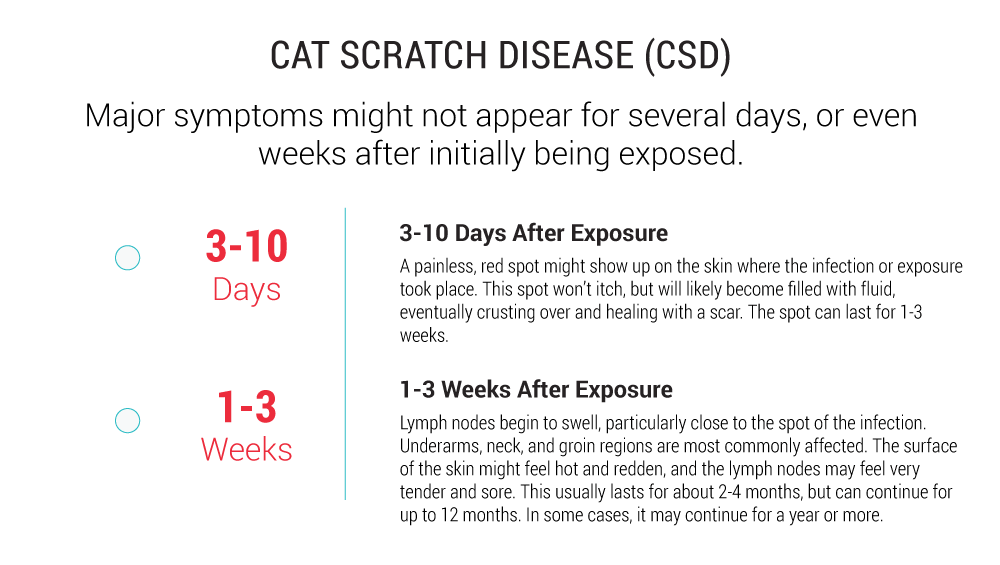
Symptoms include fever and swollen lymph nodes. UH and Kapiolani Medical Center doctors studied 18 children who got severe reactions.

“These were children who had infections of their spleen, liver, meningitis, encephalitis. involvement of their eye. Some even developed bone lesions so it was a significant illness in these children,” said Dr. Jessica Kosut, a pediatric hospitalist.

Sarah Pacheco got a mild form of the illness years ago when her new kitten, Kipling, scratched her arm.

“I had just gotten a kitten and they play and you are bound to get scratched, but I noticed I lost my voice completely,” she said.

Cat scratch disease is still rare. Doctors think Hawaii’s humid climate, outdoor lifestyle and higher feral cat population could be partly to blame.

“I don’t think it’s cats that are in people’s homes, but it can be, but a couple of the children that we took care of described playing with cats that were out in the neighborhood and one child was hiding cats in his closet to keep them a secret from his mother,” said Dr. Kosut.

Doctors say cat scratch disease is treatable. Just make sure your cat doesn’t have fleas and doesn’t play with feral cats, and you don’t have to kick out your kitty.

“I’m definitely a fan of cats and I wouldn’t say that this should discourage anyone from getting cats or adopting cats. I just want providers to be aware of it,” said Dr. Johnson.

__________________
**Comment**
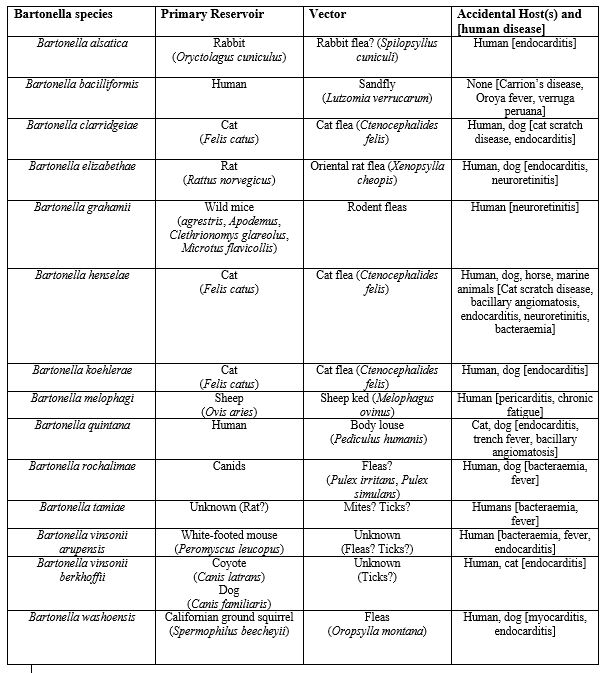
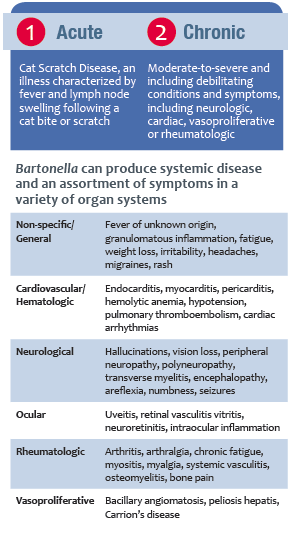
Cat Scratch Disease (CSD) or Bartonella IS NOT RARE!  And while some develop fever and swollen lymph nodes, it presents in a million different ways – some purely psychological.
And cats aren’t the only things transmitting it.

http://townsendletter.com/July2015/bartonellosis0715_3.html
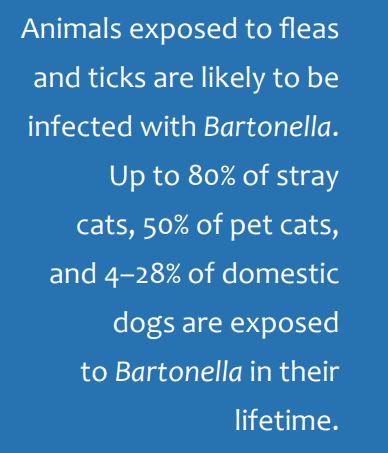
Mode of Transmission: Arthropod vectors including fleas and flea feces, biting flies such as sand flies and horn flies, the human body louse, mosquitoes, and ticks; through bites and scratches of reservoir hosts; and potentially from needles and syringes in the drug addicted. Needle stick transmission to veterinarians has been reported. There is documentation that cats have received it through blood transfusion. 3.2% of blood donors in Brazil were found to carry Bartonella in their blood. Bartonella DNA has been found in dust mites. Those with arthropod exposure have an increased risk, as well as those working and living with pets that have arthropod exposure. 28% of veterinarians tested positively for Bartonella compared with 0% of controls. About half of all cats may be infected with Bartonella – as high as 80% in feral cats and near 40% of domestic cats. In various studies dogs have close to a 50% rate as well. Evidence now suggests it may be transmitted congenitally from mother to child – potentially leading to birth defects.

I’m glad they mentioned:
  • infections of their spleen & liver
  • meningitis
  • encephalitis
  • involvement of the eye
  • bone lesions
Because, these are the things crossing my desk on a daily basis.
Bartonella is prolific, tenacious, and can cause severe illness, and many LLMD’s consider it a major coinfection of Lyme.
To read more about the organism and successful treatments:  https://madisonarealymesupportgroup.com/2016/01/03/bartonella-treatment/
For more:  
  • Heart involvement –
  • Eye involvement –
  • Neurological involvement –
https://madisonarealymesupportgroup.com/2019/02/04/from-cat-scratch-disease-to-bartonellosis/  A table within this article states Bart can cause hallucinations.
  • Skull & bone infections –
https://www.ncbi.nlm.nih.gov/pubmed/19303175  Besides the case report of a woman with osteomyelitis, the study states a literature review identified 51 other cases of osteomyelitis associated with cat scratch disease, 14 of those confirmed by PCR.
  • Thoracic involvement –
  • Cancer

https://madisonarealymesupportgroup.com/2019/01/02/bartonella-langerhans-cell-histiocytosis-cancer/

  • Chronic abdominal pain, esophageal heartburn, purpuric skin rash, mesenteric adenitis (swollen lymph nodes inside the abdomen)   

https://www.lymediseaseassociation.org/images/NewDirectory/Studies-Papers/Fried_Bartonella-2002.pdf

  • Granulomas & bony lesions

https://madisonarealymesupportgroup.com/2018/07/05/cat-scratch-disease-in-a-1-5-year-old-girl-case-report/

  • Rheumatological involvement –

https://madisonarealymesupportgroup.com/2018/05/09/rheumatological-presentation-of-bartonella-koehlerae-henselae-a-case-report-chiropractors-please-read/   Please note the joint popping with each articulation and continual joint subluxation issue.

  • Can turn off antibodies to Lyme, Babesia, Ehrlichia, Anaplasma, and even itself –

http://www.townsendletter.com/July2009/ed_lyme0709.html  Dr. Shaller feels that due to this, Bartonella should be considered in ALL initial consults.

I’m going to stop at this point as I’m growing weary.  The question begs to be asked:
Does this look rare to you?


From Cat Scratch Disease to Bartonellosis

https://www.galaxydx.com/new-educational-resource-on-human-bartonella-infections/

From Cat Scratch Disease to Bartonellosis

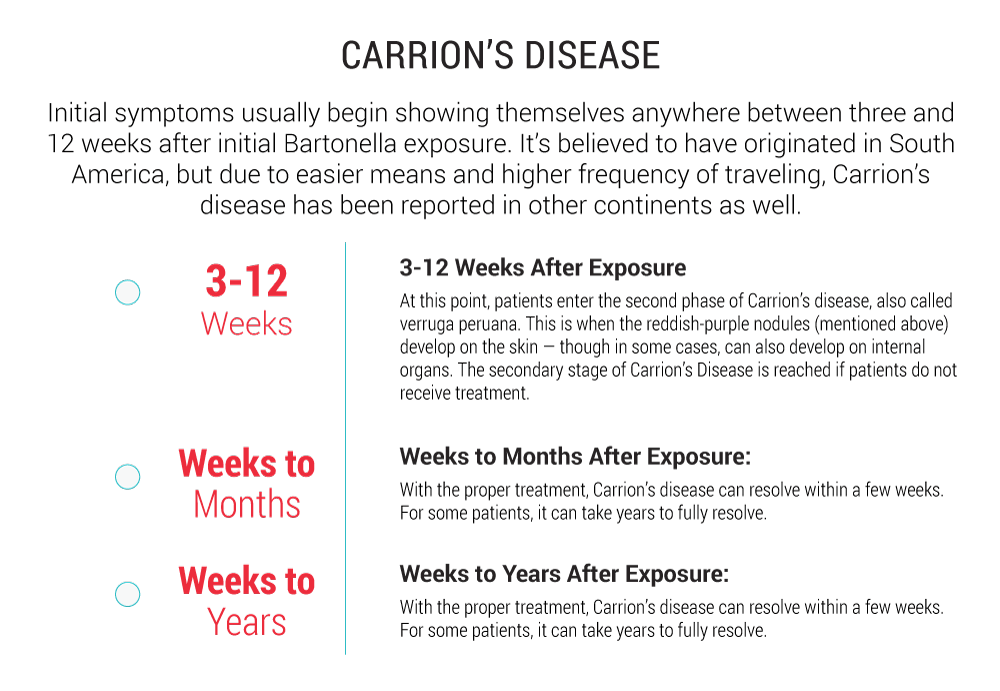
Bartonellosis is a term used to encompass all infections caused by pathogenic Bartonella species. Bartonella are emerging, flea-borne bacteria that are highly adapted to living in mammalian hosts and are implicated in a wide spectrum of diseases in humans and animals.

Woman Links Lyme Disease Diagnosis to Pet Cat Sleeping in Bed

https://www.foxnews.com/health/woman-links-lyme-disease-diagnosis-to-pet-cat-sleeping-on-bed

Woman links Lyme disease diagnosis to pet cat sleeping on bed

Jan. 21, 2019

By Alexandria Hein/Fox News

__________________

**Comment**

Please, DO NOT LET YOUR PET ON FURNITURE OR IN YOUR BED!
Treat all pets with proper tick prevention.

There are potentially numerous transmitters of Lyme, not just the black-legged tick:  https://madisonarealymesupportgroup.com/2016/02/13/lyme-disease-treatment/  It’s highly probably a STD, spread congenitally, and by ticks as well as other blood-sucking bugs. Willy Burgdorfer, the discoverer of Borrelia burgdorferi, became infected when infected rabbit urine got into his eye while working in a lab.  https://madisonarealymesupportgroup.com/2017/02/24/pcos-lyme-my-story/

This woman should consider Bartonella, a common pathogen in cats.

I hope the best for her but it’s gonna take more than supplements and cutting carbs to get on top of this monster.