Archive for the ‘Transmission’ Category

Human Tick-Borne Diseases in Australia

https://www.ncbi.nlm.nih.gov/pmc/articles/PMC6360175/

Published online 2019 Jan 28. doi: 10.3389/fcimb.2019.00003
PMCID: PMC6360175
PMID: 30746341

Human Tick-Borne Diseases in Australia

Abstract

There are 17 human-biting ticks known in Australia. The bites of Ixodes holocyclus, Ornithodoros capensis, and Ornithodoros gurneyi can cause paralysis, inflammation, and severe local and systemic reactions in humans, respectively. Six ticks, including Amblyomma triguttatum, Bothriocroton hydrosauri, Haemaphysalis novaeguineae, Ixodes cornuatus, Ixodes holocyclus, and Ixodes tasmani may transmit Coxiella burnetii, Rickettsia australis, Rickettsia honei, or Rickettsia honei subsp. marmionii. These bacterial pathogens cause Q fever, Queensland tick typhus (QTT), Flinders Island spotted fever (FISF), and Australian spotted fever (ASF). It is also believed that babesiosis can be transmitted by ticks to humans in Australia.

In addition, Argas robertsi, Haemaphysalis bancrofti, Haemaphysalis longicornis, Ixodes hirsti, Rhipicephalus australis, and Rhipicephalus sanguineus ticks may play active roles in transmission of other pathogens that already exist or could potentially be introduced into Australia. These pathogens include Anaplasma spp., Bartonella spp., Burkholderia spp., Francisella spp., Dera Ghazi Khan virus (DGKV), tick-borne encephalitis virus (TBEV), Lake Clarendon virus (LCV), Saumarez Reef virus (SREV), Upolu virus (UPOV), or Vinegar Hill virus (VINHV).

It is important to regularly update clinicians’ knowledge about tick-borne infections because these bacteria and arboviruses are pathogens of humans that may cause fatal illness. An increase in the incidence of tick-borne infections of human may be observed in the future due to changes in demography, climate change, and increase in travel and shipments and even migratory patterns of birds or other animals. Moreover, the geographical conditions of Australia are favorable for many exotic ticks, which may become endemic to Australia given an opportunity. There are some human pathogens, such as Rickettsia conorii and Rickettsia rickettsii that are not currently present in Australia, but can be transmitted by some human-biting ticks found in Australia, such as Rhipicephalus sanguineus, if they enter and establish in this country.

Despite these threats, our knowledge of Australian ticks and tick-borne diseases is in its infancy.

**Comment**

I appreciate the way the researchers wrote about the possibility of infection even though there are not recorded cases yet.  This open-mindedness is imperative if we are to move forward. Gone are the days where tick-borne illness is presented as if the information were akin to the 10 commandments.

Tick-borne illness has become a true pandemic and is found virtually everywhere.

While Lyme is not mentioned (please note further down that autopsy results showed Lyme all over a man from Sydney) the following infections are on record:

  • Q fever
  • Queensland tick typhus (QTT)
  • Flinders Island spotted fever (FISF)
  • Australian spotted fever (ASF)
  • Babesiosis
  • Anaplasma spp.
  • Bartonella spp.
  • Burkholderia spp.
  • Francisella spp. (Tularemia)
  • Dera Ghazi Khan virus (DGKV)
  • tick-borne encephalitis virus (TBEV)
  • Lake Clarendon virus (LCV)
  • Saumarez Reef virus (SREV)
  • Upolu virus (UPOV)
  • Vinegar Hill virus (VINHV)

I would say that is quite enough to make our Aussie friends quite sick.

For more on TBI’s in Australia:  https://madisonarealymesupportgroup.com/2018/08/21/our-battle-ongoing-lyme-disease-in-australia/

https://madisonarealymesupportgroup.com/2016/11/03/ld-not-in-australia-here-we-go-again/

https://madisonarealymesupportgroup.com/2018/10/03/aussie-widow-of-lyme-disease-victim-to-sue-nsw-health/  A SYDNEY woman launches a class action against NSW Health after autopsy results showed her husband was riddled with Lyme in his liver, heart, kidney, and lungs. He was only 44 years old and was bitten by a tick while filming a TV show in Sydney.

 https://madisonarealymesupportgroup.com/2018/10/18/study-finds-q-fever-rickettsia-typhus-in-australian-ticks-and-people/

https://madisonarealymesupportgroup.com/2019/01/14/python-covered-with-more-than-500-ticks-rescued-in-australia/

https://madisonarealymesupportgroup.com/2018/03/23/australian-lyme-disease-research-pilot-funded/

https://madisonarealymesupportgroup.com/2017/09/19/tbis-in-australia/


Lyme Disease Study Raises Possibility of Mother-to-Baby Transmission

https://www.thechronicleherald.ca/news/local/lyme-disease-can-cause-pregnancy-complications-study-292577/

Lyme disease study raises possibility of mother-to-baby transmission

 A female blacklegged tick is embedded in a human arm. A new study says that a developing fetus can be harmed if the mother has Lyme disease. - Public Health Agency of Canada
A female blacklegged tick is embedded in a human arm. A new study says that a developing fetus can be harmed if the mother has Lyme disease. – Public Health Agency of Canada

A scientist who co-authored a recent Public Health Agency of Canada study on the impact of Lyme disease during pregnancy says the illness can have fatal consequences for a developing fetus if the mother goes untreated.

“Miscarriage, newborn death, and newborns with respiratory problems or jaundice have been found to occur,” said American epidemiologist Alison Hinckley.

But the Centers for Disease Control and Prevention scientist says more research is needed to show a definitive link between Lyme disease and pregnancy complications, including whether the tick-borne illness can be passed from mother to baby in the womb.

Hinckley and four Public Health Agency of Canada scientists authored a recent report that reviewed 59 cases of pregnant mothers carrying Lyme disease and their pregnancy outcomes. The results were published in the November 2018 peer-reviewed science journal PLOS One, showing that 36 of the 59 fetuses had been harmed. Complications ranged from miscarriage and stillbirth to congenital abnormalities, respiratory distress and heart abnormalities.

“It is clear, however, that pregnant women who suspect that they might have contracted Lyme disease should see their health-care provider as quickly as possible to receive appropriate treatment and reduce the chance of poor fetal outcomes,” said Hinckley.

PHAC denied requests from the Herald to speak with any of the agency’s four scientists that coauthored the study. The Herald contacted the study’s lead author Lisa A. Waddell by email and phone but did not get a response.

The question remains, why do pregnant mothers with untreated Lyme disease risk harming their unborn baby?

Determining cause

The authors of the systematic review failed to provide a specific cause for any of the 36 pregnancies resulting in harm to the fetus, nor could they definitively say whether Lyme disease factored in any of the congenital malformations. The study couldn’t rule out transplacental transmission, that the bacteria causing Lyme disease, B. burgdorferi, could be passed from mother to baby in utero.

“It is biologically plausible that transplacental transmission of B. burgdorferi occurs given our understanding of transplacental spirochete transmission for other species of spirochetes (T. pallidum) in humans,” said the study. “However, the evidence in this systematic review on congenital malformations does not provide sufficient evidence to exclude or confirm a role for B. burgdorferi in congenital malformations.”

The study calls for more research to settle the debate.

But the topic of in utero transmission of Lyme disease is not new and cases of it have been documented over the decades. As far back as 30 years ago the federal Department of Health acknowledged it as a legitimate form of transmission, stating in a June 1988 Canada Diseases Weekly Report that,

“Transplacental transmission of B. burgdoferi has been documented and may be associated with an increased risk of adverse pregnancy outcome.”

That it occurs is not up for debate, argues biologist Vett Lloyd of the Mount Allison University Lyme Research Network.

“There is evidence from epidemiological studies that the Lyme disease bacteria can be transmitted from mother to child,” said Lloyd, who’s also a leading Canadian tick expert. “There is also evidence from case studies of this.

“But what we don’t know are the answers to questions important to pregnant mothers: How often does this occur? Is it with every pregnancy when the mother is infected or one in 10? One in 100? One in a million?”

We know what we don’t know

Ultimately, the study illustrates how much researchers don’t know about the impact of Lyme disease in pregnancy, she says. If in utero transmission occurs and the B. burgdorferi bacterium passes the placenta to the baby what happens then? In children and adults Lyme disease has the potential to target every vital organ.

“If it is transmitted in utero to a child, that increases the number of people who can potentially be infected,” said Lloyd. “There is no reason to think that a newborn would be any less affected by Lyme disease than an adult — the opposite would be a reasonable assumption.

This problem is compounded if a mother doesn’t know that she is infected with the Lyme disease bacteria, becomes pregnant while being treated or becomes infected while pregnant.”

The Herald made several attempts to speak to Dr. Robert Strang, the province’s chief medical officer of health, about the findings of the study but he declined to be interviewed. In an email statement Strang reaffirmed one of the main conclusions of the study: “There is not enough evidence to confirm that Lyme disease during pregnancy has any adverse effect on the fetus, Lyme disease can be effectively treated in pregnancy and that further research is needed,” stated Strang.

Strang’s statement also defends the way the province treats Lyme disease, including in pregnant mothers. “Nova Scotia’s approach to the diagnosis and treatment of Lyme disease, including Lyme disease in pregnancy, is based on current scientific evidence and is consistent with national and international evidence-based guidelines.”

Sue Faber, co-founder of LymeHope and a registered nurse, says PHAC is ignoring decades of documented proof of transplacental transmission and insists it’s only a matter of time before the medical community is forced to acknowledge it as a legitimate form of transmission that results in congenital Lyme disease — babies being born with the disease.

Over the year, her Lyme advocacy group has gotten thousands of letters from people across the country convinced family members have fallen victim to congenital Lyme disease. She also says a follow up study is needed to look at some of these families.

When the time comes that the medical community accepts that babies can contract the disease in utero it will be “a game changer,” she says.

“For Lyme disease to be passed from mother to child in pregnancy challenges and deconstructs the status quo from Lyme being only a tick-borne disease to one that can be transmitted from human-to-human, mother-to-baby,” said Faber. “Once we acknowledge that this disease changes and we have a big problem on our hands.”

Anna Maddison, spokeswoman for PHAC, admits more research is required to better understand if there may be adverse effects of Lyme disease during pregnancy. She did not say what current or future research is planned to target questions around transplacental Lyme disease.

But Maddison did point to a new Pan-Canadian Lyme Disease Research Network and that part of its research mandate will include working with patients and families to help address gaps in knowledge. The Society of Obstetricians and Gynecologists of Canada is also reviewing current evidence on the effects of Lyme disease and other tick-borne diseases on pregnancy, she says.

“The aim is to equip health-care providers and women with evidence-based information and tools on Lyme disease and other tick-borne diseases during pregnancy,” said Maddison.

But Faber says she sees little evidence that PHAC is responding to the findings of the study with the urgency it deserves.

“Medical and scientific research needs to follow the precautionary principal,” said Faber. “If there’s a risk, it needs to be addressed. We have identified that human-to-human transmission is possible, and even if it’s plausible there’s a social responsibility to protect the public from exposure to harm.”

_________________

**Comment**

The truly despicable thing is the potential for congenital transmission has been known about for decades yet nothing has been done.  Authorities continue to deny, deny, deny despite the lack of research.  You’d think that research in this area would be a high priority knowing Lyme is the #1 vector-borne disease in the U.S.  But no.  They want more climate data….

How many have been infected congenitally?  God only knows.

I find it highly interesting that the minute the Zika scare came out, they KNEW it was sexually transmitted and announced it with abandon.

With Lyme/MSIDS……crickets.

We desperately NEED transmission studies.  We need to know ALL the bugs that can transmit it, if it’s spread congenitally, via breast milk, tears and other bodily fluids, via blood transfusion, organ transplants, etc.

We also desperately need to know the cumulative effects of Lyme with the various coinfections (polymicrobial nature).

For more:  https://madisonarealymesupportgroup.com/2018/06/19/33-years-of-documentation-of-maternal-child-transmission-of-lyme-disease-and-congenital-lyme-borreliosis-a-review/

https://madisonarealymesupportgroup.com/2019/01/27/mothers-on-a-mission-to-prove-lyme-disease-can-be-passed-to-unborn-child/

https://madisonarealymesupportgroup.com/2018/11/17/young-boy-infected-congenitally-with-lyme-speaks-in-ottawa-house-of-commons/

https://madisonarealymesupportgroup.com/2018/07/24/congenital-transmission-of-lyme-myth-or-reality/

https://madisonarealymesupportgroup.com/2019/01/10/transmitted-in-the-womb-children-battle-lyme-disease-from-birth/

https://madisonarealymesupportgroup.com/2018/12/22/doctors-public-left-in-the-dark-on-danger-to-babies-from-lyme/

https://madisonarealymesupportgroup.com/2018/02/26/transplacental-transmission-fetal-damage-with-lyme-disease/

https://madisonarealymesupportgroup.com/2018/05/24/new-berlin-mom-given-life-altering-lyme-disease-diagnoses-after-pregnancy/

https://madisonarealymesupportgroup.com/2017/10/15/pregnancy-in-lyme-dr-ann-corson/

https://madisonarealymesupportgroup.com/2019/01/28/who-removes-congenital-lyme-from-diagnostic-reference/

https://madisonarealymesupportgroup.com/2018/11/11/gestational-lyme-other-tick-borne-diseases-dr-jones/

https://madisonarealymesupportgroup.com/2018/08/16/why-do-officials-continue-to-deny-gestational-lyme/

https://madisonarealymesupportgroup.com/2018/10/05/canada-acknowledges-maternal-fetal-transmission-of-lyme-disease/

Danish Study Shows Migrating Birds are Spreading Ticks & Their Pathogens – Including Places Without Sustainable Tick Populations

https://www.ncbi.nlm.nih.gov/pubmed/30709658

2019 Jan 24. pii: S1877-959X(18)30126-2. doi: 10.1016/j.ttbdis.2019.01.007. [Epub ahead of print]

Screening for multiple tick-borne pathogens in Ixodes ricinus ticks from birds in Denmark during spring and autumn migration seasons.

Abstract

Presently, it is uncertain to what extent seasonal migrating birds contribute to the introduction of ticks and tick-associated pathogens in Denmark. To quantify this phenomenon, we captured birds during the spring and autumn migration at three field sites in Denmark and screened them for ticks. Bird-derived ticks were identified to tick species and screened for 37 tick-borne pathogens using real-time PCR. Overall, 807 birds, representing 44 bird species, were captured and examined for ticks during the spring (292 birds) and autumn migrations (515 birds). 10.7% of the birds harboured a total of 179 Ixodes ricinus ticks (38 ticks in spring and 141 in the autumn) with a mean infestation intensity of 2.1 ticks per bird. The European robin (Erithacus rubecula), the common blackbird (Turdus merula), and the common redstart (Phoenicurus phoenicurus) had the highest infestation intensities. 60.9% of the ticks were PCR-positive for at least one tick-borne pathogen. Borrelia DNA was found in 36.9% of the ticks. The Borrelia species detected were B. spielmanii (15.1%), B. valaisiana (13.4%), B. garinii (12.3%), B. burgdorferi s.s. (2.2%), B. miyamotoi (1.1%), and B. afzelii (0.6%). In addition, 10.6% and 1.7% of the samples were PCR-positive for spotted fever group rickettsiae and Candidatus Neoehrlichia mikurensis.

All of the tick-borne pathogens that we found in the present study are known to occur in Danish forest populations of I. ricinus. Our study indicates that migrating birds can transport ticks and their pathogens from neighboring countries to Denmark including sites in Denmark without a sustainable tick population. Thus, a tick-borne pathogen affecting human or animal health emerging at one location in Europe can rapidly be introduced to other countries by migrating birds. These movements are beyond national veterinary control. The current globalization, climatic and environmental changes affect the potential for introduction and establishment of ticks and tick-borne pathogens in Northern Europe. It is therefore important to quantify the risk for rapid spread and long distance exchange of tick-borne pathogens in Europe.

__________________

**Comment** 

Great study until the end.  They have to mention “climatic” changes when this has been proven to be a red-herring:  https://madisonarealymesupportgroup.com/2018/08/13/study-shows-lyme-not-propelled-by-climate-change/

https://madisonarealymesupportgroup.com/2018/11/07/ticks-on-the-move-due-to-migrating-birds-and-photoperiod-not-climate-change/

Ticks are marvelous ecoadaptors and will survive harsh weather by seeking out leaf litter and snow.  In fact, warm winters have proven to be lethal to deer ticks.  In addition to that, please see links above for details on the shoddy science behind the climate model regarding ticks.

And, most importantly, as patients we must continue to insist on tax dollars and monies going for good, solid, transparent research on issues that will relieve human/animal suffering.  

Climate change data has not and will not help patients one iota.


Are You Aware of Anaplasmosis?

https://www.galaxydx.com/are-you-aware-of-anaplasmosis/

written on

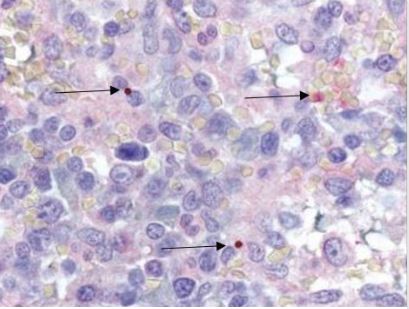
Are You Aware of Analasmosis?

Immunohistochemical (IHC) staining to detect Anaplasma phagocytophilum in a tissue sample (CDC).

Anaplasmosis is a tick-borne illness that is reported across the globe in areas such as North America, Europe, and China.

Known infections in the United States have been on the rise ever since becoming a nationally notifiable disease to the CDC in 2000. Like bartonellosis and Lyme borreliosis, patients with this condition can present with mild to severe non-specific symptoms and diagnosis is often difficult.

We are introducing a new webpage this week that describes the infectious pathogens of the Anaplasma genus and the test options that Galaxy Diagnostics offers.


Researchers Predict Spread of Invasive Long-horned Ticks into North America

https://www.thefencepost.com/news/researchers-predict-spread-of-invasive-long-horned-ticks-into-north-america/#.XGWb_4caToM.facebook

Researchers predict spread of invasive long-horned ticks into North America

Kansas State University

MANHATTAN, Kan. — A recently invaded tick species known as the long-horned tick could establish itself in wide swathes of North America — if they are transported accidentally.

This prediction was published in a new study in Nature’s Scientific Reports by Ram Raghavan, assistant professor at the Kansas State University College of Veterinary Medicine, and his international team of collaborators.

“The long-horned tick is also known as the east Asian tick, in Australia as the bush tick and in New Zealand as the cattle tick,” said Raghavan, a spatial epidemiologist. “This species of tick is native to Japan, China, Primorsky Krai region of eastern Russia and Korea; and it is well-established as an invasive species in Australia, New Zealand and on several Pacific Islands.”

In some of these countries, Australia and New Zealand in particular, Raghavan said this tick is implicated in the transmission of theileriosis to cattle — costing several millions of dollars each year — and in other places they are known to transmit severe fever thrombocytopenia virus to humans.

Raghavan pointed out widespread concerns that the tick — Haemaphysalis longicornis — will successfully establish invasive populations in the U.S. and spread broadly from where it has been currently found.

“Our primary focus in this study was to predict where this tick could establish in North America, and to do that as robustly as possible considering all the caveats in spatial distribution modeling,” Raghavan said.

Data for modeling the potential spatial distribution for this tick species was provided by multiple institutions, collected from the species’ native distribution range.

This tick species has an ability to reproduce without males and to spread to new places and establish under rather diverse climatic conditions.

“About 1983, H. longicornis had spread from northwestern New South Wales and/or southeastern Queensland across Australia to the coastal areas near Perth in Western Australia,” said Steve Barker, parasitologist and a leading expert on Australian ticks at the University of Queensland.

“Such an invasion in the U.S. would carry a significant economic burden and potential human suffering, especially since this tick is capable of transmitting a variety of pathogens such as those that cause Lyme disease and others,” said Barker, who is one of 10 co-authors of the article, “Potential Spatial Distribution of the Newly Introduced Long-horned Tick, Haemaphysalis longicornis in North America.”

Among other collaborators are researchers from the Walter Reed Army Institutes of Research, University of Kansas and institutions in Japan, Australia and New Zealand.

Raghavan said the best-fitting spatial distribution models in his research had indicated a broad potential distribution for this species. The researchers’ model accurately predicted all of the areas in which this invaded tick has already been found in the U.S.

“By our model, we have identified vast areas of North America, particularly the southeastern U.S., the West Coast and broad areas of the northwestern U.S., as well as central and southern Mexico, as climatically suitable for establishment of this species,” Raghavan said.

Another concern arises from the ability of these ticks to travel as parasites on different mammals.

“In our opinion, we feel that there is a need for strict inspection and quarantine of cattle, other livestock and pet animals, particularly dogs, about to be transported from the current focus areas of this tick,” Raghavan said. “High levels of interstate movement of livestock and other animals occur each day. Cattle are moved slowly across the nation, stopping at multiple places — potentially dropping off female ticks. The movement of ticks via livestock and other domestic animals is not currently monitored or regulated, so it is only a matter of time, in our opinion, that this species will spread further in North America.” ❖

________________

**Comment**

https://madisonarealymesupportgroup.com/2018/08/08/an-invasive-new-tick-is-spreading-in-the-u-s/  In Asia, the Long-horned tick is known for transmitting a phlebovirus (related to Heartland Virus) that causes severe fever with thrombocytopenia syndrome (S.F.T.S.), which causes low platelets.  The syndrome has an overall fatality rate of about 15%.  It is also associated with spotted fever rickettsioses, Anaplasma, Ehrlichia, and Borrelia, the causative agent of Lyme Disease in other parts of the world.  It also transmits babesiosis and theileriosis (protozoan similar to malaria) to cattle.

https://madisonarealymesupportgroup.com/2018/09/12/three-surprising-things-i-learned-about-asian-longhorned-ticks-the-tick-guy-tom-mather/  Excerpt below:

three_surprising_4.png

These were larval ticks — 50, 75, 150 – motionless, tightly clumped, seemingly knitted together almost like the overlapping scales on a snake, but tiny. And once we saw a few of these clumps, we started seeing them everywhere. In certain grassy patches there would be one every couple of feet—each of these likely the product of a single female egg batch. I thought,

“this is not a rare tick, at least not here.”

I think we can deduce that this tick WILL spread.  All you have to do is brush by this and you’ve set off a cluster bomb of ticks.

There’s no such thing as a “good” tick.