Archive for the ‘Transmission’ Category

WKOW Updates Lyme Story: Lyme Disease Spread Sexually?

https://wkow.com/2020/02/14/researchers-move-forward-with-shot-to-prevent-lyme-disease/ Interview here

I was pleased to see WKOW updated their story on Lyme disease. The initial interview focused upon the new Lyme vaccine, but they recently updated the website to include new details including the possibility of sexual transmission, the high costs of treatment, and other cognitive and psychological aspects of the disease mainstream medicine does not currently acknowledge.

Kudos to WKOW for spreading the word.

For more on sexual and congenital transmission:  https://madisonarealymesupportgroup.com/2019/05/11/lyme-found-in-genital-lesion-sexual-transmission-studies-screaming-to-be-done/

https://madisonarealymesupportgroup.com/2020/02/01/cdc-website-updated-today-possibility-of-mother-to-fetus-transmission-of-lyme-disease/

https://madisonarealymesupportgroup.com/2017/02/24/pcos-lyme-my-story/

https://madisonarealymesupportgroup.com/2018/06/19/33-years-of-documentation-of-maternal-child-transmission-of-lyme-disease-and-congenital-lyme-borreliosis-a-review/

https://madisonarealymesupportgroup.com/2018/11/11/gestational-lyme-other-tick-borne-diseases-dr-jones/

https://madisonarealymesupportgroup.com/2019/12/26/borrelia-crocidurae-in-vaginal-swab-after-miscarriage/

https://madisonarealymesupportgroup.com/2019/04/02/transmission-of-lyme-disease-lida-mattman-phd/

How Did Lyme Escape From Plum Island?

Approx. 17 Min

Brian Wilson reveals how U.S. biological warfare programs led to the proliferation of disease carrying ticks, causing a health crisis of epic proportions.

Much of the research presented in this investigative report can be found in Kris Newby’s acclaimed book: “Bitten: The Secret History of Lyme Disease and Biological Weapons.”

The ‘Swiss Agent’ article:  https://www.statnews.com/2016/10/12/swiss-agent-lyme-disease-mystery/

To listen to an interview with Charles Piller on the ‘Swiss Agent’:  https://www.wbur.org/hereandnow/2016/10/12/swiss-agent-lyme-disease

Important to note: US laboratories don’t test for the Swiss Agent.

**Correction** Wilson called Rickettsia a virus – when it’s a bacteria that is often pleomorphic (shape-shifts). Rickettsia helvetica or the ‘Swiss Agent’ is in the spotted fever family along with Rocky Mountain Spotted Fever.  That’s not to say viruses aren’t involved, just that Rickettsia is a bacteria:  https://www.bayarealyme.org/about-lyme/what-causes-lyme-disease/rickettsia-helvetica/

Interestingly, Dr. Steere, first on the Lyme, Connecticut scene initially thought the cause of the juvenile arthritis was viral.

“A virus is the most likely candidate,” Dr. Steere said. “Just because we haven’t found one yet doesn’t mean it isn’t there. We’ll keep looking.” Dr. Allen Steere https://www.nytimes.com/1976/07/18/archives/a-new-type-of-arthritis-found-in-lyme-new-form-of-arthritis-is.html

An ironic quote for sure considering the fact this man has denied the possibility of chronic/persistent Lyme disease, yet when it was his work in question he was willing to entertain something he couldn’t find or see.

Please note another important quote in the same article by Steere:

Mycoplasmas, another type of microbe, do cause arthritis in some animals, but the available tests for them have proved negative.”  https://www.nytimes.com/1976/07/18/archives/a-new-type-of-arthritis-found-in-lyme-new-form-of-arthritis-is.html

The only person seriously doing work on Mycoplasma is Dr. Garth Nicolson who states 80% of those with Lyme also have Mycoplasma:  https://madisonarealymesupportgroup.com/2020/02/25/pathogenic-mycoplasma-infections-in-chronic-illnesses-general-considerations-in-selecting-conventional-and-integrative-treatments/  He uncovered a particularly lethal, bioweaponized form of Mycoplasma. Mainstream medicine doesn’t bat an eye at this.

Also important: when I spoke with Dr. Hoffman (deceased), probably the most experienced Lyme doctor in Wisconsin, he told me that as a medical resident in Illinois he treated patients with something he called a “rickettsial-like” illness before it was given the label of Lyme disease.

This video points out the importance of coinfections and the fact that this is often a polymicrobial illness – of which little research has been done:  https://madisonarealymesupportgroup.com/2018/10/30/study-shows-lyme-msids-patients-infected-with-many-pathogens-and-explains-why-we-are-so-sick/  This recent study gave a 85% probability that a randomly selected TBD (tick borne disease) patient will respond to Borrelia and other related TBD microbes rather than to Borrelia alone.

We never hear about the polymicrobial issue in mainstream research.  They avoid it with a 10-foot pole. If one adds in flawed testing based on antibodies, coinfection involvement (mycoplasma and others), pleomorphism/persisters, as well as the bioweaponization aspect, you begin to  understand that the very definition of “designed” microbes means they are difficult to detect as well as treat.

Until these issues are acknowledged and resolved, many people will remain ill.

For more:  https://madisonarealymesupportgroup.com/2019/07/29/usas-history-of-testing-bioweapons-on-the-public-were-ticks-used-too/

https://madisonarealymesupportgroup.com/2019/07/19/biological-warfare-experiment-on-american-citizens-results-in-spreading-pandemic/

https://madisonarealymesupportgroup.com/2019/07/31/tick-expert-admits-to-working-on-ticks-dropping-them-out-of-airplanes/


How to Protect Yourself & Your Family From Infections

How to Protect Yourself and Your Family From Infections

  1. Stay home when possible, avoid planes, buses, trains, queues, busy areas.
  2. No visitors, avoid close contact with symptomatic people or potential carriers, don’t share cups.
  3. No handshakes, kisses, hugs. Don’t kiss babies. All outside surfaces, money.
  4. Gloves and meticulous hand hygiene, don’t touch eyes, nose mouth.
  5. Wash hands, warm water and soap or hand sanitizers.
  6. Catch it – bin it – kill it.
  7. Coughs and sneezes spread diseases.
  8. Faecal contamination, meticulous hand and surface hygiene.
  9. Wear a quality medical mask or n95.
  10. Wrap around glasses.
  11. Avoid hospitals, limited visiting.
  12. Good nutrition, vitamin D.
  13. Keep warm, sleep, family life.
  14. Thoroughly cook meat and eggs.
  15. Avoid public spaces and wear a mask at home if you start to feel ill with fever.

___________________

**Comment**

Great simple, logical, and straightforward suggestions.  I’d ditch the hand sanitizer, however:  https://www.ncbi.nlm.nih.gov/pubmed/29182464

Excerpt:

The burgeoning literature on human health effects associated with TCS (triclosan) exposure, such as reproductive problems, was also summarized.

https://www.pnas.org/content/early/2014/11/12/1419119111

Excerpt:

These findings strongly suggest there are adverse health effects in mice with long-term TCS exposure, especially on enhancing liver fibrogenesis and tumorigenesis, and the relevance of TCS liver toxicity to humans should be evaluated.

Also, hand sanitizers are 60% alcohol – which not only is very drying but is also a no-no for anyone on disulfiram. I found this out the hard way in the hospital:  https://madisonarealymesupportgroup.com/2019/10/27/disulfiram-psychosis-update-2/


Bartonella Infection Everywhere, But We Don’t Know About It

http://www.thecharlottepost.com/news/2020/02/01/health/bartonella-infection-everywhere-but-we-don-t-know-about-it/

Bartonella infection everywhere, but we don’t know about it

Bacteria spread by fleas, ticks, animals, spiders
Published Saturday, February 1, 2020 10:31 pm

by Stephanie Soucheray | North Carolina Health New

CENTERS FOR DISEASE CONTROL AND PREVENTION
Bartonella bacteria, which is found in animals, ticks, mosquitoes and humans, is mostly unknown as a cause of neurological, inflammatory and chronic diseases in people.

A North Carolina State University professor says Bartonella infection is one of the most important untold medical stories.

Ed Breitschwerdt, a professor of veterinary sciences at North Carolina State University, keeps waiting for the tipping point. For the last 30 years, Breitschwerdt has been studying Bartonella, a genus of bacteria found in animals, ticks and humans.

“It’s frustrating,” said Breitschwerdt. “I believed we would hit a tipping point two years ago with this.”

Laura Hopper’s tipping point came in 2006, when she was 15 years old. The Raleigh teen lost her peripheral vision. She next began to suffer bouts of joint and muscle pain and numbness in her hands. Then came the headaches, memory loss and hallucinations.

“As a mother, it’s so hard to watch your child have all these symptoms,” said Maria Hopper. “It was a couple years of going to all kinds of doctors.”

But no neurologist, rheumatologist or psychiatrist could explain all of Laura’s symptoms. And it wasn’t until 2008, when the Hoppers read a news article about Bartonella and Breitschwerdt’s work, that a lightbulb went off in their heads.

Though people have known of cat scratch disease – the most public of the human diseases caused by Bartonella infection – for more than 100 years, Breitschwerdt said he’s convinced that Bartonella is the stealth cause of many neurological, inflammatory and chronic diseases in humans.

And, unlike Lyme disease, another tick-borne illness that can cause an array of distressing symptoms, Bartonella is right in the backyard of most North Carolinians.

“It’s a medically important bacteria in animals and humans in the state. If you took every stray cat along the coast of North Carolina, three quarters of them would have Bartonella,” said Breitschwerdt. “That’s because the bacteria is commonly transmitted to animals by fleas.”

He said that, historically, vets have considered common cat flea a nuisance but have under-appreciated it as a disease vector. For several years, Breitschwerdt has seen all sorts of animals and mites, ticks, fleas and even spiders test positive for Bartonella.

“Animals are the primary reservoir for the Bartonella species,” he said.

Breitschwerdt has worked with the One Health Commission, a collective that looks at the links between environmental, human and animal health. Though his professional and personal life has been guided by his care for animals, his most recent work is geared towards detecting and treating Bartonella infection in humans.

The recovery process
The Hoppers contacted Breitschwerdt at a fortunate time: He was developing new human diagnostic method for Bartonella. Laura tested positive, and after three courses of months-long antibiotic treatments, her symptoms have all but disappeared.

“By the end of the first cycle [of antibiotics], the feeling in her hands came back,” said Maria. “By the end of the second cycle, hallucinations stopped.” Though Laura still suffers some muscle pain, she considers herself 80 to 90 percent healed.

If the bacteria is positively detected, treating Bartonella infection is a daunting task for even otherwise healthy patients

You cannot float humans or horses in enough Doxycycline to kill this bacteria,” said Breitschwerdt. Treatment, such as Laura’s, requires weeks of multi-antibiotic therapies.

Laura was also lucky in that she tested positive for Bartonella immediately.

A patient infected can have a negative test on a Monday and positive test by Wednesday.

“People are tested several times, but Bartonella can hide in the body,” Breitschwerdt said.

That’s because an animal scratch or bug bite (or a vet’s needle stick) results in Bartonella infection in red blood cells and endothelial cells, which line blood vessels. The bacteria can “hide out” for many infectious cycles, causing symptoms and eventually affecting every organ system in the body.

Most people can clear Bartonella from their bloodstreams effectively. But among the subset of people who can’t eliminate the bacteria, help in mainstream medicine will be difficult to come by.

“I often talk with veterinarians who have these vague complaints – who say they’ve been sick for weeks or months,” said Breitschwerdt.

Many of the vets receive diagnoses of Lyme disease, chronic fatigue, rheumatoid arthritis, or are sent to a psychiatrist and told their symptoms are untreated depression. But Breitschwerdt cautions them to get tested for Bartonella.

Breitschwerdt has ventured into industry with Galaxy Diagnostics, a company he founded to offer Bartonella testing kits to doctors. The company launched into human testing two years ago, and has received orders from 300 doctors across the country.

At this stage, said Amanda Elam, Galaxy’s president, the company’s goal is to educate people about Bartonella.

“We’re dong continuing medical education courses, working with people in public health and doing education with veterinarians,” she said. “I’d really like the medical community to keep an open mind about this.”

While Breitschwerdt waits for the public tipping point for Bartonella, he said he too is focused on disease education.

“It takes 10 years before something added to the medical textbooks gets widely spread in practice,” he said. “We’re working on changing those textbooks.”

This article first appeared on North Carolina Health News and is republished here under a Creative Commons license.

__________________

For more:  https://madisonarealymesupportgroup.com/2019/04/24/human-bartonellosis-an-underappreciated-public-health-problem/

https://madisonarealymesupportgroup.com/2020/02/07/one-health-trio-dr-breitschwerdts-three-publications-about-vector-borne-pathogens-and-his-family/

https://madisonarealymesupportgroup.com/category/bartonella-treatment/

https://madisonarealymesupportgroup.com/2019/03/24/cat-scratch-disease-caused-teens-schizophrenia-like-symptoms-report-says/

https://madisonarealymesupportgroup.com/2019/01/02/bartonella-in-entire-canadian-family/

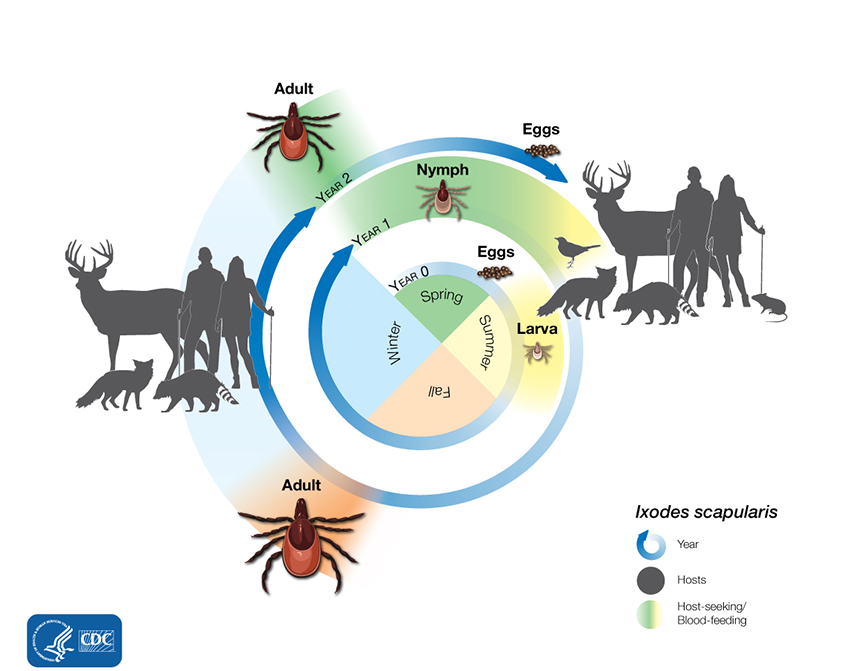
Is Exposure to Fleas and Ticks Possible During The Winter?

https://www.galaxydx.com/fleas-and-tick-prevention-in-the-winter/

Is Exposure to Fleas and Ticks Possible During The Winter?