Archive for the ‘Ticks’ Category

Patterns, Drivers, and Challenges of Vector-Borne Disease Emergence

https://www.liebertpub.com/doi/10.1089/vbz.2018.2432

Vector-Borne and Zoonotic DiseasesAhead of Print

Patterns, Drivers, and Challenges of Vector-Borne Disease Emergence

Andrea Swei, lisa I. Couper, Lark L. Coffey, Durrell Kapan, and Shannon Bennett

Published Online:https://doi.org/10.1089/vbz.2018.2432

Vector-borne diseases are emerging at an increasing rate and comprise a disproportionate share of all emerging infectious diseases. Yet, the key ecological and evolutionary dimensions of vector-borne disease that facilitate their emergence have not been thoroughly explored. This study reviews and synthesizes the existing literature to explore global patterns of emerging vector-borne zoonotic diseases (VBZDs) under changing global conditions. We find that the vast majority of emerging VBZDs are transmitted by ticks (Ixodidae) and mosquitoes (Culicidae) and the pathogens transmitted are dominated by Rickettsiaceae bacteria and RNA viruses (Flaviviridae, Bunyaviridae, and Togaviridae). The most common potential driver of these emerging zoonoses is land use change, but for many diseases, the driver is unknown, revealing a critical research gap. While most reported VBZDs are emerging in the northern latitudes, after correcting for sampling bias, Africa is clearly a region with the greatest share of emerging VBZD. We highlight critical gaps in our understanding of VBZD emergence and emphasize the importance of interdisciplinary research and consideration of deeper evolutionary processes to improve our capacity for anticipating where and how such diseases have and will continue to emerge.

_______________

**Comment**

Regarding ticks, it’s birds that are doing the damage:  https://madisonarealymesupportgroup.com/2017/08/17/of-birds-and-ticks/

Excerpt:

But birds facilitate the spread of ticks, picking them up in Maryland, Connecticut and other eastern states as they fly north in the spring, Lubelczyk explained.

“As they’re migrating, they’re either dropping the ticks off as they fly or when they land. They’re kind of seeding them along migration patterns.

https://madisonarealymesupportgroup.com/2016/10/02/the-role-of-birds-in-tickborne-illness/

Excerpt:

Birds play a central role in the ecology of tick-borne pathogens. They expand tick populations and pathogens across vast distances and serve as reservoirs that maintain and amplify transmission locally.


Bracing for the Worst – Range Expansion of the Lone Star Tick in the Northeastern United States

https://www.nejm.org/doi/full/10.1056/NEJMp1911661?

Perspective

Bracing for the Worst — Range Expansion of the Lone Star Tick in the Northeastern United States

List of authors.

  • Goudarz Molaei, Ph.D.,
  • Eliza A.H. Little, Ph.D.,
  • Scott C. Williams, Ph.D.,
  • and Kirby C. Stafford, Ph.D.

Ticks and tickborne diseases are increasingly becoming a major health concern for humans, domesticated animals, and livestock. Reported cases of bacterial and protozoan tickborne disease doubled in the United States between 2004 and 2016. More than 90% of the nearly 60,000 cases of nationally notifiable vectorborne diseases reported in 2017 were linked to ticks. As the geographic ranges of multiple tick species continue to expand, invasive tick species are being discovered, new tickborne pathogens are emerging, and coinfections in ticks are surging. Rising global temperatures, ecologic changes, reforestation, and increases in commerce and travel are all important underlying factors influencing the rate and extent of range expansion for ticks and tickborne pathogens.

Both blacklegged (Ixodes scapularis) and lone star (Amblyomma americanum) ticks may be recolonizing areas where they thrived historically, before rampant deforestation and substantial local reduction of key hosts. Linked, in part, to a warming climate, there has been an increase in the number of ticks and associated diseases recorded in the United States and Canada,1 as well as in Europe.

Persistently warming temperatures may not only lead to the continued geographic range expansion of some ticks but may also extend their active season, thereby altering host availability and abundance; interactions among vectors, pathogens, and hosts; and the prevalence of infection in ticks. A warming climate and other environmental changes will affect abundance, distribution, seasonal activity patterns, and interactions among species differently for various ticks.

Lone star ticks of all life stages (larva, nymph, and adult) feed predominantly on large mammals, especially white-tailed deer. Larvae and nymphs also feed on birds. The resurgence of lone star ticks is linked to increased populations of deer, eastern coyotes, and wild turkeys. In addition to occupying its established range, the lone star tick has expanded into the upper midwestern and northeastern United States and eastern Canada.2,3 Since lone star ticks can lay several thousand eggs, even the dispersal of a small number of gravid females may be sufficient to establish populations in areas with abundant reproductive hosts, suitable habitats, and conducive temperatures.

Current Populations of Lone Star Ticks (Amblyomma americanum) in the Northeastern United States.

Lone star ticks have been established in the southeastern United States for well over a century; southern New Jersey was historically recognized as their northern range limit.4 Some reports of lone star ticks in the northeastern United States and more recently in eastern Canada may not necessarily reflect established breeding populations.2,3 In the past few decades, however, documented breeding populations have expanded into some parts of the Northeast. Such populations were reported in Suffolk County, New York, as early as 1971; Newport County, Rhode Island, in 1986; Somerset and Middlesex Counties, New Jersey, in 2017; Fairfield and New Haven Counties, Connecticut, in 2018 and 2019, respectively; and Barnstable, Nantucket, and Dukes Counties, Massachusetts, in 2019 (see map).2,4,5

Current environmental and climatic conditions favor the establishment and expansion of lone star ticks along the southern New England coast. Moderate maritime climates may be more conducive to the establishment of lone star tick populations than the climates inland, areas where immature ticks may not survive cold winters. Investigations of lone star ticks that can be traced back to an established southern population show that adults can successfully survive the winter in mainland Connecticut, however, and population simulations using current climate conditions suggest that southern Canada is already suitable for their establishment. Although the northward range expansion of the lone star tick is consistent with climate change, a recent study revealed that tick populations in New York are genetically distinct from those occupying the species’ historical range. This finding suggests the possibility of adaptive evolution causing or coinciding with this range expansion and probably favoring pathogen transmission.

It’s unclear how the lone star tick will compete and interact directly or indirectly with other tick species in the Northeast, and the nature of these interactions may vary depending on evolutionary context and changing environmental and climatic conditions. In the southeastern United States, range expansion of the lone star tick coincided with diminished populations of the American dog tick (Dermacentor variabilis). In New Jersey, populations of the lone star tick have increased in areas where it is endemic while blacklegged tick populations have remained static.4 Field studies indicate that the lone star tick establishes populations in habitats with specific humidity ranges and that tick abundance is associated with the presence of invasive plants. Areas colonized by invasive plants are frequented by white-tailed deer, a prominent tick host and pathogen reservoir. Lone star ticks will traverse long distances when searching for a mammalian host, thereby accelerating their establishment in new areas.2

Previously considered aggressive nuisance pests, lone star ticks have now been associated with several human diseases and medical conditions, including tularemia (Francisella tularensis), ehrlichiosis (Ehrlichia chaffeensis, E. ewingii, and Panola Mountain Ehrlichia), Heartland virus disease (Heartland virus), southern tick–associated rash illness, or STARI (pathogen unknown), and red meat allergy (alpha-gal syndrome) and are probably also associated with Bourbon virus disease (Bourbon virus).2 Lone star ticks have also been commonly found to be infected with Rickettsia amblyommatis; however, serologic evidence suggests that humans develop a robust immune response to this bacterium, though it may cause symptoms in some people. Local abundance of lone star ticks and the likelihood of getting multiple bites can be highly irritating, even in the absence of disease transmission.

Although lone star ticks don’t transmit Borrelia burgdorferi — the principal bacterium that causes Lyme disease in North America — symptoms of STARI and early Lyme disease are similar, and STARI may be misdiagnosed as Lyme disease in areas with both lone star ticks and blacklegged ticks. Reported cases of human ehrlichiosis have increased, but this disease is largely underrecognized and underreported. Infections of E. chaffeensis in lone star ticks have been identified in Connecticut, Rhode Island, and Massachusetts, but few cases of human disease have been attributed to this pathogen.

Most reports of lone star ticks in the northeastern United States come from tick submissions by the public to passive surveillance programs, which serve as an early warning system. Active surveillance is important for accurate determination of the extent of the northern range expansion of this vector, however. To be effective, active surveillance should be designed specifically for lone star ticks and should include targeting of areas with emerging populations identified by passive surveillance.3 In many areas of the mid-Atlantic region and emerging areas of the Northeast, coexistence of lone star and blacklegged ticks complicates management strategies. Rodent-targeted approaches used for the control of blacklegged ticks aren’t necessarily effective for lone star ticks, since small mammals aren’t major hosts for immature members of this species. By contrast, application of acaricides to deer by means of four-poster feeding stations has reduced the abundance of host-seeking lone star and blacklegged ticks.

Abundant reproductive hosts, an increasingly hospitable climate, and genetic plasticity of the lone star tick support the continued invasion and establishment of this tick in the Northeast. Increasing population densities and subsequent range expansion, in conjunction with nondiscriminating biting habits and the capacity to transmit diverse pathogens, position the lone star tick as an important emerging health threat to humans, domesticated animals, and wildlife. It’s also plausible that the lone star tick will displace local tick species, transmit different pathogens than those species, and alter the tickborne disease landscape. We believe it’s essential for practitioners and the public to develop a heightened awareness of the health risks associated with emergent tick vectors such as the lone star tick and their potential for changing the dynamics of tickborne diseases in the northeastern United States and elsewhere.

Disclosure forms provided by the authors are available at NEJM.org.

Author Affiliations

From the Department of Environmental Sciences (G.M.), the Center for Vector Biology and Zoonotic Diseases and Northeast Regional Center for Excellence in Vector-borne Diseases (G.M., E.A.H.L., S.C.W., K.C.S.), the Department of Entomology (E.A.H.L., K.C.S.), and the Department of Forestry and Horticulture (S.C.W.), the Connecticut Agricultural Experiment Station, and the Department of Epidemiology of Microbial Diseases, Yale School of Public Health (G.M.) — all in New Haven, CT.

_________________

**Comment**

Despite the articles continual mention of climate change, research has shown this to be a moot point regarding tick proliferation:  https://madisonarealymesupportgroup.com/2018/11/07/ticks-on-the-move-due-to-migrating-birds-and-photoperiod-not-climate-change/

https://madisonarealymesupportgroup.com/2018/08/13/study-shows-lyme-not-propelled-by-climate-change/

What is a problem is the fact birds are transporting ticks everywhere:  https://madisonarealymesupportgroup.com/2019/03/09/danish-study-shows-migrating-birds-are-spreading-ticks-their-pathogens-including-places-without-sustainable-tick-populations/

The weather doesn’t bother ticks at all:  https://madisonarealymesupportgroup.com/2016/01/20/polar-vorticks/  The video in this link shows ticks surviving in 3 degrees overnight under snow cover.  When ticks are threatened they seek out leaf litter, bark mulch, or snow cover.

 Southern advocates tell me STARI IS LYME.  The symptoms are one and the same.

Also, please note the authors in one breath want to say the climate keeps Lone Star ticks in certain areas and then in another breath they say they are moving everywhere – including Canada.  Which is it?  You can’t have it both ways.

It is my opinion, which has been substantiated by a tick researcher, that many researchers are using the climate change moniker for grand money because it’s a hot topic.  This is important as there are only so many research dollars available and it’s high time we start having unbiased, accurate research that helps suffering patients.  More climate data is NOT going to do that.


Detection & Transstadial Passage of Babesia Species and Borrelia Burgdorferi Sensu Lato in Ticks Collected From Avian and Mammalian Hosts in Canada

Detection and Transstadial Passage of Babesia Species and Borrelia burgdorferi Sensu Lato in Ticks Collected from Avian and Mammalian Hosts in Canada 

John D. Scott 1,*, Kerry L. Clark 2, Nikki M. Coble 2 and Taylor R. Ballantyne 2 

Received: 24 October 2019; Accepted: 26 November 2019; Published: 2 December 2019 

Abstract: Lyme disease and human babesiosis are the most common tick-borne zoonoses in the Temperate Zone of North America. The number of infected patients has continued to rise globally, and these zoonoses pose a major healthcare threat. This tick-host-pathogen study was conducted to test for infectious microbes associated with Lyme disease and human babesiosis in Canada. Using the flagellin (flaB) gene, three members of the Borrelia burgdorferi sensu lato (Bbsl) complex were detected, namely a Borrelia lanei-like spirochete, Borrelia burgdorferi sensu stricto (Bbss), and a distinct strain that may represent a separate Bbsl genospecies. This novel Bbsl strain was detected in a mouse tick, Ixodes muris, collected from a House Wren, Troglodytes aedon, in Quebec during the southward fall migration. The presence of Bbsl in bird-feeding larvae of I. muris suggests reservoir competency in three passerines (i.e., Common Yellowthroat, House Wren, Magnolia Warbler). Based on the 18S ribosomal RNA (rRNA) gene, three Babesia species (i.e., Babesia divergens-like, Babesia microti, Babesia odocoilei) were detected in field-collected ticks. Not only was B. odocoilei found in songbird-derived ticks, this piroplasm was apparent in adult questing blacklegged ticks, Ixodes scapularis, in southern Canada. By allowing live, engorged ticks to molt, we confirm the transstadial passage of Bbsl in I. muris and B. odocoilei in I. scapularis. Bbss and Babesia microti were detected concurrently in a groundhog tick, Ixodes cookei, in Western Ontario. In Alberta, a winter tick, Dermacentor albipictus, which was collected from a moose, Alces alces, tested positive for Bbss. Notably, a B. divergens-like piroplasm was detected in a rabbit tick, Haemaphysalis leporispalustris, collected from an eastern cottontail in southern Manitoba; this Babesia species is a first-time discovery in Canada. This rabbit tick was also co-infected with Borrelia lanei-like spirochetes, which constitutes a first in Canada. Overall, five ticks were concurrently infected with Babesia and Bbsl pathogens and, after the molt, could potentially co-infect humans.

Notably, we provide the first authentic report of I. scapularis ticks co-infected with Bbsl and B. odocoilei in Canada.

The full extent of infectious microorganisms transmitted to humans by ticks is not fully elucidated, and clinicians need to be aware of the complexity of these tick-transmitted enzootic agents on human health. Diagnosis and treatment must be administered by those with accredited medical training in tick-borne zoonosis. 

Full article: Scott et al., 2019, Babesia spp. and Borrelia spp., Canada

© 2019 by the authors. Licensee MDPI, Basel, Switzerland. This article is an open access article distributed under the terms and conditions of the Creative Commons Attribution (CC BY) license (http://creativecommons.org/licenses/by/4.0/). 

_________________

**Comment**

Transstadial passage is the ability of an infection to pass from one one developmental stage of an organism to another, e.g.,from the larval to the nymph stage or from the nymph to the adult:  https://medical-dictionary.thefreedictionary.com/transstadial

In this report the authors confirm the transstadial passage of Bbsl in I. muris and B. odocoilei in I. scapularis (black legged deer tick).

According to the following 2000 article, Ixodes muris is also capable of transmitting Lyme disease:  https://bioone.org/journals/Journal-of-Medical-Entomology/volume-37/issue-5/0022-2585-37.5.766/Vector-Competence-of-Ixodes-muris-Acari–Ixodidae-for-Borrelia/10.1603/0022-2585-37.5.766.short

Also, the following 2014 article states, “early studies revealed a higher ratio of presumed nonpathogenic B. odocolei to B. microti in areas where these species co-exist.”  https://wwwnc.cdc.gov/eid/article/20/10/13-0938_article

I think it would be folly to presume anything, and the potential of B. odocoilei to be of concern to human health is relevant. In my opinion, far too much as been presumed about the ability of various ticks to transmit disease, the time it takes to transmit, as well as the ability of numerous strains of pathogens to be of human health concern.

A few things are for sure: more and more is coming out on the coinfection of ticks, that there are many strains and variations of these pathogens to be concerned with, and that current testing is abysmal in picking much of this up.  These issues are some of the factors as to why people remain ill.  Mainstream medicine must awaken from its coma to embrace the complexity of all of this or patients will continue to suffer.


Being a Sexual Health Doctor in ‘Chlamydia Capital’ of New Zealand

https://www.stuff.co.nz/life-style/love-sex/114848305/being-a-sexual-health-doctor-in-chlamydia-capital-of-new-zealand  Video and full article here

Being a sexual health doctor in ‘chlamydia capital’ of New Zealand

Excerpt:

“She got interested in sexual health field in her first year as a doctor when one of her patient’s joint problems were a complication from chlamydia.

‘I had no idea – until that point – that was a thing,’ she said. ‘There’s the slightly nerdy bit of seeing something interesting and fascinating. But also the shame that young person had, that really touched me.'”

___________________

**Comment**

I include this information because Chlamydia and borrelia mixed biofilms have been found in infected skin tissue: https://madisonarealymesupportgroup.com/2019/04/19/first-study-showing-borrelia-chlamydia-mixed-biofilms-in-infected-human-skin-tissues/ Excerpt:

Chlamydia antigen and DNA in 84% of Borrelia biofilms. Confocal microscopy revealed that Chlamydia locates in the center of Borrelia biofilms, and together, they form a well-organized mixed pathogenic structure.

Chlamydia-like organisms are in ticks:  https://madisonarealymesupportgroup.com/2016/10/07/chlamydia-like-organisms-found-in-ticks/

Here, researchers identify chlamydia along with other pathogens in Alzheimer’s:  https://madisonarealymesupportgroup.com/2019/03/09/researchers-identify-herpes-1-chlamydia-pneumoniae-several-types-of-spirochaete-as-major-causes-of-alzheimers/

CHLAMYDIA IS BEST DEFINED FROM THE LATIN WORD: CLOAK. YEP. ANOTHER STEALTH PATHOGEN.

Great read on the types of chlamydia:  https://articles.mercola.com/chlamydia/types.aspx The first two are mentioned in the abstract:

  • Chlamydia trachomatis can be passed from one person to another via unprotected sexual intercourse. Pain English: this is a STD.
  • Chlamydia pneumoniae (C. pneumoniae), a nonsexually transmitted disease that infects the lungs and causes bacterial pneumonia.
  • Chlamydia psittaci is another chlamydia strain that can lead to a rare condition called psittacosis, aka “parrot fever.”

7 Ways You’re Unknowingly Putting Yourself At Risk For Lyme Disease

https://www.naturalnews.com/2019-11-18-putting-yourself-at-risk-for-lyme-disease.html

7 Ways you’re unknowingly putting yourself at risk for Lyme disease

Image: 7 Ways you’re unknowingly putting yourself at risk for Lyme disease

(Natural News) After going outside, it may be best to do a tick check. Lyme disease is a dangerous condition that causes fever, rashes, face paralysis, and arthritis. Without proper care, it can even lead to death. Interestingly, something so deadly comes from the bite of something so small: ticks.

Ticks are tiny arachnids commonly found in grassy, woodland areas where they attach themselves to a host. They are commonly associated with deer and other kinds of game found in the wild. However, they are not only found in woods and forests; they can thrive in cities as well.

According to the Centers for Disease Control and Prevention (CDC), more than 300,000 Americans are infected each year. They are especially plentiful from May to August when they are most active and a lot of people spend time outdoors.

Lia Gaertner, a scientist and board member of the Bay Lyme Area Foundation, pointed out that there are habits that put people at risk of Lyme disease. (Related: Lyme disease compromises your body’s ability to detoxify, increasing risk from environmental toxins like heavy metals.)

1. Not doing a tick check

After going outdoors, search your body for any ticks that may have latched on. Check areas that are exposed or close to clothing edges. Ticks prefer warm areas on the body, including:

  • The armpits
  • In and around the ears
  • Back of the knees
  • Inside the belly button
  • Around the waist
  • In and around all head and body hair (especially the scalp and groin area)

Make sure to also check used clothes before putting them in the hamper. Take a bath afterward for extra measure.

Children are especially vulnerable to tick bites because they play a lot and are closer to the ground. Teach them how to conduct tick checks on their body and their clothes.

2. Being unfamiliar to what a tick looks like

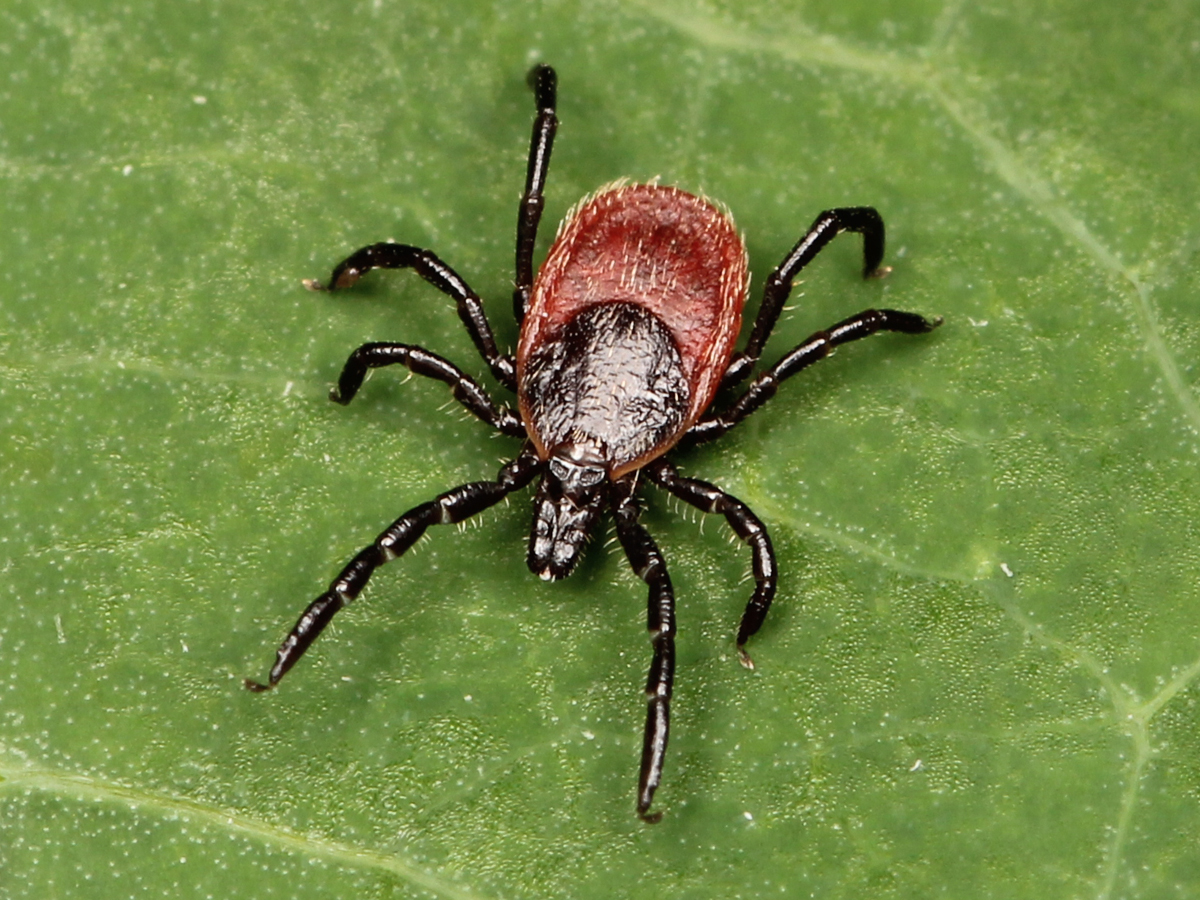
It is difficult to spot a tick when you are unaware of how it looks like. Ticks look like bulb-shaped spiders. It is easy to miss them since they embed themselves into the skin.

You can spot them by feeling a small bump while patting a pet or combing one’s hair. Ticks commonly have a dark color, but there are lighter varieties.

When planning for a hike or camping somewhere in the woods, it is best to do prior research on known ticks found in the area and prepare promptly.

3. Sleeping with your dog with no tick check

Some people prefer to sleep with their pets. Before doing that, however, do not skimp on conducting a tick check. Pets, like children, are vulnerable to tick bites because they often go out and are close to the ground.

4. Lowering your guard in city parks

People like lying on the grass or against trees in city parks, which makes them more vulnerable to tick bites. Lay a picnic mat before lying on the grass. Make sure to check the mat afterward upon getting home.

5. Raking leaves

Ticks can be found in tall grasses, but they hide under fallen leaves as well. This is especially the case in Southern states, where it is generally hotter.

When raking leaves, wear a long-sleeved shirt and pants. Spray some natural insect repellent, like citronella or lavender essential oil, at the cuffs and other holes where a tick can slip inside the clothes.

6. Thinking you’re safe in a place with no deer

It is a common misconception that ticks only attach themselves to deer, but mice, squirrels, and other animals can be carriers as well. In general, places with grassy and forested areas are more likely to have ticks, but when these animals reach the city, they can carry the ticks with them.

7. Throwing away the tick

If you find a tick attached to you, do not just throw it away. Carefully remove it with a pair of tweezers and lock it inside a container, like a sealing bag or small plastic container. Send it for testing to find out if it was infected or not. If it was, you can implement measures to prevent Lyme disease from developing.

It is impossible to completely remove ticks from residential or camping areas. However, you can implement measures that can prevent their bites. Avoid the listed habits and learn more about treating and preventing Lyme disease at Prevention.news.

Sources include:

Healthline.com

CDC.gov

___________________

For more:  https://madisonarealymesupportgroup.com/2019/04/12/tick-prevention-2019/

Regarding raking leaves – ticks love leaf litter. They also love bark mulch.  They love anything that provides humidity.  For example – Japanese barberry, a common yard shrub is a perfect habitat for ticks:  https://madisonarealymesupportgroup.com/2018/06/25/juvenile-tick-attachment-on-mice-significantly-greater-in-japanese-barberry-shrubs/

https://madisonarealymesupportgroup.com/2018/01/20/manage-barberry-lower-ticks/  Bizarrely enough, this particular shrub is the source of Berberine, an herb that obtains high amounts of resveratrol – which does so many great things for the body:  https://www.superfoodly.com/resveratrol-foods-supplements/ 

https://madisonarealymesupportgroup.com/2015/09/30/barberry-friend-or-foe/

Ticks evidently love pumpkin patches too:  https://madisonarealymesupportgroup.com/2017/10/21/mom-got-rocky-mountain-spotted-fever-while-picking-pumpkins/

When you are partaking in nature – use permethrin on all your clothing and shoes:  https://madisonarealymesupportgroup.com/2018/05/27/study-conforms-permethrin-causes-ticks-to-drop-off-clothing/

Use either Deet or Picaradin on skin. (See first link for information on products)