Archive for the ‘Ticks’ Category

Eosinophilic Fasciitis and Borrelia Infection

In 1975 Shulman described eosinophilia fasciitis as a symmetrical and painful swelling and a progressive hardening of the skin and soft tissues with abnormally thick fascia.  Typically oral steroids, immunosuppressive drugs and immunomodulatory drugs are the standard treatment.

http://www.clinicalpainadvisor.com/dermatology/eosinophilic-fasciitis-shulman-disease-diffuse-fasciitis-with-eosinophilia/article/594816/  (Picture in link) The etiology of EF is unclear at this time. It has been associated with trauma, physical exertion, Lyme disease, arthropod bites, ingestion of L-tryptophan, and statins. EF or EF-like conditions have also been reported in association with treatments for multiple sclerosis, such as dimethyl fumarate.

The following abstracts; however, reveal a possible connection to borrelia infection.  If infection is the culprit, the standard treatment will make the infection worse.

https://www.ncbi.nlm.nih.gov/m/pubmed/17925693/

[Eosinophilic fasciitis associated with Borrelia burgdorferi infection].

Belot V, et al. Ann Dermatol Venereol. 2007 Aug-Sep.
Abstract

BACKGROUND: Eosinophilic fasciitis (Shulman syndrome) is defined by the association of sclerodermatous skin changes involving underlying fascia and hypereosinophilia. While the aetiology is unknown, some observations suggest an infectious origin. We report the association of eosinophilic fasciitis with an infection involving Borrelia burgdorferi.

PATIENTS AND METHODS: A 54 year-old man consulted for a hardened oedema and stiffness of the calves associated with an oedema of the left hand evolving for 4 months. Routine blood tests showed hypereosinophilia at 1.01 G/l and moderate inflammatory syndrome. Diagnosis of eosinophilic fasciitis was confirmed by MRI and muscle biopsy. Since the patient had reported previous tick bites some months before onset, he was tested for Lyme disease. An ELISA test revealed IgG directed against Borrelia burgdorferi and this was confirmed by Western blot analysis.

DISCUSSION: The association of eosinophilic fasciitis with Lyme disease raises the question of a real link or a fortuitous association between the two conditions. Similar cases have been described in the literature with or without isolation of the spirochete from skin or fascia lesions. The incidence of eosinophilic fasciitis remains low compared to the prevalence of the infection in endemic areas. We suggest that in some patients, perhaps genetically predisposed, infection with B. burgdorferi may be at the origin of fasciitis.

https://www.ncbi.nlm.nih.gov/m/pubmed/12218249/?i=2&from=/17925693/related

Eosinophilic fasciitis (Shulman syndrome).

Mosconi S, et al. Dermatology. 2002.

Abstract

We report a case of a 30-year-old Caucasian patient with progressive sclerosis of the skin mainly on the upper limbs which was diagnosed as eosinophilic fasciitis (Shulman syndrome). Circulating antibodies against Borrelia burgdorferi were detected. The association of B. burgdorferi infection with eosinophilic fasciitis is discussed.


Another Dies From Powassan

http://hudsonvalleypost.com/new-york-man-dies-from-rare-tick-carrying-brain-swelling-virus/

New York Man Dies From Tick Carrying Brain Swelling Virus


The daughter of a man who lived just outside the Hudson Valley is warning the public after her father died from a tick that carries a rare brain swelling virus.

In early May or late April, 74-year-old Charles Smith of Saratoga County discovered a tick bite near his elbow. Ten days later, Smith became very sick and was rushed to a hospital.

After a number of tests, he was diagnosed with the Powassan virus and died in early
June, reports WYNT.

The Powassan virus is spread by the same deer tick that carries Lyme disease. Powassan, which in some cases has been fatal, attacks the nervous system and can cause a dangerous brain swelling.

Other symptoms can include vomiting, weakness, confusion, seizures and memory loss.

There is currently no treatment for the virus, which according to the CDC kills around 10% of people who become sick. Half are left with permanent neurological problems.

At the families urging, on Wednesday, the New York State Department of Health confirmed that Smith was diagnosed with the Powassan virus.

“Why has it taken us to to contact you to make people aware?” Stephanie wondered to WYNT.

To decrease your risk of being infected with the Powassan virus the CDC recommends using tick repellents, wearing long sleeves and pants, avoiding bushy and wooded areas and doing thorough tick checks after spending time outdoor.

Correction: This article originally stated that the death of 17-year-old Poughkeepsie High School Joseph Elone in 2013 was from Powassan virus.
While Powassan virus was initially suspected, Elone in fact died of Lyme carditis, according to the Lyme Action Network.

**Comment**

If you’ve read the articles I’ve posted this summer about Powassan you will realize it can no longer be called “rare.”  Too many have died in such a short period of time.

Also, the daughter of the deceased makes a valid point:  she had to contact authorities.  This is a huge reason why they are stating it is “rare.”  How many people are going to think of contacting authorities when they are grieving a loved one?  This should be a reportable disease in every state, requiring health professionals to report it.  This should also hold true for every other tick borne infection.  Those of us with boots on the ground know full well these infections are NOT rare – just rarely diagnosed and reported.

Despite what authorities say, there are things you can do for viruses besides hydrate people:  https://madisonarealymesupportgroup.com/2016/03/28/combating-viruses/

http://www.newsmax.com/Health/Health-News/ozone-therapy-treatment-cancer/2015/03/20/id/631395/  Ozone was first used in medicine at the end of the 19th century to treat tuberculosis.  During World War I, medics used it to disinfect wounds. Since the 1950s, ozone therapy has gained popularity throughout the world. More than 45,000 physicians in 50 countries now administer ozone.  Ozone is typically administered with one of two different IV methods:

Major Auto-Hemotherapy (MAH), in which blood is drawn from the patient, exposed to ozone and re-injected into the patient.

Direct Intravenous Ozone Therapy (DIV), in which oxygen and ozone are directly infused into the patient’s bloodstream.  

http://medicalozone.info/ozone-therapy-infected-blood/  Here ozone has an inhibitory effect upon parasites.  The parasites are subjected to an increased oxidative stress, and their reproductive cycle is disrupted. Ozonation was carried out at a concentration of 80 µg/ml in a RBC suspension. Optimal growth inhibition was obtained by applying ozone twice, i.e. immediately before and after infection.

http://www.oxygenhealingtherapies.com/Why_Ozone_Therapy.html  More About Viruses
“In each reproducing cell in our bodies there are two substances: RNA and DNA – the ‘helix’ form discovered by Crick and Watson. They contain the genetic blueprint for the cell, and the whole body. Viruses are not cells, they are either RNA or DNA genetic material – but not both – surrounded by a coat of protein. Since they have only half of the genetic material, they cannot reproduce on their own. They multiply by attaching themselves to the inner RNA or DNA of normal cells, taking it over and forcing the cell to make more of the virus. Picture slave labor. They wait there and emerge when our defenses are down! Outside of their host cell they are basically inert so it is clear that they are ‘hiding out’ in the cells, and must be uncovered within the cell to be destroyed before they manifest their destructive potential. This is where the amazing property of ozone to invade diseased cells, uncovering and destroying the disease or virus, is so effective.”

Although MAH improves many diseases and conditions, it rarely eliminates them. So many doctors prefer DIV, which is safer to perform, yet more powerful in its effects.  “DIV is the only way you can get rid of something,” says Robins.  According to proponents, ozone therapy is broadly effective because it attacks and removes disease-causing agents, including viruses, bacteria, fungi, molds, yeast, and toxic metals.

Although ozone therapy is often denigrated by mainstream physicians in the U.S., in other countries such as Germany, it is considered safe and a standard of care.  “When people ask why ozone therapy isn’t more available in the United States, I say it’s because it’s not a patentable medicine and the drug companies can’t make any money off it,” says Robins. “That’s probably the main reason why it’s been suppressed.”

For a list of ozone therapists, go to oxygentherapyexperts.com.

More on Powassan:

https://madisonarealymesupportgroup.com/2016/02/21/powassan-virus/

https://madisonarealymesupportgroup.com/2017/04/20/first-case-of-powassan-in-connecticut-in-a-five-month-old-baby/

https://madisonarealymesupportgroup.com/2017/04/29/more-powassan-in-maine/

https://madisonarealymesupportgroup.com/2017/06/28/powassan-can-kill/

https://madisonarealymesupportgroup.com/2017/05/05/powassan-another-reason-to-avoid-ticks/

https://madisonarealymesupportgroup.com/2016/08/31/wi-coppe-lab-in-the-news/

An unpublished 2010 study showed more than 15% of Lyme patients had Powassan. A study completed in May of 106 patients with suspected acute tick borne disease showed 10.4 % had Powassan.

https://madisonarealymesupportgroup.com/2016/06/07/dr-david-baewer-coppe-labs/

Coppe Labs in Wisconsin is a CLIA certified lab – the only other lab that tests for Powassan besides the CDC.  They also test for many other viruses and can tell if the virus is active or latent.

Start Treatment if TBI’s are Suspected

http://www.mdedge.com/ccjm/article/141387/dermatology/tickborne-diseases-other-lyme-united-states  Cleveland Clinic Journal of Medicine. 2017 July;84(7):555-567

KEY POINTS

  • Tickborne illnesses should be considered in patients with known or potential tick exposure presenting with fever or vague constitutional symptoms in tick-endemic regions.
  • Given that tick-bite history is commonly unknown, absence of a known tick bite does not exclude the diagnosis of a tick-borne illness.
  • Starting empiric treatment is usually warranted before the diagnosis of tickborne illness is confirmed.
  • Tick avoidance is the most effective measure for preventing tickborne infections.

____________________________________________________________________________

The article delineates symptoms, transmission, reservoirs, testing, and treatment of the following TBI’s:  Rocky Mountain Spotted Fever, Rickettsiosis, Ehrlichioses, Babesiosis, Tickborne relapsing fever, Borrelia miyamotoi, Southern Tick-associated Rash illness, Tularemia, and Tickborne viral infections.

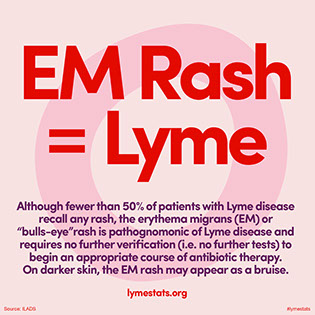
101_emrash316x316

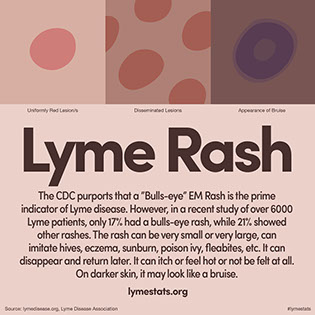
47_rash316x316

I need to address the following statements at the end of the article:

“Knowledge of the geographic locations of potential exposure is paramount to determining which tickborne infections to consider, and the absence of a tick bite history should not exclude the diagnosis in the correct clinical presentation.

Clinicians need to tread carefully here.  Many patients have been denied testing and treatment due to a map.  These maps should be viewed with the same suspicion as the testing.  

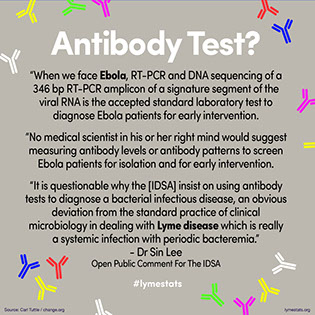
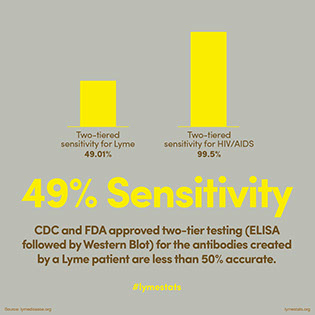
25_antibody316x316

01_test_petri316x316

38_sensitive316x316

Until you tell the fox, squirrel, bird, deer, lizards, and hundreds of other reservoirs to stay put, ticks will be traveling everywhere along with the pathogens they carry.  Since Lyme Disease (borrelia) has been found in every continent except for Antarctia (it will be found there too), you can assume that means ticks are there too.  

I’m glad the authors stated this:

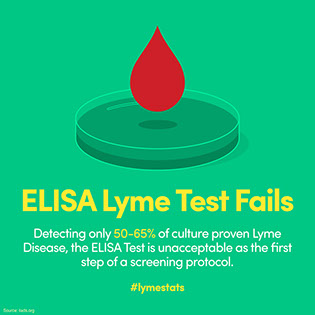
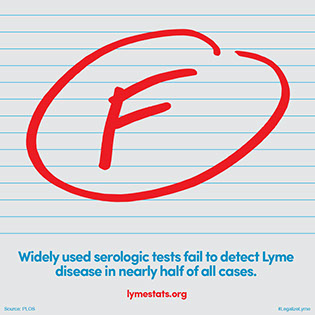
In addition, it is important to recognize the limitations of diagnostic testing for many tickborne infections; empiric treatment is most often warranted before confirming the diagnosis.”132_fail316x316

For those of us in this war, this “empiric treatment” by mainstream medicine is new.  Patient after patient has had to wait for test results before doctors will treat them.  Often, since the testing is so poor, it comes back negative and the patient is sent packing, even if the patient has every symptom in the book.  The next step is for authorities to admit and acknowledge that diagnosis of Tick borne infections is a clinical one.  This means doctors need to learn a whole lot more.  For docs willing to learn, please see:  https://www.lymecme.info

Even the CDC admits the tests suck: https://madisonarealymesupportgroup.com/2017/07/01/good-morning-america-cdc-advises-multiple-lyme-tests-due-to-false-negative-results/ CDC spokesperson at end of video.

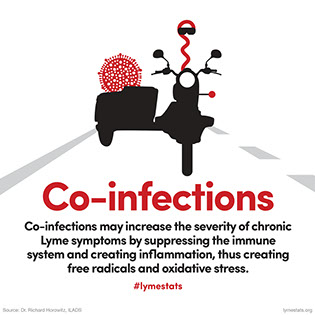
Another very important point needs to be made.  The CDC has pushed this one pathogen for one tick mantra for too long.  Many patients are co-infected making cases infinitely more complex and challenging to treat.  Lyme literate doctors trained by ILADS understand this and treat accordingly.  Until mainstream medicine realizes and admits people can have numerous pathogens, and treat for them, people will not get better.  This is why all the doxycycline in the world will not help some patients.

32_co316x316

One last point is that mycoplasma, Bartonella, and other pathogens are not included here but are quite common in patients.  Many of these pathogens are persistent and are adept at surviving.  More research needs to be done on these co-infections.

Please see:

https://madisonarealymesupportgroup.com/2017/05/01/co-infection-of-ticks-the-rule-rather-than-the-exception/  If ticks are co-infected, so are patients.

https://madisonarealymesupportgroup.com/2017/07/01/one-tick-bite-could-put-you-at-risk-for-at-least-6-different-diseases/

https://madisonarealymesupportgroup.com/2016/03/20/why-we-cant-get-better/


NY Senator Urges President Trump to Implement Her Lyme Act

https://www.gillibrand.senate.gov/news/press/release/with-lyme-disease-cases-increasing-in-ulster-county-senator-gillibrand-urges-trump-administration-to-quickly-implement-her-lyme-disease-law

Press release:

July 10, 2017

With Lyme Disease Cases Increasing In Ulster County, Senator Gillibrand Urges Trump Administration To Quickly Implement Her Lyme Disease Law

In 2015 alone, New York State reported 3,252 confirmed cases of Lyme disease to the CDC. Gillibrand’s Lyme and Tick-Borne Disease Prevention, Education, and Research Act was signed into law at the end of 2016, but has not yet been implemented by the new Administration. Trump Administration’s proposed budget would cut NIH funding by 22%, which could decrease critical Lyme disease research for prevention, diagnosis, and treatments.

Milton, NY – With Lyme disease cases increasing in Ulster County, U.S. Senator Kirsten Gillibrand visited the Cluett Schantz Memorial Park in Ulster County to urge the Trump Administration to implement her Lyme and Tick-Borne Disease Prevention, Education, and Research Act,which became law as a part of the 21st Century Cures Act in December 2016. This critical law will ensure federal coordination on urgently needed research for prevention, diagnosis and treatments for Lyme and other tick-borne diseases.

Lyme disease is the most commonly reported vector-borne illness in the U.S., and New York is among the states most significantly affected by this disease. In 2015, New York reported 3,252 confirmed cases of Lyme disease to the Centers for Disease Control and Prevention (CDC). However, the CDC estimates that the actual number of diagnosed cases is as many as ten times the number of cases that states report to the CDC. The New York State Department of Health estimates that Ulster County had 514 cases of Lyme disease in 2015.

“Families in Ulster County should be able to spend time outdoors without having to worry about being bitten by ticks and contracting Lyme disease,” said Senator Gillibrand. “I was proud to see my legislation to combat Lyme disease signed into law last December, but the Trump administration has not yet moved forward to implement the law, even though this crisis is urgent. I will continue to do everything I can to help fight Lyme disease in New York, and I urge the Trump administration to take this problem seriously and carry out its responsibilities under the Lyme disease provisions of the 21st Century Cures Act.”

“Lyme disease is a significant national public health threat, affecting adults, seniors and children at an alarming rate,” said Ulster County Executive Mike Hein.  “Ulster County has been taking action at the local level through our Department of Health and with countless partners, but more help is needed; which is why I want to commend Senator Kirsten Gillibrand for bringing her steadfast commitment to this issue and for bringing added focus to the importance of prevention and much-needed federal funding for research and treatment in our ongoing fight against Lyme disease.  Senator Gillibrand continues to deliver for the great people of Ulster County as well as New Yorkers all across the state.”  

“Federal funding, State funding, and more importantly the public-private partnership that is fundamental to scientific research, will be the key to finding solutions to reducing the scourge of Lyme and other tick-borne diseases,” said Joshua R. Ginsberg, Ph. D., President, Cary Institute of Ecosystem Studies.

“The explosion of ticks and Tick-Borne Diseases, has been allowed to spread unabated for 43 years,” said Jill Auerbach, Chairperson, Hudson Valley Lyme Disease Association. “Thanks to Senator Gillibrand and the others in Congress who fought for the public, and for this bipartisan law on Tick-Borne diseases. It will finally bring all sides together in a workgroup, no longer behind closed doors. It will look at all of the science under Congressional oversight to address real answers. We need answers regarding an accurate test and cures for the diseases, Tick research for drastic reduction of the tick population and to block tick ability to transmit disease, and increased funding commensurate with the impact of the disease on society. Tick research holds the most promise to bring about fruitful solutions to STOP TICKS and STOP DISEASE yet this field of study is long ignored and receives only a pittance of funding.”

According to the CDC, between 2005 and 2015, there were 41,229 reported cases of Lyme disease in New York, one of the most heavily affected states in the country. 95 percent of confirmed Lyme disease cases in 2015 were reported from just fourteen states, including New York.

In April, Senator Gillibrand, along with Senator Richard Blumenthal (D-CT), wrote a letter to the Secretary of Health and Human Services (HHS) requesting an update on the Trump Administration’s efforts to implement the federal Tick-Borne Diseases Working Group, which is one of the requirements in Gillibrand’s Lyme and Tick-Borne Disease Prevention, Education, and Research Act. The Working Group will ensure coordination among federal agencies and with researchers, health care providers, and patients in addressing tick-borne illnesses. The Working Group will comprise representatives from federal agencies, including the Centers for Disease Control and Prevention, the National Institutes of Health, and the Food and Drug Administration, as well as non-federal members, such as medical providers with experience in diagnosing and treating tick-borne diseases, scientists or researchers with expertise in tick-borne diseases, patients and their family members, and non-profit organizations that advocate for patients. In addition, the Working Group will submit a report to Congress every two years and will publish the report on the U.S. Department of Health and Human Services’ website regarding the Working Group’s recommendations for improving the federal response to addressing tick-borne diseases.

In addition to not yet implementing the Lyme and Tick-Borne Disease Prevention, Education, and Research Act, the Trump Administration also recently proposed a federal budget that would cut NIH funding by 22 percent, which could decrease critical Lyme disease research for prevention, diagnosis, and treatment.

http://www.poughkeepsiejournal.com/story/news/health/lyme-disease/2017/07/10/lyme-bill-implementation-needs-faster-gillibrand/464905001/  Video here.

http://www.twcnews.com/nys/hudson-valley/news/2017/07/10/sen–kirsten-gillibrand-calls-on-trump-to-implement-her-lyme-disease-law.html

GILLIBRAND2 July 2017Lyme Advocate, Jill Auerbach’s speech.

Wolbachia – The Next Frankenstein?

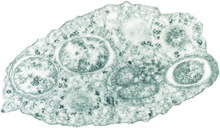
Transmission electron micrograph of Wolachia within an insect cell

Credit:  Public Library of Science/Scott O’Neill

The latest in the effort for world domination over bugs and the diseases they carry is Wolbachia, a Gram-negative bacterium of the family Rickettsiales first found in 1924 and in 60% of all the insects, including some mosquitoes, crustaceans, and nematodes (worms). For those that like numbers, that’s over 1 million species of insects and other invertebrates. It is one of the most infectious bacterial genera on earth and was largely unknown until the 90’s due to its evasion tactics. It’s favorite hosts are filarial nematodes and arthropods.

Wolachia obtains nutrients through symbiotic relationships with its host. In arthropods it affects reproductive abilities by male killing, parthenogenesis, cytoplasmic incompatibility and feminization. However, if Wolbachia is removed from nematodes, the worms become infertile or die. These abilities are what make it so appealing for insect control – cytoplasmic incompatibility, which essentially means it results in sperm and eggs being unable to form viable offering.

http://www.slideserve.com/babu/wolbachia  (Nifty slide show here)

It also makes it appealing for use in human diseases such as elephantiasis and River Blindness caused by filarial nematodes, which are treated with antibiotics (doxycycline) targeting Wolbachia which in turn negatively impacts the worms. Traditional treatment for lymphatic Filariasis is Ivermectin but they also use chemotherapy to disrupt the interactions between Wolbachia and nematodes. This anti-Wolbachia strategy is a game-changer for treating onchocerciasis and lymphatic filariasis.  https://www.sciencedaily.com/releases/2017/03/170316120451.htm

Lyme/MSIDS patients often have nematode involvement.

https://microbewiki.kenyon.edu/index.php/Wolbachia, https://www.psychologytoday.com/blog/emerging-diseases/200902/tick-menagerie-lyme-isnt-the-only-disease-you-can-get-tick  Both Willy Burgdorfer, the discoverer of the Lyme bacterium, as well as Richard Ostfeld, an animal ecologist found nematode worms in ticks. Since then, some provocative research involving nematodes, Lyme/MSIDS, dementia, and Alzheimer’s has been done.

https://madisonarealymesupportgroup.com/2016/06/03/borrelia-hiding-in-worms-causing-chronic-brain-diseases/, https://madisonarealymesupportgroup.com/2016/08/09/dr-paul-duray-research-fellowship-foundation-some-great-research-being-done-on-lyme-disease/, https://madisonarealymesupportgroup.com/2016/07/10/greg-lee-excellent-article-on-strategies-for-neurological-lyme/, https://madisonarealymesupportgroup.com/2015/10/18/psychiatric-lymemsids/

https://www.scientificamerican.com/article/how-a-tiny-bacterium-called-wolbachia-could-defeat-dengue/  Yet, according to many, Wolbachia is the next eradicator of Dengue Fever and possibly Malaria, chikungunya, and yellow fever because it stops the virus from replicating inside mosquitoes that transmit the diseases. The approach is also believed to have potential for other vector-borne diseases like sleeping sickness transmitted by the tsetse fly.  Evidently, Wolbachia does not infect the Aedes aegypti mosquito naturally, so researchers have been infecting mosquitoes in the lab and releasing them into the wild since 2011. The article states it hopes that the method works and expects infection rates in people to drop and hopes that the mosquitoes will pass the bacterium to their offspring, despite it disappearing after a generation or two of breeding and needing to “condition” the microbes to get them used to living in mosquitoes before injecting them. They also state Wolbachia is

“largely benign for mosquitoes and the environment,” and “To humans, Wolbachia poses no apparent threat.”

Their work has shown that the bacterium resides only within the cells of insects and other arthropods. They also state that tests on spiders and geckos that have eaten Wolbachia mosquitoes are just fine and show no symptoms. An independent risk assessment by the Commonwealth Scientific and Industrial Research Organizatioin (CSIRO), Australia’s national science agency, concluded that,

“Release of Wolbachia mosquitoes would have negligible risk to people and the environment.”

Interestingly, trials are underway in Vietnam, Indonesia, and now Brazil.

They state that scaling up operations to rear enough Wolbachia mosquitoes is too labor-intensive and in Cairns they are going to put Wolbachia mosquito eggs right into the environment. Evidently, other researchers are wanting to release genetically modified (GMO) mosquitoes that carry a lethal gene, and they’ve done it, and it’s causing an uproar:   http://america.aljazeera.com/articles/2013/11/9/genetically-modifiedmosquitoessetoffuproarinfloridakeys.html

http://www.naturalnews.com/2017-07-25-googles-sister-company-releasing-20-million-mosquitoes-infected-with-fertility-destroying-bacteria-depopulation-experiment.html  As of July 14, 2017, Google’s bio-lab, Verily Life Sciences,  started releasing Wolbachia laced mosquitoes in California as part of project, Debug Fresno to reduce the mosquito population.

http://www.greenmedinfo.com/blog/research-exposes-new-health-risks-genetically-modified-mosquitoes-and-salmon  Numerous studies show unexpected insertions and deletions which can translate into possible toxins, allergens, carcinogens, and other changes.  Science can not predict the real-life consequences on global pattens of gene function.

Even the European count decides CRISPR plants are GMOS and should be subjected to the same controls:  https://www.technologyreview.com/the-download/611716/in-blow-to-new-tech-europe-court-decides-crispr-plants-are-gmos/

“It means for all the new inventions … you would need to go through the lengthy approval process of the European Union,” Kai Purnhagen, an expert at Wageningen University in the Netherlands, told Nature.

So, why question the use of Wolbachia as a bio-control?

For Lyme/MSIDS & chronically ill patients, 3 words: worms and inflammation.

Dogs treated for heart worm (D. immitis) have trouble due to the heart worm medication causing Wolbachia to be released into the blood and tissues causing severe Inflammation in pulmonary artery endothelium which may form thrombi and interstitial inflammation. Wolbachia also activates pro inflammatory cytokines. Pets treated with tetracycline a month prior to heart worm treatment will kill some D. immitis as well as suppress worm production. When given after heart worm medication, it may decrease the inflammation from Wolbachia kill off.
http://www.critterology.com/articles/wolbachia-and-their-role-heartworm-disease-and-treatment

The words worms and inflammation should cause every Lyme/MSIDS patient to pause. Many of us are put on expensive anthelmintics like albendazole, ivermectin, Pin X, and praziquantel to get rid of worms and are told to avoid anything causing inflammation due to the fact we have enough of it already. We go on special anti-inflammatory diets and take systemic enzymes and herbs to try and lower inflammation.   https://madisonarealymesupportgroup.com/2016/04/22/systemic-enzymes/

Seems to me, many MSIDS/LYME patients when treated with anthelmintics, will have Wolbachia released into their blood and tissues causing wide spread inflammation, similarly to dogs.

And that’s not all.

According to a study by Penn State, mosquitoes infected with Wolbachia are more likely to become infected with West Nile – which will then be transmitted to humans.

“This is the first study to demonstrate that Wolbachia can enhance a human pathogen in a mosquito,“ one researcher said.

“The results suggest that caution should be used when releasing Wolbachia-infected mosquitoes into nature to control vector-borne diseases of humans.” “Multiple studies suggest that Wolbachia may enhance some Plasmodium parasites in mosquitoes, thus increasing the frequency of malaria transmission to rodents and birds,” he said.

The study states that caution should be used when releasing Wolbachia-infected mosquitoes into nature. https://www.sciencedaily.com/releases/2014/07/140710141628.htm

So besides very probable wide spread inflammation, and that other diseases may become more prevalent due to Wolbachia laced mosquitoes, studies show Wolbachia enhances Malaria in mosquitos. Lyme/MSIDS patients are often co-infected with Babesia, a malarial-like parasite that requires similar treatment and has been found to make Lyme (borrelia) much worse. It is my contention that the reason many are not getting well is they are not being treated for the numerous co-infections.  Some Lyme/MSIDS patients have Malaria and/or Babesia as well as Lyme.

Regardless of what the CDC states, all the doxycycline in the world is not going to cure this complicated and complex illness.

Lastly, with Brazil’s recent explosion of microcephaly, the introduction of yet another man-made intervention (Wolbachia laced mosquitos) should be considered in evaluating potential causes and cofactors. And while the CDC is bound and determined to blame the benign virus, Zika, there are numerous other factors that few are considering – as well as the synergistic effect of all the variables combined. Microcephaly could very well be a perfect storm of events.
https://madisonarealymesupportgroup.com/2016/12/21/how-zika-got-the-blame/, https://madisonarealymesupportgroup.com/2016/03/04/health-policy-recap/, https://madisonarealymesupportgroup.com/2016/03/08/fixation-on-zikapolio/

I hate bugs as much as the next person, but careful long-term studies of Wolbachia are required here.

https://www.ncbi.nlm.nih.gov/pubmed/20394659  “Despite the intimate association of B. burgdorferi and I. scapularis, the population structure, evolutionary history, and historical biogeography of the pathogen are all contrary to its arthropod vector.”

In short, borrelia (as well as numerous pathogens associated with Lyme/MSIDS), is a smart survivor.

While borrelia have been around forever with 300 strains and counting worldwide, epidemics, such as what happened with Lyme Disease in Connecticut are not caused by genetics but by environmental toxins – in this case, bacteria, viruses, funguses, and stuff not even named yet.

Circling back to Wolbachia.

Hopefully it is evident that many man-made interventions have been introduced into the environment causing important health ramifications: Wolbachia laced mosquitoes and eggs, GMO mosquitoes including CRISPR, and in the case of Zika in Brazil, whole-cell pertussis vaccinations (DTap) for pregnant women up to 20 days prior to expected date of birth, a pyriproxyfen based pesticide applied by the State in Brazil on drinking water, as well as aerial sprays of the insect growth regulators Altosid and VectoBac (Aquabac, Teknar, and LarvX, along with 25 other Bti products registered for use in the U.S.) in New York (Brooklyn, Queens, Staten Island, and The Bronx) to combat Zika. “We feel it’s critical that the scientific community consider the potential hazards of all off-target mutations caused by CRISPR, including single nucleotide mutations and mutations in non-coding regions of the genome … Researchers who aren’t using whole genome sequencing to find off-target effects may be missing potentially important mutations. Even a single nucleotide change can have a huge impact.”  http://articles.mercola.com/sites/articles/archive/2017/06/13/crispr-gene-editing-dangers.aspx?utm_source=dnl&utm_medium=email&utm_content=art3&utm_campaign=20170613Z1_UCM&et_cid=DM147520&et_rid=2042753642

All of this is big, BIG business.

Is the introduction of Wolbachia another puzzle piece in the perfect storm of events causing or exacerbating human health issues?

BTW:  Since 2017, ZAP Males® which are live male mosquitoes infected with the ZAP strain, a particular strain of the Wolbachia bacterium have a time-limited registration allowing them to be sold for five years in the District of Columbia and the following 20 states: California, Connecticut, Delaware, Illinois, Indiana, Kentucky, Massachusetts, Maine, Maryland, Missouri, New Hampshire, New Jersey, Nevada, New York, Ohio, Pennsylvania, Rhode Island, Tennessee, Vermont, and West Virginia.

Infected males mate with females, which then produce offspring that do not survive. (Male mosquitoes do not bite people.) https://www.ncipmc.org/connection/?p=4065

The jury’s still out, but it’s not looking good – particularly for the chronically ill.