Archive for the ‘Ticks’ Category

LD on the Rise in Northern CA

https://kqed.org/forum/2010101865065/lyme-disease-on-the-rise-in-northern-california

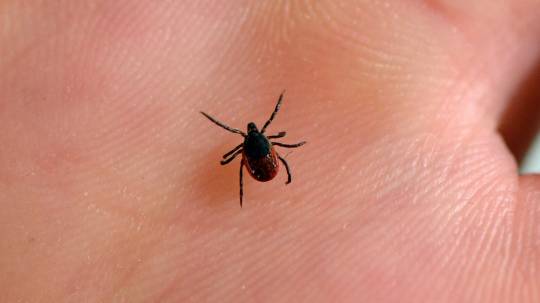
tick-for-lyme-disease-1180x664A picture taken at the French National Institute of Agricultural Research (INRA) in Maison-Alfort, on July 20, 2016 shows a tick, whose bite can transmit Lyme disease. (Photo: Bertrand Guay/Getty Images)

Lyme Disease on the Rise in Northern California

by Michael Krasny

LISTEN to interview (Go to blue link at beginning of article)

From 2004 to 2016 diseases spread by flea, mosquito and tick bites tripled in the U.S., according to a new study by the Centers for Disease Control. The increase includes viruses like West Nile, Zika and chikungunya, but it was Lyme Disease that accounted for 80 percent of incidents. We examine what’s causing the surge of tick-borne diseases and how Lyme Disease in particular is affecting Northern California.

Guests:
May Beth Pfeiffer, author, Lyme: The First Epidemic of Climate Change
Raphael Stricker M.D., physician and past president, International Lyme & Associated Diseases Society (ILADS)
Andrea Swei, assistant professor, San Francisco State University

More on Ticks from KQED Science

____________

**Comment**

Again, the issue of climate change really is a mute point when referencing ticks.  Independent Canadian tick researcher, John Scott, says the climate change issue is a red herring:  https://madisonarealymesupportgroup.com/2017/08/14/canadian-tick-expert-climate-change-is-not-behind-lyme-disease/  John explains, “The climate change range expansion model is what the authorities have been using to rationalize how they have done nothing for more than thirty years. It’s a huge cover-up scheme that goes back to the 1980’s. The grandiose scheme was a nefarious plot to let doctors off the hook from having to deal with this debilitating disease. I caught onto it very quickly. Most people have been victims of it ever since.”  “This climate change ‘theory’ is all part of a well-planned scheme. Even the ticks are smarter than the people who’ve concocted this thing,” he says.  “Climate change has nothing to do with tick movement. Blacklegged ticks are ecoadaptive, and tolerate wide temperature fluctuations.

For more on Climate Change: https://madisonarealymesupportgroup.com/2017/07/08/global-warming-numbers-fudged/
https://madisonarealymesupportgroup.com/2017/07/25/brave-new-worlds-the-expanding-universe-of-lyme-disease/

Lyme Hangout with Dr. Cameron – How to Treat for a Tick Bite – May 8, 2018

http://danielcameronmd.com/lyme-hangout-registration/#form-wrap

Featured Topic: Guidelines for treating a tick bite

Doctors are divided over the best treatment for a tick bite. The Infectious Diseases Society of American (IDSA) advises a single 200mg dose of doxycycline for an adult patient and 4m/kg up to 200 mg for a child at least 8 years of age based on a single study. The International Lyme and Associated Disease Society (ILADS) is opposed to a single dose of doxycycline for a tick bite. There is no evidence that a single dose of antibiotics is effective to prevent complications of Lyme disease or co-infections. I will review what we know, what we don’t know and what I do in practice.

When:  Tuesday, May 8th, 2018 at 8PM EST.

______________

For more:

https://madisonarealymesupportgroup.com/2017/03/24/one-pill-of-doxy-only-reduces-prevalence-of-rash-not-lyme-disease/

Tick, Mosquito, and Flea Diseases More Than Tripled Since 2004

https://www.washingtonpost.com/news/to-your-health/wp/2018/05/01/diseases-spread-by-ticks-mosquitoes-and-fleas-more-than-tripled-in-the-u-s/?

Diseases spread by ticks, mosquitoes and fleas more than tripled in the U.S. since 2004

By Lena H. Sun, May 1, 2018

GIQEI6K2ZY5H3BCXBPVK77U4AM

Clockwise from top left: The deer tick, which transmits Lyme disease; the American dog tick, which transmits Rocky Mountain spotted fever and tularemia; the Culex pipiens mosquito, which transmits West Nile virus; and the Aedes aegypti mosquito, which transmits Zika, dengue and chikungunya. (Centers for Disease Control and Prevention)

The warmer weather of spring and summer means the start of tick and mosquito season and the diseases they transmit, including Lyme disease, Rocky Mountain spotted fever, West Nile and Zika.

A new report from the Centers for Disease Control and Prevention has found that illnesses from mosquito, tick and flea bites more than tripled in the United States from 2004 to 2016.

The report, released Tuesday, shows that the number of reported cases of these diseases jumped from 27,388 cases in 2004 to more than 96,000 cases in 2016. The data includes illnesses reported in U.S. states and territories. During that period, more than 640,000 cases of these diseases were reported to the CDC.

Officials say the actual number of people who have become sick is much higher, in part because many infections are not reported or recognized. Some patients may experience mild symptoms and not seek medical attention, and not all diseases were reported for the full 13-year analysis period or from all states and territories. The data “substantially underestimate disease occurrence,” the report said.

For example, recent data from clinical and laboratory diagnoses estimate that Lyme disease infects about 300,000 Americans every year, which is eight to 10 times the number reported in the CDC analysis. In 2016, the number of Lyme disease incidents reported for the United States was 36,429.

As a group, these diseases in the United States are notable for their wide geographical distribution and resistance to control. Only one of the diseases, yellow fever, has a vaccine approved by the Food and Drug Administration.

The increase in disease cases caused by the bite of an infected mosquito, tick or flea in the United States is the result of many factors. Mosquitoes and ticks and the germs they spread are increasing in number and moving into new areas. West Nile virus, for example, was introduced to New York City in 1999 and then spread across the country. As a result of these increases, more people are at risk for infection. Overseas travel and commerce are also increasingly common, and someone infected with a mosquito-borne virus such as Zika in one country can unknowingly transport it home.

Climate change, which experts say can exacerbate many public health threats, also plays an important role, allowing mosquitoes and ticks to thrive in warmer temperatures, said Lyle Petersen, director of the CDC’s Division of Vector-Borne Diseases, which produced the report. Warmer temperatures tend to make mosquitoes get infected faster and also more infectious, he said in an interview. “The amount of virus in the mosquito increases, and when it bites you, more virus gets into you and the chances of you getting infected and becoming sick goes up,” said Petersen, who has gotten sick from West Nile virus.

For ticks, the higher temperatures have allowed them to spread into new areas, allowing them to live farther north, and that puts more people at risk, he said. What’s more, he said, “when the tick season is longer, people are exposed over longer periods.”

But other factors also play a role. The number of Lyme disease cases has increased rapidly because the population of deer — and deer ticks — has skyrocketed. “In New England 100 years ago, there were hardly any trees because they were all cut down for farmland, and the deer had been hunted to extinction,” he said. “All those forests have grown back, the deer population exploded, and the tick populations have also exploded, bringing more disease.”

Most of the pathogens are transmitted to humans from animals, such as rodents or birds, “making them difficult or impossible to eliminate,” the report said.

“The presence of vectors with proven or possible capacity to transmit a wide range of pathogens leaves the United States susceptible to outbreaks of exotic vector-borne diseases,” the report said.

Tick-borne diseases account for more than 75 percent of the reports and occur throughout the continental United States, but they are predominantly in the eastern part of the country and in areas along the Pacific Coast. Diseases spread by mosquitoes, such as dengue fever, chikungunya and Zika, were almost exclusively transmitted in Puerto Rico, American Samoa and the U.S. Virgin Islands. West Nile virus, also spread by mosquitoes, is widespread across the continental United States, where it is the major mosquito-borne disease.

During the time covered in the study, nine new germs spread by the bites from infected mosquitoes and ticks were discovered or introduced in the United States, the report said.

“The pace of emergence of new or obscure vector-borne pathogens through introduction or belated recognition appears to be increasing,” the report said.

They include two previously unknown life-threatening tick-borne viruses — Heartland and Bourbon — that were reported from the Midwest, and the chikungunya and Zika viruses transmitted by mosquitoes that were introduced to Puerto Rico in 2014 and 2015. In the United States, there were also travel-related Zika cases and limited local spread of dengue and Zika viruses in Florida and Texas. The total number of reported Zika cases in the U.S. states and territories in 2016 was 41,680, accounting for the upsurge in disease cases from all vectors for that year.

The responsibility for detecting and responding to diseases spread by vectors such as mosquitoes and ticks is almost all funded locally and operated by local and state health departments. But their resources have been greatly reduced over the years. More than 80 percent of 1,083 local mosquito control organizations in a recent national survey reported some basic deficiencies.

But on a more basic level, Petersen said, more innovative ways are needed to control ticks and mosquitoes. When the first local spread of Zika in the continental United States was reported in Florida in 2016, authorities discovered that the Aedes aegypti mosquitoes that spread the virus there were “resistant to the most common pesticides that we have,” Petersen said.

In some ways, the Zika outbreak allowed state and local authorities to increase their capacity to fight these threats. But much more needs to be done, he said. “This is a long-term problem that’s going to getting worse, and it requires a sustained response over time.”

CDC 2  (Go here for CDC graph)

Lena H. Sun is a national reporter for The Washington Post covering health with a special focus on public health and infectious disease. A longtime reporter at The Post, she has covered the Metro transit system, immigration, education and was the Beijing bureau chief from 1990 to 1994. Follow @bylenasun

______________

**Comment**

Again, climate change does not affect ticks and Lyme/MSIDS as they are ecoadaptive and can essentially survive just about anywhere:  https://madisonarealymesupportgroup.com/2017/08/14/canadian-tick-expert-climate-change-is-not-behind-lyme-disease/

“Ticks are marvellous eco-adaptors. They will be the last species on the planet. Do you see how silly this theory of climate change is as a way to rationalize what’s happening. It’s all a red herring to divert your attention,” he explains.

https://madisonarealymesupportgroup.com/2018/05/01/cdc-says-tick-mosquito-infections-spreading-rapidly/

But the author, Dr. Lyle R. Petersen, the agency’s director of vector-borne diseases, repeatedly declined to connect the increase to the politically fraught issue of climate change, and the report does not mention either climate change or global warming.
Many other factors are at work, he emphasized, while noting that “the numbers on some of these diseases have gone to astronomical levels.”

High-Resolution Ecological Niche Modeling of Ixodes scapularis Ticks Based on Passive Surveillance Data at the Northern Frontier of LD Emergence in North America

www.liebertpub.com/doi/abs/10.1089/vbz.2017.2234#utm_source=ETOC&utm_medium=email&utm_campaign=vbz

High-Resolution Ecological Niche Modeling of Ixodes scapularis Ticks Based on Passive Surveillance Data at the Northern Frontier of Lyme Disease Emergence in North America

Soucy Jean-Paul R., Slatculescu Andreea M., Nyiraneza Christine, Ogden Nicholas H., Leighton Patrick A., Kerr Jeremy T., and Kulkarni Manisha A.

Published Online:1 May 2018https://doi.org/10.1089/vbz.2017.2234

Abstract

Background: Lyme disease (LD) is a bacterial infection transmitted by the black-legged tick (Ixodes scapularis) in eastern North America. It is an emerging disease in Canada due to the expanding range of its tick vector. Environmental risk maps for LD, based on the distribution of the black-legged tick, have focused on coarse determinants such as climate. However, climatic factors vary little within individual health units, the level at which local public health decision-making takes place. We hypothesize that high-resolution environmental data and routinely collected passive surveillance data can be used to develop valid models for tick occurrence and provide insight into ecological processes affecting tick presence at fine scales.

Methods: We used a maximum entropy algorithm (MaxEnt) to build a habitat suitability model for I. scapularis in Ottawa, Ontario, Canada using georeferenced occurrence points from passive surveillance data collected between 2013 and 2016 and high-resolution land cover and elevation data. We evaluated our model using an independent tick presence/absence dataset collected through active surveillance at 17 field sites during the summer of 2017.

Results: Our model showed a good ability to discriminate positive sites from negative sites for tick presence (AUC = 0.878 ± 0.019, classification accuracy = 0.835 ± 0.020). Heavily forested suburban and rural areas in the west and southwest of Ottawa had higher predicted suitability than the more agricultural eastern areas.

Conclusions: This study demonstrates the value of passive surveillance data to model local-scale environmental risk for the tick vector of LD at sites of interest to public health. Given the rising incidence of LD and other emerging vector-borne diseases in Canada, our findings support the ongoing collection of these data and collaboration with researchers to provide a timely and accurate portrait of evolving public health risk.

_____________

**Comment**

Just remember ticks can be everywhere and the high infection rates reflect that.  We can map ticks all the day long but at the end of the day it’s all about knowing they are moving into turf they’ve never been documented in before.

More on ticks:  https://madisonarealymesupportgroup.com/2017/10/27/israeli-kids-get-lyme-disease-from-ticks-in-caves/

https://madisonarealymesupportgroup.com/2018/04/23/tick-borne-relapsing-fever-found-in-austin-texas-caves/

https://madisonarealymesupportgroup.com/2017/03/13/ticks-found-on-rocks/

https://madisonarealymesupportgroup.com/2017/08/17/of-birds-and-ticks/

https://madisonarealymesupportgroup.com/2018/04/21/ticks-from-hell-survived-the-winter/

https://madisonarealymesupportgroup.com/2018/01/26/forget-ebola-sars-and-zika-ticks-are-the-next-global-health-threat/


Tick Control Program Reveals High Level of Infection in White-Footed Mice

http://www.pctonline.com/article/tick-usda-mice-infection/

Tick Control Program Reveals High Level of Infection in White-Footed Mice

Tick Control Program Reveals High Level of Infection in White-Footed Mice

A USDA study found a high rate of white-footed mice infected with Borrelia burgdorferi, the bacteria that causes Lyme disease.

 April 26, 2018

ELLICOTT CITY, Md. — A surprisingly high percent of the white-footed mice collected last summer in Howard County, Md, in an Agricultural Research Service (ARS) Areawide Integrated Tick Management Project turned out to be infected with the bacteria that cause Lyme disease.

The area-wide project in Maryland is mainly a partnership with Howard County Department of Recreation & Parks (HCRP) and University of Maryland. Other collaborators on the project include Pennsylvania State University, Centers for Disease Control and Prevention (CDC), U.S. Army Public Health Center and University of Massachusetts.

The high rate of white-footed mice infected with Borrelia burgdorferi, the bacteria that cause Lyme disease, in Howard County — just over 50 percent of captured mice —was a little surprising to ARS project leader Andrew Li.

What was more surprising, according to Li, was that collaborators doing analogous sampling of mice in New Haven County, Conn., found an unusually low rate of infection of about 35 percent in 2017. More commonly, white-footed mice in Connecticut have infection rates as high as 80 percent

Lyme disease was first recognized as an illness in 1975 in Lyme, Connecticut, in New London County, two counties to the east. Today, about 95 percent of confirmed Lyme disease cases occur in 14 New England, Mid-Atlantic and Midwest states, according to the CDC.

Now, the tick study team is putting out brick-sized black bait boxes in which white-footed mice will treat themselves to kill immature ticks. Mice are lured into the boxes with an attractive food bait. As they move through the box, the mice brush against a wick that applies a tiny amount of the pesticide fipronil, which kills the ticks but does not harm the mice.

Use of the bait boxes is the next phase of a five-year project launched in January 2017 to evaluate several methods of tick control to develop an environmentally sensitive, effective and easily managed control package for suburban areas.

“Our goal is to identify an effective way to reduce tick populations and the associated spread of Lyme disease and other tick-borne illnesses, especially in suburban areas,” said project leader Andrew Li. Li is an entomologist with the ARS Invasive Insect Biocontrol & Behavior Laboratory in Beltsville, Md. “We want to identify vulnerable points in the lifecycle of the tick, so we can have the greatest impact for the least effort.”

Other control methods being tested, individually and in combination, include the bait boxes, ARS-patented “4-poster” deer treatment feeders, and a bioinsecticide spray Met52. 

Mouse bait boxes are being placed near residential backyards adjacent to Blandair, Cedar Lane, Rockburn Branch and Wincopin Trail Parks, and the David Force Natural Resource and Middle Patuxent Environmental Areas in Howard County. Where Met 52 is used, it will be sprayed 3 feet on each side of the border between a residential backyard and the open park area at selected study sites.

This spring, the project also is repeating a mouse collaring effort that began last fall so individual white-footed mice can be tracked to see if the bait boxes change how the mice behave.

“Lyme disease and other tick-borne diseases significantly impact the quality of our lives here in Howard County. Learning ways to reduce the risk of infection by reducing the number of ticks in our parks and neighborhoods would be a tremendous benefit to the public,” said HCRP Deer Project manager Phil Norman of the Department of Recreation and Parks.

The Agricultural Research Service is the U.S. Department of Agriculture’s chief scientific in-house research agency. Daily, ARS focuses on solutions to agricultural problems affecting America. Each dollar invested in agricultural research results in $20 of economic impact.