Archive for the ‘Ticks’ Category

1st Report of Anaplasma Found in Thai. Bartonella, Rickettsia, Leptospira, & Scrub Typhus in Humans as Well. Even More Found in Ticks

https://www.ncbi.nlm.nih.gov/pubmed/30863381

Metagenomic Approach to Characterizing Disease Epidemiology in a Disease-Endemic Environment in Northern Thailand.

Takhampunya R1, Korkusol A1, Pongpichit C2, Yodin K2, Rungrojn A1, Chanarat N1, Promsathaporn S1, Monkanna T1, Thaloengsok S1, Tippayachai B1, Kumfao N2, Richards AL3, Davidson SA1.

Abstract

In this study, we used a metagenomic approach to analyze bacterial communities from diverse populations (humans, animals, and vectors) to investigate the role of these microorganisms as causative agents of disease in human and animal populations. Wild rodents and ectoparasites were collected from 2014 to 2018 in Nan province, Thailand where scrub typhus is highly endemic. Samples from undifferentiated febrile illness (UFI) patients were obtained from a local hospital. A total of 200 UFI patient samples were obtained and 309 rodents and 420 pools of ectoparasites were collected from rodents (n = 285) and domestic animals (n = 135). The bacterial 16S rRNA gene was amplified and sequenced with the Illumina. Real-time PCR and Sanger sequencing were used to confirm the next-generation sequencing (NGS) results and to characterize pathogen species.

Several pathogens were detected by NGS in all populations studied and the most common pathogens identified included Bartonella spp., spp., Leptospira spp., and Orientia tsutsugamushi. Interestingly, Anaplasma spp. was detected in patient, rodent and tick populations, although they were not previously known to cause human disease from this region. Candidatus Neoehrlichia, Neorickettsia spp., Borrelia spp., and Ehrlichia spp. were detected in rodents and their associated ectoparasites. The same O. tsutsugamushi genotypes were shared among UFI patients, rodents, and chiggers in a single district indicating that the chiggers found on rodents were also likely responsible for transmitting to people.

Serological testing using immunofluorescence assays in UFI samples showed high prevalence (IgM/IgG) of Rickettsia and Orientia pathogens, most notably among samples collected during September-November. Additionally, a higher number of seropositive samples belonged to patients in the working age population (20-60 years old). The results presented in this study demonstrate that the increased risk of human infection or exposure to chiggers and their associated pathogen (O. tsutsugamushi) resulted in part from two important factors; working age group and seasons for rice cultivation and harvesting. Evidence of pathogen exposure was shown to occur as there was seropositivity (IgG) in UFI patients for bartonellosis as well as for anaplasmosis.

Using a metagenomic approach, this study demonstrated the circulation and transmission of several pathogens in the environment, some of which are known causative agents of illness in human populations.
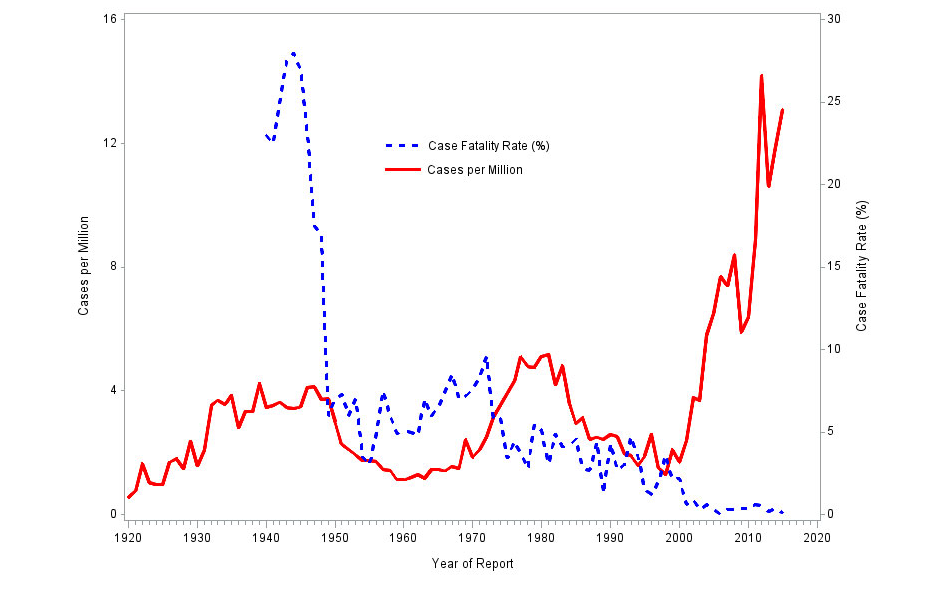
 

Rocky Mountain Spotted Fever is Not the Only Rickettsiosis

https://www.galaxydx.com/rickettsiosis_rocky_mountain_spotted_fever/

Rocky Mountain Spotted Fever is not the only Rickettsiosis


Raising Red Flag Over Lyme

https://www.suncommunitynews.com/articles/the-sun/raising-red-flag-over-lyme/

Raising red flag over Lyme

Eagle Lake resident warns public to take disease seriously

BY MARCH 1, 2019

________________

**Comment**

  1. We still don’t know everything about why some become chronically ill, and while delays in diagnosis are a factor, treatment failures have been documented since the beginning:  https://madisonarealymesupportgroup.com/2019/02/22/why-mainstream-lyme-msids-research-remains-in-the-dark-ages/
  2. There is also the issue of there being more subsets of patients besides “acute” and PTLDS:  https://madisonarealymesupportgroup.com/2019/02/25/medical-stalemate-what-causes-continuing-symptoms-after-lyme-treatment/
  3. Until the pleomorphic and polymicrobial nature of Lyme/MSIDS is recognized, patients are doomed:  https://madisonarealymesupportgroup.com/2018/10/30/study-shows-lyme-msids-patients-infected-with-many-pathogens-and-explains-why-we-are-so-sick/
  4. Blood tests for Lyme/MSIDS is abysmal, missing over half of all cases.  There has been a concerted suppression of microscopy and other forms of testing:  https://madisonarealymesupportgroup.com/2018/10/12/direct-diagnostic-tests-for-lyme-the-closest-thing-to-an-apology-you-are-ever-going-to-get/, https://madisonarealymesupportgroup.com/2019/02/27/should-lyme-patients-rico-lawsuit-include-yale/
  5. Climate change has NOTHING to do with this:  https://madisonarealymesupportgroup.com/2018/08/13/study-shows-lyme-not-propelled-by-climate-change/, https://madisonarealymesupportgroup.com/2018/11/07/ticks-on-the-move-due-to-migrating-birds-and-photoperiod-not-climate-change/

“The authorities have been using tick expansion and climate change to get research dollars. Climate change is a popular topic right now, and that is a great source of funding for related research. However, any research on ticks and climate change is inconclusive––in essence, there is no validity. The long-range, futuristic projections and statistical models are bogus science because blacklegged ticks have already been found in northern Canada. In fact, we documented blacklegged ticks on migratory songbirds in northern Alberta dating back to 1998. Any allocation of government funding for ticks and climate change research is a complete waste of taxpayers’ money. It will not help Lyme disease patients one iota.”  Independent Canadian tick researcher, John Scott

Few LLMD’s take insurance forcing patients to pay expensive long-term bills out of pocket. Insurance companies are the ones coming after doctors who dare to treat in a way that is outside the CDC guidelines of essentially 21 days of doxycycline:  https://www.dailykos.com/stories/2012/01/29/1059800/-Wisconsin-Lyme-doctor-gets-reprieve?  Once they flag a doctor they nit-pick until they find any little thing:  https://sciencebasedmedicine.org/chronic-lyme-vip-daniel-cameron-disciplined-by-new-york-medical-authorities/

The Lyme Wars are far from over.

https://madisonarealymesupportgroup.com/2017/10/24/lyme-wars-part-1-julias-story/

https://madisonarealymesupportgroup.com/2017/10/25/lyme-wars-part-2-kyra-overcomes-chronic-lyme-diagnosis/

https://madisonarealymesupportgroup.com/2017/10/26/lyme-wars-part-3/

https://madisonarealymesupportgroup.com/2017/10/27/lyme-wars-part-4/

https://madisonarealymesupportgroup.com/2017/10/28/lyme-wars-part-5-coinfections/


Jacksonville Family Shares Daughter’s 9-Month Diagnosis of Rare Disease Which Isn’t Rare (Lyme)

https://www.actionnewsjax.com/news/local/jacksonville-family-shares-daughters-9-month-diagnosis-to-lyme-disease/929972299  News Video here

Jacksonville family shares daughter’s 9 month diagnosis of rare disease

By: Brittney Verner , Action News Jax

Updated:

A local mom whose daughter was diagnosed with a rare disease is now warning other parents to be on the lookout if their kids have the same symptoms.

Cynthia Donalson said it took them almost 9 months to find out their daughter was diagnosed with Lyme disease.

Donalson said for almost a year her daughter Anna who’s now 14 has been fighting to live a normal and healthier life.

“She had suffered off and on with stomach issues. She went from being 117 pounds to 104 pounds,” Donalson.

She said it started last March and that’s when they started to seek medical attention.

“She saw a gastroenterologist at Wolfson‘s had several trips to the emergency room. They tried everything and could not find anything,” Donalson said.

She said by the end of the summer she was 85 pounds. Last December a doctor diagnosed Anna with Lyme disease. The disease is caused by bacteria and is transmitted through a bite from an animal or insect.

“It was horrible to watch because she was basically disintegrating in front of me,” Donalson said.

Anna said it’s unclear where she got Lyme disease but she spent a lot of time at soccer fields diving in dirt and she believes she could have been bitten unknowingly.

Dr. Aylin Ozdemir, who is a pediatric integrative medicine doctor diagnosed Anna. Ozdemir said Lyme disease can often be difficult to diagnose.

“In many cases patients don’t even remember a tick bite so then they become patients with a myriad of symptoms, then somebody needs to connect the dots. Even the Centers for Disease Control and Infectious Disease Society of America confirms that we don’t have a good sterile-logical blood marker to diagnose Lyme disease and they fall short,” Ozdemir said.

The disease is curable and Donalson is warning other parents whose kids may have similar symptoms not to give up until they find a solution.

The Center for Disease and Control said, “People treated with appropriate antibiotics in the early stages of Lyme disease usually recover rapidly and completely.”

“Pursue, don’t give up, keep looking for help,” Donalson said.

___________________

**Comment**

Where to even begin…..

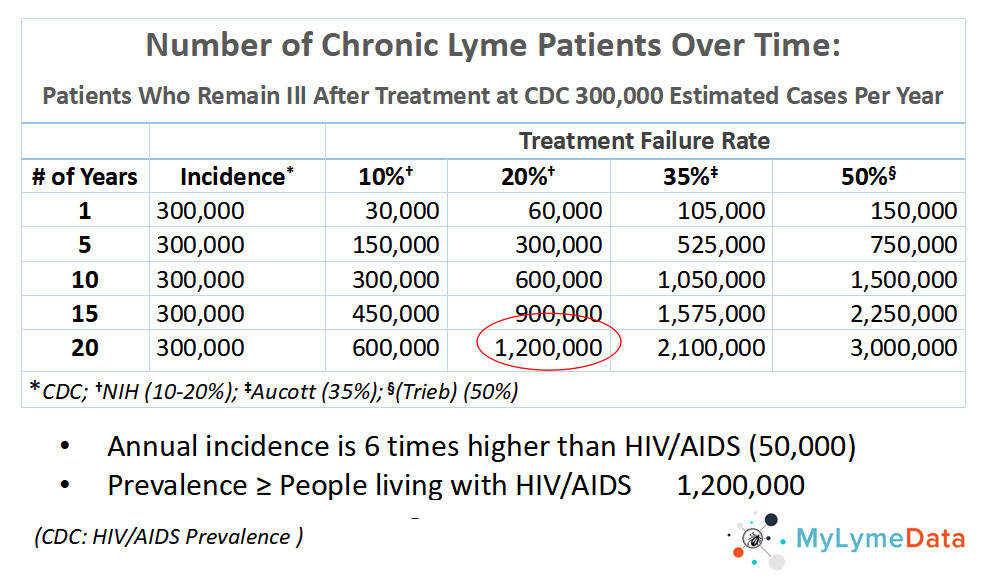
  1. Lyme IS NOT RARE!  It is twice as common as breast cancer and six times more common than HIV/AIDS.  https://www.lymedisease.org/mylymedata-lyme-disease-prevalence/.
  2. Regarding Lyme disease being curable, research has shown treatment failures since the beginning of time:  https://madisonarealymesupportgroup.com/2019/02/22/why-mainstream-lyme-msids-research-remains-in-the-dark-ages/
  3. When the CDC reports numbers they are “only talking about INCIDENCE of Lyme disease — the number of new cases each year. What about prevalence of Lyme disease — the number of people who remain ill over time?  The chart below shows Lyme disease prevalence based on the annual incidence of the disease using different assumptions about treatment failure rates. Patients diagnosed and treated early generally respond well to treatment. However, treatment failures ranging from 10-35% have been reported in early disease and higher rates are reported for late disease.”  https://www.lymedisease.org/mylymedata-lyme-disease-prevalence/.

    Chronic Lyme Disease is a big problem

    Lyme disease prevalence cases over time

  4. Regarding soccer fields, a research team has discovered the best place to find ticks is along the edges of soccer fields with woodlines, i.e. virtually every soccer field in Wisconsin: https://madisonarealymesupportgroup.com/2019/03/06/alumnus-works-to-protect-people-from-west-nile-virus-lyme-disease/
  5. “Late stage” Lyme can occur within two weeks after tick bite.  Bob Giguere of IGeneX told our support group the story of a little girl who developed facial palsy and lost the ability to walk & talk within 4-6 hours of tick bite (2).  Whether or not you label that escalating case “late stage” or not, the infection was able to cross the blood brain barrier and cause severe symptoms in short order.  https://madisonarealymesupportgroup.com/2019/02/22/why-mainstream-lyme-msids-research-remains-in-the-dark-ages/
  6. FWY:  Lyme is alive and well in the South and it’s been there a long time:  https://madisonarealymesupportgroup.com/2018/05/31/no-lyme-in-the-south-guess-again/.  Dr. Masters fought tooth and nail to get Lyme recognized in the South:   https://madisonarealymesupportgroup.com/2017/10/06/remembering-dr-masters-the-rebel-for-lyme-patients-who-took-on-the-cdc-single-handedly/  (This happened in the late 80’s!)
  7. I had to flip back to the date of this article just to make sure my eyes read that this was written this month and in the year 2019.  Wow! is all I can say….

Lyme in Slovak Republic

https://cejph.szu.cz/artkey/cjp-201888-0011_association-of-seroprevalence-and-risk-factors-in-lyme-disease.php

Association of seroprevalence and risk factors in Lyme disease

Andrea Bušová1, Erik Dorko1, Eva Feketeová2, Kvetoslava Rimárová1, Jana Diabelková1, Tímea Rovenská1, Tomáš Csank3

Cent Eur J Public Health 2018, 26(Supplement):S61-S66 | DOI: 10.21101/cejph.a5274

Objective: The aim of the presented cross-sectional seroepidemiological study was to determine the current presence of antibodies against B. burgdorferi s.l. in the groups of Slovak population, and to identify potential risk factors to Lyme borreliosis.

Methods: A group of 261 adults (patients from the Neurological Clinic with possible symptoms of LB and healthy persons with possible working exposure to tick bite: gardeners and soldiers working in afforested areas) were examined in order to assess the seroprevalence of anti-Borrelia antibodies. Sera were screened by commercial enzyme-linked immunosorbent assay (ELISA). The respondents completed questionnaires with general demographic, epidemiological and clinical data.

Results: We detected 17.2% presence of positive IgG and 5.7% presence of positive IgM antibodies in all investigated groups. Our results confirmed that the following risk factors such as age and gender are significantly associated with the presence of positive specific antibodies against investigated disease.

Conclusion: The results of seroprevalence obtained in the present study confirm the possibility of infection with B. burgdorferi among respondents exposed to contact with ticks.

_________________

**Comment**

Imagine the percentages if they used direct microscopy or even the MISDS questionnaire, not serology which misses half of cases:  https://madisonarealymesupportgroup.com/2018/10/12/direct-diagnostic-tests-for-lyme-the-closest-thing-to-an-apology-you-are-ever-going-to-get/

Key quote:  “These serologic tests cannot distinguish active infection, past infection, or reinfection.”

In plain English, these tests don’t show squat.

Please spread the word that Dr. Horowitz’s MSIDS questionnaire has been validated and predicts Lyme much better than serology:  https://madisonarealymesupportgroup.com/2017/09/05/empirical-validation-of-the-horowitz-questionnaire-for-suspected-lyme-disease/  The results support the use of the HMQ as a valid, efficient, and low-cost screening tool for medical practitioners to decide if additional testing is warranted to distinguish between Lyme disease and other illnesses.

Here it is.  You can print it off and fill it out yourself:  https://madisonarealymesupportgroup.com/wp-content/uploads/2016/01/symptomlist.pdf

https://madisonarealymesupportgroup.com/2019/02/22/why-mainstream-lyme-msids-research-remains-in-the-dark-ages/  Excerpt:

There has been an ongoing record of suppression of microscopy for Lyme.  In an interview with now retired professor of microbiology Morten Laane, the facts come rolling out on how he was fired, his lab was closed down, and his published article disappeared without a trace after presenting his findings at a scientific conference on how microscopy showed spirochetes as well as other organisms like Babesia in a number of patients (12).  Laane is far from alone.  Dr. Sin Hang Lee has even filed a $57.1 million lawsuit against the CDC for suppressing direct detection tests, and for employing ‘Lysenkoism,’ a term used for a Russian political campaign using bogus science to suppress true biological and medical sciences and to punish scientists and doctors who don’t follow Party Line (13).

BTW:  The Lyme Good Old Boys aka The Cabal own patents on Lyme serology testing:  https://crymedisease.wordpress.com/2016/02/28/the-conspirators-they-own-the-patents-and-changed-the-testing/

Employees of the U.S. Centers for Disease Control hold patents on Lyme tests:  https://www.google.com/patents/EP2805168A1?cl=en  For nearly four decades now the only FDA approved test for Lyme disease is the indirect two-tiered antibody test.

Dr. Allen Steere filed a patent in 2013 for yet more antibody detection tests for Lyme disease: (Application #20150219646) Compositions and Methods for the Detection of Bacterial Infections Associated with Lyme Disease  https://patents.justia.com/patent/20150219646

Anybody smell a rat yet?

The other issue with this study is the fact they are STILL looking this as a ONE pathogen illness when it’s typically not:  https://madisonarealymesupportgroup.com/2018/10/30/study-shows-lyme-msids-patients-infected-with-many-pathogens-and-explains-why-we-are-so-sick/  Key Quote:  “Our findings recognize that microbial infections in patients suffering from TBDs do not follow the one microbe, one disease Germ Theory as 65% of the TBD patients produce immune responses to various microbes.”