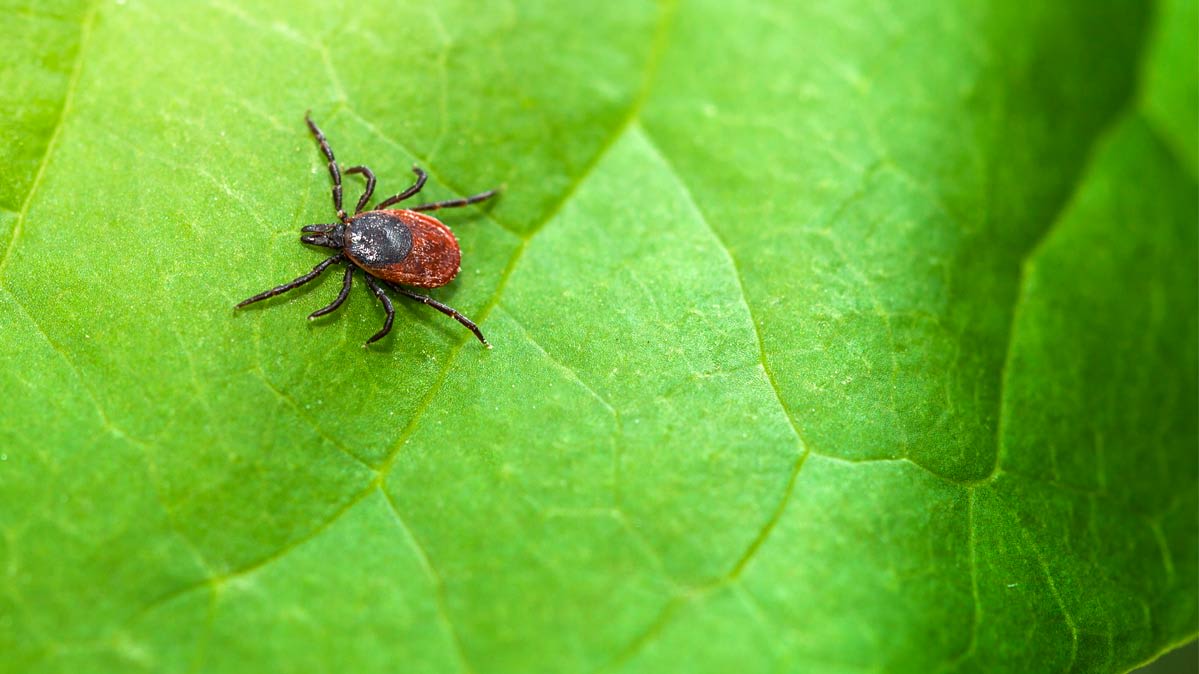
News video- Lyme More Common in UK than Thought
Interview with Janey Cringean – Channel 5 News
Lyme Disease is more common in the UK than thought.
July 31, 2019

July 31, 2019
The following full-length interview with James H. Oliver, Jr. is an eye opener on the type of work that’s been done on ticks and mosquitoes.
He’s described by Pamela Weintraub in the book, Cure Unknown, as a “world-class entomologist” for figuring out that the southern U.S. had Lyme Disease by finding 300 southern genetic strains of Borrelia, 57 of which are nearly identical to the northern pathogen and are classified as Borrelia burgdorferi sensu stricto. He also discovered two new species, Borrelia americana and Borrelia carolinensis that could potentially help explain why many in the South suffer with Lyme yet are not testing positive on current tests.
Oliver was responsible for producing ticks and mosquitos, running distribution tests, and determining factors that would cause migration for the Army.
Oliver also worked in Australia where he found ticks on snakes there.
The Navy used Oliver in Uganda, where he stayed at the Rockefeller Institute, as their acarologist where he collected ticks.
For full interview: https://academic.oup.com/ae/article/62/4/206/2712469
https://www.lymedisease.org/usa-testing-bioweapons/
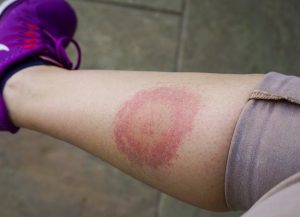
by Michelle Bentley, Royal Holloway (The University of London)
The House of Representatives has instructed the Pentagon to disclose whether it used ticks to infect the American public with Lyme disease between 1950 and 1975. The allegation comes from Chris Smith, a Republican representative for New Jersey.
A long-standing campaigner on Lyme disease, Smith says the claims are from a new book about the illness and the man who discovered it – a bioweapons scientist called Willy Burgdorfer.
There are issues with these allegations – not least that Burgdorfer didn’t discover Lyme disease until 1982, almost a decade after it’s claimed the ticks may have been used. Other scientists have dismissed the claims, and there is no proof that they are true.
But the US does have a history of testing biological weapons on the public.
The US biological weapons programme started during World War II. But the first real public test didn’t happen until 1949, when scientists put harmless bacteria in the air conditioning system at the Pentagon to see what a biological weapon might look like.
A year later, the US Navy carried out Operation Sea-Spray. The coast of San Francisco in California was sprayed with two types of bacteria, Bacillus globigii and Serratia marcesens. These bacteria are supposed to be safe, but Bacillus globigii is now listed as a pathogen, causes food poisoning, and can hurt anyone with a weak immune system.
As for Serratia marcesens, 11 people were admitted to hospital with serious bacterial infections after the San Francisco test. One of them – Edward Nevin – died three weeks later.
In 1951, tests were also carried out at the Norfolk Naval Supply Center in Virginia – a massive base that equips the US Navy. Fungal spores were dispersed to see how they would infect workers unpacking crates there. Most of the workers were African-American and the scientists wanted to test a theory that they were more susceptible to fungal disease than Caucasians.
In 1997, the National Research Council revealed that the US also used chemicals to test the potential of biological weapons in the 1950s. Zinc cadmium sulphide was dispersed by plane and sprayed over a number of cities, including St Louis in Missouri and Minneapolis in Minnesota. These cites were chosen because they were similar to Soviet targets such as Moscow in terms of terrain, weather and population.
The council concluded that no one was hurt and that the level of chemical used was not harmful, but in 2012, sociology professor Lisa Martino-Taylor claimed that there was a spike in cancer rates that could be connected back to the chemicals, which she alleges were radioactive. Nothing has since emerged to back up her claims.
 Planes were used to disperse chemicals over parts of the US in the 1950s.
There was a massive increase in testing in 1962 when then US Secretary of Defence, Robert McNamara, authorised Project 112. The project expanded bioweapons testing and pumped new funds into research.
One of the more controversial tests took place in 1966 on the New York subway. Scientists filled light bulbs with Bacillus globigii bacteria and then smashed them open on the tracks. The bacteria travelled for miles around the subway system, being breathed in by thousands of civilians and covering their clothes.
In 2008, the US Government Accountability Office acknowledged that tens of thousands of civilians might have been exposed to biological agents thanks to Project 112 and other tests.
The same report noted that, since 2003, the US defence department has been trying to identify which civilians had been exposed during Project 112 to let them know. The military denies this exposure involved any harmful disease, but many of those who have been identified allege they now suffer from long-term medical conditions.
Whether the ongoing Congressional investigation reveals that there were infected ticks remains to be seen. Either way, it could shed some much-needed light on a secret programme that we still don’t know much about.

Michelle Bentley, Reader in International Relations, Royal Holloway
This article is republished from The Conversation under a Creative Commons license. Read the original article.
_________________
For more: https://madisonarealymesupportgroup.com/2019/07/27/lyme-biowarfare-4-video-series/
https://www.consumerreports.org/outdoor-safety/how-quickly-can-an-attached-tick-make-you-sick/?
For a tick bite to make you sick, the tick must be attached to you and feeding for a certain amount of time. For some diseases, this can take a day or more. For others, it takes just minutes.
We spoke with experts in tick biology to find out why there’s so much variation, and what you need to know to protect yourself.
First, it’s important to understand that ticks can transmit bacteria, viruses, and parasites, and all of these behave a little differently.
When it comes to the transmission of tick-borne disease, scientists arguably know the most about how this works for Borrelia burgdorferi, the bacterium that causes Lyme disease, which (in the U.S.) is transmitted by blacklegged ticks (or deer ticks) as well as Western blacklegged ticks. That depth of knowledge is at least in part because so much research has been conducted into developing a vaccine against Lyme, explains Jean Tsao, Ph.D., associate professor at Michigan State University in the Department of Fisheries and Wildlife and the Department of Large Animal Clinical Sciences.
A 2018 review of all of this evidence published in the journal Ticks and Tickborne Diseases confirmed that it most likely takes more than 24 hours and closer to 48 hours of tick feeding time for the Lyme pathogen to pass from tick to human. (Your chance of getting Lyme disease from a tick that has been attached for less than 24 hours is “extremely small,” according to the Centers for Disease Control and Prevention.)
And why does it take so long? It has to do with the way ticks transmit disease, which is generally not a one-step process.
Blacklegged ticks pick up Lyme bacteria from a host, commonly a white-footed mouse. Those bacteria, also called spirochetes, settle in the tick’s gut.
When the tick finds its next host—possibly a human like you—it breaks the skin and starts injecting saliva into the wound, says Lars Eisen, Ph.D., research epidemiologist with the Centers for Disease Control and Prevention’s Division of Vector-Borne Disease, and author of the 2018 review. “Over several days, the tick alternates between injecting saliva and ingesting blood.”
When the first of your blood enters the tick’s gut, it signals the bacteria to begin reproducing, and eventually to travel up into the tick’s salivary glands. Once the bacteria are there, they can enter your body via the tick’s saliva.
That whole process is complicated, notes Eisen, which is one reason it takes such a long time. Additionally, in order for an infection to take hold, a sufficient number of bacteria have to enter the host’s body. If only a few bacteria make it in, then the human or animal immune system may be able to fight them off and prevent an infection, according to Tsao.
A number of other tick-borne diseases similarly may take up to a day or longer to get themselves from the tick into the human or animal host, according to scientists’ estimates.
The tick-borne bacteria that cause anaplasmosis and Borrelia miyamotoi disease (discovered in the U.S. only in the last few years) likely take more than 24 hours to be transmitted. Babesiosis, a tick-borne disease caused by a parasite, isn’t likely to be transmitted until a tick is attached for 36 hours. (See our guide to tick-borne diseases.)
For certain other infections, however, it’s a different story. Studies have shown that Powassan virus, which is also transmitted by blacklegged ticks and can cause severe symptoms such as brain or spinal cord inflammation, can be transmitted from a tick to a person in as little as 15 minutes.
How? Saravanan Thangamani, Ph.D., a professor in the department of microbiology and immunology at SUNY Upstate Medical University, says it has to do with a difference in how viruses behave inside ticks, compared with bacteria. Instead of camping out in the tick’s gut, as bacteria generally do, viruses multiply in the salivary glands, “ready to be transmitted to the human or animal the next time the tick feeds on them.”
Studies have demonstrated this for Powassan virus, he says, as well as for tick-borne encephalitis virus, a common tick-borne infection in Europe and Asia. And he says his lab has been generating data to suggest transmission times for Heartland virus, another recently discovered tick-borne pathogen in the U.S., are similar to those of Powassan.
A few other tick-borne illnesses can be transmitted in minutes or hours instead of days.
One is Rocky Mountain spotted fever. Estimates vary about how long it takes for a tick to give you this disease, but the CDC advises that the bacteria that cause it could be transmitted in as little as 2 hours.
Another is a disease called tick-borne relapsing fever, which is caused by another type of Borrelia bacteria, distantly related to the Borrelia that cause Lyme.
Tick-borne relapsing fever is transmitted by soft ticks, which lack the hard shield of the ticks that transmit diseases such as Lyme. And these soft ticks only feed for a few minutes, usually less than half an hour, according to the CDC.
“The relapsing fever bacteria that they spread therefore have, by necessity, evolved to be transmitted very quickly,” Eisen says.
The good news is that soft ticks, which make their homes in the burrows of hosts (often rodents), have less contact with humans. When people do contract tick-borne relapsing fever, it’s usually because they’ve spent the night in a rodent-infested cabin in a rustic or mountainous area.
It’s important to remember that the infections that can be transmitted from a tick to you very quickly, like Powassan and tick-borne relapsing fever, are rare. The CDC estimates that 300,000 people contract Lyme disease every year—while just 34 cases of Powassan virus were reported to the CDC in 2017and just 504 cases of tick-borne relapsing fever between 1990 and 2011.
For pathogens that generally take a longer time to transmit, there’s time to act before an attached tick causes a disease. Think of it as a “grace period,” Tsao says, that gives you time to thoroughly check for ticks and remove any that you find attached to you. (Here’s how to remove a tick.) The CDC recommends showering within a few hours of any potential tick exposure—that will wash off any ticks that may be crawling on you but that haven’t attached yet, and gives you an opportunity to do a thorough check for any ticks that did find a place to bite.
But given that the risk of a quick-transmitting disease, although rare, isn’t zero, it’s also important to take precautions against getting bitten in the first place. Avoid tick habitat if you can by staying out of wooded or grassy areas; when you’re on a hike, stick to the center of the trail and dress in long pants, long sleeves, and closed-toe shoes. Use an EPA-registered insect repellent on any exposed skin (see a few of our top-rated picks below), and consider buying permethrin-treated clothing or treating clothes with permethrin yourself.
__________________
**Comment**
Insanity is doing the same thing over and over and expecting different results.
The question should be, how quickly can transmission occur?
For more: https://madisonarealymesupportgroup.com/2017/04/14/transmission-time-for-lymemsids-infection/
https://www.ncbi.nlm.nih.gov/pmc/articles/PMC4278789/?
Important quote from study:
Studies have found systemic infection and the presence of spirochetes in the tick salivary glands prior to feeding, which could result in cases of rapid transmission. Also, there is evidence that spirochete transmission times and virulence depend upon the tick and Borrelia species. These factors support anecdotal evidence that Borrelia infection can occur in humans within a short time after tick attachment.
More importantly is nobody has a clue what coinfections do to this party. In other words, if a tick is coinfected with numerous pathogens (which many are), perhaps some in the salivary glands, some not – what does that do to transmission times?
Because here’s the facts: ticks are commonly infected with numerous pathogens and people contract these: https://madisonarealymesupportgroup.com/2017/05/01/co-infection-of-ticks-the-rule-rather-than-the-exception/
Lastly, Bob Giguere of IGeneX states a case by Dr. Jones of a little girl who went outside to play about 8:30a.m. and came inside at 10:30 with an attached tick above her right eye. By 2 o’clock, she had developed the facial palsy. At the hospital she was told it couldn’t be Lyme as the tick hadn’t been attached long enough. They offered a neuro-consult…..
By 4pm she couldn’t walk or talk.
So within about a 4-6 hour window a healthy little girl was sidelined by a tick bite.
https://www.ncipmc.org/projects/pest-alerts1/

https://www.ncipmc.org/projects/pest-alerts1/brown-dog-tick-vector-for-rocky-mountain-spotted-fever/
https://www.ncipmc.org/projects/pest-alerts1/rocky-mountain-spotted-fever-rickettsia-rickettsii/
https://www.ncipmc.org/projects/pest-alerts1/ticks-and-tick-borne-diseases/