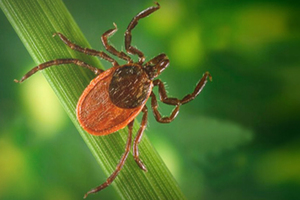
In many cases, atrial fibrillation (AF) is associated with a history of cardiac inflammation. One of the potential pathogens responsible for atrial inflammation might be Borrelia burgdorferi – a pathogen involved in Lyme carditis. This study aimed to assess whether the serological history of Borrelia infection was associated with the risk of AF. The study included 113 AF patients and 109 patients in sinus rhythm. All patients underwent a clinical evaluation, echocardiography and had their blood taken for the assessment of anti-Borrelia IgG antibodies. Patients with AF compared with the non-AF group had more often serological signs of Borrelia infection (34.5% vs 6.4%; p <0.0001). The multivariate analysis showed that positive results for anti-Borrelia IgG antibodies were a strong independent predictor of AF (odds ratio 8.21; 95% confidence interval 3.08 to 21.88; p < 0.0001).
In conclusion, presented data show that exposure to Borrelia spp. infection is associated with an increased risk of AF. Whether the early treatment of Lyme disease lowers the risk of AF development remains to be explored.
___________________
**Comment**
Imagine what the real numbers look like…..
They used blood tests as the foundation of the study and we know these tests miss anywhere from 70-86% of cases.
We investigated the presence of the measles virus genome in order to identify asymptomatic infections in the adult population. Bone-marrow aspirates were obtained from 179 patients, 20-96 years of age, for the diagnosis of malignant diseases (29 with malignant lymphoma, 28 with acute leukaemia, 21 with myelodysplastic syndrome, five with multiple myeloma and 96 with other diseases). The measles virus genome was detected in 17 (9.5%) of 179 individuals by RT-PCR and 28 (15.6%) through hybridization. The genomes detected in bone marrow were all in the same cluster, D5, the strain circulating during the study period, and no evidence of persistent infection was obtained. We conclude that asymptomatic infections of measles virus are common in adults and the presence of the measles virus genome would not be related to the pathogenesis of illness.
A total of 342 samples of peripheral blood mononuclear cells (PBMC) were obtained from 145 healthy individuals, which we examined for the presence of measles virus genome RNA by reverse transcription-polymerase chain reaction (RT-PCR), to identify whether asymptomatic infection of measles virus has occurred in healthy children. Measles virus genome was detected in 11 (23.4%) of 47 nonimmunized individuals; all positives for RT-PCR were infants who experienced measles exposure. No genome was detected in those without measles exposure. In 83 individuals immunized with measles vaccine, the vaccine strain genome was detected in 10 (71.4%) of 14 recipients whose PBMC were obtained within 2 months of vaccination. Measles wild-type genome was detected in 36 (46.2%) of 78 individuals, 40 (25.2%) of 159 samples, who had been immunized more than 2 months before. The wild-type measles genome was also detected in 6 (46.2%) of 13 individuals who had been infected with measles in the distant past. The measles PCR-positive rate was not related to the period since immunization or natural infection. Sequence analysis of PCR products demonstrated they were all in the same cluster of D5 lineage, which was the circulating strain during the study period. We obtained 13 samples of nasopharyngeal secretion (NPS) simultaneously from individuals whose PBMC were positive for measles PCR but did not detect virus genome. Measles genome was, however, detected from NPS in cases of acute infection. We conclude that asymptomatic measles infection is common but would rarely become a source of transmission because of negative PCR in NPS.
___________________
**Comment**
Hopefully you can see where I’m going with this. Just because you have the presence of a virus in your body does NOT mean you will become ill. COVID-19 is no different – and they have only identified “virus-like” particles, not the actual purified virus.
A positive test result shows you may have antibodies from an infection with the virus that causes COVID-19. However, there is a chance a positive result means that you have antibodies from an infection with a virus from the same family of viruses (called coronaviruses), such as the one that causes the common cold.
If you test negative
You could still have a current infection.
_____________________
**Comment**
Ha, ha, ha….yes this is where we are at folks – months and months into a ‘pandemic.’ Our authorities are so inept they STILL don’t have an accurate test.
This isn’t new to Lyme/MSIDS patients. Forty years into the history of Lyme and we still don’t have an accurate test, so don’t hold your breath for COVID testing.
“I open up the door, and there’s like eight different people, five different cars, and I’m like ‘what the heck’s going on?’ This guy’s in a suit with a mask. It’s the Health Department guy, and they have three papers for us. For me, her and my daughter,” he said.
The couple was ordered to wear ankle monitors. If they travel more than 200 feet, law enforcement will be notified.
Having fun yet? Ready to admit this experiment is about far more than a virus? That the same ‘authorities’ guilty of the mismanagement of Lyme are the same ones mismanaging COVID?
I’ve posted numerous articles on the faulty testing which is as bad as Lyme testing. In the words of a doctor, bio-chemist, protease developer, and former founder of a lab:
I’m skeptical that a PRC test is ever true. It’s a great scientific research tool. It’s a horrible tool for clinical medicine.
His advice for people who want to be tested for COVID-19:
Key quote: “These serologic tests cannot distinguish active infection, past infection, or reinfection.”
In plain English, these tests don’t show squat.
Please spread the word. The general public is clueless about how the CDC uses faulty testing against people. For Lyme – you can’t get treated without testing positive, even though testing misses over half of all cases. With COVID, if you test positive, even without symptoms, you could be forced to quarantine and have your rights taken away.
ONE OF THE MOST FRUSTRATING ASPECTS of how academic science conducts itself in the US is high reliance to SELECTIVE ATTENTION to information that suits one’s particular viewpoint in science. Graduate students writing theses or dissertations are expected to provide a reasonable approximation of a background of the foundations upon which their thesis is built. Somewhere along the way, some scientists have forgotten the ethics of the moral responsibility of providing an unbiased representation of the state of knowledge upon which they base their positions. To seek only confirming instances that match one’s own viewpoint is positivistic – and it is the essential driver of confirmation bias. CDC and Fauci’s reliance of the Selective Attention Bias is monumental is size and historically destructive in scope.
Here I outline a few rather important facts that CDC and Fauci (and thus the rest of public health and most of the US medical system) have forgotten. The result is a public health policy response in the US that is full of … holes, at immense cost to the well-being of society.
When I read headlines like “Scientists discover” X, Y or Z about Coronavirus”, I almost always groan. “We ALREADY KNOW that about coronviruses” is my response, and so off to Pubmed I go.
Here are some things we already know that are being forgotten, or ignored, in public health policy in the US (and elsewhere) on the COVID-19 response.
(1) Coronavirus antibodies don’t last. Based on a non-peer-reviewed study preprint of a King’s College Study that monitored SARS-CoV-2 antibody levels for three months, the media represents this as new because the researchers who have presented the data failed to provide an thorough representation of past studies – and the media failed to pick up on the reality of what we already know. We’ve known that the antibody response to coronaviruses in humans is shorter than that, say, for human rhinoviruses (the common cold) since 1990.
Here’s the study on coronviruses (1990):
“After preliminary trials, the detailed changes in the concentration of specific circulating and local antibodies were followed in 15 volunteers inoculated with coronavirus 229E. Ten of them, who had significantly lower concentrations of preexisting antibody than the rest, became infected and eight of these developed colds. A limited investigation of circulating lymphocyte populations showed some lymphocytopenia in infected volunteers. In this group, antibody concentrations started to increase 1 week after inoculation and reached a maximum about 1 week
later. Thereafter antibody titres slowly declined. Although concentrations were still slightly raised 1 year later, this did not always prevent reinfection when volunteers were then challenged with the homologous virus. However, the period of virus shedding was shorter than before and none developed a cold. All of the uninfected group were infected on re-challenge although they also appeared to show some resistance to disease and in the extent of infection. These results are discussed with reference to natural infections with coronavirus and with other infections, such as rhinovirus infections.“And here’s the study on rhinoviruses (1989):
“The specific humoral immune response of 17 volunteers to infection with human rhinovirus type 2 (HRV-2) has been measured both by neutralization and by ELISA. Six volunteers who had HRV-2-specific antibodies in either serum or nasal secretions before HRV-2 inoculation were resistant to infection and illness. Of the remaining 11 volunteers who had little pre-existing HRV-2-specific antibody, one was immune but 10 became infected and displayed increases in HRV-2-specific antibodies. These antibodies first increased 1-2 weeks after infection and reached a maximum at 5 weeks. All six resistant volunteers who had high pre-existing antibody and eight of the volunteers who became infected maintained their HRV-2-specific antibody for at least 1 year. At this time they were protected against reinfection. Two volunteers showed decreases in HRV-2-specific antibodies from either serum or nasal secretions. They became infected but not ill after HRV-2 inoculation 1 year later.“So, people infected with coronaviruses have short-lived active antibodies compared to rhinovirus, but have a mild infection a year later if re-exposed. To be fair to the authors of the study, they referenced the coronavirus study from 1990, as well as length of antibody responses in SARS and MERS. But it’s still a fair question to ask:Why then are we reading headlines such as
The high profile emphasis is followed by proclamations that natural immunity from infections might not “enough”, begging the question of definition of “enough” – Fauci and others (like Paul Offit) have already presaged that an untested vaccine might only make the infection less severe, and not prevent infection or transmission. So this high emphasis and follow-on claim that natural herd immunity might not be enough is a type of distortion used to convince the public that they may have to wait for a vaccine to save society. Of course.2. Masks Don’t Really Work Outside of Healthcare Systems.A meta-analysis on masks concluded that masks should work in the healthcare setting, but the three studies that focused on the utility of masks to protect the wearer outside of the healthcare system? Two of three studies say “no effect” – and the one that is significant is only marginally significant, and oh, also (like all of the other studies) only focused on the ability of masks to protect the wearer.And, for good measure, N95 does NOT mean they stop 95% of droplets, as incorrectly reported by “Ask Ethan” on Forbes – it means they can block viruses no smaller than 5 microns. SARS-CoV-2 is 30 times smaller than N95.
In a BSL3 laboratory, workers must wear much more effective equipment that an N95 mask, or a handkerchief, or a shirt collar, to block viruses the size of coronaviruses. Clearly we are being socially conditioned to submit to pressure to conform to an agenda to accept the spate of SARS-CoV-2 vaccines as the living Savior of society. Oh, if only that could even be theoretically true. Unfortuantely, CDC, Fauci and apparently FDA also forgot that
“Objective The aim of this study was to compare the efficacy of cloth masks to medical masks in hospital healthcare workers (HCWs). The null hypothesis is that there is no difference between medical masks and cloth masks.
Setting 14 secondary-level/tertiary-level hospitals in Hanoi, Vietnam.
Participants 1607 hospital HCWs aged ≥18 years working full-time in selected high-risk wards.
Intervention Hospital wards were randomised to: medical masks, cloth masks or a control group (usual practice, which included mask wearing). Participants used the mask on every shift for 4 consecutive weeks.
Main outcome measure Clinical respiratory illness (CRI), influenza-like illness (ILI) and laboratory-confirmed respiratory virus infection.
Results: The rates of all infection outcomes were highest in the cloth mask arm, with the rate of ILI statistically significantly higher in the cloth mask arm (relative risk (RR)=13.00, 95% CI 1.69 to 100.07) compared with the medical mask arm. Cloth masks also had significantly higher rates of ILI compared with the control arm. An analysis by mask use showed ILI (RR=6.64, 95% CI 1.45 to 28.65) and laboratory-confirmed virus (RR=1.72, 95% CI 1.01 to 2.94) were significantly higher in the cloth masks group compared with the medical masks group.
Penetration of cloth masks by particles was almost 97% and medical masks 44%.
Conclusions: This study is the first RCT of cloth masks, and the results caution against the use of cloth masks. This is an important finding to inform occupational health and safety. Moisture retention, reuse of cloth masks and poor filtration may result in increased risk of infection. Further research is needed to inform the widespread use of cloth masks globally. However, as a precautionary measure, cloth masks should not be recommended for HCWs, particularly in high-risk situations, and guidelines need to be updated.
Trial registration number Australian New Zealand Clinical Trials Registry: ACTRN12610000887077.”
From Ref #2
“Summary:
Respiratory infection is much higher among healthcare workers wearing cloth masks compared to medical masks, research shows. Cloth masks should not be used by workers in any healthcare setting, authors of the new study say.”
C. R. MacIntyre, H. Seale, T. C. Dung, N. T. Hien, P. T. Nga, A. A. Chughtai, B. Rahman, D. E. Dwyer, Q. Wang. A cluster randomised trial of cloth masks compared with medical masks in healthcare workers. BMJ Open, 2015; 5 (4): e006577 DOI: 10.1136/bmjopen-2014-006577
Even Medpage today published an article that concluded that some politicians are pushed masks for fear mongers, not toward evidence-based medical purposes.
3. Coronavirus Vaccines Cause Pathogenic Priming… and Therefore Require Phase 1 Animal Studies to Detect Disease Enhancement
This has been covered in my blog before as suggested reading, but I’ll put those findings again right here for those expecting more from our regulatory agencies. In March 2020, FDA allowed Fauci, I mean, Moderna, to skip the critical Phase 1 animal studies that led to a halth to human studies for SARS and MERS vaccines. That was a LONG time ago now (5 months). How many times over could Moderna (I mean, Fauci) have conducted the animal studies to detect pathogenic priming by now? Maybe they have! Certainly we would have heard of the results if they showed no disease enhancement. Come on, we may be – collectively- stupid, but we’re not dead. Yet.
Immunization with inactivated Middle East Respiratory Syndrome coronavirus vaccine leads to lung immunopathology on challenge with live virus.“Lung mononuclear infiltrates occurred in all groups after virus challenge but with increased infiltrates that contained eosinophils and increases in the eosinophil promoting IL-5 and IL-13 cytokines only in the vaccine groups.Inactivated MERS-CoV vaccine appears to carry a hypersensitive-type lung pathology risk from MERS-CoV infection that is similar to that found with inactivated SARS-CoV vaccines from SARS-CoV infection.”https://www.ncbi.nlm.nih.gov/pubmed/27269431
Vaccine efficacy in senescent mice challenged with recombinant SARS-CoV bearing epidemic and zoonotic spike variants.“VRP-N vaccines not only failed to protect from homologous or heterologous challenge, but resulted in enhanced immunopathology with eosinophilic infiltrates within the lungs of SARS-CoV-challenged mice. VRP-N-induced pathology presented at day 4, peaked around day 7, and persisted through day 14, and was likely mediated by cellular immune responses.” https://www.ncbi.nlm.nih.gov/pubmed/17194199
Immunization with Modified Vaccinia Virus Ankara-Based Recombinant Vaccine against Severe Acute Respiratory Syndrome Is Associated with Enhanced Hepatitis in Ferrets“Immunized ferrets developed a more rapid and vigorous neutralizing antibody response than control animals after challenge with SARS-CoV; however, they also exhibited strong inflammatory responses in liver tissue.”
Animal Models for SARS and MERS coronaviruses. “The concern that is extrapolated from the FIPV vaccine experience to human SARS-CoV vaccines is whether vaccine recipients will develop more severe disease if they are exposed to or infected with SARS-CoV after neutralizing antibody titers decline. The second concern is whether recipients of a SARSCoV vaccine would be at risk of developing pulmonary immunopathology following infection with an unrelated human coronavirus e.g. 229E, OC43, HKU1 or NL63 that usually causes mild, self limited disease. Although findings from preclinical evaluation have revealed these concerns, studies in animal models may not be able to provide data to confirm or allay these concerns.” https://www.ncbi.nlm.nih.gov/pmc/articles/PMC4550498
Lab-Made Coronavirus Triggers Debate“…a study on his team’s efforts to engineer a virus with the surface protein of the SHC014 coronavirus, found in horseshoe bats in China, and the backbone of one that causes human-like severe acute respiratory syndrome (SARS) in mice. The hybrid virus could infect human airway cells and caused disease in mice…”
There are many other bits of Science that CDC, Fauci, and the FDA have forgotten – such as how to accurately count deaths, how to design an accurate PCR test. And there will no doubt be some science they would like to forget .
They seem hell bent on holding society hostage with lock-downs, and mask mandates, and destruction of small businesses, depletion of retirement accounts.
We won’t forget that the disaster is largely man-made, stemming first from CDC’s flawed PCR test, fumbled attempts to contain by early contact tracing, and made much worse by a lock-down that was supposed to last two weeks. We have not forgotten that we never signed up for lock-downs of long duration that destroy our means of making a living, feeding and housing ourselves and our children. But there is a bright light coming out of the tunnel BEFORE the untested vaccines.
A Bit of Science CDC and Fauci Would Like To Ignore
Here’s a bit of Science I want YOU to help make certain NO ONE forgets. Please share Dr. Brownstein’s case series study on his protocol used on 107 COVID-19 patients with zero deaths – and only 1 hospitalization on the core protocol – with every ND, DO, DC, nurse, geriatric specialist, nursing home employee, public health official, friend, neigbor, and family member you know. Share my editorial, too.
If this virus can be so easily treated, why are we destroying America?
Candidatus Neoehrlichia mikurensis (12/14), which was carried in the blood of infected patients for 10-59 days until treatment with doxycycline.
Borrelia burgdorferi sensu lato
Rickettsia spp. were detected in one patient each. The B. burgdorferi-infected patient presented with fever, whereas the remaining patients were judged to have subclinical infections.
Borrelia miyamotoi, Anaplasma phagocytophilum, and Babesia spp. were not detected in any patient.
Another issue with this study is once again it assumes 10-60 days of treatment is sufficient. Big assumption that’s been killing people or making their lives miserable. Thromboembolic complications is hardly the only thing these poor people could have. The list of possible complications is virtually endless.