Archive for the ‘Testing’ Category

Nine COVID Facts: A Pandemic of Fearmongering & Ignorance

http://www.ronpaulinstitute.org/archives/featured-articles/2020/october/28/nine-covid-facts-a-pandemic-of-fearmongering-and-ignorance/

Nine Covid Facts: A Pandemic of Fearmongering and Ignorance

undefinedEver since the alleged pandemic erupted this past March the mainstream media has spewed a non-stop stream of misinformation that appears to be laser focused on generating maximum fear among the citizenry. But the facts and the science simply don’t support the grave picture painted of a deadly virus sweeping the land.Yes we do have a pandemic, but it’ a pandemic of ginned up pseudo-science masquerading as unbiased fact. Here are nine facts backed up with data, in many cases from the CDC itself that paints a very different picture from the fear and dread being relentlessly drummed into the brains of unsuspecting citizens.

1) The PCR test is practically useless

According to an article in the New York Times August 29th 2020 testing for the Covid-19 virus using the popular PCR method results in up to 90% of those tested showing positive results that are grossly misleading.

Officials in Massachusetts, New York and Nevada compiled testing data that revealed the PCR test can NOT determine the amount of virus in a sample. (viral load) The amount of virus in up to 90% of positive results turned out to be so miniscule that the patient was asymptomatic and posed no threat to others. So the positive Covid-19 tests are virtually meaningless.

2) A positive test is NOT a CASE

For some reason every positive Covid-19 test is immediately designated a CASE. As we saw in #1 above up to 90% of positive Covid-19 tests result in miniscule amounts of virus that do not sicken the subject. Historically only patients who demonstrated actual symptoms of an illness were considered a case. Publishing positive test results as “CASES” is grossly misleading and needlessly alarming.

3) The Centers for Disease Control dramatically lowered the Covid-19 Death Count

On August 30th the CDC released new data that showed only 6% of the deaths previously attributed to Covid-19 were due exclusively to the virus. The vast majority, 94%, may have had exposure to Covid-19 but also had preexisting illnesses like heart disease, obesity, hypertension, cancer and various respiratory illnesses. While they died with Covid-19 they did NOT die exclusively from Covid-19.

4) CDC reports Covid-19 Survival Rate over 99% 

The CDC updated their “Current Best Estimate” for Covid-19 survival on September 10th showing that over 99% of people exposed to the virus survived. Another way to say this is that less than 1% of the exposures are potentially life threatening. According to the CDC the vast majority of deaths attributed to Covid-19 were concentrated in the population over age 70, close to normal life expectancy.

5) CDC reveals 85% of Positive Covid cases wore face masks Always or Often 

In September of 2020 the CDC released the results of a study conducted in July where they discovered that 85% of the positive Covid test subjects reported wearing a cloth face mask always or often for two weeks prior to testing positive. The majority, 71% of the test subjects reported always wearing a cloth face mask and 14% reported often wearing a cloth face mask. The only rational conclusion from this study is that cloth face masks offer little if any protection from Covid-19 infection.

6) There are inexpensive, proven therapies for Covid-19

Harvey Risch, MD, PhD heads the Yale University School of Epidemiology. He authored “The Key to Defeating Covid-19 Already Exists. We Need to Start Using It”which was published in Newsweek Magazine July 23rd, 2020. Dr. Risch documents the proven effectiveness of treating patients diagnosed with Covid-19 using a combination of Hydroxychloroquine, an antibiotic like azithromycin and the nutritional supplement zinc. Medical Doctors across the globe have reported very positive results using this protocol particularly for early stage Covid patients.

7) The US Death Rate is NOT spiking

If Covid-19 was the lethal killer it’s made out to be one would reasonably expect to see a significant spike in the number of deaths reported. But that hasn’t happened. According to the CDC as of early May 2020 the total number of deaths in the US was 944,251 from January 1 – April 30th. This is actually slightly lower than the number of deaths during the same period in 2017 when 946,067 total deaths were reported.

8) Most Covid-19 Deaths Occur at the End of a normal Lifespan

According to the CDC as of 2017 US males can expect a normal lifespan of 76.1 years and females 81.1 years. A little over 80% of the suspected Covid-19 deaths have occurred in people over age 65. According to a June 28th New York Post article almost half of all Covid suspected deaths have occurred in Nursing Homes which predominately house people with preexisting health conditions and close to or past their normal life expectancy.

9) CDC Data Shows Minimal Covid Risk to Children and Young Adults

The CDC reported in their September 10th update that it’s estimated Infection Mortality Rate (IFR) for children age 0-19 was so low that 99.97% of those infected with the virus survived. For 20-49 year-olds the survival rate was almost as good at 99.98%. Even those 70 years-old and older had a survival rate of 94.6%. To put this in perspective the CDC data suggest that a child or young adult up to age 19 has a greater chance of death from some type of accident than they do from Covid-19.

Taken together it should be obvious that Covid-19 is pretty similar to typical flu viruses that sicken some people annually. The vast majority are able to successfully fight off the virus with their body’s natural immune system. Common sense precautions should be taken, particularly by those over age 65 that suffer from preexisting medical conditions.

The gross over reaction by government leaders to this illness is causing much more distress, physical, emotional and financial, than the virus ever could on its own. The bottom line is there is NO pandemic, just a typical flu season that has been wildly blown out of proportion by 24/7 media propaganda and enabled by the masses paralyzed by irrational fear.

State and local governments in particular have ignored the rights of the people and have instituted outrageous attacks on freedom and liberty that was bought and paid for by the blood and sacrifice of our forefathers.

Slowly the people are recognizing the great fraud perpetrated on them by bureaucrats and elected officials who have sworn to uphold rights and freedoms as spelled out in the US Constitution. The time has come to hold these criminals accountable by utilizing the legal system to bring them to justice.

Either we act now to preserve freedom and liberty for our children and future generations yet unborn, or we meekly submit to tyrants who crave more power and control. I will not comply!


Copyright © 2020 by RonPaul Institute. Permission to reprint in whole or in part is gladly granted, provided full credit and a live link are given.
Please donate to the Ron Paul Institute

com/2020/07/10/coronavirus-why-everyone-was-wrong/  Beda M Stadler is the former director of the Institute for Immunology at the University of Bern, a biologist and professor emeritus.

Excerpt:

  1. Firstly, it was wrong to claim that this virus was novel.
  2. Secondly, It was even more wrong to claim that the population would not already have some immunity against this virus.
  3. Thirdly, it was the crowning of stupidity to claim that someone could have Covid-19 without any symptoms at all or even to pass the disease along without showing any symptoms whatsoever.

Your Lyme Disease Test Results Are Negative, But Your Symptoms Say Otherwise

https://igenex.com/tick-talk/your-lyme-disease-test-results-are-negative-but-your-symptoms-say-otherwise/

Your Lyme Disease Test Results Are Negative, But Your Symptoms Say Otherwise 

What happens when everything adds up to a likely diagnosis of Lyme disease except the lab test results? It’s a question doctors face more often than many people realize.

Even if a patient has potentially been exposed to ticks and demonstrates symptoms that could be caused by Lyme disease, many doctors will still rely on laboratory tests to definitively determine whether a patient does or does not have the disease. And that can have serious, even deadly consequences for patients who have Lyme disease yet don’t start treatment because of negative lab test results.

So why would an infected patient test negative for Lyme disease? It turns out there are a number of reasons that could trigger false negative test results. The following article highlights some of the issues that may be at fault.

Be sure to share these potential concerns and considerations with your doctor when discussing diagnostic testing options for Lyme disease.

Why Your Lyme Disease Test Results May Be Negative Despite Persistent Symptoms
1. The test isn’t designed to detect the exact disease-causing bacteria you have.

A number of Lyme disease lab tests are designed to identify only a few species of the Borrelia bacteria that can cause Lyme disease. In the United States, for example, many tests are only designed to detect Borrelia burgdorferi, leaving out many other species that are less common yet still known to cause the disease in humans, including the recently discovered B. mayonii.

In fact, a recent internal study showed exactly how easily tests can miss infections from species other than B. burgdorferi. IGeneX researchers tested 43 samples – all positive on IGeneX Lyme ImmunoBlot tests – using the more limited Western blots prepared from the following species of Borrelia:

  • burgdorferi B31
  • burgdorferi B297
  • mayonii
  • californiensis
  • afzelii
  • garinii
  • spielmanii
  • valensiana

When only a B. burgdorferi B31 Western Blot was performed, only 14 of the 43 Lyme ImmunoBlot-positive samples were Western-Blot-positive. In other words, the B. burgdoferi Western Blot missed 29 of the 43 infections. However, when all eight Western Blots were performed, the remaining twenty-nine samples were detected.

This inability of many lab tests to cast a wide enough net of detection could result in false negative results for patients infected with different strains of disease-causing Borrelia.

2. Your test was not sensitive enough.

Many doctors and labs adhere diligently to the two-step tests – for Lyme disease that are approved by the FDA and recommended by the CDC, which involves an initial enzyme-linked immunosorbent assay (ELISA) followed by a Western blot test. Both tests are designed to detect antibodies in the patient’s blood to the B. burgdorferi bacteria and, according the CDC, both must be positive for a patient to be diagnosed with Lyme disease.

However, recent studies have raised concerns about the accuracy of these tests, particularly the ELISA, which has been found to have a poor sensitivity rate, or ability to detect antibodies in the blood. Recent studies, in fact, report that the ELISA and Western blot can miss up to 60 percent of well-defined Lyme disease cases.

3. Indirect testing can be more limited than direct testing.

Both tests used in the CDC recommended two-step process are indirect methods of diagnosis—meaning they do not detect the actual Lyme disease bacteria itself but, instead, measure the body’s immune-system response to the presence of disease-causing bacteria. However, a number of factors can prevent the body from producing antibodies, including the following:

  • Timing: If conducted in the early stages of Lyme disease, a patient’s body may not have developed a sufficient enough number of antibodies to detect. This issue can be compounded by the lack of sensitivity of the ELISA test.
  • Immunity Suppression: The saliva of infected ticks contains specific immune-suppressing components that can delay or prevent the activation of a person’s immune response. These components are designed to prevent the body from effectively “fighting off” the Lyme disease-causing bacteria so it has a chance to take hold.
  • Antibiotics: If patients are taking antibiotics at the time of the Lyme disease test, they may not produce enough antibodies to be detected by the test.
  • Modified Form of Borrelia: In some patients, the Borreliabacteria will transform into a cyst, which will prevent the body’s immune system from producing antibodies.
  • Weakened Immune System: False negatives can also result in patients in whom the immune system is weakened or compromised due to coinfection with another illness.
  • Seronegative patients: These patients do not produce antibodies.

Direct testing methods can eliminate some of these variables because they don’t rely on the body’s response to a pathogen but rather look for the presence of the disease-causing bacteria directly. Polymerase chain reaction (PCR) assays, for example, are used to identify Lyme bacteria in the patient’s blood or urine.

4. Different labs can produce different results.

When it comes to testing for Lyme disease, the quality of the lab conducting the test can also affect the reliability of the results. That’s because different labs use different protocols and techniques to perform each test. Those with more advanced procedures and capabilities provide higher levels of accuracy and precision across various types of tests.

By improving diagnostic precision, clinicians are not only able to more accurately detect Lyme infection but, in some cases, the specific stage of a patient’s Lyme disease infection.

5. Co-infections cause complexities.

Common Lyme disease co-infections include Babesiosis, Powassan, Bartonellosis, Ehrlichiosis, Anaplasmosis, and Rickettsiosis.

In some cases, they may not have Lyme disease at all, but one of these other illnesses instead. Depending on a patient’s symptoms, doctors should consider the potential of a co-infection as a factor when all symptoms point to Lyme disease but test results are negative.

6. TBRF can cause a negative result.

The disease Tick-Borne Relapsing Fever is caused by a similar but totally separate species of Borrelia to the bacterium that causes Lyme disease, and also causes Lyme-like symptoms. However, if a patient with TBRF takes a Lyme disease test, the TBRF will not show up, causing the Lyme test to be negative even though the patient is still sick with an infection.

An early and accurate diagnosis is key

For patients and doctors, being aware of the many factors that can influence Lyme disease lab tests can better inform your perspective and reliance on the results. Doctors should consider multiple types of tests, a panel approach, to increase the chances of detecting the disease.

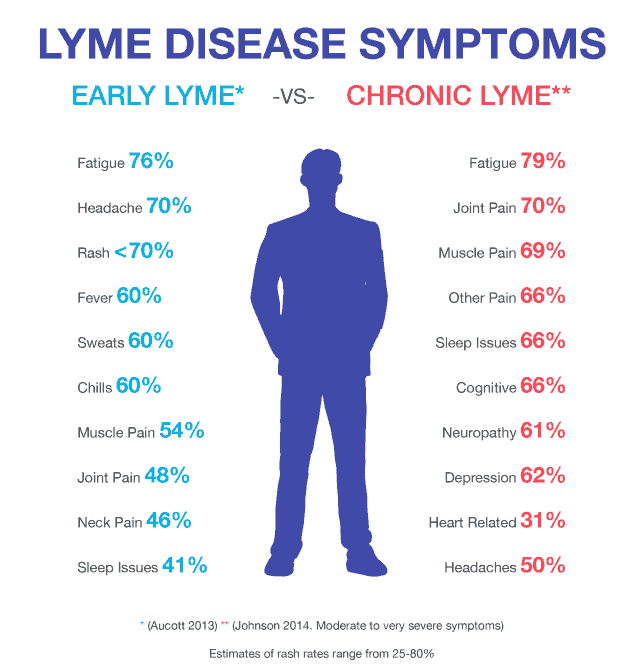
Additionally, they should always consider the patient’s  Lyme disease test results in conjunction with their current or previously reported symptoms. Remember, Lyme disease causes symptoms such as fever, chills, headache, fatigue, muscle and joint aches, and swollen lymph nodes. (An erythema migrans or “EM” rash may also appear, but note – at least 20% of patients don’t experience this rash at all.)

Finally, doctors should also consider risk factors that heighten someone’s probability of exposure to ticks or regions where Lyme disease and other tick-borne diseases are prevalent.

For more information on getting the proper diagnosis and treatment for your tick-borne disease, read the IGeneX blogs The Importance of Getting the Right Diagnosis and How to Find Doctors Who Can Help with Your Tick-Borne Disease.


Additional Resources

_______________________

**Comment**

More great information here on why serology testing doesn’t work:  https://madisonarealymesupportgroup.com/2020/12/15/lyme-disease-is-a-small-vessel-disease-dr-klemann/

The problems of Lyme/MSIDS testing have been the bane of patients for over 40 years and other studies have shown an even poorer outcome of current testing than what was mentioned in this article:  https://madisonarealymesupportgroup.com/2020/03/01/study-cdcs-2-tier-lyme-testing-inaccurate-in-more-than-70-of-cases/

There is also a law-suit on current testing listed in the comment section of this article:  https://madisonarealymesupportgroup.com/2020/05/27/letter-to-cdc-dr-beard-why-isnt-direct-detection-of-lyme-disease-a-priority/

There has been wide-spread suppression of direct testing for Lyme disease putting patients in a juggernaut of unbelievable proportions.

For more:  https://madisonarealymesupportgroup.com/2020/05/06/more-cdc-lip-service-on-lyme-testing/

https://madisonarealymesupportgroup.com/2019/03/07/yet-another-worthless-study-showing-2-tiered-lyme-testing-can-not-rule-infection-out/

Heading to Finland to Find Ways to Accurately Diagnose Tick-Borne Diseases

https://www.lookingatlyme.ca/2020/10/s1-e14-heading-to-finland-to-find-ways-to-accurately-diagnose-tick-borne-diseases/

Heading to Finland to find ways to accurately diagnose tick-borne diseases

In this episode Sarah talks with Canadian researcher Dr.Leona Gilbert, originally from Thunder Bay, and currently living in Finland. Dr. Gilbert tells us about an interaction with a patient that led her to focus on testing for Lyme disease. She points to research showing that patients who suffer from long term effects of Lyme disease often test positive for multiple microbes. 

Tickplex is a diagnostic kit that tests for six different forms of borrelia, ten other forms of microbes as well as antibodies which correlate to three different disease stages – all in one test! Dr. Gilbert explains the benefit to this method (also known as polymicrobial theory) over testing for one microbe with one antibody at a time. She points out that many long time sufferers of Lyme disease and co-infections are unable to build an adequate immune response to these microbes, but with treatment their immune system starts to respond and is then able to create antibodies. Research is also showing that outcomes are much better for those patients who are diagnosed early, tested for multiple microbes and then treated. She also talks about how multiplex testing is identifying patients who are “shining up” due to a hyperactive immune system.

“We need to let the science drive us and let the needs of the patient also influence where we’re going with the science as well.”

Dr. Leona Gilbert

Dr. Gilbert explains that polymicrobial theory, although accepted in other disease models, will take time to be accepted in relation to Lyme disease and points out the importance of creating individual treatment protocols based on multiple microbe testing as well. She strongly believes that both the science and the needs of the patient should drive researchers and points out that her group collaborates with patient groups, advocacy groups, scientific groups, as well as national and international organizations. 

Dr. Gilbert explains for us the difference between co-infections and opportunistic infections and touches on the role of decreased immune function and opportunistic infections in Lyme patients.

Find out more about our forthcoming educator resource!

Did you know that Lyme bacteria can persist even after treatment? Dr. Gilbert outlines research done not only in the lab, but also in animals and in humans that proves that persister forms of Borrelia exist despite antibiotic treatments. She discusses some of the theories behind how borrelia is able to evade treatment, including within biofilms, by transforming into round body forms and by moving into certain places in the body. Dr. Gilbert talks about other research that’s happening to better understand these persister forms. She explains how we can access the Tickplex test from overseas.

“People that have been sick for a very long time, even five to ten years, that they actually can’t even build up an immune response to actually resolve these microbes.”

Dr. Leona Gilbert

Sarah Cormode and Dr. Leona Gilbert talk tick-borne illness and diagnosis.

https://player.captivate.fm/episode/e19ec32c-499b-4cbf-9f63-62471b78ceac  (Listen Here)

______________________

**Comment**

Gilbert was part of the group that found a high probability of patients being infected with multiple pathogens.

For more:

https://madisonarealymesupportgroup.com/2018/10/30/study-shows-lyme-msids-patients-infected-with-many-pathogens-and-explains-why-we-are-so-sick/

Excerpt:

For the first time, Garg et al. show a 85% probability for multiple infections including not only tick-borne pathogens but also opportunistic microbes such as EBV and other viruses.

Additionally, 83% of all TBD diagnostic tests performed by the commercial laboratories in the USA accounted for only LD. Globally, the commercial laboratories’ ability to diagnose LD has increased by merely 4% (weighted mean for ELISA sensitivity 62.3%) in the last 20 years. This study provides evidence regarding polymicrobial infections in patients suffering from different stages of TBDs. Literature analyses and results from this study followed Hill’s criteria indicating a causal association between TBD patients and polymicrobial infections. Also, the study outcomes indicate that patients may not adhere to traditional IgM and IgG responses.

This is groundbreaking information that doesn’t get any recognition.

Study Finds Two Ways to Improve Lyme Testing

https://www.mdpi.com/2079-7737/9/11/366

The Platelet Fraction Is a Novel Reservoir to Detect Lyme Borrelia in Blood

*Author to whom correspondence should be addressed.
Biology 2020, 9(11), 366; https://doi.org/10.3390/biology9110366
Received: 16 September 2020 / Revised: 23 October 2020 / Accepted: 27 October 2020 / Published: 29 October 2020
To diagnose Lyme disease, a patient’s blood is tested for antibodies that develop as part of the immune response. This can lead to cases being missed or inadequately treated. An ideal test would directly detect the Lyme disease bacteria, Borrelia, to provide better clinical guidance. In this study, we aimed to improve the methods currently used to find Borrelia in human blood, and identified two opportunities for optimization. We demonstrate that the container most commonly used to collect blood (EDTA) decreases Borrelia’s ability to grow, and we identify a superior alternative (citrate). Additionally, using experimentally infected blood, we show that Borrelia is highly concentrated in the platelet fraction, making it an ideal candidate for direct detection. These results lay the foundation for diagnostic test development, which could improve patient outcomes in Lyme disease.
Serological diagnosis of Lyme disease suffers from considerable limitations. Yet, the technique cannot currently be replaced by direct detection methods, such as bacterial culture or molecular analysis, due to their inadequate sensitivity. The low bacterial burden in vasculature and lack of consensus around blood-based isolation of the causative pathogen, Borrelia burgdorferi, are central to this challenge. We therefore addressed methodological optimization of Borrelia recovery from blood, first by analyzing existing protocols, and then by using experimentally infected human blood to identify the processing conditions and fractions that increase Borrelia yield. In this proof-of-concept study, we now report two opportunities to improve recovery and detection of Borrelia from clinical samples. To enhance pathogen viability and cultivability during whole blood collection,
  • citrate anticoagulant is superior to more commonly used EDTA.
  • Despite the widespread reliance on serum and plasma as analytes, we found that the platelet fraction of blood concentrates Borrelia, providing an enriched resource for direct pathogen detection by microscopy, laboratory culture, Western blot, and PCR. The potential for platelets to serve as a reservoir for Borrelia and its diagnostic targets may transform direct clinical detection of this pathogen. View Full-Text

_____________________

For more:

The CDC deliberately avoids direct detection methods and has suppressed efforts for a direct test for decades.

Around 2003 the WHO encouraged research into microscopy as a direct test for the Borrelia spirochete, the pathogen causing Lyme disease. When a promising new and simple technique was discovered in 2013, it was however violently attacked. Not on the science itself, which is the normal procedure in science, but personally. Now retired professor microbiology Morten Laane was fired after he gave a lecture at a scientific conference in 2014. Moreover, his laboratory was closed down, the website of the scientific journal was hacked and the article disappeared. An exclusive interview (in link).

Lyme advocate and patient Carl Tuttle continues to ask WHY direct detection methods are not used for tick-borne illness.  The CDC continues to give him the run-around:  https://madisonarealymesupportgroup.com/2020/05/27/letter-to-cdc-dr-beard-why-isnt-direct-detection-of-lyme-disease-a-priority/

Within this link you will learn of a current lawsuit over this issue by Sin Hang Lee, alleging that employees of the Centers of Disease Control and Prevention (CDC) unilaterally terminated a contractual agreement under which the CDC agreed to evaluate a “no false-positive” DNA based Lyme disease test, a currently available test that vastly improves the speed and accuracy of Lyme disease diagnosis for sufferers, and one that is capable of diagnosing all tick-borne borrelial infections.

The CDC’s stranglehold over Lyme testing is also evident with COVID-19 testing.  

I question whether an accurate test for COVID-19 is even possible. It appears it has NOT been singularly isolated and purified and without this important foundation, an accurate test AND vaccine will never be possible:

False Positive Tests

https://drmalcolmkendrick.org/2020/09/28/false-positive-tests/

False Positive Tests

By Dr. Malcolm Kendrick

Sept. 28, 2020

There has been a lot of noise about false positive COVID19 tests in the news. So, I thought I would try to explain what it all means. Or do my best anyway.

There are two measures in most medical screening tests which are usually defined as the ‘sensitivity’ and the ‘specificity’ of a test. In my opinion, these two words are far too close together in sound, so they are very easy to mix up in your brain.

I find it easier to think of the accuracy of test results in this way.

  • False negatives
  • False positives

A false negative is a result which informs someone that they do not have a disease, when in fact they do.

A false positive is a result which informs someone they do have a disease, when they don’t. (See article for a great explanation of testing)

_____________________

**Comment**

The full article gets into the nitty-gritty of testing.  Great educational resource – highly recommend.

Important points:

  • one of the primers in the COVID-19 PCR assay – an 18-base primer for a region of the RdRP gene – has exact sequence homology with a region on human chromosome 8.  This is likely to cause a lot of false positives.
  • politicians and Health Officials are basing their numbers of cases entirely on the results of these tests, which are not fit for this purpose.
  • they are then using these figures to terrorise the population, and to justify decisions to impose local lockdowns, and increase nonsensical general restrictions which are having a massive impact on people’s lives and their health, and also on the economy, particularly hitting small businesses hard.

For more:  https://madisonarealymesupportgroup.com/2020/07/01/us-scientist-manufactured-pandemic-testing-people-for-any-strain-of-coronavirus-not-specifically-covid-19/  Problems with both PCR and antibody testing discussed

BTW: the Lyme/MSIDS patients have the opposite problem that’s happening with COVID-19.

For decades Lyme/MSIDS patients have been given false negatives when they are infected.

They are sent home with a false sense of security due to a negative result, but find their life spirals downward until they can not deny it any longer and are forced to seek help outside mainstream medicine which has its head completely buried in the sand regarding tick-borne illness.