Archive for the ‘Rickettsia’ Category

Invasive Tick Detected in 6 Additional Tennessee Counties

https://www.tn.gov/agriculture/news/2019/10/17/invasive-tick-detected-in-six-additional-tennessee-counties.html

Invasive Tick Detected in Six Additional Tennessee Counties
Thursday, October 17, 2019
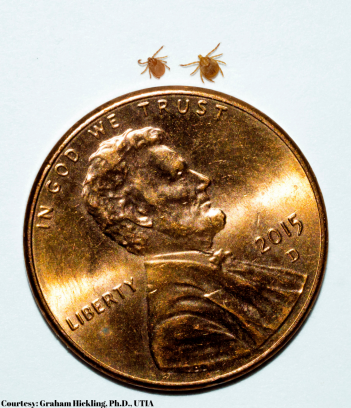
Asian_Longhorned_Tick2

NASHVILLE – The Tennessee Department of Agriculture, United States Department of Agriculture – Animal and Plant Health Inspection Services, Tennessee Department of Health, and University of Tennessee Institute of Agriculture today announced the detection of the invasive Asian longhorned tick in an additional six Tennessee counties:  Knox, Jefferson, Claiborne, Cocke, Putnam, and Sevier. The tick was detected in Union and Roane Counties in May.

The Centers for Disease Control and Prevention reports that there is no evidence to date that the tick has transmitted pathogens to humans in the U.S. There are concerns that the tick may transmit the agent of Theileriosis in cattle, and heavy infestations can cause blood loss and lead to death.

It is important to be aware of this tick, as cattle and canines are particularly susceptible to tick bites. Livestock producers are reminded to be vigilant when purchasing animals, apply a tick treatment to cattle prior to bringing them to your farm, and always use best practices for herd health. Dog owners should provide their animals with a tick preventative and check for ticks.

“Tennessee has numerous animal hosts and a suitable habitat for this tick species,” Dr. R.T. Trout Fryxell, Associate Professor of Medical and Veterinary Entomology for UTIA, said. “While it is always important to be diligent and keep an eye out for all ticks, the unique biology of the Asian longhorned tick helps this species to establish quickly and become a problem.”

Tips to prevent tick bites in animals and livestock include:

·         Coordinate with your veterinarian to determine appropriate pest prevention for pets and livestock.

·         Check pets and livestock for ticks frequently.

·         Remove any ticks by pulling from the attachment site of the tick bite with tweezers.

·         Monitor your pets and livestock for any changes in health

If your animals are bitten by a tick, Dr. Trout Fryxell suggests putting the tick in a ziplock bag, writing down the date and where the tick was most likely encountered, and storing it in a freezer.

For additional information about the longhorned tick in the United States, click here. To find more information on tick-borne diseases, click here.

________________

**Comment**

The Asian Tick has been found in the following 12 states:  Arkansas, Delaware, Kentucky, New Jersey, New York, North Carolina, Virginia, West Virginia, Pennsylvania, Maryland, Connecticut and Tennessee.

https://madisonarealymesupportgroup.com/2019/10/26/researchers-conclude-asian-longhorned-tick-contributes-minimally-to-lyme-disease-in-the-u-s/  This article admits it can transmit Lyme.  It’s also suspected of transmitting the following: Anaplasma, Ehrlichia, Rickettsia, and Borrelia species.

For a great read: https://madisonarealymesupportgroup.com/2018/09/12/three-surprising-things-i-learned-about-asian-longhorned-ticks-the-tick-guy-tom-mather/

To take this tick lightly would be foolish.


Tick-borne Pathogens Bartonella spp., Borrelia Burgdorferi Sensu Lato, Coxiella Burnetii & Rickettsia Spp. May Trigger Endocarditis

https://www.ncbi.nlm.nih.gov/pubmed/31374162/

2019 Jul;28(7):957-963. doi: 10.17219/acem/94159.

Tick-borne pathogens Bartonella spp., Borrelia burgdorferi sensu lato, Coxiella burnetii and Rickettsia spp. may trigger endocarditis.

Abstract

BACKGROUND:

Infections caused by tick-borne pathogens such as Bartonella spp., Borrelia burgdorferi s.l., Coxiella burnetii and Rickettsia spp. are capable of causing serious lesions of the mitral and aortic valves, leading to a need for valve replacement.

OBJECTIVES:

The aim of the study was to determine whether such cases are sporadic or frequent. An additional goal was to establish effective diagnostic methods to detect these infections.

MATERIAL AND METHODS:

The study involved 148 patients undergoing valve replacement. Blood samples were drawn for serological testing. Samples of the removed mitral and aortic valves were tested with PCR and immunohistochemical staining.

RESULTS:

Specific antibodies to

  • Bartonella spp. were detected in 47 patients (31.7%) and in 1 of the healthy controls (1%) (p < 0.05)
  • B. burgdorferi spirochetes were found in 18 of the patients (12.2%) and in 6 blood donors from the control group (5.8%) (p < 0.1)
  • Rickettsia spp. were detected in 12 (8.1%) 
  • C. burnetii phase I and II antigens in the serum of 1 patient. All the participants in the control group were seronegative to C. burnetii and Rickettsia spp. antigens.
  • PCR tests for detection of Bartonella spp., B. burgdorferi s.l., C. burnetii and Rickettsia spp. DNA in the valve samples were all negative.

Inflammation foci with mononuclear lymphoid cells in the aortic and mitral valves were seen in sections stained with hematoxiline and eozine. In sections dyed using the indirect immunofluorescence method with hyperimmune sera, Bartonella spp. and Rickettsia spp. were found.

CONCLUSIONS:

The results obtained indicate that laboratory diagnostics for patients with heart disorders should be expanded to include tests detecting tick-borne zoonoses such as bartonelloses, Lyme borreliosis, rickettsioses and Q fever.

________________

**Comment**

This article shows that tick borne pathogens are common with patients needing heart valve replacements. Unfortunately, testing still isn’t accurate. Finding antibodies, authorities would argue, doesn’t mean a person has symptoms; however, this issue desperately needs further research as finding antibodies does indicate the presence of pathogens.

A point to be made about the low percentage of those testing positive for Lyme might be due to the fact they only tested one strain: Borrelia burgdorferi sensu lato.  There are 300 strains worldwide and 100 in the U.S. (and counting).

Bartonella is similar in the fact that a recent article pointed out that a 14-year-old boy with PANS caused by Bartonella henselae infection was NOT seropositive. Only one of the three blood samples tested positive before culturing and only two tested positive after culturing. A single blood draw might have missed confirming a diagnosis of bartonellosis.

How many doctors are going to hunt these infections to ground? How many have the time and doggedness it requires to find them? It’s far more likely they will take the results from a singular test, close the book, and move onto the next patient.

We desperately need accurate tests that pick up ALL the pathogens.


Tick Expert Admits to ‘Working on Ticks’ & Dropping Them Out of Airplanes

Tick Expert Admits to ‘Working on Ticks’ & Dropping Them Out of Airplanes

The following full-length interview with James H. Oliver, Jr. is an eye opener on the type of work that’s been done on ticks and mosquitoes.

He’s described by Pamela Weintraub in the book, Cure Unknown, as a “world-class entomologist” for figuring out that the southern U.S. had Lyme Disease by finding 300 southern genetic strains of Borrelia, 57 of which are nearly identical to the northern pathogen and are classified as Borrelia burgdorferi sensu stricto. He also discovered two new species, Borrelia americana and Borrelia carolinensis that could potentially help explain why many in the South suffer with Lyme yet are not testing positive on current tests.

Oliver was responsible for producing ticks and mosquitos, running distribution tests, and determining factors that would cause migration for the Army.

Oliver also worked in Australia where he found ticks on snakes there.

The Navy used Oliver in Uganda, where he stayed at the Rockefeller Institute, as their acarologist where he collected ticks.

For full interview:  https://academic.oup.com/ae/article/62/4/206/2712469

James H. Oliver, Jr.: Ticks, Lyme Disease, and a Golden Gloves Champion

Source:

Marlin E. Rice & James H. Oliver, Jr. Ticks, Lyme Disease, and a Golden Gloves Champion. American Entomologist (2016) 62 (4): 206–213, doi:10.1093/ae/tmw073. Published by Oxford University Press/ on behalf of the Entomological Society of America.

__________________

For more:  https://madisonarealymesupportgroup.com/2019/07/19/biological-warfare-experiment-on-american-citizens-results-in-spreading-pandemic/

https://madisonarealymesupportgroup.com/2019/07/21/got-15-minutes-the-officially-ignored-link-between-lyme-plum-island/

https://madisonarealymesupportgroup.com/2019/07/24/lyme-disease-expert-champions-investigation-into-pentagon-weaponizing-ticks-its-a-courageous-move/

https://madisonarealymesupportgroup.com/2019/07/27/lyme-biowarfare-4-video-series/

https://madisonarealymesupportgroup.com/2018/12/19/its-1984/

North Central Integrated Pest Alert

https://www.ncipmc.org/projects/pest-alerts1/

image.png

They have the following for ticks and specific diseases:

https://www.ncipmc.org/projects/pest-alerts1/brown-dog-tick-vector-for-rocky-mountain-spotted-fever/

https://www.ncipmc.org/projects/pest-alerts1/rocky-mountain-spotted-fever-rickettsia-rickettsii/

https://www.ncipmc.org/projects/pest-alerts1/ticks-and-tick-borne-diseases/


Kentucky: More Than Two Dozen Rocky Mountain Spotted Fever Cases Reported in Grayson County

http://outbreaknewstoday.com/kentucky-more-than-two-dozen-rocky-mountain-spotted-fever-cases-reported-in-grayson-county-89113/

Kentucky: More than two dozen Rocky Mountain spotted fever cases reported in Grayson County

July 22, 2019

By NewsDesk  @infectiousdiseasenews

Health officials in Grayson County, Kentucky are reporting a recent increase in cases of the tickborne disease, Rocky Mountain spotted fever (RMSF).

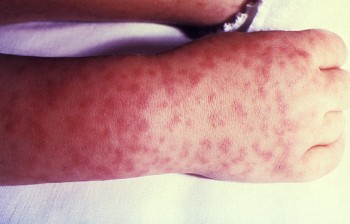
Characteristic spotted rash of Rocky Mountain spotted fever/CDC


They report receiving 26 cases of RMSF since July 7, 2019.

Dr. Bryce Meredith made the following statement, “We are seeing an increase in tick-borne illnesses in Grayson and the surrounding counties. Individuals should have heightened awareness regarding ticks in our area. The most common illnesses are Ehrlichiosis and Rocky Mountain Spotted Fever.”

RMSF is a tick borne disease caused by the organism, Rickettsia rickettsii. Typically, the progress of the disease is a sudden onset of high fever, deep muscle pain, severe headache and chills. A rash usually appears on the extremities within 5 days then soon spreads to palms and soles and then rapidly to the trunk.

Fatalities can be seen in greater than 20% of untreated cases. Death is uncommon with prompt recognition and treatment. Still approximately 3-5% of cases seen in the U.S. are fatal. The absence or delayed appearance of the typical rash or the failure to recognize it, especially in dark-skinned people cause a delay in diagnosis and increased fatalities.

Early stages of RMSF can be confused with erlichiosis, meningococcal meningitis and enteroviral infection.

They are asking residents to ensure they are protecting their family, pets, and yourselves properly while outdoors.

If you find a tick, please remove it appropriately. Also, if you feel fatigued (tired) or having a headache that will not go away, consider seeing your family healthcare provider for tick borne illness testing.

Dr Meredith said, “Ticks are commonly in woods, grassy, or bushy areas. If individuals are planning on being in these areas, they should plan accordingly and wear long sleeves, long pants tucked into your socks, and use an EPA approved insect and tick repellent. Once an individual has returned inside, they should check their clothes and body for ticks. Early awareness and early tick removal is particularly important. Typically, if an individual removes a tick within 24-48 hours, this decreases the rate of disease transmission. I encourage individuals to contact their physician if a tick has been attached for an undetermined time or if they develop fever, rash, chills, or vague symptoms such as new onset unexplained dizziness or excessive fatigue.”

RMSF & the importance of timely treatment: Outbreak News Interviews
DO NOT WAIT FOR LABORATORY CONFIRMATION FOR TREATMENT IF RMSF IS SUSPECTED. This is deadly.
Do not hesitate to use doxycycline in children. New research demonstrates it will NOT hurt children’s teeth.

_________________

For more: https://madisonarealymesupportgroup.com/2018/09/14/rocky-mountain-spotted-fever-rmsf/

https://madisonarealymesupportgroup.com/2017/10/21/mom-got-rocky-mountain-spotted-fever-while-picking-pumpkins/

https://madisonarealymesupportgroup.com/2015/08/13/severe-case-of-rmsf-had-to-remove-patients-arms-and-legs/

https://madisonarealymesupportgroup.com/2018/08/16/new-tick-causes-epidemic-of-rmsf/

https://madisonarealymesupportgroup.com/2018/06/12/georgia-mom-warns-others-after-son-contracts-rocky-mountain-spotted-fever-after-tick-bite/

https://madisonarealymesupportgroup.com/2018/08/19/monster-ticks-found-in-germany-threaten-europe-with-deadly-disease-crimean-congo-fever/  Please note the last quote of the story – that they proved a tropical form of tick typhus in one of tropical ticks found in Germany. Typhus, a bacteria, is making a comeback, particularly in the South. Common in the U.S. in the 40’s, and normally attributed to lice, now it’s been proven to be in a tick. In other words, another disease and a tick found where they supposedly shouldn’t be.
Typus is a rickettsial infection with ticks carring numerous species including rickettsia, ehrlichia, and anaplasma. Rocky Mountain Spotted Fever is also considered a tick-borne typhus fever.  

https://www.health.ny.gov/diseases/communicable/rocky_mountain_spotted_fever/fact_sheet.htm Divided into the typhus group and the spotted fever group, disease is transmitted through ectoparasites (fleas, lice, mites, and ticks). Inhalation and inoculating conjunctiva with infectious material can also cause disease. The good news for most is that doxycycline is a front-line drug for it. Broad-spectrum antibiotics aren’t helpful.

https://madisonarealymesupportgroup.com/2019/05/22/cdc-creates-interactive-training-for-diagnosis-management-of-rocky-mountain-spotted-fever/

https://madisonarealymesupportgroup.com/2018/10/21/all-his-symptoms-pointed-toward-the-flu-but-the-test-was-negative-rmsf-in-connecticut/

AGAIN, TESTING IS ABYSMAL.  DOCTORS NEED EDUCATION.

If interested:  https://madisonarealymesupportgroup.com/2018/02/19/calling-all-doctors-please-become-educated-regarding-tick-borne-illness-heres-how/

https://madisonarealymesupportgroup.com/2018/06/06/lyme-education-for-healthcare-professionals/

https://madisonarealymesupportgroup.com/2019/03/15/global-lyme-alliance-announces-new-partnership-with-delaware-lyme-board-to-help-educate-physicians-about-lyme-disease/