Archive for the ‘research’ Category

Toxicity & Impact of Environment on Chronic Illness – Dr. Neil Nathan

 Approx. 1 Hour

Toxicity and the Impact of Our Environment on Chronic Illness With Dr. Neil Nathan

Published on Mar 15, 2019

Learn more at https://livingwithlyme.us/ Cindy Kennedy, FNP, is joined by Dr. Neil Nathan, who discusses his book, Toxic, and how the environment can impact chronic illness.
Neil has been practicing medicine for 47 years, and has been Board Certified in Family Practice and Pain Management and is a Founding Diplomate of the American Board of Integrative Holistic Medicine and a Board member of The International Society for Environmentally Acquired Illness. With Dr. Rich van Konynenburg he did the ground-breaking clinical research which demonstrated the importance of methylation chemistry in Chronic Fatigue Syndrome, and he has recently completed a study with Dr. Robert Naviaux on the metabolomics of Chronic Fatigue Syndrome. He has written several books, including Healing is Possible: New Hope for Chronic Fatigue, Fibromyalgia, Persistent Pain, and Other Chronic Illnesses and On Hope and Healing: For Those Who Have Fallen Through the Medical Cracks.
He has hosted an internationally syndicated radio program/podcast on Voice America called The Cutting Edge of Health and Wellness Today. He has been working to bring an awareness that mold toxicity is a major contributing factor for patients with chronic illness and lectures internationally on this subject which led to the publication of his book, Mold and Mycotoxins: Current Evaluation and Treatment, 2016 and now to his most recent book Toxic: Heal Your Body from Mold Toxicity, Lyme Disease, Multiple Chemical Sensitivities and Chronic Environmental Illness.
His current medical practice is the Redwood Valley Clinic in Northern California. He can be contacted most easily through his website, www.neilnathanmd.com, through which consultations are available. Neil has been treating chronic complex medical illnesses for 25 years now, and Lyme disease for the past 15 years. As his practice has evolved, he finds himself increasingly treating the patients who have become so sensitive and toxic that they can no longer tolerate their usual treatments, and his major current interest is in finding unique ways of helping them to recover. The recent findings that mast cell activation and porphyria are more common than has been appreciated by the medical profession are of particular importance in this regard.


Lyme in Slovak Republic

https://cejph.szu.cz/artkey/cjp-201888-0011_association-of-seroprevalence-and-risk-factors-in-lyme-disease.php

Association of seroprevalence and risk factors in Lyme disease

Andrea Bušová1, Erik Dorko1, Eva Feketeová2, Kvetoslava Rimárová1, Jana Diabelková1, Tímea Rovenská1, Tomáš Csank3

Cent Eur J Public Health 2018, 26(Supplement):S61-S66 | DOI: 10.21101/cejph.a5274

Objective: The aim of the presented cross-sectional seroepidemiological study was to determine the current presence of antibodies against B. burgdorferi s.l. in the groups of Slovak population, and to identify potential risk factors to Lyme borreliosis.

Methods: A group of 261 adults (patients from the Neurological Clinic with possible symptoms of LB and healthy persons with possible working exposure to tick bite: gardeners and soldiers working in afforested areas) were examined in order to assess the seroprevalence of anti-Borrelia antibodies. Sera were screened by commercial enzyme-linked immunosorbent assay (ELISA). The respondents completed questionnaires with general demographic, epidemiological and clinical data.

Results: We detected 17.2% presence of positive IgG and 5.7% presence of positive IgM antibodies in all investigated groups. Our results confirmed that the following risk factors such as age and gender are significantly associated with the presence of positive specific antibodies against investigated disease.

Conclusion: The results of seroprevalence obtained in the present study confirm the possibility of infection with B. burgdorferi among respondents exposed to contact with ticks.

_________________

**Comment**

Imagine the percentages if they used direct microscopy or even the MISDS questionnaire, not serology which misses half of cases:  https://madisonarealymesupportgroup.com/2018/10/12/direct-diagnostic-tests-for-lyme-the-closest-thing-to-an-apology-you-are-ever-going-to-get/

Key quote:  “These serologic tests cannot distinguish active infection, past infection, or reinfection.”

In plain English, these tests don’t show squat.

Please spread the word that Dr. Horowitz’s MSIDS questionnaire has been validated and predicts Lyme much better than serology:  https://madisonarealymesupportgroup.com/2017/09/05/empirical-validation-of-the-horowitz-questionnaire-for-suspected-lyme-disease/  The results support the use of the HMQ as a valid, efficient, and low-cost screening tool for medical practitioners to decide if additional testing is warranted to distinguish between Lyme disease and other illnesses.

Here it is.  You can print it off and fill it out yourself:  https://madisonarealymesupportgroup.com/wp-content/uploads/2016/01/symptomlist.pdf

https://madisonarealymesupportgroup.com/2019/02/22/why-mainstream-lyme-msids-research-remains-in-the-dark-ages/  Excerpt:

There has been an ongoing record of suppression of microscopy for Lyme.  In an interview with now retired professor of microbiology Morten Laane, the facts come rolling out on how he was fired, his lab was closed down, and his published article disappeared without a trace after presenting his findings at a scientific conference on how microscopy showed spirochetes as well as other organisms like Babesia in a number of patients (12).  Laane is far from alone.  Dr. Sin Hang Lee has even filed a $57.1 million lawsuit against the CDC for suppressing direct detection tests, and for employing ‘Lysenkoism,’ a term used for a Russian political campaign using bogus science to suppress true biological and medical sciences and to punish scientists and doctors who don’t follow Party Line (13).

BTW:  The Lyme Good Old Boys aka The Cabal own patents on Lyme serology testing:  https://crymedisease.wordpress.com/2016/02/28/the-conspirators-they-own-the-patents-and-changed-the-testing/

Employees of the U.S. Centers for Disease Control hold patents on Lyme tests:  https://www.google.com/patents/EP2805168A1?cl=en  For nearly four decades now the only FDA approved test for Lyme disease is the indirect two-tiered antibody test.

Dr. Allen Steere filed a patent in 2013 for yet more antibody detection tests for Lyme disease: (Application #20150219646) Compositions and Methods for the Detection of Bacterial Infections Associated with Lyme Disease  https://patents.justia.com/patent/20150219646

Anybody smell a rat yet?

The other issue with this study is the fact they are STILL looking this as a ONE pathogen illness when it’s typically not:  https://madisonarealymesupportgroup.com/2018/10/30/study-shows-lyme-msids-patients-infected-with-many-pathogens-and-explains-why-we-are-so-sick/  Key Quote:  “Our findings recognize that microbial infections in patients suffering from TBDs do not follow the one microbe, one disease Germ Theory as 65% of the TBD patients produce immune responses to various microbes.” 


Melatonin: Benefits & Uses

https://articles.mercola.com/vitamins-supplements/melatonin.aspx?

iu-71

STORY AT-A-GLANCE

  • Melatonin is a hormone produced by the pineal gland, which helps regulate your circadian rhythm
  • Taking a melatonin supplement may be helpful for people who are experiencing sleep disorders due to various environmental or social factors
  • Aside from promoting sleep, melatonin supplements may help boost cardiovascular health, manage fibromyalgia, lower the risk of gallstones and decrease the symptoms of tinnitus

Sleeping is an essential human function, and at the heart of it is your circadian rhythm, also known as your body clock. It’s a natural, biological timer that helps your body recognize sleepiness and wakefulness over a period of 24 hours.

By sticking to a regular bedtime schedule, such as sleeping and waking up at the same time each day, you can maintain a steady circadian rhythm that will allow you to maximize your productivity while you’re awake, and get the right amount of sleep when nighttime arrives.1

Your circadian rhythm is largely dictated by your pineal gland. This gland is located near the center of your brain, with a shape that looks similar to a pine cone, hence the name. It’s estimated to be one-third of an inch long, and is made up of unique pineal cells and neuroglial cells that help support the gland.

Despite its small size, it plays a crucial role in your health because it produces a single hormone called melatonin, which is vital for controlling your body clock and, ultimately, your sleeping patterns.2

What Is Melatonin?

Melatonin, or N-acetyl-5-methoxytryptamine, is a hormone produced by the pineal gland.3 Your brain usually starts secreting melatonin around 9 p.m., which is the time most people go to bed. By increasing the amount, your body begins to recognize that bedtime is fast approaching, allowing you to sleep at an ideal time.4

To do this properly, you need to be aware of your exposure to light throughout the day and especially at night, because melatonin production depends on how much light your body absorbs.

If you stay awake past dark, light emitted by electrical devices hampers your body’s ability to produce melatonin. Ideally, you want to stop using gadgets an hour before sleeping to help increase melatonin production and maintain a steady circadian rhythm. Nightshift workers usually have it worse and constantly suffer from disrupted body clocks, because of their poor melatonin production.

3 Main Uses of Melatonin in Your Body

What is the role of melatonin anyway? Based on published research, it has been discovered to perform three main functions:

• Controls your circadian rhythm — Melatonin works as a sleeping aid by normalizing your circadian rhythm by convincing your body to prepare itself for bedtime.5 It’s a hormone that only “signals” your body to prepare for sleep, not one that actually makes you fall asleep.

• Functions as an antioxidant — Recent studies have found that melatonin not only affects your body clock, but also functions as an antioxidant that can help support your health. Specifically, it may help different aspects of your brain, cardiovascular and gastrointestinal health.6 It may even lower your risk of cancer, in some cases.7

• Boosts your immune system — Melatonin may benefit your immune system in various ways. In one study, researchers suggest that melatonin may help improve the treatment of bacterial diseases such as tuberculosis.8 In another study, melatonin has been suggested as a potential tool against inflammation, autoimmune diseases and Type 1 diabetes.9


6 Ways to Optimize Your Melatonin Levels Naturally to Improve Sleep Quality

According to the Centers for Disease Control and Prevention (CDC), an estimated 50 to 70 million Americans are suffering from a sleeping or wakefulness disorder.10 As a result, many of them turn to various remedies, such as behavioral and environmental changes, to get a good night’s rest.11

One of the first things you can do is to make sure that your body is producing enough melatonin. Optimizing your melatonin levels naturally is important because it helps keep your body functioning normally without relying on outside factors. So, instead of immediately relying on melatonin supplementation, here are a few lifestyle changes I suggest you try first to boost your melatonin production:

• Avoid using electronic devices an hour before sleeping — Gadgets such as cellphones, TVs and computers emit blue light, and exposure to it tricks your body into thinking it’s still daytime. By avoiding gadgets an hour before bed, your body can produce the melatonin needed to help you sleep at your intended time.

• Make sure to get regular sunlight exposure — Getting regular sun exposure in the morning or at noontime helps your body reduce its melatonin production, so that when nighttime arrives, your pineal gland produces the correct amount to induce sleepiness.

• Try to sleep in complete darkness — If possible, try to remove immediate light sources from your room to help improve your sleep quality. The slightest exposure to light can interfere with your body’s melatonin production and keep you up later than you need. Keep gadgets 3 feet away from your bed or use blackout window shades.

• Remove sources of electromagnetic fields (EMFs) in your bedroom — EMFs emitted by certain devices such as Internet routers can disrupt your pineal gland’s melatonin production. Ideally, you should turn off your wireless router, as well as other wireless devices connected to the Internet before sleeping.

• If you need a nightlight, use a low-wattage yellow, orange or red bulb — Low-wattage bulbs with a yellow, orange or red color do not interfere with melatonin production the same way that white and blue bulbs do.

• Wear blue light-blocking glasses — This special device can help keep your eyes from absorbing blue light that can affect your melatonin levels. It can be a useful tool to have around the house, especially if you’re constantly surrounded by gadgets and artificial light sources.

In addition, the following foods are known to contain small amounts of melatonin. Making them a part of your regular diet while practicing the aforementioned sleeping tips may help improve sleep quality:12

  • Grass fed meat (lamb, beef and pork)
  • Wild-caught salmon
  • Pasture-raised chicken and eggs
  • Raw, grass fed milk
  • Pineapple
  • Banana
  • Apple
  • Pomegranate
  • Mulberry
  • Tart cherries
  • Grapes
  • Onion
  • Garlic
  • Cauliflower
  • Turnip
  • Cucumber
  • Carrot
  • Radish
  • Beetroot
  • Tomatoes
  • Seeds (Flax, sunflower, fennel, mustard, alfalfa, celery and fenugreek)
  • Nuts (pistachio, almonds and walnuts)

If you’ve already tried everything, including incorporating melatonin foods in your diet, and you’re still having difficulty getting quality sleep, you may consider taking a melatonin supplement. In 2016 alone, 3.1 million adults in the United States turned to melatonin supplementation to help them sleep peacefully.13

Studies Regarding the Use of Melatonin Supplements

Since the discovery of melatonin, various studies have been conducted to discover how using it as a supplement can benefit your health. According to the Journal of Pineal Research, the melatonin secreted by your pineal gland enters every cell in your body and can even cross morphophysiologic barriers.

As a result, not only may it help you improve sleep quality,14 it also has certain anti-inflammatory compounds that may help reduce your risk of cardiovascular diseases, such as atherosclerosis and hypertension.15

In addition, a study published in Endocrine Journal reports that increasing melatonin intake may help improve your overall health, as this hormone can be an effective antioxidant that can help fight free radicals in your body.16

Another study suggests that melatonin may help obese people manage their weight. The researchers indicate that certain lifestyle factors suppress melatonin production, which results in sleep disruption that can lead to weight gain. By increasing melatonin production, adequate sleep can be reintroduced as part of a healthy lifestyle, along with other positive lifestyle changes, to help curb obesity.17

8 Potential Benefits of Melatonin Supplement

Melatonin may help boost your health in various situations, as shown in the table below. While each benefit is backed up with scientific research, always consult with a doctor before giving melatonin supplements a try:

• Insomnia — Melatonin is primarily used to help treat people who have sleeping disorders by inducing sleepiness quicker.18

• Jet lag — Melatonin may be used to help treat jet lag by adjusting your body to a new time zone. However, it’s generally recommended only for travelers who cross four to five time zones.19

• Heart disease — People who are struggling with heart disease may benefit from melatonin. A study has found that it may help lower your bad cholesterol levels by as much as 38 percent.20

• Menopause — Increasing melatonin consumption in menopausal women 42 to 62 years old may help improve mood and stave off depression.21

• Autism — Children diagnosed with autism who are also plagued with sleeping problems may benefit from melatonin supplementation. Research indicates that taking the hormone can lead to deeper sleep and better daytime behavior.22 However, I advise consulting your health care provider before giving any melatonin supplement to children.

• Fibromyalgia — People affected with fibromyalgia are believed to have lower levels of melatonin. A group of researchers found that increasing the melatonin levels of fibromyalgia sufferers through supplementation helped alleviate their symptoms and improved sleep quality.23

• Gallstones — Melatonin can help lower your risk of gallstones by inhibiting cholesterol absorption across the intestinal epithelium, as well as increasing the conversion of cholesterol into bile.24

• Tinnitus — If you have tinnitus, slightly increasing your melatonin may help improve your symptoms. In one study, participants who took 3 milligrams of melatonin supplements every night experienced a decrease in tinnitus intensity after the testing duration.25

Do Not Take Melatonin if You Have These Conditions

Here’s a crucial question you should ask yourself: Are you fit to take melatonin? While there are valid reasons for taking this supplement, remember that it can exacerbate certain health conditions as well. If you’re taking any of the following medications, you should not take melatonin as the mixture can have adverse effects to your health:26

• Anticoagulants and anti-platelet drugs

• Anticonvulsants

• Contraceptive drugs

• Diabetes medications

• Immunosuppressants

Taking melatonin while pregnant should be avoided as well, since there’s little knowledge in this field.27 If you’ve recently developed pregnancy-related sleeping problems, I advise you to consider behavioral and dietary changes before considering melatonin or other similar types of supplement.

Refrain from giving melatonin to children, including babies and toddlers, unless approved by your physician. While a 2016 study found that children with sleep difficulties who took melatonin did not develop any concerns or adverse side effects,28 it’s better to be safe.

10 Side Effects of Melatonin You Should Know About

Some of melatonin’s potential side effects include:29,30

  • Daytime sleepiness
  • Short-term depression
  • Irritability
  • Vivid dreams, or possibly nightmares
  • Mild anxiety
  • Headaches
  • Abdominal discomfort
  • Confusion
  • Body clock disruption
  • Dizziness

If you are already taking a melatonin supplement and begin to experience any of the mentioned side effects, stop taking it immediately and consult with a doctor for safer alternatives. In addition, melatonin and alcohol should not be taken together, as it can increase your chances of accidents because the sedative effects are amplified.31

Remember: Consider Optimizing Your Melatonin Levels Naturally Before Taking a Supplement

Melatonin is a crucial hormone that performs few but important functions. Low levels of it can lead to sleep disruption, increase your risk of certain diseases and lower your antioxidant capabilities. However, remember to always try and improve your sleeping habits and environment before attempting melatonin supplementation.

While there’s an abundance of scientific evidence that suggest melatonin supplementation can be beneficial to your health, too much of it can actually make you more wakeful. By primarily focusing on natural strategies, you forego this risk, as well as the chances of developing unpleasant side effects that can further disrupt your quality of sleep. If you do decide to take a melatonin supplement, seek guidance from a doctor first.

Frequently Asked Questions About Melatonin

Q: Is melatonin addictive?

A: Currently, there’s very little information regarding melatonin supplement addiction. However, beware that it can still be abused, although the chances of becoming dependent are lower compared to other types of medications or supplements.32


Q: How long does it take for melatonin to work?

A: The average time for melatonin supplements to work is generally 20 minutes. If you’re about to take melatonin for the first time, it’s recommended that you take it one to two hours before your bedtime.33


Q: Can you take melatonin supplements while pregnant?

A: As of the moment, there is a lack of scientific evidence regarding the use of melatonin supplements on pregnant women, but it’s theorized that it may hamper sex drive, reduce ovarian function and increase the risk of developmental disorders. If you’re pregnant, it is best that you avoid using this supplement and resort to natural remedies to correct sleeping problems.34


Q: Is melatonin safe to use for kids?

A: Melatonin supplements are generally safe for children. According to a study published in Canadian Family Physician, children with sleep difficulties who took melatonin had no concerns or adverse side effects, according to their parents.35 However, consult with your child’s pediatrician before giving them any type of melatonin supplement.


Q: When is the ideal time to take melatonin?

A: Taking a melatonin supplement two hours before bedtime can help you maximize its effectiveness.36


Q: How long does the effects of melatonin last?

A: The half-life of melatonin is very short, around 59 to 65 minutes only.37


Q: Can you overdose on melatonin?

A: Yes. While there are no reported deaths related to overdosing from melatonin, consuming more than the recommended amount can cause side effects, such as autoimmune hepatitis, a psychotic episode, seizures, headaches or skin eruption.38

__________________

**Comment**

Besides helping sleep, melatonin is known for protecting the brain. Research has shown starting to supplement in middle age protects against Alzheimer’s, reduces the risk of Parkinson’s, shrinks the size of the infarct area in a stroke, minimizes brain swelling & dysfunction after head injury, and increases the “longevity protein” SIRT1.  https://www.lifeextension.com/magazine/2013/9/Melatonin-The-Brain-Hormone/Page-01

  • Melatonin has been proposed as a treatment for numerous brain and neurological diseases as it helps reduce oxidative stress and inflammation inside the brain and strengthens the blood-brain barrier.  A leaky blood-brain barrier can contribute to issues like brain fog, anxiety, depression, and even Alzheimer’s.
  • It also increases brain-derived neurotrophic factor (BDNF) – which is a protein that promotes survival of nerve cells & helps regular synaptic plasticity.  Mouse studies have shown melatonin relieves symptoms of ALS by preventing cell death and slowing disease progression.  
  • Melatonin is needed for normal eye development, decreases pressure in the eye and lack of it may be a cause of glaucoma.
  • A rat study showed melatonin prevents against cell death in optic neuritis, a manifestation of MS, Lyme, and Bartonella.
  • Regarding tinnitus, (noise in the ears), melatonin was 150 times more effective than other tinnitus drugs in reducing symptoms.
  • Melatonin may help prevent and treat cancer by improving immune function, increasing tumor suppressor proteins, acting against cancer stem cells, and by suppressing cells that block the activity of immune cells. Supplementation also reduced incidence and size of breast cancer tumors.
  • Melatonin concentration is 400 times higher in the gut than the brain and controls behavior of gut bacteria.  It’s been shown to be protective against lesions caused by H.pylori infection and speeds ulcer healing.  It protects and strengthens the intestinal barrier and can help prohibit inflammation in the stomach which can in turn protect against colitis, irritable bowel, and various cancers.  https://selfhacked.com/blog/melatonin/


Small Fiber Neuropathy & PTLDS

https://journals.plos.org/plosone/article?id=10.1371/journal.pone.0212222

Association of small fiber neuropathy and post treatment Lyme disease syndrome

Peter Novak , Donna Felsenstein, Charlotte Mao, Nadlyne R. Octavien, Nevena Zubcevik

Published: February 12, 2019  https://doi.org/10.1371/journal.pone.0212222

Abstract

Objectives

To examine whether post-treatment Lyme disease syndrome (PTLDS) defined by fatigue, cognitive complaints and widespread pain following the treatment of Lyme disease is associated with small fiber neuropathy (SFN) manifesting as autonomic and sensory dysfunction.

Methods

This single center, retrospective study evaluated subjects with PTLDS. Skin biopsies for assessment of epidermal nerve fiber density (ENFD), sweat gland nerve fiber density (SGNFD) and functional autonomic testing (deep breathing, Valsalva maneuver and tilt test) were performed to assess SFN, severity of dysautonomia and cerebral blood flow abnormalities. Heart rate, end tidal CO2, blood pressure, and cerebral blood flow velocity (CBFv) from middle cerebral artery using transcranial Doppler were monitored.

Results

10 participants, 5/5 women/men, age 51.3 ± 14.7 years, BMI 27.6 ± 7.3 were analyzed. All participants were positive for Lyme infection by CDC criteria. At least one skin biopsy was abnormal in all ten participants. Abnormal ENFD was found in 9 participants, abnormal SGNFD in 5 participants, and both abnormal ENFD and SGNFD were detected in 4 participants. Parasympathetic failure was found in 7 participants and mild or moderate sympathetic adrenergic failure in all participants. Abnormal total CBFv score was found in all ten participants. Low orthostatic CBFv was found in 7 participants, three additional participants had abnormally reduced supine CBFv.

Conclusions

SFN appears to be associated with PTLDS and may be responsible for certain sensory symptoms. In addition, dysautonomia related to SFN and abnormal CBFv also seem to be linked to PTLDS. Reduced orthostatic CBFv can be associated with cerebral hypoperfusion and may lead to cognitive dysfunction. Autonomic failure detected in PTLDS is mild to moderate. SFN evaluation may be useful in PTLDS.

________________

**Comment**

Keep in mind, researchers by nature have to keep tight & narrow study parameters. In this case they chose to use the unscientific and abysmal CDC 2-tiered blood serology which research has shown misses over half of all cases.  It was also never intended for diagnosis but for surveillance purposes only.  Lyme should be a clinical diagnosis.  We desperately need a better form of accurate testing for this very reason.  Nearly ALL research is based upon 2-tiered serology which leaves out a huge subset of patients – which means there is study bias. 

Some of the sickest people NEVER test positive using CDC criteria.

Also, please note:  

All patients had received a course of antibiotics for Lyme disease including 3 weeks of oral doxycycline as recommended by Infectious Diseases Society of America (IDSA) guidelines [13,30]. Because of symptoms persistence, all participants were treated with additional antibiotics (data in S1 Table). The list may not be accurate and may underestimate the antibiotic therapy as many participants were treated in multiple institutions and as such medical records may be incomplete.

Many would argue that the entire premise of this research article is flawed in that the CDC moniker of PTLDS is not taking into account persistent/chronic infection.  For a fantastic read on that:  https://madisonarealymesupportgroup.com/2019/02/25/medical-stalemate-what-causes-continuing-symptoms-after-lyme-treatment/

Until this issue is resolved, people will be put into two camps based on a false premise, 1) Acute cases 2) PTLDS.  There are numerous subsets of people.  See link above.

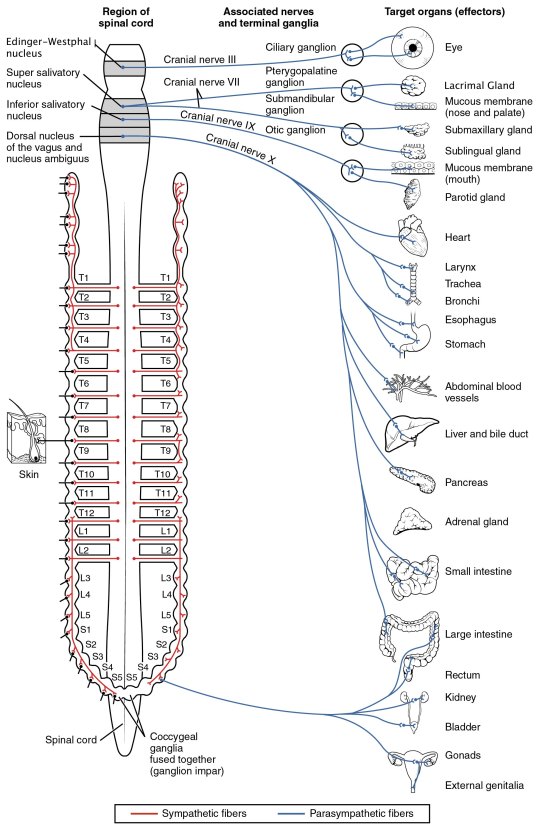
Parasympathetic failure & low orthostatic CBFv  was noted in 7 out of 10 patients and abnormal total CBFv score was found in all 10!
All of you out there suffering with dry eye & mouth, inability to digest food, and having colitis type symptoms (either diarrhea or constipation – usually alternating) this study reveals why.
Lyme loves the spine!  
1503_Connections_of_the_Parasympathetic_Nervous_System

By OpenStax College – Anatomy & Physiology, Connexions Web site. http://cnx.org/content/col11496/1.6/, Jun 19, 2013., CC BY 3.0, https://commons.wikimedia.org/w/index.php?curid=30148020

You can visualize where on the spine the various organs receive information from.  Notice all the things connected to the cranial nerves at the top.  Please know Bartonella and other coinfections can affect these areas as well.  Dr. Ericson’s found Bart all over the place:  https://madisonarealymesupportgroup.com/2019/02/27/advanced-imaging-found-bartonella-around-pic-line/  Take a gander at her slides where she’s found Bart in collagen, where a PIC line was removed, skin biopsies (including the brain), cartilage, and blood cells.

Lastly, besides the spinal involvement, notice ALL of the patients had an abnormal Total CBFv score.  This is cerebral blood flow velocity from the middle cerebral artery.  Not enough blood flow = not enough oxygen, which is required for normal functioning.  It alone can account for brain fog and fatigue.  Too much blood flow = swelling and inflammation which can cause severe pain and even lead to Chiari:  https://madisonarealymesupportgroup.com/2016/04/02/chiari/  In one week I met 3 Lyme patients with a Chiari diagnosis.  I had an MRI to rule it out myself.

One drug that was most effective for me for this issue was Minocycline:  https://madisonarealymesupportgroup.com/2017/06/04/minocycline-for-ms-and-much-more/


Disseminated Bartonella Visualized by PET/CT & MRI

https://www.mdpi.com/2075-4418/9/1/25

Diagnostics 2019, 9(1), 25; https://doi.org/10.3390/diagnostics9010025

Disseminated Bartonella henselae Infection Visualized by [18F]FDG-PET/CT and MRI

Published: 1 March 2019
Abstract
We describe the clinical course of a 24-year old male with Crohn’s disease in immunosuppressive therapy admitted with a 6-week history of fever, weight loss, night sweat, and general malaise. The patient received extensive workup for a fever of unknown origin and received empiric antibiotics. Workup with Fluorine-18 fluoro-2-deoxy-d-glucose ([18F]FDG) positron-emission tomography (PET/CT), and magnetic resonance imaging (MRI) with intravenous contrast showed multifocal ostitis of the columna and os sacrum, as well as abscesses in m. iliopsoas and m. iliacus and affection of the retroperitoneum, liver, and spleen. Initially, malignancy was suspected, but a subsequent liver biopsy showed necrotizing granulomatous inflammation and a later polymerase chain reaction (PCR) showed Bartonella henselae. The patient had relevant exposure from housecats. He was treated with Doxycycline and Rifampicin for 12 weeks resulting in complete recovery. This case is, to our knowledge, a rare example of disseminated infection with Bartonella henselae visualized on both [18F]FDG-PET/CT and MRI. View Full-Text
___________________
**Comment**
The Cat’s beginning to get out of the bag regarding Bartonella.  Prepare yourself to see a whole lot more of this. I’m thankful that the authors stated that this case was to their knowledge a rare example; however, Bartonella has flown under the radar for so long chances are quite high there is much more of this going on. Similarly to Lyme and other coinfections, testing that relies on serology is abysmal and many remain undiagnosed.
We’ve always been told that folks that contract Bartonella need a history of cat exposure or other animals and have suppressed immune systems.  Please know, many completely healthy individuals with NO cat exposure can have disseminated Bartonella.  For examples of this:  https://madisonarealymesupportgroup.com/2019/03/02/skin-inflammation-nodules-letting-the-cat-out-of-the-bag/  After the study I list 6 cases.
Dr. Ericson’s work has shown Bartonella virtually everywhere in the human body:  https://madisonarealymesupportgroup.com/2019/02/27/advanced-imaging-found-bartonella-around-pic-line/  Slides in link
In my experience Bartonella is as bad if not worse than Lyme which gets all the press. Authorities do not even consider it with Lyme patients but nearly everyone I work with has it along with Lyme and often Babesia as well as Mycoplasma and various viruses.  Until the polymicrobial aspect is acknowledged and treated, we are doomed as patients.
Yes, Martha, Lone Star ticks are in Wisconsin as well:  https://madisonarealymesupportgroup.com/2017/02/10/lone-star-ticks-in-wisconsin/