The CDC published, in the February edition of its “Emerging Infectious Diseases,” two new papers pertaining to Lyme disease case numbers. CDC indicates that the researchers found 476,000 people are diagnosed with and treated for Lyme disease each year in the U.S.
This is a 59% increase from their previous estimate of 300,000.
Also, CDC posted a new page to its website, Syndromic Surveillance of Emergency Department Visitsfor Tick Bites, showing tick bites by time, age/sex, and region: https://www.cdc.gov/ticks/tickedvisits/
While quick to state this increased number is “likely an over-estimate of actual infections because patients are sometimes treated presumptively,” they fail to mention the other side of the equation: that many fail to be diagnosed due to abysmal testing and doctor bias. Interestingly they state tick-borne illness is a burden on the health care system but fail to state the need to improve testing and treatment, but simply say more effective prevention measures are needed.
The new numbers are based on more recent data and insurance claims.
While health authorities and mainstream media have ignored, if not outright opposed, the use of vitamin C and other supplements in the treatment of COVID-19, citing lack of clinical evidence, a landmark review recommends the use of vitamin C as an adjunctive therapy for respiratory infections, sepsis and COVID-19
According to the authors, “Vitamin C’s antioxidant, anti-inflammatory and immunomodulating effects make it a potential therapeutic candidate, both for the prevention and amelioration of COVID-19 infection, and as an adjunctive therapy in the critical care of COVID-19”
Oral vitamin C at doses of 2 to 8 grams a day have been shown to reduce the incidence and duration of respiratory infections
Intravenous vitamin C at 6 to 24 grams a day has been shown to reduce mortality, ICU admission rates, hospital stays and time on mechanical ventilation in patients with severe respiratory infections
An international vitamin C campaign has been launched in response to the landmark review
Regardless of what the mainstream media want you to think, many are starting to realize the truth, which is that both vitamin C (ascorbic acid) and vitamin D have an enormous amount of research showing they provide important immune function enhancements, and that your immune function is your frontline defense against all illness, including COVID-19.
As reported in the paper “Optimal Nutritional Status for a Well-Functioning Immune System Is an Important Factor to Protect Against Viral Infections,” published April 23, 2020:1
“The role nutrition plays in supporting the immune system is well-established. A wealth of mechanistic and clinical data show that vitamins, including vitamins A, B6, B12, C, D, E, and folate; trace elements, including zinc, iron, selenium, magnesium, and copper; and the omega-3 fatty acids eicosapentaenoic acid and docosahexaenoic acid play important and complementary roles in supporting the immune system.
Inadequate intake and status of these nutrients are widespread, leading to a decrease in resistance to infections and as a consequence an increase in disease burden.”
High-Dose Vitamin C Acts as an Antiviral Drug
As explained in the video above by Dr. Andrew Saul, editor-in-chief of the Orthomolecular Medicine News Service, at extremely high doses, vitamin C actually acts as an antiviral drug, effectively inactivating viruses.
His Tokyo presentation, “Orthomolecular Medicine and Coronavirus Disease: Historical Basis for Nutritional Treatment,” highlights the fact that when used as a treatment, high doses of vitamin C — often 1,000 times more than the U.S. Recommended Dietary Allowance (RDA) — are needed.
It’s a cornerstone of medical science that dose affects treatment outcome, but this premise isn’t accepted when it comes to vitamin therapy the way it is with drug therapy. Most vitamin C research has used inadequate, low doses, which don’t lead to clinical results.
“The medical literature has ignored over 80 years of laboratory and clinical studies on high-dose ascorbate therapy,” Saul notes, adding that while it’s widely accepted that vitamin C is beneficial in fighting illness, controversy exists over to what extent. “Moderate quantities provide effective prevention,” he says, while “large quantities are therapeutic.”
Landmark Paper Puts Vitamin C on the COVID-19 Treatment Map
While health authorities and mainstream media have ignored, if not outright opposed, the use of vitamin C and other supplements in the treatment of COVID-19, citing lack of clinical evidence, we now have a landmark review2 recommending the use of vitamin C as an adjunctive therapy for respiratory infections, sepsis and COVID-19.
The review,3 published December 7, 2020, in the journal Nutrients, was co-written by Dr. Paul Marik who, in 2017, developed a groundbreaking vitamin C-based treatment for sepsis. Marik is now heading up the Front Line COVID-19 Critical Care Alliance,4 which has developed a highly successful treatment for COVID-19.
The COVID-19 protocol was initially dubbedMATH+ (an acronym based on the key components of the treatment), but after several tweaks and updates, the prophylaxis and early outpatient treatment protocol is now known as I-MASK+5 while the hospital treatment has been renamed I-MATH+,6 due to the addition of the drug Ivermectin. Vitamin C remains a central component of this treatment, though.
(The two protocols7,8 are available for download on the FLCCC Alliance website in multiple languages. The clinical and scientific rationale for the I-MATH+ hospital protocol has also been peer-reviewed and was published in the Journal of Intensive Care Medicine9 in mid-December 2020.) As explained in the Nutrients review abstract:10
“There are limited proven therapies for COVID-19. Vitamin C’s antioxidant, anti-inflammatory and immunomodulating effects make it a potential therapeutic candidate, both for the prevention and amelioration of COVID-19 infection, and as an adjunctive therapy in the critical care of COVID-19.
This literature review focuses on vitamin C deficiency in respiratory infections, including COVID-19, and the mechanisms of action in infectious disease, including support of the stress response, its role in preventing and treating colds and pneumonia, and its role in treating sepsis and COVID-19.
The evidence to date indicates that oral vitamin C (2-8 g/day) may reduce the incidence and duration of respiratory infections and intravenous vitamin C (6-24 g/day) has been shown to reduce mortality, intensive care unit (ICU) and hospital stays, and time on mechanical ventilation for severe respiratory infections …
Given the favorable safety profile and low cost of vitamin C, and the frequency of vitamin C deficiency in respiratory infections, it may be worthwhile testing patients’ vitamin C status and treating them accordingly with intravenous administration within ICUs and oral administration in hospitalized persons with COVID-19.”
International Vitamin C Campaign Launched
In a December 16, 2020, action alert,11 Rob Verkerk, Ph.D., founder and scientific director of the Alliance for Natural Health, announced the launch of an international vitamin C campaign12 in response to the landmark review, which “puts all the arguments and science in one, neat place.”
As noted by Verkerk, there are several reasons to take supplemental vitamin C. First, your body cannot make it. Second, most people do not get sufficient amounts from their diet and, third, your body’s requirement for vitamin C can increase 10-fold whenever your immune system is challenged by an infection, disease or physical trauma.
In fact, the Nutrients review13 points out that it’s common for hospitalized patients to have overt vitamin C deficiency, defined as a blood level at or below 11 µmol/L. This is particularly true for older patients and those hospitalized for respiratory infections.
According to the authors, “Vitamin C concentrations are three to 10 times higher in the adrenal glands than in any other organ. It is released from the adrenal cortex under conditions of physiological stress (ACTH stimulation), including viral exposure, raising plasma levels fivefold.” In his action alert, Verkerk notes:14
“Taking vitamin C as a preventative and then, upping your intake if you’re infected, is a no brainer.So is using vitamin C intravenously for those with acute respiratory infections, or sepsis, in critical care.
So much so, that we argue — given the now available evidence — that doctors and other health professionals who avoid recommendations on vitamin C in relation to COVID disease prevention and treatment, should be considered medically negligent …
There is ample evidence to show that supplements like zinc, vitamin C, and vitamin D can help prevent and treat COVID-19, but we’re prevented from learning about these benefits by the federal government.
Because supplements are not, and can never become, FDA-approved, they cannot claim to have an impact on disease, even when we know they can. This nonsense has to stop.”
How Vitamin C Works
As mentioned, the Nutrients review15 details vitamin C’s mechanisms of action and how it helps in cases of infectious disease, including the common cold, pneumonia, sepsis and COVID-19. For starters, vitamin C has the following basic properties:
Anti-inflammatory
Immunomodulatory
Antioxidant
Antithrombotic
Antiviral
Beneficial antiviral effects apply to both the innate and adaptive immune systems. When you have an infection, vitamin C improves your immune function in part by promoting the development and maturation of T-lymphocytes, a type of white blood cell that is an essential part of your immune system.
Phagocytes, immune cells that kill pathogenic microbes, are also able to take in oxidized vitamin C and regenerate it to ascorbic acid. With regard to COVID-19 specifically, vitamin C:16
Helps downregulate inflammatory cytokines, thereby reducing the risk of a cytokine storm. It also reduces inflammation through the activation of NF-κB and by increasing superoxide dismutase, catalase and glutathione. Epigenetically, vitamin C regulates genes involved in the upregulation of antioxidant proteins and downregulation of proinflammatory cytokines
Protects your endothelium from oxidant injury
Helps repair damaged tissues
Upregulates expression of Type-1 interferons, your primary antiviral defense mechanism, which SARS-CoV-2 downregulates
Eliminates ACE2 upregulation induced by IL-7. This is particularly noteworthy, as the ACE2 receptor is the entry point for SARS-CoV-2 (the virus’ spike protein binds to ACE2)
Appears to be a powerful inhibitor of Mpro, a key protease (enzyme) in SARS-CoV-2 that activates viral nonstructural proteins
Regulates neutrophil extracellular trap formation (NETosis), a maladaptive response that results in tissue damage and organ failure
Enhances lung epithelial barrier function in an animal model of sepsis by promoting epigenetic and transcriptional expression of protein-channels at the alveolar capillary membrane that regulate alveolar fluid clearance
Mediates the adrenocortical stress response, particularly in sepsis
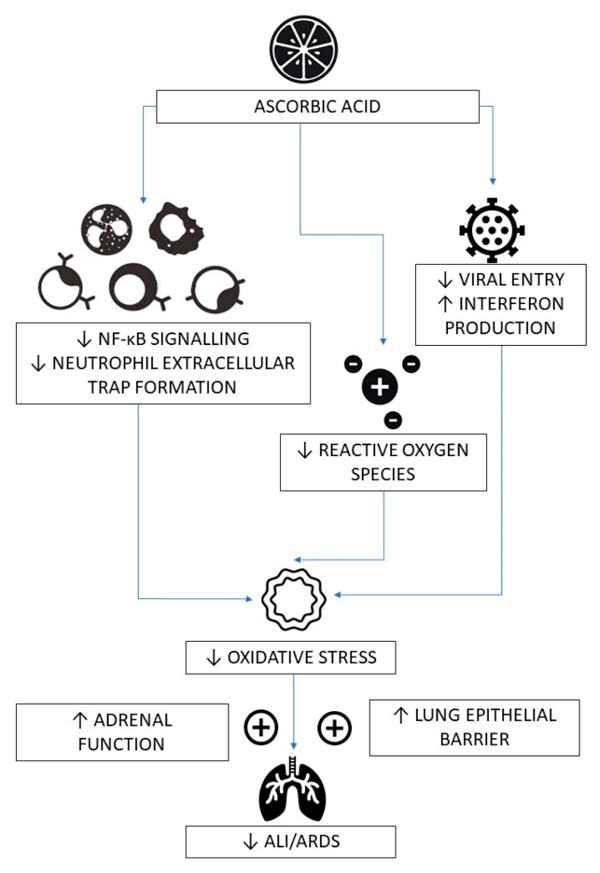
The graph below, from the Nutrients review, illustrates the key ways in which vitamin C ameliorates the pathology seen in COVID-19.
Nebulized Peroxide May Be Even Better
The beautiful graphic above makes it really clear that one of the primary ways that vitamin C works is through the generation of reactive oxygen species. Guess what the primary one is? If you guessed hydrogen peroxide give yourself a high five!
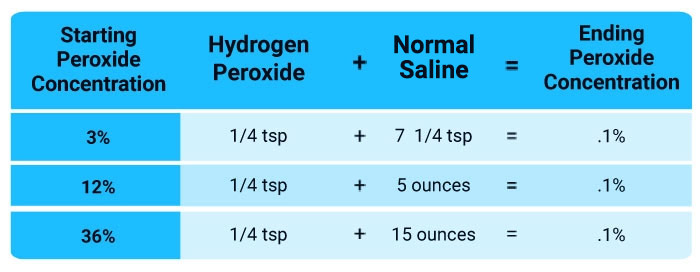
It is highly likely that the peroxide forms a very powerful signaling function that stimulates the immune system to defeat whatever viral threat it is exposed to. This is one of the reasons why nebulized peroxide is my absolute favorite intervention for acute viral illnesses. It is highly effective, inexpensive and has no side effects when used at the very low doses recommended (0.1%, which is 30 times less concentrated than regular drugstore 3% peroxide).
My video below discusses the details of how you can use this therapy. The key is to have your nebulizer already purchased and ready to go so that it is locked and loaded and you don’t have to go out and purchase anything if you or a loved one gets sick. You can still use vitamin C with the peroxide, as they likely have a powerful synergy and use different complimentary mechanisms.
Since you are not using full strength 3% peroxide and diluting it by 30 to 50 times, it is unlikely the stabilizers will present a problem, but to be safe, it is best to use FOOD-GRADE peroxide. Also, do not dilute it with plain water as the lack of electrolytes in the water can damage your lungs if you nebulize it. Instead, use saline or add a small amount of salt to the water to eliminate this risk.
Clinical Evidence
The Nutrients review17 also includes clinical evidence for the role of vitamin C in COVID-19, noting that early oral supplementation might help prevent a mild case from developing into something more serious. In patients with critical symptoms, intravenous administration of vitamin C has been shown to speed up recovery, reducing both ICU stays and mortality.
Interestingly, vitamin C deficiency and COVID-19 share many of the same risk factors, including male gender, darker skin, older age and comorbidities such as diabetes, high blood pressure and COPD. All of these subgroups are at increased risk for severe COVID-19 and, according to the authors, all “have also been shown to have lower serum vitamin C levels.”
Commenting on the clinical evidence supporting the use of vitamin C in the treatment of COVID-19, the authors write:18
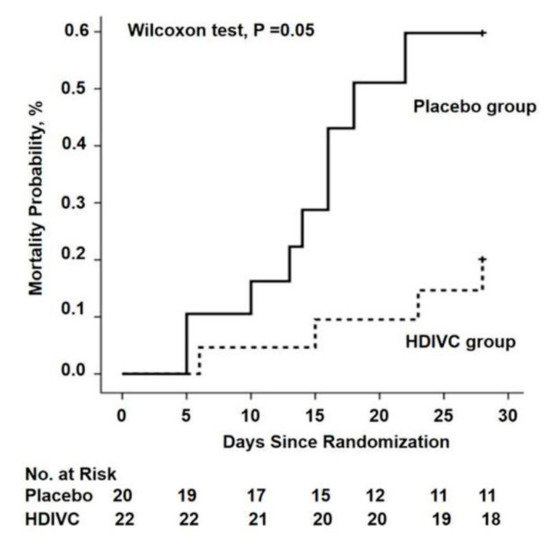
“There are currently 45 trials registered on Clinicaltrials.gov investigating vitamin C with or without other treatments for COVID-19. In the first RCT to test the value of vitamin C in critically ill COVID-19 patients, 54 ventilated patients in Wuhan, China, were treated with a placebo (sterile water) or intravenous vitamin C at a dose of 24 g/day for 7 days …
The more severely ill patients with SOFA [sequential organ failure assessment] scores ≥ 3 in the vitamin C group exhibited a reduction in 28-day mortality: 18% versus 50% in univariate survival analysis (Figure 2). No study-related adverse events were reported.”
Figure 2 below, from version 1 of the study,19 “High-Dose Vitamin C Infusion for the Treatment of Critically Ill COVID-19,” posted on the preprint server Research Square August 10, 2020 (updated September 23, at which point it was renamed20), shows the 28-day mortality rates between critically ill COVID-19 patients given high-dose IV vitamin C (HDIVC) compared to those given a placebo.
The Nutrient review also summarizes findings from other COVID-19 trials using vitamin C, as well as a few case reports:21
“In the UK, the Chelsea and Westminster hospital ICU, where adult ICU patients were administered 1 g of intravenous vitamin C every 12 h together with anticoagulants, has reported 29% mortality, compared to the average 41% reported by the Intensive Care National Audit and Research Centre (ICNARC) for all UK ICUs …
The Frontline COVID-19 Critical Care Expert Group (FLCCC), a group of emergency medicine experts, have reported that, with the combined use of 6 g/day intravenous vitamin C (1.5 g every 6 h), plus steroids and anticoagulants, mortality was 5% in two ICUs in the US (United Memorial Hospital in Houston, Texas, and Norfolk General Hospital in Norfolk, Virginia), the lowest mortality rates in their respective counties.
A case report of 17 COVID-19 patients who were given 1 g of intravenous vitamin C every 8 h for 3 days reported a mortality rate of 12% with 18% rates of intubation and mechanical ventilation and a significant decrease in inflammatory markers, including ferritin and D-dimer, and a trend towards decreasing FiO2 requirements.
Another case of unexpected recovery following high-dose intravenous vitamin C has also been reported. While these case reports are subject to confounding and are not prima facie evidence of effects, they do illustrate the feasibility of using vitamin C for COVID-19 with no adverse effects reported.”
How Much Vitamin C Do You Need?
As detailed in the introduction of the Nutrients review,22 primates and humans are dependent on an adequate supply of vitamin C from fruits and vegetables. Gorillas need 4.5 grams a day, while smaller primates weighing around 7.5 kilos need about 600 mg per day. This gives us a clue as to what the human requirement might be, and it’s quite a bit higher than the daily recommended intake. According to the authors:23
“The EU Average Requirement of 90 mg/day for men and 80 mg/day for women is to maintain a normal plasma level of 50 µmol/L, which is the mean plasma level in UK adults. This is sufficient to prevent scurvy but may be inadequate when a person is under viral exposure and physiological stress.
An expert panel in cooperation with the Swiss Society of Nutrition recommended that everyone supplement with 200 mg ‘to fill the nutrient gap for the general population and especially for the adults age 65 and older. This supplement is targeted to strengthen the immune system.’ The Linus Pauling Institute recommends 400 mg for older adults (>50 years old).
Pharmacokinetic studies in healthy volunteers support a 200-mg daily dose to produce a plasma level of circa 70 to 90 µmol/L. Complete plasma saturation occurs between 1 g daily and 3 g every four hours, being the highest tolerated oral dose, giving a predicted peak plasma concentration of circa 220 µmol/L.
The same dose given intravenously raises plasma vitamin C levels approximately tenfold. Higher intakes of vitamin C are likely to be needed during viral infections with 2–3 g/day required to maintain normal plasma levels between 60 and 80 µmol/L. Whether higher plasma levels have additional benefit is yet to be determined, but would be consistent with the results of the clinical trials discussed in this review.”
While high-dose vitamin C regimens typically call for intravenous administration, if treating a viral infection at home (be it COVID-19 or something else), you could use oral liposomal vitamin C, as this allows you to take far higher doses without causing loose stools.
You can take up to 100 grams of liposomal vitamin C without problems and get really high blood levels, equivalent to or higher than intravenous vitamin C. I view that as an acute treatment, however. I discourage people from taking mega doses of vitamin C on a regular basis if they’re not actually sick, because it is essentially a drug — or at least it works like one.
Saul, who has worked with and recommended vitamin C for most of his professional life suggests taking “enough vitamin C to be symptom-free,” whatever dosage that might be. When you’re well, you typically don’t need more than the 200 mg to 400 mg recommended in the quote above.
This science won’t matter to our public health ‘authorities’ any more than the Danish Mask study showing masks don’t work. Both defy their narrative so they are shouted down or flatly ignored. So much for “following the science.” The Lyme/MSIDS world has lived in this “twilight zone” for over 40 years.
Congratulations to all you Lyme advocates who played a key role in getting historic increases for Lyme disease funding passed by the House and Senate yesterday.
The Fiscal Year 2021 Omnibus Appropriations bill, which includes a $36M additional Lyme and tick-borne funding or $91M total funding, is on to the President for his consideration and signature.
Here’s what happened
+$10M ($63M total) NEW Lyme disease line item at NIAID. The NIH’s National Institute of Allergy and Infectious Diseases requested an increase from $34M in FY20 to $53M in FY21. While the NIAID budget is almost entirely discretionary, the Senate proposed, and the House approved a $10M mandatory increase on the FY21 budget for Lyme disease making the total $63M. This mandatory increase is very helpful to our cause because it sets a precedent for an annual line increase that we can work on each year.
+$5M NEW funding for the Kay Hagan Tick Act. The Kay Hagan Tick Act required the CDC to enhance surveillance (expected to be very poor due to Covid-19 distractions at the state level) and to fund the Centers of Excellence for Lyme and tick-borne disease. This budget was added to the vector-borne disease line item. While the Kay Hagan Tick Act recommended larger annual funding ($30M per year over fice years), this initial $5M represents another line item which we work to grow. The good news is that the House-Senate negotiators asked that CDC include an FY22 spending plan for the Kay Hagan Tick Act in their Congressional Budget justification to accompany the President’s FY 22 Budget Request. This will help create some stability and predictability for the Tick Act.
+$2M ($16M total) for the Lyme disease budget for the CDC. An additional $2M was added to the CDC Lyme disease budget, which will be used for the agency’s prevention programs.
TBDRP funding held steady at $7M. While the Tick-Borne Disease Research Program did not increase, this important research program with Lyme community input did not decrease.
In total – the federal government plans to spend $91M in FY21 vs. $55M in FY20, a 65% increase in spending on Lyme disease. Wow!
This number is an historic increase in funding for Lyme disease and yet we are just at the beginning of our journey. Thank you all for your support and very important participation and contributions! The meetings, the letters, the emails and more! Lyme disease is a team sport!
SAVE THE DATE. Now mark your calendar for February 23 from 3-5pm ET and February 24 from 9am – 5pm ET for our 2021 Lyme Fly-In, which will be virtual this year.
“Insanity is doing the same thing over and over and expecting different results.”
Giving more money to NIAID and the CDC is like throwing sand into the ocean where sharks come along and eat it all.
The CDC and NIAID have not done ONE good thing for patients or doctors who dare to treat them except abuse patients by telling them they are “imagining” their illness and crucify doctors by creating extremely limited diagnostic and treatment guidelines that are then used as criteria for witch hunts. This hasn’t changed in over 40 years and will now continue.
Why do we give these people more and more tax-payer money when we get nothing in return but heartache?
The polarizing politics over tick-borne illness hasn’t changed. The new IDSA guidelines are even more entrenched than before. Do not expect any change within mainstream medicine. They will still abuse patients and they will still consider Lyme literate doctors “quacks.”
Dr. Anthony Fauci, head of NIAID for over 6 presidencies, is the one who doles out research dollars. He is going to take all this money and give it to researchers who will NOT study persistent infection. He will NOT support research studying autopsies of those who have succumbed to Lyme/MSIDS by looking at brains and tissues. He will NOT study and support other tests as CDC employees own the patents and are profiting from the CDC 2-tiered testing. Expect a lot more climate data – which has been proven to be a mute point in tick proliferation.
Yet, they now have a bigger pot of money to spend. Don’t expect anything in return.
GERIATRIC BABESIA CASES ARE RISING AND MAY REQUIRE LONGER TREATMENT
The number of Babesia cases among the elderly in the U.S. appears to be growing. According to a study by Menis and colleagues, published in the journal Open Forum Infectious Diseases, 19,469 Medicare beneficiaries had a Babesia diagnosis recorded between 2006 – 2017, with the highest rates occurring in babesiosis-endemic states. [1]
Overall, the number of individuals contracting Babesia is rising, as well. The annual number of cases per year climbed from 4 per 100,000 to 9 per 100,000 in the U.S. between 2006 and 2017. The annual number of cases of Babesia per year for individuals over the age of 85 was 4 out of 100,000. In comparison, the number of Lyme disease cases among the elderly was 15.98 per 100,000.
Most of the cases of Babesia occurred in the Lyme-endemic states of Massachusetts, Rhode Island, Connecticut, New York, and New Jersey, according to the authors. Other states recording Babesia cases included Florida, Pennsylvania, California, Maryland, and Virginia. Some cases of Babesia were also reported in New Hampshire, Maine, Vermont, Minnesota, Wisconsin, Texas, North Carolina, and Illinois.
The most common test used to diagnose Babesia was a blood smear in the institutional setting, wrote Menis in a related paper. [2] The intracellular parasite in the red blood cell clears after a few days. The most common tests used in a physician’s office involved antibody or PCR testing. [2]
Co-infections can be deadly
A Babesia infection can be serious for patients.
“Patients co-infected with Lyme disease experienced more symptoms and a more persistent episode of illness than did those (n=10) experiencing babesial infection alone,” wrote Krause and colleagues [3]. In another paper, the authors explain, “Immunocompromised people who are infected by B. microti are at risk of persistent relapsing illness.” [4]
For some patients, including the elderly, a Babesia infection can be more serious. “Babesiosis can be life threatening, particularly for persons who are asplenic, immunocompromised, or elderly,” wrote Krause et al. [4]
85-year-old dies from Babesia and Ehrlichia
Javed and colleagues describe the case of an 85-year-old man who died of a concurrent Babesiosis and Ehrlichiosis infection. [5]
He was an avid gardener and golfer in good health except for hypertension. He did not have a tick bite or rash. The man was hospitalized with weakness and jaundice. He had mild anemia, a very low platelet count, a mildly elevated bilirubin, and mildly reduced renal function.
The doctors diagnosed Babesia based on a bone marrow biopsy revealing intraerythrocytic inclusions (tetrads), typical of babesiosis. In retrospective, his admitting bloods from admission revealed parasitemia in 8% of the red blood cells. The Babesia antibody IgM and IgG were positive for Babesia.
The elderly man was treated with IV clindamycin and IV quinine. His anemia worsened despite transfusion of two units of blood and he was transferred to a tertiary hospital for possible exchange transfusion. The doctor added azithromycin but not Atovaquone.
His condition worsened. His oxygen saturation dropped to 84% and he subsequently developed bilateral pneumonia, renal failure, hepatic failure, and a coma. He was too ill to tolerate exchange transfusion.
He died within 60 hours of admission to the tertiary care center.
Post-mortem tests were positive for Human Monocytic Ehrlichiosis, the cause of Ehrlichia. He was never treated with doxycycline, the most commonly prescribed medication for Ehrlichia.
Treatment of Babesia
Krause and colleagues reported that a 10-day course of Mepron and Zithromax would be as effective as clindamycin and quinine and have less side effects. [3] The Medicare beneficiaries were far more likely to be prescribed Mepron with Zithromax than clindamycin and quinine. [1]
Some patients with Babesia require longer treatment. Krause and colleagues reported immunocompromised and elderly patients were more likely to need longer term therapy.” [4]
In another paper, the authors point out that,
“Such patients generally require antibabesial treatment for >or=6 weeks to achieve cure, including 2 weeks after parasites are no longer detected on blood smear.” [4]
More than one-third of elderly Babesia patients were not treated with anti-Babesia treatment during their evaluation. The study was not designed to determine if the elderly were subsequently treated.
IDSA position
The 2020 Infectious Diseases Society of America (IDSA) guidelines for Babesia highlighted concerns regarding severe Babesia in the elderly.
“Numerous immunodeficiencies and comorbidities have been associated with severe babesiosis, including asplenia and hyposplenism, cancer,congestive heart failure, HIV infection, immunosuppressive drugs, and advanced age.” [6]
For immunocompromised patients, we suggest monitoring Babesia parasitemia using peripheral blood smears even after they become asymptomatic and until blood smears are negative. PCR testing should be considered if blood smears have become negative but symptoms persist (weak recommendation, moderate-quality evidence).
In addition, the IDSA guidelines advised longer treatment for immunocompromised Babesia patients.
“A subgroup of highly immunocompromised patients reported in a case control study required at least 6 consecutive weeks of antibiotic therapy, including 2 final weeks during which parasites were no longer detected on peripheral blood smear.” [6]
However, some patients can relapse.
“A few cases of relapse despite at least 6 consecutive weeks of atovaquone plus azithromycin demonstrate that resistance to atovaquone and/or azithromycin can emerge in highly immunocompromised patients during an extended course of this antibiotic combination,” wrote Krause et al. [6]
Editor’s note: I share the same concerns regarding Babesia in the elderly, and I base the length of antibiotics on the patient’s response to treatment.
Menis M, Whitaker BI, Wernecke M, et al. Babesiosis Occurrence among the U.S. Medicare Beneficiaries Ages 65 and Older, During 2006-2017: Overall, and by State and County of Residence. Open Forum Infectious Diseases. 2020
Menis M, Forshee RA, Kumar S, McKean S, Warnock R, Izurieta HS, Gondalia R, Johnson C, Mintz PD, Walderhaug MO, Worrall CM, Kelman JA, Anderson SA. Babesiosis Occurrence among the Elderly in the United States, as Recorded in Large Medicare Databases during 2006-2013. PLoS One. 2015 Oct 15;10(10)
Krause PJ, Telford SR, 3rd, Spielman A, et al. Concurrent Lyme disease and babesiosis. Evidence for increased severity and duration of illness. JAMA. Jun 5 1996;275(21):1657-60.
Krause PJ, Gewurz BE, Hill D, et al. Persistent and relapsing babesiosis in immunocompromised patients. Clin Infect Dis. Feb 1 2008;46(3):370-6. doi:10.1086/525852
Javed MZ, Srivastava M, Zhang S, Kandathil M. Concurrent babesiosis and ehrlichiosis in an elderly host. Mayo Clin Proc. May 2001;76(5):563-5. doi:10.4065/76.5.563
Krause PJ, Auwaerter PG, Bannuru RR, et al. Clinical Practice Guidelines by the Infectious Diseases Society of America (IDSA): 2020 Guideline on Diagnosis and Management of Babesiosis. Clin Infect Dis. Nov 30 2020;doi:10.1093/cid/ciaa1216
Mainstream medicine still does not believe the seriousness of this complex illness that thousands upon thousands are suffering from. The interaction of confections make cases extremely difficult to treat. Do not mess around with this, get to a Lyme literate doctor asap: https://madisonarealymesupportgroup.com/2020/11/25/what-makes-a-doctor-lyme-literate/ These doctors typically layer treatment to reduce any potential of resistance to treatment. We often took 4 things simultaneously.
Predicting the current and future distribution of the western black-legged tick, Ixodes pacificus, across the Western US using citizen science collections
In the twenty-first century, ticks and tick-borne diseases have expanded their ranges and impact across the US. With this spread, it has become vital to monitor vector and disease distributions, as these shifts have public health implications. Typically, tick-borne disease surveillance (e.g., Lyme disease) is passive and relies on case reports, while disease risk is calculated using active surveillance, where researchers collect ticks from the environment. Case reports provide the basis for estimating the number of cases; however, they provide minimal information on vector population or pathogen dynamics. Active surveillance monitors ticks and sylvatic pathogens at local scales, but it is resource-intensive. As a result, data are often sparse and aggregated across time and space to increase statistical power to model or identify range changes. Engaging public participation in surveillance efforts allows spatially and temporally diverse samples to be collected with minimal effort. These citizen-driven tick collections have the potential to provide a powerful tool for tracking vector and pathogen changes.We used MaxEnt species distribution models to predict the current and future distribution of Ixodes pacificus across the Western USthrough the use of a nationwide citizen science tick collection program. Here, we present niche models produced through citizen science tick collections over two years. Despite obvious limitations with citizen science collections, the models are consistent with previously-predicted species ranges in California that utilized more than thirty years of traditional surveillance data. Additionally, citizen science allows for an expanded understanding of I. pacificus distribution in Oregon and Washington. With the potential for rapid environmental changes instigated by a burgeoning human population and rapid climate change, the development of tools, concepts, and methodologies that provide rapid, current, and accurate assessment of important ecological qualities will be invaluable for monitoring and predicting disease across time and space.
_____________________
**Comment**
Authors continue the debunked theory that the climate is behind tick proliferation. Repeating something over and over does not make it true. This study was a complete waste of time and money and does nothing to help suffering patients. Ticks are showing up worldwide in areas they shouldn’t be carrying pathogens they shouldn’t have. Move on. There’s much bigger fish to fry!
“explain to the public a reason for not tackling this serious health care issue earlier. The tick problem was programmed for the future.Thus, ill-founded statistical analyses culminated in fabricated erroneous data and, ultimately, resulted in a series of maps that turned out to be flawed science.” John Scott

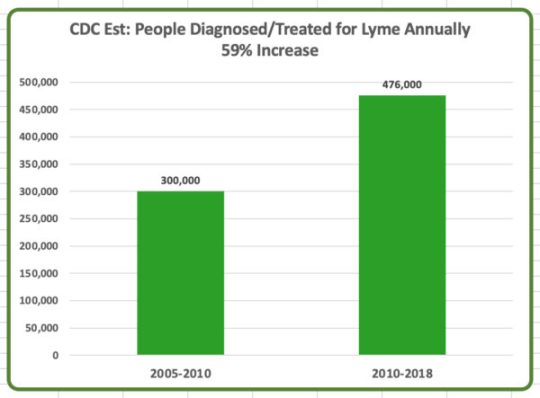 Fig. 1: Prepared by LDA, Jan. 2021