Archive for the ‘Psychological Aspects’ Category

When Will I Start to Feel Better?

https://www.treatlyme.net/guide/recovery-timeline-for-lyme-bartonella-babesia  Video Here

When You Might Start to Feel Better: The Lyme, Bartonella, and Babesia Timelines

In this video article, Marty Ross MD describes when you should start to feel better in your treatment. As Dr. Ross describes, it all depends on the which infections you are treating.

Resources

__________________

**Comment**

This topic paramount, as patients desperately want their lives back.  At least I did.

I remember finding a man who was infected but had achieved his health back.  In a vast pool of sick people, he appeared to be a lone survivor.  Frantically, I emailed him for answers.  Per usual, he got right back to me with encouragement.  (This has been my experience time and time again.  Infected people “get it,” and immediately help those looking for it).

To be honest, I only remember one thing he said: “Don’t be depressed about feeling depressed.”  You may laugh, but that simple statement probably helped me more than any other advice, because this complex illness will truly sift you like wheat making you question your very sanity and your desire to continue with life.

I would compare having Lyme/MSIDS to being dropped behind enemy lines in an Arctic climate where you are given nothing but a toothpick and a shovel for survival.

I would love to say that I completely agree with Dr. Ross but it just wasn’t our experience.  Since both my husband and I are infected and have both waged this battle (and continue to wage it), I have two narratives I am quite intimate with – plus many other patients who tell me their stories.

Tracking improvement is like catching a greased pig.  Very hard to do.  Nothing about this is linear.  There are forward steps, stalls, and backward steps – sometimes within the same day!

I advise patients to keep a monthly calendar close by with lines on it for writing.  Write down your major symptoms every day.  This will really help if you are tracking others in your family as well.  If you don’t do this you will likely forget much of what you experience.

If possible, then take these notes and write or type up an executive summary noting the main symptoms.  This will help your Lyme literate doctor more than anything.  They are versed in the various symptoms and your documentation will show what infections are dominant at the time (and this varies from time to time.)

It is true that if you are not experiencing change (improvement or worsening) you are likely in a plateau which should indicate you need to change your treatment.  Be honest about this and talk with your LLMD about this so you are in agreement.  This is NOT an illness that you can just ‘trust the experts’ with.  You NEED to be a part of this unique partnership.  Admittedly, in the beginning you won’t know much and won’t be able to be much help, but in time you will become a quasi-expert.  I tell patients that doctors are experts in THE human body but you are the expert with YOUR body.  Your intel is indispensable to your physician.  If they don’t want your intel, it’s time to find a new doctor!

For more:

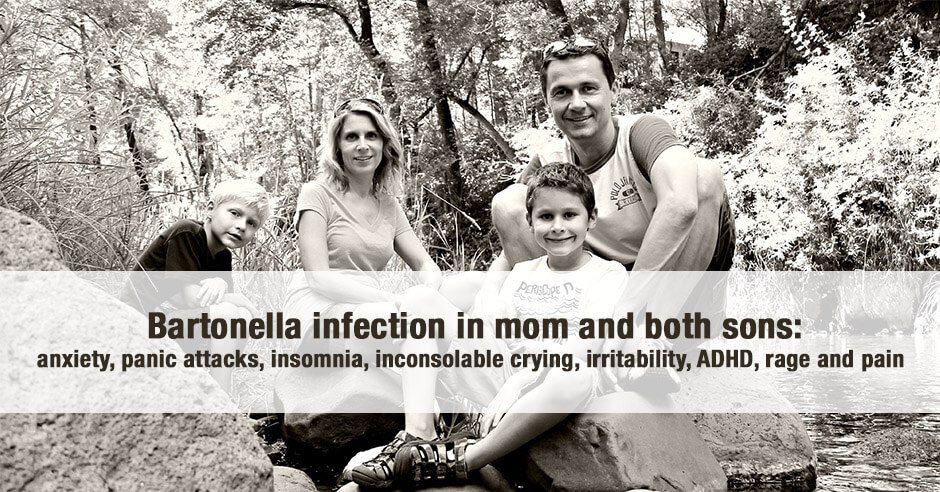
Bartonella Infection in Mom and Both Sons: Anxiety, Panic Attacks, Insomnia, Inconsolable Crying, Irritability, ADHD, Rage, and of Course Pain

https://www.everywomanover29.com/blog/bartonella-infection-in-mom-and-both-sons-anxiety-panic-attacks-insomnia-inconsolable-crying-irritability-adhd-rage-and-pain/

Bartonella infection in mom and both sons: anxiety, panic attacks, insomnia, inconsolable crying, irritability, ADHD, rage and pain

bartonella infection

A mom and both her sons experienced a variety of emotional/mood and pain symptoms between them as a result of a Bartonella infection: anxiety, panic attacks, insomnia, irritability, inconsolable crying, ADHD, rage, eye pain, joint pain and pain in the legs. This family case study was published in Parasites and Vectors in 2013. I would love to see individual amino acids being used to ease some of these symptoms while the infection is being treated (more on this below).

Here are some of the emotional and mood-related symptoms they experienced:

  • the mother and both sons developed recurrent rash-like skin lesions, disruptive sleep patterns and both boys developed anxiety accompanied by episodes of inconsolable crying, irritability, and panic attacks
  • subsequent to the spider infestation of the apartment, [the mother] developed fatigue, memory difficulties, headaches, irritability, eye pain, insomnia, chest pain, blurred vision, shortness of breath, rash and skin lesions and anxiety attacks.
  • The youngest son… awakened at night crying and complaining of pain in his legs
  • The older son experienced increased irritability and rage episodes. In addition, the boy’s teacher indicated a lack of attention during class, and suggested that the child might have an Attention Deficit Hyperactivity Disorder (ADHD).

The youngest son also developed severe neurological symptoms and was diagnosed with Guillain-Barre syndrome and Chronic Inflammatory Demyelinating Polyradiculoneuropathy.

You can read the full investigation, timing, sequence of events and all the symptoms in the paper: Bartonella henselae infection in a family experiencing neurological and neurocognitive abnormalities after woodlouse hunter spider bites  (For more see link)

___________________

**Comment**

Fantastic article that needs to be shared widely.  I believe Bartonella is much more common than doctors believe, and as in these cases, quite severe and debilitating.

A few points:

  • Please note the spider infestation. See this article for more on transmission.
  • The author mentions Chinese herbs, which in my experience aren’t strong enough to fight this alone.  This is just my experience, and my husband’s and numerous other patients, but and I realize perhaps there are others with a different experience than ours.
  • For us, when we relapse, it’s clearly Bartonella that immediately responds to the combination of rifampin and clarithromycin.  Within 2-3 months of treatment we push the symptoms away.
  • The author also gets into amino acids to address symptoms – of which I have little experience.  When in the midst of the battle, I hear Dr. Hoffman telling me that if I address the infection(s), the symptoms will either disappear entirely or lessen considerably.  I have proven this dictum repeatedly with each successive, treated relapse.  When money is an issue, you must decide the best course of action as many things are needed to successfully fight MSIDS.  As with everything else; however, each case is individual and for those suffering with severe psychiatric, sleep, and other issues, learning about amino acids may be a key part of treatment.
  • My husband has definitely found relief with 5-HTP & Gabapentin for sleep issues.  Strong CBD and melatonin has helped as well as LDN.  Lyme/MSIDS related insomnia is very real.

Please read the article in its entirety, but here’s a highlight on the various amino acids:

Borrelia burgdoeri Co-Localizing With Amyloid Markers in Alzheimer’s Disease Brain Tissues

https://content.iospress.com/articles/journal-of-alzheimers-disease/jad215398

Borrelia burgdorferi Co-Localizing with Amyloid Markers in Alzheimer’s Disease Brain Tissues

Accepted Oct. 24, 2021, Published Dec. 5, 2021

Adjunct Therapies That Have Helped With My Tick-Borne Illneses

https://www.globallymealliance.org/blog/adjunct-therapies-that-have-helped-with-my-tick-borne-illnesses

Jen Crystal discusses the adjunct therapies that helped her in her Lyme disease journey.

Patients write to me every day asking what helped me achieve remission from tick-borne illness. I wish there was a magic answer I could give them, but since every single case is different, there is no set protocol. What worked for me might not work for someone else. Moreover, what worked for me five years ago is not what works for me now. Each case changes over time as spirochetes are killed off and symptoms improve. My Lyme Literate Medical Doctor (LLMD) is always fine-tuning my protocol.

That said, there are several adjunct therapies that have worked in conjunction with my ever-changing protocol of medication and supplements. I call these adjunct or complementary therapies because they supported, but did not replace, my medical protocol. These therapies would not have worked alone, because first and foremost I needed to treat the infections of Lyme disease, babesiosis, ehrlichiosis, and possible bartonella. In fact, before I was accurately diagnosed with these tick-borne illnesses, I tried some alternative therapies and they did not help, because the underlying infections were too severe. Once I started appropriate treatment, the following therapies helped me heal:

Integrative Manual Therapy

Developed by Sharon Giammatteo, Ph.D., this hands-on technique uses light touch to facilitate healing. The therapy combines cranial therapy and neurofascial processing. In her book Body Wisdom: Light Touch for Optimal Health, Giammatteo explains that cranial therapy is “a manual approach to correcting problems of the cranium, as well as the tissues and structures within in. Cranial therapy works by exerting a gentle force on the head and the body. The force decompresses dysfunctional areas and facilitates proper biological rhythms.”[1]

Don’t be alarmed by the word “force”; it’s simply someone gently placing a hand on your head or body, making barely perceptible movements. The technique is lighter than massage. When I’m struggling with brain fog or other symptoms of Lyme brain, my integrative manual therapist might place one hand on my forehead and one hand on my lower back, to enable drainage. This is part of neurofascial processing, which is just placing hands on different parts of the body to get systems working in sync.

The great part about Integrative Manual Therapy is that a lot of it can be done at home, either by yourself or with the help of someone else. Techniques are outlined in Giammatteo’s book. You can also work with a trained facilitator. Some D.O.’s (Doctors of Osteopathic Medicine) do manual therapy, and some physical therapists do it. This means these appointments might be covered by insurance. You can also pay out-of-pocket for a private practitioner. At the height of my illnesses, I did Integrative Manual Therapy twice a week; now I do it twice a month.

Neurofeedback

You may have heard of biofeedback, which uses the body’s own feedback to regulate systems. Neurofeedback works in the same way, except on the brain instead of the body. This non-invasive technique uses your brain’s own feedback to help it work optimally, whether that is being able to rest, thinking more clearly, or having less intrusive thoughts.

During neurofeedback appointments, I sit in a comfortable lounge chair. The practitioner affixes small sensors on my head and ears. These sensors are connected to a computer that receives feedback from my brain, and then relays information back to my brain that helps it work better. During this process, I watch kaleidoscope-style images on a screen (though it’s fine to close your eyes), and listen to soft music. Sometimes as certain feedback is being sent, the music skips. That’s all I notice during the entire session. Otherwise I just sit and relax, and let my brain do its work.

I started neurofeedback when I saw a sleep specialist for insomnia. In conjunction with sleep medication, neurofeedback helped my brain retrain itself to turn off for rest. It toned down, though did not eliminate, my hallucinogenic nightmares. It also helped me to be able to fall asleep for a nap during the day, which my exhausted body desperately needed.

There are different types of neurofeedback. Some work on just one part of your brain at a time, while others work on the whole brain. I do NeurOptimal, which helps the whole brain at once. My practitioner thinks that working on only one part of my brain at a time might actually exacerbate, not help, some of my neurological issues.

Some sleep specialists do neurofeedback, which can be covered by insurance. There are also private practitioners that you can find through NeurOptimal. When my insomnia was raging, I did neurofeedback three times a week. Now that I am in remission, I do it once a month.

Physical Therapy

Physical therapy is an important way to rebuild muscle strength and stamina—when you are ready. I made the mistake of starting physical therapy too early in my treatment, and paid for it. Because infections were ravaging my body, exertion only made them worse. Before my babesiosis was adequately treated, thirty seconds on a stationary bike gave me a migraine and sent me straight back to bed.

When I was bedridden, people used to say to me, “You should get up and go for a walk. It’ll make you feel better.” Just walking to the end of the driveway made me feel much, much worse. You know your body best. If you had the flu, you would not go for a walk. You would wait until you felt better. I had to wait until my infections were cleared up enough before I could do physical therapy consistently, and have it make a positive difference. Talk with your LLMD about when physical therapy would be appropriate for you.

Make sure your physical therapist understands the way your illnesses impact your body, and has you go at a slow pace. You likely won’t be able to do a typical graded physical therapy program where you steadily increase time and weights. Instead, you’ll make progress, take some down turns, then make progress again. When I first started physical therapy, all I did were some gentle stretches and slow manipulations with my fingers and toes. It took months to work up to twelve minutes on a stationary bike. I added weights very, very slowly. Now, after regaining strength and learning to pace myself, I am able to ski, walk, paddleboard, kayak, and swim. (For more on my slow but steady physical therapy, see my poem “Never Say Never”).

Talk Therapy

Being sick, especially for an extended period of time, can take an emotional toll. Moreover, Lyme disease can cause anxiety and depression. Your LLMD or a psychiatrist may prescribe medication to help your mood, but it’s also really helpful to talk about your feelings with an objective professional. You want someone who believes your illness and believes in you. Someone who will allow you to vent on the tough days and, more importantly, give you some coping skills to handle those hard times. My own therapist also helped me examine relationships and patterns from my past that informed my response to illness. She helped me to accept and love my illnesses, and myself. By encouraging me to be gentle with myself, she helped me not to wallow in the past, but to learn from it so I could move forward.

These are the therapies that have helped me. It is not an exclusive or exhaustive list; other therapies that I haven’t tried, like reiki, light massage, rife machines, and hyperbaric oxygen chambers, may be helpful to other patients. I encourage you to discuss possible adjunct therapies with your LLMD to determine which would be best for you.

[1] Giammatteo, Sharon, Ph.D. Body Wisdom: Light Touch for Optimal Health. Berkeley, California: North Atlantic Books, 2002 (21).

Jennifer Crystal

Writer

Opinions expressed by contributors are their own. Jennifer Crystal is a writer and educator in Boston. Her work has appeared in local and national publications including Harvard Health Publishing and The Boston Globe. As a GLA columnist for over six years, her work on GLA.org has received mention in publications such as The New Yorker, weatherchannel.com, CQ Researcher, and ProHealth.com. Jennifer is a patient advocate who has dealt with chronic illness, including Lyme and other tick-borne infections. Her memoir about her medical journey is forthcoming. Contact her via email below.

Email: lymewarriorjennifercrystal@gmail.com


Career & Life Lessons From Survivors of Chronic Lyme Disease

https://www.lymedisease.org/life-lessons-chronic-lyme/

Career and life lessons from survivors of chronic Lyme disease

By Fred Diamond, Nov. 9, 2021

We all know that Lyme disease can cause major career disruption. But what if overcoming the disease can help you find your life’s purpose and mission?

I host The Sales Game Changers Podcast for sales professionals around the globe. I interview sales leaders about tactics, strategies, and ideas. Because someone in my life has chronic Lyme disease, I became interested in learning more about how survivors could transform their lives.

I recently hosted an episode called, “How These Leaders Discovered Their ‘Why’ After Conquering Chronic Illness and How It Applies to Sales.”

I sought out people to interview who had overcome their disease, or at least contained it, and found a more purposeful way to focus their careers and lives.

Great sales professionals are always looking for ways to find their purpose and mission so they can better serve their customers. I knew these lessons would resonate with my audience.

I’ve met some amazing leaders who have battled chronic Lyme and have shifted their career paths and life efforts to helping others suffering from chronic illness. I am inspired by them all.

You can listen to the episode or read the complete transcript. This episode was one of our most listened to ever.

Guests

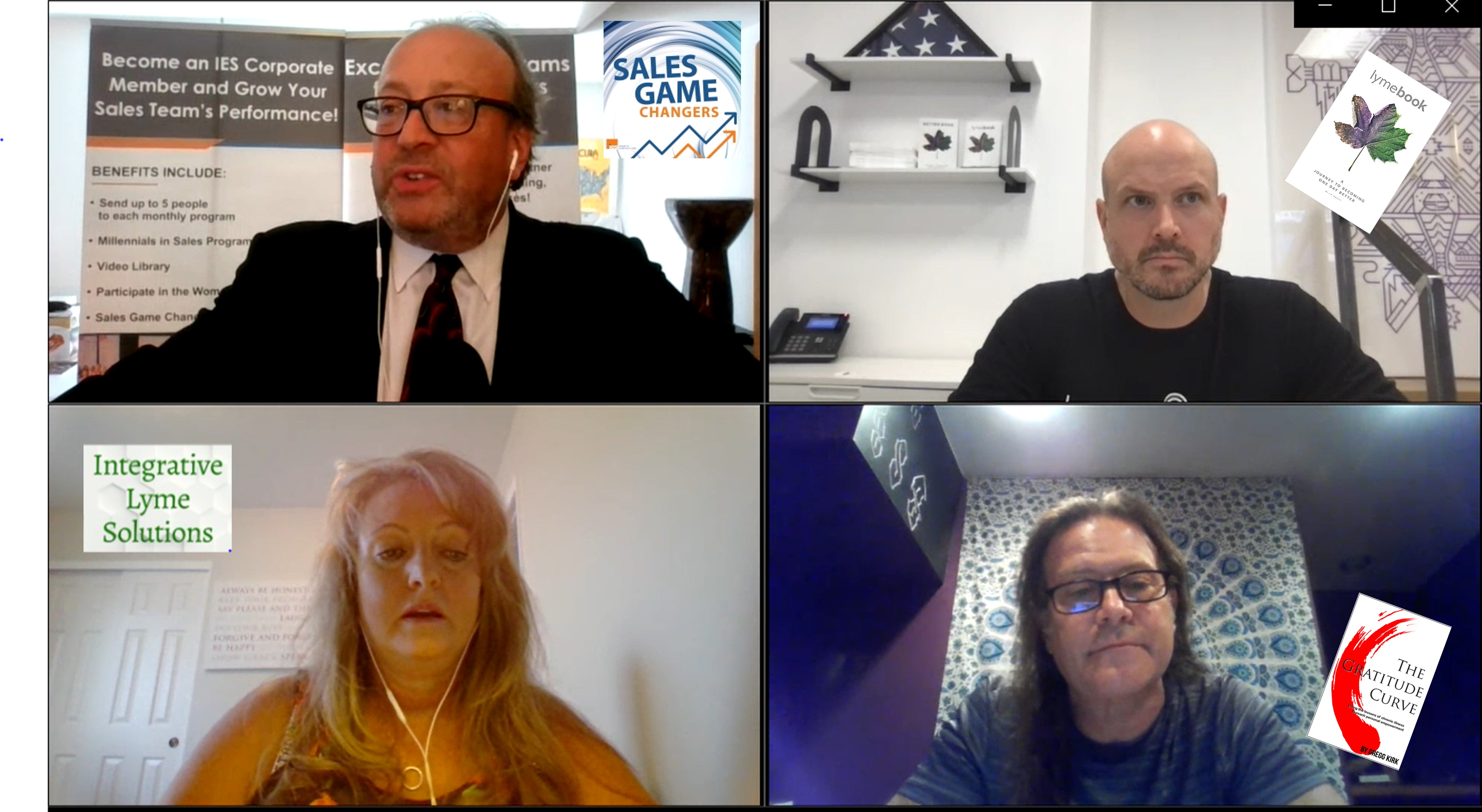
The guests included:

  • Gregg Kirk, a digital sales support marketing director who switched career paths after his decade-long struggle with Lyme disease. After reaching remission, he wrote the book “The Gratitude Curve” and founded a nonprofit Lyme patient fund called Ticked Off Foundation.
  • Tanya Hoebel, vice-president of The Lyme Center in Chico, California, as well as the co-host of the Integrated Lyme Solution podcast.
  • And JP Davitt, founder of Lymefriends and the author of “LYME BOOK: A Journey to Becoming One Day Better.” After overcoming chronic illness, he’s been focused on helping others make one day better.

All three have found their life’s purpose in helping others who are struggling with Lyme disease.

The shift to recovery

I asked when the shift to recovery took place and then how did this define their mission.

Gregg Kirk said, “The shift started when I was at my worst, I was at the point where I wanted to die. It was one of these weird situations where I wanted to die but I kept hanging around. Then I started looking inward. Why am I still here and why have I gone through this? Is this some kind of weird karma thing? Did I deserve this? Did I kill someone in a past life? Why am I going through all this mental and physical punishment? Then after I had that night, I let everything go. I just felt like my life had burnt to the ground and I started looking at my life in a different way.”

“I started thinking, maybe this disease is pointing me in a direction. Maybe I was going in the wrong direction in my life, as much as I liked my life at the time. I just started to let it happen. And the less I resisted, the more things started changing in very unexpected ways,” he said.

Tanya Hoebel said, “When I was nearing the end of my treatment, that was about 9 years into my illness, I could for the first time see the light at the end of the tunnel. I really had some faith that I was going to get better. I didn’t let it physically or emotionally ruin me because I continued to fight back. I thought, how can I possibly allow another human being go through even one day of what I’ve gone through over the last 9 years? My life changed at that moment.”

JP Davitt said, “When I was sick, I dreamt of a platform that would allow sick people to connect more easily with one another. I imagined a social platform that was more like online dating for wellness. I created an interactive health and wealth advisory practice, and my passion became my niche.”

Mission and meaning

I then asked them specifically what they created to further their mission and how it’s put more meaning into their life.

Tanya said, “I’m so thankful that I found another resource to end my suffering. It proved to me also, that someone on top of the world emotionally, financially, and at the top of their career like I was prior to Lyme can in one moment lose it all. I could have been one of those people homeless on the streets that you see roaming around and you often wonder why they’re there. That is what Lyme disease does physically, emotionally, and financially.”

“Because this positive person, me, contemplated suicide at one point, I thought I’ve got to do something, I’ve got to make a difference. That is when I became so involved in advocating for Lyme. I run a nonprofit organization, it’s called The Lyme Center, it’s based out of Chico, California and our mission is to educate and advocate for Lyme.”

“I’m also the co-founder of an incredible mentoring group on Facebook. This group has proved to be more than I ever dreamt it to be in such a short amount of time. We offer lots of treatment options and help educate them on so many different levels of Lyme because there are so many facets of it. I even managed to find time to cohost a weekly podcast, Integrative Lyme Solutions.”

JP said, “Lymefriends is a platform that acts like a dashboard for people with Lyme disease to go to, a one-stop-shop for all of the resources. I collect resources without worrying about any competition bringing everything together to help them finance sooner.”

“Whenever I was sick and having to streamline my efficiency with my body, it really taught me a lot about processes. Learning a lot about this process as I carried that over to healthcare and I was able to them form a goal to not just help with Lyme disease, but my goal really in the grand picture is to change the literacy and vocabulary of healthcare using technology.”

Gregg said, “There is a patient care problem. People have no money and they’re not getting diagnosed properly. When they finally are, they’re not getting the proper care.”

“I thought, if I had a billion dollars, what would I do? I thought I would create a healthcare system, like an insurance system that funded treatment because most of the treatments that worked for me were not covered by insurance, the herbal treatments and so forth. I thought, I don’t need to wait until I’m a billionaire, I can start a foundation, a nonprofit that people come to us, they get qualified through some documentation, and we give them monthly stipends. We’ve been able to help many people get the treatment they need.”

It was very inspiring to hear from some people who have overcome Lyme disease and have been able to give back in a big way and to give their lives more purpose.

The same can happen for you.

Fred Diamond is based in Fairfax, VA and can be contacted via Facebook. For a living, he runs the Institute for Excellence in Sales and hosts the Sales Game Changers Podcast. Someone close to him is a chronic Lyme survivor, which led to his Lyme-related advocacy.