Archive for the ‘Prevention’ Category

Ask the Expert: 6 Tips for Creating a Tick-Free Zone in Your Yard

https://www.dispatch.com/story/lifestyle/home-garden/2022/04/24/ask-expert-tips-bug-bites-ticks-mulch-advice  Video Here (Approx. 1 Min)

Ask the Expert: 6 tips for creating a tick-free zone in your yard

The Columbus Dispatch

Editor’s note: Throughout the growing season, Mike Hogan, OSU Extension Educator for Agriculture & Natural Resources in Franklin County, will answer gardening questions submitted by Dispatch readers. Send your questions to hogan.1@osu.edu.

Q: Last summer while spending time in our backyard, ticks appeared on my legs on many occasions. Is there a pesticide that can be used early in the spring to prevent ticks from infesting the yard later this summer?

A: There are pesticides available that control ticks — they are called acaricides — but relying on the use of such products is rarely an effective season-long strategy if the environment is favorable for ticks.

Here are some tips to create a tick-safe zone in your yard:

  • Clear tall grass and brush around the home and at the edge of the lawn.
  • Place a 3-foot-wide barrier of wood chips, mulch or gravel between lawns and wooded areas.
  • Mow the lawn frequently and keep leaves raked.
  • Stack firewood neatly and in a dry area to discourage rodents, which ticks feed on.
  • When locating playground equipment, patios and decks, try to place these areas away from wooded areas and trees and in a sunny location when feasible.
  • Remove any trash and unused items from the yard, because these materials may give ticks a place to hide.
The practice of mulching too deeply, knwn as volcano mulching can slowly kill trees and shrubs.

Q: I have had a disagreement with our landscaper the past few years about mulch beds in our yard. Our landscaper says that new mulch should be added each spring, but the mulch is getting deep and I do not see a need for adding more mulch. Do you have any thoughts on this issu

A: Yes! The main thought is that mulch should never, ever, ever be more than 2 to 4 inches deep. Ever! No matter where the mulch is located -— in flower or perennial beds, shrub beds, vegetable gardens, and particularly around trees in the landscape, mulch should be spread to a thickness of no deeper than 4 inches.

(See link for article and video)

__________________

SUMMARY:

  • Please see this article for info on how to dress, protect your yard, protect your pets, and properly use acaricides.
  • The expert talks about volcano mulching, which is harmful to trees, shrubs and other woody ornamentals due to causing oxygen deprivation to the roots of the plant, as well as repelling away water if it becomes compacted.  Also make sure to put mulch 2-3 inches away from the trunk of the tree.
  • Before adding new mulch to an area with pre-existing mulch, remove some of the old mulch first so depth never exceeds 4 inches.
  • Essentially you want to make your yard a tough place for ticks to survive by keeping it cleared of debris.  Also, repel wildlife that ticks travel on.  Bird feeders and bird baths draw birds into the yard, as well any other food that will draw wildlife.

Spring is Here! Prescribed Fire, Ticks, & How They Are Connected

https://naturalcommunities.net/blogs/news/do-you-have-the-tick-tickles

Spring is Here! Prescribed Fire, Ticks, and How They Are Connected

Finally, spring is here! With temperatures warming and the snow melting, it also means it’s the beginning of prescribed fire season.  The window after snowmelt and before growing season is the ideal time of year to get out and run fire through your managed natural areas, to reduce invasive species and promote our native plants.  But these warmer temperatures also mean something else will be joining us outdoors, something much less welcome – ticks.  While prescribed fires and ticks may seem like separate topics, recent research has indicated that how we manage our natural areas and how frequently we encounter some species of ticks may be more closely linked than we’ve realized.

Prescribed fires may be something you’ve heard about before, and they’re a worthy management tool to bring up again now that we’re in spring burn season.  For many natural areas in the Midwest, prescribed fires are an integral part of the ecological flywheel and are a tool that’s been used for thousands of years to control unwanted plants and promote the growth of beneficial native plants.  Particularly in the ‘establishment and management’ spoke of the ecological flywheel, controlled fire can be one of the most powerful and effective tools to managed restored areas by promoting native plant vigor, as many of our beneficial native plants are adapted to (and benefit from!) fire whereas invasive species are not.  It is also a way to prepare the seedbed for many perennial grasses and other plants, as they require bare mineral soil for germination and fires release nutrients back into the soil.

Ticks are also something you’ve likely heard about before, as they are an unfortunate but natural part of the midwestern landscape.  There are three species commonly encountered here in Illinois and much of the Midwest: the black-legged (deer) tick, the American dog (wood) tick, and the lone-star tick, and all three species carry various pathogens.  They can also be found in a variety of natural landscapes, with the black-legged ticks and lone star ticks generally found amongst leaf litter in woodlands, and American dog ticks found along grassy edges of woodlands and grasslands.

So, what do these two aspects of spring have to do with one-another?  More than you may think, and it all has to do with the habitat requirements of ticks.  Ticks depend on the right type of ‘micro-climate,’ the atmospheric conditions immediately around the animal that may be different from the overall landscape.  In particular, many ticks are susceptible to desiccation if they are in too dry of an environment, and so they need a micro-climate that protects from wind, has higher temperatures, and holds moisture.  As it turns out, this is the exact type of micro-climate that many unburned environments provide, as the soil is covered by leaf litter and the understory is sheltered by invasive species like Eurasian honeysuckle and buckthorn.

Recent research may indicate that frequent prescribed fires can reduce the likelihood of tick encounters, and therefore reduce the risk of contracting tick-borne diseases.  Prescribed fires can reduce the invasive plant species that provide a conducive micro-climate for ticks, as well as reducing leaf litter where ticks find cover.  This opens the habitat to lower temperatures and less moisture.  Prescribed fires can also reduce ticks by direct mortality, as most ticks are slow moving and can’t actively escape an area being burned.  In addition, most prescribed fires take place over larger areas, extending the time needed for ticks to recolonize those burned sites when compared to smaller burned areas.  All of this is beginning to point to frequent prescribed fires being an effective tool in reducing tick abundance.

While it’s too early to know all the details of how prescribed fires can reduce tick abundance, the many other benefits of fire as a management tool are well-known.  If you are a municipality, park district, or land manager, sign up for a free consultation below and we can discuss how you can utilize this age-old management practice to as part of your land management program, and how you can fill the gaps left by invasives with more beneficial native plants (and hey, if it also helps reduce tick abundance, that’s a pretty sweet tool!).

Andres Ortega

Military, Family Members, and Lyme: Being Shot At Not As Bad As Gaslighting, Abandonment, and Betrayal

https://danielcameronmd.com/are-military-family-members-at-risk-for-lyme-disease/

Are military family members at risk for Lyme disease?

It is often suggested that military service members are at an increased risk for contracting Lyme disease, given that they frequently work outdoors in tick-habitats, surrounded by tall grass, brush, weeds and leaf litter. But what about their family members? Are they safer?

A study by Schubert and Melanson, entitled “Prevalence of Lyme Disease Attributable to Military Service at the USMA, West Point NY: FY2016–2018,” looks at the exposure of military personnel and their families to the Ixodes scapularis (or black-legged) tick, the vector of Lyme disease. [1]

The authors examined cases of Lyme disease treated at a hospital on the West Point Military Reservation, in New York between 2016 and 2018. Out of 144 cases identified, 63 involved military personnel, but family members accounted for 81 cases.

The period prevalence of Lyme disease for military personnel was 292 encounters per 100,000 during a 3-year period. However, family members were at greater risk, with a period prevalence of 581 cases per 100,000.

These findings “show a difference in period prevalence between service members and family members,” writes Schubert, “with the family members being at higher risk to contract Lyme instead of service members, as is commonly suggested in the literature.”

The authors point out that further research is needed to determine if these findings were specific to West Point or are comparable across the military. Tick exposure, they write, may have been less at West Point than at other military locations.

“At West Point, the majority of active-duty military work indoor jobs during the academic months and spend limited time in a training field environment,” Schubert points out.

Interestingly, however, “the data presented here suggest that proper personal protective measures (Permethrin treated uniforms and tick check training) have a significant effect on Lyme disease period prevalence,” since military personnel who were better protected and trained were less likely to contract Lyme disease.

The authors did not discuss the outcomes for the 63 Lyme disease cases.

References:
  1. Schubert, S. L. and V. R. Melanson (2019). “Prevalence of Lyme Disease Attributable to Military Service at the USMA, West Point NY: FY2016-2018.” Mil Med.

_____________________

https://danielcameronmd.com/soldier-dismissed-failing-lyme-disease-treatment/

Soldier dismissed from active duty after failing Lyme disease treatment

soldier-lyme-disease-treatment

Welcome to another Inside Lyme Podcast with your host Dr. Daniel Cameron. In this episode, Dr. Cameron will be discussing the case of a 21-year-old soldier who was dismissed from active duty after failing treatment for multiple illnesses including Lyme disease.

The case was first described by Melanson and colleagues in a paper entitled “The Epistemic Fallacy: Unintended Consequences of Empirically Treating (Clinically Diagnosed) Chronic Lyme Disease in a Soldier.”1

“A 21-year-old, Division 1 student athlete patient presented with heart palpitations and frequent unprovoked adrenaline rushes,” wrote the authors. His symptoms were initially dismissed as stress.

Four months later, testing for Epstein-Barr virus was positive but serological testing for Lyme disease was negative. “He was diagnosed with EBV reactivation and prescribed rest and recovery,” the authors wrote.

The man graduated but remained on medical leave since his symptoms had not resolved.

He was presumed to suffer from persistent mononucleosis like symptoms and Traumatic brain injury (TBI) attributed to possible post-concussion syndrome related to sports injuries, the authors explained.

The patient was then treated with Hyperbaric Oxygen Therapy (HBOT). However, after two sessions, it was discontinued due to an increase in symptoms including heart palpitations, flank pain, myalgias, and neuropathy.

CLICK BELOW TO LISTEN TO PODCAST

Although repeat testing for Lyme disease was negative, the man was treated clinically for Lyme disease based on symptoms, possible tick exposure during military trainings and the lack of other definitive findings.

He received three courses of doxycycline. Further Lyme disease tests were inconclusive.

The patient was forced to stop treatment after it worsened his symptoms, causing an increase in joint pain, intermittent nerve pain, headache, fatigue, cognitive difficulties, anxiety, mild depression, and increased chest pain.

The patient then sought treatment with a functional medicine doctor. His workup focused on mycotoxicosis in part due to his living and training environments.

He had a homogeneous single nucleotide polymorphism in the MTHFR gene suggestive a low level of metabolic detoxification and an abnormal mycotoxin urine panel.   He was treated for 3 months with IV phosphatidylcholine (up to 10 amps), IV glutathione (1,200 mg), IV Leucoviron (10mg), and subcutaneous B12 (1000 micrograms). He had minor improvements in fatigue and stamina but stopped after 3 months due to cost. His follow-up urine mycotoxin urine panel was negative.

The man remained ill and “was unable to perform moderate-or-strenuous physical exercise or cognitive activity due to the following symptoms:

  • cognitive impairment affecting short-term memory and ability to focus
  • severe fatigue, and post exertion malaise
  • asthma and increasing allergic-type reactions with chemical and food sensitivities as well as histamine intolerance
  • progression to heat/ultraviolet induced urticaria

“Additionally, the patient struggled emotionally with anxiety, depression, environmental stimulation (such as bright and flashing lights and loud noises), and sensitivity to stress.

He was subsequently diagnosed with chronic fatigue syndrome/myalgic encephalomyelitis (CFS/ME) following resolved acute mycotoxicosis.

The young man was considered unfit for duty by the Army Medical Evaluation Board for the following reasons: “Lyme disease, mycotoxicosis, chronic fatigue syndrome, allergic rhinitis and vasomotor rhinitis.”

The authors did a great job of describing the severity of symptoms and poor function of a soldier despite evaluation and empiric treatments for CFS/ME, following resolved acute mycotoxicosis and Lyme disease. Unfortunately, the soldier was unfit for duty despite extensive treatment for a wide range of illnesses.

The following questions are addressed in this Podcast episode:

  1. Have you seen patients with this range of symptoms?
  2. What is HBOT?
  3. What is integrative medicine?
  4. What is empiric treatment?
  5. Was Lyme disease a consideration?
  6. What other illnesses were considered?
  7. Are their patients with Lyme disease that fail treatment?
  8. Are their patients with the other illnesses discussed failing treatment?

Read comments on this blog from FaceBook readers

Thanks for listening to another Inside Lyme Podcast. Please remember that the advice given is general and not intended as specific advice to any particular patient. If you require specific advice, please seek that advice from an experienced professional.

References:
  1. Melanson VR, Hering KA, Reilly JL, Frullaney JM, Barnhill JC. The Epistemic Fallacy: Unintended Consequences of Empirically Treating (Clinically Diagnosed) Chronic Lyme Disease in a Soldier. Med J (Ft Sam Houst Tex). Jan-Mar 2022;(Per 22-01/02/03):50-55.
Related Articles:

Lyme disease forces 24-year-old army officer out of military

Study explores the risk of tick bites among german military personnel

Military dependent child contracts Lyme disease abroad

____________________

https://www.lymedisease.org/tbdwg-feb28-malachowski/

Being shot at in combat not as bad as mistreatment for Lyme disease

Feb. 28, 2022

Col. Nicole Malachowski delivered the following public comment to the February 28, 2022, meeting of the federal Tick-borne Disease Working Group.

I’m Colonel Nicole Malachowski, United States Air Force, Retired.

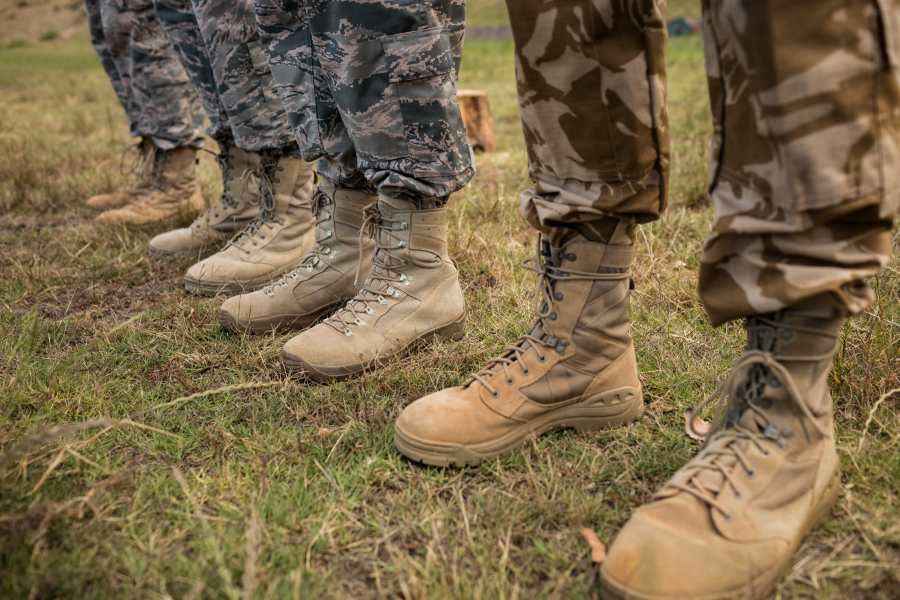
Lyme disease & tick-borne illness pose a unique risk to military service members, their families, and our veterans. This cohort is high-risk, due to the unique exposures of global military service. This is a Military Readiness issue.

In 2017, after 21 years of honorable service as a fighter pilot, I was medically retired after being found “100% unfit for duty due to chronic systemic tick-borne illness.”

Since my retirement, I’ve served as a trained Air Force Wounded Warrior Program Mentor (no endorsement implied) to airmen facing medical discharge. Not a month goes by that I’m not working with someone dealing with Lyme disease.

Front line medical providers in the Department of Defense (DoD) and Veterans Administration (VA) are not properly trained to consider Lyme disease and global strains of Borrelia in their differential diagnosis.

We are medically retiring honorable service members that are undiagnosed and misdiagnosed.

Millions of dollars in training goes to waste

This is unacceptable. Our taxpayers have invested millions of dollars into the training of our military members, and in too many cases, the American public is not getting a proper return on their investment.

The CDC increased its Lyme disease case count to 476,000 annually. That number is low. Why? They choose not to include the medical records of the largest healthcare system in America: the DoD and the VA.

Even if they did, the case count would still be low because the DoD and VA rely heavily on serology and the 2-tier testing system meant for surveillance use only. Front line DoD and VA medical providers are untrained to, and uncomfortable with, making a clinical diagnosis.

It took me four years to get the VA disability system to recognize the very illness for which I was medically discharged. As part of this battle, they forced me to succumb to a psychological evaluation to ensure my chronic symptoms were not psychosomatic. The indignity of this insulting appointment was swept away by the psychiatrist’s findings, which concluded my chronic illness is, in fact, physical in nature.

Yet, she did diagnose me with “medically-induced PTSD.” She accurately pinpointed the damage done by years of struggle for diagnosis, access to care, treatment, disability benefits, and the appalling lack of support from both the DoD and VA.

Abandonment and betrayal

Think about it: I’ve been shot at in combat, but that is not what caused my PTSD.  It was caused by the unnecessary controversy surrounding Lyme disease, years of gaslighting, abandonment and betrayal by the DoD, an abysmal lack of education & awareness by front line clinicians, poor diagnostics, therapeutic standards that did not cure me, and a VA disability system that fails to understand chronic tick-borne illness.

Our service members, military families, and veterans deserve better. This requires a whole of government approach, one that the DoD and VA are uniquely suited to positively impact.

This is, indeed, a military readiness issue. You want to thank me for my service? Fix this problem. Thank you.

Col. Nicole Malachowski was the first female Thunderbird pilot. In addition to commanding a fighter squadron, she served as a White House Fellow and an advisor to First Lady Michelle Obama. She is now a professional speaker and fierce advocate for the cause of Lyme and other tick-borne diseases.

For more: 

Wilderness Medical Society Writes Clinical Practice Guidelines for TBI’s. They Also Are Wrong

https://www.wemjournal.org/article/S1080-6032(21)00163-0/fulltext

Wilderness Medical Society Clinical Practice Guidelines for the Prevention and Management of Tick-Borne Illness in the United States

Published:October 09, 2021DOI:https://doi.org/10.1016/j.wem.2021.09.001
The Wilderness Medical Society convened an expert panel to develop evidence-based guidelines for the prevention and management of tick-borne illness (TBI). Recommendations are graded based on quality of supporting evidence according to criteria put forth by the American College of Chest Physicians. The guidelines include a brief review of the clinical presentation, epidemiology, prevention, and management of TBI in the United States, with a primary focus on interventions that are appropriate for resource-limited settings.
Strong recommendations are provided for the use of DEET, picaridin, and permethrin; tick checks; washing and drying clothing at high temperatures; mechanical tick removal within 36 h of attachment; single-dose doxycycline for high-risk Lyme disease exposures versus “watchful waiting;” evacuation from backcountry settings for symptomatic tick exposures; and TBI education programs. Weak recommendations are provided for the use of light-colored clothing; insect repellents other than DEET, picaridin, and permethrin; and showering after exposure to tick habitat. Weak recommendations are also provided against passive methods of tick removal, including the use of systemic and local treatments. There was insufficient evidence to support the use of long-sleeved clothing and the avoidance of tick habitat such as long grasses and leaf litter. Although there was sound evidence supporting Lyme disease vaccination, a grade was not offered as the vaccine is not currently available for use in the United States.  (See Link for article)
_____________________
**Comment**
Any document that refuses to include ILADS material is rigged.  In the conclusion the authors admit:
The recommendations presented in this CPG are largely consistent with those presented by the CDC (https://www.cdc.gov/ticks/index.html)
In essence they are telling us they’ve used tax-payer dollars to tell us nothing new.
  • These guidelines are a regurgitation of the accepted narrative by a supposed “expert panel” whom were chosen based on interest or research experience.
  • They essentially sifted through The Cabal’s research with keywords, and then looked at existing guidelines and CDC references – all of which are stacked against patients, but of course were peer-reviewed.
  • They didn’t even address the polarity which exists in both Lyme/MSIDS research and clinical practice.
  • The first glaring misnomer & simplification is that they state the black-legged tick is only in the Eastern US, despite independent research showing migrating birds are spreading ticks globally and that patients are infected globally.
  • While there is a greater risk of being bitten at certain times of the year, you can be bitten 24/7/365Never forget that and never let your guard down.
  • They continue to downplay transmission if you remove the tick before 72 hours.  Don’t buy it.  I know too many who have defied this 4-cornered box, including myself.  Remove all ticks ASAP.
  • They continue to push the one-dose doxy prophylactic treatment which doesn’t work. Neither does two pills. Unfortunately, researchers still believe the EM rash is some magical symbol.  The EM rash comes and goes at will and should never be a marker for effectiveness of treatment.
  • The EM rash is a poor indicator of Lyme, and highly variable, although if you have it, you ARE INFECTED WITH LYME, no testing needed – start treatment ASAP.
  • Ironically, if the doctor can’t identify the tick, or if attachment time is unknown, they still recommend the “wait and see” approach, even though that particular refrain has caused untold damage.
  • The “experts” then give a complicated diagram showing a triage of events (many of which are faulty) leading to either remaining in the field or evacuating.  In other words, they are asking you to again trust the “experts” and their four-cornered box which has been defied again and again.
  • And lastly, and certainly expected is their belief in a Lyme vaccine as an “attractive option,” despite the fact patients have literally been maimed by it.

Increase in Tick Bites During COVID-19 Pandemic

https://danielcameronmd.com/increase-in-tick-bites-during-covid-19-pandemic/

Increase in tick bites during COVID-19 pandemic

tick-bites-COVID-19

In a recent article, “Effects of COVID-19 Pandemic on Reported Lyme Disease, United States, 2020,” McCormick and colleagues assessed how the pandemic might influence the risk of tick bites and affect patients seeking medical care and the reporting of Lyme disease cases.

“The data suggested that individuals were more likely to spend time outside, more likely to visit the CDC website describing tick bite removal, were less likely to visit an ER, and tested for Lyme disease,” according to the authors.¹

Approximately 50% of U.S. residents spent more time outdoors in 2020 than in 2019, but fewer tick bite–related emergency department visits and Lyme disease laboratory tests were reported, according to a survey by Porter Novelli.¹ “Only 20.9% of respondents reported spending less time outdoors in 2020.”

Furthermore, there was an 25% increase in visits to the CDC’s website page which describes tick bite removal procedures.

ED visits for tick bites

Despite an increase in tick bite exposures, there was a decrease in the number of individuals visiting the Emergency Department (ED) for tick bites and fewer tests for Lyme disease. “The largest relative decreases were observed in May,” according to the authors.

During the month of May, between 2017 and 2019, there was an average of 12,693 ED visits for tick bites. However, in May 2020, only 5,845 ED visits for tick bites occurred. And, the number of Lyme disease tests decreased by 25%.

“These findings suggest that the risk of acquiring Lyme disease was similar or potentially higher in 2020 compared with risk during prior years, but fewer persons sought care, and fewer positive laboratory reports were referred for case investigation.”

The authors point out, “Lyme disease case reporting for 2020 might be artificially reduced due to coronavirus disease–associated changes in healthcare-seeking behavior,” the authors point out.

 Editor’s perspective

I have had Lyme disease patients who have put delayed visiting the Emergency Department or their doctor’s office during the COVID-19 pandemic.  I’ve also had Lyme disease patients who were initially tested for COVID-19 but not Lyme disease. Their treatment for Lyme disease was delayed, making it more difficult to treat them.