Archive for the ‘Prevention’ Category

Interview: Balsam Fir Needles Kill Ticks

https://www.globallymealliance.org/videos/balsam_fir

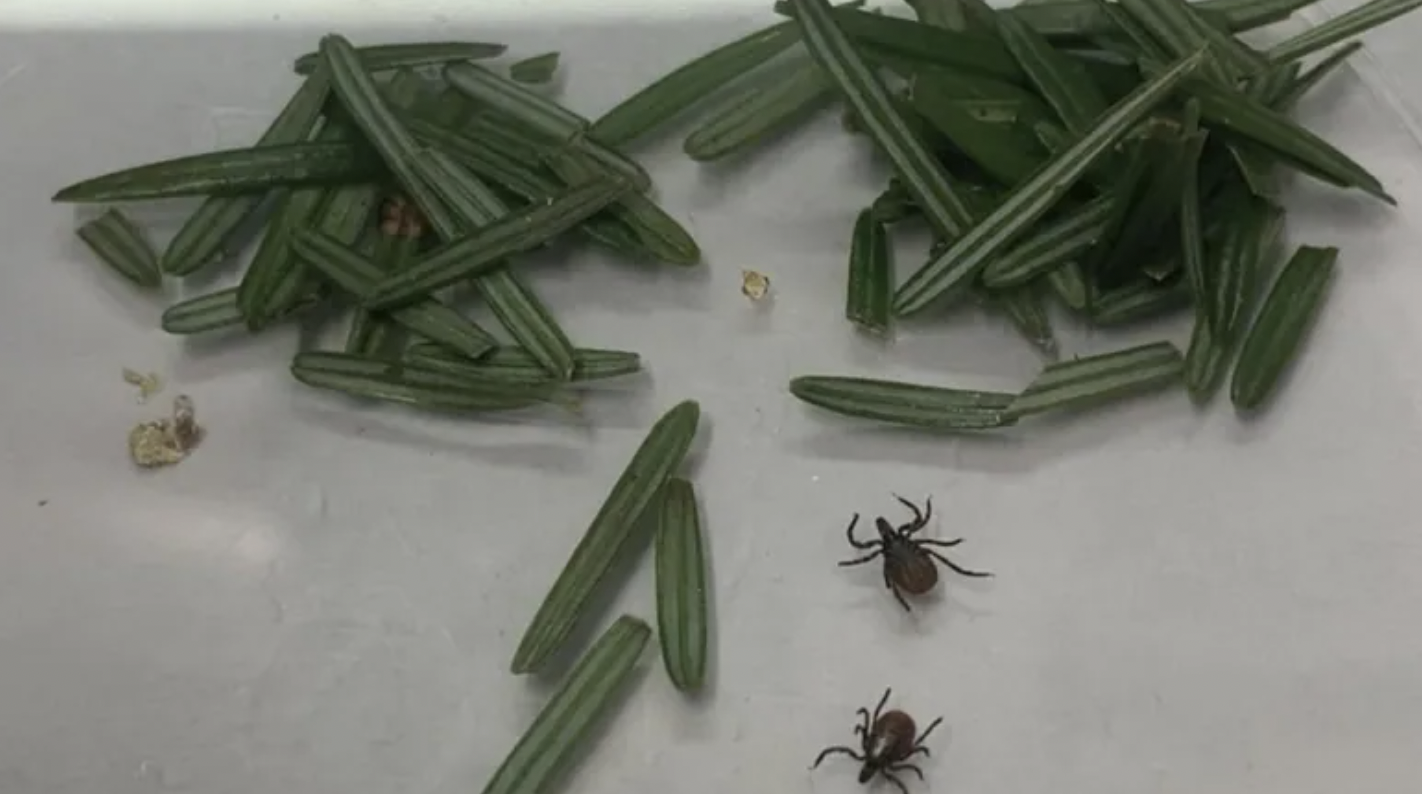
Dr. Timothy Sellati, GLA’s Chief Scientific Officer Interviews Dr. Shelley Adamo, a Professor and Researcher at Dalhousie University in Canada. They discuss her latest discovery that balsam fir needles are effective in preventing ticks from surviving winter.
So many of our readers were interested in this story, that we decided to learn more about this exciting discovery!
Watch below:

A transcript of this video is below:

note: transcript has been edited and condensed for clarity.

Dr. Timothy Sellati:

So what I’d like to do is ask you about how you determined that balsam fir needles could kill ticks, and in particular, why does it seem to only work or work better under very cold temperature conditions?

Dr. Shelley Adamo:

So what I had noticed, and this is sort of the way science works, is observation. And I know that’s why citizen science can be so powerful: You’ve got lots of people observing. So I was observing, and I just noticed that I didn’t see a lot of ticks coming out in the early spring, where there were a lot of balsam fir trees. And it was just a hunch, and so I thought, “Well, let me see.” So I brought in ticks, into the lab, and then we also had balsam fir needles, and we chopped them up, and we put them in an incubator. So it was a winter-like condition for the ticks, and they died. It took a long time to kill them, though, so it didn’t kill them right away. It took a few weeks for them to be sitting in balsam fir before they died. So then I thought, “Well, I wonder if I could make this more powerful.”

I was working with my colleague, Nicoletta Faraone, at Acadia University, who’s a chemist, and we distilled the essential oil out of the balsam fir needles. And when I used balsam fir oil, that was a lot more lethal. Now, the problem with essential oils, as probably people know, is that they evaporate, and so at warm temperatures, they disappear. So it still takes a while to kill ticks. So essential oils, particularly at the low percentages I wanted to use, because I was thinking ahead. And I know one of the questions you’re going to ask is, “Where is this going?” I wanted to make sure this wasn’t going to be lethal to other organisms, or as low lethality as I could get. So I was using very small percentages, and because of the small percentages, I needed cold temperatures, so that the essential oil would last long enough to have this slow effect on the ticks; they would slowly die. And it turns out to be amazingly effective, and that’s what we found.

So what we did was we just had the ticks in these little cotton balls, and they were each one tick per tube, and we put them in incubators to simulate winter temperatures, and we added small amounts of balsam fir essential oil, and that was in the paper. And we found that as long as the temperatures were cold, we could get 100% lethality, but if the temperatures were warm … I’m going to use Celsius, but feel free to change that to Fahrenheit for yourselves. If it’s above 12 degrees Celsius, it hardly worked at all, and it had its best effect if temperature stayed below four degrees Celsius. So we’re looking at 36, 38 degrees Fahrenheit below that.

Dr. Timothy Sellati:

So what are the next steps for the study?

Dr. Shelley Adamo:

Well, so the study is now complete, and I published those results. So what we’re working on now is something a little new for me, at least, is I would like to have a practical application to this. And ideally, what we’re working on right now is: Can we turn this into as low-toxicity product as we can, so that people could put it on their yards, for example? And over the winter, it would slowly get rid of all the ticks.

Now, there are a couple things we need to do. We realized very quickly that one, I wanted something non-toxic, so we’re only using food-grade ingredients, so literally, stuff you can eat. And also, we wanted to use very small percentages, so that we wouldn’t have toxicity on other organisms. And we needed to get into the leaf litter for this to be practically useful to people. Because maybe you don’t know: How do ticks get through the winter? They burrow into the leaf litter, and it’s like an insulating blanket. I don’t know if you had there, where you are, but we had some very cold weather recently. It went down to minus 20 Celsius, very cold. You would think all the ticks would be dead, because they’re not actually cold-loving arthropods.

But it turns out, probably not, because we had sensors. Laura Ferguson, who’s another colleague of mine, Acadia, we have sensors in the leaf litter, and it only went down to minus five Celsius, which ticks can handle. So that’s why ticks can get through the winter. So if we want to get those ticks, we have to make sure the balsam fir can go through the leaf litter and find them where they’re sleeping, basically.

And so that is our goal right now, and of course, we don’t want to use petroleum products, and we want to use literally, just food-grade materials. And I think we can do it, and we’ve got a handle on it, but we need to perfect it. So that’s one thing.

The other thing we’re doing is we need to ensure this has minimal toxicity and is ecologically safe, so we’re looking at off-target effects. Fortunately for us, most of the pollinators are not out at the wintertime, and very few of them are in the leaf litter where the ticks are. But we do need to do our due diligence, so that takes some time, and that’s what we’re working on now.

Dr. Timothy Sellati:

I mean, that’s the aspect of your work that I find most intriguing, is the idea that this provides an opportunity to apply an acaricide, something that can kill ticks, during the winter season. You talked about how the ticks can overwinter, because they’re hiding under the leaf litter. I know from my own research experience that if you don’t want the ticks to move around much, if you’re using them in the context of a mouse infection study, you keep them on ice.

But my own observation this winter, living here in Danbury, Connecticut, is that we’ve had some relatively warm days, and I’ve unfortunately had to pull ticks off of myself and off of my dogs that are playing around in the back yard, because the ticks become active again. And that’s something that’s very unusual. I think it is a reflection of the warming winters and the shorter time period that the ticks are subjected to very cold weather.

Dr. Shelley Adamo:

It’s also a function of the way ticks overwinter. Ticks are not insects, so I’ll say arthropods. Many arthropods that overwinter, they go into what’s called a winter diapause, and they are truly hibernating. So even if there’s little warm bumps in the winter, they tend not to wake up, because their bodies are physiologically changed. They’ve pumped themselves full of antifreeze proteins, and they’re just waiting.

Ticks do not do that; they just lightly slumber. You can see; that’s from their southern heritage. They didn’t evolve in Connecticut; they evolved further south. And they keep some of those traits, and you would think that that would make them susceptible to cold, and if they didn’t hide under the leaf litter or wood. But what it does mean is they are opportunistic. So as soon as temperatures go above … I’m trying to convert in my head. About four degrees Celsius. It’s got to be 40 degrees or so.

Dr. Timothy Sellati:

32 degrees Fahrenheit, yes.

Dr. Shelley Adamo:

Yeah, they wake up. It’s easy for them to wake up, because they haven’t switched their whole physiology. They’re in a light behavioral quiescent state, but it’s not a true diapause. So that’s why whenever winter temperatures get warm, and they’re desperate at that point, especially the adults. So the adult ticks that are overwintering are adult ticks that couldn’t find a host in the fall, and they’re looking hard. They would rather not get you. They’d rather get a deer, because they’re looking for mates, as well. They’re probably not going to find a mate on you.

Dr. Timothy Sellati:

Hopefully not.

Dr. Shelley Adamo:

Hopefully not. That suggests you have many ticks, which would not be good. So that is a good point to remind people, that with these warming winters, you will see ticks as soon as it’s warm enough for them to move, and it doesn’t require very much.

Dr. Timothy Sellati:

So the other question I have is related to the fact that this is an essential oil product, and again, from my own personal experience, I contacted my tick control company, and unfortunately, they informed me that they do not do spraying for ticks during the wintertime.

So do you think that this essential oil product, if it’s ultimately commercialized and made available to the public, is it something that a homeowner would be able to apply themselves?

Dr. Shelley Adamo:

I would say yes, but I think probably would be better to let a professional, because they have the high-powered nozzles, which will help these products get into the leaf litter. It’s just because of where they are, and they have the specialized equipment, and that combined with, I hope, the formulation we’re developing, which helps drag it down below the leaf litter, between the two, would probably give you good coverage. No, I think winter is overlooked. Let’s say an overlooked season for control. I think it’s got a lot of potential. These animals are not moving around very much, which means you have a good chance, once you’ve saturated an area, that they’ll stay there and let this low-toxicity product slowly kill them.

The other thing about it is that there aren’t very many other organisms around, so it can really reduce off-target effects, and the last point is it’s a vulnerable time for ticks. They actually don’t like winter very much. As I said, they’re in this behaviorally quiescent state, but they’re not comfortable in the winter, and it’s a stress for them. So if you start piling stressor upon stressor, you can really increase the lethality. And so unlike maybe some of our native insects, they’re more susceptible, and I think more fragile, at this point of time, point of the season. And I think it’s been overlooked as a method of control.

Dr. Timothy Sellati:

Okay, I’ve got one other question that unfortunately, is going to demonstrate my ignorance of chemistry. But the other intriguing idea for me is with an essential oil, it’s an oil; it’s maybe not as dissolvable in water. So do you think that once applied, the essential oil from balsam fir needles would remain longer in or under the leaf litter, even if you get a rain in the winter? That it wouldn’t necessarily wash it away as readily as in the summertime?

Dr. Shelley Adamo:

So what we found is that just plain old balsam fir needles themselves do not really control ticks in the real-world situation very well. The reason I was seeing it, it’s my self-observation, is because this was right under a balsam fir tree, and all the leaf litter was balsam fir. But typically, you have a mix, and they will move around. They will search. Ticks will move around for their favorite overwintering site, so they will not actually overwinter under balsam fir needles, if that’s all there is. They’ll move around until they can find their nice maple, oak, comfortable, cozy leaf litter.

So what we’re doing with our formulation is trying to solve exactly that problem. We’re going to encapsulate. Basically, we’re working on encapsulating the balsam fir into little basically food-grade capsules that will get into the leaf litter and slowly dissolve, and so they will stay there. That’s what we need to test, is making sure that with massive rain and snow melt, it won’t all get lost in the runoff, and that is something that we need to test.

I have some hope, just because of the type of capsules might stick to some of the leaf litter and so may not be washed away with the rain, because our winters are becoming, well, at least here in Nova Scotia, wet, because we’re going through these cycles.

Dr. Timothy Sellati:

Same here.

Dr. Shelley Adamo:

And these cycles, it’s not just rain, but snow melt. And so it’s something that we have to consider, and we are on it, but it’s one of the reasons it’s a difficult problem, and we are working on it.

Dr. Timothy Sellati:

Right, right. Well, no, what you’ve just related is absolutely brilliant. It’s the tick-control equivalent of a time-release capsule that we might take, as humans, to treat some condition.

Dr. Shelley Adamo:

Yeah, yes.

Dr. Timothy Sellati:

Well, that’s wonderful. I really appreciate your taking the time to tell us more about your fascinating research.

Dr. Shelley Adamo:

Happy to do it.  Just wish us luck for our success. We’re trying to come up with something as non-toxic and cheap as possible, so that everyone will have, I hope, reduced experience with ticks and Lyme.

Dr. Timothy Sellati:

Yes, you will be able to count me as a customer.

Dr. Shelley Adamo:

Thank you very much.

Dr. Timothy Sellati:

All right, have a good day.

Dr. Shelley Adamo:

You, too.

***

Stay up to date with the latest news & discoveries by signing up for our newsletter:

The above material is provided for information purposes only. The material (a) is not nor should be considered, or used as a substitute for, medical advice, diagnosis, or treatment, nor (b) does it necessarily represent endorsement by or an official position of Global Lyme Alliance, Inc. or any of its directors, officers, advisors or volunteers. Advice on the testing, treatment or care of an individual patient should be obtained through consultation with a physician who has examined that patient or is familiar with that patient’s medical history.





Study: Controlled Burns Reduce Ticks, Lyme Disease

https://www.bayjournal.com/news/wildlife_habitat/study-controlled-burns-reduce-ticks-lyme-disease/article

Study: Controlled burns reduce ticks, Lyme disease

By Ad Crable

Jan. 13, 2023

Prescribed fire

A prescribed fire takes place at the Arboretum at Penn State. (Courtesy of the Arboretum at Penn State)

As tick-borne Lyme disease continues to spread in Pennsylvania and other Chesapeake Bay drainage states, a new study suggests more use of prescribed burns on public and private forests could help reduce both the numbers of ticks and incidence of the disease.

In a paper published in Ecological Applications, researchers from Penn State, the U.S. Forest Service and New Jersey Department of Environmental Protection said the increased use of prescribed fire by forest managers to control invasive plants, improve wildlife habitat and restore ecosystem health can also help knock down the tick problem.  (See link for article)

________________

**Comment**

For more:

    Researchers Discover Balsam Fir Needles Kills Ticks

    https://www.globallymealliance.org/news/balsam-fir-needles-can-kill-ticks-that-cause-lyme-disease-dalhousie-researcher

    New study concludes oil in balsam fir needles is effective in preventing ticks from surviving winter

    Written by CBC News. Photo credit @Amal El Nabbout

    When Nova Scotia scientist Shelley Adamo noticed ticks avoid balsam fir trees, her professional instincts kicked in.

    Adamo, a professor in the department of psychology and neuroscience at Dalhousie University in Halifax, said she noticed ticks often didn’t survive winter on her South Shore property which has thick stands of balsam fir trees.

    Adamo said she had a “realistic hunch” that she should study the effects of balsam fir trees on Ixodes scapularis, the blacklegged tick that is a vector for Lyme disease. First discovered in Lyme, Conn., in the 1970s Lyme disease is now a common tick-borne disease that can cause fever, joint pain, rash and other longer-lasting effects.

    The results of a three-year study into how balsam fir needles could help control tick populations was published on July 29 in Scientific Reports. Adamo spoke to Emma Smith of CBC Radio’s Mainstreet NS about what she discovered.

    What did you do to determine that these balsam fir needles could could kill blacklegged ticks? 

    We tested them by collecting ticks and then we would put them in incubators and give them like a winter kind of experience.

    We put them in tubes and then we put the balsam fir in with them and they died.

    Then we tried it outdoors as well. So we worked with people at the Harrison Lewis Centre who were very good to us. They’re down in the Port Joli area between Liverpool and Shelburne, a real hotspot for Lyme.

    We collected the ticks locally so we weren’t adding ticks at least, and we put them in their own little tubes so they couldn’t get out. But it was mesh so that snow and rain could fall in.

    We put them in the tubes with balsam fir and put them out in December and collected them in March and we looked to see who lived and who died.

    Some ticks got a little layer of oak and maple leaves, which is what they like. And some of them got a layer of of balsam fir. The ones that got to live with the balsam fir needles died. Pretty much all of them.

    This could be a natural-product way to try to reduce the load of these potentially Lyme carrying ticks.

    When you collected those tubes in the spring, the ones that had the maple and oak leaves, were those tick still alive?

    They don’t all live. But surprisingly for ticks that evolved much further south, they actually can survive fairly well in in our Nova Scotian winters.

    We vary quite a bit from year to year but our survival in the maple and oak was sometimes 60 per cent, sometimes 80 per cent, whereas the survival in the balsam fir was basically zero.

    To read the full story from CBC News, click here.

    To read GLA’s blogs, click here.

    _______________

    For more:

    STARI: The Southern Tick-Borne Illness That Looks, Smells, and Acts Just Like Lyme Disease

    https://rawlsmd.com/health-articles/stari-the-southern-tick-borne-illness-that-can-mimic-lyme-disease?

    STARI: The Southern Tick-Borne Illness That Can Mimic Lyme Disease

    by Stephanie Eckelkamp
    Updated 10/27/22

    There’s a false narrative that tick-borne diseases aren’t much of a problem in southern states, but we know this to be far from the truth. Not only is Lyme disease present, but ailments like Heartland virusehrlichia, and Rocky Mountain spotted fever can be a big problem for people and pets — so it’s important to keep yourself protected.

    One primarily southern tick-borne pathogen that’s gotten very little attention is STARI (southern tick-associated rash illness). STARI has caused confusion among doctors and patients because some of its early symptoms closely mimic those of Lyme disease. The promising news: STARI appears to be far less detrimental to long-term health than Lyme.

    Here, we cover the signs and symptoms of STARI, how it differs from Lyme, what ticks carry it, and how to protect yourself.

    What Is STARI?

    STARI is an emerging zoonotic disease transmitted by the bite of the Lone Star tick, which often results in a red, ring-like rash with a central clearing that is almost indistinguishable from the erythema migrans bullseye rash sometimes seen in Lyme disease. The exact causative pathogen is still up for debate — while it was once thought to be caused by the Borrelia lonestari spirochete bacterium, this spirochete has not been detected in all cases of the illness.

    binoculars icon

    Where Is It Most Commonly Found?

    STARI isn’t a reportable condition, meaning it’s not required to be reported to public health agencies at local, state, or national levels. Therefore, it’s hard to get a clear breakdown of where exactly STARI is most concentrated, plus it may be misdiagnosed as Lyme. But in general, you can expect to find it where you’d discover Lone Star ticks — throughout south-central, southeastern, and eastern states.

    While these ticks may be more concentrated in the south, their range spans eastward from central Texas and Oklahoma and up the Atlantic coast as far north as Maine. And scientists believe they’ll only get more common in northern states as global temperatures rise.

    icon of human and warning symbol

    What Are the Symptoms?

    A key feature of STARI is the red, ring-like rash with a central clearing surrounding the area of a tick bite. This rash usually appears within a week of the tick bite and may expand to three inches in diameter or more. The STARI rash is generally smaller, more circular, and less tender than a Lyme disease rash (which can reach 12 inches in diameter). Keep in mind that the saliva of Lone Star ticks can irritate the skin, so redness and discomfort aren’t always signs of infection. Nevertheless, any skin irritation after a tick bite is always worth monitoring.

    bullseye rash on womans leg

    Other symptoms of STARI may include:

    • Fatigue
    • Headache
    • Fever
    • Muscle aches
    • Joint pain

    Fortunately, no long-term symptoms related to STARI have been reported, and the tick-borne illness hasn’t been associated with arthritic, cardiac, or neurologic manifestations in patients.

    STARI vs. Lyme: What Are the Key Differences?

    While there is clearly a lot of overlap between the symptoms of STARI and the early symptoms of Lyme disease, data suggests patients with STARI are less likely to experience neck stiffness, joint stiffness, and swollen lymph nodes than patients with Lyme, as well as the more severe symptoms mentioned above. Additionally, a study from 2005 comparing STARI patients in Missouri to Lyme disease patients in New York noted several other differences:

    • STARI patients were more likely to recall a tick bite than Lyme patients.
    • The time from tick bite to rash onset was shorter in STARI patients (approximately six days).
    • STARI patients with a rash were less likely to have other symptoms.
    • STARI patients were less likely to have multiple skin lesions than Lyme patients, and (as mentioned above) they tended to have rashes that were smaller and rounder.
    • STARI patients recovered more rapidly after antibiotic treatment than Lyme patients.

    icon of medical capsule

    How Is It Diagnosed and Treated?

    Because scientists haven’t actually determined the exact causative agent (e.g., whether it stems from a bacterium, virus, parasite, etc.) that leads to STARI, diagnostic tests have not been developed. Doctors typically use a patient’s symptoms, geographic location, and the possibility of a tick bite to make a diagnosis. Of course, due to the fact that there is significant overlap in the symptoms of STARI and Lyme disease, there’s a real possibility for misdiagnosis.

    It’s unknown whether antibiotics help treat STARI, but because this illness so closely resembles early Lyme, doctors often prescribe them to be safe. To date, STARI symptoms have resolved following oral doxycycline treatment, but it’s uncertain if the drugs do anything to speed recovery.

    How to Protect Yourself

    You certainly want to do what you can to protect yourself from the bite of a Lone Star tick. In addition to STARI, these ticks are known to transmit ehrlichiosis, Heartland virus disease, Bourbon virus disease, and tularemia. The bite of a Lone Star tick can also sometimes lead to alpha-gal syndrome, a potentially life-threatening allergic reaction to red meat.

    Lone Star ticks are known to aggressively target and bite both humans and pets. So taking steps to protect yourself and to prevent them from hitching a ride into your home on Fido is key.

    Some good strategies:

    • Wear protective clothing when out in nature and shower afterward
    • Avoid brushy areas and stay on the trail when hiking
    • Perform regular tick checks
    • Use an effective tick repellent, featuring essential oils like oil of lemon eucalyptus or insecticides such as DEET, picaridin, or permethrin.

    If you get bitten, remove the tick promptly and carefully, following the steps in this article. If you save the tick, you might want to consider sending it to a laboratory such as IGenex or Ticknology to be tested for pathogens.

    Pets should be subject to frequent tick checks, too, and you should strongly consider putting your dogs on some type of oral tick-preventative treatment. (Read this article for veterinary-approved tips on protecting your pets from tick-borne pathogens.)

    Bottom Line

    STARI is a tick-borne illness that closely resembles early Lyme disease, but fortunately, it is unlikely to cause long-term illness, and it may respond well to antibiotic treatment. However, you also have to be mindful of coinfections — the Lone Star ticks that transmit STARI may also transmit a variety of other serious bacterial and viral infections.

    As with any tick-borne illness, prevention is the best medicine. But taking steps to boost your body’s natural defenses by eating a nutritious dietexercising, getting enough sleep, and consuming phytochemical-rich herbs, including Japanese knotweedcat’s clawandrographisChinese skullcapreishicordyceps, and garlic, may also offer a layer of protection and support overall health before or after a tick bite.

    Dr. Rawls is a physician who overcame Lyme disease through natural herbal therapy. You can learn more about Lyme disease in Dr. Rawls’ new best selling book, Unlocking Lyme. You can also learn about Dr. Rawls’ personal journey in overcoming Lyme disease and fibromyalgia in his popular blog post, My Chronic Lyme Journey

    REFERENCES
    1. Abdelmaseih R, Ashraf B, Abdelmasih R, Dunn S, Nasser H. Southern Tick-Associated Rash Illness: Florida’s Lyme Disease Variant. Cureus. 2021;13(5):e15306. Published 2021 May 28. doi:10.7759/cureus.15306
    2. Lyme Disease. Mayo Clinic website. https://www.mayoclinic.org/diseases-conditions/lyme-disease/symptoms-causes/syc-20374651
    3. Lyme Disease Maps: Most Recent Year. Centers for Disease Control and Prevention website. https://www.cdc.gov/lyme/datasurveillance/maps-recent.html
    4. Slide show: Guide to different tick species and the diseases they carry. Mayo Clinic website. https://www.mayoclinic.org/tick-species/sls-20147911?s=7
    5. Southern Tick-Associated Rash Illness. Centers for Disease Control and Prevention website. https://www.cdc.gov/stari/index.html
    6. Upstate tick expert predicts huge season for ticks. Upstate Medical University website. https://www.upstate.edu/news/articles/2022/2022-03-24-ticks.php
    7. Wormser GP, Masters E, Liveris D, et al. Microbiologic evaluation of patients from Missouri with erythema migrans. Clin Infect Dis. 2005;40(3):423-428. doi:10.1086/427289
    ___________________
    **Comment**
    It must be understood that patients in the South have had an extraordinary hurdle to overcome regarding tick-borne illness as “authorities” simply state it doesn’t exist there.  For years, and to this day, doctors illogically look at a map and announce it can not be Lyme disease.
    Please remember ticks travel on birds, reptiles, mammals, and go everywhere.

    http://  Approx. 5 Min

    Dr. Alan McDonald, Dr. Klinghardt, & Dr. Martz on Borrelia, Lyme, Alzheimer’s, Parkinson’s, ALS, MS and more

    Clip from Under Our Skin

    It’s important to remember that new strains of borrelia and other coinfections are being discovered continually.  Rather than studying this crucially important topic and how it affects testing, diagnosis, and treatment, researchers receiving government grants are forever stuck on ‘climate change,’ a hotly contested topic which hasn’t helped patients in over 40 years.

    Could Prescribed Fire Reduce Ticks & Their Diseases? Answer: YES, Once Again

    https://www.lymedisease.org/prescribed-fire-reduce-ticks/

    Could prescribed fire reduce ticks and their diseases?

    By Chuck Gill, Penn State

    Oct. 24, 2022

    Prescribed fire — a tool increasingly used by forest managers and landowners to combat invasive species, improve wildlife habitat and restore ecosystem health — also could play a role in reducing the abundance of ticks and the transmission of disease pathogens they carry, according to a team of scientists.

    For a recently published paper, the researchers reviewed the scientific literature on the effects of fire on forest composition and structure and its influence on ticks and their wildlife hosts.

    They concluded that prescribed burning can help restore forest habitats to a state less favorable to several species of disease-carrying ticks and could be an effective management tactic for reducing their populations. READ MORE

    ________________

    **Comment**

    This should be a no-brainer.  I’m continually amazed with the lack of common sense in research.  Seems all that matters is continuing the machinery (money and power grabs) of research.

    The question to ask is, now that this information continues to be proven, will anyone do it?  How many years will it take before this effective practice will once again be permitted?

    For more: