Archive for the ‘Mycoplasma’ Category

Of Birds and Ticks

http://mainepublic.org/post/battle-against-ticks-and-lyme-disease-scientists-look-skies#stream/0

In the Battle Against Ticks and Lyme Disease, Scientists Look to the Skies

  JUL 3, 2017

As we head into the Maine outdoors this summer, the all-too-familiar warnings about how to avoid ticks reverberate in many of our heads.

Stay on the trail. Steer clear of wooded and brushy areas where ticks congregate.

But while most of us take pains to dodge the eight-legged pests, Chuck Lubelczyk heads straight for them.

As a field biologist at the Maine Medical Center Research Institute’s Lyme and Vector-Borne Disease Laboratory, he studies the spread of diseases carried by ticks, as well as by mosquitoes. That means venturing out into the fields, forests and coastlines of Maine to collect the bugs and evaluate where they pose the most risk to humans.

On a recent June day, Lubelczyk trudged into the greenery of the Wells Reserve, a 2,250-acre spread in York County headquartered at a restored saltwater farm. He partnered with researchers from the Biodiversity Research Institute in Portland to collect ticks from creatures less often associated with them: birds.

The team, assisted by several interns, set up wide nets to ensnare the birds as they flew through the area. They then delicately extricated them, tucked the birds into breathable collection bags, and toted them to a shady picnic table for easier handling. Using tweezers, the team plucked off each tick — typically feasting around the birds’ eyes, bills, and throats — and preserved the bugs for later testing at the lab.

Lubelczyk held up a vial containing at least 50 tiny nymphal deer ticks swirling in a preservative solution. They’d been tweezed off a single bird, a towhee, that morning.

Once free of ticks, the birds were then safely released to continue on their way.

https://bangordailynews.com/video/ticks-on-migratory-birds/ (Video here)

While mice, chipmunks and deer get most of the attention as hosts for ticks, “Not a lot of people talk about the bird issue,” he said. “They’re understudied in a big way, I think. They do have a real role to play.”

Ticks are an annoyance to birds, but they don’t transmit disease to them or slowly and lethally drain them of blood, as researchers have seen among moose calves in Maine. But birds facilitate the spread of ticks, picking them up in Maryland, Connecticut and other eastern states as they fly north in the spring, Lubelczyk explained.

“As they’re migrating, they’re either dropping the ticks off as they fly or when they land. They’re kind of seeding them along migration patterns.”

Emerging diseases

By tracking the birds and the ticks they carry, researchers hope to predict where Lyme and other tick-borne diseases are most likely to accelerate. Lyme is now present in every county in the state, after hitting a record of 1,488 cases in 2016, but ticks are just getting established in areas such as Aroostook and Washington counties, Lubelczyk said.

Along with Lyme, Lubelczyk tested the ticks for other two other emerging diseases, anaplasmosis and the rare but potentially devastating Powassan virus. Powassan, carried by both the deer tick and the groundhog or woodchuck tick, recently sickened two people in midcoast Maine, following the death in 2013 of a Rockland-area woman.

A recent survey Lubelczyk led found the virus in ticks crawling around southern Maine, Augusta and on Swan’s Island in Hancock County.

In the modest Scarborough lab, medical entomologist Rebecca Robich furthered the findings of that survey. Clad in a white coat and blue gloves, she cloned a tiny band of the Powassan virus’ inactivated RNA, using a sample derived from the ticks that tested positive in the survey. Robich began the work, designed to confirm the earlier test results, last winter.

She expects to know conclusively within the next month what percentage of the sampled ticks were infected with Powassan, she said.

“We’re this close to finishing,” Robich said.

Growing exposure

Ticks have become so prevalent in Maine that Lubelcyzk and his colleagues are increasingly called upon to educate the public about the health risks the arachnids pose. That includes speaking at community forums, town meetings, garden clubs and even to groups of employees.

“They’re widespread enough now that DOT, CMP, people like that are bumping into them on a regular basis,” he said. “Even people like law enforcement. The warden service, regular police with police dogs, they’re exposed.”

Their outreach also includes plenty of phone calls to the lab, fielded by its small staff of four, not counting summer interns.

“If somebody calls, we never really turn them down,” he said.

Many people don’t realize that the lab no longer identifies ticks for the public, Lubelczyk said. Now located in Scarborough along with MMC’s medical and psychiatric research centers, the lab formerly operated in South Portland, where it identified a tick’s species for anyone who walked in the door or mailed a sample. The University of Maine Cooperative Extension in Orono has since taken over that service (it does not test ticks for disease).

“It’s very hard to say no to someone when they’re really frantic because they found a tick on themselves, or their child, or even their pet,” he said. “And they’re sitting out in the parking lot.”

So far this season, the lab has fielded numerous calls from worried residents only to discover after viewing a photograph that the tick in question is a dog tick, not a deer tick. Maine is home to 15 species of ticks, and the dog tick is not among those that transmit disease to humans, at least in this region.

Through its outreach work, the lab has also found itself at the center of debates about how to manage ticks. Lubelczyk recalled a town forum on Long Island a couple of years ago that grew tense as residents discussed the use of pesticides.

“As soon as the topic of any kind of spray was brought up, not even by us, by somebody else, the fishing community was dead set against it,” he said. “Understandably, they’re worried about the stock. It really makes that difficult because you start to have divisions in how to control the ticks.”

The lab’s research on the role of birds in spreading tick-borne disease is similarly delicate, because many birds are under threat ecologically, Lubelczyk said.

“No one really cares if you try to target mice. Birds are federally protected in a lot of cases,” he said.

That other biting pest

Educating the public represents a large part of the lab’s mission but only a small part of its budget. Its outreach work is funded largely through small grants from foundations, Lubelczyk said.

Most of its research funding is targeted toward mosquitoes rather than ticks, boosted by the federal government’s initiative to combat the Zika virus, he said. While Zika hasn’t appeared in Maine, warming temperatures due to future climate change could make the state habitable for one of the mosquito species that carries it.

Lubelczyk explained this as he stood in the lab’s testing area, next to a large freezer storing petri dishes packed with frozen mosquitoes. A piece of yellow tape affixed to the door warned, “Not for food.”

While Lyme is far more prevalent, diseases carried by mosquitoes, such as West Nile virus and Eastern Equine Encephalitis, can lead to more acute illness. Both can cause inflammation of the brain and other serious complications.

Funding for tick research is generally less reliable, Lubelczyk said. The recent Powassan survey, for example, was funded by the Maine Outdoor Heritage Fund, which collects money through the sale of instant scratch lottery tickets.

A continuing threat

The lab’s role in helping to prevent tick-borne diseases has only grown as the tick population and the diseases they carry spread. The incidence of Lyme in Maine is among the highest rates in the country, averaging 82.5 cases per 100,000 people between 2013 and 2015.

Anaplasmosis and babesiosis are less common but becoming increasingly worrisome.

Lubelczyk understands the illnesses on both a professional and personal level. He contracted Lyme several years ago, after a deer tick latched onto him while he made a pitstop on the way home from work one steamy July day, he said. He had just changed into shorts and sandals and jumped out of his car for 30 seconds to hang a mosquito trap in Wells, he recalled.

A day and a half later, he spotted the tick bite. After a round of antibiotics, he recovered, Lubelczyk said.

His usual garb for field work includes long sleeves and pants treated with permethrin, along with gaiters over his boots.

“It’s embarrassing,” he said, wincing. “We always talk about wearing appropriate clothing.”

_____________________

**Comment**

I’m thankful someone is dealing with the bird issue in relation to tick propagation as I believe it will be found to be much more of an issue than previously thought.  It would help explain why folks insist they’ve been infected while near trees as birds would drop them onto trees (as well as various rodents).  Like deer, birds serve primarily as transits that can spread ticks far and wide.

While Lubelczyk doesn’t feel dog ticks are important carriers (at least in his area) – he’s mistaken.  Every tick should be suspect until proven otherwise.  Think about it:  they all exchange bodily fluids with their hosts.  Dog ticks are known to carry Tularemia, https://www.cdc.gov/ticks/diseases/index.html Rocky Mountain Spotted Fever, Ehrlichia, Mediterranean Spotted Fever, Babesia in dogs (which should also make it suspect for humans), and potentially Bartonella.  http://labs.russell.wisc.edu/wisconsin-ticks/rhipicephalus-sangineus/  No, it would not be wise to think of the Dog Tick in friendly terms.  Remember that ticks are moving all over the place defying commonly held beliefs about geography.  And while folks fighting for research grants want to promote and blame the supposed “global warming” mentioned in this article, there are many who disagree for good reasons:  https://madisonarealymesupportgroup.com/2017/07/08/global-warming-numbers-fudged/

https://madisonarealymesupportgroup.com/2017/08/14/canadian-tick-expert-climate-change-is-not-behind-lyme-disease/  John explains, “The climate change range expansion model is what the authorities have been using to rationalize how they have done nothing for more than thirty years. It’s a huge cover-up scheme that goes back to the 1980’s. The grandiose scheme was a nefarious plot to let doctors off the hook from having to deal with this debilitating disease. I caught onto it very quickly. Most people have been victims of it ever since.”
“This climate change ‘theory’ is all part of a well-planned scheme. Even the ticks are smarter than the people who’ve concocted this thing,” he says.
“Climate change has nothing to do with tick movement. Blacklegged ticks are ecoadaptive, and tolerate wide temperature fluctuations. On hot summer days, these ticks descend into the cool, moist leaf litter and rehydrate. In winter, they descend into the leaf litter, and are comfortable under an insulating blanket of snow. Ticks have antifreeze-like compounds in their bodies, and can tolerate a wide range of temperatures. For instance, at Kenora, Ontario, the air temperature peaks at 36°C and dips to –44°C, and blacklegged ticks survive successfully.

Also, please note that although there has only been one Zika death in an elderly man with a preexisting health condition in the continental U.S., all the funding is going to it and mosquito research.  This is causing untold harm here where Lyme is causing around 400,000 new cases per year.  There is no official tally on all the other coinfections that often come with Lyme as they aren’t even reportable in many states but are a crucial detail in understanding the complexity of Lyme/MSIDS.  People are often infected with numerous pathogens.  https://madisonarealymesupportgroup.com/2017/07/01/one-tick-bite-could-put-you-at-risk-for-at-least-6-different-diseases/

To treat this complex as a one organism/one disease would be folly.  

Also, he claims that West Nile virus and Eastern Equine Encephalitis, can lead to more acute illness, I would disagree again.  Lyme (borrelia), Babesia, Bartonella, Mycoplasma, and numerous other viruses, and funguses have killed people outright.  Heart block, encephalitis, meningitis, and other serious illnesses are caused by TBI’s. Powassan can be transmitted in under 15 minutes and can kill. Rocky Mountain Spotted Fever is another killer.  There is much to show that if the non-cell wall and biofilm formation of borrelia isn’t successfully dealt with, it could lead to dementia or Alzheimer’s in the future:  https://madisonarealymesupportgroup.com/2017/06/10/the-coming-pandemic-of-lyme-dementia/https://madisonarealymesupportgroup.com/2016/06/03/borrelia-hiding-in-worms-causing-chronic-brain-diseases/https://madisonarealymesupportgroup.com/2016/08/09/dr-paul-duray-research-fellowship-foundation-some-great-research-being-done-on-lyme-disease/https://madisonarealymesupportgroup.com/2016/06/09/alzheimers-byproduct-of-infection/https://madisonarealymesupportgroup.com/2017/01/18/a-bug-for-alzheimers/

And of course, while many cases of Lyme (borrelia) don’t kill immediately, it can make you want to die and disrupt life in such a way people commit suicide.  https://madisonarealymesupportgroup.com/2017/06/20/suicide-lyme-and-associated-diseases/https://madisonarealymesupportgroup.com/2017/07/26/can-lyme-steal-your-mind/

If that isn’t serious, I don’t know what is.  We need to completely kill the idea that Lyme/MSIDS isn’t a severe disease(s).


Mycoplasma and Other Intracellular Bacterial Infections in Rheumatic Diseases: Comorbid Condition or Cause?

https://www.peertechz.com/articles/mycoplasma-and-other-intracellular-bacterial-infections-in-rheumatic-diseases-comorbid-condition-or-cause.pdf  by Garth Nicolson, May, 2017  Open Journal of Tropical Medicine

Letter to the Editor

Although the causes of rheumatic diseases have remained relatively unknown, systemic intracellular bacterial infections are commonly found in rheumatic disease patients [1-4]. Because of this, certain infections have been confused with comorbid conditions.

Often patients with rheumatic diseases have co-morbidities, and some authors have concluded that this can include chronic infections. “Infections continue to be a significant cause of morbidity and mortality in patients with rheumatic diseases, and, consequently, early diagnosis and treatment of infection is critical to the successful medical management of these patients” [5].

A link between certain types of infections and rheumatic diseases has been seen by a number of authors. For example, infections with Mycoplasma species, Borrelia species and other intracellular bacteria have been linked to various forms of rheumatic disease [1-4, 6-13]. In addition, animal models of rheumatic disease have been established by infection with Mycoplasma species [13-15]. In one of these contributions experimental arthritis was induced by a clinical isolate from M. fermentans injected into the joints of rabbits [15]. Outbreaks of rheumatic disease, such as polyarthritis, have been traced to infections by Mycoplasma species [16]. Arthritis in animals caused by Mycoplasma species infections closely resemble the signs and symptoms found in patients with rheumatoid arthritis [17]. In addition, reactive arthritis following M. pneumonia infection has been seen in patients [18]. Mycoplasma infections have also been found in the joints of patients with rheumatic disease [19-21]. In a case-control study the presence of antibodies against Mycoplasma pneumoniae have been statistically correlated to the clinical features of rheumatoid arthritis (p<0.001) [21]. Furthermore, genetic analyses and transmission in animals indicate that arthritis is not directly linked to genetic abnormalities [22]. The pathogenesis of rheumatoid arthritis appears to be linked to immunological features of infection(s) involving host recognition of foreign antigens that mimic host antigens or host antigens that are incorporated into microorganism structures and the presence of localized immune complexes and the influences of environmental conditions [22].

Standard treatments of chronic infections like mycoplasma often employ long-term antibiotics, such as but not limited to tetracyclines and other antibiotics [23-26]. The U.S. National Institutes of Health sponsored a double-blind, placebocontrolled, long-term clinical trial that showed that the antibiotic minocycline was safe and effective for the treatment of rheumatoid arthritis. The antibiotic-treated patients showed greater improvements in joint swelling and tenderness (p<0.02), and the treatment group also had better improvements in hematocrit, SED rate, platelet counts and rheumatoid factor with no serious toxicity [27, 28]. A 4-year follow-up indicated that the minocycline-treated patients had fewer relapses and less frequent need for immune-suppressive drugs to control their RA (p<0.02) [29]. Although treatment of arthritis with antibiotics was effective and safe, treatment failures can, just as in any treatment for arthritis, be due to therapeutic failures, resistance and/or mutation of the microorganism [30].

Part of the reason that most rheumatic disease patients do not receive antibiotic treatment may have more to do with the enormous pressure from the marketing and sales of various drugs that do little to address the underlying causes of rheumatic diseases than the effectiveness of various treatments.

In summary, intracellular bacteria are commonly linked to rheumatic diseases, especially rheumatoid arthritis and similar conditions, and these infections can be successfully treated with antibiotics. Treatment often but not always resulted in significant reductions in rheumatic signs and symptoms. Thus chronic infections, such as intracellular bacterial infections, do not appear to be simply co-morbid conditions in rheumatic disease patients. Although there is circumstantial evidence, such as the animal transmission experiments discussed above, that infections like Mycoplasma species may be the cause of rheumatic diseases like rheumatoid arthritis, this has still not been conclusively proven in clinical cases.

References

1. Ford D (1991) The microbial causes of rheumatoid arthritis. J Rheumatol 18: 1441-1442. Link: https://goo.gl/NfKEJT

2. Krause A, Kamradt T, Burnmester GR (1996) Potential infectious agents in the induction of arthritides. Curr Opin Rheumatol 8: 203-209. Link: https://goo.gl/VNKX6m

3. Hyrich KL, Inman RD (2001) Infectious agents in chronic rheumatic diseases. Curr Opin Rheumatol 13: 300-304. Link: https://goo.gl/DekK3X

4. Horowitz S, Evinson B, Borer H, Horowitz J (2000) Mycoplasma fermentans in rheumatoid arthritis and other inflammatory arthritides. J Rheumatol 27: 2747-2753. Link: https://goo.gl/ysRguP

5. Segal BH, Sneller, MC (1997) Infectious complications of immunosuppressive therapy in patients with rheumatic diseases. Rheum Dis Clin North Amer 23: 219-237. Link: https://goo.gl/voNcLe

6. Ponka A (1979) Arthritis associated with Mycoplasma pneumoniae infection. Scand J Rheumato 8: 27-32. Link: https://goo.gl/G6iSdx

7. Schaeverbeke T, Vernhes JP, Lequen L, Bannwarth B, Bébéar C, et al. (1997) Mycoplasmas and arthritides. Rev Rheumatol Engl 64: 120-128. Link: https://goo.gl/bvdg2J

8. Schaeverbeke T, Gilroy CB, Bebear C, Dehais J, Taylor-Robinson D, et al. (1996) Mycoplasma fermentans but not M. penetrans detected by PCR in synovium from patients rheumatoid arthritis and other rheumatic disorders. J Clin Pathol 49: 824-828. Link: https://goo.gl/N6h76a

9. Hoffman RW, O’Sullivan FX, Schafermeyer KR, Moore TL, Roussell D, et al. (1997) Mycoplasma infection and rheumatoid arthritis analysis of their relationship using immunoblotting and an ultra-sensitive polymerase chain reaction detection method. Arthritis Rheumatol 40: 1219-1228. Link: https://goo.gl/YKeX8s

10. Haier J, Nasralla M, Franco AR, Nicolson GL (1999) Detection of mycoplasmal infections in blood of patients with rheumatoid arthritis. Rheumatol 1999; 38: 504-509. Link: https://goo.gl/dgh5qA

11. Lünemann JD, Zarmas S, Priem S, Franz, J, Zschenderlein R, et al. (2001) Rapid typing of Borrelia burgdorferr sensu lato species in specimens from patients with different manifestations of Lyme Borreliosis. J Clin Microbiol 39: 1130-1133. Link: https://goo.gl/fDmCLr

12. Ford DK (1979) Yersinia-induced arthritis and Reiter’s syndrome. Ann Rheum Dis 38: 127-128. Link: https://goo.gl/d9xr2M

13. Cole BC, Griffi th MM (1993) Triggering and exacerbation of autoimmune arthritis by the Mycoplasma arthritidis super-antigen MAM. Arthritis Rheumatol 36: 994-1002. Link: https://goo.gl/SXre62

14. Mu HH, Nourian MM, Jiang HH, Justin WT, barry CC, et al. (2014) Mycoplasma super-antigen initiates a TLR4-dependent Th17 cascade that enhances arthritis after blocking B7-1 in Mycoplasma arthritidis-infected mice. Cell Microbiol 16: 896-911. Link: https://goo.gl/TzyHdX

15. Rivera A, Yanez A, Leon TG, Silvia G, Eduardo B, et al. (2002) Experimental arthritis induced by a clinical Mycoplasma fermentans isolate. BMC Musculoskelet Disord. Link: https://goo.gl/EQyzcM

16. Agnello S, Chetta M, Vicari Mancuso R, Manno C, Console A, et al. (2012) Severe outbreaks of polyarthritis in kids caused by Mycoplasma mycoides subspecies. Vet Rec. Link: https://goo.gl/x5mu4j

17. Jansson E, Backman A, Kakkarainen K, Miettinen A, Seniusová B (1983) Mycoplasmas and arthritis. Zeit Rheumatol 42: 315-319. Link: https://goo.gl/AYYBDt

18. Alvarez LB, Ceballos, BI, Alonso JL (2002) Reactive arthritis following a Mycoplasma infection. Med Clin (Barc).

19. Gilroy CB, Keat A, Taylor-Robinson D (2001) The prevalence of Mycoplasma fermentans in patients with infl ammatory arthritides. Rheumatol 40: 1355- 1358. Link: https://goo.gl/t6Vmgv

20. Ataee RA, Golmohammadi R, Alishiri GH, Esmaeili D, JonaidiJ, et al. (2015) Simultaneous detection of M. pneumoniae, M. hominis and M. arthritidis in snovial fl uid of patients with rheumatoid arthritis by multiplex PCR. Arch Iran Med 18: 345-350. Link: https://goo.gl/FQXsh3

21. Ramirez AS, Rosas A, Hernandez-Rerain JA, orengo JC, Saavedra P, et al. (2005) Relationship between rheumatoid arthritis and Mycoplasma pneumonia: a case-control study. Rheumatol 44: 912-914. Link: https://goo.gl/u9yq1Y

22. Ford DK (1969) Current views on the pathogenesis and etiology of rheumatoid arthritis. Canad Med Assoc 101: 147-151. Link: https://goo.gl/w2h9if

23. Nicolson GL, Nasralla M, Nicolson NL (1999) The pathogenesis and treatment of mycoplasma infections. Antimicrob Infect Dis Newsl 17: 81-88. Link: https://goo.gl/fGZz1S

24. Nicolson GL, Nasralla M, Franco AR, A. Robert F, Nancy LN, et al. (2000) Diagnosis and integrative treatment of intracellular bacterial infections in chronic fatigue and fi bromyalgia syndrome, Gulf War illness, rheumatoid arthritis and other chronic illnesses. Clin Pract Alt Med 1: 92-102. Link: https://goo.gl/YsX1mN

25. Baseman JB, Tully JG (1997) Mycoplasmas: sophisticated, reemerging and burdened by their notoriety. Emerg Infect Dis 3: 21-32. Link: https://goo.gl/rbHHgB

26. Couldwell DL, Lewis DA (2015) Mycoplasma genitalium infection: current treatment options, therapeutic failure and resistance-associated mutations. Infect Drug Resist 8: 147-161. Link: https://goo.gl/MxKQu8

27. Tilley BC, Alarcon GS, Heyse SP, David ET, Rosemarie N, et al. (1995) Minocycline in rheumatoid arthritis. A 48-week, double-blind, placebocontrolled trial. MIRA Trial Group. Ann Intern Med 122: 81-89. Link: https://goo.gl/Hbh5jV

28. Pillemer SR, Fowler SE, Tilley BC, Graciela SA, Stephen P, et al. (1997) Meaningful improvement criteria sets in a rheumatoid arthritis clinical trial. MRIA Trial Group. Minocycline in rheumatoid arthritis. Arthritis Rheumatol 40: 419-425. Link: https://goo.gl/s8DXbf

29. O’Dell JR, Paulsen G, Haire CE, Kent B, William P, et al. (1999) Treatment of early sero-positive rheumatoid arthritis with minocycline: four year follow-up of a double-blind, placebo-controlled trial. Arthritis Rheumatol 42: 1691-1695. Link: https://goo.gl/G1jd4i

30. Razin S, Yogev D, Naot Y (1998) Molecular biology and pathogenicity of mycoplasmas. Microbiol Mol Biol Rev 62: 1094-1136. Link: https://goo.gl/tZBnMS

For more on Mycoplasma see: https://madisonarealymesupportgroup.com/2016/02/07/mycoplasma-treatment/

https://madisonarealymesupportgroup.com/2015/08/12/connecting-dots-mycoplasma/

https://madisonarealymesupportgroup.com/2017/07/14/clinical-association-lyme-disease-and-guillain-barre/

More on Minocycline:  https://madisonarealymesupportgroup.com/2017/06/04/minocycline-for-ms-and-much-more/

https://madisonarealymesupportgroup.com/2017/07/14/bells-palsy-despite-treatment/

Clinical Association: Lyme Disease and Guillain-Barre

According to this abstract in The American Journal of Emergency Medicine, http://www.ajemjournal.com/article/S0735-6757(17)30559-4/fulltext  the authors state an association between GBS and Lyme is rare; however, the following article states that Epstein-Barr, also known as Mono, is an infection that triggers Guillain-Barre as well as mycoplasma and cytomegalovirus.  http://www.webmd.com/brain/tc/guillain-barre-syndrome-topic-overview#1

Dr. Garth Nicolson states that Mycoplasma is the most common co-infection with Lyme (borrelia).  https://madisonarealymesupportgroup.com/2016/02/07/mycoplasma-treatment/  Cytomegalovirus (herpes virus family) is also a coinfection to LD.  https://www.envita.com/lyme-disease/cytomegalovirus-a-chronic-lyme-disease-coinfection-and-cancer-causing-agent

Which leaves EBV.

In Dr. Waisbren’s book, Treatment of Chronic Lyme Disease, the majority of his 51 cases of chronic Lyme had high EBV titers.  He also states,

“As will be seen in other cases, the Epstein-Barr virus may be a candidate for a co-infection associated with LD.”  

Waisbren often treated this co-infected patients that had EBV with 1000mg of Valtrex three times a day with good success.  He also used gamma globulin (4cc twice a week).

I think this is another great example of proclaiming something is rare when little research has been done.  Until Lyme patients are routinely tested for GB, I think it unwise to assume a connection is rare.  Researchers need to tread carefully in all things related to TBI’s, understanding that their words have been used against patients for decades.

Time to admit there’s a lot we frankly just don’t know.


Wolbachia – The Next Frankenstein?

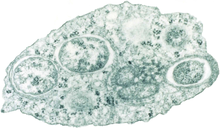
Transmission electron micrograph of Wolachia within an insect cell

Credit:  Public Library of Science/Scott O’Neill

The latest in the effort for world domination over bugs and the diseases they carry is Wolbachia, a Gram-negative bacterium of the family Rickettsiales first found in 1924 and in 60% of all the insects, including some mosquitoes, crustaceans, and nematodes (worms). For those that like numbers, that’s over 1 million species of insects and other invertebrates. It is one of the most infectious bacterial genera on earth and was largely unknown until the 90’s due to its evasion tactics. It’s favorite hosts are filarial nematodes and arthropods.

Wolachia obtains nutrients through symbiotic relationships with its host. In arthropods it affects reproductive abilities by male killing, parthenogenesis, cytoplasmic incompatibility and feminization. However, if Wolbachia is removed from nematodes, the worms become infertile or die. These abilities are what make it so appealing for insect controlcytoplasmic incompatibility, which essentially means it results in sperm and eggs being unable to form viable offering.

http://www.slideserve.com/babu/wolbachia  (Nifty slide show here)

It also makes it appealing for use in human diseases such as elephantiasis and River Blindness caused by filarial nematodes, which are treated with antibiotics (doxycycline) targeting Wolbachia which in turn negatively impacts the worms. Traditional treatment for lymphatic Filariasis is Ivermectin but they also use chemotherapy to disrupt the interactions between Wolbachia and nematodes. This anti-Wolbachia strategy is a game-changer for treating onchocerciasis and lymphatic filariasis.  https://www.sciencedaily.com/releases/2017/03/170316120451.htm

Lyme/MSIDS patients often have nematode involvement.

https://microbewiki.kenyon.edu/index.php/Wolbachiahttps://www.psychologytoday.com/blog/emerging-diseases/200902/tick-menagerie-lyme-isnt-the-only-disease-you-can-get-tick  Both Willy Burgdorfer, the discoverer of the Lyme bacterium, as well as Richard Ostfeld, an animal ecologist found nematode worms in ticks. Since then, some provocative research involving nematodes, Lyme/MSIDS, dementia, and Alzheimer’s has been done.

https://madisonarealymesupportgroup.com/2016/06/03/borrelia-hiding-in-worms-causing-chronic-brain-diseases/https://madisonarealymesupportgroup.com/2016/08/09/dr-paul-duray-research-fellowship-foundation-some-great-research-being-done-on-lyme-disease/https://madisonarealymesupportgroup.com/2016/07/10/greg-lee-excellent-article-on-strategies-for-neurological-lyme/https://madisonarealymesupportgroup.com/2015/10/18/psychiatric-lymemsids/

https://www.scientificamerican.com/article/how-a-tiny-bacterium-called-wolbachia-could-defeat-dengue/  Yet, according to many, Wolbachia is the next eradicator of Dengue Fever and possibly Malaria, chikungunya, and yellow fever because it stops the virus from replicating inside mosquitoes that transmit the diseases. The approach is also believed to have potential for other vector-borne diseases like sleeping sickness transmitted by the tsetse fly.  Evidently, Wolbachia does not infect the Aedes aegypti mosquito naturally, so researchers have been infecting mosquitoes in the lab and releasing them into the wild since 2011. The article states it hopes that the method works and expects infection rates in people to drop and hopes that the mosquitoes will pass the bacterium to their offspring, despite it disappearing after a generation or two of breeding and needing to “condition” the microbes to get them used to living in mosquitoes before injecting them. They also state Wolbachia is

“largely benign for mosquitoes and the environment,” and “To humans, Wolbachia poses no apparent threat.”

Their work has shown that the bacterium resides only within the cells of insects and other arthropods. They also state that tests on spiders and geckos that have eaten Wolbachia mosquitoes are just fine and show no symptoms. An independent risk assessment by the Commonwealth Scientific and Industrial Research Organizatioin (CSIRO), Australia’s national science agency, concluded that,

“Release of Wolbachia mosquitoes would have negligible risk to people and the environment.”

Interestingly, trials are underway in Vietnam, Indonesia, and now Brazil.

They state that scaling up operations to rear enough Wolbachia mosquitoes is too labor-intensive and in Cairns they are going to put Wolbachia mosquito eggs right into the environment. Evidently, other researchers are wanting to release genetically modified (GMO) mosquitoes that carry a lethal gene, and they’ve done it, and it’s causing an uproar:   http://america.aljazeera.com/articles/2013/11/9/genetically-modifiedmosquitoessetoffuproarinfloridakeys.html

http://www.naturalnews.com/2017-07-25-googles-sister-company-releasing-20-million-mosquitoes-infected-with-fertility-destroying-bacteria-depopulation-experiment.html  As of July 14, 2017, Google’s bio-lab, Verily Life Sciences,  started releasing Wolbachia laced mosquitoes in California as part of project, Debug Fresno to reduce the mosquito population.

http://www.greenmedinfo.com/blog/research-exposes-new-health-risks-genetically-modified-mosquitoes-and-salmon  Numerous studies show unexpected insertions and deletions which can translate into possible toxins, allergens, carcinogens, and other changes.  Science can not predict the real-life consequences on global pattens of gene function.

Even the European count decides CRISPR plants are GMOS and should be subjected to the same controls:  https://www.technologyreview.com/the-download/611716/in-blow-to-new-tech-europe-court-decides-crispr-plants-are-gmos/

“It means for all the new inventions … you would need to go through the lengthy approval process of the European Union,” Kai Purnhagen, an expert at Wageningen University in the Netherlands, told Nature.

So, why question the use of Wolbachia as a bio-control?

For Lyme/MSIDS & chronically ill patients, 3 words: worms and inflammation.

Dogs treated for heart worm (D. immitis) have trouble due to the heart worm medication causing Wolbachia to be released into the blood and tissues causing severe Inflammation in pulmonary artery endothelium which may form thrombi and interstitial inflammation. Wolbachia also activates pro inflammatory cytokines. Pets treated with tetracycline a month prior to heart worm treatment will kill some D. immitis as well as suppress worm production. When given after heart worm medication, it may decrease the inflammation from Wolbachia kill off.
http://www.critterology.com/articles/wolbachia-and-their-role-heartworm-disease-and-treatment

The words worms and inflammation should cause every Lyme/MSIDS patient to pause. Many of us are put on expensive anthelmintics like albendazole, ivermectin, Pin X, and praziquantel to get rid of worms and are told to avoid anything causing inflammation due to the fact we have enough of it already. We go on special anti-inflammatory diets and take systemic enzymes and herbs to try and lower inflammation.   https://madisonarealymesupportgroup.com/2016/04/22/systemic-enzymes/

Seems to me, many MSIDS/LYME patients when treated with anthelmintics, will have Wolbachia released into their blood and tissues causing wide spread inflammation, similarly to dogs.

And that’s not all.

According to a study by Penn State, mosquitoes infected with Wolbachia are more likely to become infected with West Nile – which will then be transmitted to humans.

“This is the first study to demonstrate that Wolbachia can enhance a human pathogen in a mosquito, one researcher said.

“The results suggest that caution should be used when releasing Wolbachia-infected mosquitoes into nature to control vector-borne diseases of humans.” “Multiple studies suggest that Wolbachia may enhance some Plasmodium parasites in mosquitoes, thus increasing the frequency of malaria transmission to rodents and birds,” he said.

The study states that caution should be used when releasing Wolbachia-infected mosquitoes into nature. https://www.sciencedaily.com/releases/2014/07/140710141628.htm

So besides very probable wide spread inflammation, and that other diseases may become more prevalent due to Wolbachia laced mosquitoes, studies show Wolbachia enhances Malaria in mosquitos. Lyme/MSIDS patients are often co-infected with Babesia, a malarial-like parasite that requires similar treatment and has been found to make Lyme (borrelia) much worse. It is my contention that the reason many are not getting well is they are not being treated for the numerous co-infections.  Some Lyme/MSIDS patients have Malaria and/or Babesia as well as Lyme.

Regardless of what the CDC states, all the doxycycline in the world is not going to cure this complicated and complex illness.

Lastly, with Brazil’s recent explosion of microcephaly, the introduction of yet another man-made intervention (Wolbachia laced mosquitos) should be considered in evaluating potential causes and cofactors. And while the CDC is bound and determined to blame the benign virus, Zika, there are numerous other factors that few are considering – as well as the synergistic effect of all the variables combined. Microcephaly could very well be a perfect storm of events.
https://madisonarealymesupportgroup.com/2016/12/21/how-zika-got-the-blame/https://madisonarealymesupportgroup.com/2016/03/04/health-policy-recap/https://madisonarealymesupportgroup.com/2016/03/08/fixation-on-zikapolio/

I hate bugs as much as the next person, but careful long-term studies of Wolbachia are required here.

https://www.ncbi.nlm.nih.gov/pubmed/20394659  “Despite the intimate association of B. burgdorferi and I. scapularis, the population structure, evolutionary history, and historical biogeography of the pathogen are all contrary to its arthropod vector.

In short, borrelia (as well as numerous pathogens associated with Lyme/MSIDS), is a smart survivor.

While borrelia have been around forever with 300 strains and counting worldwide, epidemics, such as what happened with Lyme Disease in Connecticut are not caused by genetics but by environmental toxins – in this case, bacteria, viruses, funguses, and stuff not even named yet.

Circling back to Wolbachia.

Hopefully it is evident that many man-made interventions have been introduced into the environment causing important health ramifications: Wolbachia laced mosquitoes and eggs, GMO mosquitoes including CRISPR, and in the case of Zika in Brazil, whole-cell pertussis vaccinations (DTap) for pregnant women up to 20 days prior to expected date of birth, a pyriproxyfen based pesticide applied by the State in Brazil on drinking water, as well as aerial sprays of the insect growth regulators Altosid and VectoBac (Aquabac, Teknar, and LarvX, along with 25 other Bti products registered for use in the U.S.) in New York (Brooklyn, Queens, Staten Island, and The Bronx) to combat Zika. “We feel it’s critical that the scientific community consider the potential hazards of all off-target mutations caused by CRISPR, including single nucleotide mutations and mutations in non-coding regions of the genome … Researchers who aren’t using whole genome sequencing to find off-target effects may be missing potentially important mutations. Even a single nucleotide change can have a huge impact.”  http://articles.mercola.com/sites/articles/archive/2017/06/13/crispr-gene-editing-dangers.aspx?utm_source=dnl&utm_medium=email&utm_content=art3&utm_campaign=20170613Z1_UCM&et_cid=DM147520&et_rid=2042753642

All of this is big, BIG business.

Is the introduction of Wolbachia another puzzle piece in the perfect storm of events causing or exacerbating human health issues?

BTW:  Since 2017, ZAP Males® which are live male mosquitoes infected with the ZAP strain, a particular strain of the Wolbachia bacterium have a time-limited registration allowing them to be sold for five years in the District of Columbia and the following 20 states: California, Connecticut, Delaware, Illinois, Indiana, Kentucky, Massachusetts, Maine, Maryland, Missouri, New Hampshire, New Jersey, Nevada, New York, Ohio, Pennsylvania, Rhode Island, Tennessee, Vermont, and West Virginia.

Infected males mate with females, which then produce offspring that do not survive. (Male mosquitoes do not bite people.) https://www.ncipmc.org/connection/?p=4065

The jury’s still out, but it’s not looking good – particularly for the chronically ill.

One Tick Bite Could Put You at Risk For at Least 19 Different Diseases

http://www.businessinsider.com/deer-tick-can-carry-lyme-disease-powassan-virus-babesiosis-and-more-2017-6 by Kevin Loria, June 28,2017

The deer tick, also known as the blacklegged tick, is a fascinating but nasty little creature, and it’s spreading.

The tiny arthropods carry Lyme disease — the serious illness that we most associate them with — but that’s not the only pathogen they spread.

“One thing that people really need to be aware of is that Lyme disease is not the only pathogen that’s out there — there’s quite a few of them, [including] probably quite a few that we haven’t discovered yet,” says Rafal Tokarz, an associate research scientist at Columbia University’s Mailman School of Public Health.

And the deer tick, which as far as we know carries more illnesses than any other tick, “has been expanding its range enormously in the last 30 years,” says Durland Fish, professor emeritus of epidemiology at the Yale School of Public Health. Before the early 70s, it was largely unknown outside the Northeast, but now it has spread north, south, and west.

The diseases that we know deer ticks spread are all serious:

1. Lyme disease, which is transmitted by ticks infected with the bacterium Borrelia burgdorferi, infects roughly 300,000 Americans every year. It can be treated with antibiotics if caught early, but can cause severe inflammation, nerve, and joint pain,among other symptoms, if left untreated.

2. When people are infected with babesiosis, parasites infect and destroy red blood cells. Not everyone shows symptoms but it can be life-threatening for some at-risk patients. It’s “like tick-borne malaria,” says Fish, and is the most important contaminant of the blood bank right now, he says.

3. Anaplasmosis is spread by another bacteria carried by deer ticks. It usually shows up a week or two after a bite and can cause fever, headaches, nausea, and general malaise, among other symptoms. If untreated it can be severe, leading to hemorrhage, renal failure, and for a small fraction of even healthy patients, potentially can be fatal.

4. Deer ticks can also spread the Borrelia miyamotoi bacteria, which Fish says is similar to the one that causes Lyme. Symptoms include joint pain, fatigue, fever, chills, and headache.

5. A relatively recently discovered disease that’s spread by deer ticks as well as dog and Lone Star ticks is ehrlichiosis, caused by a bacteria in the same family as the one responsible for Rocky Mountain spotted fever. Symptoms often present like the flu.

6. Powassan virus has been around for a while but has received more attention recently, especially since the deer tick (which frequently bites humans) started spreading it — the ticks that transmitted the first reported cases in the 1950s rarely bite people. Unlike Lyme, which often takes many hours or even a couple days before it’s transmitted, Powassan infection can occur in as little as 15 minutes. Not everyone who gets bitten by an infected tick gets sick, but if they do, it’s a serious problem since there’s no treatment. In those (still rare) cases, Fish says that there’s about a 50% chance of permanent neurological damage and a 10% chance of death.

The broad range of potential conditions means that doctors don’t even necessarily know what to look for. Even worse, “ticks can frequently be co-infected with more than one pathogen,” says Tokarz. That’s especially true in certain locations, like on Long Island. One bite could transmit both Lyme disease and babesiosis, conditions that would normally be treated quite differently.

It’s also possible that having two or more illnesses could change the way the disease manifests. “We still don’t know whether co-infection exacerbates a disease or doesn’t make a difference,” says Tokarz.”Studies have shown both.”

Unfortunately, we don’t have any good way to control ticks and to stop the ongoing expansion, which will lead to more people getting sick.

In the places where people are at risk of picking up a tick “it is a very important, very severe problem, but the only thing that can be done is to educate people on the dangers of coming into contact with ticks,” says Tokarz.

If you get one on you, pull it off right away — don’t bother with urban legends about needing to burn it off. And protect yourself if you are going to be hiking or spending time in a place where ticks are common. Use permethrin-treated clothing for outdoors work and use insect repellent that contains DEET.

________________________________________________________________________________________

**My letter to the author**

Dear Mr. Loria,

Thank you for your piece on ticks and the pathogens they carry. I just wanted to add to your list; however, as there are many more pathogens carried by ticks. Also, they are discovering a variety of ticks carry pathogens, and if you think about it logically for a moment, ticks have similar habits and mouth parts, and require blood meals to survive, which technically makes every tick suspect. Unfortunately, geographical maps and entomology information (which ticks spread what) have been used to deny patients diagnosis and treatment. A doctor will look at the CDC map and claim, unequivocally, that since such and such isn’t supposed to be in that state, it isn’t TBI’s (tick borne infections). https://madisonarealymesupportgroup.com/2016/09/24/arkansas-kids-denied-lyme-treatment/ and then eventually they have to admit they are wrong: https://madisonarealymesupportgroup.com/2017/03/02/hold-the-press-arkansas-has-lyme/

How many went undiagnosed through the years?

https://www.lymediseaseassociation.org/about-lyme/other-tick-borne-diseases

  • Babesiosis
  • Bartonellosis
  • Borrelia miyamotoi
  • Bourbon Virus
  • Colorado Tick Fever
  • Crimean-Congo hemorrhagic Fever
  • Ehrlichiosis/Anaplasmosis
  • Heartland Virus
  • Meat Allergy/Alpha Gal
  • Pacific Coast Tick Fever: Richettsia philipii
  • Powassan Encephalitis
  • Q Fever
  • Rickettsia parkeri Richettsiosis
  • Rocky Mountain Spotted Fever (RMSF)
  • SFTS: Severe Fever with Thrombocytopenia Syndrome 
  • STARI: Southern Tick-Associated Rash Illness
  • Tickborne meningoencephalitis
  • Tick Paralysis
  • Tularemia

I run a physical support group here in Wisconsin, 4th in the nation for TBI’s, and nearly all of us are co-infected, and while Tokarz states he doesn’t know whether coinfection exacerbates a disease, we all do. http://danielcameronmd.com/babesia-and-lyme-its-worse-than-you-think/.  Each pathogen necessitates different medications so the CDC mono therapy of doxycycline won’t do a thing against many of the other pathogens.

Babesia can increase the severity of Lyme disease. Coinfected patients were more likely to have experienced fatigue, headache, sweats, chills, anorexia, emotional lability, nausea, conjunctivitis, and splenomegaly more frequently than those with Lyme disease alone. [7]
Babesia can also increase the duration of illness with Lyme disease. Babesia patients can remain symptomatic for years with constitutional, musculoskeletal, or neurological symptoms. One study found that 50% of coinfected patients were symptomatic for 3 months or longer, compared to only 4% of patients who had Lyme disease alone. [7] Meanwhile, one-third of patients with a history of both Babesia and Lyme disease remained symptomatic an average of 6 years. [2]

“The clinical pictures for 3 out of our 4 coinfected patients included a large number of symptoms, and 1 coinfected patient had persistent fatigue after treatment,” according to a study by Steere and colleagues. [8]”

https://madisonarealymesupportgroup.com/2016/03/20/why-we-cant-get-better/

https://madisonarealymesupportgroup.com/2017/05/01/co-infection-of-ticks-the-rule-rather-than-the-exception/

https://madisonarealymesupportgroup.com/2014/11/14/studies-show-why-its-tough-to-treat-lyme-and-co/

https://madisonarealymesupportgroup.com/2015/05/08/interview-with-dr-horowitz/

For a fantastic book on all of this and more, read science journalist and past Executive Editor of Discover Magazine, Pam Weintraub’s work, Cure Unknown: Inside the Lyme Epidemic. http://www.astralgia.com/pamelaweintraubresume18.pdf

Sincerely,
Alicia Cashman
Madison Lyme Support Group
https://about.me/lymecoordinator56
lymecoordinator56@gmail.com
https://madisonarealymesupportgroup.com