Published writings exposing the CDC’s false Lyme disease narrative
Carl Tuttle
Hudson, NH, United States
MAR 17, 2023 —
Additional information sent to Mathematica Policy Research. It should be noted that there hasn’t been a single response from anyone at Mathematica or the CDC.
Truth does not mind being questioned. A lie does not like being challenged!
———- Original Message ———-
From: CARL TUTTLE <runagain@comcast.net>
To: “achen@mathematica-mpr.com” <achen@mathematica-mpr.com>, “info@mathematica-mpr.com” <info@mathematica-mpr.com>, “pdecker@mathematica-mpr.com” <pdecker@mathematica-mpr.com>
Cc: “lwx1@cdc.gov” <lwx1@cdc.gov>, “frederick.chen@ama-assn.org” <frederick.chen@ama-assn.org>, “gmarx@cdc.gov” <gmarx@cdc.gov>, “acoyne@mathematica-mpr.com” <acoyne@mathematica-mpr.com>, “jconstantine@mathematica-mpr.com” <jconstantine@mathematica-mpr.com>, “ctrenholm@mathematica-mpr.com” <ctrenholm@mathematica-mpr.com>, “tbarnes@mathematica-mpr.com” <tbarnes@mathematica-mpr.com>, “sboudreau@mathematica-mpr.com” <sboudreau@mathematica-mpr.com>, “jdevallance@mathematica-mpr.com” <jdevallance@mathematica-mpr.com>, “sara.berg@ama-assn.org” <sara.berg@ama-assn.org>, “jack.resneck@ucsf.edu” <jack.resneck@ucsf.edu>, “jack.resneck@ama-assn.org” <jack.resneck@ama-assn.org>, “todd.unger@ama-assn.org” <todd.unger@ama-assn.org>, “jon.burkhart@ama-assn.org” <jon.burkhart@ama-assn.org>, “karen.kmetik@ama-assn.org” <karen.kmetik@ama-assn.org>, “sanjay.desai@ama-assn.org” <sanjay.desai@ama-assn.org>, “william_henderson@paul.senate.gov” <william_henderson@paul.senate.gov>
Date: 03/17/2023 11:48 AM Subject: Published writings exposing the CDC’s false Lyme disease narrative; “Hard to catch and easily treated”
Mathematica
Princeton, NJ
Attn: Arnold Chen, Senior Researcher
Dear Dr. Chen,
Now that we know that the Covid lab leak theory being a “conspiracy theory” was a lie and the “15 days to stop the spread” was a lie and “masks work” to stop the spread was a lie and “vaccine mandates will stop the spread” was a lie and “natural immunity is a myth” was a lie and the “there is no side effects” was a lie and the “safe and 100% effective” was a lie then you can pretty much bet that “chronic Lyme does not exist” is a lie. Post Treatment Lyme Disease Syndrome is simply a fabricated medical condition disguising treatment failure because a chronic relapsing seronegative disease does not fit the business model of vaccine development, patent royalties and pharmaceutical profits.All this suffering for the sake of a vaccine. Just like the current mismanagement of Covid … all for the sake of a vaccine. It should be blatantly obvious to everyone; pharmaceutical profits over lifesaving care. Suppressing evidence of persistent infection after antibiotic treatment for Lyme disease is criminal.
Patient testimony across America is describing a disease that is destroying lives, ending careers while leaving its victims in financial ruin.
The false Lyme disease narrative “Hard to catch and easily treated” propagated by the CDC for nearly three decades has been exposed in countless books; first and foremost, frontline treating physician Dr. Kenneth Liegner’s 892-page book:
“In the fullness of time, the mainstream handling of chronic Lyme disease will be viewed as one of the most shameful episodes in the history of medicine because elements of academic medicine, elements of government and virtually the entire insurance industry have colluded to deny a disease.” -Kenneth B. Liegner M.D.
We are dealing with a life-altering/life-threatening infection with faulty/misleading antibody tests, inadequate treatment, misguided medical training and absolutely no disease control whatsoever; a public health disaster.
Has Mathematica Policy Research been pulled into this crime against humanity while being paid by the CDC to propagate the well-established false Lyme disease narrative under the guise of “GUIDANCE”?
When treating Bartonella clears symptoms of autism, what next?
By Debbie Kimberg
March 14, 2023
My 16-year-old autistic son’s learning disabilities suddenly resolved after treatment for congenital Bartonella and Lyme infections. (See: After 80% improvement in autism symptoms, he’s going to college.) This turn of events totally shocked our family and left us scrambling to figure out our next steps.
Before beginning treatment for Bartonella, Sammy had a tutor named Annie. This sweet, patient young woman came weekly to our home to help him organize his work and make sure he turned it in.
A few months after starting treatment, Sammy began resisting Annie’s assistance. He’d routinely exclaim, “Mom, I don’t need her help! I’m doing fine by myself!”
At first, I thought his angry behaviors were resurfacing. But then I paid closer attention to his grades and realized that he was right. My son, who had suffered with learning differences and ADHD, could suddenly do his schoolwork with no support from anyone else.
Not only did his ADHD resolve, but his grades in his core classes moved from Cs to As. What a baffling and exciting time for our family!
Learning new words
Concurrently, Sammy began asking me the meaning of all kinds of words. They were words that you would expect a 16-year-old to know, such as tremor, simmer, and immature. With Sammy’s new desire to broaden his vocabulary, we played a word game, though we never called it that.
I deliberately began to speak using larger, more advanced words, coyly embedding the meaning into the sentence to ensure he understood it. Interestingly, he was quick to try to incorporate that same word into conversation to showcase his mastery. He was a sponge! Sammy smiled proudly when he spoke, as he skillfully used a new word in a conversation.
Our vocabulary game reminded me of Forrest Gump running from the school bullies who chased him and how the braces fell off Forrest’s legs and onto the dirt road. It was as if a similar shackle on Sammy’s brain had inhibited his learning. Once it was removed, his ability to learn was remarkable.
Nurturing a new stage in learning
Before, our job as parents had involved helping him get his high school technical diploma (targeted to special education students). Now, we needed to help him catch up on all of the learning he had clearly missed due to this disease and the brain inflammation it caused. Our hope was for him to earn a full high school diploma.
This was uncharted territory.
We believed that a private school would be better equipped to handle his new, unique learning needs. But how could I even begin to explain to a school administrator what had happened, and Sammy’s unusual learning needs?
Although I thought it would be a strange conversation to have, I expected that admissions officers would be supportive and want to work with us. Instead, school after school turned us away, even ones whose mission was to support children with learning differences. Sammy’s diagnosis of autism and his previous IQ and psychological testing didn’t meet the schools’ minimum requirements.
I grew more frustrated as every school that we pursued turned us away. I was at a loss for how to help him.
Then I had an epiphany! A different and potentially better path was needed.
Changing educational gears
Since Sammy was doing well in high school, no longer requiring special education classes and wanting to attend a four-year university, we changed gears. Now, we set our sights on what he needed to learn to take his ACT and be accepted to college. We hoped to leapfrog Sammy to a new level.
This decision turned out to be a great one. A highly regarded college-testing prep school heard what had happened and were eager to help. The owner took an immediate interest in our story and moved Sammy to the top of their long wait list.
Sammy’s ACT tutor was a perfect fit – smart, fun, compassionate—and he loved singing too. Typically, a student would receive private college test prep tutoring for 2-3 months. Sammy received weekly tutoring for 10 months. With the help of this amazing school and its staff, Sammy did well enough on his ACT to gain admission to his first choice of colleges.
The future: rehabilitation from autism
I hope one day that many other families will face the same dilemma of helping their child recover from autism symptoms. With proper screening and treatment for vector-borne infections, our education system will need to redefine its services for these children.
New school programs will be required to help recovering children, a type of rehabilitation, if you will. Much like someone might need intensive occupational therapy to learn to walk again after a car accident, those recovering from autism and brain inflammation will need rehabilitation as well.
Imagine if our country could move away from Applied Behavioral Analysis therapy (ABA – designed to increase social abilities like completing tasks, communicating, and learning new skills). Currently, demand for this therapy is so high that young children must often wait years to learn basic language, coping and hygiene skills. Instead, we could enter a new era in which our children are taught to catch up in their schooling and how to refine more advanced social skills.
Therapists would need to develop new programs and be specially trained to help our recovering autistic children become the adults they were meant to be.
And of course, with proper screening and treatment prior to, or in worst case, during pregnancy, hopefully the rates of autism will see a steady decline.
I look forward to this day with great anticipation. I believe it’s not a matter of if, but a matter of when.
What’s needed
There are important steps needed to make this dream a reality:
1) CDC recognition of this important medical cause of autism symptoms,
2) development of effective diagnostic testing and an extensive, flexible set of criteria for a doctor to make a clinical diagnosis of tick-borne diseases,
3) development of effective, reliable and fast-acting treatments for tick-borne diseases.
We need to call on the CDC and government to treat autism as the public health emergency it is. We must screen the 7 million cases of autism to identify those who’ve been impacted by Bartonella and Lyme-related infections. The CDC needs to work more aggressively, beyond the genetic research, to follow the path of a potential infectious cause of symptoms. Bartonella should be at the top of the list.
And of course, infected parents and siblings would need to be screened and treated too.
I say all of this with much love and acceptance to all on the autism spectrum. To our autistic teens and adults, we accept and appreciate who you are. It is okay to acknowledge that you may be sick through no fault of your own. And it’s okay to get treated, so you feel better. It could change your life.
To find a doctor to screen your child for tick-borne diseases, see LymeDisease.org’s Physician Directory or your state’s Lyme Facebook group.
Debbie Kimberg can be contacted through her website. You can follow her son’s wellness journey on Instagram and TikTok at @hijackedbrains.
Disclaimer: The author is not a doctor. This article is the opinion of the author and is not intended to dispense medical advice. Please seek a doctor’s advice for diagnosis and treatment.
Post Treatment Lyme Disease Syndrome (PTLDS) can develop in patients even after receiving antibiotic treatment for Lyme disease. Although the exact cause of PTLDS is unknown, it could be due to a persistent infection. PTLDS is characterized by fatigue, pain and cognitive difficulties.
The four randomized controlled trials included 485 subjects who met the following inclusion criteria:
Randomized controlled trials
Patients with Post-Lyme Disease Syndrome which has persisted for at least 6 months after treatment of the initial infection and who tested positive by IgG Western blot
Patients aged 18 years and above
Number of cases providing valid data to measure outcomes
Studies that the control group used placebo, while the observation group took the antibiotic
Their meta-analysis showed that ceftriaxone had better results than placebo on FSS. “FSS-11 is the most widely used scale to measure the fatigue severity of the subjects,” wrote Zhang et al.
“Ceftriaxone treatment may be the best choice for antibiotic treatment of PTLD, which provides useful guidance for antibiotic treatment of PTLD in the future.”
The systemic meta-analysis concluded that intravenous ceftriaxone may be the best choice for treating Post-Treatment Lyme Disease Syndrome.
An NIH-sponsored clinical trial demonstrated that intravenous ceftriaxone therapy improved patients’ cognitive function in the short term, according to Fallon.² There were no trials addressing pain.
The authors were not able to show significant gains in the Beck Depression Inventory (BDI), Mental Health Scale and Physical Functioning Scales. Neither were they able to show significant gains with oral doxycycline.
Zhang et al. acknowledged several limitations to their study. “The number of RCTs is small; The duration and dose of treatment in these RCTs are not uniform; The follow-up time of various RCTs is different to some extent.”
Author’s Note: I have been reluctant to recognize the term PTLDS until there is a reliable test to exclude a persistent infection.This systemic meta-analysis validated my concerns that PTLDS may be the result of a persistent infection.
Zhang X, Jiang Y, Chen Y, et al. Efficacy and safety of antibiotic therapy for post-Lyme disease? A systematic review and network meta-analysis. BMC Infect Dis. Jan 12 2023;23(1):22. doi:10.1186/s12879-023-07989-4
Fallon BA, Keilp JG, Corbera KM, et al. A randomized, placebo-controlled trial of repeated IV antibiotic therapy for Lyme encephalopathy. Neurology. Mar 25 2008;70(13):992-1003. doi:10.1212/01.WNL.0000284604.61160.2d
In her book, “Bitten: The Secret History of Lyme Disease and Biological Weapons,” Kris Newby reviews the circumstantial evidence suggesting the organism that causes Lyme disease may originally have been developed as a biological weapon
An estimated 476,000 Americans are diagnosed with and treated for Lyme disease each year, and prevalence is rising
Lyme disease is transmitted by ticks (and sometimes other biting insects) infected with the bacteria Borrelia burgdorferi. There are about two dozen species of B. burgdorferi with hundreds of strains worldwide, many of which are resistant to antibiotics
Ticks can also carry other pathogens, and coinfections are another reason why Lyme disease is so difficult to treat
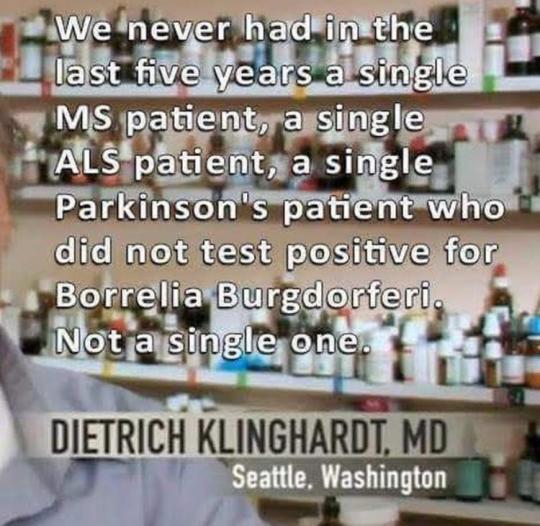
A major challenge with Lyme disease is that its symptoms imitate so many other disorders, including multiple sclerosis (MS), arthritis, chronic fatigue syndrome, fibromyalgia and even Alzheimer’s disease, making proper identification difficult and time consuming
In a February 28, 2023, Substack article,1 investigative journalist Paul D. Thacker interviewed award-winning author Kris Newby about the U.S. government’s history of manipulating pathogens to make them deadlier, and the secretive federal research that may be responsible for the epidemic of Lyme disease.
Newby, who educates health care providers on vector-borne diseases, is the author of “Bitten: The Secret History of Lyme Disease and Biological Weapons.” She also produced the 2008 Lyme disease documentary “Under Our Skin,”2 which was nominated for an Academy Award the following year.3 A follow-up film, “Under Our Skin 2: Emergence” came out in 2014.
As is the case with many people who end up becoming experts at a particular disease, Newby and her husband contracted Lyme disease in 2002 during a vacation at Martha’s Vineyard. “We were desperately ill and undiagnosed for a year. I thought that was the end of my life as I knew it. It took us four or five years to fully recover,” she told Thacker.
Background on Lyme Disease
According to the U.S. Centers for Disease Control and Prevention, an estimated 476,000 Americans are diagnosed with and treated for Lyme disease each year.4 While exact numbers are difficult to ascertain, what is known is that the prevalence is rising, and this is true across the world. Outbreaks are also steadily creeping into northern areas with less temperate climates.5
Lyme disease is transmitted by ticks (and sometimes other biting insects) infected with the bacteria Borrelia burgdorferi. There are about two dozen species of B. burgdorferi with hundreds of strains worldwide,6 many of which are resistant to antibiotics. Research7 suggests one reason for this may be that B. burgdorferi form protective biofilms around themselves, which enhances antibiotic resistance.
Another feature that makes B. burgdorferi such a formidable foe is its ability to take on different forms in your body, depending on the conditions. This clever maneuvering helps it to hide and survive. Its corkscrew-shaped form also allows it to burrow into and hide in a variety of your body’s tissues, which is why it causes such wide-ranging multisystem involvement.
Ticks can also carry other pathogens, and coinfections are another reason why Lyme disease is so difficult to treat, as the symptomology can be all over the place. Coinfections in many cases also don’t respond to treatment for B. burgdorferi, so a multilayered approach is frequently required to get all of the infections under control.
Lyme Disease Is Often Debilitating
A “typical” case usually starts out with an expanding rash, fever, fatigue, chills and headache. As the disease progresses, additional symptoms such as muscle spasms, loss of motor coordination, arthritic pain, debilitating fatigue, heart problems, psychiatric symptoms, cognitive difficulties, and problems with vision and hearing can emerge.8
For more information on identifying a Lyme disease rash, see the American Lyme Disease Foundation’s (ALDF) website.9 Newby describes her personal experience:
“It’s sort of like having multiple sclerosis, Alzheimer’s, chronic fatigue … joint pain, all at the same time. It’s primarily a neurological disease that creates hyper-inflammation in your body. And the symptoms commonly move around your body. You can be very debilitated, unable to perform the tasks of a normal adult …
There is a growing body of scientific evidence that shows that the Lyme disease bacterium is a trickster that is good at dodging your immune system.
It comes out of the tick in a very mobile spirochetal form and, when it senses an antibiotic or killer cells, it goes into a dormant cyst form, hiding out for months to years. And when your immune system is stressed, it can start causing disease again.”
A major challenge with Lyme disease is that its symptoms imitate so many other disorders, including multiple sclerosis (MS), arthritis, chronic fatigue syndrome, fibromyalgia and even Alzheimer’s disease, making proper identification difficult and time consuming.10
What’s worse, many Lyme sufferers outwardly look quite healthy, and their blood work often raises no cause for concern, which is why Lyme disease has also been called “the invisible illness.”
In the past, Lyme sufferers were frequently told that their problem was psychiatric; in essence, the symptoms were “all in their head.” Today, Lyme is becoming more widely recognized as an actual disease, but sufferers are still often met with skepticism and resistance from the medical community and insurers.
The Lyme Disease Mimicker
Complicating matters further, there’s yet another tick-borne disease on the loose. Researchers have identified a tick-borne illness that is very similar to Lyme, caused by Borrelia miyamotoi.
The CDC11 describes B. miyamotoi as a distant relative to B. burgdorferi, being more closely related to bacteria that cause tick-borne relapsing fever. This disease is characterized by recurring episodes of fever, headache, nausea and muscle or joint aches.
This bacterium was first identified in Japanese ticks in 1995. Since then, it’s been found in several rodent species (and the ticks that feed on them) in the U.S., as well as in ticks feeding on European red deer, domestic ruminants and white-tailed deer.
Is Lyme Disease a Biological Weapon Gone Rogue?
According to Newby, there’s good reason to suspect that Lyme disease might be a biological weapon. There’s no smoking gun; just circumstantial evidence. But when taken together, it forms a highly suspect picture.
She describes being at a party where a former CIA agent bragged about a Cold War operation that involved dropping infected ticks on Cuba. “At that point, I knew I wasn’t done with the story,” she told Thacker. Her book, “Bitten,” is the result of her investigation into the military’s use of infectious bioweapons.
“When we started the film, Lyme disease was already too controversial to go down the bioweapons rabbit hole, so we focused on the human toll and the corruption in the medical system that allowed this epidemic to get so out of control,” Newby told Thacker.
“This CIA guy was a little bit in his cups, but what he said rang true. I started doing some research, interviewed him several times, and found that it was a verifiable story.”
Newby also got tipped off by Willy Burgdorfer during the filming of “Under Our Skin.” Burgdorfer, a Swiss medical zoologist, is credited with discovering Lyme disease. He worked at Rocky Mountain Labs — a National Institutes of Health-run biosafety level 4 (BSL4) facility in Montana — his whole career, and had contracts with Fort Detrick, which oversees the U.S. chemical and biological weapons programs.
While he made some important admissions during that interview, at the very end, he broke into an “evil little smile” and said, “I didn’t tell you everything.” Was he hinting that Lyme disease was a bioweapon?
“He started hinting at the unnatural origin of the outbreak to several people,” Newby told Thacker. “When I interviewed him for the book, he said, ‘Yes, I was in the biological weapons program. I was tasked with trying to mass produce ticks and mosquitoes.’
That’s also when he told me that he was called to investigate the outbreak of what was called ‘Lyme disease,’ but which could’ve been caused by one or more organisms. In Army documents, they said they were conducting early gain-of-function experiments by mixing pathogens — bacteria and viruses — inside ticks to create more effective bioweapons.”
These ticks were infected with various diseases. KRIS NEWBY, MSME
The Official Story
As described by Newby, the official story is that Burgdorfer was sent to investigate a novel disease outbreak in Lyme, Connecticut, and Long Island. In 1980, he discovered the bacterium that now bears his name, Borrelia burgdorferi, and determined that this was what caused the disease.
He subsequently published an article stating the organism was easily killed off with penicillin. The notion that Lyme disease is easy to diagnose and treat has stuck ever since, even though the reality is often the opposite.
Newby agrees that, if caught early, many cases can indeed be cured with an inexpensive course of doxycycline. Two other antibiotics, ceftriaxone and vancomycin, have also been shown to clear the B. burgdorferi infection in cases where doxycycline fails.12 Unfortunately, Lyme disease patients often go undiagnosed for years, and by the time a diagnosis is made, the infection is well-established and very difficult to treat.
Holes in the Official Storyline
While researching for the book, Newby produced an animation of the original outbreak, which supposedly began at the mouth of the Connecticut River, near Long Island. This turned out to be rather revealing. She told Thacker:
“When I drew a 50-mile radius around that point, there were three new, highly virulent tick-borne diseases that showed up at that same time, in the late ’60s. This was 13 years before the Lyme bacterium was declared the cause of ‘Lyme disease’ in 1981.
I started looking through military records to see if the outbreak could be tied to any bioweapons accidents. And that’s when I discovered this massive bug-borne weapons program, as well as a program where germs were sprayed from airplanes over large areas, called Project 112.
Some of those germs were tick-borne diseases that they freeze-dried and aerosolized for spraying … Whatever happened in Lyme, Connecticut, we don’t have all the details. But I put together a solid circumstantial case, based on available evidence …
Burgdorfer … had worked with Q fever and ticks, experience that was needed at Rocky Mountain Labs for their bioweapons work. As soon as he got a security clearance, he started putting plague in fleas; deadly yellow fever in mosquitoes; and then mixing and matching viruses and bacteria in ticks to increase the virulence of these living weapons.
The Detrick weapons designers were looking for ticks that could be dropped on an enemy without arousing suspicion, filled with agents for which the target population wouldn’t have natural immunity … Ticks were the perfect stealth weapon, untraceable and long-acting …
I went as far as I could as a journalist to put together the circumstantial evidence that says Lyme disease is not the big problem — meaning the bacteria called Borrelia burgdorferi.
It’s what Burgdorfer said that they’re covering up: 1) that a different bacteria, perhaps a rickettsia related to Rocky Mountain spotted fever, was developed as a bioweapon in the Cold War; 2) that it might be a combination of bugs inside the ticks that is making people sick.”
Mice and Rats Are the Most Problematic Hosts
Since the late 1970s, the spread of Lyme disease has primarily been blamed on deer. However, more recent evidence suggests rodents like mice and rats are a far more serious threat.13 Ticks are not born with the Lyme spirochetes. They pick up the bacteria when feeding on an infected host.14
Research indicates that white-footed mice infect 75% to 95% of larval ticks that feed on them, while deer only infect about 1%. According to a 1996 study,15 rats are even more infectious than mice, noting that “the capacity of rats to serve as reservoir hosts for the Lyme disease spirochete, therefore, increases risk of infection among visitors to … urban parks.”
Another study16 published the following year also found that Norway rats and black rats were exceptionally effective hosts, infecting nearly all ticks that fed on them.
The main predators of small rodents like mice and rats are foxes, birds of prey, skunks and snakes.17 Agricultural and urban sprawl have decimated the habitats of these natural predators of mice and rats, allowing disease-carrying rodent populations to rise unabated.
Better Diagnostics for Lyme Are Sorely Needed
A big problem facing Lyme patients and their treating doctors is the difficulty of reaching a proper diagnosis.18Conventional lab tests are unreliable, and one reason for this is because the spirochete can infect your white blood cells.19
Lab tests rely on the normal function of white blood cells to produce the antibodies they measure. If your white cells are infected, they don’t respond to infection appropriately. So, for blood tests to be truly useful, you need to be treated first.
Once your immune system begins to respond normally, only then will the antibodies show up. This is called the “Lyme Paradox.” You have to be treated before a proper diagnosis can be made.
That said, I recommend the specialized lab called IGeneX20 because they offer highly sensitive tests for more outer surface proteins (bands), and can often detect Lyme while standard blood tests cannot. IGeneX also tests for a few strains of coinfections such as Babesia and Ehrlichia.
Patients and Doctors Fight for Recognition of Chronic Lyme
As if the difficulties of getting a proper diagnosis and treatment were not enough, Lyme sufferers face additional hurdles when they don’t fully recuperate after the initial treatment. Whether “chronic” Lyme disease is possible or not has been the subject of controversy for many years.
The Infectious Diseases Society of America (IDSA), which publishes guidelines for a number of infectious diseases, including Lyme disease, has long opposed the idea chronic Lyme exists, and doesn’t include long-term treatment guidance for chronic Lyme in its clinical guidelines.21,22
This is important, as insurance companies frequently restrict coverage for long-term treatment based on IDSA’s guidelines. Physicians’ treatment decisions are also guided by its recommendations. Opposing IDSA is the International Lyme and Associated Diseases Society (ILADS), the members of which argue that many patients suffer long-term consequences and require far longer treatment than recommended by IDSA.23
Prevention Tips
Considering the difficulty of diagnosing and treating Lyme disease, taking preventive measures should be at the top of your list:
Avoid tick-infested areas, such as leaf piles around trees. Walk in the middle of trails and avoid brushing against long grasses and path edgings. Don’t sit on logs or wooden stumps and take extra precautions if you’re in an area where rats have been sighted.
Wear light-colored long pants and long sleeves, to make it easier to see the ticks.
Tuck your pants into socks, and wear closed shoes and a hat, especially if venturing out into wooded areas. Also tuck your shirt into your pants.
Ticks are very tiny. You want to find and remove them before they bite, so do a thorough tick check upon returning inside, and keep checking for several days following exposure. Also check your bedding for several days following exposure.
As for using chemical repellents, I do not recommend using them directly on your skin as this will introduce toxins directly into your body. If you use them, spray them on the outside of your clothes and avoid inhaling the spray fumes. The Environmental Protection Agency has a list24 indicating the hourly protection limits for various repellents.
If you find that a tick has latched onto you, it’s very important to remove it properly. For detailed instructions, please see lymedisease.org’s tick removal page.25 Once removed, make sure you save the tick so that it can be tested for presence of pathogenic organisms.
It’s Time to Ban Gain-of-Function Research
In closing, the Lyme disease epidemic and COVID-19 both appear to be the result of bioweapons development, and the real-world ramifications clearly demonstrate the risks involved. They can’t guarantee containment of the created pathogens, and sometimes, they don’t even try to contain them. In the case of Lyme disease, it’s possible that live testing is what led to the epidemic.
And while we don’t know whether SARS-CoV-2 was intentionally released or simply escaped, the end result is the same. The virus spread worldwide. If the world doesn’t wise up and realize just how suicidal these biological weapons programs are, humanity may eventually be wiped out by one of our own creations.
I highly recommend reading Thacker’s substack article. In it you will learn that Sam Telford, a Chronic Lyme denialist who is part of the Cabal, teaches biosecurity, specializes in the bioweapon Tularemia, and was the director of a bio-level 3 lab in Groton, Massachusetts that works on dangerous, tickborne diseases on the government’s select agent list. He’s funded by the NIH and the military-industrial complex so of course he was going to destroy anything that threatens the official narrative on Lyme/MSIDS.
Christian Perrone: Revisiting the Covid Pandemic and What is Next?
In this episode Dr Christian Perrone, Professor of Infectious and Tropical Diseases, and I revisit the pandemic and his experience in France. His story and doubts about the system started with lyme disease where he was one of the key experts and found evidence of fraud and how ticks had been modified to amplify disease.
Dr. Perronne is also a Lyme literate doctor who has spoken out widely in support of treating Lyme patients appropriately as well as the fact these infections are serious but overlooked and denied by many ‘authorities’ and doctors.
It appears that Dr. Perronne, a vaccine proponent, is clashing yet again with ‘the powers that be’ – this time over COVID injections, and due to this was recently fired as Head of the Medical Department at Raymond Poincaré Hospital in Garches. In this article and video, Perronne explains point by point how the response to COVID was all wrong, the tests used are fraudulent, the COVID injections are not vaccines but are gene therapy injections, as well as effective COVID treatments.