Archive for the ‘Lyme’ Category

Could ‘New’ Antibiotic Prevent Chronic Lyme Disease?

https://news.northeastern.edu/2023/05/26/lyme-disease-treatment/

Could ‘new’ antibiotic treatment prevent chronic Lyme disease?
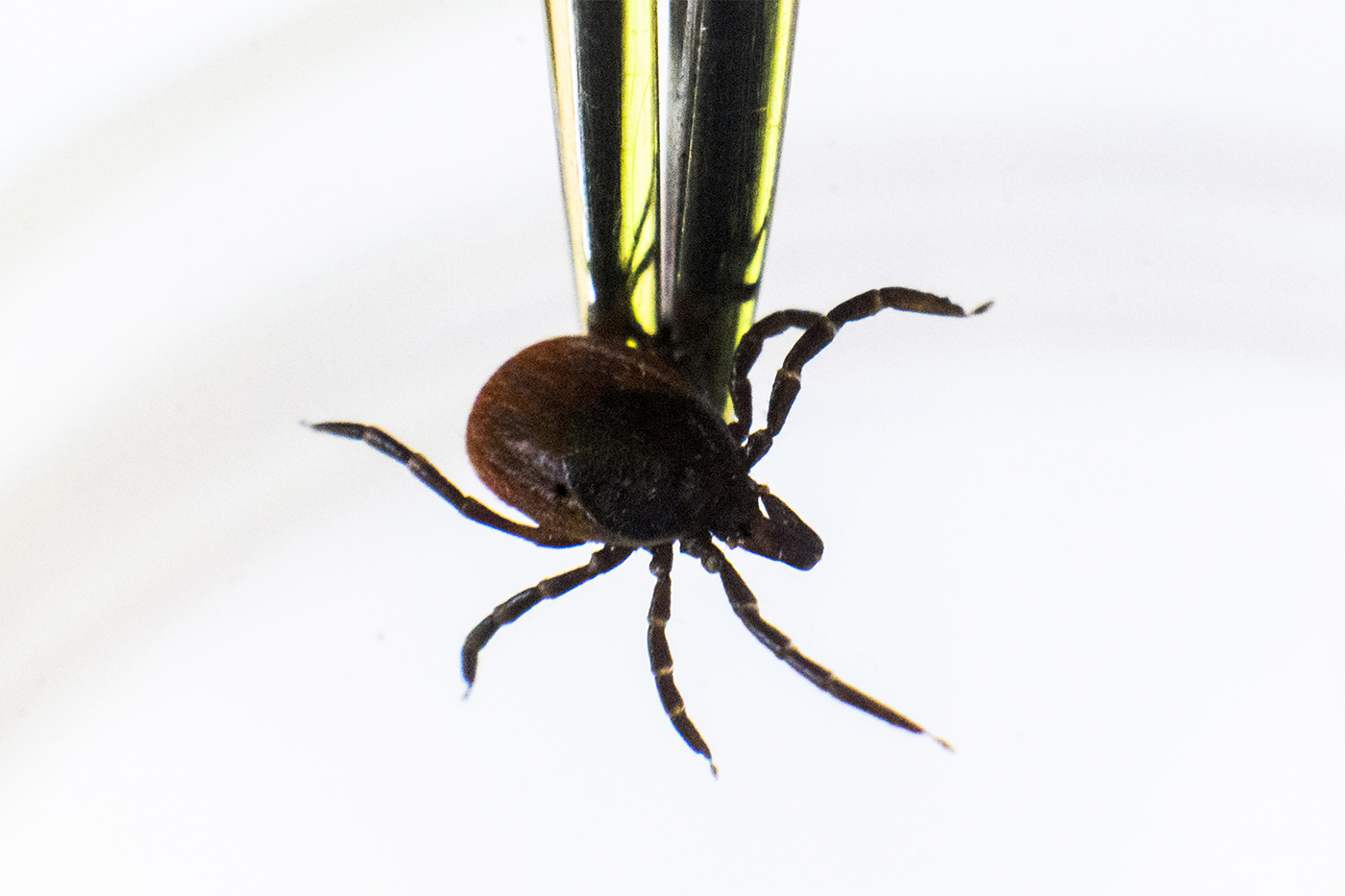
A tick is held by a pair of tweezers

Every year, tens of thousands of new Lyme disease patients find that their symptoms persist even after the standard course of antibiotic treatment.

Instead of being cured, they find their lives upturned by chronic Lyme, also called persistent or post-treatment Lyme. Symptoms include bone-deep fatigue, cognitive difficulties, arthritis, muscle and joint pain and intermittent fevers, chills and sweats that can go on for months or years.

While medical solutions have proved elusive, a researcher at Northeastern University says he has developed a treatment for Lyme disease that could prevent chronic Lyme from developing in the first place.

Kim Lewis, distinguished professor of biology and director of Northeastern’s Antimicrobial Discovery Center, says human trials of his discovery may begin as early as next year.

Final toxicity trials will continue this summer, but so far the treatment—an antibiotic known as hygromycin A—has not been toxic in animals and has effectively cleared Lyme disease in mice, Lewis says.

He says the real promise of hygromycin A in preventing chronic Lyme is that it is a targeted antibiotic that selectively kills Lyme disease-causing bacteria without damaging the beneficial bacteria in the patient’s microbiome.

According to Lewis’ theory, the broad spectrum antibiotics traditionally prescribed for Lyme disease, doxycycline and amoxicillin, cause havoc in the gut by wiping out the healthy balance of bacteria.

“The microbiome has now been linked to almost every aspect of our health, especially the development of the immune system,” Lewis says.

(See link for article)

________________

A few points:

  • While Lewis regurgitates that only 10% go on to develop chronic Lyme, the Bay Area Lyme Foundation, states that it’s closer to 34%.  Microbiologist Holly Ahern shows it may be 60% or more.  This matters because the greater the number, the more research money will be designated for it.
  • Hygomycin A is found in the soil and it is weak against most bacteria but very potent against spirochetes.
  • The final stage of animal toxicity studies will take place this summer and human trials may start next year.

For more:

Is Your Home Making You Sick? How To Check For Mold

https://www.lymedisease.org/how-to-check-for-mold-iseai/

Is your home making you sick? Here’s how to check for mold.

The International Society for Environmentally Acquired Illness (ISEAI) Indoor Environmental Professional (IEP) Committee has released a Mold Testing Guide to educate patients with diagnosed or probable environmentally acquired illness.

It includes five common test types, do-it-yourself and professional approaches, and how to get help to assess and improve your home’s indoor air quality.

Environmentally acquired illness (EAI) refers to chronic health problems caused by exposure to unhealthy indoor air, mold and other biotoxins, Lyme disease and other persistent infections, and toxicants found in the environment.

Understanding Mold Exposure and Your Health

Awareness about mold’s effect on human health, and indoor air quality in general, has been increasing over the past few years. Several types of illnesses may be caused by exposure to mold and other toxins in damp buildings and they can often become complex and chronic, with symptoms similar to Lyme disease and its co-infections.

Mold exposure from damp buildings may lead to chronic inflammation and can be a primary exposure factor in the clinical presentation of individuals suffering from a variety of chronic health issues due to environmental exposures.

A medically-sound indoor environmental professional is often needed to help sensitive patients, but worth it. Some patients with Lyme disease may find it more difficult to heal in an unhealthy building that is affected by mold.

Unfortunately, there are currently no US Federal or State regulated levels set for indoor mold exposures and interpretation of environmental sample data can be very subjective and vary from one professional to another.

The Mold Testing Guide can help educate patients and physicians about this important topic.

A Healthy Indoor Environment

ISEAI feels that a healthy indoor environment is free of water damage, fungal and microbial growth, and byproducts of that growth (mycotoxins, mVOCs, fragments).

That said, there is no such thing as a truly “mold free” home, since fungal spores exist in the natural outdoor environment. A goal is to maintain an indoor environment that resembles the natural outdoor environment as much as possible, without undue elevations.

In addition to a thorough visual assessment by a professional, the results of environmental testing such as mold testing may allow sensitive patients to better understand their exposure levels, and take appropriate action if needed.

About ISEAI

ISEAI is a 501(c)(3) non-profit organization co-founded by 350+ clinician members to raise awareness about the environmental causes of complex chronic illness and to advance the care of patients through clinical practice, education and research. Their vision is a world where a wide range of clinicians have the knowledge and skills to diagnose and treat the root causes of debilitating complex chronic and inflammatory illnesses.

About the IEP Committee

ISEAI’s IEP Committee is a group of highly credentialed and experienced indoor environmental professionals who have specialized experience with medically-sensitive patients. The Committee reports to the ISEAI Board of Directors and provides education to clinicians and the public on topics of mold, indoor air quality and contaminants.

Additional Resources

ISEAI’s Resources Page includes other IEP Committee documents such as the Mold Remediation Factsheet and a directory of medically-sound IEPs and clinicians.

Also read: Finding the Right Indoor Environmental Professional to Assess Your Home.

SOURCE: The International Society for Environmentally Acquired Illness

For more:

9 Lyme & Tick-borne Disease Hacks & Dr. John Aucott’s Lyme Research Update

https://www.treatlyme.net/guide/lyme-tick-borne-disease-hacks  Video Here (Approx. 35 Min)

Nine Lyme and Tick-borne Disease Hacks

Marty Ross MD presents nine hacks for Lyme and tick borne disease. Watch this video and Powerpoint presentation to find real ways to improve your health.

This is a second recording of a video Powerpoint presentation first delivered to the Canadian Lyme Disease Research Network Virtual 2023 Awareness Event on May 23, 2023.

Video Thumbnail
____________________

Watch Dr. John Aucott’s update on latest Lyme disease research

Dr. John Aucott, Director of the Johns Hopkins Lyme Disease Research Center, recently delivered an overview of Lyme and other tick-borne disease research. You can watch a replay of his presentation below.

What follows is the introduction to Dr. Aucott by Shireen Rusby, one of the founders of Maryland’s Lyme Care Resource Center.

May is Lyme disease awareness month. Like any “awareness” effort, the intent is to increase the attention to and appreciation for the subject. In the case of Lyme disease there is a particularly powerful irony to the concept of awareness. Lyme disease is an illness that is often hidden and its symptoms unrecognized, yet the patient can be so overwhelmed that there is little reprieve from the self-awareness that dominates each day.

Those of us living with Lyme disease, as well as those living with many other long-term, hidden health conditions, have experienced very similar scenarios – the body’s natural inclination toward homeostasis is challenged.

Balance becomes harder to achieve and maintain. Lyme has imbalanced us, COVID has imbalanced us, ME/CFS has imbalanced us, dysautonomia and POTS have imbalanced us. So while our bodies, minds and spirits are making constant efforts to balance and rebalance physically, mentally and emotionally, what is the impact of stressors on a system that is already experiencing overload?

Well, that’s a whole thesis in and of itself and we’re not going to cover it tonight. But there is one stressor that we can increase “awareness” of this evening. For members of the Lyme community and those of other hidden illnesses, the challenges of dysfunctional homeostasis are compounded by the emotional strain of invalidation.

What interferes with healing

When we then begin to doubt our own reality, we make efforts to normalize the abnormal state of our being and that in turn leads to an even greater maladaptive response and further interferes with healing.

In his book, Conquering Lyme Disease, Dr. Brian Fallon states: “The experience of being disbelieved and misrepresented over and over is inherently traumatizing. Some patients…have identified this atmosphere of disbelief (and the resulting social isolation and self-doubt) as the single most stressful aspect of their illness experience.”

Some of you may have seen the movie Avatar. It is a futuristic story of human beings landing on another planet and attempting to conquer the native people of that land. When greeting each other, these natives to whom we are supposedly superior, look each other in the eye and say, “I see you.”

This simple phrase encapsulates much of our ongoing struggle in the medical world. It speaks to a fundamentally necessary component of the practitioner-patient relationship that is at times absent in this journey with invisible illness.

Many medical professionals may not know where to turn when blood work looks normal and verifiable analytical tools fail to provide objective evidence. The simple truth, however, is that an absence of evidence is not evidence of absence. That quote, often attributed to the astrophysicist Carl Sagan, can serve as an incredibly powerful guiding principle when it comes to illnesses like Lyme disease.

The art of inquiry

Our lack of comprehensive and neatly packaged scientific proof need not preclude our awareness and acknowledgement of the situation. Rather, this is an opportunity for us to practice the art of inquiry as the necessary first step on the path of healing.

And certainly, there is no one path of healing in illnesses as complex as Lyme disease, and that adds to the challenge for both the patient and the practitioner. The fractured Western paradigm of medicine, in its tendency to compartmentalize and classify health as black or white, present or absent, positive or negative often fails to recognize the holistic nature of human suffering.

But the path of healing is first paved with recognition of and respect for the imbalanced body, mind and spirit.

Our journey to regain and retain balance begins again each day. In paving this path let us remember to turn toward the light especially when it seems dark, and let us use the tools of compassion and understanding to help one another.

Fostering awareness of this hidden yet ever-growing health pandemic will increase the opportunities for healing, and will turn the tide against the history of glaring invisibility and deafening silence.

We have as our guest speaker tonight someone who has made it his mission to foster the awareness of Lyme disease. He has paved the path of healing for countless Lyme warriors with sound practices and with stellar science.

John Aucott and his amazing team at the Lyme Disease Research Center, have partnered with many, first and foremost with the patients they serve, to produce the scientific evidence necessary to authenticate many of our struggles – struggles which we have experienced for months, years or even decades, while seeking out the rare practitioner like him who looks at us and says “I see you.”

For your endless support, for your validation of what we endure, and for your ongoing efforts to find the evidence that may have once seemed absent –we offer our endless gratitude.

http://  Approx. 2 hours

For more:

Another Misdiagnosed Patient Dead From Lyme Disease

https://pagesix.com/2023/05/09/olivia-flowers-brother-suffered-from-lyme-disease-before-death/

Olivia Flowers’ brother ‘suffered’ from ‘debilitating’ Lyme disease before death

“My brother suffered from this insidious disease for his entire adult life,” Olivia, 31, captioned an Instagram post Tuesday.

The Bravolebrity explained that Conner kept his “struggles” with the disease “very private,” but she and her family “saw the toll it took on his life trying to navigate the debilitating symptoms over the last 17 years.”  (See link for video and article)

________________

**Comment**

Yet another patient with several misdiagnoses and medical treatment that didn’t address the underlying infection(s) who succumbed.

How many more need to die?

For more:

Ultimately, these issues boil down to human rights abuses. What has been going on domestically and worldwide needs to be viewed in that light. Those who have engaged in systematic medical neglect of persons with chronic Lyme disease need to be ‘called out’ and ‘called to account’. ~ Dr. Kenneth Liegner

Increased Occurrence of Treponema spp. and Double-Species Infections in Patients With Alzheimer’s Disease

https://www.sciencedirect.com/science/article/abs/pii/S0048969722042115?via%3Dihub

Increased occurrence of Treponema spp. and double-species infections in patients with Alzheimer’s disease

https://doi.org/10.1016/j.scitotenv.2022.157114Get rights and content

Highlights

  • Detection of five bacterial and five viral pathogens in serum and cerebrospinal fluid.
  • An increased frequency of Alzheimer’s disease patients positive for Treponema spp.
  • A significantly higher prevalence of cases with two and more simultaneous infections.
  • The studied pathogens were widespread equally in serum and cerebrospinal fluid.
  • Paralleled analysis of multiple sample specimens provides complementary information.

Abstract

Although the link between microbial infections and Alzheimer’s disease (AD) has been demonstrated in multiple studies, the involvement of pathogens in the development of AD remains unclear. Here, we investigated the frequency of the 10 most commonly cited viral (HSV-1, EBV, HHV-6, HHV-7, and CMV) and bacterial (Chlamydia pneumoniae, Helicobacter pylori, Borrelia burgdorferi, Porphyromonas gingivalis, and Treponema spp.) pathogens in serum, cerebrospinal fluid (CSF) and brain tissues of AD patients. We have used an in-house multiplex PCR kit for simultaneous detection of five bacterial and five viral pathogens in serum and CSF samples from 50 AD patients and 53 healthy controls (CTRL). We observed a significantly higher frequency rate of AD patients who tested positive for Treponema spp. compared to controls (AD: 62.2 %; CTRL: 30.3 %; p-value = 0.007). Furthermore, we confirmed a significantly higher occurrence of cases with two or more simultaneous infections in AD patients compared to controls (AD: 24 %; CTRL 7.5 %; p-value = 0.029). The studied pathogens were detected with comparable frequency in serum and CSF. In contrast, Borrelia burgdorferi, human herpesvirus 7, and human cytomegalovirus were not detected in any of the studied samples. This study provides further evidence of the association between microbial infections and AD and shows that paralleled analysis of multiple sample specimens provides complementary information and is advisable for future studies.

For more: