Archive for the ‘Lyme’ Category

URGENT: Calling all Wisconsin Moms Who Gave Their Children Lyme/MSIDS Congenitally

Calling All Wisconsin Moms

40014926_1136051749881179_8641512880027467776_n

My daughter with KG, the apples of my eye

Moms, I’m asking you to consider helping the plight of patients in Wisconsin by stepping up to the plate and being willing to discuss your congenital Lyme/MSIDS case with the media for Lyme Awareness in May – here in Wisconsin.

They are interested specifically in congenital cases here in Wisconsin.  

I understand your hesitancy.  I understand your fears, but it is my firm believe that the ONLY way this mountain is every going to move is if we move it ourselves.  It’s going to take all of us working together.

I know you’ve already suffered so much watching your little ones suffer and I realize I’m asking you to rehash probably the most painful chapter of your life but the world needs to know.  Future moms need to know of the risks.  They need to hear from you – someone who’s gone or is going through it.

If you are willing, please contact me a.s.a.p. as this is all going down quickly.  We hope to get the story out before the Lyme Awareness event in May & the showing of “Under Our Skin.”  https://madisonarealymesupportgroup.com/2019/04/02/save-the-date-may-is-lyme-awareness-month-free-showing-of-under-our-skin-best-primer-on-lyme-disease/

Hopefully, with your help, many will attend this event to learn about this serious 21st century pandemic that you can contract in your backyard, congenitally, and very probably STD.

You are all heroines in my book.

Contact:  Lymecoordinator56@gmail.com


Missing Links? Connect the Dots Between Lyme & Mental Health

https://www.enaturalawakenings.com/FAIR/April-2019/Missing-Links/

Missing Links?

Connect the Dots Between Lyme and Mental Health

Is it possible that a tiny little tick could assault the brain and body and cause lingering mental health issues in its wake? Yes. But even with decades of research that demonstrates a causal link between infectious disease and psychiatric issues, our healthcare system still isn’t appropriately identifying and treating those afflicted with Lyme disease. The real question is: why are we missing these individuals?

It isn’t an easy answer. Ultimately the complexity of how the disease impacts the brain and body and how uniquely the symptoms can present is a major factor, as some show symptoms right away and delete others not until months or years later. A lack of definitive diagnostics is another factor in accurate identification. Lastly, a lack of acceptance of the disease and not enough Lyme-literate medical and mental health professionals is a hurdle in both diagnosis and treatment.

Research on Lyme Disease and Mental Health

Since the early 1990s, research has demonstrated a clear link between psychiatric conditions and Lyme disease, and continues to signify a connection. In 2002, Tomáš Hájek, MD and colleagues found that 33 percent of screened psychiatric patients showed signs of an infection with the Lyme spirochete, Borrelia burgdorferi. Many mental health issues have been linked to tick-borne bacteria, including: depression, mood lability, bipolar disorder, irritability, anxiety, panic attacks, obsessive compulsive disorder, attention and executive functioning problems, memory issues, word finding difficulties and even psychosis.

A 2018 study by Shreya Doshi, MA and colleagues found that in patients with post-treatment Lyme symptoms, they had depression symptoms 8 to 45 percent of the time, and suicidal ideation was reported by 19.8 percent of these patients. In 2017, Dr. Rosalie Greenberg’s study found that 89 percent of participants diagnosed with Pediatric Bipolar Disorder tested positive to one or more pathogens, including tick-borne Babesia, Bartonella and Lyme, as well as Mycoplasma pneumoniae.

Even with many research studies over decades that demonstrate a causal link between infectious disease and mental health, the average person sees between five and seven doctors before a diagnosis of Lyme disease.

Lyme’s Effect on the Brain

When Lyme disease affects the brain, it is frequently referred to as Lyme neuroborreliosis or Lyme encephalopathy. Neuroborreliosis is an infection within the brain that can mimic virtually any type of encephalopathy or psychiatric disorder and is often compared to neurosyphilis. Both are caused by spirochetes, are multi-systemic and can affect a patient neurologically, producing cognitive dysfunction (memory, word finding, attention problems) and organic psychiatric illness (anxiety, depression, OCD).

The causative agent of Lyme disease, Borrelia burgdorferi, is a highly neurotropic organism that not only can produce neurologic disease, but also can exist dormant within the central nervous system (CNS) for long periods—even months or years. It is an evolved pathogen that uses several strategies to survive in both human and animal hosts, including using a screw-like mechanism that allows the bacteria to embed in the cell’s membrane.

There are multiple ways in which Lyme disease affects the brain and body and produces changes in the CNS that leads to mental health issues. The Lyme spirochete can burrow into the brain and nervous system, causing damage within the brain that leads to long-term issues. It causes brain swelling or inflammation that leads to psychiatric issues, causes immune reactions to the bacteria and impacts the endocrine system and hormones. Lyme can impact any area of the brain, including the emotional center of the brain: the limbic system. The bacteria in Lyme releases toxins in the brain and body, and these exotoxins are continuously released as waste material that may cause symptoms.

Why is Lyme Disease Hard to Identify?

Lyme disease is known as the great imitator because its symptoms mimic and overlap with so many other diseases that it can be hard to diagnose. It is a multi-systemic illness that can affect the CNS, causing a wide array of neurologic and psychiatric symptoms. In 1994, Fallon and Nields noted up to 40 percent of patients with Lyme disease develop neurologic involvement of either the peripheral or central nervous system.

Most people don’t realize that there are three stages of Lyme disease: early with dermatological symptoms, disseminated, and late stage. Late stage Lyme is when there is a dissemination of the bacteria to the CNS, which can occur within as little as two weeks. Lyme disease may lie dormant for months to years before symptoms of late infection emerge when something (head injury, toxins, EMF) causes the bacteria to cross the blood-brain barrier into the brain.

Patients with late stage Lyme disease present with a variety of neurological and psychiatric problems, ranging from mild to severe, which makes it very hard to connect to infectious disease. Most patients have no recollection of tick bite or falsely believe that a tick has to be engorged to carry bacteria and parasites that can be transmitted. Moreover, they are often told that their prior Lyme disease was “cured” and can’t be related to their current symptoms. These problems delay treatment and make it more likely to have late stage Lyme with a neurocognitive or neuropsychiatric impact.

Common Features of Psychiatric Issues Due to Lyme

Since tick-borne bacteria affects the CNS as noted previously, a multitude of symptoms can present. Afflicted individuals can show symptoms immediately or months later and can show a combination of physical, cognitive or psychiatric issues.

Common symptoms of tick-borne disease include: chronic fatigue, sleep problems, brain fog, cognitive and memory impairments, slowed cognitive processing, attention or executive functioning deficits, depression or mood dysregulation, anxiety, OCD, sensory sensitivity, irritability, anger and headaches.

It is important to note that one can have a pre-existing condition prior to Lyme disease that can exacerbate with infectious disease, which further complicates proper diagnosis and treatment. Lyme and tick-borne disease is co-morbid with ADHD, autism, sleep disorders, depression, anxiety disorder, pain and migraines, and can be a source of Pediatric Acute-onset Neuropsychiatric Syndrome (PANS).

What Should You Do? 

If you or your child has a history of unexplained medical and mental health symptoms or haven’t gotten better with traditional therapies and psychotherapy, consider that infectious disease might be the source of your mental health issue. It is important to note that infectious disease takes many forms and that one may have a single illness, but it is more likely that one is affected by more than one infection, including strep, virus, other bacteria or environmental contaminants such as mold.

The first step is to find a Lyme-literate medical or mental health professional for proper diagnosis and treatment. The best way to do that is to seek a referral from a trusted friend or from Lyme organizations at the regional or national level, such as ILADS, your state Lyme organization or PANDAS.org. As many a patient who has taken this path can attest, you waste your time and may cause further damage to your health by going to an untrained professional. 

Dr. Roseann Capanna-Hodge is an integrative psychologist, certified neurofeedback practitioner and director of wellness centers in Ridgefield and Newtown. She is a member of ILADS and is a co-author of Brain Under Attack: A Resource Guide for Parents and Caregivers of Children with PANS, PANDAS, and Autoimmune Encephalitis for the nonprofit organization Epidemic Answers. Connect at 203-438-4848, Info@DrRoseann.com or DrRoseann.com. 

_______________

**Comment**

So thankful for mental health professionals who understand what’s happening in Lyme-land.  Her advice about finding a Lyme literate professional was also spot on as you will waste a lot of money if you see mainstream medicine for this.

For more on what Lyme/MSIDS can do to the brain:  https://madisonarealymesupportgroup.com/2015/10/18/psychiatric-lymemsids/

https://madisonarealymesupportgroup.com/?s=psychiatric+lyme

https://madisonarealymesupportgroup.com/2010/08/09/tom-grier-lyme-lecture-outline/

https://madisonarealymesupportgroup.com/2010/08/18/lyme-on-the-brain-part-2-by-tom-grier/

https://madisonarealymesupportgroup.com/2010/08/27/lyme-on-the-brain-by-tom-grier-part-3-a-lecture-notes/

https://madisonarealymesupportgroup.com/2010/08/29/lyme-on-the-brain-by-tom-grier-part-3-b-lecture-notes/

https://madisonarealymesupportgroup.com/2010/08/30/lyme-on-the-brain-by-tom-grier-part-4-lecture-notes/


Ability of Stationary Phase Persister/Biofilm Microcolonies of Borrelia Burgdorferi to Cause More Severe Disease

https://globallymealliance.org/gla-pov-ability-stationary-phase-persister-biofilm-microcolonies-borrelia-burgdorferi-cause-severe-disease/?

Ability of Stationary Phase Persister/Biofilm Microcolonies of Borrelia burgdorferi to Cause More Severe Disease

borrelia-burgdorferi_mice

by Timothy Sellati, Ph.D., Chief Scientific Officer, GLA

Ying Zhang, Ph.D., a Global Lyme Alliance (GLA)-funded investigator, and his team at Johns Hopkins University just published a seminal study in the journal Discovery Medicine titled “Stationary phase persister/biofilm microcolony of Borrelia burgdorferi causes more severe disease in a mouse model of Lyme arthritis: Implications for understanding persistence, post-treatment Lyme disease syndrome (PTLDS), and treatment failure”.

Lyme disease patients, infected via tick bite with the bacterial spirochete B. burgdorferi, are routinely treated with two to four weeks of Doxycycline, Amoxicillin, or Cefuroxime, which is curative in many cases if treated at the onset of the infection. However, research shows that despite treatment, up to 20% of patients continue to suffer lingering symptoms of fatigue, pain, or joint and muscle aches, and neurocognitive manifestations that last 6 months or more.  This clinically-defined condition is known as post-treatment Lyme disease syndrome (PTLDS).  A long-standing mystery is whether development of PTLDS reflects

  1. persistence of B. burgdorferi in a patient’s tissues, consistent with chronic infection, or
  2. self-perpetuating inflammation caused by tissue damage triggered by the original infectious insult.

Zhang and colleagues published several influential papers over the past five years revealing a potential answer to this mystery. His lab showed that in vitro stationary phase (non-growing) cultures of B. burgdorferi contain different morphological variants. These bacterial variants include planktonic (free-swimming) spirochetal forms, round body forms, and aggregated microcolony (biofilm-like) forms, which have varying levels of persistence (e.g., the capacity to tolerate antibiotic exposure) in comparison to the log phase culture, which mainly consists of rapidly growing spirochetal forms with no or few persisters. B. burgdorferi develops into these morphological variants under stress conditions but their relevance to severe and persistent Lyme disease was unclear until the publication of this new study.

Zhang et al. report that biofilm-like microcolony (MC) and planktonic (free-swimming spirochete and round body; SP) variants found in stationary phase cultures were not only more tolerant of exposure to antibiotics but also caused more severe arthritis in mice than the log phase spirochetes (LOG). Importantly, the authors show that the murine infection caused by LOG could be eradicated by Ceftriaxone (CefT) whereas the persistent infection established with MC could not be eradicated by Doxycycline (Doxy), CefT, or Vancomycin (Van), or Doxy+CefT or Van+CefT, but could only be eradicated by the persister drug combination Daptomycin (Dapto)+Doxy+CefT.

This GLA-funded work establishes for the first time that:

Varying levels of persistence and the severity of disease pathology caused by infection with B. burgdorferi is linked to different morphological forms of the spirochete.

The following facts highlight the importance of this novel discovery. The number of patients developing PTLDS, or chronic Lyme, which is less clinically well-defined, is on the rise; a trend that is consistent with the rise in annual incidence of Lyme disease, which is ~427,000 cases. The absence of a full understanding of the cause(s) of PTLDS hampers efforts to effectively treat patients suffering with this syndrome. The authors demonstrated that the degree of persistence or persistent infection varied with different inoculae, where biofilm-like microcolony inoculae produced a more severe and persistent disease that could not be eradicated by the current Lyme antibiotics or even some two-drug combinations but could be eradicated by the persister drug combination Dapto+Doxy+CefT. In contrast, the disease induced by the log phase spirochetal forms is more readily eradicated by CefT. That the inclusion of persister drug Dapto, in combination with Doxy and CefT, is critical for eradicating the persistent infection established by persister inoculae validates the relevance of Dr. Zhang’s GLA-funded efforts to screen for drugs or drug combinations against stationary phase bacteria enriched in persisters in vitro, which were published by Feng et al. in 2014 and 2015 (see influential papers here).

Finally, the reported findings may not only provide a new understanding of PTLDS and perhaps chronic Lyme disease, but also will inform and accelerate development and testing of novel persister drug combination regimens that can more effectively cure persistent Lyme disease in the future. GLA’s goal in the near future will be to support human clinical trials to evaluate if the persister drug combination could more effectively treat or cure patients with PTLDS/chronic Lyme disease.

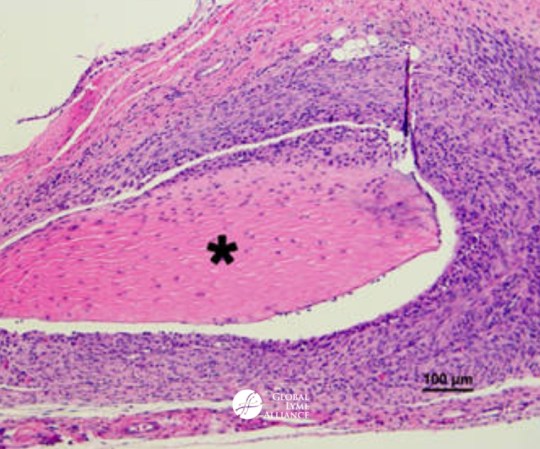
Pictured: Image of joint histopathology taken from a mouse infected with micro-colony/biofilm-like B. burgdorferi. Read Dr. Zhang’s full paper here.


timothy sellatiTimothy J. Sellati, PH.D. is Chief Scientific Officer at Global Lyme Alliance

As GLA’s Chief Scientific Officer, Dr. Sellati leads GLA’s research initiatives to accelerate the development of more effective methods of diagnosis and treatment of Lyme and other tick-borne diseasesmorphological variantshttps://www.dovepress.com/evaluation-of-in-vitro-antibiotic-susceptibility-of-different-morpholo-peer-reviewed-article-IDR  Metronidazole led to reduction of spirochetal structures by ~90% and round body forms by ~80%. Tigecycline and tinidazole treatment reduced both spirochetal and round body forms by ~80%–90%.
In terms of qualitative effects, only tinidazole reduced viable organisms by ~90%. Following treatment with the other antibiotics, viable organisms were detected in 70%–85% of the biofilm-like colonie

_________________

**Comment**

Great work by Zhang et al.!  Paper found here:  http://www.discoverymedicine.com/Jie-Feng/2019/03/persister-biofilm-microcolony-borrelia-burgdorferi-causes-severe-lyme-arthritis-in-mouse-model/

Unfortunately, they use the falsely skewed 10-20% percentages regarding the PTLDS group when microbiologist Holly Ahern argues convincingly that when ALL subgroups are added, it’s more like 60% that develop chronic/persistent symptoms:  https://madisonarealymesupportgroup.com/2019/02/25/medical-stalemate-what-causes-continuing-symptoms-after-lyme-treatment/  This is quite important and reveals the true state of affairs.

When I heard Dr. Zhang a few years back, he was working on this very concept, and please know the mycobacterium drugs have many side-effects that require close monitoring:  https://madisonarealymesupportgroup.com/2016/10/09/mycobacterium-drugs-for-ld/

The drug we used effectively throughout our treatment was Tinidazole which we pulsed throughout the entire time with 2-3 other antibiotics focusing on Bb’s different morphological variants as well as the various coinfections we had:  https://madisonarealymesupportgroup.com/2016/02/13/lyme-disease-treatment/  Dr. Eva Sapi found:

https://www.dovepress.com/evaluation-of-in-vitro-antibiotic-susceptibility-of-different-morpholo-peer-reviewed-article-IDR  Metronidazole led to reduction of spirochetal structures by ~90% and round body forms by ~80%. Tigecycline and tinidazole treatment reduced both spirochetal and round body forms by ~80%–90%.  In terms of qualitative effects, only tinidazole reduced viable organisms by ~90%. Following treatment with the other antibiotics, viable organisms were detected in 70%–85% of the biofilm-like colonies.


Post Treatment Lyme Disease Syndrome: A Review of its Origin & its Consequences in the Socio-economic Sphere

https://www.ommegaonline.org/article-details/The-Post-Lyme-Disease-Treatment-Syndrome-(PTLDS)-a-review-of-its-origin-and-its-consequences-in-the-socio-economic-sphere./2407#.XKLo6qbumDo.linkedin

The Post-Lyme Disease Treatment Syndrome (PTLDS) a review of its origin and its consequences in the socio-economic sphere.

DR. JOSE LAPENTA
Lapenta J, Lapenta JM

Conclusion

It is demonstrated that the chronic symptoms of Lyme disease are a reality, referred to as:

Chronic Lyme disease (CLD); or Syndrome- Post-treatment of Lyme disease (PTLDS).

As we said at the beginning, the CDC does not recognize the term Chronic Lyme Disease (CLD) because it is confusing[1].

With respect to this, we conclude that the CDC is wrong because data demonstrated that months or years after adequate treatments with antibiotics, patients can have the same or worse symptoms, which gives truth to the term: chronic Lyme disease (CLD).

On the other hand, the CDC alleges that the term Post-treatment of Lyme disease syndrome (PTLDS) is used by some scientists to define symptoms after the treatment of the disease and that it is due to “unknown cause”:

With regard to this aspect, the “so called” Post-treatment of Lyme disease syndrome (PTLDS), is the same chronic Lyme disease, consisting of:

  • Lyme positive patients who were never treated.
  • Positive Lyme patients who after treatment in acute phase relapsed months or years later, and reached the secondary or late stage with symptoms equal or more severe than at the beginning.

Patients who were misdiagnosed due to lack of effective diagnostic tests and reached the chronic stage. Today the CDC recognizes that its diagnostic tests are not 100% effective.

Well-diagnosed Lyme patients who never responded to the treatments recommended by the CDC.

  • We also disagree with the CDC about the definition of “unknown cause” when most studies and research show that it is a chronic encephalopathy produced by Borrelia burgdorferi, either by:
  • Its persistence in the bloodstream, cerebrospinal fluid and tissues due to resistance to treatment, under the well-known mechanism of “Biofilm”.
  • Generation of neurological damage due to the persistence of Borrelia burgdorferi in tissues that do not regenerate, such as the nerve cells.
  • An inflammatory process that remained in the nervous system and tissues after eliminating the causative agent.
In some patients, the coexistence of other diseases such as Erlichiosis, Babesiosis and Bartonellosis, which worsen the symptoms and obstruct the treatment.

We find with an unprotected society, the reality is that thousands of patients are discarded as positive Lyme after 4 months of treatment, because the treatment guidelines of the CDC say that in that time or less you will be cured, which we prove is false in a good proportion of patients.

In 2019 May, is the limit for the recognition of ICD-11 Codes of Lyme disease (International classification of diseases), and the WHO refuse to recognize them all, which will cause patients without coverage for their treatments. One of the unrecognized codes is congenital Lyme[46-54] .

The global community of patients with Lyme must organize well and adequately claim from health authorities such as the World Health Organization (WHO) to recognize the entire Lyme codes, and ensure coverage of their treatment at all levels.

The Syndrome post-treatment of Lyme disease (PTLDS), which is nothing more than the ”chronic symptoms” of the disease, is being used perversely to cover the reality of this disease, avoid coverage by health insurance, and tell patients: “you have nothing, go to a psychologist” … when their blood and brain are sailing in a sea of ​​Borrelias.

Comments

With regard to the proposal of new treatment guidelines for Lyme disease, we prefer to wait for what the health authorities at the world level will propose; then we will make a new publication about it.

Dr. José Lapenta Dermatologist

Dr. José M. Lapenta Md

Acknowledgments

To the Lyme world community that fights for its rights to be treated as real patients and not as psychiatric patients.

To my son J. Miguel MD, for his logistical support and co-author.

To all patients with Lyme especially Stacy Cellier Gomez whose story was quite motivating.

References
  1. Post-Treatment Lyme Disease Syndrome. (2018) Cent Dis Control Prev.

Pubmed| Crossref| Others

  1. Lapenta, J., Lapenta, J.M. Lyme Disease and Dementia, Alzheimer, Parkinson, Autism, an Easy Way to Destroy your Brain. (2018) Inv Dermatol Venereology Res 4(1): 30-43.

Pubmed| Crossref| Others

  1. Krupp, L.B., Masur, D., Schwartz, J., et al. Cognitive functioning in late Lyme borreliosis. (1991) Arch Neurol 48(11): 1125–1129.

Pubmed| Crossref| Others

  1. Benke, T., Gasse, T., Hittmair-Delazer, M., et al. Lyme encepha- lopathy: Long-term neuropsychological deficits years after acute neuroborreliosis. (1995) Acta Neurol Scand 91(5): 353-357.

Pubmed| Crossref| Others

  1. Bujak, D.I., Weinstein, A., Dornbush, R.L. Clinical and neurocognitive features of the post Lyme syndrome. (1996) J Rheumatol 23(8): 1392-1397.

Pubmed| Crossref| Others

  1. Gaudino, E.A., Coyle, P.K., Krupp, L.B. Post-Lyme syndrome and chronic fatigue syndrome. Neuropsychiatric similarities and dif- ferences. (1997) Arch Neurol 54(11): 1372-1376.

Pubmed| Crossref| Others

  1. Bloom, B.J., Wyckoff, P.M., Meissner, H.C., et al. Neurocognitive abnormalities in children after classic manifestations of Lyme disease. (1998) Pediatr Infect Dis J 17(3): 189-196.

Pubmed| Crossref| Others

  1. Elkins L.E., Pollina, D.A., Scheffer, S.R., et al. Psychological states and neuropsychological performances in chronic Lyme disease. (1999) Appl Neuropsychol 6(1): 19-26.

Pubmed| Crossref| Others

  1. Kaplan, R.F., Jones-Woodward, L., Workman, K., et al. Neuropsychological deficits in Lyme disease patients with and without other evidence of central nervous system pathology. (1999) Appl Neuropsychol 6(1): 3-11.

Pubmed| Crossref| Others

  1. Klempner M.S., Hu, L.T., Evans, J., et al. Two controlled trials of antibiotic treatment in patients with persistent symptoms and a history of Lyme disease. (2001) N Engl J Med 345(2): 85-92.

Pubmed| Crossref| Others

  1. Morgen, K., Martin, R., Stone, R.D., et al. FLAIR and magnetization transfer imaging of patients with post-treatment Lyme disease syndrome. (2001) Neurology 57(11): 1980-1985.

Pubmed| Crossref| Others

  1. Weinstein, A., Britchkov, M. Lyme arthritis and post-Lyme disease syndrome. (2002) Curr Opin Rheumatol 14(4): 383-387.

Pubmed| Crossref| Others

  1. Shotland, L.I., Mastrioanni, M.A., Choo, D.L., et al. Audiologic manifestations of patients with post-treatment Lyme disease syndrome. (2003) Ear Hear 24(6): 508-517.

Pubmed| Crossref| Others

  1. Steven, E. P., Joseph, J. B., Nick, S. H., et al. Chronic infection in ‘post-Lyme borreliosis syndrome. (2005) Int J Epid 34(6): 1439-1440.

Pubmed| Crossref| Others

  1. Cairns, V., Godwin, J. Post-Lyme borreliosis syndrome: a meta-analysis of reported symptoms. (2005) Int J Epidemiol 34(6): 1340-1345.

Pubmed| Crossref| Others

  1. Pícha, D., Moravcova, L., Lasikova, S., et al. Symptoms of post-Lyme syndrome in long-term outcome of patients with neuroborreliosis. (2006) Scand J Infect Dis 38(8): 747-748.

Pubmed| Crossref| Others

  1. Pfister, H.W., Rupprecht, T.A. Clinical aspects of neuroborreliosis and post-Lyme disease syndrome in adult patients. (2006) Int J Med Microbiol 40: 11-6.

Pubmed| Crossref| Others

  1. Auwaerter, P.G. Point: antibiotic therapy is not the answer for patients with persisting symptoms attributable to lyme disease. (2007) Clin Infect Dis 45(2): 143-148.

Pubmed| Crossref| Others

  1. Stricker, R.B. Counterpoint: long-term antibiotic therapy improves persistent symptoms associated with lyme disease. (2007) Clin Infect Dis 45(2): 149-157.

Pubmed| Crossref| Others

  1. McAuliffe, P., Brassard, M.R., Fallon, B. Memory and executive functions in adolescents with posttreatment Lyme disease. (2008) Appl Neuropsychol 15(3): 208-219.

Pubmed| Crossref| Others

  1. Hassett, A.L., Radvanski, D.C., Buyske, S., et al. Role of psychiatric comorbidity in chronic Lyme disease. (2008) Arthritis Rheum 59(12): 1742-1749.

Pubmed| Crossref| Others

  1. Moniuszko, A., Czupryna, P., Zajkowska, J., et al. Post Lyme syndrome as a clinical problem. (2009) Pol Merkur Lekarski 26(153): 227-230.

Pubmed| Crossref| Others

  1. Clarissou, J., Song, A., Bernede, C., et al. Efficacy of a long-term antibiotic treatment in patients with a chronic Tick Associated Poly-organic Syndrome (TAPOS). (2009) Med Mal Infect 39(2): 108-115.

Pubmed| Crossref| Others

  1. Markeljevic, J., Sarac, H., Rados, M. Tremor, seizures and psychosis as presenting symptoms in a patient with chronic lyme neuroborreliosis (LNB). (2011) Coll Antropol 35(1): 313-318.

Pubmed| Crossref| Others

  1. Schutzer, S.E., Angel, T.E., Liu, T., et al. Distinct cerebrospinal fluid proteomes differentiate post-treatment lyme disease from chronic fatigue syndrome. (2011) PLoS One 6(2): e17287.

Pubmed| Crossref| Others

  1. Chandra, A., Wormser, G.P., Marques, A.R., et al. Anti-Borrelia burgdorferi antibody profile in post-Lyme disease syndrome. (2011) Clin Vaccine Immunol 18(5): 767-771.

Pubmed| Crossref| Others

  1. Fallon, B.A., Petkova, E., Keilp, J.G., et al. A reappraisal of the u.s. Clinical trials of post-treatment lyme disease syndrome. (2012) Open Neurol J 6: 79-87.

Pubmed| Crossref| Others

  1. Klempner, M.S., Baker, P.J., Shapiro, E.D., et al. Treatment trials for post-Lyme disease symptoms revisited. (2013) Am J Med 126(8): 665-669.

Pubmed| Crossref| Others

  1. Aucott, J.N., Rebman, A.W., Crowder, L.A., et al. Post-treatment Lyme disease syndrome symptomatology and the impact on life functioning: is there something here? (2013) Qual Life Res 22(1): 75-84.

Pubmed| Crossref| Others

  1. Aucott, J.N., Crowder, L.A., Kortte, K.B. Development of a foundation for a case definition of post-treatment Lyme disease syndrome. (2013) Int J Infect Dis 17(6): 443-449.

Pubmed| Crossref| Others

  1. Batheja, S., Nields, J.A., Landa, A., et al. Post-treatment lyme syndrome and central sensitization. (2013) J Neuropsychiatry Clin Neurosci 25(3): 176-186.

Pubmed| Crossref| Others

  1. Crowder, L.A., Yedlin, V.A., Weinstein, E.R., et al. Lyme disease and post-treatment Lyme disease syndrome: the neglected disease in our own backyard. (2014) Public Health 128(9): 784-791.

Pubmed| Crossref| Others

  1. Scieszka, J., Dabek, J., Cieslik, P. Post-Lyme disease syndrome. (2015) Reumatologia 53(1): 46-48.

Pubmed| Crossref| Others

  1. Weitzner, E., McKenna, D., Nowakowski, J., et al. Long-term Assessment of Post-Treatment Symptoms in Patients With Culture-Confirmed Early Lyme Disease. (2015) Clin Infect Dis 61(12): 1800-1806.

Pubmed| Crossref| Others

  1. Blaut-Jurkowska, J., Jurkowski, M. Post-Lyme disease syndrome. (2016) Pol Merkur Lekarski. 40(236): 129-133.

Pubmed| Crossref| Others

  1. Nemeth, J., Bernasconi, E., Heininger, U., et al. For The Swiss Society For Infectious Diseases And The Swiss Society For Neurology. Update of the Swiss guidelines on post-treatment Lyme disease syndrome. (2016) Swiss Med Wkly 146: 14353.

Pubmed| Crossref| Others

  1. Aucott, J.N., Soloski, M.J., Rebman, A.W., et al. CCL19 as a chemokine risk factor for posttreatment Lyme disease syndrome: A prospective clinical cohort study. (2016) Clin Vaccine Immunol 23(9): 757–766.

Pubmed| Crossref| Others

  1. Rebman, A.W., Aucott, J.N., Weinstein, E.R., et al. Living in Limbo: Contested Narratives of Patients with Chronic Symptoms Following Lyme Disease. (2017) Qual Health Res 27(4): 534-546.

Pubmed| Crossref| Others

  1. Rebman, A.W., Bechtold, K.T., Yang, T., et al. clinical, symptom, and quality-of-life characterization of a well-defined group of patients with posttreatment Lyme disease syndrome. (2017) Front Med (Lausanne) 4: 224.

Pubmed| Crossref| Others

  1. Hanna, A.F., Abraham, B., Hanna, A., et al. Effects of intravenous ketamine in a patient with post-treatment Lyme disease syndrome. (2017) Int Med Case Rep J 10: 305-308.

Pubmed| Crossref| Others

  1. Weinstein, E.R, Rebman, A.W., Aucott, J.N., et al. Sleep quality in well-defined Lyme disease: a clinical cohort study in Maryland. (2018) Sleep 1: 41(5).

Pubmed| Crossref| Others

  1. Cervantes, J., Doctor says you are cured, but you still feel the pain. Borrelia DNA persistence in Lyme disease. (2017) Microbes Infect 19(9-10): 459-463.

Pubmed| Crossref| Others

  1. Touradji, P., Aucott, J.N., Yang, T., et al. Cognitive Decline in Post-treatment Lyme Disease Syndrome. (2018) Arch Clin Neuropsychol.

Pubmed| Crossref| Others

  1. Davidsson, M. The Financial Implications of a Well-Hidden and Ignored Chronic Lyme Disease Pandemic. (2018) Healthcare Basel 6(1): 16.

Pubmed| Crossref| Others

  1. Lapenta, J., Lapenta, J.M. understanding the Lyme disease, Classification and codes. (2018) Ommega Pub 4(1): 1-11.

Pubmed| Crossref| Others

  1. Lapenta, J., Lapenta, J.M. Understanding the Lyme Disease, Classification And Codes. (2017)

Pubmed| Crossref| Others

  1. Lapenta, J., Lapenta, J.M. Minocycline, Alzheimer’s, and Other Neurological Disorders.

Pubmed| Crossref| Others

  1. Centers for Disease Control and prevention.

Pubmed| Crossref| Others

  1. Online ICD9/ICD9CM codes.

Pubmed| Crossref| Others

  1. ICD-10 Version 2016.

Pubmed| Crossref| Others

  1. ICD-10-CM Codes.

Pubmed| Crossref| Others

  1. Information from World Health Organization (WHO): List of Official ICD-10 Updates. For the ICD-11 revision: The ICD 11th Revision is due by 2017 (Archived, Feb. 2014); ICD Revision Timelines and ICD-11 Beta Draft (online beta-version of ICD-11). Source:

Pubmed| Crossref| Others

  1. International Statistical Classification of Diseases and Related Health Problems.

Pubmed| Crossref| Others

_________________

For a list of 700 peer-reviewed articles on the persistence of Lyme:  https://www.ilads.org/wp-content/uploads/2018/07/CLDList-ILADS.pdf

Great article by microbiologist Holly Ahern where she takes the PTLDS moniker head-on showing that the actual number of those with persistent/chronic symptoms is more like 60%:  https://madisonarealymesupportgroup.com/2019/02/25/medical-stalemate-what-causes-continuing-symptoms-after-lyme-treatment/

Please spread the word on this as researchers seeing the falsely skewed low percentages of 10-20% aren’t going to see the relevance in studying this further.  If; however, they see that 60% of patients are affected chronically, that puts the whole matter into a different urgent category.  We need to point out CDC/NIH errors.


Be a Victor Not a Victim

https://globallymealliance.org/be-a-victor-not-a-victim/

by Jennifer Crystal

Many patients of tick-borne disease take years to get diagnosed. A lucky few ones find a bull’s-eye rash or an embedded tick, go to a physician who just happens to be Lyme literate, and get started on antibiotics right away. If they respond well to initial treatment, they can be cleared of Lyme in a month’s time.

Most patients are not this lucky. Even of those who do get treated right away, 10-20% go on to suffer after treatment. And for people who are not immediately treated, Lyme bacteria and quite possibly other co-infections the tick has introduced to ones body can spread through their bodies and brains for months, years, even decades before they are  accurately diagnosed. By the time of diagnosis, the person is often bedridden, plagued by exhaustion, joint aches, migraines, brain fog, and other neurological impairments. The unluckiest can suffer paralysis or schizophrenia.

When you’re a victim of unbearable physical and neurological suffering and you’re fighting to get a diagnosis, it can be the most natural thing in the world to also fall victim to a woe-is-me mentality. In some respects, you have to. Just to get people to take you seriously. If you’re like me, you might be used to putting on a good face even in the toughest times.

I’ve always been a glass-half-full person, an optimist fundamentally, but in order to get people to really understand what was going on under my mask of a smile, I had to complain. I was doing myself no favor by remaining stoic. Some might say I was throwing a pity party. But I needed to do so in order to be heard.

When I finally did get accurately diagnosed with Lyme and two of its co-infections, babesia, and ehrlichia, I wanted to shout from the rooftops, “Hey world, guess what? I have Lyme disease!” After eight years battling mystery symptoms, two years being utterly bedridden, and countless pointless doctors appointments where I was told, “Maybe it’s all in your head” or “You just need to exercise more,” I finally felt validated, I had a true physical disease—multiple diseases, in fact three of them—and the tests and clinical diagnoses to prove it.

Getting that validation can make you want to go back to all those naysayers and gleefully howl, “I told you so.” But many of those same people are the ones you will still need support from, whether it’s emotional or financial support from friends and family or medical support from physicians. For that reason, you have to take the moral high road. You have to extend understanding to those people, recognizing that they simply didn’t know enough about tick-borne diseases. Yet you have to educate them so they can meet you where you are and help you the manner best suited for your illness.

Inside, you may be very angry indeed. You may feel like a victim for all you’ve been through. When you start having Herxheimer reactions and start feeling worse than ever, you may even curse the tiny tick that did all this to you, the doctors who wouldn’t listen to you, the friends or family who didn’t advocate for you. You may curse the world for not understanding your suffering.

I say you may only to suggest that this could happen, but also to give you permission to have these feelings. It’s okay to be angry. It’s okay to be sad. It’s okay to be frustrated. It’s okay to mourn the months or years of your life that you’ve lost.

It’s not okay to stay in that place. It’s not okay to get stuck in your own anger. For then, you indeed become a victim, you become bitter. The tick, the disease(s) it carried, and the naysayers all win, because you’ve let them get the best of you. Please don’t do this. You are better than that.

You are a fighter. You deserve to regain your health. But your body cannot heal if you weigh it down with toxic emotions. You can have them, sure; that’s only natural. But at some point you must need to move beyond them. You must release yourself from them, so that your body has a real fighting chance to heal.

Don’t send your body the message that you’re a victim because it will believe you. Send your body the message that you are going to treat it kindly, be patient with it, and support it every step of the way on its journey to health.

Be a victor instead of a victim.


jennifer crystal

Opinions expressed by contributors are their own.

Jennifer Crystal is a writer and educator in Boston. She has written a memoir about her journey with chronic tick borne illness, for which she is seeking representation. Contact her at: 

lymewarriorjennifercrystal@gmail.com. 

_________________
**Comment**
Great, great reminder.  You can have all those emotions but don’t stay in that place forever.  Rise above it.  Come to support group and vent.  That’s what we are here for.
One point that is important – way more than 10-20% of us have chronic symptoms.  Microbiologist Holly Ahern wrote an incredible piece pointing out it’s more like 60%: https://madisonarealymesupportgroup.com/2019/02/25/medical-stalemate-what-causes-continuing-symptoms-after-lyme-treatment/  This is a prime example of how this plague has been downplayed using statistics and wrong definitions.  
We need to issue well known as it is being used against patients. Researchers are taking the falsely skewed statistic of 10-20% and making this sound rare – when it is not.
Please get the word out.  This PTLDS definition must change.