Please see the letter below addressed to the Co-Chair of the Tick-Borne Disease Working Group which will hold its first meeting TODAY June 4th per the following link:
WAKE UP AMERICA!
———- Original Message ———-
From: CARL TUTTLE <runagain@comcast.net>
To: dwalker@utmb.edu
Cc: James.Berger@hhs.gov, tickbornedisease@hhs.gov, Las@silverleafconsulting.net, Sylvia.Trent-Adams@hhs.gov
Bcc: (98 indusclosed recipients)
Date: June 3, 2019 at 9:42 AM
Subject: June 4, 2019, TBDWG Meeting
June 3, 2019
University of Texas Medical Branch
301 University Boulevard,
Galveston, TX 77555-0419 Attn: David H. Walker, MD, Director, UTMB Center for Biodefense and Emerging Infectious Disease
Dear Dr. Walker,
As a doctor of pathology and Co-Chair of the Tick-Borne Disease Working Group I would like to share a seven page pathology report for Lyme patient Vicki Logan which is included in the attached letter to past CDC Director Brenda Fitzgerald, MD.
“In 1991 the Lyme disease organism, Borrelia burgdorferi, was grown from the cerebrospinal fluid of my patient Vicki Logan at the Centers for Disease Control in Fort Collins, Colorado despite prior treatment with intravenous antibiotics. Her case made the front page of the New York Times Science Times in August of 1993.” -Kenneth Liegner, MD
The destructive nature of Borrelia is evident in Vicki Logan’s liver (nutmeg liver), kidneys, heart, lungs and brain. The patient died after the insurer refused additional IV antibiotic therapy.
Links to the seven page autopsy results of patient Vicki Logan show histopathologic findings consistent with neurologic manifestations of chronic Lyme disease.
Lyme patient Vicki Logan’s 1991 positive culture test performed by the Centers for Disease Control should have set off a red flag but was ignored while the focus remained on discrediting the sick and disabled Lyme patient population. [1]
There are rumors that Dr. Eugene Shapiro has been selected to participate as a member of the Tick-borne Disease Working Group. Shapiro has spent a career discrediting the sick and disabled along with the courageous clinicians attempting to help these patients as he coauthored the deplorable Lancet article referenced below. There is no place for Shapiro on the TBDWG as he is a disgrace to the medical profession.
In contrast, Dr. Kenneth Liegner has spent his career helping the sick and disabled and recently published his results using Disulfiram in the treatment of chronic Lyme disease. I recommend that you read his Open Access article:
Disulfiram (Tetraethylthiuram Disulfide) in the Treatment of Lyme Disease and Babesiosis: Report of Experience in Three Cases Kenneth B. Liegner
Shapiro on TBD Working Group; other controversial choices too
Less than 24 hours before the Tick-Borne Disease Working Group (TBDWG) holds its June 4 meeting, the Department of Health and Human Services (HHS) has finally named its selections for the newest incarnation of the panel.
Among the controversial choices is Dr. Eugene Shapiro. Within the last few weeks, more than 19,000 people have signed a petition to keep Shapiro off the working group, because he’s widely seen as working against the interests of Lyme patients.
After the first session of the TBDWG issued its report to Congress in late 2018, HHS solicited nominations for the second session of the group. At that time, officials said the panel would be named in April.
That month came and went, however, with no word about the new Working Group. Finally, on May 15, the Infectious Diseases Society of America announced on its website that Shapiro had been named to the group. In response to our inquiries, HHS said only that no decision had been made.
Finally, after close of business on the eve of the June 4 meeting, HHS announced its choices.
Other troubling choices
In addition to Shapiro, there are some other choices that the Lyme community may find troubling. New co-chairs of the panel are Dr. David Walker -and Leigh Ann Soltysiak.
Dr. Walker is an expert in rickettsial infections, not Lyme disease. Since 80% of tick-borne disease cases in the US are Lyme disease, many people feel that such an important position should be filled by someone whose expertise is Lyme disease.
Ms. Soltysiak has personal experience with Lyme disease. However, she served last time as the only patient representative on the vaccines subcommittee. Many Lyme patients expressed dismay that the subcommittee exhibited a unanimous pro-vaccine stance, with no committee members raising safety issues that are important to the Lyme community.
Here’s the announcement from HHS:
The U.S. Department of Health and Human Services announces today the appointment of new members to fill vacant positions on the Tick-Borne Disease Working Group (Working Group). These new members include five Special Government Employees and four Regular Government Employees (RGEs). The Working Group also announces six alternate RGE members, should the RGE members not be able to attend meetings.
The Working Group will hold its next public meeting on June 4, 2019, from 8:30 a.m. to 5:00 p.m. ET, at the Holiday Inn Washington-Capitol, 550 C Street S.W., Washington, D.C. Members of the public may attend the meeting in person or via webcast. For more information, visit the Working Group’s website here.
The Tick-Borne Disease Working Group was established on August 10, 2017, as required by the 21st Century Cures Act, to provide expertise and to review all efforts within the Department of Health and Human Services related to all tick-borne diseases, to examine research priorities and to help ensure interagency coordination and minimize overlap. The Working Group is required to submit a report to the HHS Secretary and Congress on their findings and any recommendations for the federal response to tick-borne disease every two years. It issued its first report in November 2018.
The Working Group will be chaired by David Hughes Walker, M.D., Professor of Pathology and Executive Director, University of Texas Medical Branch Center for Biodefense and Emerging Infectious Diseases; and Leigh Ann Soltysiak, Owner, Principal, Silverleaf Consulting, LLC.
The Working Group members are as follows:
SPECIAL GOVERNMENT EMPLOYEES (PUBLIC MEMBERS)
Leigh Ann Soltysiak* (Co-Chair): Owner, Principal, Silverleaf Consulting, LLC; Adjunct Professor, Entrepreneurship Thinking, Stevens Institute of Technology (New Providence, New Jersey). She brings a valuable perspective to the Working Group as a former Lyme disease patient who speaks honestly about the physical, financial and psychosocial issues caused by the disease. She was a valued member of the 2018 Working Group’s Vaccines/Therapeutics subcommittee.
David Hughes Walker, M.D.* (Co-Chair): Professor of Pathology, The Carnage and Martha Walls Distinguished University Chair in Tropical Diseases; and Executive Director, University of Texas Medical Branch Center for Biodefense and Emerging Infectious Diseases. (Galveston, Texas). His work currently focuses heavily on tick-borne diseases. Dr. Walker brings with him significant experience with committee work, as the current chair of the Tick-Borne Disease Research Program’s Programmatic Panel, as well as past membership in seven federal advisory committees.
Scott Palmer Commins,*BS, M.D., Ph.D.: Associate Professor of Medicine & Pediatrics, University of North Carolina at Chapel Hill; Member, UNC Food Allergy Initiative, Thurston Research Center (Chapel Hill, North Carolina)
Sam T. Donta, M.D.*: Infectious Disease Consultant, Falmouth Hospital; and Former Member, U.S. Department of Defense Tick Borne Disease Research Programmatic Review Panel (Falmouth, Massachusetts)
Robert Sabatino: Founder and Executive Director, Lyme Society Inc. (Staten Island, New York)
Eugene David Shapiro*, M.D.: Professor of Pediatrics, Epidemiology, and Investigative Medicine, Yale University School of Medicine; Vice Chair for Research of the Department of Pediatrics; Co-Director of Education for the Yale Center for Clinical Investigation; and Deputy Director of Yale’s PhD Program in Investigative Medicine (New Haven, Connecticut)
Patricia V. Smith: President, Lyme Disease Association (Wall, New Jersey)
REGULAR GOVERNMENT EMPLOYEES (FEDERAL MEMBERS)
Charles Benjamin (Ben) Beard, Ph.D.: Deputy Director, Division of Vector-Borne Diseases, National Center for Emerging and Zoonotic Infectious Diseases, Centers for Disease Control and Prevention
Commander Rebecca Bunnell*, MPAS, PA-C: Senior Advisor, Learning and Diffusion Group, Innovation Center, Centers for Medicare and Medicaid Services
Angel M. Davey, Ph.D.*: Program Manager, Tick-Borne Disease Research Program, Congressionally Directed Medical Research Programs, U.S. Department of Defense
Dennis M. Dixon, Ph.D.: Chief, Bacteriology and Mycology Branch, National Institute of Allergy and Infectious Diseases, National Institutes of Health
Captain Estella Jones, DVM: Deputy Director, Office of Counterterrorism and Emerging Threats, Food and Drug Administration
Leith Jason States, M.D.*, MPH (FMF): Deputy Chief Medical Officer, Office of the Assistant Secretary for Health, U.S. Department of Health and Human Services
Adalberto (Beto) Pérez de León*, M.D.: Director, Knipling-Bushland U.S. Livestock Insects Research Laboratory, Agricultural Research Service, U.S. Department of Agriculture
ALTERNATE REGULAR GOVERNMENT EMPLOYEES (FEDERAL MEMBERS)
Chien-Chung Chao*, Ph.D.: Research Chemist, Viral and Rickettsial Diseases Department Infectious Diseases Directorate, Naval Medical Research Center, U.S. Department of Defense
Captain Scott J. Cooper, MMSc, PA-C: Senior Technical Advisor and Lead Officer for Medicare Hospital Health and Safety Regulations, Centers for Medicare and Medicaid Services
Shahla Jilani, M.D.*: Deputy Chief Medical Officer, Office of the Assistant Secretary for Health, U.S. Department of Health and Human Services
David A. Leiby, Ph.D.: Chief, Product Review Branch, Division of Emerging & Transfusion-Transmitted Diseases, Office of Blood Research & Review, Center for Biologics Evaluation & Research, Food and Drug Administration
Commander Todd Myers, Ph.D.: Scientist, Office of the Chief Scientist, Office of Counter Terrorism and Emerging Threats, Food and Drug Administration
Samuel S. Perdue, Ph.D.: Section Chief, Basic Sciences and Program Officer, Rickettsial and Related Diseases, Bacteriology and Mycology Branch, National Institute of Allergy and Infectious Diseases), National Institutes of Health
Susanna N. Visser, Dr.PH,: Associate Director for Policy, Division of Vector-Borne Diseases, National Center for Emerging and Zoonotic Infectious Diseases, Centers for Disease Control and Prevention
This does not surprise me at all. Crawl in bed to do business with the devil and he will invite his buddies along. The very people behind this plague are still involved. It’s a ‘good old boy’ club known as The Cabal. They’ve been doing the same ineffective work for over 40 years.
Hear Willy Burgdorfer say this in his own words. Scroll to 2:40:
Willy is far from innocent yet he admitted the entire thing is politically tainted and that the money goes to same people who have done nothing. This interview was done 5 years ago and nothing’s changed.
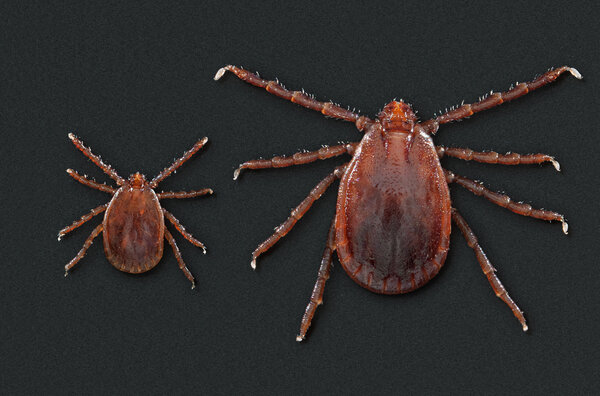
This photo depicts two Haemaphysalis longicornis ticks, commonly known as the longhorned tick. It has been linked to the spread of a hemorrhagic fever in China. The smaller of the two ticks on the left is a nymph. The larger tick is an adult female.
Science Source
When a tick bores into your skin, anchoring itself for what can be a leisurely meal while often spreading germs, it isn’t just Lyme disease that you have to worry about.
Various kinds of ticks have been shown to carry at least 16 diseases in the U.S alone that can infect humans, according to the Centers for Disease Control and Prevention. Now add one more to the global list of ills that a tick bite can bring about, according to a study in the May 30 New England Journal of Medicine.
The study, identifying a new tick-borne disease, shows that we still don’t know how many more diseases ticks can carry. “We continue to discover new viruses,” says Dr. Bobbi Pritt, director of the Clinical Parasitology Laboratory and co-director of the Vector-Borne Disease Lab Services at Mayo Clinic. She was not involved in the study.
The newly discovered disease was found in Inner Mongolia, an autonomous region of China. In April 2017, a 42-year-old female farmer from the Mongolian town Alongshan went to a county hospital complaining of fever and headache. She had a history of tick bites. In searching for the cause of the patient’s fever, researchers ruled out the usual tick-borne diseases found in the area. Using genome sequencing, a process of determining the makeup of an organism’s DNA, they isolated a new disease-causing agent, which they called Alongshan virus, or ALSV, after the patient’s hometown.
Further testing found 86 additional patients in the same Inner Mongolia region who were infected with ALSV. “Neither permanent clinical complications nor death occurred among patients with confirmed infection,” wrote the authors, from various universities and laboratories in China, in the journal article.
The patients in the study had symptoms of headache and fever coming an average of three to seven days after a tick bite, according to an email response to questions from Quan Liu, an author of the study from the School of Life Sciences and Engineering at Foshan University in Foshan, China. They were treated with ribavirin, an antiviral, and benzylpenicillin sodium, an antibiotic, for three to five days, he wrote.
“The symptoms usually resolved after six to eight days of treatment, and all patients had complete recovery.”
Diseases from a variety of ticks are seen around the world, but there are regional differences depending on the virus or bacteria carried by the ticks in the area. So far, ASLV has been found only in Inner Mongolia, in Ixodes persulcatus ticks, according to the study. It has also been found in mosquitoes in the same area, so researchers can’t be certain whether the patients got sick from a tick bite or a mosquito bite.
Like the victims of ASLV, most patients recover from the diseases caused by tick bites — although some tick-borne diseases can result in enduring joint pain, impaired muscle movements and fatigue.
Finding a new disease can only reinforce the need for people to take precautions to avoid tick bites.
In the U.S., where more than 59,000 cases of tick-borne diseases were reported in 2017, tick season is just beginning.
“Once the snow melts, the ticks come out. Stay away from tall grasses and forested areas,” says Pritt. “If you go into those areas, wear protective clothing and use an insect repellent with DEET.”
The CDC also suggests treating clothing and camping gear with the repellent permethrin, walking in the center of paths to avoid brushing against plants and leaves, and bathing and checking your body for ticks after an outdoor excursion.
And if you do come down with a fever that isn’t easily explained or diagnosed, make sure you tell your physician about any travel or recent outdoor experiences, says Pritt.
“The overarching theme is the more we look at ticks, the more we find,” says Wendy Adams, research grant director, Bay Area Lyme Foundation, who was not involved in the study. “We find parasites, viruses, bacteria. We just found worms in ticks in New York.”
It means that when humans are bitten by ticks, there are many diseases and infections they can contract — even a disease carried by a parasite within a tick.
Susan Brink is a freelance writer who covers health and medicine. She is the author of The Fourth Trimester: Understanding, Protecting, and Nurturing an Infant through the First Three Months, and co-author of A Change of Heart.
CorrectionJune 1, 2019
A previous version of this story incorrectly referred to the Centers for Disease Control and Prevention as the Centers for Disease Control and Infection.
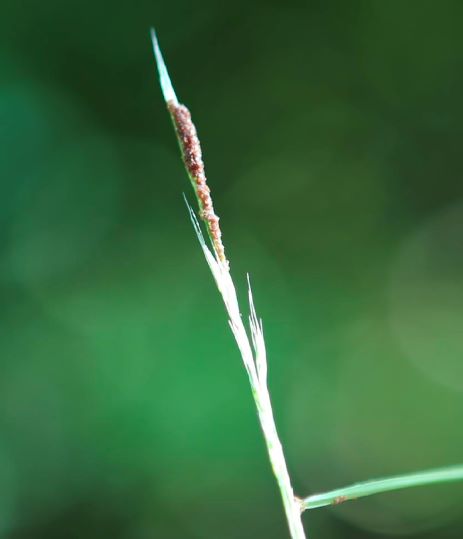
To date this tick which causes significant havoc in Asia, has not transmitted any diseases in the U.S. yet, but the concern is palpable due to its ability to clone itself and replicate quickly. It also lines up on a stalk of grass like a cluster bomb waiting to be touched by something to detonate. When you study this tick for 5 min. it becomes clear why this particular tick infestation can drain cattle of their blood. https://madisonarealymesupportgroup.com/2018/09/12/three-surprising-things-i-learned-about-asian-longhorned-ticks-the-tick-guy-tom-mather/
Three patients, each of whom had required intensive open-ended antimicrobial therapy for control of the symptoms of chronic relapsing neurological Lyme disease and relapsing babesiosis, were able to discontinue treatment and remain clinically well for periods of observation of 6–23 months following the completion of a finite course of treatment solely with disulfiram. One patient relapsed at six months and is being re-treated with disulfiram. View Full-Text
This is an open access article distributed under the Creative Commons Attribution License which permits unrestricted use, distribution, and reproduction in any medium, provided the original work is properly cited (CC BY 4.0).
Please notice this is by Dr. Ken Liegner, an experienced Lyme literate doctor affiliated with ILADS. The IDSA/NIH/CDC people are not doing work like this. They are fixated on the acute phase leaving chronically infected people out to dry.
Thankfully, some good work is being done in the treatment area. Some examples:
https://madisonarealymesupportgroup.com/2019/02/22/why-mainstream-lyme-msids-research-remains-in-the-dark-ages/ Within this article is a link to an ILADS video Dr. Burrascano made recently. I highlight his video and explain his findings within his own practice of what worked for many patients, including a “cycling” approach to treatment as well as the fact blood levels of antibiotics are different for people. This treatment points are important because if the blood level isn’t high enough, pathogens will not be killed with a potential for them to mutate and become stronger in the future.
Be encouraged. There’s some great stuff in the works.
My numbers won’t budge. Every month I go in for a blood test and every month I get an email from my doctor stating that my inflammatory markers are the same. The numbers are not so high to cause a panic, but they’re not low enough to signal any real improvement either. I’ve tried everything from meditation to medication, but nothing seems to work. Each month I pray the numbers will drop and I’m devastated when month after month they stay the same.
I’ve put in all the work; there’s been no stinting. I’ve been in treatment for three years. I’ve changed my lifestyle, my diet, and most difficult of all, my mindset. But I keep coming up short. There’s no doubt I’m better. My bedridden days are mostly in the past, and the pain that keeps me up at night (painsomnia, I call it) happens once or twice week instead of every day. Another marker of my improvement is after treatment my herxheimer reactions are greatly diminished. These are positive trends, but still I am not where I want to be. I want clinical proof that my recovery is real. I want to know unequivocally that I’m heading toward remission. I’ve been at this dreaded plateau for months waiting to break free. I anxiously await the day when my inflammatory markers take a dramatic drop.
Your plateau may be different than mine. Maybe you, too, made big improvements in the beginning and now it’s tapering off, or maybe you’re stuck waiting for any minuscule improvement at all. Either way the lack of progress may be the hardest thing to bear.
All this was weighing heavily on me. Then one day I started thinking about actual plateaus in nature. Consider for a moment you are climbing up a mountain and reach a plateau. You’ve done the grueling work of going up the mountain and now you are walking on level ground. You are still moving forward, that hasn’t changed, but you’re not increasing your elevation. Maybe that’s what plateaus are in treatment—a leveling off that doesn’t feel like progress, because you aren’t climbing anymore. But you have achieved an incremental improvement in your recovery.
This bit of visualization changed the way I thought about my lack of headway, though there were still some questions I needed to ask myself— questions you may need to ask yourself as well:
Q: Have I really plateaued or is my progress just going slowly?
A: With Lyme disease the improvement can be slow . . . very slow. As they say, any progress is good progress. If you feel comfortable with your treatment protocol, you may need to practice patience and remember you are getting better. However, sometimes the progress is too slow and even if there is incremental improvement you may want talk to your doctor about exploring ways to speed up your treatment plan.
Q: Have you hit a plateau before? What helped jumpstart my healing?
A: If this has happened before, what was it that made the difference? Maybe it’s a new supplement or an increased dose of medication. Maybe your thyroid or adrenals are out of balance and need attention. Try to remember back to what helped you before and try it again. It may help to keep a journal about what you think is and isn’t working for you.
Q: Do I need to change my treatment or ride it out?
A: As I said, with Lyme getting better takes time. Ask yourself if you think your current treatment plan is sufficient to to get you better. This is a good place to use your intuition. If you feel skeptical every time you meet with your doctor that might be your body telling you something.
Q: If I plan to stay the course when will I know it’s time to adjust?
A: Give yourself a timeline—six months, nine months—for when you want to reevaluate. Verbalize your timeline to your doctor, so she or he knows what you’re thinking. Ask if there is a test that can be run at that time to compare where you were before to where you are now.
Q: Am I testing too often?
A: If you’re like me and your numbers aren’t budging, maybe it’s time to put more space between tests. This depends naturally on what is medically advisable. But I I did realize that the constant testing was causing me frequent disappointments, which weren’t good for my healing. I have since decided to go from once a month to once every other month for my bloodwork and focus on other things in the meantime.
Q: Is there something else I could do to move forward?
A: A plateau is the perfect time to reevaluate your habits. Perhaps it’s time to add more nutrients to your diet or increase detox. Have you always wanted to try a complementary therapy? Now may be the time. Or are there other options?
Q: Is this a good time for a healing pause?
A: Have no doubts, recovery from Lyme treatment is a full-time job. It seems like there’s always something else you can try, but is that the best thing for your body? This could be an indication that it’s time to take a break from all the intensity and let your body rest at the top of the mountain.
Take some time and ask yourself these questions. Get quiet and let your intuition speak. There are few doctors, medications, or therapies that can give us as much insight as our own common sense. Remember the image of the mountain and keep walking forward on the level ground of the plateau—the uphill slope may be only a few steps ahead.
Opinions expressed by contributors are their own.
Kerry J. Heckman is a licensed therapist and author of the healing and wellness blog Words Heal. She was diagnosed with chronic Lyme disease in 2016.
______________________
**Comment**
Great article to begin meaningful dialogue.
Not sure what tests she keeps having done but I’ve heard mixed opinions about the CD-57 test which some docs swear by and others like my own say it’s a general, very basic indicator of immunity and unless you have the number before you were sick and then taken at regular intervals throughout treatment, it’s just a number. https://www.tiredoflyme.com/cd57.html
Another thing that helped this inflammation/pain for me was systemic enzymes: https://madisonarealymesupportgroup.com/2016/04/22/systemic-enzymes/ There are many brands out there. You might have to try a few to find one that works. I’ve tried different variations of Wobenzym as well as a brand my doctor sells. (I’m not affiliated with any companies)
I’ll never forget the ranger in the documentary, “Under Our Skin,” state that he never could have imagined that his greatest improvement would come AFTER three years of treatment. This has been my experience and my husband’s as well. I must add that after 4.5 years of treatment for us, and two relapses requiring 2-3 month stints of treatment, we got better EACH TIME we treated. This very well could be the “cycling” approached discussed by Dr. Burrascano here: https://madisonarealymesupportgroup.com/2018/12/28/the-history-of-lyme-disease-dr-burrascano/In brief: he found that cycling 3-4 times typically worked for most patients. Ironically, the 3rd cycle yielded the worst herx. Pam Weintraub wrote about this in, “Cure Unknown: Inside the Lyme Disease Epidemic,” way back in the 90’s, yet few doctors do this. Cycling just means that after you are symptom-free for 2-3 months you quit ALL treatment. If and when symptoms return, you hit hard with antibiotics until symptoms leave again. You do this 3-4 times. Burrascano states his symptoms never returned and many of his patients had the same experience.
When I hit a plateau after years of treatment yet still had symptoms, I called another LLMD I knew and asked if he’d be willing to do a phone consultation with me, not as a treating physician, but as a second ear to hear what I’ve done to give me ideas for any omissions he saw. That phone call was worth every penny as he carefully listened to what I’d done and gave me ideas for things to try. Very helpful. I then took that knowledge to my LLMD and he was smart enough to implement them at my request based on another experienced practitioner’s wisdom.
Lastly, I’ve found surrounding myself with experienced patients and doctors to be extremely helpful. You learn a lot by sharing your experiences and always come away with something you haven’t tried before. Don’t let this information bog you down. Only try 1 thing at a time so you can track any changes. Support Group is a great place to do this. Always run things by your practitioner as there might be drug interactions or things you need to consider or can’t try at all based on your specific issues/drug interactions.
I’ve learned the most from patients who are on the same journey. Don’t isolate yourself.