Geetha Parthasarathy, PhD (third from left), a research scientist at Tulane National Primate Research Center, received the 2019 Laure Woods Emerging Leader Award from the Bay Area Lyme Foundation. She was awarded a $100,000 grant, designed to be a catalyst for future research, particularly in the areas of Lyme diagnostics and novel therapies. She is pictured with another Emerging Leader Award recipient and Bay Area Lyme Foundation representatives. (Photo provided by Bay Area Lyme Foundation)
Geetha Parthasarathy, PhD, a research scientist at Tulane National Primate Research Center, was one of two researchers awarded a $100,000 grant last weekend at the Bay Area Lyme Foundation’s seventh annual LymeAid event. Parthasarathy received the 2019 Laure Woods Emerging Leader Award, a grant designed by Bay Area Lyme Foundation to be a catalyst for future research, particularly in the areas of Lyme diagnostics and novel therapies.
Lyme disease is a potentially disabling tick-borne infectious disease that is essentially inflammatory in nature, affecting various organs of the body. Parthasarathy’s grant project will investigate the use of novel supplemental therapeutics for the treatment of acute Lyme neuroborreliosis, a nervous system disorder affecting the central and peripheral nervous systems. Parthasarathy discovered that a certain growth factor receptor is activated in brain cells in response to the Lyme disease bacterium Borrelia burgodorferi, and that the activation of this receptor seems to induce inflammation. This grant project aims to determine if growth factor inhibitors, such as those traditionally used in cancer treatment, could reduce that inflammation.
This is of particular importance given that for some individuals certain neurological symptoms can persist even after they are treated for Lyme disease using the typical recommended antibiotic regimen. Currently, there are no additional treatments to offer these patients, who are often in need of additional therapies to combat what is known as post-treatment Lyme disease syndrome. Parthasarathy’s grant project is pre-clinical, meaning that the therapy will be tested on tissue samples as opposed to live subjects. If successful, she hopes that this therapy will move on to animal model pre-clinical trials.
“There is not a lot of funding for new therapies to combat Lyme, so it’s wonderful to get support for this project and to be able to try new approaches that can help people return to health,” Parthasarathy said.
Lyme disease is the fastest-growing infectious disease in the nation, newly infecting approximately 300,000 individuals yearly — more than hepatitis, HIV, tuberculosis, West Nile and Zika virus combined. Lyme is acquired after a bite from an infected tick, and often causes severe and complicated health issues that are difficult to treat. Lyme is also difficult to diagnose, and many people with the infection suffer for years without knowing that Lyme is the cause of the deterioration in the health status. Approximately $1 million was raised at the LymeAid event this year, 100 percent of which will go directly to fund scientific research, education and prevention programs for Lyme disease.
___________________
**Comment**
Great news.
Question: Why is there a lack of funding for Lyme, the fastest growing infectious disease in the nation that affects more people than hepatitis, HIV, tuberculosis, West Nile, and Zika COMBINED? HELLOOOOOO?
Erin was just 9 years old, but she had already been plagued by depression and other issues for years. She had taken antidepressants and other medications, but they hadn’t helped her. In fact, they made her worse. When Erin started talking about suicide, her parents knew they had to do more for their daughter. They took her for a brain imaging test called SPECT that looks at activity and blood flow in the brain.
Erin’s brain scan did not look healthy. It showed notable overactivity, which can be an indicator of inflammation. Blood tests and lab work revealed that the young girl had Lyme disease as well as other issues. Antidepressants would never heal the underlying infection.
Lyme Disease in the Brain
Lyme disease is a bacterial infection that is transmitted through the bite of an infected deer tick. Untreated, Lyme disease and other infections can interfere with the immune system and lead to inflammation. They can also cause changes in the brain that impact moods, learning, and more.
On SPECT brain scans, infectious diseases like Lyme disease can make the brain look like it has been exposed to toxins. A toxic appearance is a sign of a troubled brain.
The Lyme-Mental Health Link
Many people are surprised to learn that infectious diseases, including Lyme disease, are a major contributor to mental illnesses and cognitive issues.Research shows that children who have had an infectious disease are significantly more likely to have mental health problems as they grow up. In a study that followed over 3.5 million people, scientists found a 62% increase in the risk for mood disorders if a person had been hospitalized for any type of infection.
Why Don’t Most Doctors Test for Lyme?
Unfortunately, few healthcare professionals are aware of the connection between infections like Lyme disease and psychiatric problems like depression. If you go to your doctor and tell them you have symptoms of depression, you’re likely to walk out of the appointment with a prescription for antidepressants. But it is unlikely that they will do testing for infectious diseases or brain imaging. Because of this, Lyme disease often goes undiagnosed or misdiagnosed, allowing the immune system disruption, systemic inflammation, and brain changes to worsen.
This needs to change.
Getting a comprehensive evaluation that includes brain imaging and lab screening tests helps provide a more accurate diagnosis, which is key for zeroing in on the proper treatment. As more people in the medical community become aware of the problem, infectious disease psychiatry is likely to emerge within the next 30 years as a major discipline of psychiatry.
Targeting the Infection to Help Treat the Depression
When it is caught early, Lyme disease can usually be treated effectively with antibiotics. When it has been present in your system for months or years and is accompanied by depression or other psychiatric or cognitive problems, additional treatments may be necessary. A comprehensive treatment program worked for 9-year-old Erin, who went from having depression and suicidal thoughts to experiencing a remarkable turnaround.
At Amen Clinics we have treated hundreds of patients with treatment-resistant psychiatric symptoms like depression who tested positive for Lyme disease. When their treatment plan included targeted solutions for the infection, they finally got the help they needed. If you or a loved one has symptoms of depression that aren’t responding to treatment, speak to a specialist about getting a full brain-body evaluation to discover if infection like Lyme disease might be the root cause. For more information, call 888-988-9319 or schedule a visit online.
_____________________
**Comment**
Great article and reminder that mental health issues can be driven or caused by infections. Tons of articles have crossed my desk recently on how this is happening more and more. A few examples:
Christine’s life has been devastated by one tick bite (Image: Supplied)
Sitting on a park lawn as she played with her two-year-old daughter Christine Jennings had no idea her life was about to be ripped apart.
The mother-of-four had taken her children to Leicester’s Bradgate Park to get them away from paint fumes as she redecorated the family home.
It was a decision she has regretted every day since.
That night, as she got ready for bed, Christine, then aged 32, was horrified to find an insect attached to the side of her torso at the rib cage.
Screaming at the sight of the creepy crawly – a deer tick – which had buried into her skin, she managed to rip it out.
Three years later she would learn she had left the creature’s tiny head inside.
Within days Christine, a talented painter and interior designer, started getting pains all over her body, migraines and swollen knees.
She thought she had picked up a virus and put the headaches down to the paint fumes.
Christine, playing with her children, before the nightmare began(Image: Supplied)
Yet it was only the start of a harrowing litany of serious and irreversible health afflictions – made worse by what she claims was shocking NHS indifference to her plight – which would rob Christine of everything.
Today, aged 57, the once energetic and devoted mother is a prisoner in her own body – unable to move, blind, bed bound and confirmed to a dark room.
She is in constant and excruciating pain as, in her words, she lies “waiting to die”.
Christine had been infected by Lyme disease , carried by the tick which bit her on that summer outing in 1994.
The rare bacterial infection is transmitted by the black-legged tick which feed on deer.
It can be more effectively treated if diagnosed early – yet Christine claims NHS doctors have refused to diagnose her and now claims she is now being refused treatment which could improve her quality of life.
Remembering how her full and accomplished life suddenly went into freefall 25 years ago, she said: “I’d taken the kids out on a nature walk to get out of the house I was painting. I’d recently got divorced and we’d moved into a new home.
She got the tick bite in Leicester’s Bradgate Park(Image: Loughborough Echo)
“After we’d gone quite a distance I sat in the short grass with my youngest while the others played with the dog.
“We were a long way from the deers, I was wearing walking boots, jeans and a denim blouse.
“When I got home I carried on decorating and ended up going to bed in the early hours, which is when I discovered I’d got this insect attached to my rib cage.
“I only realised it was a tick when I couldn’t get it off and after a bit of panic I eventually managed to grasp the body and rip it off, which I later discovered was the worst thing to do because I’d left the head in.”
Lyme disease rarely infects people if the entire infected tick is removed from the body within 36 hours.
In Christine’s case, the head was discovered and surgically removed three years later.
Two weeks after being bitten Christine got a bulls-eye rash on her arm and decided to go to the doctor.
She said: “From that moment on my life never recovered.
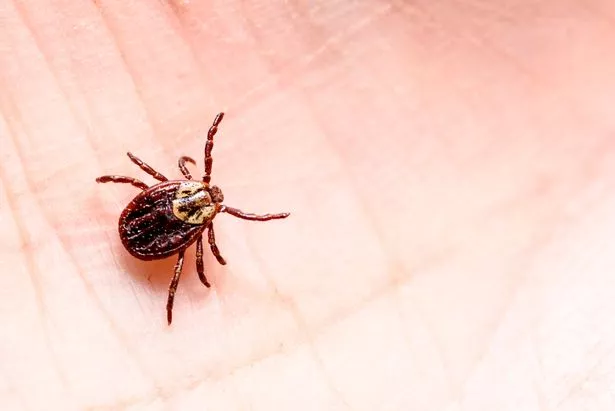
The blood-sucking bug behind Lyme disease, the deer tick(Image: Getty Images/iStockphoto)
“I’d never been one for being ill or suffering from bugs or headaches.
“The symptoms were like a flu without the cold, a really bad migraine , head pain, neck pain, and swollen knees. I was so ill I couldn’t get out of bed.
“When I got the rash on my arm a week after coming down with the other symptoms, I went to the doctor, who dismissed it as ringworm.
“I told him about the tick, but he said that I didn’t have to worry, that you only get things like that in America. So Lyme disease was dismissed right from the offset.”
Christine claims doctors continued to rule out Lyme disease as she was afflicted by more health problems, including back pain, knee problems, and tinnitus .
She said: “I was so immobile at times that I couldn’t stand up, go up the stairs or move around. I felt so ill.
“Within four years I was having to use a wheelchair if I wanted to get from A to B.
“Until then I didn’t know about Lyme disease but one day I was reading a magazine article about little known summer illnesses, and there was some information about it.
“The symptoms were identical to mine. The fact that it was carried by deers, and I had been in a deer park.
“Everything I had been experiencing fitted, but doctors wouldn’t accept it, they just dismissed any mention of Lyme disease.”
Within four years Christine had to use a wheelchair(Image: Supplied)
Unable to get a diagnosis that would allow her to get treatment, Christine’s health continued to deteriorate as the infection wreaked havoc on her body.
By 2000 it began to affect her eyes, and knowing that Lyme disease can cause blindness, she began a desperate search for experts who were researching or treating the disease in the hope of saving her sight.
During that time she managed to get six clinical diagnoses, outside the NHS, for Lyme disease.
After after meeting a specialist in Sunderland she started a three-year treatment programme, in which she received a dual combination of antibiotics through a Hickman line.
But she was devastated when she was told she was already too ill to continue the treatment.
The disease had been left too long and she had lost the chance to bring it under control.
By 2004 Christine had developed a rare combination of four eye diseases.
Today she is confined to a dark room and in constant pain(Image: Supplied)
She says when a “staggered” doctor at a specialist eye hospital examined her, he found only three other similar cases – and all were as a result of Lyme disease.
Christine was passed on to a doctor who had worked with Lyme disease in the US “had no doubt” she had the disease and suggested a treatment regime involving neurologists and other professionals.
But Christine claims: “Then he received a letter from a public health officer and he told me he’d been told go to down a different path.
“So even though this rare combination of eye diseases needed specialist treatment, I was denied that care.
“I believe they were more worried that I would file a lawsuit against them if they acknowledged it really was Lyme than they were worried about my life.
“But that was never the case. I would have been happy to have had my sight saved and received the medical care I had been fighting for for years.
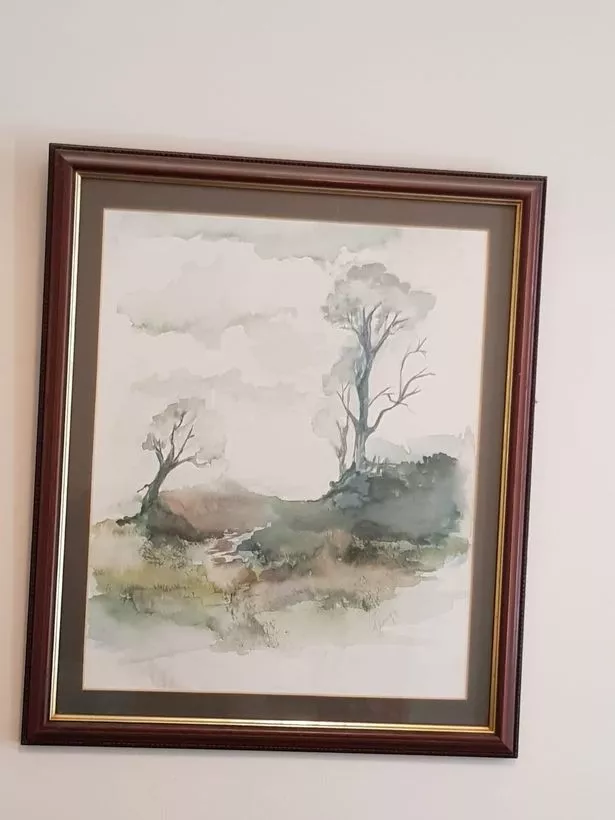
A watercolour painted by Christine before her illness left her unable to move(Image: Supplied)
“I’ve lost half of my life to this disease. My mental and emotional ability to carry on fighting is rapidly diminishing now.
“I can’t cope and the sense of hopelessness, knowing that there is no acknowledgement on any level, is very distressing.”
Christine says she has considered ending her life – but can’t do that to her children and grandchildren.
She said: “Right now, I’m just existing. I feel that I’m just lying here waiting to die.
“I’m bed bound, I can’t move around without assistance, I need 24-hour care day and night, I’ve had seven mini strokes, three bleeds on the brain, I’ve got arthritis , muscle wasting, bowel problems, I have no use of my left side, and I need help to eat, drink, shower, and get dressed.
“I’ve lost all independence and I’m now totally blind.
“The iris on one of my eyes has split open and blood vessels are exposed and are pushing through to lay on the surface of the eye.
“So even though I’m blind I have to stay in the dark as the slightest bit of light affects all the nerves in my eye and increases the pain in my brain.”
“Some days I don’t cope at all. Other days I want to end it, but I couldn’t take my own life because I’ve got four children, and grandchildren, and I couldn’t do that to them.
“Two of my daughters care for me, and without them I wouldn’t get through my days or nights.
“I’m never going to be cured now, it’s too late. I’m never going to get my sight back. A lot of what is wrong with me is damaged and cannot be put right.
“But I could be supported and my quality of life could be improved. That is all I am asking for.”
A spokesperson at Leicester’s Hospitals said: “We are sorry to find out Christine is unhappy with her care.
“Christine has been invited to appointments this year, but has not attended them.
“We have not yet received a formal complaint about her current concerns so would encourage her to contact our Patient Information and Liaison Service, and we will happily look into them for her.”
_________________
**Comment**
Expect to hear more stories just like this one. This isn’t going away, in fact it’s spreading, and authorities are still in the Dark Ages.
This story also highlights the importance of early diagnosis and treatment. Even if you’ve had a delay, delay it no further and get to a ILADS trained practitioner. This does not get better on its own but will worsen until there is irreparable damage.
Appropriate treatment is everything.
If you do not know the Lyme literate doctors in your area, contact your local support group. They do.
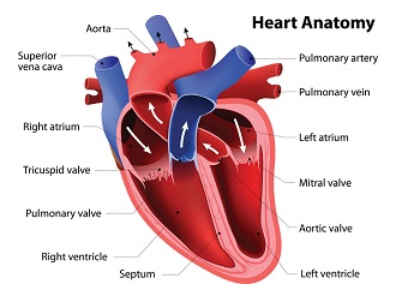
Both bartonellosis and Lyme disease are associated with dangerous heart conditions that can be fatal in some cases. The heart has three important aspects that can be affected by disease: electrical, structural, and muscular. Bartonella and Borrelia species can negatively impact all three of these.
Electrical
The electrical function of the heart causes the muscles to contract in a specific sequence for ideal blood flow. These electrical patterns can be seen on an ECG (electrocardiogram) tracing. Specific pathways carry electrical impulses at different speeds to cause the heart to beat correctly. If an impulse is too fast or too slow, the heart will beat inefficiently, which may be fatal.
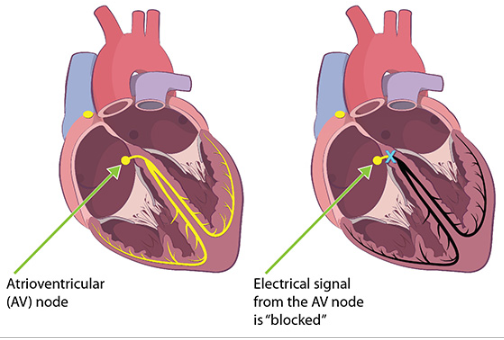
Carditis is a localized or diffuse swelling of the heart tissues. It can disrupt electrical signals in the heart, causing a “heart block.” An example of this is when the signal from the atrioventricular node (AV node) is interrupted. Less commonly, a patient may also experience atrial fibrillation, an abnormal heartbeat that can reduce the amount of blood moving through the heart.
A heart block can be detected as an abnormality on an ECG. A severe heart block can prevent the heart from getting the electrical stimulation necessary to beat, leading to sudden death.
The AV node sends electrical impulses through the heart, leading to muscle contractions. If a complete or partial heart block occurs, the signal is interrupted (Source: CDC).
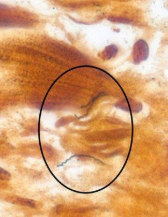
Borrelia spirochetes have a characteristic corkscrew shape. They can be seen in stained heart tissue (Source: CDC).
“Lyme carditis” is carditis caused by Lyme disease and occurs in up to 10% of people who contract Lyme disease. It occurs when Borrelia spirochetes infiltrate heart tissue, resulting in inflammation.
Heart blocks can be treated with a pacemaker. It is important to know if the heart block is caused by Lyme carditis. If it is, the patient can use a temporary pacemaker until the carditis is resolved with antibiotic treatment eliminating the need for a permanent pacemaker.
Since these slow heartbeats are the most common result of infection, fast heartbeats can be missed as a symptom of infection. Nevertheless, different kinds of fast electrical impulses like tachycardia and premature ventricular contractions (PVCs) can also be caused by infections.
Structural
The structure of the heart valves consists of fibrous material and collagen with very little blood supply into the tissue. Healthy valves allow blood to flow through the chambers of the heart while preventing backward flow. The cells in heart valves are extremely slow-growing and slow-dividing. Consequently, valves are unable to heal the way other tissue does and are susceptible to infection.
Abnormalities in heart valves can increase the risk of infection. About one in fifty people have abnormalities in how their valves developed in gestation. As people age, their valves can develop additional abnormalities, including calcification. Genetic differences such as Ehlers-Danlos syndrome (EDS) can also make valves more likely to deteriorate over time.
The heart is made up of four chambers that receive blood sequentially. The tricuspid and mitral valves prevent backward flow of blood (Source: NIH).
Endocarditis is a swelling of the inner layer of the heart. It is often caused by a pathogen that can strike these vulnerable structures. Sometimes inflammation from the pathogen causes fibrin and other materials in the blood to stick to the heart valves. As more of this material sticks together, it grows in the shape of a plant off of the heart valve. The growth is called a “vegetation” because of this shape.
If someone has endocarditis, blood samples will be taken to see if the pathogen can be identified. If no pathogen is identified, the diagnosis is “culture-negative endocarditis.” A common cause of culture-negative endocarditis in humans and animals is Bartonella species infection. A recently published case described a 28-year old patient with a history of homelessness who was positive for Bartonella quintana using PCR. Bartonella quintana is transmitted to humans via lice and is the most common species associated with culture-negative endocarditis, but B. henselae, B. kohlerae, and other species have been implicated in these cases as well.
Rarely, Borrelia species including the species that causes Lyme disease can cause endocarditis. This is most likely because Borrelia typically do not remain in the bloodstream long after infection occurs. Likewise, research shows that Bartonella can cycle in and out of the bloodstream over the course of an infection. If endocarditis causes damage to the heart valves, the patient may require heart valve surgery.
Muscular
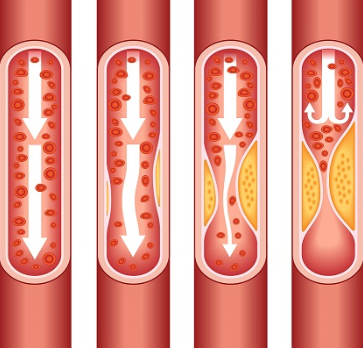
The muscles of the heart contract to move blood through the chambers of the heart. These muscles have a rich blood supply. Over time, the blood vessels supplying the heart can become damaged. Each time a blood vessel is damaged, the body makes a kind of band-aid for the damage out of cholesterol and fibrin. Eventually these build up into plaques which can block blood supply to the heart. This process is called coronary artery disease (CAD).
As plaque builds up in the coronary arteries, blood flow becomes restricted. This results in coronary artery disease. (Source: CDC).
Rarely, Lyme disease and Bartonella species infections affect the muscle of the heart directly. This can cause angina (heart pain) and damage like a heart attack. When the muscle is damaged, it releases chemicals that can be tested for in the blood. Usually heart muscle damage is caused by CAD. However, with Lyme disease, the test may be positive even though there is no problem with blood flow. In one small study, patients who were assumed to have CAD were tested for several infectious diseases; a number of them had Borrelia species infections, including Lyme disease.
Inflammation from the immune response to infectious disease can increase the cycle of damage to the heart vessels that is repaired with even more aggressive plaques, leading to earlier and more severe CAD than a person otherwise would have had. Despite this logical cause of disease, research on the association of CAD with Lyme disease or Bartonella species infections has had mixed results. It may be that the association between infectious disease and CAD involves additional variables that are unknown at this time.
Conclusion
Bartonellosis and Lyme disease can damage the heart in a variety of ways. Some of this damage may be permanent or require surgery. When a heart problem develops, it is important to consider infectious causes including bartonellosis and Lyme disease so that antibiotic treatment can be initiated and further damage or death can be prevented.
References
Hinton, R. B., & Yutzey, K. E. (2011). Heart valve structure and function in development and disease. Annual Review of Physiology, 73, 29-46. doi:10.1146/annurev-physiol-012110-142145 https://www.ncbi.nlm.nih.gov/pmc/articles/PMC4209403/
Scheffold, N. et al. (2015). Lyme carditis—Diagnosis, treatment and prognosis. Deutsches Ärzteblatt International, 112(12), 202-208. doi:10.3238/arztebl.2015.0202 https://www.ncbi.nlm.nih.gov/pmc/articles/PMC4395762/
Zainal, A. et al. (2019). Lyme carditis presenting as atrial fibrillation. BMJ Case Reports, 29(4), e228975. doi:10.1136/bcr-2018-228975 https://www.ncbi.nlm.nih.gov/pubmed/31036741
Fatima, B. et al. (2018). Lyme disease—An unusual cause of a mitral valve endocarditis. May Clinic Proceedings: Innovations, Quality & Outcomes, 2(4), 398-401. Doi:10.1016/j.mayocpiqo.2018.09.003 https://www.ncbi.nlm.nih.gov/pmc/articles/PMC6260468/
Gilson, J. et al. (2017). Lyme disease presenting with facial palsy and myocarditis mimicking myocardial infarction. Journal of Community Hospital Internal Medicine Perspectives, 7(6), 363-365. doi:10.1080/20009666.2017.1396170 https://www.ncbi.nlm.nih.gov/pmc/articles/PMC5738646/
Kubánek, M. et al. (2012). Detection of Borrelia burgdorferi sensu lato in endomyocardial biopsy specimens in individuals with recent-onset dilated cardiomyopathy. European Journal of Heart Failure, 14(6), 588-596. doi:10.1093/eurjhf/hfs027 https://www.ncbi.nlm.nih.gov/pubmed/22379178
Stöllberger, C. et al. (2001). Seroprevalence of antibodies to microorganisms known to cause arterial and myocardial damage in patients with or without coronary stenosis. Clinical and Diagnostic Laboratory Immunology, 8(5), 997-1002. doi:10.1128/CDLI.8.5.997-1002.2001 https://www.ncbi.nlm.nih.gov/pmc/articles/PMC96185/
Patel, S. et al. (2019). A case of Bartonella quintana culture-negative endocarditis. American Journal of Case Reports, 20, 602-606. doi:10.12659/AJCR.915215 https://www.ncbi.nlm.nih.gov/pubmed/31026253
___________________
**Comment**
Great article; however, a reminder that nobody’s really got a bead on how many with Lyme/MSIDS have heart issues. When testing misses over half of all cases with mainstream medicine’s head in the sand, there are many with heart issues flying under the radar or blamed on something else.
Please note that the article states the importance of knowing if the heart issues ARE caused by Lyme/MSIDS as proper treatment will often ameliorate the problem. This is true with nearly every other symptom as well. Knowing is everything but mainstream medicine at this point in time would rather diagnose you with anything BUT Lyme/MSIDS so you need to see ILADS trained health professionals. I could pull up 100 articles of people who went to doctor after doctor only to be misdiagnosed for years that had an underlying Lyme/MSIDS infection that could have been treated. Due to the delay, many never retrieved their health back.
Diagnosing Lyme/MSIDS requires a shift in thinking that mainstream doctors haven’t been wiling to make. Plus, we do not fit into a 10 minute Western Medicine managed care paradigm.