Archive for the ‘Lyme’ Category

French and Australian Connections on Lyme, Inflammation and Cancer: Medicine Week 2019, Baden-Baden

https://www.linkedin.com/pulse/french-australian-connections-lyme-inflammation-cancer-yu-md/

French and Australian Connections on Lyme, Inflammation and Cancer: Medicine Week 2019, Baden-Baden

By Dr. Simon Yu, MD

Medical Director at Prevention and Healing,Inc.
______________________
Medicine Week in Germany is considered one of the biggest cutting-edge complementary medical conferences in the world and there are multiple lectures simultaneously held at the huge congress hall. I gave a lecture on Parasites, Inflammation and Immune Dysregulation in the section on “Causal Therapies for Chronic Inflammation and Chronic Infection,” sponsored by Dr. med. Rainer Mutschler from Germany.

Many of the international speakers covered cutting edge topics of Lyme, parasites, mold, inflammation and chronic infections, and different treatment modalities. Bacteriophage therapy and hemoadsorption therapy were new concepts for me take home to investigate further.

The first speaker, Louis Charles Teulieres, MD from France and England, spoke on bacteriophages in Lyme disease and diagnostics. Bacteriophages are a hot topic in the Lyme community as a means to detect and treat Lyme disease instead of heavily relying on antibiotics. Bacteriophages, a dominant viral life form existing as naked DNA with a protein coat, infect bacteria and “devour” them. They are everywhere: 50 million bacteriophage viruses are found in one milliliter of seawater.

Dr. Teulieres’ main focus: Is there a place for bacteriophages in diagnosis and treatment of Lyme disease? Can this provide an alternative treatment to antibiotics for Lyme disease, and thereby avoid post-antibiotic resistance? His lecture was highly technical, and it is still theoretical to use bacteriophages as a diagnostic tool, or to kill Borrelia Lyme bacteria with a Borrelia-specific virus. Phage Therapy is a novel idea to be tested soon. I have some skepticism about this approach which overlooks hidden dental spirochete and parasite infections, but stay tuned for more research.

Other topics included molds and fungus in chronic inflammation by Dr. Damien Downing of London, a lecture on biofilm by a doctor from Scandinavia, Lyme and co-infections by Prof. Dr. Kenny de Meirleir of Belgium, immune monitoring of hemoadsorption approaches as a new treatment option in antibiotic resistant chronic Lyme infection by Prof. Dr. Marion Schneider of Germany, and patient cases treated with hemoadsorption and extracorporeal hyperthermia by Dr. med. Rainer Mutschler of Germany.

Bacteriophage testing for Lyme disease claims it could detect direct evidence of Borrelia presence, is highly sensitive and specific, could distinguish Lyme from relapsing fever Borrelia strains, could distinguish active and non-active Borrelia presence, and could be developed to have the ability to distinguish different Borrelia sub-types.

On my last day at the Medicine Week, I met Australian researcher Jennie Burke, MSc from Sydney who gave a lecture on, Cancer and Infection. I did not attend her lecture but at the night meeting at the restaurant, she gave me her lecture slides to review.

To my delight, she presented on viral, bacterial and parasite infections as possible causative agents for the development of tumors or opportunistic inhabitants. Her slides covered controversial topics from Virginia Livingston Wheeler, Royal Rife and Dr. Milbank Johnson on BX virus and Rife frequency therapy, Dr. Laszlo K. Csatary on Newcastle virus, and included a list of bacteria and viruses associated with inducing cancer. Her list of cancer types and infections include Gallbladder carcinoma, mucosa-associated lymphoid tissue (MALT) lymphoma, and Ovarian, Colorectal, Lung, Pancreatic, Breast, Prostate, Anal and Oral cancer. She listed the names of the bacterial and viral infections and development of specific cancer types.

Her last slide was: Parasites in Cancer? The antiparasitic mebendazole shows survival benefit in preclinical models of glioblastoma multiforme (brain cancer). Supporting articles include: Mebendazole Monotherapy and Long Term Disease Control in Metastatic Adrenocortical Carcinoma, Mebendazole Inhibits Growth of Human Adrenocortical Carcinoma Cell Lines Implanted in Nude Mice, and Mebendazole Elicits a Potent Antitumor Effect on Human Cancer Cell Lines Both in Vitro and in Vivo.

The development of cancer, infections and environmental toxins are not a new concept, but have been largely sidelined (seduced) by the genetic mutation theory of cancer. It is time to renew infections and environmental toxins, including EMF, as the driving forces of inflammation and immune dysregulation. The end results are the imbalance of Th1, Th2, Th17 and regulatory T immune cells that can trigger autoimmune reactions or development of cancer.

I have written many articles on parasites, fungal infections and cancer connections, presenting cancer as an infectious disease as if cancer is a metabolic parasite. Dr. Tim Guilford and I published, Antiparasitic and Antifungal Medications for Targeting Cancer Cells Literature Review and Case Studies, in PubMed with extensive references. If you are suffering from cancer, get a copy and share with your oncologist. He or she may embrace and try parasite and fungal medications or scorn you and laugh at you. You have nothing to lose by trying.

Listening to French, Australian and other international speakers at Medicine Week was worthwhile, and I learn from going to Baden-Baden every year. Meeting good friends and enjoying good wine, beer, food and Roman Baths give even more incentives to attend, and expand my horizons.

Dr. Simon Yu, M.D. is a Board Certified Internist. He practices Internal Medicine with an emphasis on Integrative Medicine to use the best each has to offer. For more articles and information about integrative medicine, patient success stories, and Dr. Yu’s new book, AcciDental Blow Up in Medicine: Battle Plan for Your Life, visit his website at www.preventionandhealing.com or call Prevention and Healing, Inc., 314-432-7802. You can also attend a free monthly presentation and discussion by on Integrative Medicine at his office on the second Tuesday each month at 6:30 pm. Call to verify the date. Seating is limited, arrive early.
7 Ways You’re Unknowingly Putting Yourself At Risk For Lyme Disease

https://www.naturalnews.com/2019-11-18-putting-yourself-at-risk-for-lyme-disease.html

7 Ways you’re unknowingly putting yourself at risk for Lyme disease

Image: 7 Ways you’re unknowingly putting yourself at risk for Lyme disease

(Natural News) After going outside, it may be best to do a tick check. Lyme disease is a dangerous condition that causes fever, rashes, face paralysis, and arthritis. Without proper care, it can even lead to death. Interestingly, something so deadly comes from the bite of something so small: ticks.

Ticks are tiny arachnids commonly found in grassy, woodland areas where they attach themselves to a host. They are commonly associated with deer and other kinds of game found in the wild. However, they are not only found in woods and forests; they can thrive in cities as well.

According to the Centers for Disease Control and Prevention (CDC), more than 300,000 Americans are infected each year. They are especially plentiful from May to August when they are most active and a lot of people spend time outdoors.

Lia Gaertner, a scientist and board member of the Bay Lyme Area Foundation, pointed out that there are habits that put people at risk of Lyme disease. (Related: Lyme disease compromises your body’s ability to detoxify, increasing risk from environmental toxins like heavy metals.)

1. Not doing a tick check

After going outdoors, search your body for any ticks that may have latched on. Check areas that are exposed or close to clothing edges. Ticks prefer warm areas on the body, including:

  • The armpits
  • In and around the ears
  • Back of the knees
  • Inside the belly button
  • Around the waist
  • In and around all head and body hair (especially the scalp and groin area)

Make sure to also check used clothes before putting them in the hamper. Take a bath afterward for extra measure.

Children are especially vulnerable to tick bites because they play a lot and are closer to the ground. Teach them how to conduct tick checks on their body and their clothes.

2. Being unfamiliar to what a tick looks like

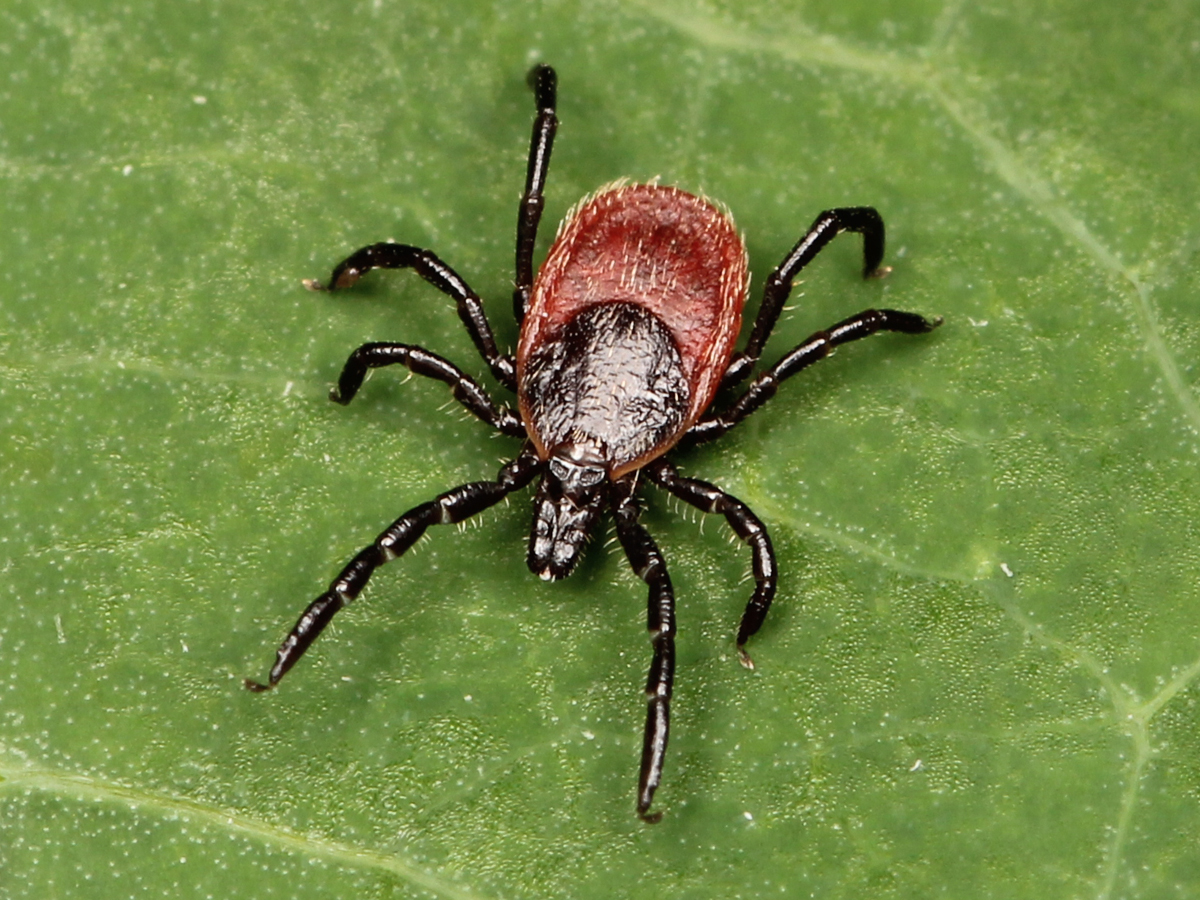
It is difficult to spot a tick when you are unaware of how it looks like. Ticks look like bulb-shaped spiders. It is easy to miss them since they embed themselves into the skin.

You can spot them by feeling a small bump while patting a pet or combing one’s hair. Ticks commonly have a dark color, but there are lighter varieties.

When planning for a hike or camping somewhere in the woods, it is best to do prior research on known ticks found in the area and prepare promptly.

3. Sleeping with your dog with no tick check

Some people prefer to sleep with their pets. Before doing that, however, do not skimp on conducting a tick check. Pets, like children, are vulnerable to tick bites because they often go out and are close to the ground.

4. Lowering your guard in city parks

People like lying on the grass or against trees in city parks, which makes them more vulnerable to tick bites. Lay a picnic mat before lying on the grass. Make sure to check the mat afterward upon getting home.

5. Raking leaves

Ticks can be found in tall grasses, but they hide under fallen leaves as well. This is especially the case in Southern states, where it is generally hotter.

When raking leaves, wear a long-sleeved shirt and pants. Spray some natural insect repellent, like citronella or lavender essential oil, at the cuffs and other holes where a tick can slip inside the clothes.

6. Thinking you’re safe in a place with no deer

It is a common misconception that ticks only attach themselves to deer, but mice, squirrels, and other animals can be carriers as well. In general, places with grassy and forested areas are more likely to have ticks, but when these animals reach the city, they can carry the ticks with them.

7. Throwing away the tick

If you find a tick attached to you, do not just throw it away. Carefully remove it with a pair of tweezers and lock it inside a container, like a sealing bag or small plastic container. Send it for testing to find out if it was infected or not. If it was, you can implement measures to prevent Lyme disease from developing.

It is impossible to completely remove ticks from residential or camping areas. However, you can implement measures that can prevent their bites. Avoid the listed habits and learn more about treating and preventing Lyme disease at Prevention.news.

Sources include:

Healthline.com

CDC.gov

___________________

For more:  https://madisonarealymesupportgroup.com/2019/04/12/tick-prevention-2019/

Regarding raking leaves – ticks love leaf litter. They also love bark mulch.  They love anything that provides humidity.  For example – Japanese barberry, a common yard shrub is a perfect habitat for ticks:  https://madisonarealymesupportgroup.com/2018/06/25/juvenile-tick-attachment-on-mice-significantly-greater-in-japanese-barberry-shrubs/

https://madisonarealymesupportgroup.com/2018/01/20/manage-barberry-lower-ticks/  Bizarrely enough, this particular shrub is the source of Berberine, an herb that obtains high amounts of resveratrol – which does so many great things for the body:  https://www.superfoodly.com/resveratrol-foods-supplements/ 

https://madisonarealymesupportgroup.com/2015/09/30/barberry-friend-or-foe/

Ticks evidently love pumpkin patches too:  https://madisonarealymesupportgroup.com/2017/10/21/mom-got-rocky-mountain-spotted-fever-while-picking-pumpkins/

When you are partaking in nature – use permethrin on all your clothing and shoes:  https://madisonarealymesupportgroup.com/2018/05/27/study-conforms-permethrin-causes-ticks-to-drop-off-clothing/

Use either Deet or Picaradin on skin. (See first link for information on products)


Anti-Inflammatories Help Major Depression

https://www.psychologytoday.com/us/blog/expressive-trauma-integration/201911/anti-inflammatories-help-major-depression

By Odelya Gertel Kraybill Ph.D.

Anti-Inflammatories Help Major Depression

New study suggests that anti-inflammatories can mitigate MDD symptoms

Posted Nov 11, 2019

Odelya Gertel Kraybill Expressive Trauma Integration

A new study* published in the Journal of Neurology, Neurosurgery, and Psychiatry asserts the efficacy of anti-inflammatories in treating major depression. This adds to the mounting evidence that there is a connection between emotional functioning and inflammation.

An increasing number of studies have shown that depression and/or bipolar disorder are accompanied by immune system dysregulation, inflammation, and high levels of cytokines. Researchers have found that inflammation triggers depression, almost like an allergic reaction.  (See link for full article)

________________

**Comment**

More and more is coming out on the role inflammation plays in chronic disease states and Lyme/MSIDS is no acceptation. These patients are full of inflammation and addressing that inflammation is an important aspect of treatment.  https://madisonarealymesupportgroup.com/2019/11/18/link-between-inflammation-mental-sluggishness-shown-how-msm-systemic-enzymes-and-melatonin-can-help/

Of course, the first step is to address the pathogens which are causing this, the second step is to aid the body in detoxifying these pathogens, and the third step is to support the body by supplementing with the things our bodies are deficient in – which varies from person to person. But, the last factor is this addressing the burgeoning inflammation caused by the war brought on by pathogens.

Here are some things that have helped me in my journey.  I pray they help someone else out there as well.

(Please read about melatonin in the first link under the comment section.  Melatonin is particularly good for the brain as it not only reduces inflammation but it protects the blood-brain barrier.)

For examples of effective Lyme disease treatment: https://madisonarealymesupportgroup.com/category/lyme-disease-treatment/  Please remember Lyme is the tip of the spear and patients are often coinfected with numerous pathogens all requiring different medications.  This is why effective treatment is overlapping in nature and given for a much longer duration than a few weeks.  This fact has not been accepted and embraced by mainstream medicine and until it is, patients are required to be treated by ILADS trained professionals who understand this complex illness.  For a great video on this:  https://madisonarealymesupportgroup.com/2019/11/21/cdc-misses-the-mark-with-chronic-lyme-disease/


Changing of the Guard: How the Lyme Disease Spirochete Subverts the Host Immune Response

https://www.ncbi.nlm.nih.gov/pubmed/31753921?

2019 Nov 21. pii: jbc.REV119.008583. doi: 10.1074/jbc.REV119.008583. [Epub ahead of print]

Changing of the guard: How the Lyme disease spirochete subverts the host immune response.

Abstract

Lyme disease, also known as Lyme borreliosis, is the most common tick-transmitted disease in the Northern Hemisphere. The disease is caused by the bacterial spirochete Borrelia burgdorferi and other related Borrelia species. One of the many fascinating features of this unique pathogen is an elaborate system for antigenic variation whereby the sequence of the surface-bound lipoprotein VlsE is continually modified through segmental gene conversion events. This perpetual changing of the guard allows the pathogen to remain one step ahead of the acquired immune response, enabling persistent infection. Accordingly, the vls locus is the most evolutionarily diverse genetic element in Lyme disease-causing borreliae. Small stretches of information are transferred from a series of silent cassettes in the vls locus to generate an expressed mosaic vlsE gene version that contains genetic information from several different silent cassettes, resulting in ~1040 possible vlsE sequences. Yet, despite its extreme evolutionary flexibility, the locus has rigidly conserved structural features. These include a telomeric location of the vlsE gene, an inverse orientation of vlsE and the silent cassettes, the presence of near-perfect inverted repeats of ~100 bp near the 5′ end of vlsE, and an exceedingly high concentration of G runs in vlsE and the silent cassettes. We discuss the possible roles of these evolutionarily conserved features, highlight recent findings from several studies that have used next-generation DNA sequencing to unravel the switching process, and review advances in the development of a mini-vls system for genetic manipulation of the locus.

___________________

**Comment**

Read it again: “This perpetual changing of the guard allows the pathogen to remain one step ahead of the acquired immune response, enabling persistent infection.”

Please spread the word.

Peer-Reviewed Evidence of Persistence of Lyme:MSIDS copy


Drug For Alcoholism Could Treat Lyme Disease

https://news.yahoo.com/father-bedbound-by-lyme-disease-is-back-on-his-feet-due-to-a-drug-for-alcoholism

November 22, 2019

Ciaran Hughes endured "constant pain" for months, with doctors baffled as to what was wrong. [Photo: Supplied]Ciaran Hughes endured “constant pain” for months, with doctors baffled as to what was wrong. [Photo: Supplied]

A father who was bedbound by Lyme disease is finally back on his feet due to a drug for alcoholism.

Ciaran Hughes, 31, developed “constant” pain, “laboured” movement and a loss of balance in March while working in Indonesia.

Multiple tests both abroad and in his native Northern Ireland came back clear, including one for Lyme disease…(See full story in link above)

_________________

For more:  https://madisonarealymesupportgroup.com/2019/11/19/if-disulfiram-is-the-cure-for-lyme-disease-should-it-be-prescribed-to-all-lyme-disease-patients/

Excerpt:  Disulfiram should certainly be prescribed with caution or avoided in patients with personal and familial antecedents of psychosis. Case reports are, however, not enough to guarantee the safety of a drug. Studies at larger scales are necessary. Some questions still remain unanswered.

For more:  https://madisonarealymesupportgroup.com/2019/06/03/disulfiram-in-the-treatment-of-lyme-babesiosis-3-case-reports/

https://madisonarealymesupportgroup.com/2019/07/14/disulfiram-breakthrough-drug-for-lyme-other-tick-borne-diseases/

https://madisonarealymesupportgroup.com/2019/10/15/disulfiram-psychosis-update/

https://madisonarealymesupportgroup.com/2019/10/27/disulfiram-psychosis-update-2/

https://madisonarealymesupportgroup.com/2019/09/18/dr-liegner-interview-on-disulfiram/