Archive for the ‘Lyme’ Category

New Study Identifies Bird Species That Could Spread Ticks & Lyme Disease

https://phys.org/news/2021-01-bird-species-lyme-disease.html

New study identifies bird species that could spread ticks and Lyme disease
New study identifies bird species that could spread ticks and Lyme disease

Birds play an underrecognized role in spreading tickborne disease due to their capacity for long-distance travel and tendency to split their time in different parts of the world—patterns that are shifting due to climate change. Knowing which bird species are able to infect ticks with pathogens can help scientists predict where tickborne diseases might emerge and pose a health risk to people.

A new study published in the journal Global Ecology and Biogeography used machine learning to identify bird species with the potential to transmit the Lyme disease bacterium (Borrelia burgdorferi) to feeding ticks. The team developed a model that identified birds known to spread Lyme disease with 80% accuracy and flagged 21 new species that should be prioritized for surveillance.

Lead author Daniel Becker, a Postdoctoral Fellow at Indiana University, says, “We know birds can infect ticks with the Lyme bacterium; however, until now, no one has systematically studied the ecological and evolutionary drivers that influence which bird species are most likely to host and spread Borrelia burgdorferi on a global scale. We set out to fill this gap by identifying traits of bird species that are most likely to pass Lyme to feeding ticks.”

Senior author Barbara Han, a disease ecologist at Cary Institute of Ecosystem Studies, says, “To predict and monitor species that could spread tickborne diseases to people, we first need to know which traits make certain animals good pathogen hosts. Here, we used machine learning to assess bird species traits, paired with Lyme infection data from ticks found on birds, to predict bird species that have the potential to spread Lyme.”

In this study, the team searched published literature to locate studies reporting Lyme infection of ticks found feeding on birds. The global search yielded 102 studies, including data from ticks found on 183 bird species; of these, 91 carried ticks that tested positive for Borrelia burgdorferi. These bird species are considered ‘competent’ reservoir species because they are known to infect feeding ticks with Borrelia burgdorferi. Species flagged have a broad range, reaching across the Americas, Africa, Asia, and Oceania.

Next, machine learning was used to compare traits of competent bird species with 4691 other bird species. Data included information on life history features like diet composition, foraging location, body size, lifespan, reproductive rate, and fledgling age, as well as geographical information like migration distance, global dispersal, and maximum elevation. They also looked at baseline corticosterone—the stress hormone in birds—which can influence susceptibility to infection.
New study identifies bird species that could spread ticks and Lyme disease

The model identified birds that were known to spread Lyme to ticks with 80% accuracy, and revealed 21 that should be prioritized for surveillance based on sharing traits with known competent species. High-risk species tend to have low baseline corticosterone, breed and winter at high latitudes and low elevations, are broadly distributed, and occur on either extreme of the pace-of-life continuum (species that breed early and die young, or breed late and are longer lived).

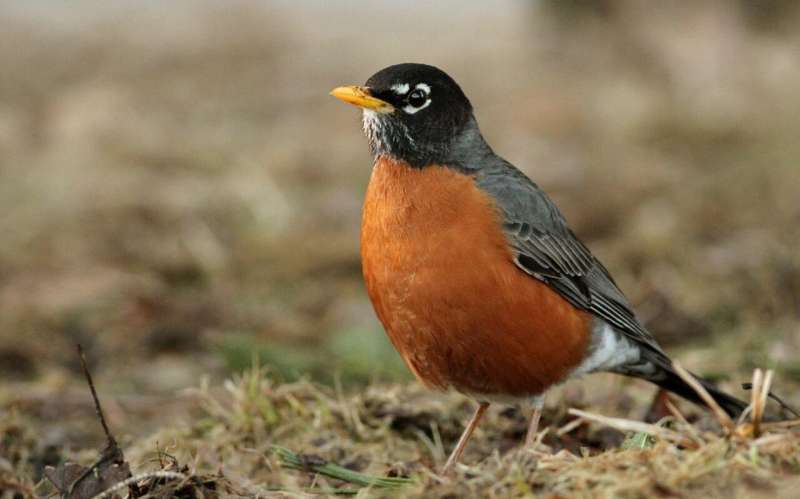
Species from the genus Turdus, commonly known as true thrushes, were found to have a significantly greater likelihood of competence compared to other taxa. This finding suggests that thrushes might be the riskiest bird species for Lyme transmission. Passerines, or perching birds, also tended to have higher competence, as did birds that primarily eat seeds and those that forage on the ground—a behavior that would put them in reach of questing ticks.

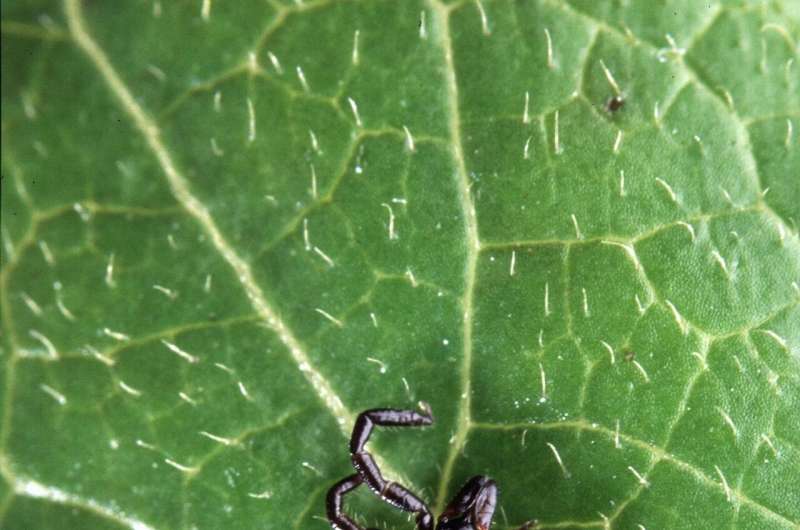
Identifying Lyme-competent bird species could have direct implications for our health. Tickborne diseases, especially Lyme disease, can be difficult to diagnose. Knowing where ticks and the diseases they carry are spreading can help medical practitioners prepare for diagnosis and treatment, improving health outcomes for patients.

Due to climate change, the breeding ranges of many birds are shifting north. As spread into higher latitudes, so do ticks and pathogens. Some have taken up full or part-time residence in cities and suburbs. Birds that can succeed in developed environments, especially those that are overwintering in these new places in close proximity to people, increase residents’ risk of contracting a tickborne disease.

Becker says, “Birds don’t spread Lyme directly to people, but they can carry infected ticks to new locations with no history of Lyme occurrence. A could drop off a bird and into a garden or yard, where it could later bite and infect a person. If local medical practitioners are unfamiliar with Lyme symptoms, proper diagnosis could be delayed. Identifying where ticks are spreading could improve medical response to Lyme and other tickborne diseases.”

Han concludes, “These findings remind us that pathogen competence varies tremendously, even among animals of the same family. Machine learning techniques allow us to analyze animal traits and help us predict risky species on a global scale—not only for Lyme, but for other tickborne and zoonotic diseases that involve multiple host . These predictions could provide crucial information to guide early interventions, prevent disease spillover, and protect our health.”


Pediatric Lyme Disease Biobank, USA, 2015–2020: An Innovative Approach to Understanding Pediatric Lyme Disease

https://wwwnc.cdc.gov/eid/article/26/12/20-0920_article

Pediatric Lyme Disease Biobank, United States, 2015–2020

Lise E. NigrovicComments to Author , Desire N. Neville, Fran Balamuth, Michael N. Levas, Jonathan E. Bennett, Anupam B. Kharbanda, Amy D. Thompson, John A. Branda, Aris C. Garro, and the Pedi Lyme Net Working Group
Author affiliations: Boston Children’s Hospital, Boston, Massachussetts, USA (L.E. Nigrovic); Children’s Hospital of Pittsburgh, Pittsburgh, Pennsylvania, USA (D.N. Neville); Milwaukee Children’s Hospital, Milwaukee, Wisonsin, USA (F. Balamuth); Children’s Hospital of Philadelphia, Philadelphia, Pennsylvania, USA (M.N. Levas); Nemours/Alfred I. duPont Children’s Hospital, Wilmington, Delaware, USA (J.E. Bennett, A.D. Thompson); Children’s Minnesota, Minneapolis, Minnesota, USA (A.B. Kharbanda); Massachusetts General Hospital, Boston (J.A. Branda); Rhode Island Hospital, Providence, Rhode Island, USA (A.C. Garro)

Abstract

In 2015, we founded Pedi Lyme Net, a pediatric Lyme disease research network comprising 8 emergency departments in the United States. Of 2,497 children evaluated at 1 of these sites for Lyme disease, 515 (20.6%) were infected. This network is a unique resource for evaluating new approaches for diagnosing Lyme disease in children.

https://globallymealliance.org/an-innovative-approach-to-understanding-pediatric-lyme-disease/

An Innovative Approach to Understanding Pediatric Lyme Disease

by Mayla Hsu, Ph.D., Director of Research and Science, GLA

In the late 1970s, children presenting with arthritic symptoms were among the first cases of what is now known to be Lyme disease. Almost 50 years later, the incidence among kids remains high. Despite an estimated 400,000 new cases of Lyme disease annually in the U.S., with more than half being children, focused research to develop accurate diagnostics and improved treatments for them is lacking.

Global Lyme Alliance (GLA) funded the Pedi Lyme Net led by Lise Nigrovic, M.D., M.P.H., of the Division of Emergency Medicine at Boston Children’s Hospital.

To address this critical need, Global Lyme Alliance (GLA) funded the Pedi Lyme Net led by Lise Nigrovic, M.D., M.P.H., of the Division of Emergency Medicine at Boston Children’s Hospital. Dr. Nigrovic established Pedi Lyme Net, a network of seven children’s hospital emergency departments in five Lyme-endemic states. After obtaining informed parental consent, this network of pediatricians collects patient specimens from children suspected of having Lyme disease, or their clinical mimics, for testing and further research within Pedi Lyme Net.

Currently, the standard Lyme disease diagnostic blood test is problematic. Besides its inaccuracy in detecting early disease, the test also cannot distinguish new or persistent infections. Developing better diagnostic tests relies on having patient samples, alongside careful patient histories. An added feature of Pedi Lyme Net is that samples are also collected from control patients who visit the emergency room for non-Lyme related conditions, such as accidental fractures or lacerations. Altogether, the goal is to build a comprehensive data set for research.

Dr. Nigrovic recently published an article that describes Pedi Lyme Net’s Lyme disease screening results. Between June 2015 to January 2020, blood samples were obtained from 2,497 Lyme disease symptomatic patients and 377 asymptomatic control patients. All were analyzed with the C6 Lyme disease enzyme immunoassay, and those that were positive or equivocal were further tested with Western immunoblot, the standard Lyme disease test.

Among the 515 patients who tested positive for Lyme disease, the median age was 8, and 67% were boys, which correlates with national Lyme disease incidence statistics. The most common symptoms of those diagnosed with Lyme disease were fever, headache, facial palsy, and arthritis. These symptoms were used to classify Lyme patients into early, early disseminated, and late stage disease.

Among the Lyme-positive patients:

  • 8.9% had erythema migrans (EM) skin rashes alone
  • 89.5% had positive blood test results
  • 1.6% had both

These results show that the classic EM rash was only present in a minority of Lyme disease patients, and indicates that blood test results identify many more patients than skin rash alone. It also shows that many patients who are positive by blood test lack the skin rash.

Interestingly, only 15.6% of Lyme disease patients and their parents recalled a tick bite in the past year.

This is further evidence that tick bites are often missed, and reinforces that tick bite prevention is an important first step to reduce infections. A more in-depth study led by Dr. Nigrovic addressing this question shows the unreliability of tick bite history at predicting Lyme disease in children.

Pedi Lyme Net is a unique resource for advancing Lyme disease research. Besides being exclusively composed of pediatric samples, it also includes control pediatric samples, which are more appropriate as comparators than adults. Children’s bodies and physiology are not merely small versions of those of adults. Also, because the Pedi Lyme Net enrolls patients from emergency rooms, the samples are from symptomatic individuals, whose specific clinical presentations may be important information in understanding the basic science of disease. Finally, patient samples are from Lyme-endemic areas across the U.S., ensuring broad representation of pediatric Lyme patients.

Further studies of samples collected in the Pedi Lyme Net may involve understanding how different disease stages manifest in children, along with varied inflammatory biomarkers or immune correlates. One limitation of this study is the Western immunoblotting blood test may have given false negative results to some individuals who, early in disease, might not have developed the antibodies detected by this test. Follow-up calls to test later time points were done by Pedi Lyme Net researchers. And, since samples were banked, they can be tested with newly emerging diagnostic technologies in pursuit of designing tests with higher accuracy. Eventually, other tick-borne co-infections may also be studied in this population, since ticks frequently transmit not only Borrelia burgdorferi, the bacteria that cause Lyme disease, but other pathogens as well.

GLA is proud to support Pedi Lyme Net as it expands under the leadership of Dr. Nigrovic. This is an important research initiative that will lead to improved patient diagnostics and care. To date, Pedi Lyme Net data has led to over 10 peer-reviewed publications and scientific presentations.

Learn more about preventing Lyme in kids.
Blog: Kids and Lyme Disease: Cognitive Symptoms and School

Two Much Lyme Podcast

https://globallymealliance.org/two-much-lyme/

By Julia Allyn & Madison Pinckney

Welcome to the Two Much Lyme podcast!

Hosts Julia and Maddy both live with late-stage Lyme disease. Their conversations focus on the challenges of living with chronic illness through multiple stages of life, including college and early career. The podcast is in partnership with Global Lyme Alliance (GLA). Julia and Maddy will highlight personal Lyme stories and experiences along with GLA initiatives, like the research we fund, and interviews with Lyme-literate doctors to provide multiple perspectives on this complex disease.

Listen on Apple
Listen on Spotify

To connect with the hosts of the podcast
Instagram @two.muchlymepodcast
Website www.twomuchlymepodcast.com


Opinions expressed by contributors are their own.

About Julia Allyn
GLA Lyme Education Ambassador

Meet our co-host, Julia!! Since being officially diagnosed in October of 2017, Julia has struggled with chronic Lyme disease, Bartonella, Babesia, B. miyamotoi, chronic fatigue syndrome, Hashimoto’s, Addison’s disease, PANDAS, post-concussion syndrome, cPTSD and several other complex syndromes. Julia is currently getting a master’s degree in applied clinical nutrition to pursue a career working in integrative nutrition and medicine specializing in Lyme and autoimmune patients. She is also a Global Lyme Alliance ambassador focusing on spreading awareness on tick borne diseases. Today, she lives in Colorado with both her therapy dog and boyfriend. She is working with several health care practitioners to continue healing and the fight.

About Madison Pinckney
GLA Lyme Education Ambassador and Peer to Peer Mentor

Meet our cohost, Maddy! After struggling for 10 years, Maddy was finally diagnosed with neurological Lyme disease in 2018. Since her diagnosis, she has struggled with Babesia, Bartonella, Anaplasma, Mycoplasma, dysautonomia, PANDAS, epilepsy, PTSD, and other chronic diseases. As a Global Lyme Alliance Ambassador she aims to educate and spread awareness about a disease that so many spend years suffering with before receiving a diagnosis. She is planning on attending law school next year to study public health law to advocate for those with chronic illnesses, while pushing for the better treatment of Lyme patients. Maddy currently lives in Upstate New York working on her Lyme blog @maddymeetslyme while undergoing treatment.

GLA’s White Paper on PTLD

https://globallymealliance.org/does-chronic-inflammation-cause-ptld/  Click on this link to fill out your information to receive the paper.  It is for personal use only as it is GLA’s intellectual property.

iu-108

For more:  

“THE SYNDROME POST-TREATMENT OF LYME DISEASE (PTLDS), WHICH IS NOTHING MORE THAN THE ‘CHRONIC SYMPTOMS’ OF THE DISEASE, IS BEING USED PERVERSELY TO COVER THE REALITY OF THIS DISEASE, AVOID COVERAGE BY HEALTH INSURANCE, AND TELL PATIENTS: ‘YOU HAVE NOTHING, GO TO A PSYCHOLOGIST’ … WHEN THEIR BLOOD AND BRAIN ARE SAILING IN A SEA OF ​​BORRELIAS.” DR. LAPENTA


Lyme & The Limbic System

https://globallymealliance.org/lyme-and-the-limbic-system/

By Jennifer Crystal

The longer I’ve been in remission from Lyme disease, babesiosis, ehrlichiosis and chronic active Epstein Barr virus, the more I’ve been able to do. Once bedridden, I now only need naps in the afternoon. Previously unable to walk up a flight of stairs, I can now spend a morning skiing. I’ve moved from being too confused to understand a simple paragraph, to writing two full books. Each year brings new abilities, but within those years, there are always some setbacks, too.

Sometimes these setbacks are out of my control, but often times, they’re the result of pushing myself too hard either physically or neurologically. This is something that Lyme patients or those recovering from any long-term illness naturally do, because after being on hold for so long, we’re eager to live our lives to the fullest. I might ski a few too many runs. I might watch movies too many nights in a row. I might read too many student papers at once. Suddenly, my limbic system kicks into high gear.

What is the limbic system? Why does it activate so quickly for Lyme patients? And what can patients do to calm it back down?

The limbic system is deep in the cerebral cortex of our brains. It manages emotional and behavioral responses such as fight or flight. We need those responses for survival. If we’re confronted by a bear, we need our fight or flight system to kick in to allow us to make split-second survival decisions. When I push myself beyond my capabilities, my body essentially sees an approaching bear. It knows these pushes could lead to relapse, so it springs into action in an effort to protect me from danger. As Sharon Giammatteo, Ph.D. explains in Body Wisdom: Light Touch for Optimal Health, “When you are frightened, severely stressed, or weakened due to illness or injury, your limbic system will respond.”

What does it feel like to “go limbic,” as my integrative manual therapist likes to call it?

It feels like my whole body and brain are on high alert. My thoughts race. I can’t nap, despite the physical need. The intensity of my dreams revs up. I wake in the middle of the night.

The overstimulation—from whatever activities I did that got me into this state, and from the response—causes panic. I worry that I’m relapsing. I worry that I’ll never sleep. I worry that I’ve done myself in. This anxiety is a breeding ground for dormant Lyme symptoms to flare, and I find myself in a vicious cycle.

Though I can recognize when I’m in this state, it’s hard to get myself out of it, especially since the state itself is involuntarily. Anxiety medication does not work, because I’m not actually having an anxiety attack. Other calming methods, like putting lavender oil on my pressure points, also do nothing.

So what’s a Lyme patient to do when their limbic system goes into overdrive?

The most helpful tools for me have been craniosacral therapy and neurofascial processing. As Giammatteo explains,

  • “Cranial therapy works by exerting a gentle force on the head and the body. The force decompresses dysfunctional areas and facilitates proper biological rhythms.” The “gentle force” is light, manipulative touch on certain areas of the head and neck.
  • Neurofascial processing is a similar technique used on other parts of the body. “A most remarkable treatment approach,” Giammatteo writes, “it can be used for all pain and physical dysfunction, no matter how chronic or how severe.”

Some physical therapists practice these techniques (which means appointments are more likely to be covered by your insurance). If your physical therapist doesn’t offer them, your Lyme Literate Medical Doctor (LLMD) may be able to recommend an integrative manual therapist who works specifically with these techniques. Best of all, many of them can be done at home, either by yourself or with the help of a caregiver. They involve simply placing your hands in spots like your forehead and lower back for a certain period of time. These techniques are all outlined in Giammatteo’s book.

Simple as it may sound, the other thing that helps me return from limbic overdrive to homeostasis is rest.

Because I’ve pushed my brain or body too far, they need recovery time. They also need to be sent a signal that the danger is gone. I slow my work load, spend less time on screens, and allow myself more down time. Within a few days, I’m usually back to normal.

It’s scary to “go limbic,” and it’s frustrating to have to take extra down time when all I want to do is, well, do. But keeping the big picture in mind, I remember that pushing myself too hard, too fast only gets me in trouble. As my LLMD says, “Lyme is the turtle disease.” Slow and steady indeed wins the race.

For more blogs, click here


jennifer crystal_2

Opinions expressed by contributors are their own.

Jennifer Crystal is a writer and educator in Boston. Her memoir about her medical journey is on submission. Contact her at lymewarriorjennifercrystal@gmail.com.


_______________________

**Comment**

The phrase, “Wired, Tired” comes to mind.  This is the inability to rest despite being exhausted. It can affect the mind as well as the body, making some feel they have anxiety.

Please note that being stressed or weakened will cause this when you have Lyme/MSIDS.  

Lyme/MSIDS patients are in an epic battle for their health in which their entire body is stressed and weakened.  I must also point out that vaccinations also stress/weaken the body so that it will mount an immune response.  Please keep this in consideration as every single infected patient I  know suffered a relapse after vaccination.