CDC Lying Again. Tuttle Drops the Mic
The US Centers for Disease Control is lying to the public about Lyme disease!
MAY 24, 2021 —
As promised from the previous petition update, the following is a critique of Dr. Grace Marx’s, PowerPoint presentation which clearly shows that our public health officials are lying to us. You can voice your opinion and send her an email: lwx1@cdc.gov
Dr. Marx contact info: (photo is from this link)
———- Original Message ———-
From: CARL TUTTLE <runagain@comcast.net>
To: “lwx1@cdc.gov” <lwx1@cdc.gov>, “coca@cdc.gov” <coca@cdc.gov>
Cc: All members of the NH Lyme Disease Study Commission,”governorsununu@nh.gov” governorsununu@nh.gov
Date: 05/22/2021 2:16 PM
Subject: Re: Lyme Disease Updates and New Educational Tools for Clinicians
Dr. Marx,
As anticipated, the Clinician Outreach and Communication Activity (COCA) Webinar failed to mention the ten important facts I pointed out in my email dated May 15th five days prior to your presentation.
After reviewing the slides of your presentation at the following link, I found additional areas of concern:
Lyme Disease Updates and New Educational Tools for Clinicians
https://emergency.cdc.gov/coca/ppt/2021/052021_Lyme_Disease_Slides.pdf?fbclid=IwAR05dtD4eswvd_8WLpBQkp_1j-A2iME1WRdWJmcGTaxehWdIZN5FC2KcpAA
_____________________________________________________________________________________________________________________
Page# 11
Transmission occurs:
- After an infected tick has been attached for at least 24hrs
- Most transmission occurs after 36 hours
Carl Tuttle’s comments: Rapid transmission has been reported in under 4hrs [1, 2, 3, 4]
Page# 15
95% of reported Lyme disease cases are from 15 states and D.C.
Carl Tuttle’s comments: Quest diagnostics is reporting positive Lyme tests in all fifty states. [5]
Page# 21
- A single dose of doxycycline can lower the risk of Lyme disease
Carl Tuttle’s comments: Single dose Doxycycline after tick bite as prophylaxis against Lyme disease failed 80% of the time in the mouse model so why would this be recommended in humans? [6]
Page# 25
- Most tick bites do NOT transmit disease, so antimicrobial PEP is not routinely recommended.
Carl Tuttle’s comments: 77% of the ticks tested in the town of Litchfield, NH were carrying tick-borne disease as reported by a 2009 UMass Tick Study [7] so assuming that disease will not be transmitted is like playing Russian roulette with the public’s health. Front line clinicians in this Lyme endemic region who are witnessing the devastation first hand will offer the patient thirty days of minocycline after a tick bite.
Page# 32
- The LYMERix vaccine was available between 1998 and 2002
- Safe and effective
- Pulled from the market in 2002
Carl Tuttle’s comments: The LYMErix vaccine was pulled due to adverse reactions [8]and class action lawsuit:
VACCINES AN-D RELATED BIOLOGICAL PRODUSTS ADVISORY COMMITTEE
Advisory Committee Meeting: l/31/01
https://www.dropbox.com/s/sodqs3pdeeesktf/Sheller%20Lymerix.pdf?dl=0
Below is communication with the attorney who handled the LYMErix lawsuit.
“The people who have contacted us were, prior to vaccination with LYMErix, healthy, active and energetic. Indeed, the very reason they sought the LYMErix vaccine was their desire to preserve their healthy, active lifestyle. However, what they experienced was a dramatic degradation of their health and quality of life. As will be described below, these previously healthy individuals are now afflicted with painful, at times debilitating arthritic symptoms, including joint pain and swelling, as well as extremely severe Lyme-disease-like symptoms which have persisted to this day.” -Stephen A. Sheller, Esq
Page# 37
Typical Lyme Disease Manifestations
- Three months or more; Arthritis [Late stage]
Carl Tuttle’s comments: What stage of Lyme disease results in disability; patients in wheelchairs? You can become horribly disabled or die [9] from Lyme disease and routinely denied Social Security Disability Compensation and yet the public knows nothing about this stage of disease.
Page# 38
- Erythema migrans (bulls-eye rash) 70%
Carl Tuttle’s comments: The State of Maine DOH reported incidence of rash less than 50% as mentioned in my previous email.
Page# 45
- Blacklegged ticks may also transmit pathogens that cause:
Anaplasmosis
Babesiosis
Ehrlichiosis
Borrelia miyamotoi disease
Borrelia mayonii (Lyme disease)
Powassan virus disease
Carl Tuttle’s comments: Why isn’t the CDC recommending a “tick panel” to check for all of these pathogens?
Page# 48
- CDC recommends diagnostic tests for Lyme disease that have been evaluated and cleared by the FDA. Two-step serologic tests are the only FDA-cleared test for Lyme disease.
Carl Tuttle’s comments: Why after nearly forty years since the discovery of Lyme do we not have an accurate test to detect Lyme in all stages of disease???
Page# 49
- Two-Step Lyme Disease Serologic Testing
- A NEGATIVE Elisa means NEGATIVE
Carl Tuttle’s comments: The more sensitive Western blot is only ordered after a positive Elisa lab result and it is used to rule out a FALSE POSITIVE Elisa.
When a NEGATIVE Elisa is found the Western blot is never ordered to rule out a FALSE NEGATIVE. So basically a NEGATIVE Elisa is 100% reliable whereas a POSITIVE Elisa is never reliable. How can this test be reliable in one instance and not another? Physicians are not allowed to order the Western Blot after a NEGATIVE Elisa and this practice is criminal. The system of using the Elisa as first line testing is completely flawed.
“If false results are to be feared, it is the false negative result which holds the greatest peril for the patient.” – Dr. Allan MacDonald
Page# 51
Western blot for Lyme Disease
- Positive test requires at least 2 out of 3 [IgM] bands
- Positive test requires at least 5 out of 10 [IgG] bands
Carl Tuttle’s comments: Interpretation of the Western immunoblot is an area of significant confusion. Strict criteria were created in 1994 for surveillance of Lyme disease and only those patients who met this strict case definition were reported to the CDC. So if you did not meet those criteria your Western blot stated NEGATIVE.
Under the Infectious Conditions for Public Health Surveillance page, the Centers for Disease Control updated its Lyme Case Definition in 2011 stating the following:
“This surveillance case definition was developed for national reporting of Lyme disease; it is not intended to be used in clinical diagnosis”
Physicians who treat Lyme disease exclusively recognize that it is not necessary to have five positive Western blot IgG bands or two IgM bands in order to diagnose Lyme disease. Those guidelines were strictly developed for surveillance purposes only.
Page# 59
Test Sensitivity by Manifestation of Lyme Disease
- Early Localized (bulls-eye rash) -POOR
- Early Disseminated -VERY GOOD
- Late Disseminated -EXCELLENT
Carl Tuttle’s comments: Serology for Lyme disease is no better than a coin toss [10, 11] and is responsible for unimaginable pain and suffering.
2010 Complaint Letter to Jose T. Montero, MD, Director NH DHHS
https://www.dropbox.com/s/3pfjav6mtj50hkd/2010%20Letter%20Jose%20T.%20Montero%2C%20MD%2C%20Director.pdf?dl=0
Page# 63
Each stage of disease can be treated effectively with antibiotics.
Carl Tuttle’s comments: There are hundreds of references to failed treatment of the one-size-fits-all IDSA Lyme treatment guideline [12,13] so why does the CDC continue to refuse to recognize this problem leaving hundreds of thousands (if not millions worldwide) in a debilitated state?
Treatment Delays Increase Risk of Persistent Illness in Lyme Disease (Johns Hopkins)
https://www.hopkinslyme.org/news/treatment-delays-increase-risk-of-persistent-illness-in-lyme-disease/
Page# 66
Treatment for Neurologic Lyme Disease
- 2-3 weeks duration in all cases
Carl Tuttle’s comments: I have never met any Lyme patient horribly disabled from neurologic Lyme disease who returned to baseline health with 2-3 weeks of antibiotics.
One high profile case comes to mind:
NEWS: Former patient who testified as a child about Lyme disease recalls encounter with Sen. Ted Kennedy
https://www.lymedisease.org/186/
Evan White testified from his wheelchair in 1993 at Senator Ted Kennedy’s Hearing, Washington DC
Excerpt:
“No one could hear or feel the moment of that child and not be moved,” Kennedy explained to the [Boston] Globe at the time. Anyone who wasn’t moved, he said, “hasn’t got a heart.”
Based on the summary below it appears that it took years of antibiotics, not weeks to treat Evan’s disability. Had he not met Dr. Joseph Burrascano, Evan would have been a burden on the Social Security program today through “therapeutic nihilism.”
Late Neurologic Lyme Is Reversible: Evan White
Post by CaliforniaLyme » Wed 31 Oct 2007 16:46
https://www.lymeneteurope.org/forum/viewtopic.php?t=147
Page# 72
Lyme Disease Treatment Considerations
- Pregnant or breastfeeding patients:
- doxycycline in pregnant or breastfeeding woman has not been thoroughly studied
Carl Tuttle’s comments: Where is the section on congenital transmission of Lyme disease which has been identified dating back to 1985? [14]
Page# 74
Post Treatment Consideration
- Most patients with Lyme disease recover completely within WEEKS to MONTHS after a course of antibiotic treatment.
Carl Tuttle’s comments: This statement has been propagated by the CDC for over thirty years while the horribly disabled continue to go unrecognized .
Page# 74
Post Treatment Considerations
- About 1 in 20 treated patients may experience symptoms more than six months after treatment.
Carl Tuttle’s comments: Once again that number was pulled out of a hat and propagated by the CDC for over thirty years while researchers at Johns Hopkins found 35% of acute Lyme disease patients who were treated with the IDSA’s short course of antibiotics were found to meet the case definition of “Post Lyme Disease Syndrome” at six months:
Post-treatment Lyme disease syndrome symptomatology and the impact on life functioning: is there something here?
http://www.lymemd.org/pdf/aucott_et_al_qol_research.pdf
Page# 75
Post Treatment Considerations
- Additional prolonged antibiotics have not been shown to improve long-term outcomes
- long-term antibiotic therapy has the potential to cause serious side-effects…
- More than two courses of antibiotics have NOT been recommended for the treatment of Lyme disease.
Carl Tuttle’s comments: The Klempner NIH antibiotic trials were cut short at three months. Evan White would still be in a wheelchair today or deceased if his treatment ended after only three months.
Two Controlled Trials of Antibiotic Treatment in Patients with Persistent Symptoms and a History of Lyme Disease
http://www.nejm.org/doi/full/10.1056/NEJM200107123450202#article_references#t=references
Second comment: Doxycycline for Acne has been prescribed long term for decades but when Lyme is involved, suddenly we have a double standard.
____________________________
Dr. Marx,
It would appear that you are not a front-line treating physician for Lyme disease. The majority of our public health officials have never treated the late-stage Lyme patient and therefor have no practical experience whatsoever while propagating the disinformation as I have pointed out.
It is blatantly obvious that the CDC is now grooming its younger generation of Medical Epidemiologists in the practice of suppressing the truth, facts and scientific references in order to maintain the illusion that our public health officials have everything under control.
Carl Tuttle
Hudson, NH
Cc: All members of the NH Lyme Study Commission
Governor Chris Sununu
REFERENCES (Please read them!)
1. Clinical evidence for rapid transmission of Lyme disease following a tick bite
https://www.sciencedirect.com/science/article/abs/pii/S0732889311004159?via%3Dihub
2. B. Patmas, MA, Remora, C. Disseminated Lyme Disease After Short-Duration Tick Bite. JSTD 1994; 1:77-78
https://www.lymedisease.org/hard-science-on-lyme-ticks-can-transmit-infection-the-first-day/
3. Lyme borreliosis: a review of data on transmission time after tick attachment
Michael J Cook
https://www.ncbi.nlm.nih.gov/pmc/articles/PMC4278789/
The claims that removal of ticks within 24 hours or 48 hours of attachment will effectively prevent LB are not supported by the published data, and the minimum tick attachment time for transmission of LB in humans has never been established.
4. Regarding Tick Attachment Times –
https://history.nih.gov/display/history/Burgdorfer%2C+Willy+1986
there are about 5 to 10 percent of infected ticks that have a generalized infection, including salivary glands and saliva at the time of attachment. In such cases, transmission of spirochetes would and does occur immediately at time of attachment.” —Willy Burgdorfer
5. LYME SCI: Lyme has been found in all 50 states and is on the rise
6. A sustained-release formulation of doxycycline hyclate (Atridox) prevents simultaneous infection of Anaplasma phagocytophilum and Borrelia burgdorferi transmitted by tick bite
https://www.dropbox.com/s/jc0h9g9arjhc8l1/Zeidner%202008.pdf?dl=0
7. Correlation between Tick Density and Pathogen Endemicity, New Hampshire
https://wwwnc.cdc.gov/eid/article/15/4/08-0940_article
8. LymeRix Vaccine Victim’s Stories
https://www.dropbox.com/s/5ikfgocui4hk7h9/LymeRix%20Victims.pdf?dl=0
9. Deaths From Lyme Disease Compiled by: John D. Scott, Research Scientist 17 April 2018
https://www.dropbox.com/s/eo794dx7zspc1ln/Ld%20deaths.doc?dl=0
10. Two-Year Evaluation of Borrelia burgdorferi Culture and Supplemental Tests for Definitive Diagnosis of Lyme Disease
Peggy Coulter , 1 Clara Lema , 1 Diane Flayhart , 1 Amy S. Linhardt , 1 John N. Aucott , 2 Paul G. Auwaerter , 2 and J. Stephen Dumler 1, *
Published 2005
Comparisons with qualitative clinical assessments
“Overall, initial serologic tests agreed with possible or probable clinical Lyme disease diagnosis in only 50% (40/80) of cases.” [COIN TOSS]
11. Commercial test kits for detection of Lyme borreliosis: a meta-analysis of test accuracy
Michael J Cook 1 , Basant K Puri 2
Sensitivity for each test technology varied from 62.4% for Western blot kits, and 62.3% for enzyme-linked immunosorbent assay tests, to 53.9% for synthetic C6 peptide ELISA tests and 53.7% when the two-tier methodology was used. [COIN TOSS]
12. 700 articles LYME EvidenceofPersistence-V2
https://www.dropbox.com/s/n09sk90eo6xz7ua/700%20articles%20LYME%20EvidenceofPersistence-V2.pdf?dl=0
13. Lyme borreliosis: diagnosis and management
https://www.bmj.com/content/369/bmj.m1041/rr-1
14. Congenital Transmission of Lyme
https://www.dropbox.com/s/xlju8w25phkypy0/Congenital%20Transmission%20of%20Lyme.pdf?dl=0
_______________________
**Comment**
A picture is worth 1,000 words:
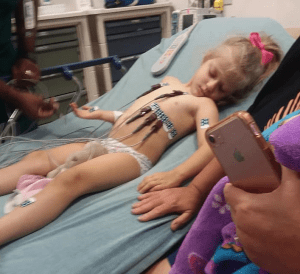
This is what an “insignificant” tick bite looks like and why all of this matters.