Archive for the ‘Lyme’ Category

Ozone Therapy for Lyme Disease & Other Tick-Borne Illness

https://www.globallymealliance.org/blog/ozone-treatment-for-lyme-disease

GLA’s Chairman, Paul Ross interviews ozone therapy specialist Dr. Robbins, along with a Lyme patient, Charles Toepher who has experience with the treatment

Watch the interview:

“Recognizing the importance of evaluating novel treatment options for chronic Lyme disease patients, GLA is funding a study of the effects of ozone on Lyme bacteria at world-renowned Tufts University.”- Timothy Sellati Ph.D., Chief Scientific Officer, GLA.

Read the transcript of the video interview below.

note: The transcript has been edited and condensed for clarity.

Paul Ross: Dr. Robbins, I thought we’d begin with you giving us a brief overview of how you got interested in using ozone therapy for Lyme, and do you also consider it a treatment for other tick-borne disease?

Dr. Robbins: I’ve treated several thousand Lyme patients successfully, to the point where I believe we’ve put it in remission because we have to be able to prove it’s gone. And I think we need a much better, more reliable test to prove that true.

Paul Ross: So, when a patient comes to see you, do you know from the outset or after an initial discussion and/or exam which type of ozone you’re going to use?

Dr. Robbins: Everybody gets the simplest method first because the most important thing about the therapy is all these people are suffering. They find ozone as a last resort when other things have failed. So, I have to be very careful that they don’t get hurt, and while in all my years and 380,000+ treatments that we’ve done intravenously, I have only had two patients that I had to stop treating because they had what I would call an allergic or hypersensitive response to ozone.

So, with that in mind, I can dose this very, very carefully. The best part about ozone is that it’s completely adjustable to the individual. I like to tell patients, it’s a little shocking the way I say it purposely, I go, “You’re not the boss and I’m not the boss. Your body is our boss. Your body tells us whether it’s going to be full speed ahead or whether we have to be far more gentle with you, and with a small percentage of the Lyme patients, I have to adjust every single treatment because of the way it may cause a Herxheimer reaction in them, and I’m sure there isn’t a person listening to this that doesn’t know what a Herx is.

So, to minimize that, we take actions we can talk about later, but more importantly, I adjust the therapy to the individual so they don’t have to suffer any more than they already have, if possible. Herxing isn’t a bad thing. It means it’s working. We’re killing off junk, but it’s not a wonderful thing to go through either.

Paul Ross: So, you’ve treated an extraordinary number of patients. If you had to guess, what percentage of those are Lyme and/or tick-borne disease?

Dr. Robbins: It’s about an average of about 100 new Lyme patients a year. I’ve only had one patient that had Rocky Mountain Spotted Fever, but I always find Lyme disease… because, remember, I’m not a LLD (Lyme-literate Doctor). I’m an expert in getting rid of it with ozone, but I’m not an expert on Lyme disease and every aspect of it. I’m still learning, I would have to say. And there’s so many co-infections. it’s all these different co-infections that ozone is treating because when ozone enters your blood, it has the unique ability to destroy every bacteria and spirochete, every virus, fungus, yeast, mold, parasite, toxin, and harmful free radical, and even chelate toxic metal off nerve tissue, which regular chelation therapy can’t do, and that’s where all the damage is done, by toxic metals. It acts as an anti-inflammatory and as a pain killer.

It stimulates natural stem cell activity, so I call that fixing the unfixable, repairing the unrepairable. It has many other positive side effects, including hair and nails growing healthier and faster. People sleep better and have more energy all day long. It increases oxygen utilization at the cellular level by allowing the organelles, the mitochondria that make energy, to uptake oxygen and create more energy molecules. It has circulation benefits as well. So, it has a versatility that’s caused much of its problem. It’s so versatile, and it sounds too good to be true. So, that’s ozone’s biggest problem and worse, it’s not a patentable medicine. If it were patentable, it would be in every hospital already. So, big pharma has no use for it whatsoever.

Paul Ross: So, I think the lesson to take away is that ozone is extremely effective for all tick-borne diseases.

Dr. Robbins: Yes, and while you’re doing ozone therapy, you can be doing any pharmaceutical that you’re already on or suddenly have to be put on, including antibiotics. You could be taking any nutraceuticals, which includes vitamins, minerals, herbs, homeopathy, Ayurvedic medicine, Chinese medicine. You could be doing any other therapy you want.

Paul Ross: Patients will be relieved to hear that they can use this while continuing their other treatments. So, it seems this isn’t only a treatment for people with chronic Lyme. What if someone is bitten by a tick and they immediately go on a short course of antibiotics. Is it beneficial for them to do ozone at that time?

Dr. Robbins: I’ve only had five “I’ve just got bitten” cases in my career with Lyme disease. When we can get them that close to it, we not only do intravenous, but we inject right into where the bite is and around it to kill the toxins and infection that still may be living there. That’s just done once or twice and then the rest of it is just IV. In those cases, in a relatively short time, we stop treating them. They had absolutely no symptoms. So, the sooner they get in the better, but unfortunately, I only see Stage II and Stage III Lyme. That’s what I mostly see. I also like to point out to people that there is a Stage IV, I call it, is death. Lyme is a life-taking disease. It is not a life-changing disease, and it has to be taken seriously that way.

Paul Ross: is there an average or typical number of treatments that one has to take in order to start seeing improvement?

Charles Toepher: I can actually address that. I speak for both my sister and I, who had chronic fatigue as well. After the first treatment it was immediate. We were like, “Hey, that’s what feeling better is like.” And that feeling went away after a couple of hours, but I said, “Okay, this actually can make a difference, so I’m going to go back for more and see what happens.”

Dr. Robbins: I always want to point out that ozone, and for Lyme disease, particularly late-stage Lyme, is a marathon. It’s not a sprint. But the good news, while I normally say there is no average, usual, or typical number of treatments that it takes to get rid of any medical problem in anybody, the fact is that by the time they’ve done a minimum of three or four treatments a week for about 24, 26 treatments, they will know it’s working. They will see there is changes and benefits.

Ozone is medicine. It’s just medicine, but it’s in a different form than we’re used to using medicine. Where normally, it’s a capsule, powder, tablet, or liquid. This is in a gas form. And when we take medicine, we take it every day or usually several times a day, not just once a week, month, or a year. When you want to get rid of a very serious, life-taking disease, to expect that one or two treatments, one or two doses of medicine in a week is going to change everything, is very unrealistic. it’s important to understand that not everybody receives ozone miracles. I wish everybody did, but it’s important to recognize that.

Paul Ross: Most of the chronic Lyme sufferers, they experience a journey until they receive some sort of relief, usually often after seeing many doctors and trying many different protocols. Can you briefly describe your experience with Lyme, and perhaps you had other infections, and then how you ended up trying ozone?

Charles Toepher: Yes. I got sick when I was in college. I was on the crew club. So, they take you out to the woods, they leave you there, you go run back six, seven miles, and I ended up getting really ill. It turned out to be Borrelia and Lyme.  Ultimately, they gave me a course of antibiotics, and generally, I was okay after that for probably about four or five years.

In my mid-20s, I got really sick again, and this time, I couldn’t function. You feel like your brain is on fire all the time, and you have to sleep but you can’t sleep, and you’re tired all the time. It’s like you’re hungover, and I don’t drink. That’s how I felt pretty much 24/7, and luckily, I had a friend who recommended me to a fellow by the name of Martin Feldman.

And Martin, Dr. Feldman, did tests on me and said, “Oh, you have Epstein-Barr and Lyme disease.” I got, “What’s that?” Because I had no idea what this was. He said, “It’s a tick-borne disease. The other is not, but we have to treat you with IV therapy. We’re going to change your diet. We’re going to give you Vitamin B shots. We’re going to supplement you.” And so, I went through that and there was improvement, quite a bit of improvement.

Paul Ross: How long did it take?

Charles Toepher: About a year and a half. I mean, I was really not well. And then, again, things sort of settled down and then 2006, for me, August, because I remember because I woke up with swelling around my eyes. And I ended up taking Chinese medicine because I spent two years working in China and had access to Chinese medicine. But after that, really until probably about 2016, I tried acupuncture, vitamin therapies, and Panchakarma, which actually was temporarily helpful.

Paul Ross: Can you tell us about what that is? I’m not familiar with it.

Charles Toepher: Panchakarma is traditional Indian medicine, and it up-regulates the function of your liver to help you detoxify. You’re fed a highly alkalizing diet and very specific herbs for the period of time that they’re treating you. They actually give you medicated oils, which are massaged into the body, into the head. It actually really helped, but it didn’t help me for a long enough period of time, and was pricey. But in 2016, a friend of mine mentioned ozone therapy, and so I started doing research on it because being in the environmental cleanup business, we would clean up oil spills. We would work on cleaning up radiological contamination, and also, funny enough, we used a bacteria to eat the oil spills, in a machine and so, I understood, conceptually, how bacteria functioned.

So, I read about it and I went to see Dr. Robbins as a result. The first time I saw him, he said, “Okay. You need to come for at least 35, 36 treatments. But you need to come consistently three times a week for this, and then we’re going to reevaluate at the end of that time.” Dr. Robbins also had me take a liquid probiotic, which really were helpful and worked with the treatment, even though past probiotics had given me some kind of intestinal distress.

Additionally, because you become friendly with people there, and I met somebody who said to me, “Listen, you should also consider going to this Chinese medicine person, traditional Chinese medicine.” And what I found was that Dr. Robbins’ treatments became more effective with me taking the Chinese herbal medicine that she was prescribing for me as well. Over time I saw great improvement. Now I have mostly good days and once in a while I’ll have a bad health day.

I continued the probiotic, which is interesting because, literally, the equipment that we built to clean sewage and clean oil-contaminated water, conceptually operated the same way. The bacteria would sort of populate this iron stomach or intestine and would eat the food. And so, the probiotic, which ultimately Dr. Robbins made, Doctor’s Biome, he calls it, worked very effectively with the treatment because the ozone gets rid of everything, the bad bacteria and the good bacteria, and so, you need to repopulate the good bacteria. And especially if you took as many antibiotics as I was given. It sort of elevates your sense of wellbeing. So, the Chinese medicine, the ozone therapy, and also I did what Dr. Robbins calls a glute sandwich. So, I had Glutathione, first the ozone therapy, then Glutathione injected, which was wonderful for me.

The other thing that was interesting is, I had to get used to feeling better because you get used to feeling bad all the time, and so you almost want or are looking for that familiar feeling. And so, part of the journey is being willing to go to a place you either haven’t been for a very long time or you don’t remember, and having the confidence to continue on that path. Part of that also was meditation. Some of the meditations that Dr. Joe Dispenza does, I like to use because it, from a scientific standpoint, makes sense to me, and everything I do. I mean, I research everything to death because that’s a big part of what we do. I’m a business person, but everything we do has a basis in science, whether it’s environmental sciences or health sciences, and so, I really need to know.

Paul Ross: Dr. Robbins, when Charles came to see you, did you find him to be a typical Lyme patient or was he sicker than most? What were your initial impressions?

Dr. Robbins: Well, no. I would say more that’s what I see. It’s very typical. Many of the Lyme patients today have other co-infections like Epstein-Barr virus, very common. Mold toxicity seems to be something, in the last couple years, that I see quite a bit of, and I’m published on mold toxicity, actually. The Online Journal of Alternative and Complimentary Medicine on ozone and its ability to eliminate mold and mixed mold mycotoxicosis. So, in any case, these co-infections, that’s why ozone’s working because it’s fighting and attacking all these different things.

Dr. Robbins: And there’s only three things patients with ozone therapy have to do. The first is to be well hydrated. The second is to take vitamin C, which has become a very interesting thing with Lyme. It’s almost a diagnostic test for it, in some patients. Even small amounts of it can cause a person to Herx. No other kind of medical problem seems to be hit by Vitamin C that way. The third is to change the diet. We have to put good biome back in.

Paul Ross: Charles, did you Herx from the treatment, and if so how did this Herxing compare to Herxing from you’ve had many different treatments?

Charles Toepher: Yes, I have had a Herx reaction. It got a little bit of tightness in the chest, so I sat with an oxygen cannula for about 10 minutes and then I was fine. Or if I was a little too aggressive and I’m often like let’s do more! – which isn’t always the best thing to do. In that case, you go home and you go, okay, I kind of overdid it. I would do breathing exercises, cold therapy (an ice cold shower or an ice bath), and meditation. A sauna, but far infrared saunas were helpful when I wouldn’t feel great after a treatment, which would happen every once in a while. But in general, never had any issues. The  treatment was usually about 10 minutes, 15 minutes. That’s it. And then, I’d sit there, have some green tea, which seems to help a lot.

Paul Ross: From the time that you first saw Dr. Robbins to the time you stopped, or perhaps you’re continuing to use ozone, you could let us know how long until you felt like you were well?

Charles Toepher: Probably after the first 30, 40 treatments, I felt like a human being again, but I really wanted more, so I continued. I then stopped for two years because I was fine, but started having weird balance issues where going down stairs became a challenge, and so I went back for more treatment and did the herbs, and then just continued. And what I found is that there hasn’t been an endpoint where I’ve stopped getting better or stronger, and I’ve used a fitness tracker to mark my progress.

Now, I’m a once-a-month guy, so to speak, for ozone, and I am a once-every-other-week guy for a Vitamin C IV, and that has worked, and I’ve continued with doing let’s say, and infrared sauna once a week or twice a week as well. When I have access to the Chinese herbs, I take them, but the funny thing is, I don’t need them anymore. I dedicate three hours a week to treatments that make my life better, and it has made a meaningful difference in my life and the quality of my life and the energy I can give to my work and to other people around me.

Paul Ross: I think for many who will be viewing this, this story that you’re telling will be so very reassuring and I imagine there will be some converts, some people who will be very, very eager to try this therapy. Before we close, is there anything that either of you would like to add, something that we should have covered that we didn’t cover?

Dr. Robbins: No moral or ethical doctor should ever promise or guarantee a result. I usually tell patients if a doctor promises you 100%, leave skid marks getting out of that office. The fact of the matter is, with Lyme disease, if you stay with it and you’re consistent with care, I have to say, I have not failed yet. The primary goal is to get you well so you can live your life again, and that’s why I’m doing this at my age because we’re changing people’s lives.

Charles Toepher: I would second what Dr. Robbins says. It’s about being consistent. There definitely were times where I really didn’t feel great, but I went anyway, and then the sun comes out, as it were a bit. The other thing I would say is not ozone is created equal, in terms of who’s applying it, and again, I’ve done a lot of research, there’s a standard of care that I found with Dr. Robbins that, when you look around, what’s available in the United States is not always so consistent. So, in terms of both the equipment, the knowledge. And so, that’s the only caution I would say.

Paul Ross: Well, on behalf of GLA, we want to thank the two of you. I think this has been an extremely informative session and I trust that the viewers will find it to be as enlightening as I can tell you I have found it to be. Our guests today were Dr. Howard Robbins and a patient of his, Charles Toepher.  Again, on behalf of GLA, thank you both of you. Very informative and we hope to continue bringing you, that is our audience, additional alternative treatments.

***

To reach Dr. Robbins for questions: Email OzoneDoctor@yahoo.com or call: 212-581-0101

To read more blog posts, click here.

Federal Court Dismisses Lyme Lawsuit Against IDSA

https://www.lymedisease.org/torrey-idsa-lyme-case-dismissed/

Federal court dismisses Lyme lawsuit against IDSA

Sept. 30, 2021

From journalist Mary Beth Pfeiffer on Facebook:

Torrey v. IDSA update: I am saddened to report that the lawsuit on behalf Lyme disease patients has been dismissed in federal court in Texas.

Below is an excerpt from the court’s recent ruling dismissing the claim that IDSA had violated the Sherman Anti-Trust Act; the court had earlier dismissed the claim under the Racketeer Influenced and Corrupt Organizations Act.

The excerpt sums up the case outcome. In the ultimate ruling, which was just unsealed, the judge wrote these fateful words: “…Plaintiffs have not pled claims for relief that are plausible on their face…” In other words, a case had not been made that the Infectious Diseases Society of America had unjustly acted to deny care to Lyme disease patients.

On a positive note, I am told that an appeal will be filed to overturn the dismissal. This is an indication that the attorneys, who are working without pay, believe the case has merit and promise.

After all, eight insurance companies named as defendants settled the lawsuit. The appeal will take at least a year to be heard, perhaps two. I know many people had great faith in this lawsuit. I am sorry to dash hopes for legal redress.

But there are other developments — in the research, advocacy and governmental arena — that should give some solace. I will write about those soon. For now, I am reviewing the case documents and will post them on my website in a day or two. You can also find other documents there and articles on what the case sought to accomplish.

 Click here to see court filings and other history of this case.

_______________

**Comment**

No shock here. 

One must remain hopeful and always try, but the CDC is currently getting away with murder regarding COVID on the world’s stage.  They’ve gotten away with murder for over 40 years with Lyme/MSIDS.

If you have trouble accepting the fact the CDC is completely corrupt.  Wonder no more.

This organization expertly manipulates, weaponizes, and obscures data, rejects research or anything not created/endorced by its own organization or has vested interests in, and  quietly updates information rather than being transparent.

The CDC has been caught numerous times giving false information.

We should no longer be shocked.

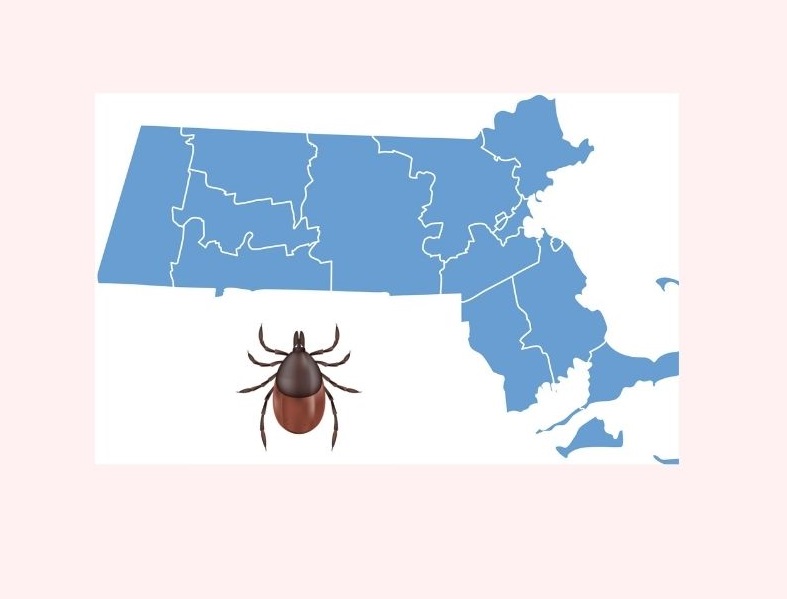
A Perfect Example of CDC Lying: Only 7 Cases of Lyme in Massachusetts?

https://www.lymedisease.org/7-cases-of-lyme-in-massachusetts/

Dorothy Kupcha Leland

SEP 28, 2021

TOUCHED BY LYME: What? Only 7 cases of Lyme in Massachusetts?

Advocates have objected for years to how severely the CDC undercounts Lyme disease cases.

LymeDisease.org’s Lorraine Johnson took a deep dive into this issue in a blog earlier this year. Basically, she points out, in states the CDC considers low-incidence, only 1 in 50 Lyme cases is counted. While in high-incidence states, 1 in 7 is counted.

(Johnson calculated those numbers from data in the CDC’s own report. I suggest you read her article for more explanation.)

Which brings us to the strange case of Massachusetts, traditionally considered a “high-incidence” state. According to the CDC website, the Bay State clocked thousands of Lyme cases every year. Until suddenly, it didn’t.

Abruptly, in 2016, there were only 146 cases. In 2017, there were 321. In 2018, the number dwindled to 13. And in 2019, the most recent figures available, there were six “confirmed” cases in Massachusetts, along with one “probable” case, for a total of seven. In the whole dang state.

Does this mean that fewer people in Massachusetts are contracting Lyme disease? Not at all. It merely reflects the fact that the state has changed the way it tracks Lyme disease cases. Ergo, the CDC throws out the Massachusetts numbers. Disregards them. Pretends they don’t exist.

Cape Cod Times reporter Cynthia McCormick looked into this troubling development in an article published last week.

Although the coronavirus pandemic has put a lot of pressure on local, state, and federal health officials, it can’t be blamed for a surveillance system that has been problematic for years.

While Massachusetts reportedly had seven cases in 2019, notes McCormick, neighboring Rhode Island had 971 cases that year. Even though its population is only a fraction of the size of Massachusetts. According to her article:

“Absurd does not even begin to categorize it,” Larry Dapsis, Barnstable County entomologist, said about the federal statistics.

“It is laughable in a very painful way,” said Dorothy Leland, spokesperson for LymeDisease.org, a patient advocacy group based in San Ramon, California.

Dapsis, coordinator of the Cape Cod Cooperative Extension’s Tick Project, said he doesn’t want residents or visitors getting the idea that Lyme disease isn’t a problem on Cape Cod.

“Let me tell you, it is,” Dapsis said.

Problematic reporting system

A big part of the problem is that the CDC’s cumbersome Lyme surveillance system requires a lot of administrative paper shuffling for both doctors and local health officials.

Massachusetts gave that process the heave-ho several years ago—and that was even before the extra burdens brought on by the pandemic.

I repeat something I’ve stated in this blog before: The CDC’s system for counting Lyme cases is broken. It needs to be fixed now.

Click here to read the article from the Cape Cod Times.

How much does the CDC undercount Lyme cases? It depends on where you live.

TOUCHED BY LYME is written by Dorothy Kupcha Leland, LymeDisease.org’s Vice-president and Director of Communications. She is co-author of When Your Child Has Lyme Disease: A Parent’s Survival Guide. Contact her at dleland@lymedisease.org .

__________________

**Comment**

If you have trouble accepting the fact the CDC is completely corrupt.  Wonder no more.

This organization expertly manipulates, weaponizes, and obscures data, rejects research or anything not created/endorced by its own organization or has vested interests in, and  quietly updates information rather than being transparent.

The CDC has been caught numerous times giving false information.

We should no longer be shocked.

The Lyme Vaccine That Got Away (And Good Riddance)

https://newrepublic.com/article/163658/what-happened-lyme-disease-vaccine

The Lyme Vaccine That Got Away

Twenty years ago, you could get a vaccine for Lyme disease. Now you can’t. What happened?

Illustration by Julie Benbassat

How does a vaccine get developed, studied, approved, distributed, and administered, and then just … disappear? On Episode 34 of The Politics of Everything, hosts Laura Marsh and Alex Pareene explore what happened to LYMErix, a vaccine for Lyme disease that has been called the only safe and effective vaccine ever to have been voluntarily withdrawn from the market in the United States. What does the story of LYMErix tell us about vaccine hesitancy, liability, and how pharmaceutical companies decide what to sell? And can we expect another Lyme vaccine anytime soon? Guests include Rebecca Onion, who wrote about LYMErix for Slate, and Andrew Zaleski, who wrote about new prophylactic treatments for Lyme for Outside magazine.


(See link for article or listen to the story)

**Comment**

The article states that “LYMErix was the only effective, FDA-approved vaccine in the U.S. ever to have been voluntarily withdrawn from the market.”

Ha, ha, ha, that’s a good one.
  • If by “effective” you mean it caused many patients to have Lyme-like symptoms, then I agree but most people don’t expect a vaccine to maim them for life, so “effective” would be the wrong word.
  • Hopefully by now you are aware that the FDA has a long sordid history of “approving” very harmful and dangerous drugs and “vaccines.” Just because something is “approved” doesn’t mean it’s safe, needed, or even effective. Recently the FDA deceptively “approved” the Pfizer COVID injection despite massive fraud in reporting “vaccine” injuries which is maiming and killing thousands, and despite misleading the public on efficacy.  Doctors for COVID Ethics also state it is “needless, ineffective, and dangerous.”  The corrupt FDA is not to be trusted.
  • Further, as pointed out by Dr. Flemming, making an antibody isn’t always a good thing. He gives the example of how antibodies created to fight strep can result in Rheumatic fever due to antibodies attacking the body’s own tissues, beginning with the joints and then moving on to the heart and surrounding tissues. Making the wrong type of antibody can enhance infection. Antibodies are just not that simple, but vaccine zealots continue with the “vaccines are safe and effective“ mantra despite thousands suffering with severe reactions and even death.  Flemming  explained the antibody issue in his groundbreaking book, “Is COVID-19 a Bioweapon? A Scientific and Forensic Investigation.”
  • It’s interesting that Rebecca calls persistent infection with Lyme, “so-called chronic Lyme.” She also states that people “believed” the vaccine injured them.  This should be a clear “heads-up” on her flagrant bias and lack of knowledge.  Of course an FDA study “contradicted” patient experience just like it is currently contradicting science on effective, safe COVID treatments.  The FDA has a long history of monopolizing medicine. Would you expect anything else?  They’ve been contradicting patients for over 40 years and aren’t about to change now.  Again the FDA is corrupt, has conflicts of interests and can not be trusted.
  • Lymerix was not covered by the National Vaccine Injury Compensation Program so SmithKline Beecham, now GlaxoSmithKline was liable.  They yanked Lymerix not out of concern for patients, but because they were concerned about lawsuits, and rightly so.  We would not be living through the current COVID injection nightmare if manufacturers were actually liable for damage.  Big Pharma should always be held liable if their products cause damage and death.  Losing money is the only thing that will keep these companies honest.  Right now they are accountable to no one and can do as they wish without fear of repercussions.  Circling back to Lymerix, please know that due to vaccine development, they took the most specific band for Lyme out of serology testing, which is labeled by many as a crime.  We can thank Lymerix for not only debilitating people physically but for stymieing testing for over 40 years – testing which is still used to this day despite its utter and complete failure. One expert accuses public health officials of setting an arbitrary level of antibodies for testing. Another expert has sued the CDC over monopolizing Lyme testing.  This same expert has filed a “stay of action” against FDA to stop approval of COVID injections for using faulty PCR tests in the trials.  The CDC, with FDA involvement, has a long history of monopolizing testing so they can control the narrative.
  • The people in this article obviously are not aware of the severe conflicts of interest regarding our government and Big Pharma. They also believe that the government should be the one to “nationalize” vaccines and manufacture them.  I couldn’t disagree more strongly.  Government and Big Pharma needs to cease and desist from interfering with medicine. Even a group within the CDC has stepped forward to reveal inter agency corruption – much revolving around vaccines.
  • They also erroneously state Lyme used to be a “weird regional infection,” when Lyme has been found all over for a long, long time – it’s just the very corrupt government they want to control everything denies it!  “Nothing to see here!”  These poor people have been denied diagnosis and treatment for decades because according to our government, Lyme doesn’t exist there.
  • The article then glorifies Klempner’s Lyme PrEP, which we keep being told isn’t a vaccine but a monoclonal antibody “preventative treatment,” that directly gives you the antibody.  What they fail to mention is Lymerix as well as Lyme PrEP both use OspA  – the very antigen of Lyme disease that is blamed for causing devastating Lyme-like symptoms. They erroneously state it’s “just antibodies.”  If only it were that simple.  Antibodies, as stated previously, are not always harmless. Watch this brief video to understand the interplay between antigens and antibodies.
  • Klempner was also the trial administrator of the Connaught OspA Lyme vaccine in the 1990s, and is quite aware of the adverse effects of injecting OspA into people.  He also was an author of the 2006 IDSA guidelines that were the subject of an investigation by Senator Richard Blumenthal which exposed undisclosed financial conflicts in many of the panelists as well as the fact they simply ignored alternative medical opinion (which is happening again with COVID). Those guidelines relied heavily on his 2001 “retreatment” study in which most of the participants had not been treated in the first place. 
  • To state that Lyme patients and advocates do not trust Klempner would be the understatement of the year and further, I’m with Lyme advocate Carl Tuttle: we don’t want any Lyme vaccines until the issue of chronic/persistent infection is acknowledged. As you can see from this article, there are those who still believe what we are suffering from is a “scam that should be condemned”.
  • The authors then regurgitate that since COVID is a “public health issue” it’s important that EVERYONE get the vaccine because of person to person spread of infection, but that Lyme is different because it’s solely spread by ticks, even though experts have disputed this oft repeated dogma.  This “for the greater good” narrative is continually used by vaccine zealots but ignores individual freedoms as well as individual medical/health status, including the very real issue of natural immunity which is currently being ignored, not to mention the elephant in the room which is effective, safe treatments which have been proven to be successful.
  • They then mention Sam Telford, also part of the Lyme Cabal, who blames the spread of deer, and suburbanization in America, never once mentioning experimentation on ticks by infecting them with numerous pathogens and releasing them, in fact dropping them, from airplanes.  Telford, a professor of infectious disease and global health at Tufts University, helped discover the mechanism that led to the development of Lymerix and ran one of the clinical trials that tested it. He is now part of a group of biotech professionals who have formed an alliance and want to bring back the vaccine. This article, written by a doctor, methodically records the devastation Lymerix caused but which is completely ignored by Cabalists like Telford who continue to state Lymerix was “effective.” Telford, a Chronic Lyme denialist, teaches biosecurity, specializes in the bioweapon Tularemia, and was the director of a bio-level 3 lab in Groton, Massachusetts that works on dangerous, tickborne diseases on the government’s select agent list.  He’s funded by the NIH and the military-industrial complex.
  • They then wrap it up by stating the conversation parallels everything else going on: climate change, sociological issues and economics, drug company treatment choices, and marketing.
Again, articles like this one give me gray hair and make me want to swear – a lot.

Single Tick Bite Leads to 3 Diseases in Elderly Woman

https://danielcameronmd.com/tick-bite-causes-3-diseases-elderly-woman/

Single tick bite leads to 3 diseases in elderly woman

Health aid helping old woman in bed who had a tick bite and Lyme disease.

In their article “Triple Tick Attack,” doctors describe the case of a 74-year-old woman living in Connecticut who developed three tick-borne diseases as the result of a single tick bite. While Lyme disease is the most common tick-borne illness, ticks can transmit other bacterium, causing various “co-infections,” which can be difficult to diagnose.

The woman was an avid gardener, who had a history of COPD (chronic obstructive pulmonary disease) and high blood pressure. She was admitted to the hospital with dyspnea, fatigue, and a cough productive of yellowish mucoid sputum.

The patient also had significant altered mental status, pallor, and peripheral edema. A lung examination revealed bibasilar crackles, Kumar explains. [1]

She was treated empirically for community-acquired pneumonia, and was prescribed ceftriaxone and azithromycin.

The woman no history of a rash or tick bite. However, lab tests later revealed the presence of 3 tick-borne pathogens.

“We present a case of triple infection with babesiosis, Lyme disease, and anaplasmosis treated with antibiotics and red blood cell (RBC) exchange (erythrocytapheresis).”¹

1) Babesia − This tick-borne disease is caused by a tiny parasite that infects the red blood cells.

“A peripheral blood smear revealed the presence of intracytoplasmic parasites consistent with Babesia,” writes Kumar. Consequently, the woman was started on azithromycin and atovaquone.

Further testing revealed that she had severe babesiosis. Her parasitic load was so high (9.04%) that she required a red blood cell (RBC) exchange (erythrocytapheresis).

Repeat testing, however, found the parasitic load remained high (6.54%), which required a second round of RBC exchange.

“Antimicrobials were changed to clindamycin, quinine, and doxycycline for a total of 14 days,” writes Kumar.

2) Borrelia burgdorferi − The bacteria that causes Lyme disease. Serologic tests were positive. The patient was prescribed doxycycline.

3) Anaplasma − The bacteria that causes anaplasmosis, formerly known as human granulocytic ehrlichiosis (HGE). The patient’s anaplasma titers were positive.

“Patients presenting with an atypical clinical picture of a single pathogen or a lack of improvement with antibiotics after 48 hours require further testing for the presence of other infections,” the authors suggest. “A delay in the diagnosis can lead to an increased risk of complications and disease duration.”

In another case report, Grant and colleagues describe a 70-year-old man who presented to the emergency room with “fevers, ankle edema and nausea following a presumed insect bite on his ankle 1 month prior.”²

Test results revealed the man was positive for Lyme disease, Babesia microti, and Anaplasmosis.

His symptoms resolved completely following treatment with doxycycline, atovaquone and azithromycin.

The authors suggest, “Co-infection with Lyme disease and another tick-borne illness is common, and testing for co-infection should be performed in patients with >24 hours of symptoms despite appropriate treatment, as well as unexplained laboratory abnormalities.”