This lecture explores how minerals like selenium, zinc & copper work with your immune system to help regulate it. It also explains the interactions between candida, viruses, and other infections with these minerals.
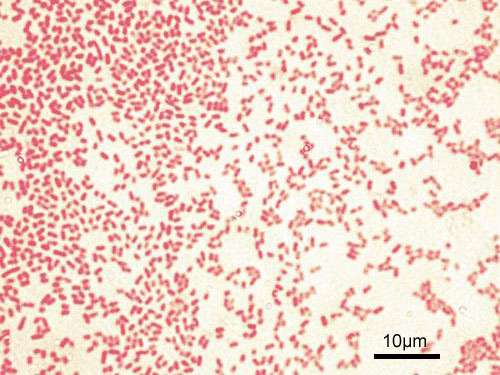
Gram-stained P. aeruginosa bacteria (pink-red rods) Credit: Wikipedia
A study has found that much higher doses of antibiotics are needed to eliminate a bacterial infection of the airways when other microbes are present. It helps explain why respiratory infections often persist in people with lung diseases such as cystic fibrosis despite treatment.
In the study, published today in The ISME Journal, researchers say that even a low level of one type of microbe in the airways can have a profound effect on the way other microbes respond to antibiotics.
The results highlight the need to consider the interaction between different species of microbe when treating infections with antibiotics—and to adjust dosage accordingly.
“People with chronic infections often have co-infection with several pathogens, but the problem is we don’t take that into account in deciding how much of a particular antibiotic to treat them with. Our results might help explain why, in these people, the antibiotics just don’t work as well as they should,” said Thomas O’Brien, who carried out the research for his Ph.D. in the University of Cambridge’s Department of Biochemistry and is joint first author of the paper.
Chronic bacterial infections such as those in the human airways are very difficult to cure using antibiotics. Although these types of infection are often associated with a single pathogenic species, the infection site is frequently co-colonized by a number of other microbes, most of which are not usually pathogenic in their own right.
Treatment options usually revolve around targeting the pathogen, and take little account of the co-habiting species. However, these treatments often fail to resolve the infection. Until now scientists have had little insight into why this is.
To get their results the team developed a simplified model of the human airways, containing artificial sputum (‘phlegm’) designed to chemically resemble the real phlegm coughed up during an infection, packed with bacteria.
The model allowed them to grow a mixture of different microbes, including pathogens, in a stable way for weeks at a time. This is novel, because usually one pathogen will outgrow the others very quickly and spoil the experiment. It enabled the researchers to replicate and study infections with multiple species of microbe, called ‘poly-microbial infections’, in the laboratory.
The three microbes used in the experiment were the bacteria Pseudomonas aeruginosa and Staphylococcus aureus, and the fungus Candida albicans—a combination commonly present in the airways of people with cystic fibrosis.
The researchers treated this microbial mix with an antibiotic called colistin, which is very effective in killing Pseudomonas aeruginosa. But when the other pathogens were present alongside Pseudomonas aeruginosa, the antibiotic didn’t work.
“We were surprised to find that an antibiotic that we know should clear an infection of Pseudomonas effectively just didn’t work in our lab model when other bugs were present,” said Wendy Figueroa-Chavez in the University of Cambridge’s Department of Biochemistry, joint first author of the paper.
The same effect happened when the microbial mix was treated with fusidic acid—an antibiotic that specifically targets Staphylococcus aureus, and with fluconazole—an antibiotic that specifically targets Candida albicans.
The researchers found that significantly higher doses of each antibiotic were needed to kill bacteria when it was part of poly-microbial infection, compared to when no other pathogens were present.
“All three species-specific antibiotics were less effective against their target when three pathogens were present together,” said Martin Welch, Professor of Microbial Physiology and Metabolism in the University of Cambridge’s Department of Biochemistry and senior author of the paper.
At present antibiotics are usually only laboratory tested against the main pathogen they are designed to target, to determine the lowest effective dose. But when the same dose is used to treat infection in a person it often doesn’t work, and this study helps to explain why. The new model system will enable the effectiveness of potential new antibiotics to be tested against a mixture of microbe species together.
Poly-microbial infections are common in the airways of people with cystic fibrosis. Despite treatment with strong doses of antibiotics, these infections often persist long-term. Chronic infections of the airways in people with asthma and chronic obstructive pulmonary disorder (COPD) are also often poly-microbial.
By looking at the genetic code of the Pseudomonas bacteria in their lab-grown mix, the researchers were able to pinpoint specific mutations that give rise to this antibiotic resistance. The mutations were found to arise more frequently when other pathogens were also present.
Comparison with the genetic code of 800 samples of Pseudomonas from around the world revealed that these mutations have also occurred in human patients who had been infected with Pseudomonas and treated with colistin.
“The problem is that as soon as you use an antibiotic to treat a microbial infection, the microbe will start to evolve resistance to that antibiotic. That’s what has happened since colistin started to be used in the early 1990’s. This is another reminder of the vital need to find new antibiotics to treat human infections,” said Welch.
___________________
**Comment**
Hopefully it’s clear why I would post this cystic fibrosis research on a Lyme/MSIDS website. Lyme/MSIDS is also often a polymicrobial illness involving numerous pathogens. Logic would then follow that this complex illness would also be impossible to eradicate using a singular antibiotic against multiple infections that not only require different medications individually but that synergistically would also necessitate higher doses for a longer period of time.
This is known, appreciated, and utilized by Lyme literate doctors when treating patients, and Lyme/MSIDS patients, researchers, and doctors alike have been screaming bloody murder about this topic for decades. But they are laughed at and ridiculed, and written off as tin-foil hat wearing nut-jobs.
Mainstream research and medicine barely even acknowledge coinfection, a fact that is seen not only in ticks but daily in humans living in the real world. They also deny pleomorphism – or the ability of borrelia, and other pathogens to shape-shift into different forms. Research has shown borrelia shape-shifts when threatened so it can survive.
The current simplistic view of Lyme/MSIDS is killing people, and the sooner it is recognized and addressed the better.
One would hope that research showing the very real complexities and failure of standard treatment on patients with multiple infections simultaneously would cause even the most entrenched to consider the same possibility with Lyme/MSIDS.
Clostridium difficile is labeled as one of the organisms of greatest concern for antibiotic resistance by the National Institutes of Health.
Most healthcare practitioners associate it with acute colitis and diarrhea. However, it can also colonize the gastrointestinal tract, creating chronic symptoms that are harder to recognize.
Colonization of a number of problematic Clostridia species (and the metabolites they produce) can create neurological irritation and neurotransmitter imbalances, and has been implicated in:
Attention issues
Mood disorders
Neurological conditions
In this three-part series, Dr. Kurt Woeller delivers clinically relevant information that comes from years of working with neurologically symptomatic patients, his experience in specialized testing, and from a place of commitment to excellent patient care.
Dive into Part 1 where Dr. Woeller introduces the breadth of alternative symptoms that can manifest with Clostridium difficile (C. diff) and other pathogenic species.Stay tuned for upcoming Parts 2 and 3 where Dr. Woeller identifies methods most effective for detecting C. diff and discusses his most trusted therapeutics for addressing positive test results.Best for your health,
Kurt N. Woeller, DO, has been a functional and integrative medicine physician and a biomedical autism treatment specialist for over two decades. A respected author, international lecturer, and educator, he provides healthcare practitioner education through his online Integrative Medicine Academy.
Dr. Woeller serves as a clinical consultant and educator for both BioHealth Laboratory and Great Plains Laboratory (GPL). At GPL, he teaches the Organic Acid Test (OAT) interpretation and implementation course.
At his private practice in Bend, OR, he focuses on specialized diagnostic testing and treatment for individuals with complex medical conditions like autism, autoimmune and neurological disorders.
Strategies and treatments for Lyme patients to avoid Candida overgrowth
When I was a teenager, I used to get yeast infections during the summers because I was always in a wet bathing suit. At least, that was the rationale I was given by doctors and other females, and it made sense. What I didn’t know then was that recurring yeast infections can also be a sign of a weakened immune system, something that would come back to haunt me in college when I started wrestling mysterious flu-like symptoms. The yeast infections persisted then, too.
People generally don’t talk about yeast infections because they seem like a private topic. But we should, because candidiasis—a fungal infection caused by yeast (Candida) overgrowth—is not exclusive to females or the vagina. In fact, many men and women alike suffer from Candida overgrowth and may not even know it. Candidiasis often occurs in the gut, causing symptoms typically associated with the gastrointestinal tract such as bloating, constipation, diarrhea, gas, blood sugar swings, and cravings for sweets; and those that aren’t, such as fatigue, depression, dizziness, itching, and hives. Candida can also manifest in the mouth as thrush, causing bad breath, a funny taste, soreness, white lesions, or a pasty white tongue.
I was first diagnosed with intestinal yeast overgrowth when I was wrestling a bad case of mononucleosis that slipped into chronic active Epstein-Barr virus. The naturopathic physician I was seeing told me excessive Candida could cause fatigue, inflammation, and headaches. In more serious cases, systemic candidiasis can, according to the Centers for Disease Control and Prevention (CDC)affect the blood, brain, heart, eyes, bones, and other parts of the body.
So, what does this have to do with Lyme disease? Many Lyme patients may already be dealing with candidiasis infections that are exacerbating or causing some of their symptoms. Coupled with Lyme disease, these symptoms become overwhelming. Moreover, antibiotics, a standard and critical treatment for Lyme, cause Candida overgrowth because they kill off the good bacteria in the gut. As Richard Horowitz, M.D. explains in Why Can’t I Get Better? Solving the Mystery of Lyme & Chronic Disease, “Although we all normally have Candida organisms present in our gastrointestinal tract in limited amounts, taking antibiotics for bacterial infections will encourage an overgrowth of Candida…Furthermore, many Americans have diets high in sugar and refined carbohydrates, which help promote yeast overgrowth.” Immune suppression due to stress—common for Lyme patients—and other factors such as medications that decrease the acidity of the gastrointestinal tract can also lead to Candida issues.
What can Lyme patients do to avoid and/or treat Candida overgrowth?
• Diet: We often hear of the “Lyme diet” to treat inflammation, which it does. It also combats Candida overgrowth. I have had success by eliminating simple sugars, gluten and wheat, and alcohol. In his book, Dr. Horowitz also recommends eliminating malt, vinegar, carbohydrates (including fruit early in treatment), all yeast-containing foods (most bread and cheeses, mushrooms), and fermented foods. How extreme you need to be with this diet depends on how acute your infection is. Because I am still on low-dose antibiotics, I have stuck to a gluten-free, low-sugar, alcohol-free diet while in remission. I avoid mushrooms and most yeasty foods but do eat dark chocolate, cheese, and whole grains. Talk to your Lyme Literate Medical Doctor (LLMD) about the best dietary changes for you.
• Probiotics: When you’re on antibiotics, you must take probiotics to replenish your system with good yeast. However, you must take the probiotics at least two hours before or after the antibiotics, or the antibiotics will kill the probiotics.
• Anti-fungal medication: For persistent candidiasis, some LLMDs prescribe anti-fungal medication, some of which have also been known to be effective against Lyme bacteria. They are not without side effects (some can cause liver or heart damage), so doctors use these sparingly and in low and/or pulsed doses, and you should have regular bloodwork to test your liver and other functions while you’re on these medications.
• Monitor symptoms and adjust accordingly: I can tell when yeast levels are getting high because I get a pasty tongue, have vaginal symptoms, or feel some gastrointestinal discomfort. This usually happens after I’ve cheated by eating several gluten-free brownies (naturally sweetened, but the sugars still add up). I will then be extra-careful with my diet in the following days, and it sometimes helps to eat something that tastes acidic, like grapefruit or tomato but is alkaline once digested (you’re trying to keep a healthy pH balance).
• Don’t cheat: With some diets, especially those that are just about losing or maintain weight, having a “cheat” day once in a while won’t have too many adverse effects. That’s not true with Lyme disease, especially if you are dealing with an acute infection. Eating a regular pizza or a chocolate chip cookie will probably make you feel horrible for a few days, and that’s not worth it. There are plenty of great alternative foods available.
If you find yourself craving sweets or experiencing unexplained fatigue or digestive symptoms, talk to your doctor about Candida, especially if you are being treated for Lyme disease.
Jennifer Crystal is a writer and educator in Boston. Her memoir about her medical journey is forthcoming. Contact her at lymewarriorjennifercrystal@gmail.com.
Opinions expressed by contributors are their own. Jennifer Crystal is a writer and educator in Boston. Her memoir about her medical journey is forthcoming. Contact her using her email.
Both my husband and I took diflucan, an anti-fungal medication twice a week throughout our entire treatment journey (over 5 years). I believe this saved us from many problems antibiotics can cause. We also tried to limit sugar. We also took a strong, refrigerated probiotic daily as well as a prebiotic (feeds the good guy bacteria), specially formulated for Lyme/MSIDS patients with many and varied strains of bacteria.


 Madison Area Lyme Support Group